► We drive a prototype of the new Cupra Raval
► First of the smaller ‘MEB+’ Volkswagen Group cars
► Revealed in February 2026
Cupra’s success has been nothing short of astronomical. It’s now sold more than a million cars since 2018 and in the first nine months of 2025 alone it sold more than 250,000 vehicles.
Such figures have made it the darling of the core Volkswagen Group, to the point where VW handed over full responsibility to Martorell to lead the development of the portfolio of new small electric cars. The first model set to arrive is the long-awaited Cupra Raval, first teased all the way back in 2021 with the Urban Rebel concept car, which is almost ready to hit the streets.
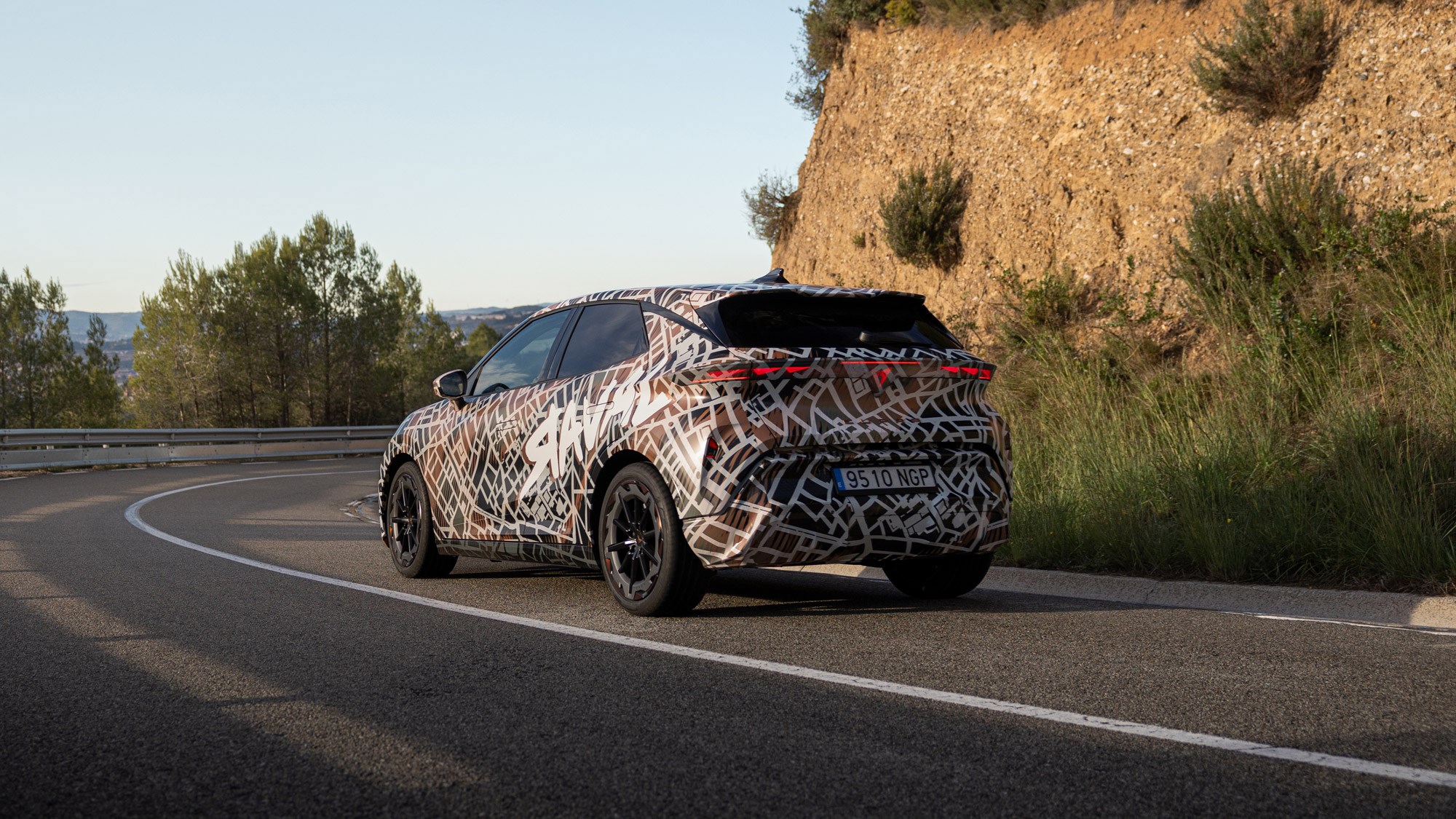
Ahead of its reveal in February 2026, Cupra has allowed us an early camouflaged prototype drive of the Raval. But is it a positive sign of things to come from what is likely to be its most Cupra’s most important electric car yet, as well as for the wider VW Group models based on this platform?
At a glance
Pros: Feels like a proper hot hatch to drive, fantastic brakes, clever packaging
Cons: Firm ride, certain specs are currently unknown
What’s new?
The Cupra Raval will be the first model to sit on Volkswagen’s new MEB+ platform, which represents a significant shift compared to the regular MEB underpinnings that first debuted on the ID.3 in 2020. It’ll play an important role in not just the Raval’s sister cars – the ID.Polo, VW ID.Cross and Skoda Epiq – but also in the various heavy facelifts due for other VW and Cupra models that have been fast-tracked to arrive in 2026.
The ‘Electric Urban Car Family’ is also the first time Seat and Cupra has led a major project within Volkswagen, earning it plenty of status in the process. For my prototype drive I’m accompanied by Xavier de Silva, who has led the small car project at Martorell, and has managed the tough task of ensuring that each model in the family lives up to its brands’ characteristics.
But it’s benefitted Cupra in a big way. Previously it’s had to follow VW’s engineering and work with what it’s had available to it, but with the Raval it’s been able to influence its cars’ characteristics from the start. And it certainly shows.
What are the specs?
With the reveal of the Raval still a few months away, some of the specs are still under wraps for now, though Cupra is slowly drip feeding them to us. While less powerful versions will follow to bring the Cupra’s starting price down to the €26,000 (£22,900) figure it’s promising, the initial launch models will all be more hot hatch-esque in their performance.
These are the Dynamic and Dynamic Plus, each with 208bhp, but our prototype drive is in the top-spec VZ Extreme model, producing 223bhp and 214lb ft Nm of torque. No 0-62mph figure is given, but expect around 6.5 seconds and flat out it will reach 108mph.
It’s also the first front-wheel-drive model on the MEB platform, switching from the usual RWD layout that is used on the Cupra Born and Tavascan. De Silva said they considered keeping rear-wheel-drive, but ultimately FWD makes a lot more sense in a car like this, especially from a packaging point of view – something the Raval is very good at, as we’ll come onto later.
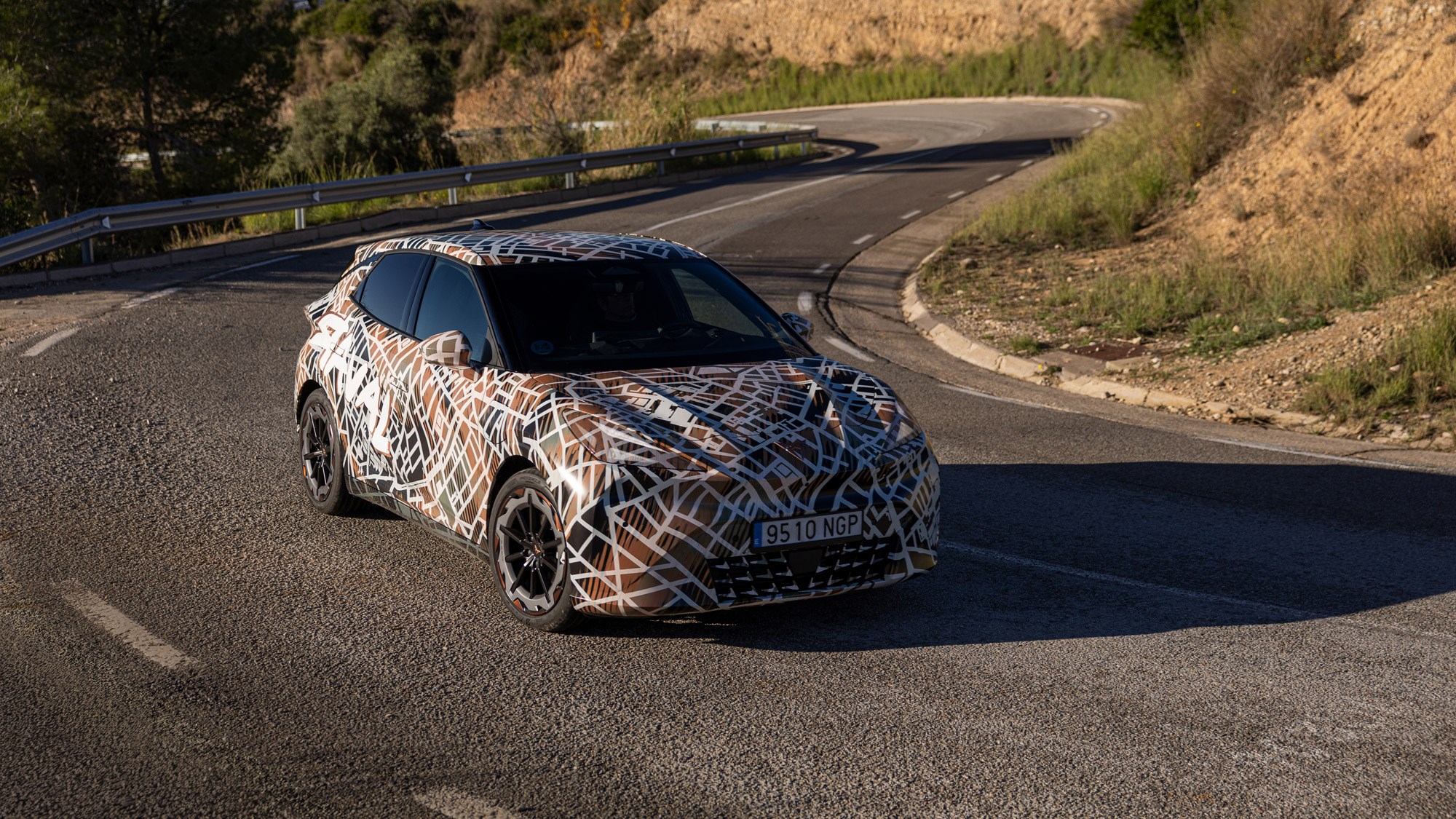
The battery capacity is yet to be confirmed but, based on what we know about the ID.Polo, it’s expected to be available with 38kWh and 56kWh units. A range of up to 450km (280 miles) is promised, too, which drops to ‘around 400km’ (249 miles) for the VZ Extreme.
Its dimensions are also very similar to a Seat Ibiza at a little over four metres, though it has a longer wheelbase helping to give it interior space closer to cars from the class above.
What’s it like to drive?
Smaller electric cars have so far proven to be some of the most entertaining in the EV world, and the Raval looks to be a brilliant addition. Feeling a lot like a hot hatch to drive, it really shows that Cupra has led this project and has been able to put its own distinctive stamp on things.
The seating position is excellent, with our test car’s electric bucket seats getting nice and low and with plenty of adjustment to the steering wheel, which, like its other models, contains proper drive mode buttons, including a useful shortcut to the raciest ‘Cupra’ setting. Good start.
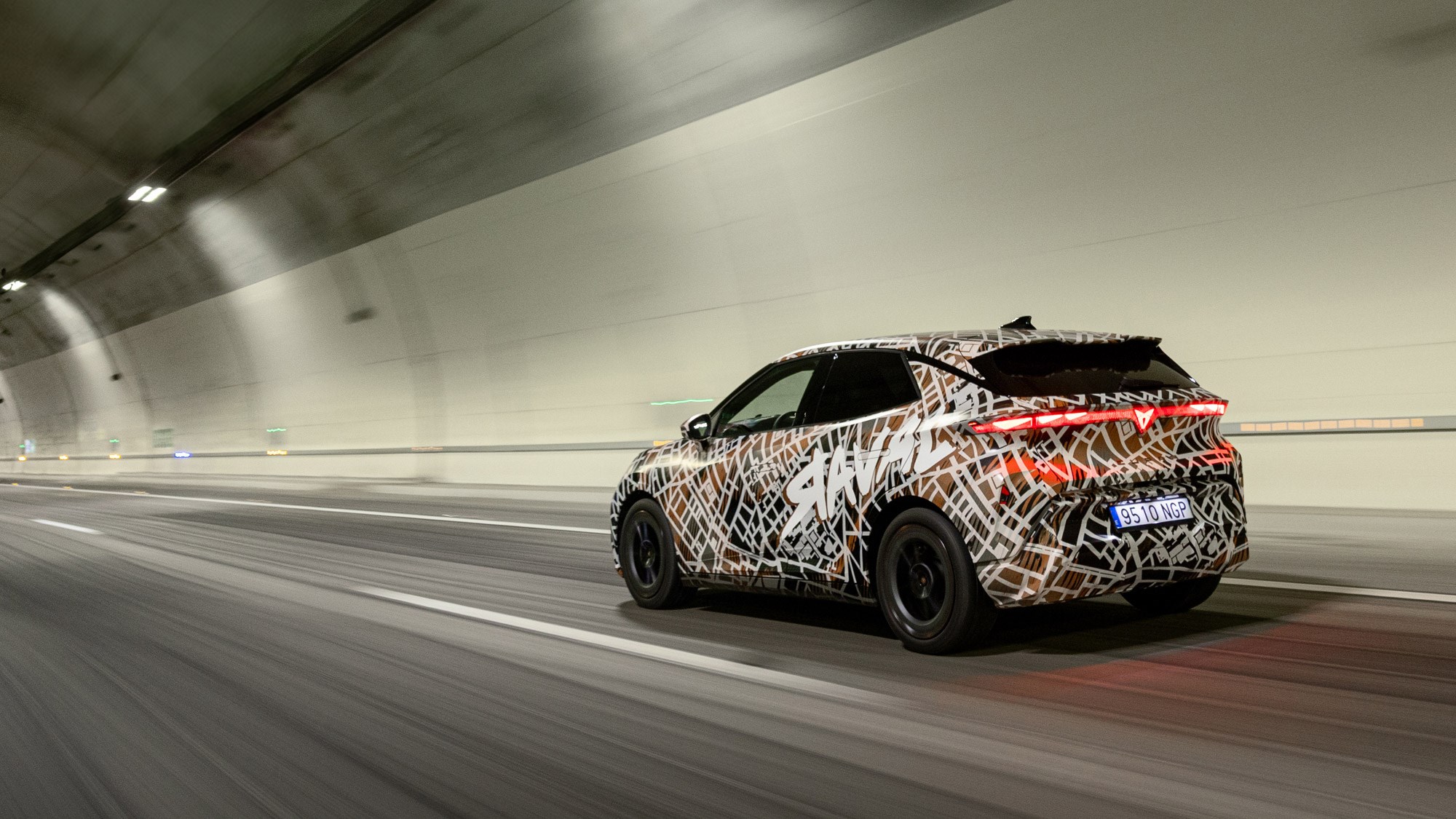
Regenerative braking paddles on the wheel offer more in the way of one-pedal driving than Cupra’s current offering and the brakes in general are a revelation, for not just compared to Cupras but anything on MEB as a whole. I ran a Cupra Tavascan long-termer for our sister publication Parkers for six months and the brakes were by far the worst thing about it. They were incredibly vague and with a ridiculous amount of pedal travel before anything happened, due to the complexity of friction and regenerative braking.
The Group has faced some flak for every single MEB model, even up to a £60,000 Volkswagen ID.7 GTX, having rear drum brakes, but discs are now standard on the rear, with all braking performance rolled together into a ‘one box module’ in the ECU.
De Silva also has a Tavascan as his company car and agrees the brakes are not great, and has an enormous smile on his face when I declare how much better the Raval’s are. It’s a fairly firm brake pedal and the performance is reassuring. I’d go as far to say they’re the best of any small EV. And, yes, I know I’ve just dedicated three paragraphs to the brakes but it’s a big deal.
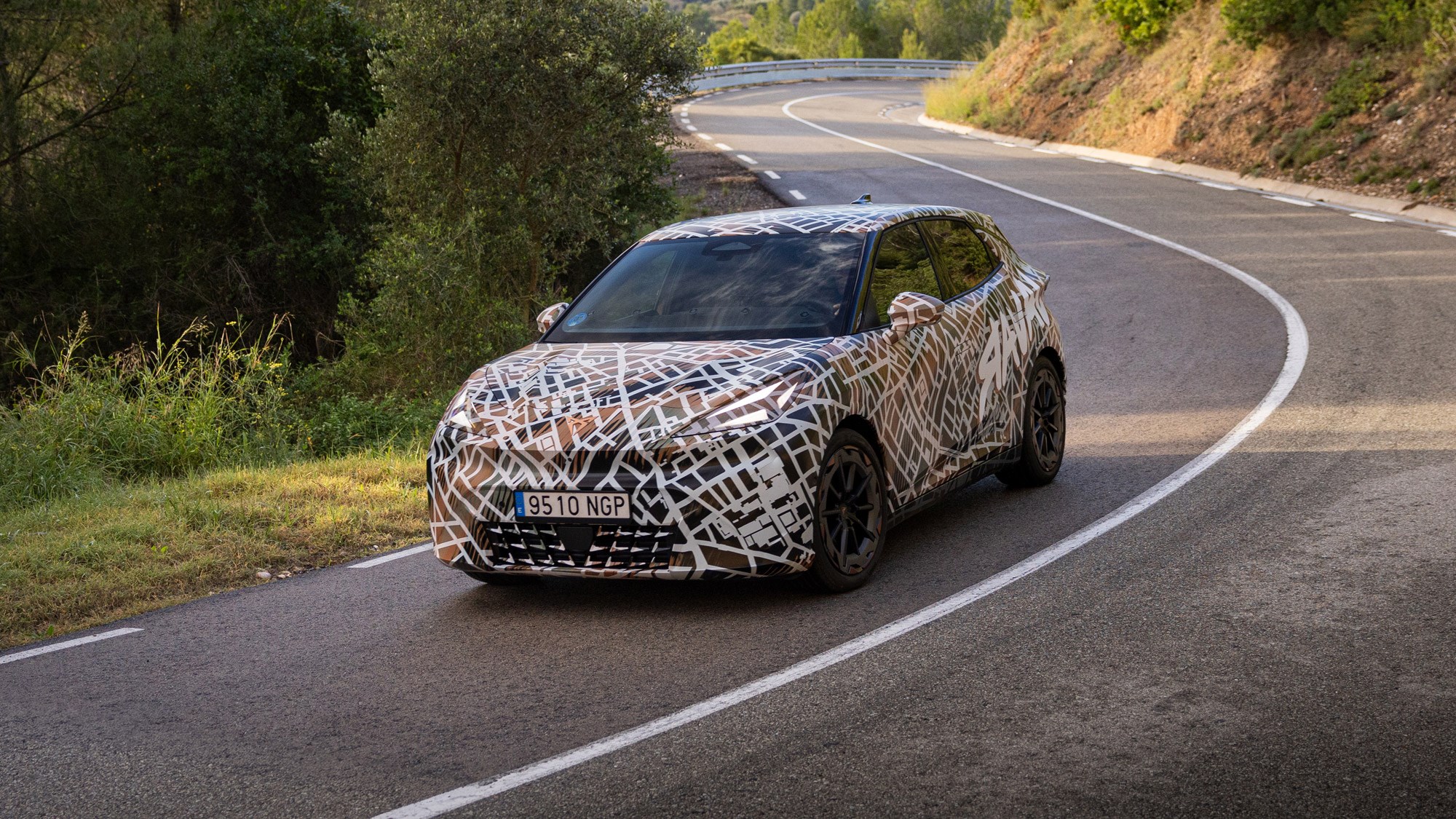
The steering is accurate and has enough weight to it, yet suits a small EV like this well. Out on the mountain roads above Cupra HQ in Martorell the Raval is a joy on the tight corners. VZ Extreme models come with lower and stiffer suspension (although with adaptive DCC), wider tyres, an ESC off mode and a limited-slip differential, too, just if you were in any doubt this wasn’t a proper hot hatch.
Performance is bang on the money, too. It’s not lightning quick but offers enough shove for quick overtakes and darting away from the lights. Cupra has also engineered in a sports sound, which turns on in Performance and Cupra modes, though can be switched off altogether in the Individual’ setting. I’d leave it on, it’s fun and engaging without trying too hard, and is also moderated based on the pressure on the accelerator pedal, meaning it doesn’t continue droning on at a high-speed cruise.
Things to improve on the Raval? Well, though the VZ Extreme is designed to live up to its name, there’s no getting away from the fact the suspension is stiff, potentially too much so around town. It’ll be interesting to see how Cupra dials it back for non-performance variants and how it’ll cope when it eventually arrives in the UK towards the end of 2026.
What’s it like inside?
The interior of our Raval remained quite literally under wraps, with only the core controls not disguised on our test car. But through the camouflage it’s easy to ascertain that it will feel a lot like any other Cupra inside, just in a smaller package. There’s familiar copper trim and lots of interesting textures that are classic Cupra. The touchscreen runs the same software as a Born and Tavascan and is responsive and easy to use. Hopefully there are a few physical buttons hiding underneath all the disguise, but I wouldn’t bet on it.
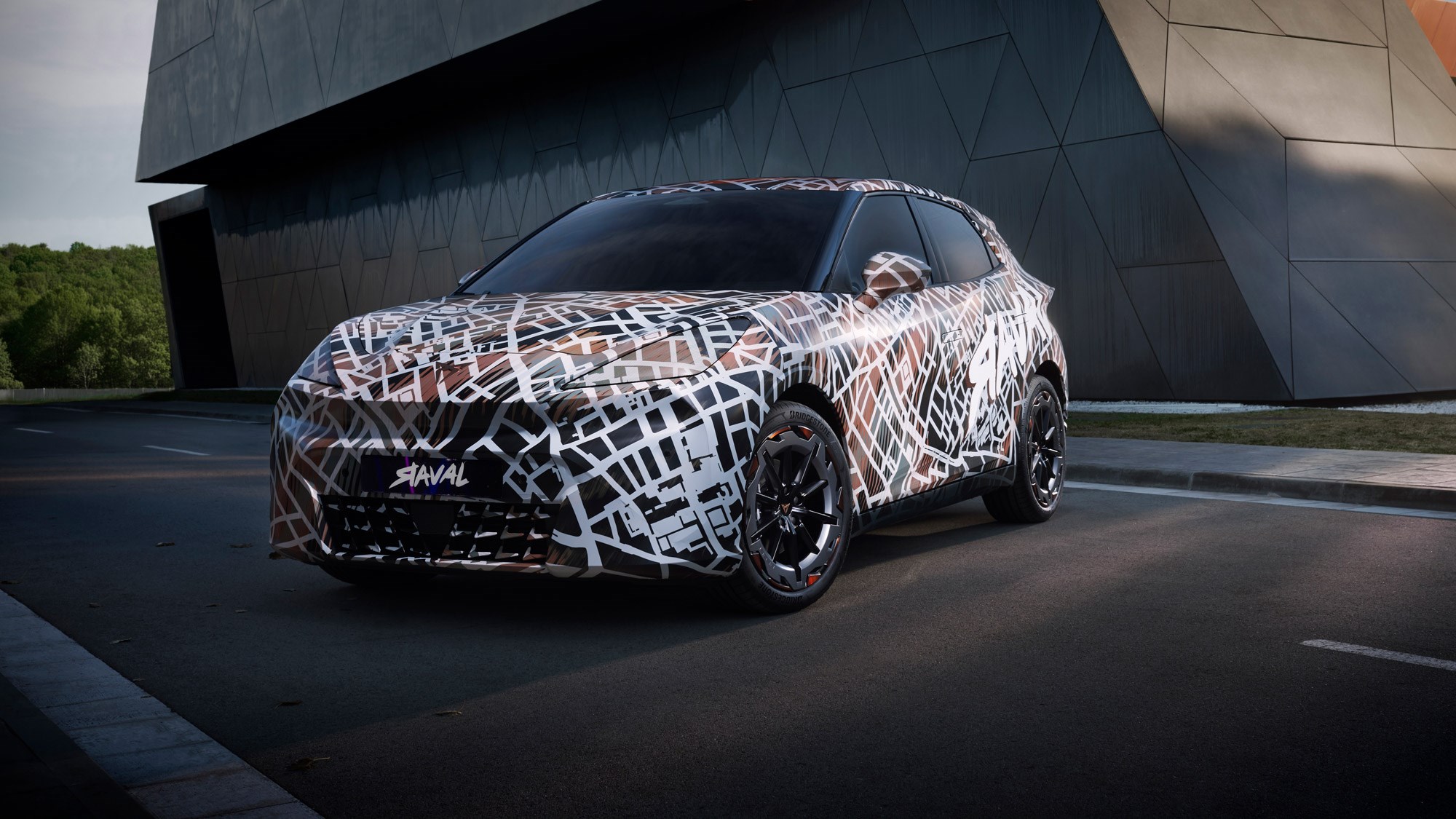
But it’s the space in the Raval that impresses most. Considering it’s the size of a supermini, rear seat space is excellent (even with the bulky bucket seats) and the boot is a great size. The false floor reveals a huge underfloor storage area that practically goes down to the underside of the car. Given its generous interior dimensions I can’t help but feel it makes the larger Cupra Born somewhat redundant.
Verdict
It’s a bold statement to say the Cupra Raval is the best electric car yet from the mainstream Volkswagen Group brands, but based on this early drive I’m confident that will be the case. The move to this updated MEB+ platform seems a far more significant step forward than it might initially seem, with big improvements made to interior space, efficiency and braking performance.
The Raval feels like a strong contender in the electric hot hatch class with its engaging driving experience and I for one can’t wait to see the end result. It seems the trick to making a good electric VW is to let Cupra do the hard work.