► Updated Seat Ibiza launches January 2026
► Mild design tweaks, same good car
► Mild hybrids come in 2027
No, really – you really are reading the review of the ‘new’ Seat Ibiza. The brand’s supermini has undergone some pretty light tweaks to keep it fresh, launching in January 2026.
As so many of the (remaining) superminis go big on tech and electrified powertrains, the Ibiza looks resolutely old school by comparison. But, to that end, does that mean old school is the best kind of school?
At a glance
Pros: Largely the same car as before; neat handling, feels well built; user-friendly
Cons: Largely the same car as before; cosy rear; base seats aren’t very comfy
What’s new?
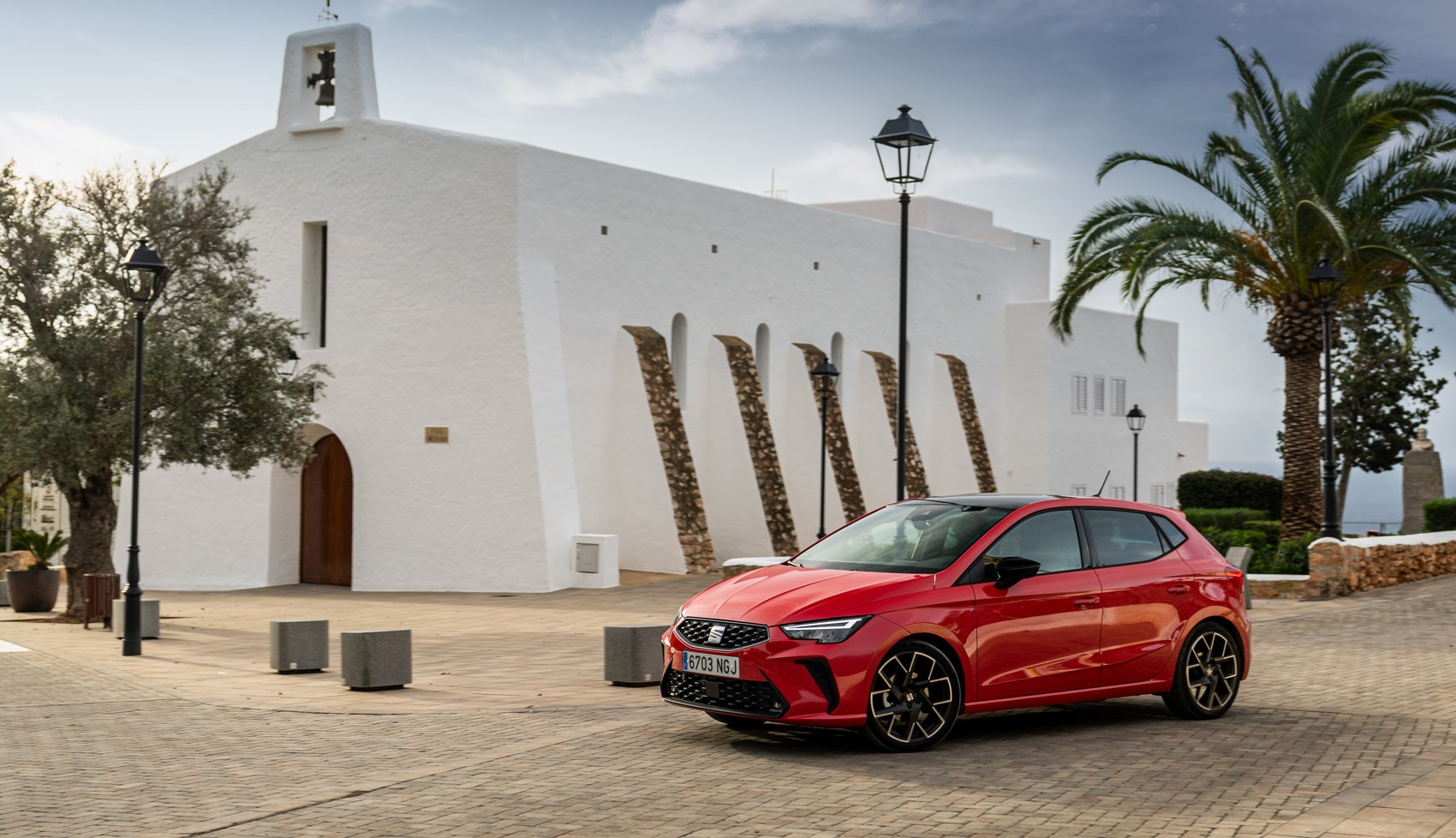
Not much, in reality. Much of this car is effectively the same car as the one that originally launched in 2017, with this version being its second facelift (the first was in 2021). The latest update is largely a visual one to keep the car fresh, with a new front end that incorporates new headlights, redesigned front and rear bumpers as well as four new wheel designs.
New seats and a couple of small trim bits make their way inside – as is a lightly refreshed version of the infotainment’s operating system – but little else has changed inside.
What are the specs?
The Ibiza is offered with a total of four petrol engines overall. The range starts with a naturally aspirated 79bhp 1.0-litre engine with a five-speed manual. Then there are two power variants of the turbocharged three-cylinder engine – 94bhp (six-speed manual only) and 113bhp (either a six-speed manual or a seven-speed dual-clutch) – as well as a 148bhp 1.5-litre four-cylinder that the UK market doesn’t get. That engine for our market is reserved for the Arona crossover – also facelifted just like the Ibiza.
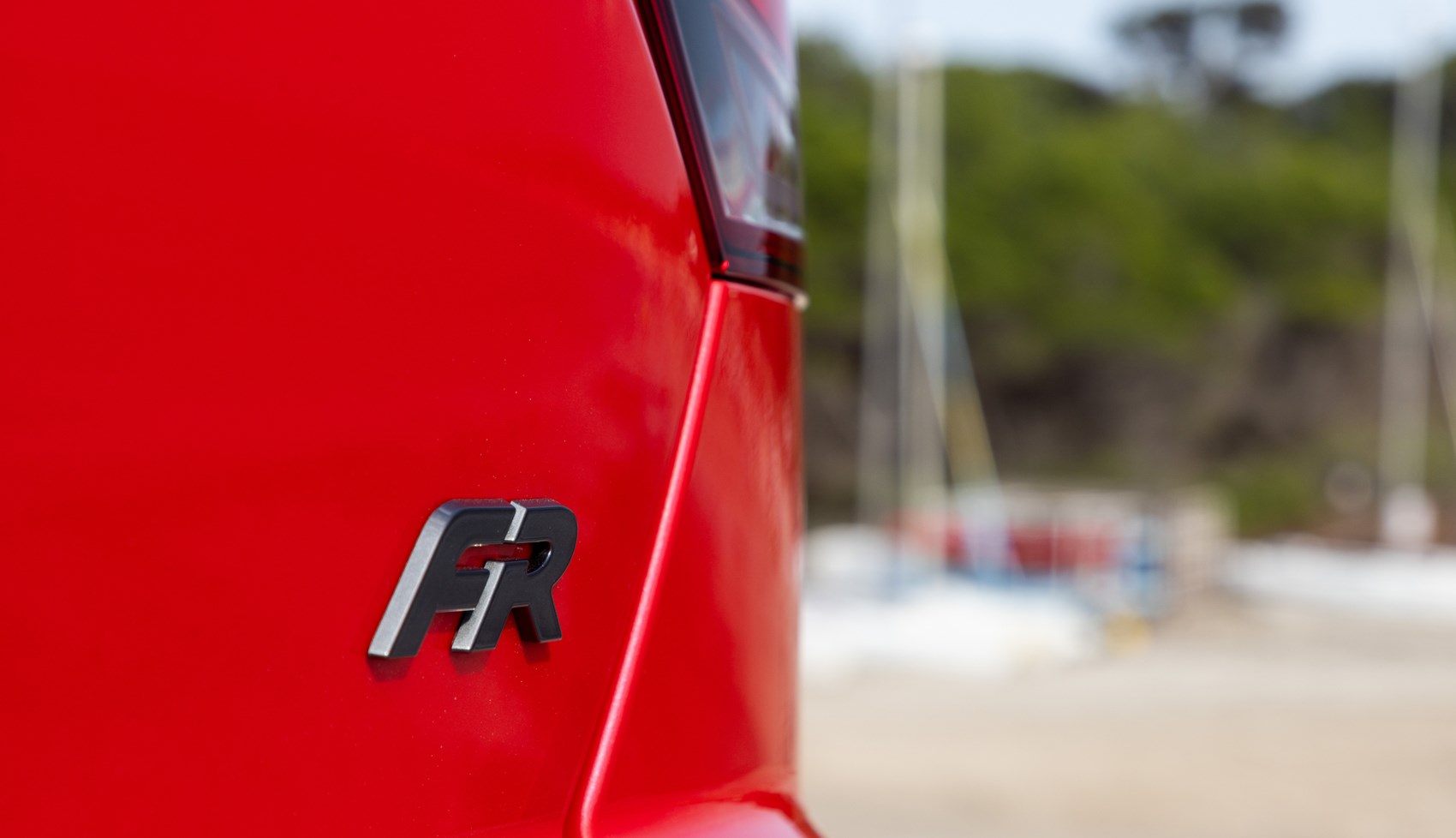
Four trims will be available in the UK: SE, SE Tech, FR and FR Sport. Every model comes with full LED headlights, metallic paint, an 8.25-inch infotainment display. Upper versions will include tech like customisable digital instruments, a larger 9.2-inch central infotainment display, drive modes and sportier wheels. You can add things like wireless charging, keyless entry and heated seats depending on what spec you choose.
As part of Seat’s (rather glacial) plans to update its range of cars, the Ibiza’s engines options will be revised in 2027 to include mild hybrid options with electrified torque boost assistance – and will likely be labelled as eTSI.
What’s it like to drive?
Our test car used the 113bhp version of the turbo’d three-cylinder, mated to the seven-speed dual-clutch transmission. The engine is fizzy has a perfectly good amount of power, doesn’t come with a lot of turbo-lag, and is reasonably quiet on the move. Sometimes the DSG auto can be a little slow to change down, but (provided you go for a model that comes with drive modes) enables throttle-off coasting when set to Eco.
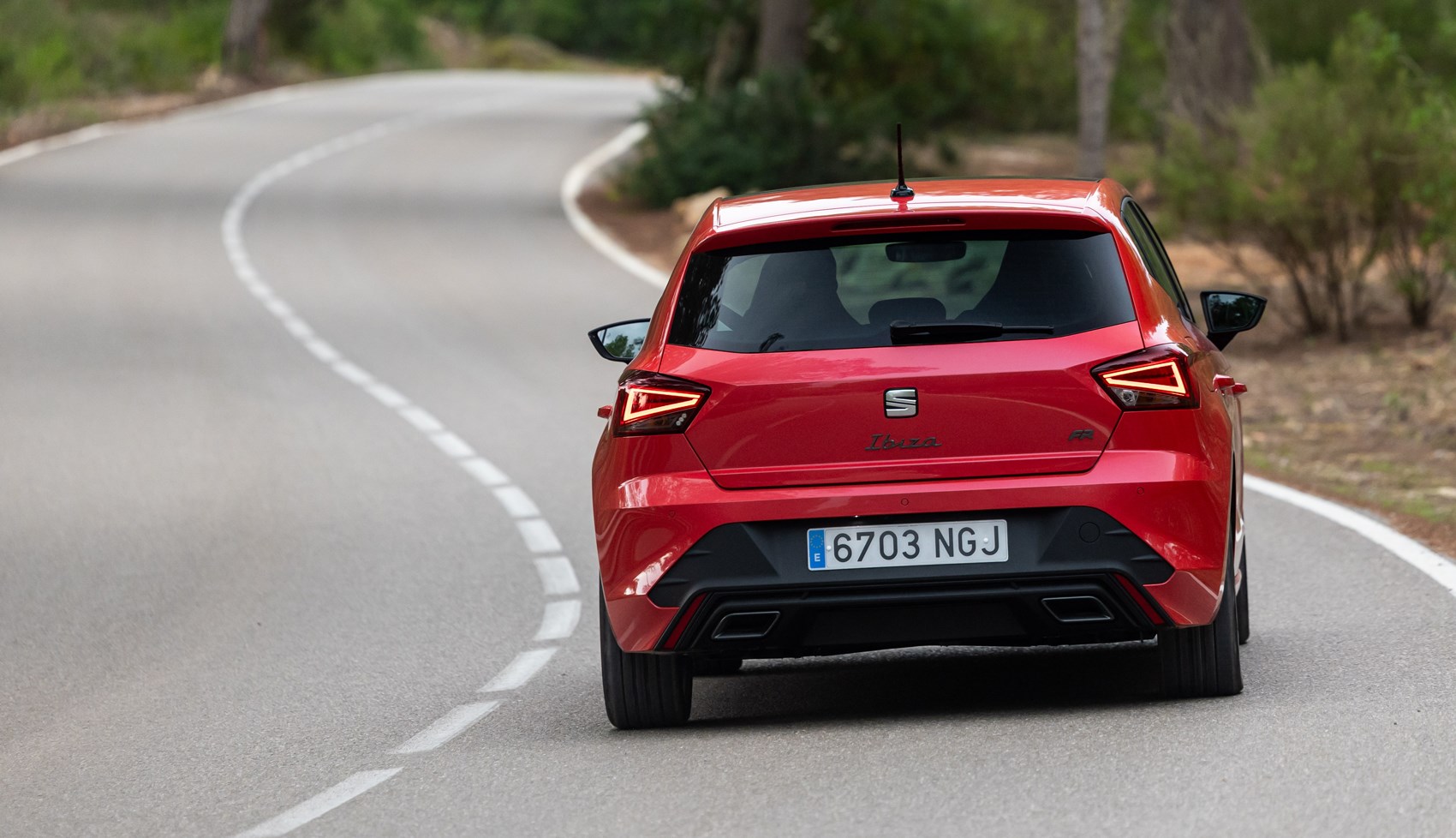
The ride is well balanced. We went pothole hunting while zipping about on the island of Ibiza and Seat’s eponymous supermini and it manages pretty chunky ones well, without a sharpness you’d expect for a car running on 18-inch wheels. Body control is good, too – this isn’t some sports car but it’s a well-balanced thing to drive.
It’s just good. There’s not a lot of fuss or frippery to it all, just a pretty well-adjusted and secure small car to drive.
What’s the interior like?
Like the Arona, the VW Polo and Skoda Fabia, the Ibiza should be praised for its relatively no-nonsense interior design and the fact that so many of the controls are still operated via physical switches. It’s neatly laid out, built well enough for a car of this type and everything feels in the right place. The infotainment screen is glossy and bright, and the digital instruments on the FR version we tried
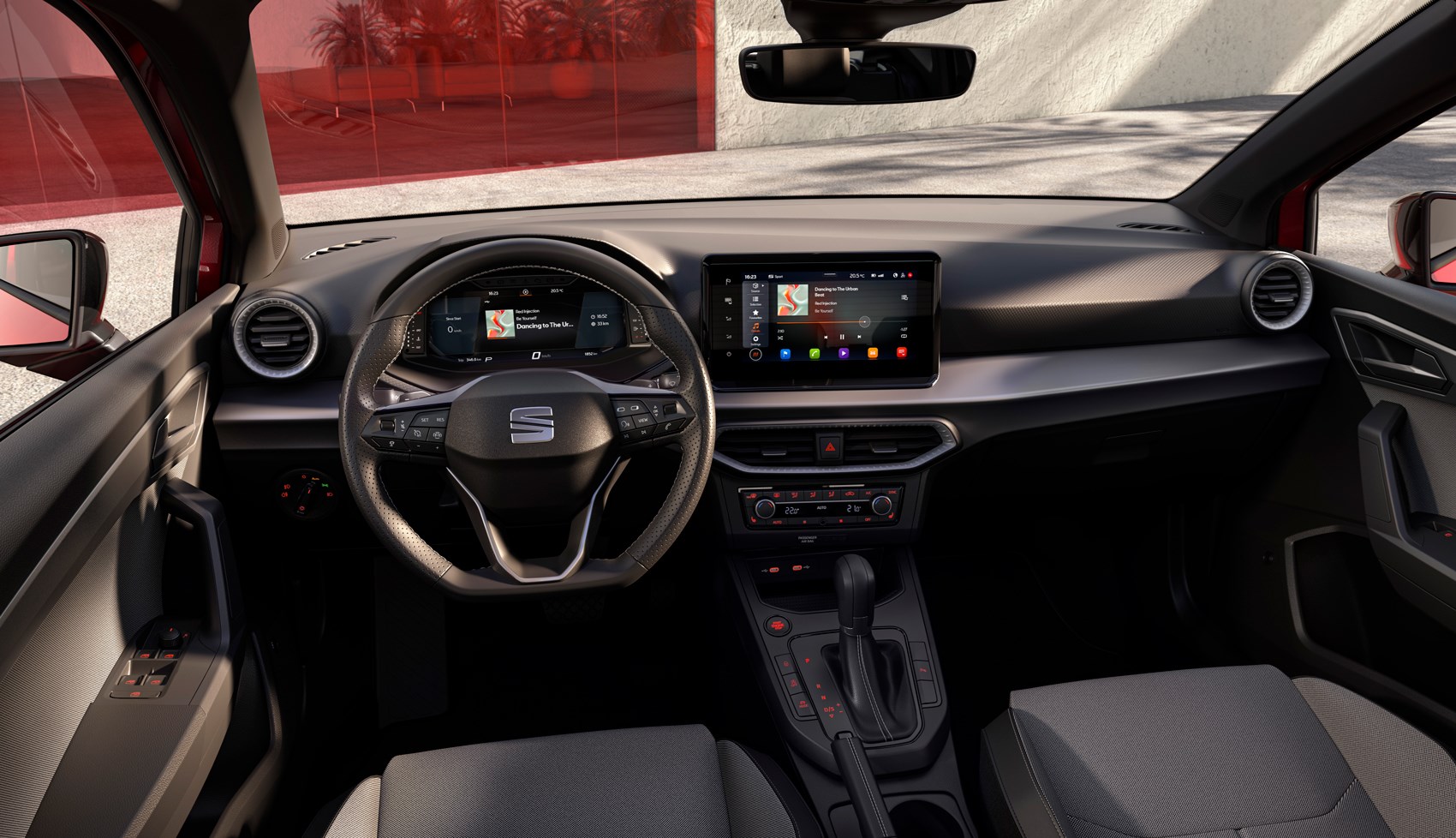
Naturally, more recent safety regulations have creeped into the Ibiza’s control systems, with a revised driver safety menu accessed via the instrument panel that allows you to tweak or turn off your driver assistance aids. Seat’s steering wheel button layout is still a bit confusing, though.
The seat designs are quite interesting, with Seat going for durable fabrics in funky looking designs. Base-spec SE models feel quite hard, mind, but – despite looking a little too over-bolstered for the chunkier among us – the FR model’s seats are comfier to spend time in.
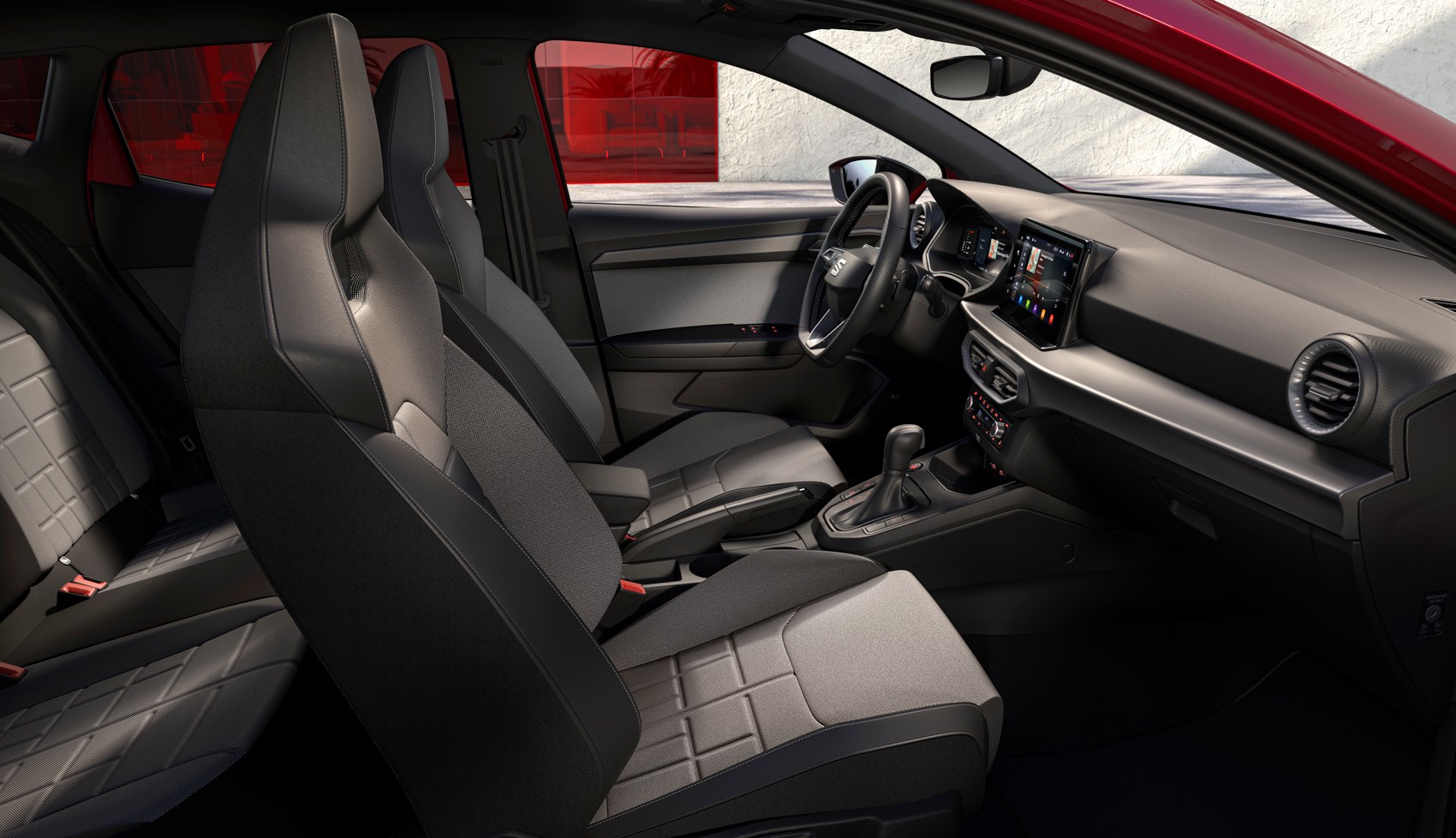
Rear legroom is cosy for adults – largely to be expected in this class of car, really – but you can wedge yourself in fine for short journeys. The 355-litre boot is pretty good for a supermini, bested only by packaging wizards Skoda with the Fabia on the same platform and the sixth-generation Clio that launches in the UK in 2027.
Before you buy
SE Tech will likely be the best balance of equipment, coming with smaller 17-inch wheels that’ll improve the ride. We’d also suggest that the 94bhp TSI engine is perfectly good enough, with the upper 113bhp offering more poke if you do more motorway miles.
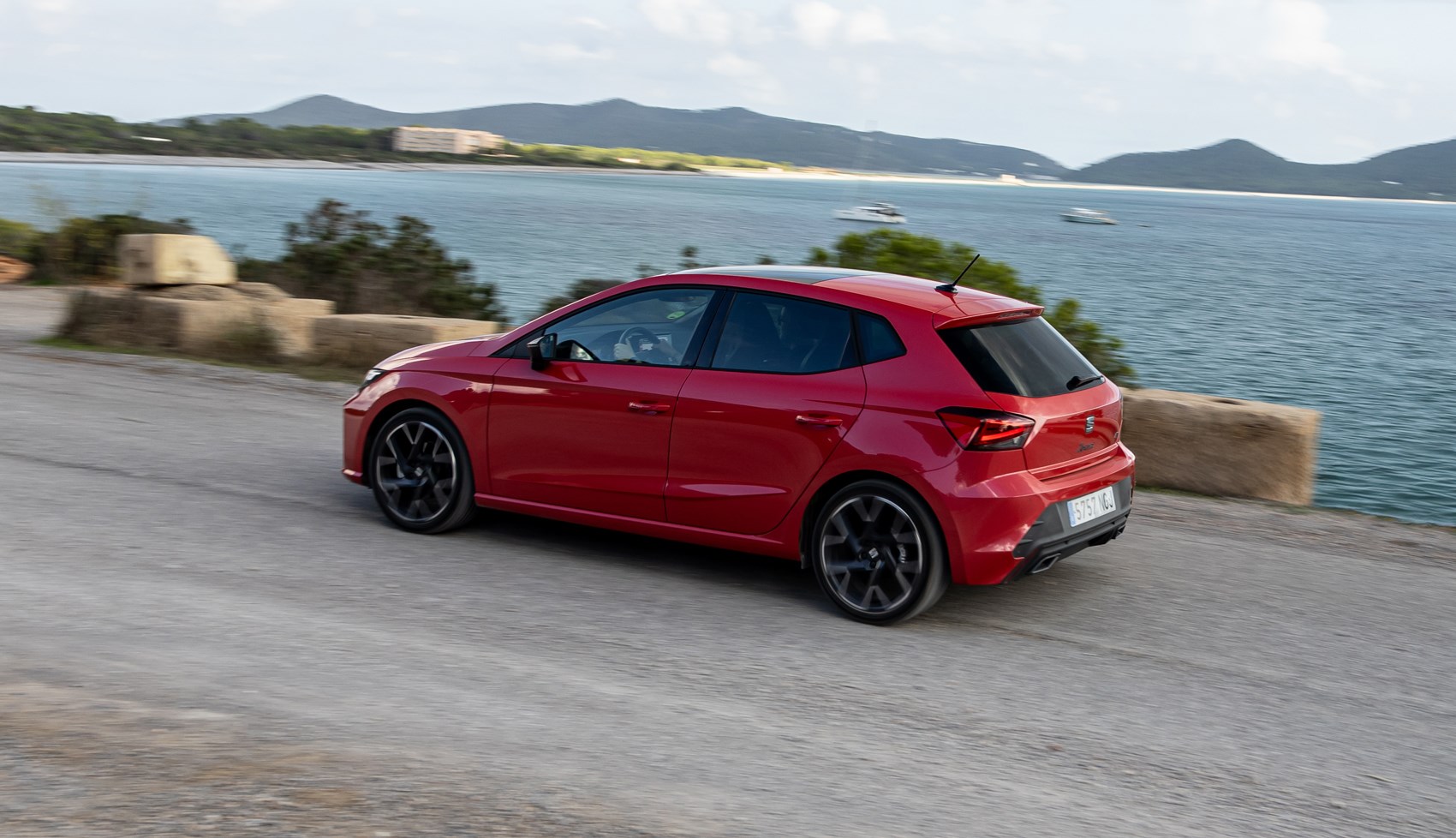
Naturally, the Ibiza has the VW Polo and Skoda Fabia to contend with in terms of direct rivals. But, as Seat rebrands to be the ‘entry’ point in the VW Group brand portfolio, we expect the asking price to undercut the Fabia – if not by much. Other competition includes the likes of the Peugeot 208 and Vauxhall Corsa from Stellantis – both good but softer dynamically than the Ibiza – as well as the Renault Clio, which has undergone a rather ugly (if tech-focused) transformation for its sixth generation.
Verdict: Seat Ibiza
You can argue the case for the Seat Ibiza not changing much as a positive and negative thing. The latest Renault Clio, for example, has had a pretty significant digital overhaul to keep the younger buyer happy – whereas the mild changes to the Ibiza haven’t technologically moved the game on.
But the overbearing positive is that this generation of Ibiza has always been a good car, and these extremely mild changes haven’t done anything to upset that. It’s still a sweet thing to potter about in, and the fact that it’s quite old school in its approach means its sensible interior ergonomics and straightforward engine options arguably make it one of, if not the most user-friendly car in its class.
Specs are for Seat Ibiza 1.0 TSI 115