► Electric hot hatches do exist in 2025
► These are our favourite pocket rockets
► Read our full reviews for more information
The slow creep to electric cars means we’re now seeing EVs in increasingly varied body styles; although most of them are electric SUVs, now you can get electric estates, electric convertibles and even electric hot hatches. Powerful, compact and remarkably fizzy, electric hot hatches very much make up the second wave of electric cars – and now there are a good amount to choose from.
To be clear, if you’re expecting pops, bangs and lift-off oversteer, we’d recommend looking elsewhere. That’s because electric hot hatches don’t provide the same experience as their ICE counterparts, but an altogether new one: they’re more like heavy go-karts that defy physics with supercar-worrying torque.
The best electric hot hatches at a glance:
- Best electric hot hatch for cornering: Abarth 600e – Find out more
- Best electric hot hatch for style: Alpine A290 – Find out more
- Best electric hot hatch for all-round activities: Cupra Born VZ – Find out more
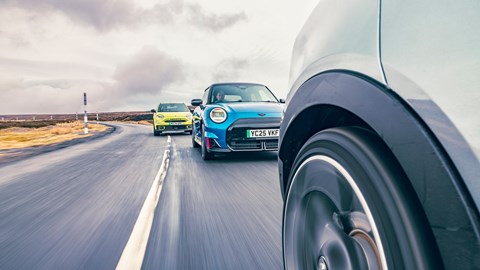
The best electric hot hatches on sale in 2025
On this page you’ll find the best hot hatches we’ve tested, from Mini to Cupra – and we’ve also added a few wildcards for a bit of spice. With that in mind, keep reading for our top recommendations.
Abarth 600e
Best for limited-slip diff magic and cool colours
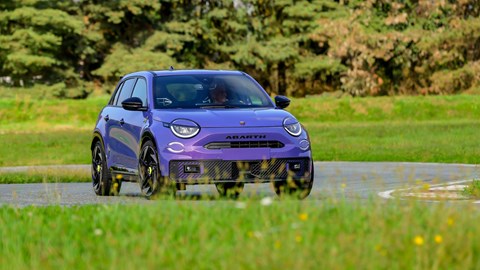
Pros: Aggressive looks, strong performance, likeable character
Cons: Poor range, base model interior feels bare
Abarth’s 600e is one of the best compact electric cars on the market. It comes in two trims, 237bhp or 278bhp, it can go from 0-62mph in as quick as 5.85 seconds – but it’s about a lot more than just straight-line speed.
Abarth’s engineers have tweaked the chassis, steering and brakes to give the hottest 600e available far more performance and precision in the twisty stuff. Combine it with a clever JTKEKT limited-slip differential, and it also has great traction for punching out of corners. There’s hardly any torque steer either, which is very unusual for a hot hatch.
Inside, the 600e is relatively charming and thanks to a bold body kit, it certainly has more presence than its Fiat sibling too. Our only issues? Its 200 mile range isn’t that competitive and could be lower in the real world. In addition, the interior in the cheaper model is pretty barren.
Find out more in our full Abarth 600e review
Also try: the Alfa Romeo Junior Veloce, which also puts out 278bhp and uses the same LSD as the Abarth.
Alpine A290
Best for retro vibes
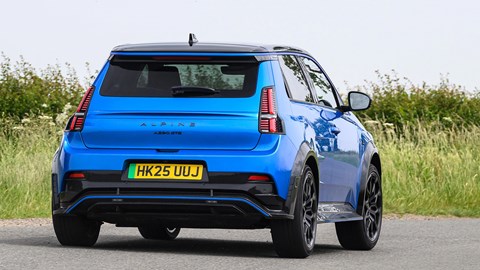
Pros: Characterful looks, real-world pace, neat handling, strong brakes
Cons: Powertrain is not rewarding, no cupholders
In many ways the A290 is job done for Alpine. As a performance car, it’s superior to the Abarth 500e and MINI Cooper Electric and provides a neat step up for those that the looks and feel of a Renault 5 but with added motorsport credentials.
The first thing that stands out about the A290’s driving experience is that, by the warped standards of EV performance cars (and EVs in general for that matter), it’s not that quick. 0-62mph takes 6.4 seconds in the 217bhp model, rising to 7.4 seconds in the lower-powered car.
However, the the driving position is well-judged and – in top-spec GTS there’s Napa leather (sustainable, natch) aplenty – plus physical climate control dials (bravo, Alpine) and a responsive and easy to navigate touchscreen.
Cupra Born VZ
Best for electric fun from the VW Group
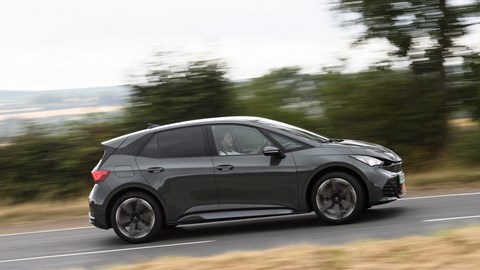
Pros: Premium looks inside and out, fast, direct steering, lots of fun
Cons: Brakes could be better, why wasn’t the regular Born this good?
The standard Cupra Born styles itself as a more premium, exciting version of the Volkswagen ID.3 – but the VZ is the car it should’ve been all along. The specs tell half the story: power increases from 227bhp to 322bhp, torque swells from 229 to 402lb ft, and the VZ’s 5.6 second 0-62mph time is a second quicker than standard, too. Top speed meanwhile creeps up from 99mph to 124mph.
The other half of the story comes in the form of significantly improved driving dynamics. The steering is more precise, more direct and offers more feedback – while the Born VZ’s brakes are easier to modulate than before. Simply put, the point at which regen moves over to physical braking has been significantly refined.
The result is a car with enormous grip, and one that inspires confidence and asks to be hustled at every corner – whether you’re in the mountains of Barcelona where we first tested it, or back home in the UK. Just as well, then, that the interior’s new Sabelt sports seats are both comfy but also supportive when pushing on.
To find out more, read our full Cupra Born VZ review
Mini Cooper SE electric
Best for performance and looks, Mini style
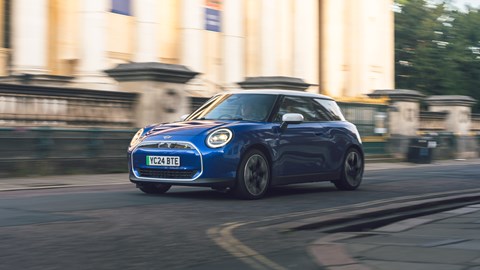
Pros: Classic looks get updated, nippy performance, Go-Kart mode is fun
Cons: Very little
Unlike its predecessor, the Mini Cooper Electric was designed from the ground up to be an electric car, and it’s all the better for it. We’ll get to the design later, but first the performance: the Cooper SE’s 215bhp is good for 0-62mph in an Abarth-beating 6.7 seconds. And as with all EVs, that figure doesn’t really describe the feeling of electric slingshot speed to 30mph.
The Cooper SE handles well but isn’t skateboard stiff like some other EVs. Munich’s engineers have tuned suspension that walks a fine line between relaying information about the road and being fidgety – and in practice it’s an ideal balance.
Better still is the premium interior, which looks to the future but with the style you’d hope for from a Mini. A highlight of our Cooper SE long-termer has to be the Mini’s Go-Kart mode. It replaces engine noise with a Star Wars-style propulsion sound, and even makes a pleasing alternative noise for energy regen.
Mini also does a specific EV hot-hatch, the JCW, but we felt it compromises too much on usability and comfort. It’s a little too rigid, and doesn’t do enough over the standard car to warrant the discomfort. We’d get the standard Cooper every time.
To find out more, read our full Mini Cooper SE review
And now a wildcard…
There is one electric car out there that can’t really be classed as a hot hatch, but does invoke the spirit of them. They can’t go into the regular list, because that’d be cheating, but we felt it should be mentioned at least.
Hyundai Ioniq 5 N
Best for family-friendly space and supercar performance
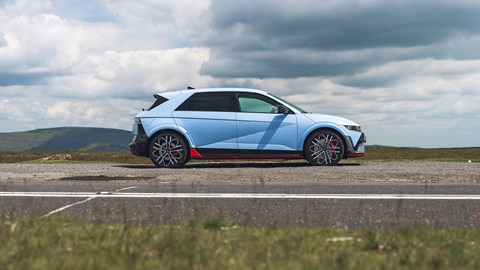
Pros: Retro-modern looks, supercar performance, lots of interesting tech
Cons: Not actually a hot hatch at all…
The Hyundai Ioniq N is pushing the realms of being a hatchback (it’s so big, it nearly qualifies as an SUV), but it gets a mention here for its deceptive, hatch-alike looks and physics-bending performance. Hyundai’s designers have done their best to make it look like a futuristic hybrid of a DeLorean and a Golf GTI, when in fact it’s the size of a medium-sized crossover.
Still, despite the size it can move with deceptive ease: two e-motors make 641bhp and 546lb ft of torque for a 0-62mph sprint of just 3.4 seconds, while a tonne of chassis management keeps the actual tonnes in check when cornering. We’ve driven it on the road, but also tested it around Brands Hatch and found it to be pretty nimble despite its 2.2-tonne kerbweight.
It looks like a classic hot hatch too: lowered and covered in vents, louvres and diffusers – and most of them are functional. The Ioniq 5 N is 20mm lower and 50mm wider to make space for some girthier tyres (275/35 21-inch Pirelli P-Zeros) and the stance is just perfect. Even its N seats are 20mm lower, connecting you with the driving experience in a very authentic way.
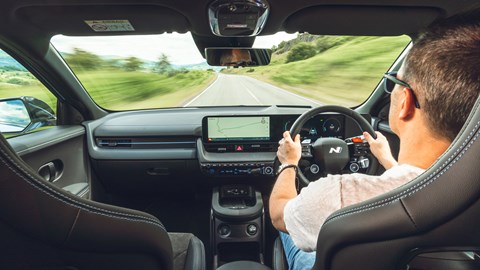
Inside, there’s a range of tech and some interesting performance-focused features. Find the N menu on the infotainment screen and you can tweak the settings of the electric motors, steering weight, damper stiffness, electronic limited-slip differential and more.
Hyundai’s N e-Shift function is worth a special mention: it turns the paddles behind the wheel – usually used to adjust regen settings on EVs – into ‘gearshift’ paddles that cycle through a software-only eight-speed DCT transmission, letting you ‘rev’ up and down through virtual gears. Sounds naff, works brilliantly.
To find out more, read our full Hyundai Ioniq 5 N review or consider the new Genesis GV60, which is much like this car in a more luxurious package.