► We drive the rag-top Bentley Continental GT
► Immense speed, sublime cabin, questionable practicality
► Are the striking looks and extra headroom worth the sacrifice?
Bentley has done a fantastic job of reinventing the Continental GT. When the original car was launched at the turn of the millennium, it quickly became the go-to status symbol for premiership footballers. The trouble is, that cheapened the sophisticated driver profile the brand was hoping to curate for the car.
Over the last 20 years, though, a steady stream of styling tweaks and engineering improvements have pushed the nation’s windbag players into brightly coloured Range Rover SVRs and murdered-out Mercedes G-Wagons. And that’s a good thing. It finally feels like Bentley is getting back to its roots.
That change in attitude means Bentley’s grand tourer can once again compete in the same space as Aston Martin and Ferrari. And I love it – so much, in fact, that the coupe is now fighting for the top spot in my list of the best cars ever made.
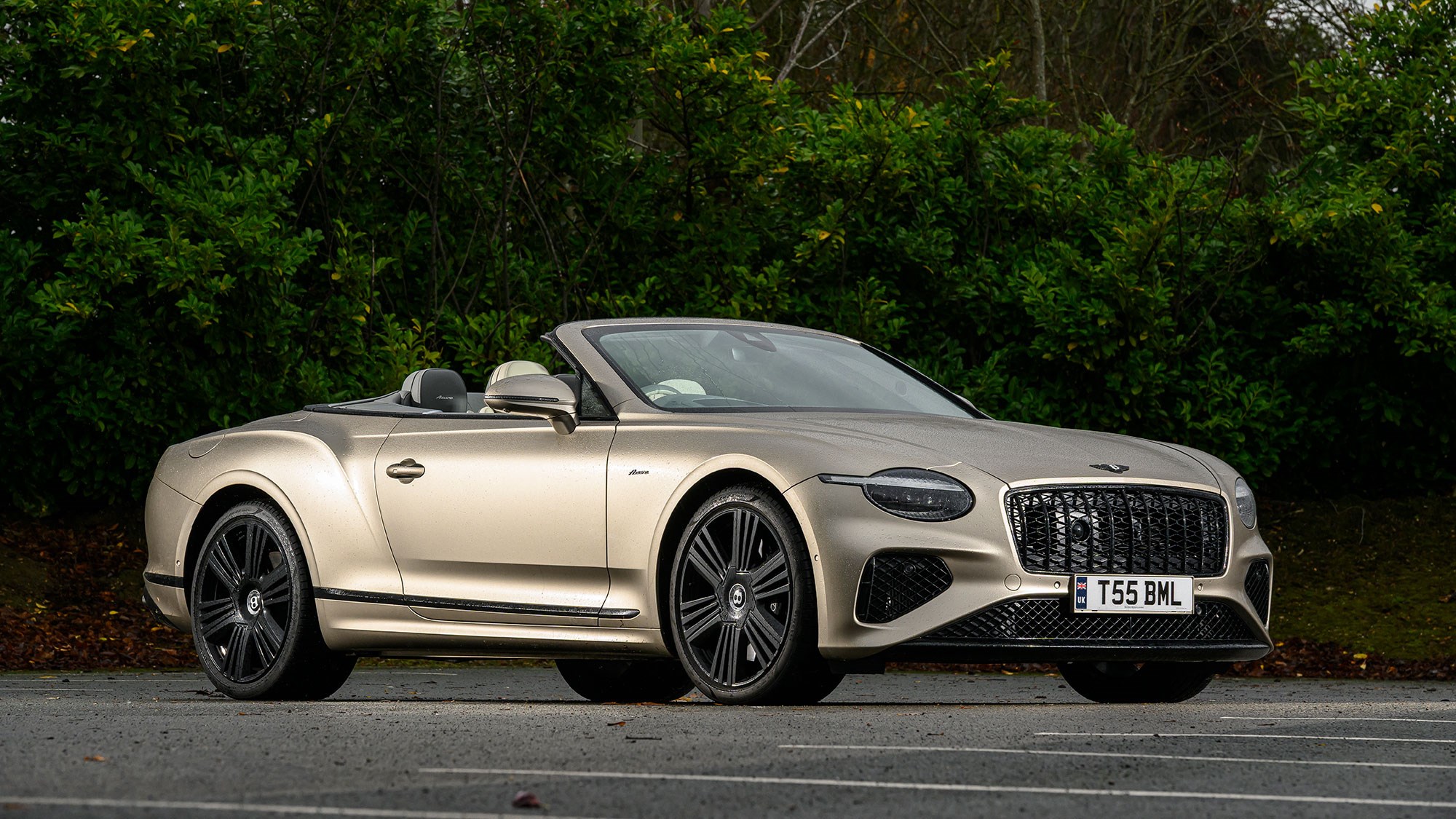
This isn’t the coupe, though. This is the Bentley Continental GT Convertible – and it presents a problem. Even an optimistic, newly qualified automotive engineer will tell you there are some serious compromises to be made when you take an angle grinder to the roof of your two-tonne super coupe.
Surely, though, if any company can engineer its way around that, it should be Bentley. Right? Scroll down to find out whether it’s cracked the code, or whether you’d be better off spending your money on an Aston Martin DB12 Volante.
At a glance
Pros: Immense speed, wonderful interior, phenomenal agility, incredible build quality
Cons: Awful boot capacity, slightly compromised comfort, surprisingly wobbly
What are the specs?
The car in these images is the common or garden Continental GTC Azure. It has a detuned version of the GTC Speed‘s turbocharged 4.0-litre V8 PHEV system with 671bhp and 686lb ft of torque, rather than 771bhp and 738lb ft. The depravity.
Despite being so down on power, it can still shunt this mobile palace from 0–62mph in 3.9 seconds before running into an electronic buffer at 168mph. Bentley also reckons it can do 50 miles on electric power alone and, when you do need to use the engine, you’ll have a maximum combined range of 520 miles.
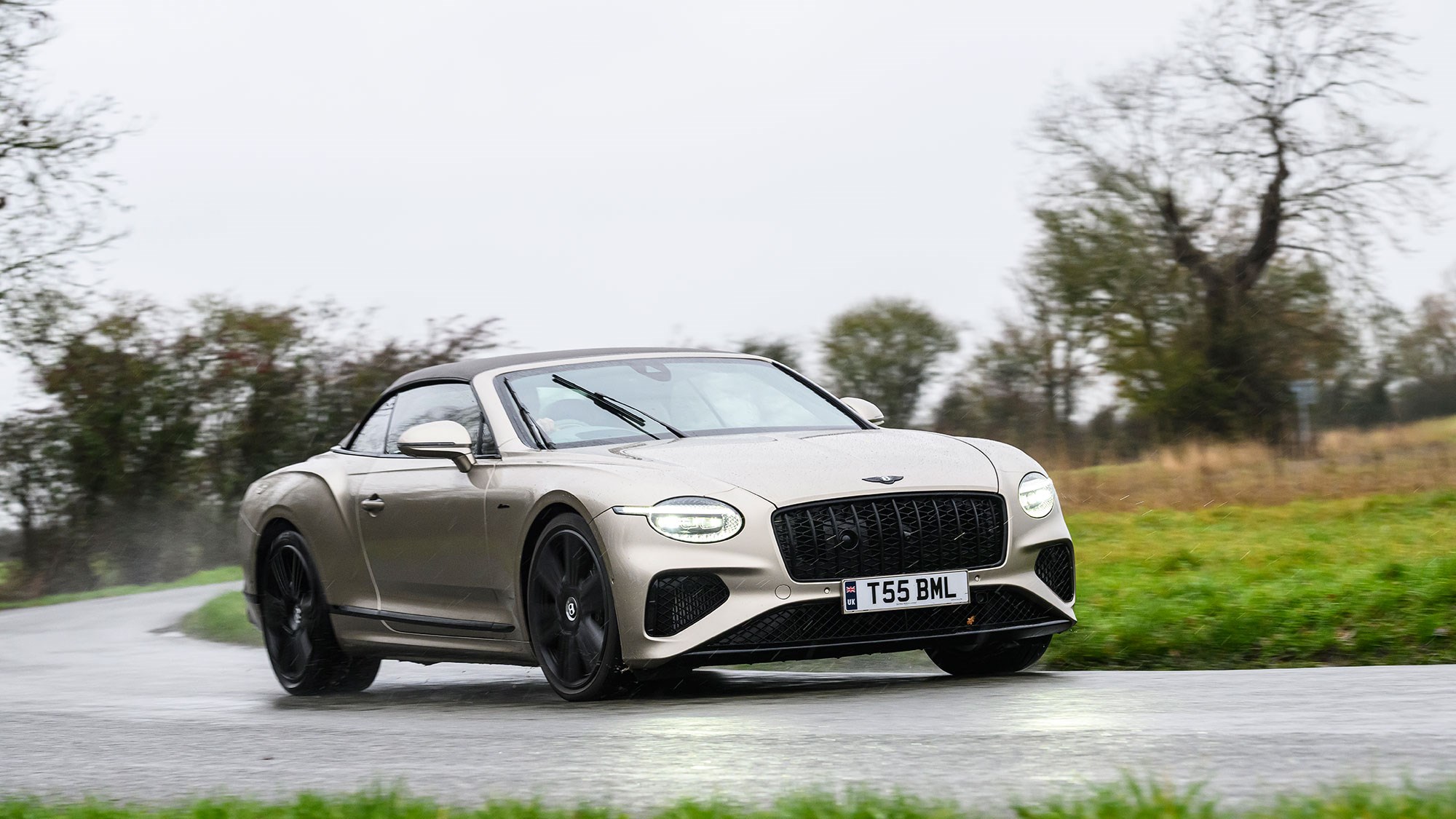
It’s undeniably fast, but there are some real-world drawbacks to the system. For example, the battery pack that powers the electric motor needs to live somewhere – and the only place Bentley had for it was under the boot floor. That’s dented boot capacity.
Team that with the extra space needed for the GTC’s folding roof and you’re left with a boot capacity of just 134 litres. That’s about half of what you get from the Renault 5 supermini – and almost all the GTC’s boot is occupied by charging cables. That’s not ideal for touring.
How does it drive?
It’s not quite as sorted as I hoped. That’s not to say it isn’t good – it’s still hilariously quick and surprisingly nimble for its size – but you can easily notice the compromises Bentley has been forced to make. This is especially disappointing because cheaper fast convertibles, such as the BMW M4, manage to hide them better.
What’s arguably worse is that these compromises aren’t only noticeable on the ragged edge of performance. You encounter them at normal speeds, which means you’ll be reminded of them every time you steer the car off your driveway.
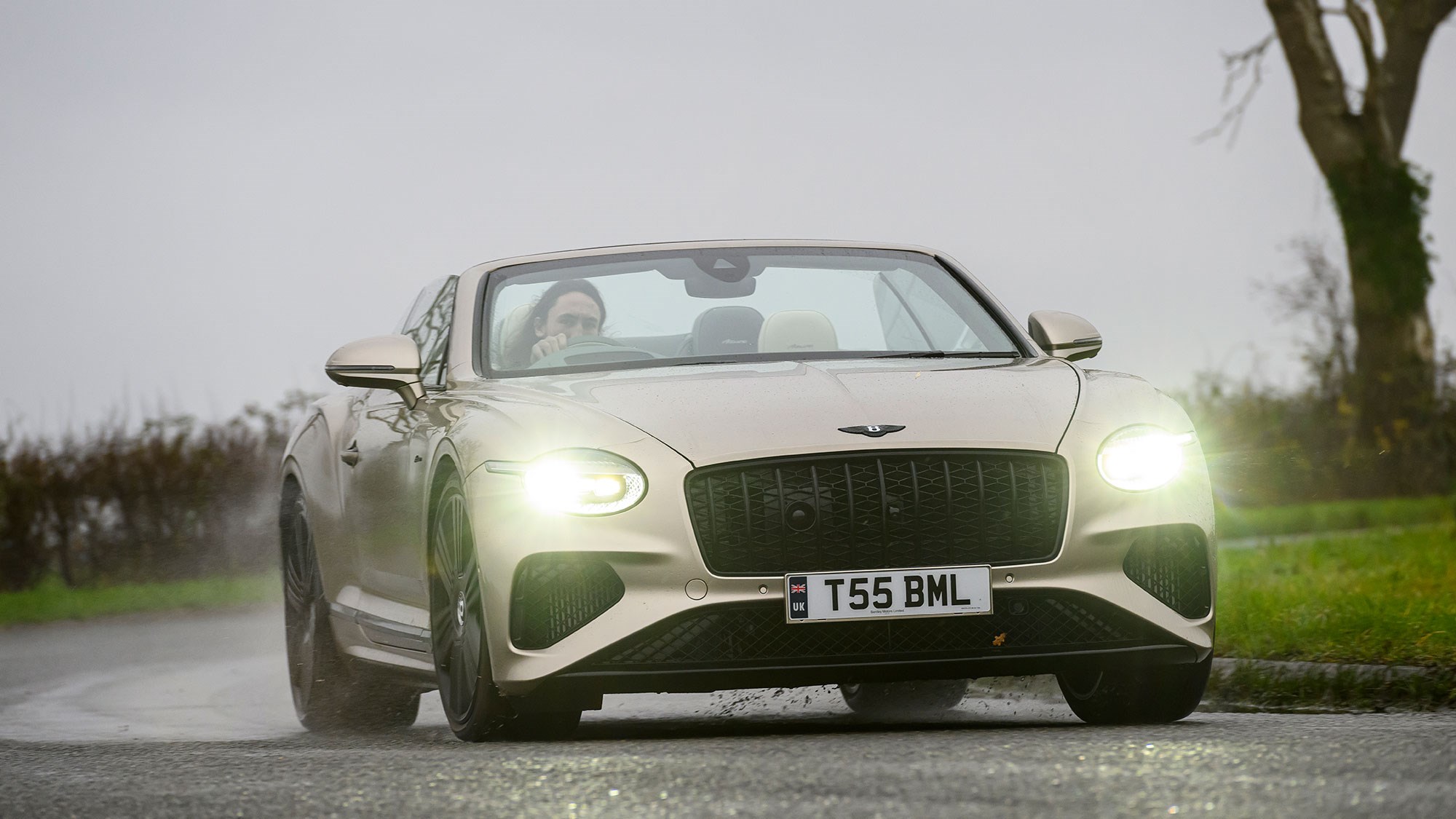
My biggest issue is the amount of flex in the chassis. Pass over some cross-axle bumps and you’ll feel the floor pan twisting beneath you. There’s also a noticeable amount of scuttle shake on badly surfaced roads. Granted, it doesn’t rattle around like a rusty old MX-5 but, for a car that costs the same as an average three-bedroom house, I expected it to be as steady as a rock.
Plus, no matter how much insulation that rag-top has, it isn’t as refined as the coupe. It does a valiant impression, but there’s more wind noise. It’s also ever-so slightly less comfortable than the coupe as it’s carrying an extra 186kg. That means the dampers are working a harder to control even more heft, and the car doesn’t breathe quite as gently with the road. Again, that’s not what you want for touring.
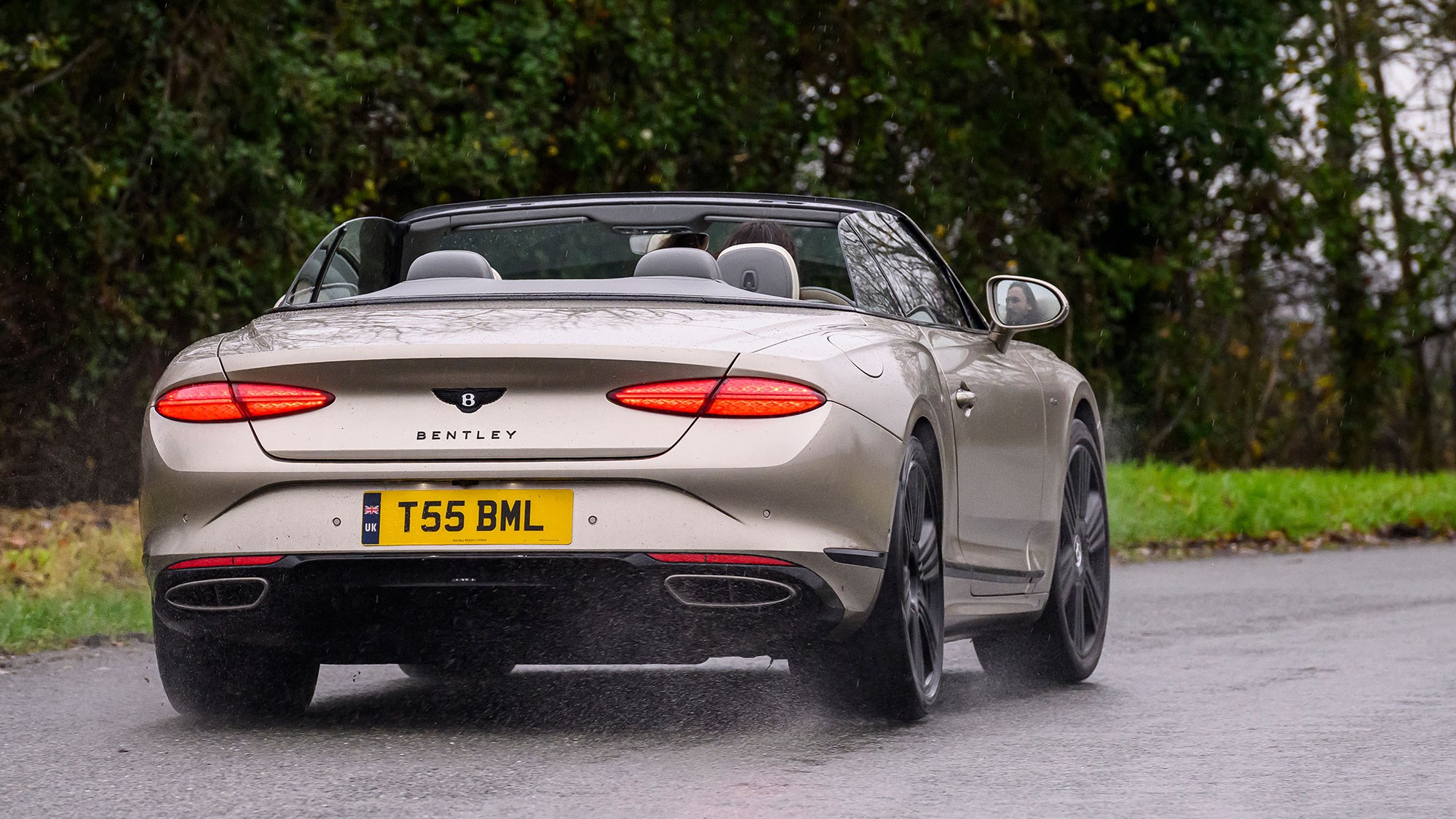
In Bentley’s defence, though, there’s an awful lot to like about the Continental GTC’s driving experience. That engine is just as good here as it is in the coupe. Even though the Azure has the ‘entry-level’ engine, it’s still fast enough to claim your licence within your first hour of ownership.
It’s deceptive. There’s an immense amount of torque from barely 1,500rpm – thanks to the electrical assistance – and because the engine isn’t screaming and the gearing is so long, it’s too easy to stray into triple digits. The wind whipping through your hair makes it easier to stay legal in the GTC than the coupe, but you still need to keep a tight leash on your right foot.
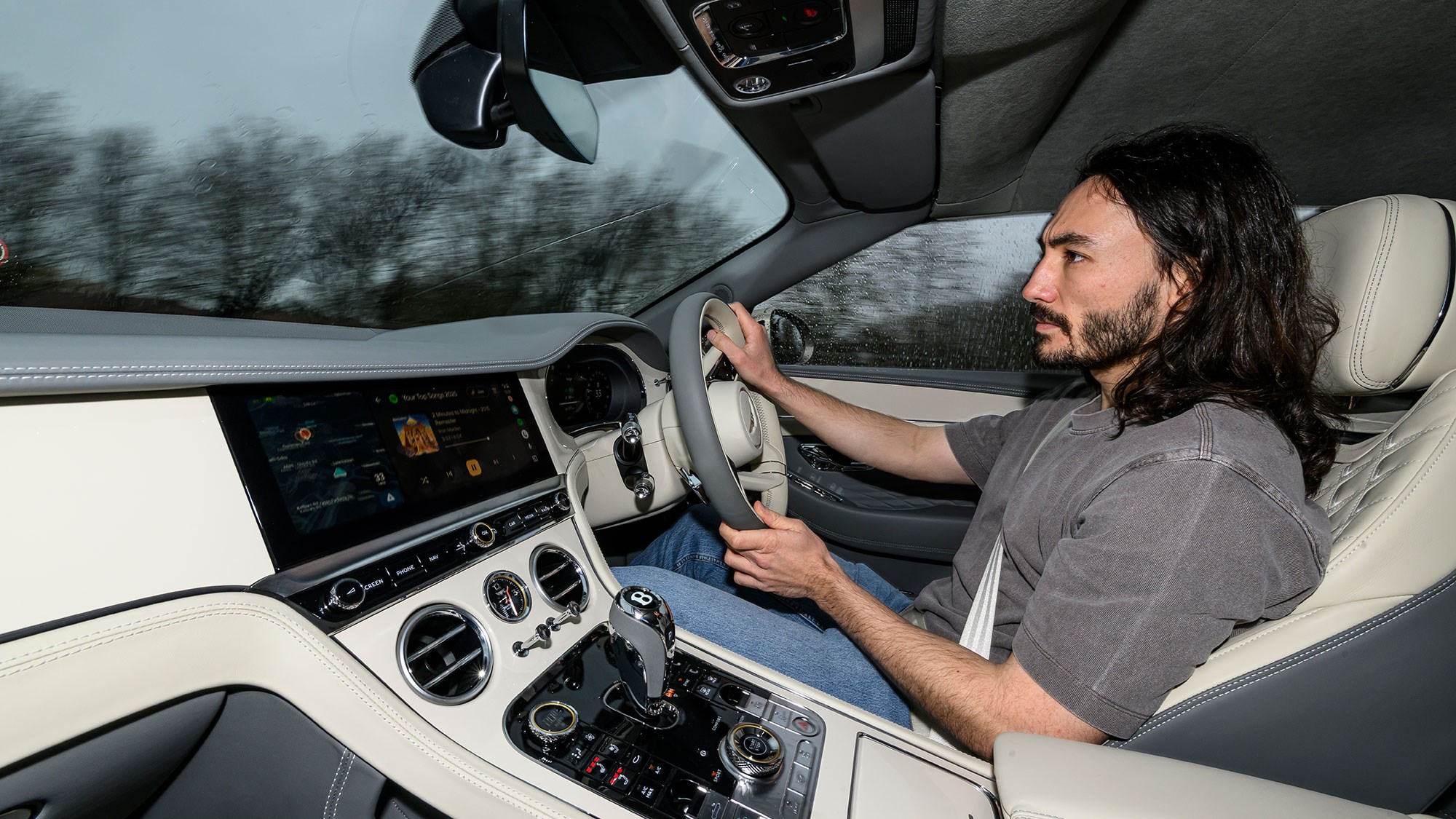
Bentley also did a cracking job of making the engine and the electric motor play nice. The blending between the two power sources is immaculate. There’s no jerkiness at low speeds and no lag when you floor it, as the computers struggle to decide how to mash the extra torque through the gearbox. The grunt is always there when you want it.
There’s an extra benefit to the convertible I haven’t yet mentioned. With the roof down, you can better hear the filthy noises flying out of the exhaust. In Sport mode, the engine sounds lumpy and coarse under hard acceleration, almost like an old muscle car. It’ll also parp and fart if you change up with your foot buried in the firewall, which is very amusing.
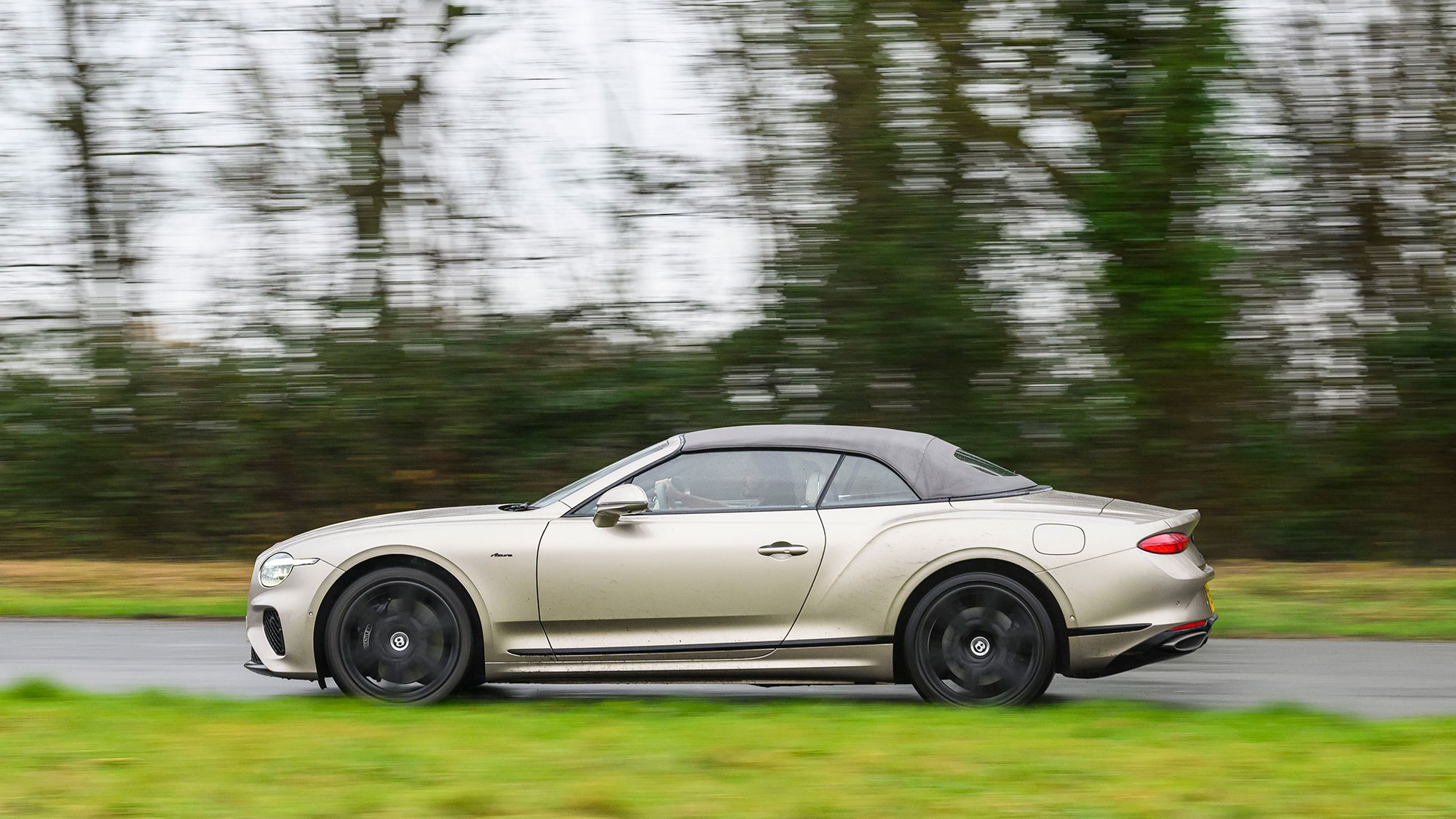
I like Bentley’s rear-wheel steering system, too. It makes this 2.6-tonne land yacht nose into corners with tenacity. And, because you also get four-wheel drive, it takes an awful lot of commitment and a very wet road before the rear end will let go, which is exactly what you want in something designed for crossing continents. Just remember to pack light if you are planning a trip to Europe.
What about the interior?
It’s the same as the coupe, which is to say sublime. The most significant difference is a small button on the centre console that activates a neck heater in the headrest to keep the chill off your shoulders when you’re driving with the roof down in winter.
As the images in this review prove, I tested the car with the roof down in winter. But with the Bentley’s neck scarf, heated seat and heated wheel engaged, I was perfectly warm. I was only in shirt sleeves, too. In fairness, my temperature tolerances have been conditioned by Cumbria’s perpetually frozen climate, but that’s still impressive.
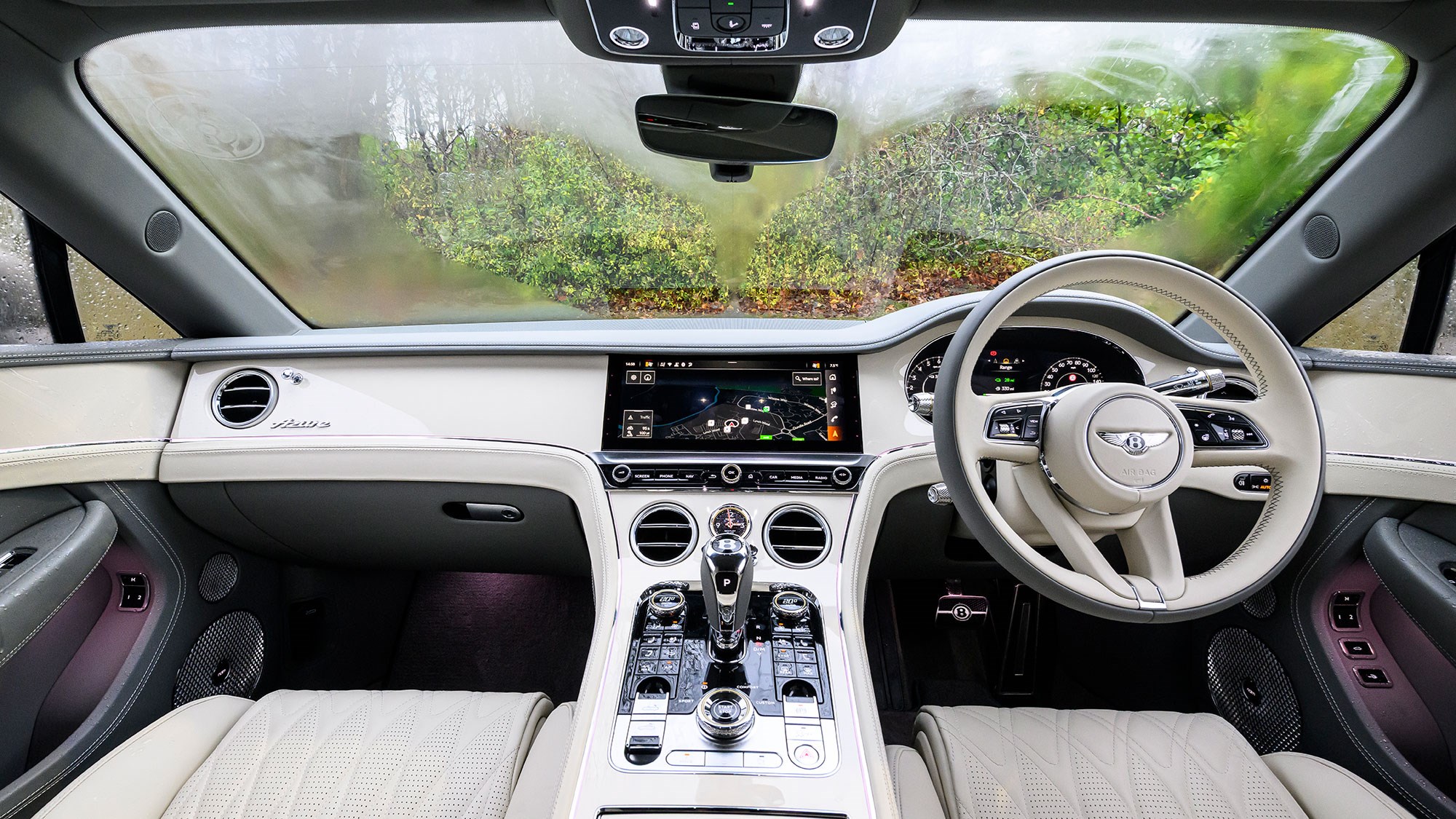
I love the cabin layout, too. The Continental GT hasn’t succumbed to the touchscreen craze plaguing price peers such as the Range Rover and Porsche Panamera Turbo S E-Hybrid. You get a switchboard of dials and buttons to operate everything from the climate controls to the seat massagers – and I love it. It’s far easier to find a physical button using muscle memory than it is to dig around in a fathomless pit of infotainment sub-menus.
Quality is similarly top-notch, but I wasn’t stuck on my test car’s trim. I know it’s weak-willed for a car reviewer to pass judgement on how something looks, but I think it’s an important point to make in this instance as you can easily ruin the GTC’s cabin by going too daft with the spec. Which you will do. Bentley’s configurator is too tempting to not fiddle with.
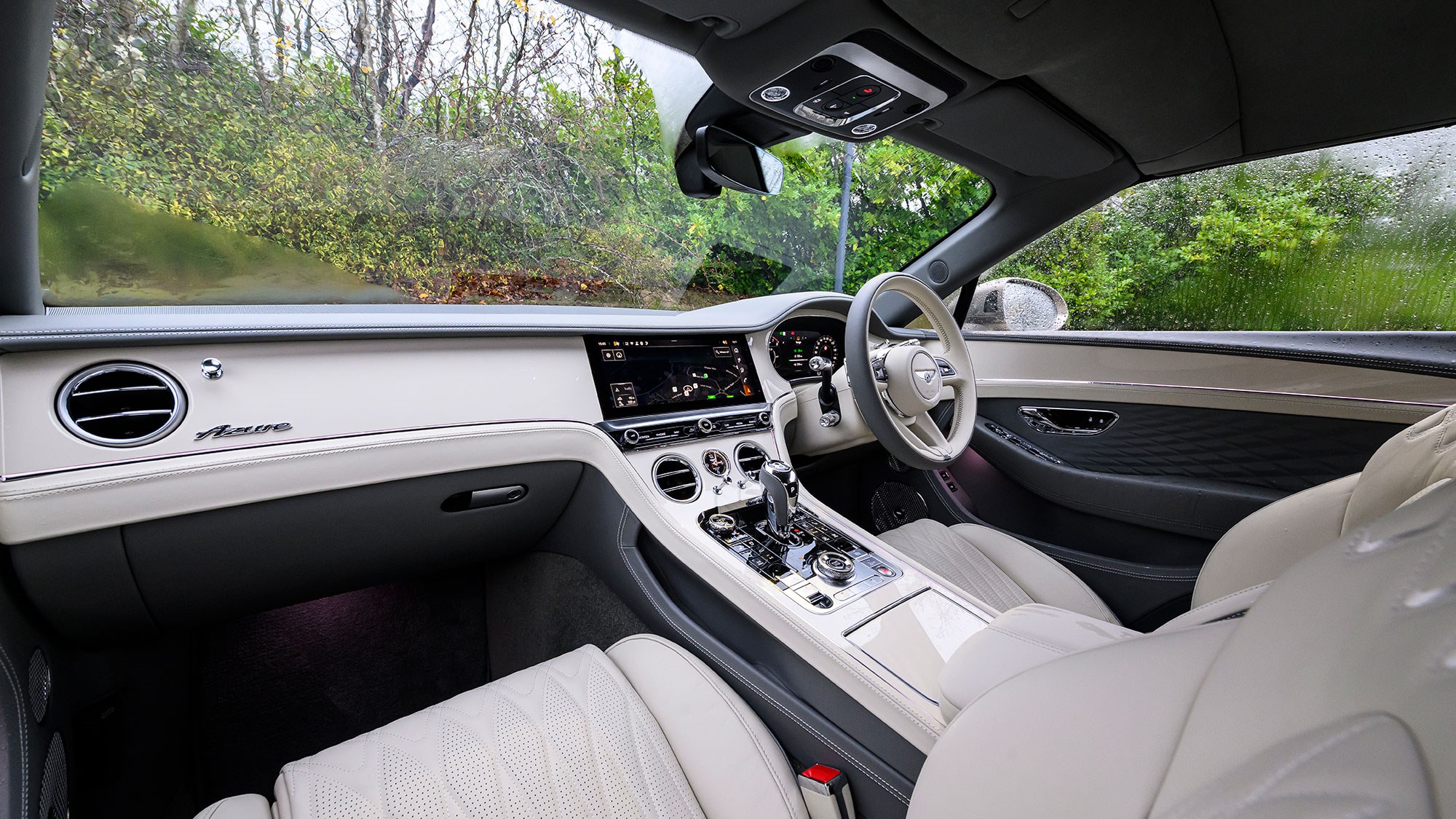
The GTC I tested was definitely in a lightly coloured combination – a mix of painted veneer wood and an upholstery tone we’d be worried about getting a cup of coffee near. If it was my money, I’d have finished the dash in a more timeless (and much darker) eucalyptus veneer. Chances are, you’ll be living with this car for a long time – so make sure you’re 100 per cent happy with the spec before handing any cash over.
Before you buy (trims and rivals)
The Continental GTC has four main specifications. There’s the base-model, the Azure, the Speed and the Mulliner, with each step up the ladder offering a slightly different USP. So, the Azure gets a posher cabin, the Speed has a more powerful engine and the Mulliner has the best of everything. The top spec one costs a little under £300,000.
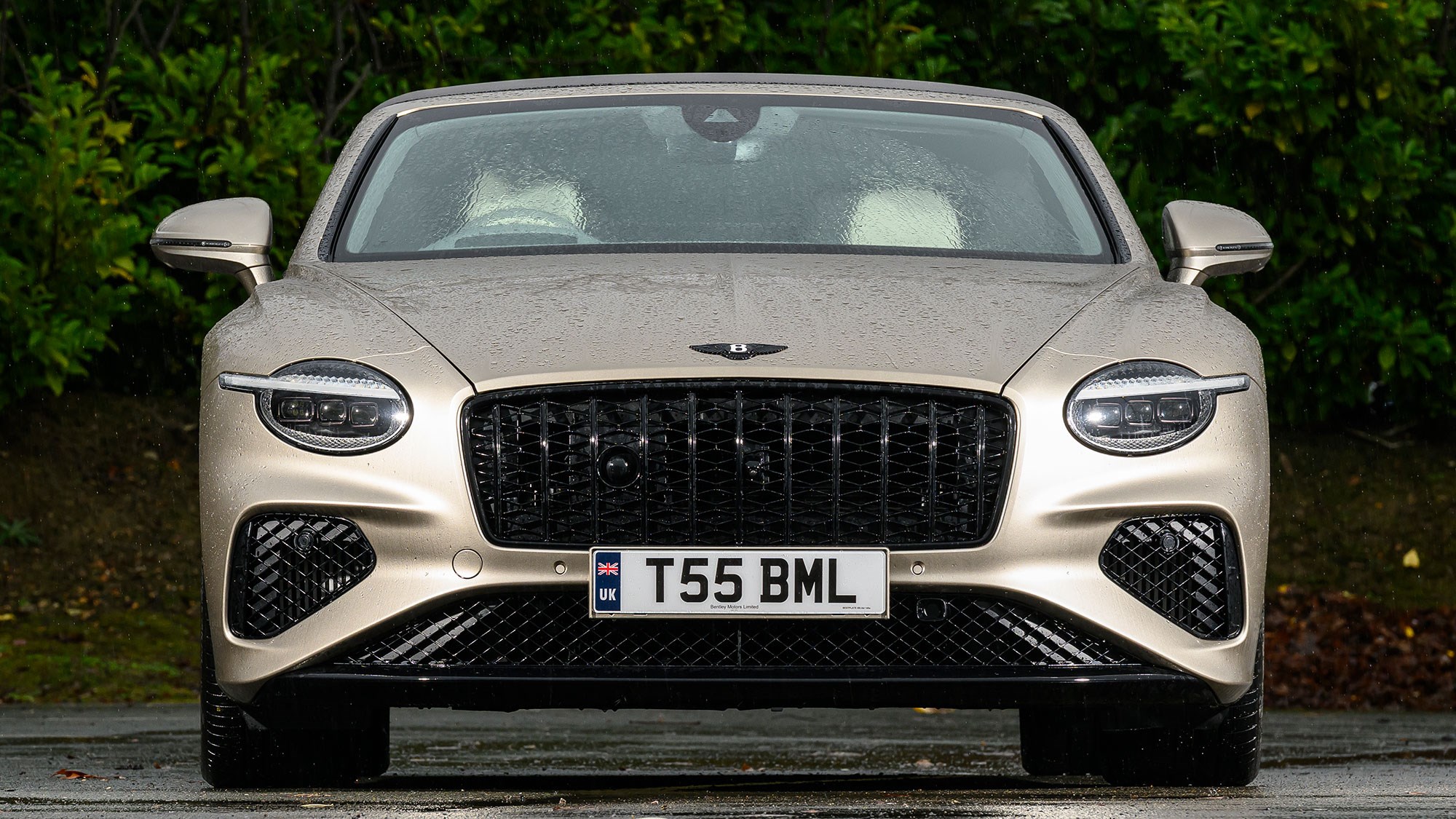
The Continental sort of sits in a bit of an odd Venn diagram between lower-priced premium convertibles and the ultra high-performance stuff – to the point there’s little to directly compare it to. Similar grand tourers include the Maserati GranCabrio (which we’ve compared the Conti GTC to here) right up to cars like the Aston Martin Vanquish Volante. The Aston has more boot space for a weekend away, a V12 and a sharper driving experience… but it’s at least £100k more when it comes to the point of order. A DB12 Volante is closer in most aspects, mind you…
Verdict: Bentley Continental GTC
The Continental GTC is a very good car, but it makes far better sense as a hardtop in my book. This car’s purpose is to waft across Europe in absolute comfort, but the drop-top makes the car a little less refined, slightly less comfortable and far less practical. The slight flex in the body also makes it feel less expensive than it is.
If I was shopping for a Bentley Continental GT, I’d sooner chuck the money I’d spend on the convertible towards getting a coupe with the better engine. And if I desperately wanted a drop-top grand tourer, I’d be heading straight to my nearest Aston Martin dealer. Both its nearest offerings are less compromised.