► We drive the range-topping Panamera
► And, good grief, it’s fast in a straight line
► Active ride tech doesn’t work as well in UK
The Porsche Panamera Turbo S E-Hybrid, the range-topper in the Panamera line-up, is a monster. The starting point for its powertrain is a 591bhp twin-turbocharged 4.0-litre V8 which, because that’s obviously not enough performance for a sensible family saloon, Porsche supplemented with a 187bhp electric motor and a massive 25.9kWh battery pack.
The result? 771bhp and 738lb ft of torque. And if you convert that latter figure into modern metric units, it becomes a far more intimidating 1000Nm. Yikes. Scroll down to find out just how much the Panamera Turbo S E-Hybrid scared us.
At a glance
Pros: monstrous performance, magical suspension for cruising, stunning agility for its size
Cons: GTS is better to drive and costs less, no more Sport Turismo, hilarious options list
What’s new?
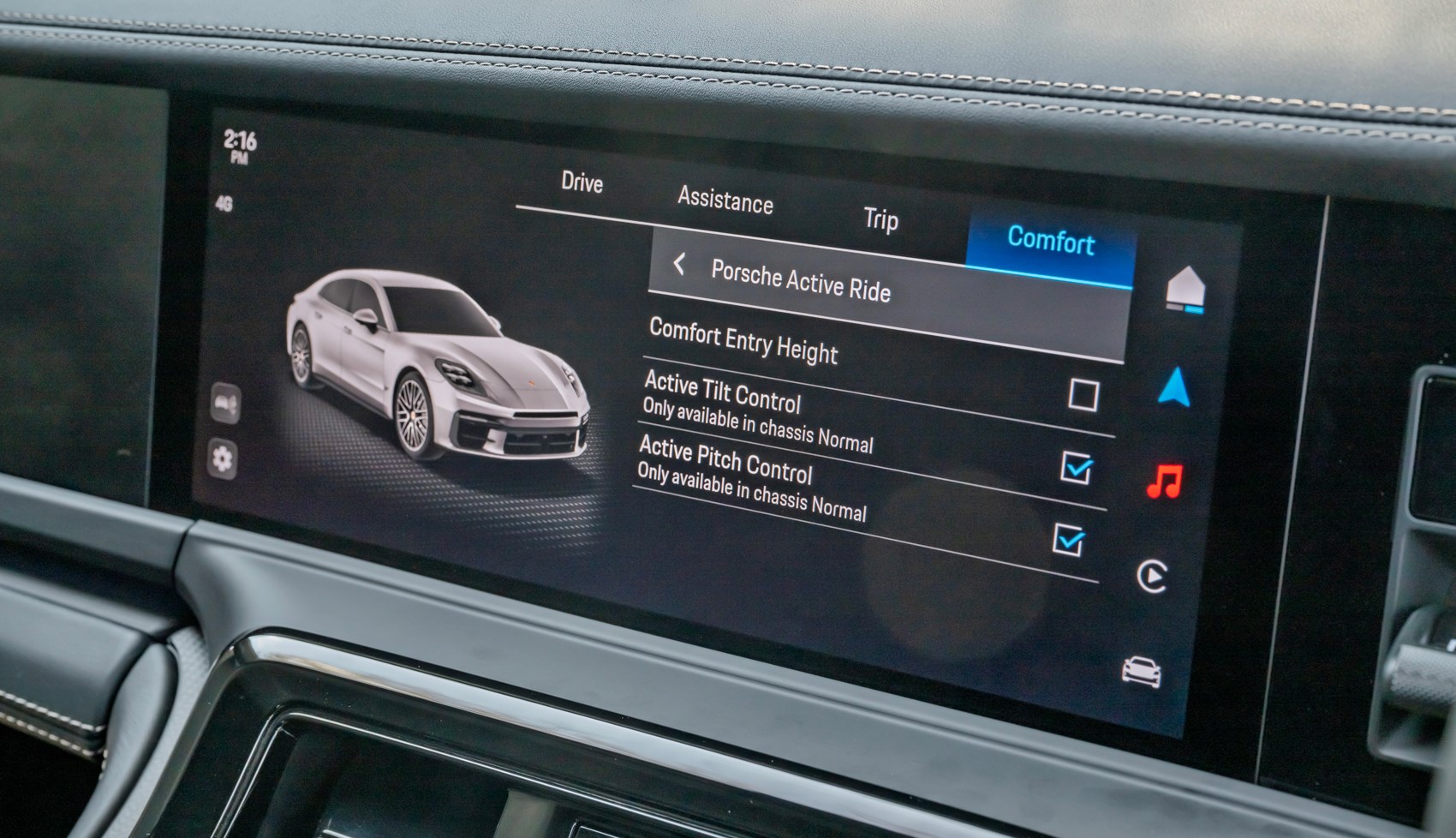
For the Mk3 Panamera, Porsche introduced a clever (and, praise be, standard fit on the Turbo S E-Hybrid!) new suspension setup called ‘Active Ride Control.’ It’s a set of active dampers with electro-hydraulic pumps, that can be pre-loaded to counteract the usual suspension forces you feel when cornering. The idea is that it keeps the cabin level and stops the occupants from rolling around.
I’ll dig into how the system behaves on the road later but, if you’re used to conventional suspension, you’ll find the tech to be a little uncanny. Air suspension is now the default option on the Panamera, as opposed to the steel springs you got in the old car.
Inside, you’ll see lots of influence from the Taycan and Cayenne, with the Panamera sharing the same sort of widescreen infotainment system and fully digital instrument cluster, compared to the old car’s part-analogue dials.
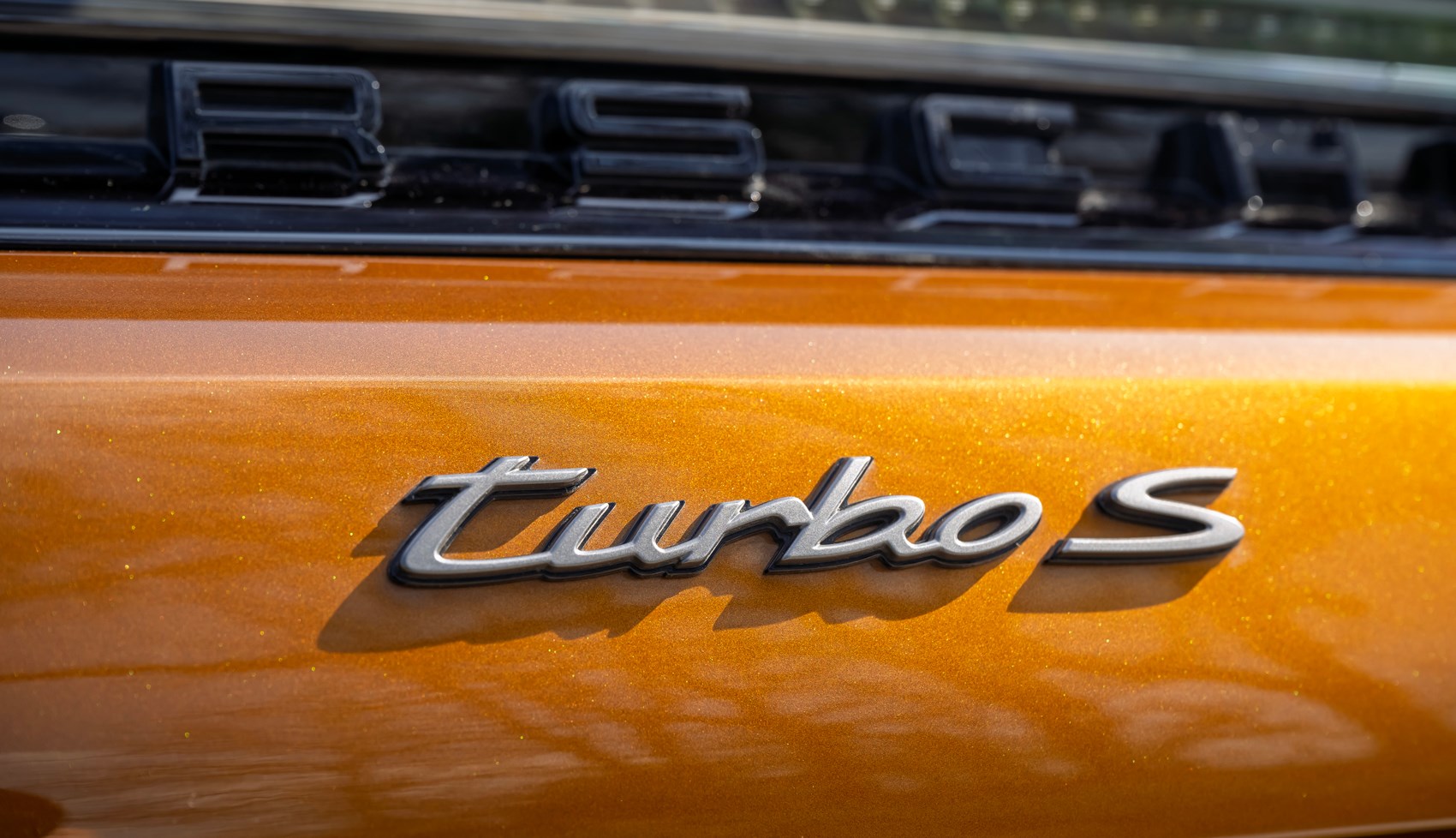
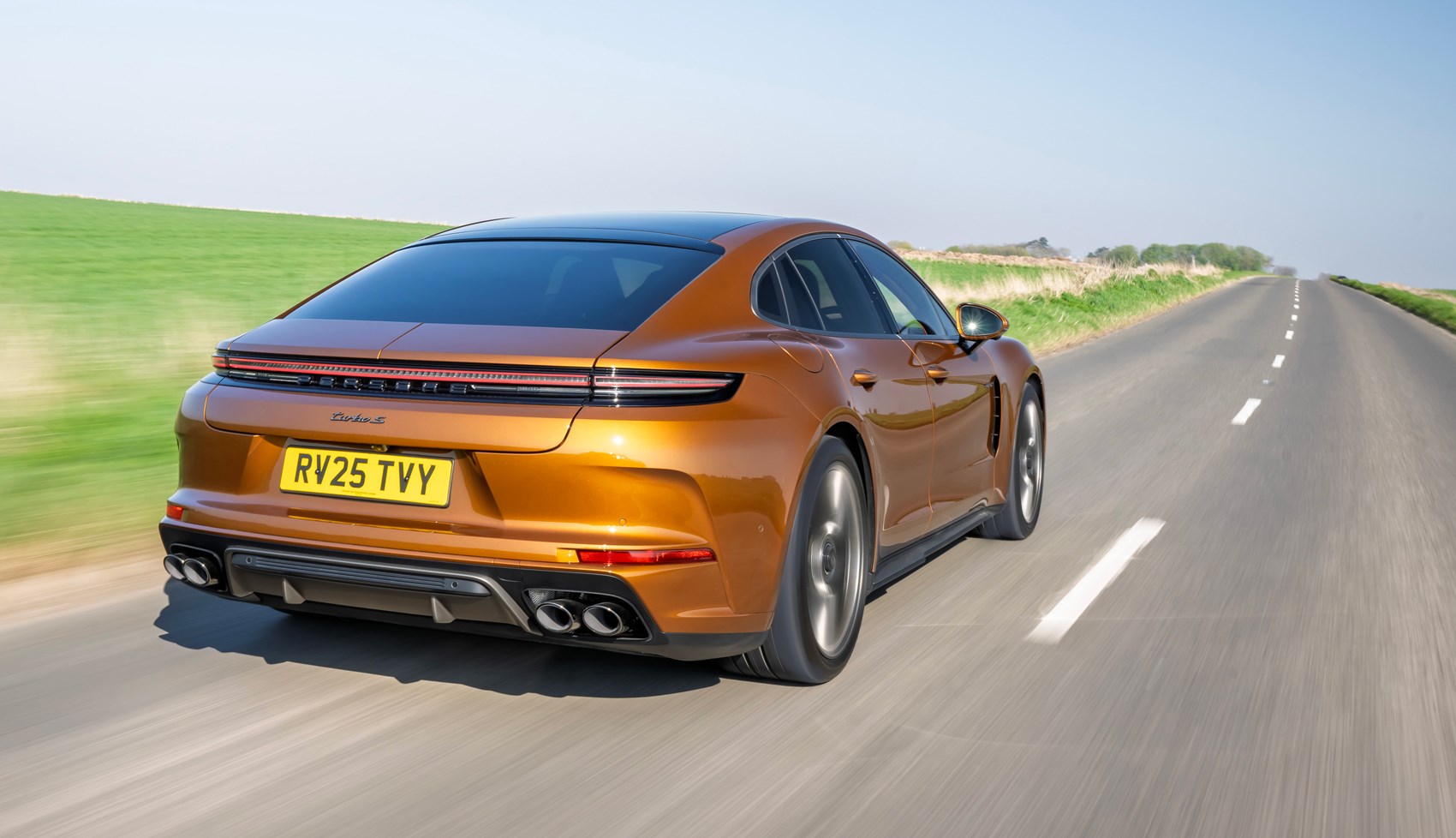
The exterior styling revisions are a little less obvious. The front and rear bumpers have been lightly tweaked, with a more pronounced rear LED light bar being a highlight. There’s also a new ‘Turbonite’ styling pack, not surprisingly exclusive to the Turbo, that swaps the standard car’s stainless and black trims for grey-coloured replacements. Even Porsche’s renowned yellow and red logo gets monochromed by the option.
I’ve already cantered through the Turbo S E-Hybrid specs above, so now I’ll focus on the Turbo E-Hybrid. It’s basically the same powertrain as the previous model, melding a twin-turbocharged 4.0-litre V8 with a massive electric motor for a combined output of 671bhp and 686lb ft of torque.
That’s enough to punt the Panamera from 0–62mph in just 3.2 seconds and keep it charging up to a top speed of 196mph. Ample, one might think for a four-seat luxury saloon.
But no. Because the Turbo S E-Hybrid is more. Much more. Porsche says it can thrash from 0–62mph in 2.9 seconds but, having tested the car’s launch control system, I’m convinced the company is sandbagging. It also has a top speed of 202mph.
If you prefer your Panamera hybrid to be a little more – ahem – sensible, you can always opt for the 4 E-Hybrid or the 4S E-Hybrid. These each use a turbocharged 2.9-litre V6 as their base, for outputs of 464bhp and 537bhp respectively.
Range and charging specs
Stick with me. We’re nearly at the good part. Every Panamera hybrid comes with a 25.9kWh battery pack, which is much larger than the 17.9kWh unit you got in the old car. The upshot of that is this new car can drive much further on electric power alone.
Porsche says every Panamera hybrid can manage at least 50 miles under WLTP conditions. I reckon that’ll be more like 35 miles in the real world, but that’s still a useful improvement over the old car. The Mk2 would struggle to drive 20 miles without waking the engine.
You also get a more powerful 11kW onboard charger that, in the best-case scenario, reduces charge times to around two and a half hours.
How does it drive?
The Turbo S E-Hybrid is very much a two-faced car. Leave the chassis in Comfort mode and the powertrain in Hybrid mode, and you’ve got a continent-crossing, motorway munching grand tourer. And it’s here that Porsche’s Active Ride tech makes the most sense.
When you’re belting down the Autobahn at twice the UK speed limit, a gentle curve can feel like a hairpin. But the Panamera’s ability to prop itself up and actively manage its own heft counteracts that slightly frantic sensation. In the Panamera, it’s like floating down the road on a rocket-powered magic carpet rather than piloting a jet fighter. It’s uncanny how the wheels seem to pick themselves up – you brace for an impact of a bump, but the car seems to skip over them. Even on UK motorways, it’s a remarkably calm way to cruise.
It works the same way when you lay into the brakes by jacking up the nose and, when you floor it, the front end doesn’t lift. Another perk of the setup is that, as soon as you touch a door handle, the car quite literally jumps up to meet your backside on your descent into the seat. You’ll find a similar setup on the Audi A8.
But where it comes unstuck is on lumpier tarmac at lower speeds. Here, the car seems to run out of brain power because it can’t cope with all the different cambers, pits and crests being thrown at it in quick succession so one axle reacts differently to the other. We quite often found we got a loose sensation from the rear, like it wasn’t following the same path as the front. Oddly, for a Porsche, it’s not a confidence-inspiring car to drive quickly.
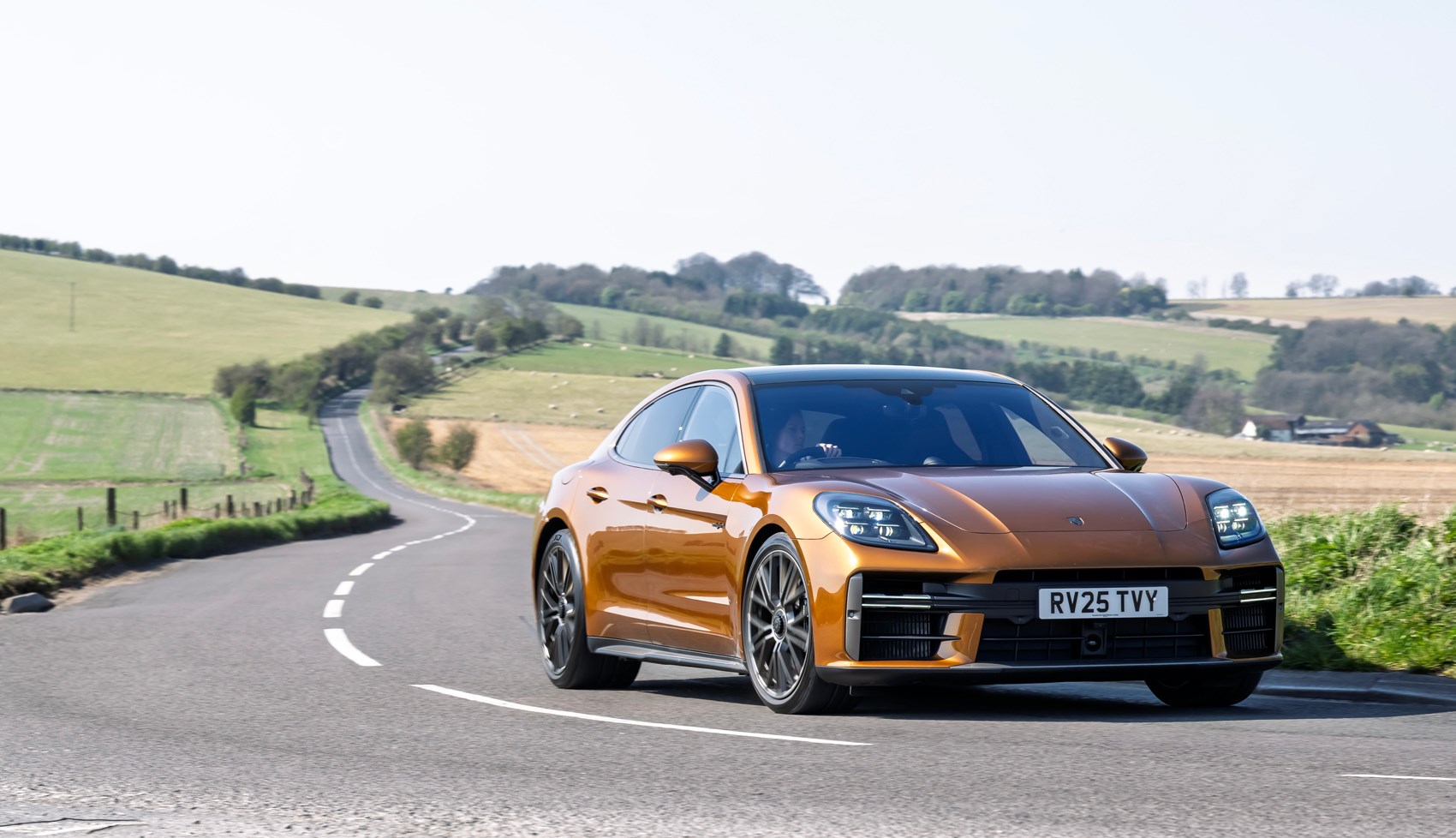
Happily, you can disengage the tech by switching the chassis into Sport mode. Then, the dampers simply firm up and you regain a G-force equilibrium between the speed of the corner and the battering your body receives from the seat.
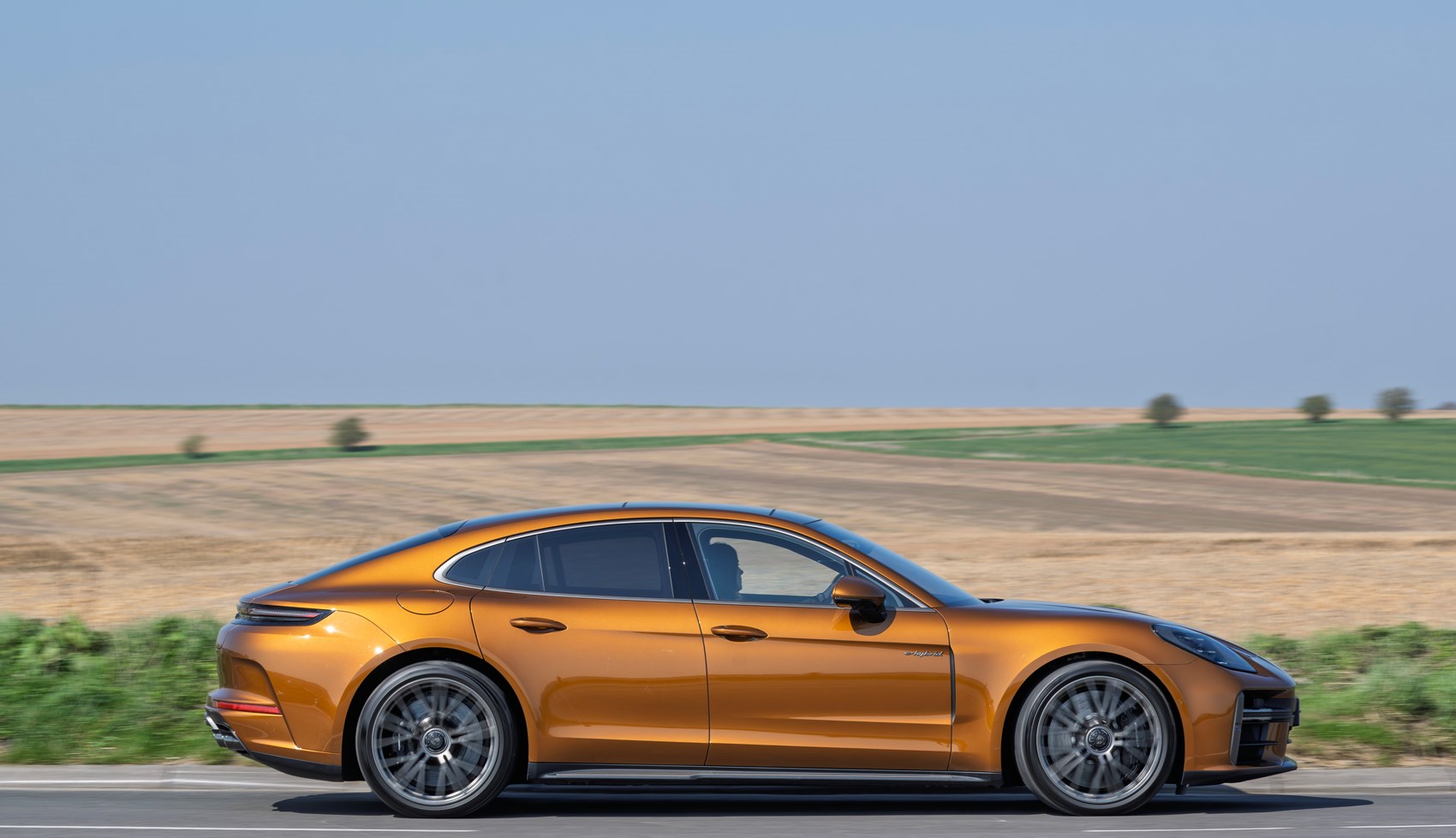
It all adds up to quite a mixed car to drive. It’s outrageously fast and very capable in most situations, but doesn’t feel suited to this small island. The steering is razor-sharp and there’s zero body-roll, but the Turbo S E-Hybrid feels heavy and big, with a suspension that is trying to aid but gets flustered.
In terms of raw pace, though, it’s quite the thing. We’ve driven cars with more poke and less weight than the Turbo S E-Hybrid, but they were supercars from the likes of McLaren and Lamborghini. Not 2.3-tonne, four-door family saloons with air-conditioned seats and a television screen ahead of the front passenger. Being able to sprint from 0–62mph in 2.9 seconds in a car that’s better equipped and more comfortable than my house is simply preposterous.
The electric motor mashes into the tarmac the second you tickle the throttle, playing the warm-up set for when the V8 finally takes the stage. And when those turbos kick in at about 2,500rpm, you get a very satisfying shove in the small of your back – and before you know it, you’ll be standing in front of the judge.
The speed is intoxicating, and the technology is awe-inspiring. But the Turbo S E-Hybrid isn’t the best version of the Panamera. Having driven it back-to-back with the non-hybrid GTS, we’d take the simpler option every time. It’s lighter, it’s nimbler, it’s cheaper, it’s much more approachable and it’s no slower in the real world.
What about the interior?
It’s a Porsche. So, it’s very well made and packed with equipment. The tech isn’t overwhelming, either. The menus on the infotainment screen are simple, the digital gauge cluster does a very convincing impression of Porsche’s old analogue setup and – praise be – you get physical buttons on the centre console for the climate control.
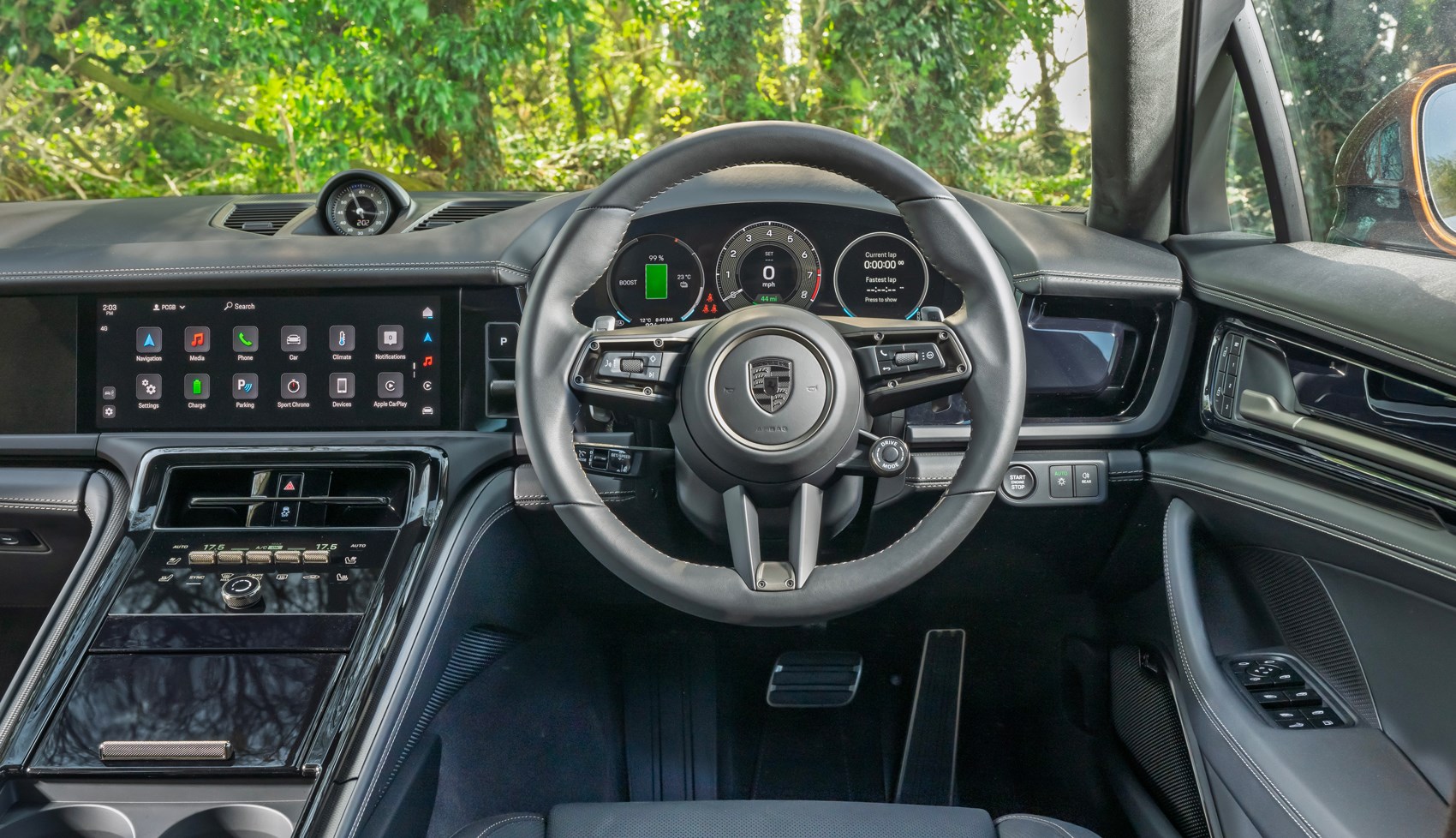
There are a couple of snags, though. The first is that passenger infotainment system. It seems a little pointless to me because, most of the time, it just mirrors the content on the central screen. Plus, whoever’s sat in that seat will more than likely have a phone in their pocket on which to watch films. The glossy plastic used on the centre console isn’t the best quality, either. I reckon it’ll turn matte within the first 10,000 miles.
Before you buy
You’ll be spending a lot of money on your Panamera, whichever model you opt for. Prices for the most basic petrol-powered car start from £89,400 but, if you want the Turbo or Turbo S E-Hybrid, you’ll need to set aside between £151,500 and £175,100.
That puts the two ends of the Panamera model range into two very different camps – and cars at the upper end of the spectrum don’t slot neatly alongside their rivals. I’ll explain. For around £30,000 less than a Turbo E-Hybrid, you could have a 717bhp BMW M5 saloon which, despite its extra weight, is every bit as fast.
Alternatively, you can spend roughly the same amount of cash as the Turbo S E-Hybrid on a Mercedes-AMG GT 4-Door, which has an even more frightening 831bhp.
Then there’s the options list which, like any Porsche, can be your enemy and your friend. You can easily spend more than £200,000 on a Panamera, so we urge you to exercise caution.
Verdict
Our colleagues were bowled over by the Panamera’s Active Ride suspension when they tried it on the track but, having now sampled it on the road both in Germany and the UK, we’re not sure it’s worth spending the £7k + Porsche commands to option it onto a Turbo E-Hybrid. It’s great on the motorway, but it’s not as helpful on twisty roads – and the Panamera’s standard setup already strikes an exceptional balance between comfort and body control.
The V8-equipped hybrids are supercar quick. But we also don’t think they’re worth the extra money over my favourite Panamera – the GTS. That is unless you’re specifically looking for a Panamera that’ll let you sneak into a lower road tax bracket, get a favourable (and very fortunate) company car deal or dodge the charges for a low-emission zone.
For the reasons explained above, the GTS is the better car. It’s also cheaper and, if you never bother to charge the hybrid up, it’ll probably be no worse on fuel. So just buy the GTS. You’ll be all the happier for it.