► New illuminated grille, same polished EV hatchback
► Now with more efficiency
► And a substantial price cut
When the first Peugeot E-308 launched back in 2023, a quick browse of what else the £40,000 asking price could get you always put it on the back foot. Sure, it was a very refined and efficient hatchback with a nice interior, but it was more money than a base-spec Tesla Model 3 and a whole host of our favourite electric vehicles (EVs), including the excellent Renault Scenic E-Tech. A tough sell for a hatchback.
But, with this facelift, the E-308 now is now a lot more affordable, lopping nearly £10,000 off the base price, and once the government’s Electric Car Grant is applied, now means it slips in at less that £30,000. And it’s gained longer driving range too. Sounds tempting, right?
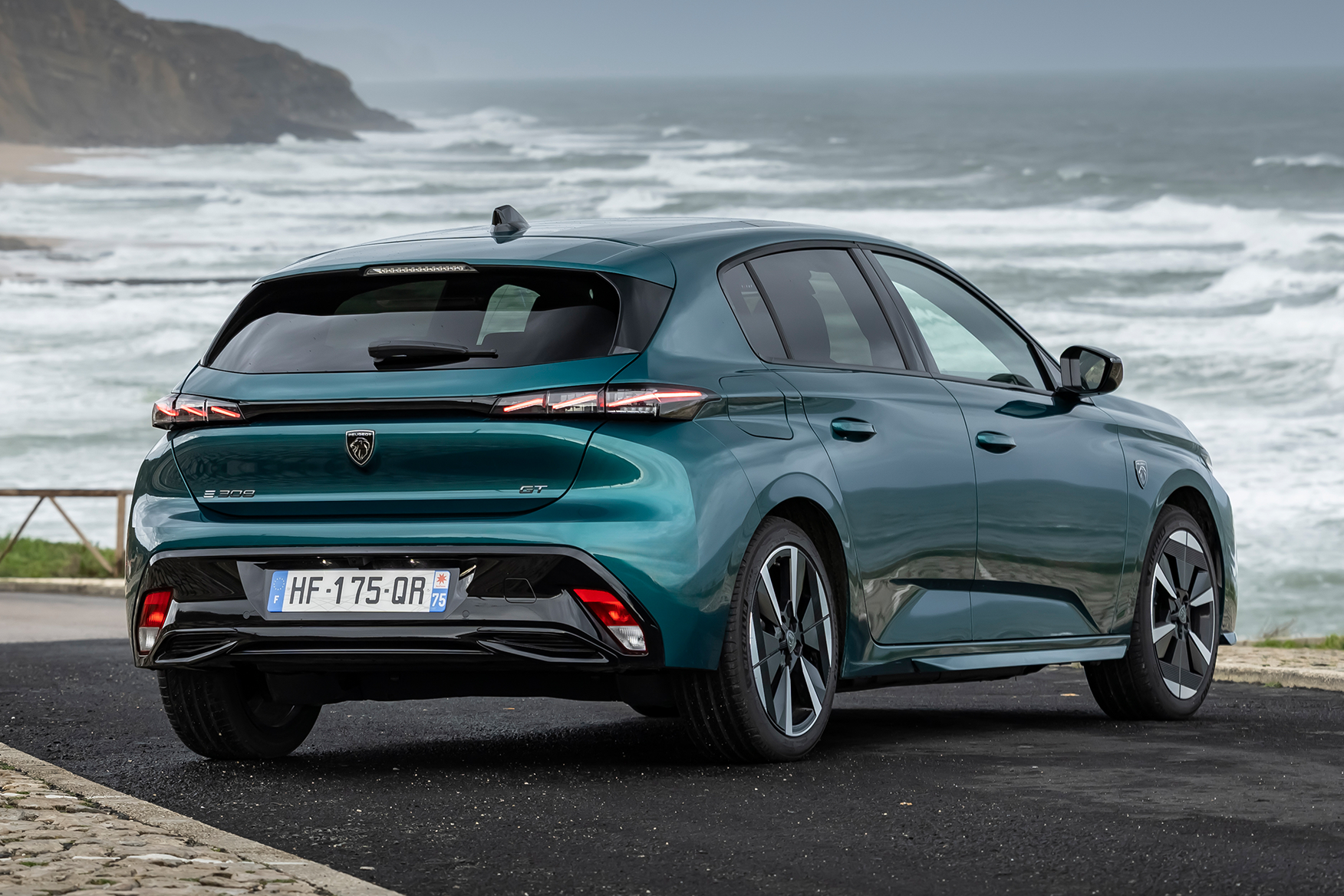
To find out, I’ve driven the updated Peugeot E-308 across the sunny roads of Portugal. Keep reading to see if the Peugeot E-308 will finally be troubling the class-best MG4 EV and Cupra Born, or find out how we test cars here to learn why you can trust us.
At a glance
Pros: Excellent refinement; classy interior; good battery efficiency
Cons: Still sluggish; rear space isn’t amazing; more practical E-308 SW isn’t that much more
What’s new?
Not too much to be honest. Externally, there’s a new front bumper, headlights designed to look like three claw strikes, and the rear lights have also been updated. The front badge is also illuminated for the first time – if that matters to you. There are also new diamond-cut alloys available in 17-inch and 18-inch depending on the trim level.
The interior receives updated 3D driver display gadgets but is otherwise just the same as before – no bad thing as the classy interior is one of the defining selling points of the E-308. So far it doesn’t sound like much of an update, but mercifully, more meaningful changes have taken place under the skin.
What are the specs?
The big news is an updated 52kWh battery, which is the same relatively small size battery for this segment but very efficient. We commended the old E-308 for its impressive efficiency with a WLTP driving range of 257 miles, and the new model takes that even further – it boasts a WLTP driving range of up to 279 miles on a charge.
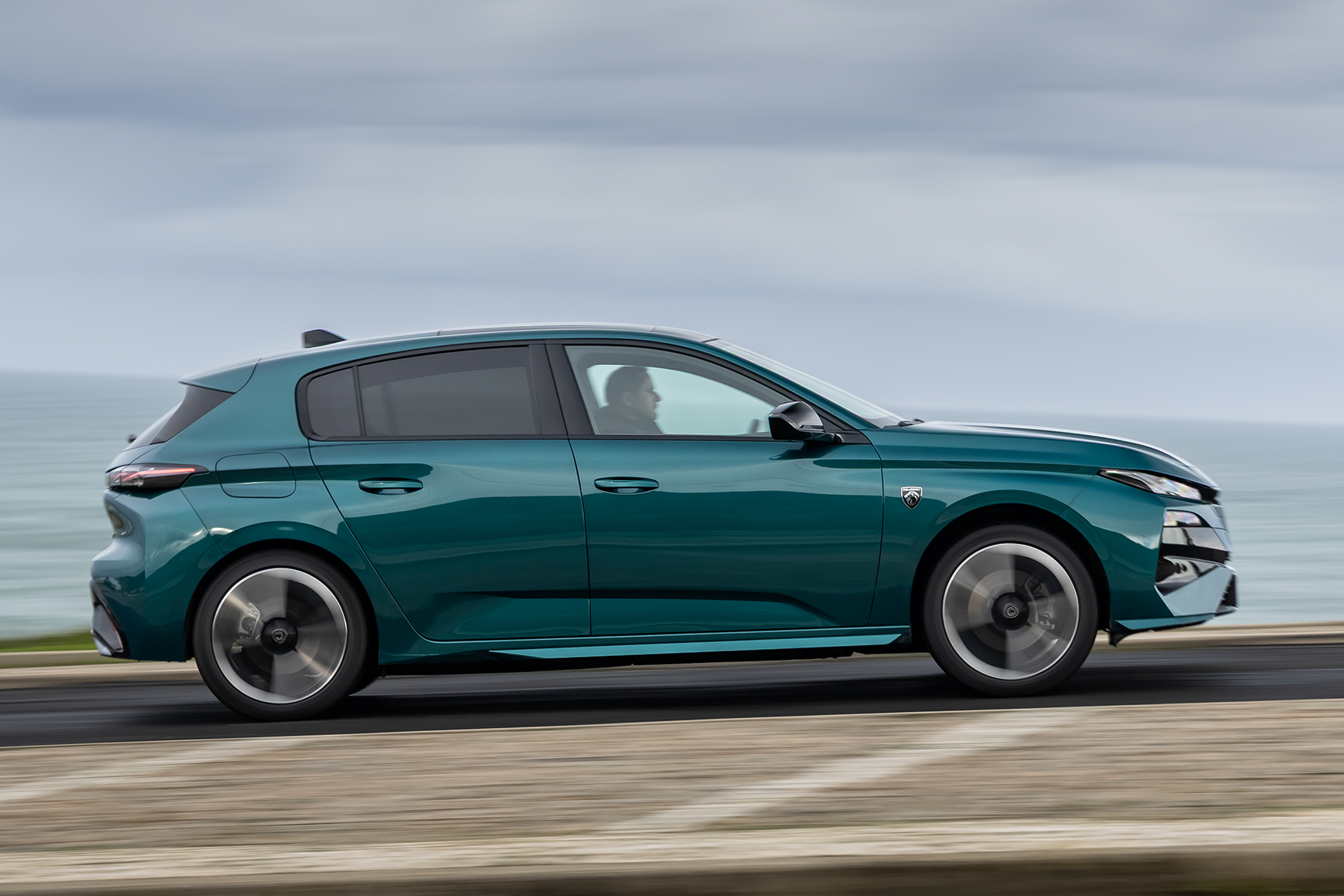
In less positive news, it has the same 154bhp electric motor that drives the front wheels as before. In fact, with 0-62mph taking a yawning 9.8 seconds, it’s over half a second slower than the Vauxhall Astra Electric – which uses the same electric motor – covering the same sprint. There’s enough low speed punch to make town driving painless, but those used to electric cars pinging them up to motorway speeds briskly will be disappointed.
The upshot of this is excellent efficiency, with a mixed road route taking in some urban streets, country roads and dual carriageway saw consumption of just under four miles per kWh. The E-308 is capable of being rapid charged at up to 100kW, giving a 20-80% charge time of 32 minutes.
What’s it like to drive?
Just like before, the E-308 is a refined and soft car to drive. It takes the sting out of urban potholes yet still has decent body control should you hit a dip or crest in the road at speed. Given the leisurely performance, the comfort it offers makes more sense than an attempt to make it feel ‘sporty’.
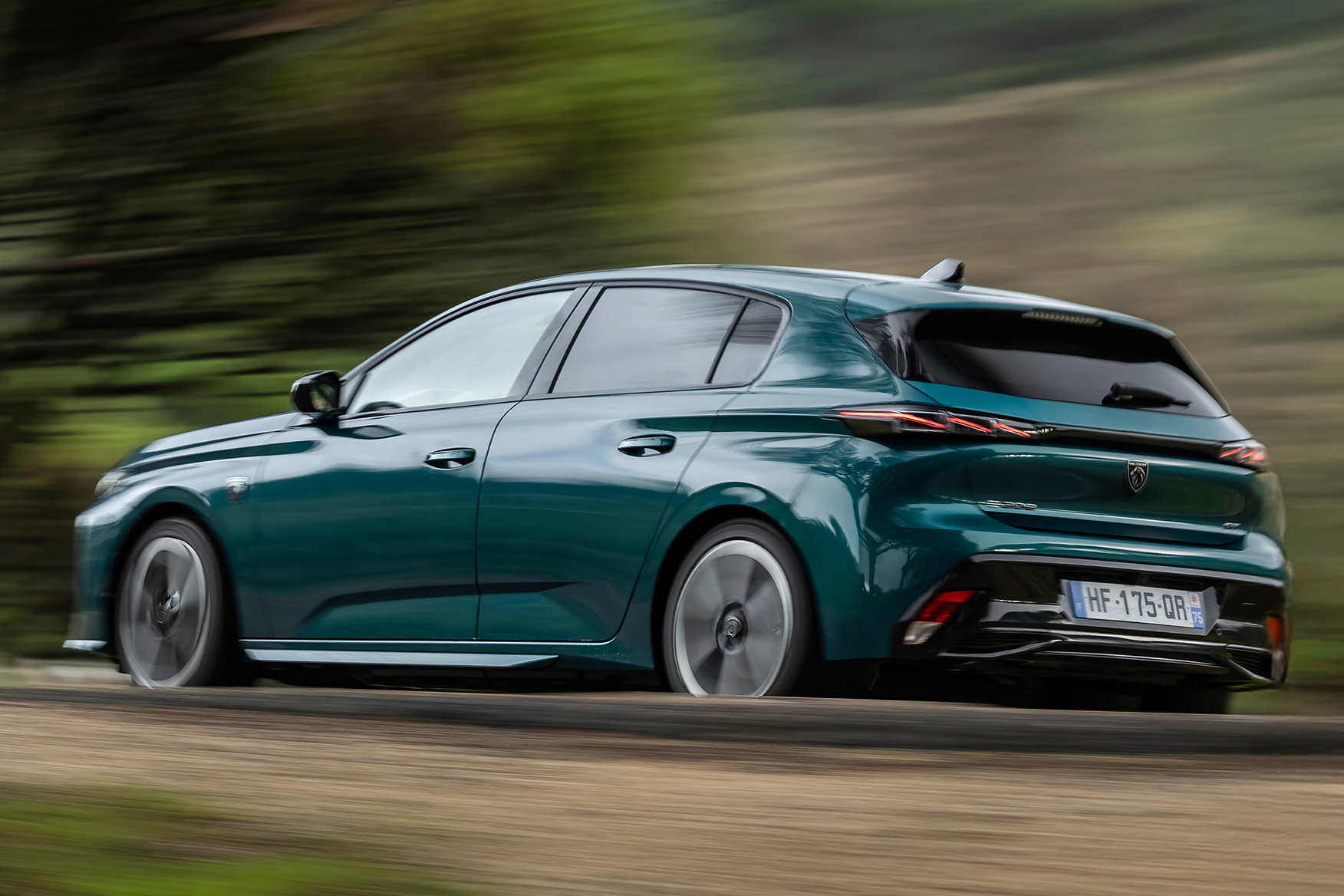
That said, the steering is certainly on the quick side. Like other modern Peugeots it gets a tiny octagonal steering wheel attached to a quick rack. There’s a lot of weight and a sluggish response just off the straight ahead but it doesn’t take a lot of spinning to get from lock to lock. A quarter of a turn is more than enough for most situations.
There’s a bit of body roll but decent grip and a safe, if uninvolving balance. An ID.3 is more satisfying to drive down a country road quickly, while the MG4 can be genuinely good fun. You’re better to drive sensibly and conserve energy in the E-308, enjoying the comfort, quiet and interior.
What’s the interior like?
The interior is largely unchanged, which means the quality of the materials is a step above rivals and there’s physical switch gear, lovely touches. It also means it still features Peugeot’s i-Cockpit driving position with a miniature steering wheel, high-set dials and updated 3D graphics – Marmite features. I fit rather well with my short legs but plenty of my taller colleagues simply can’t get comfortable. It’s certainly a car to sit in before deciding if it works for you.
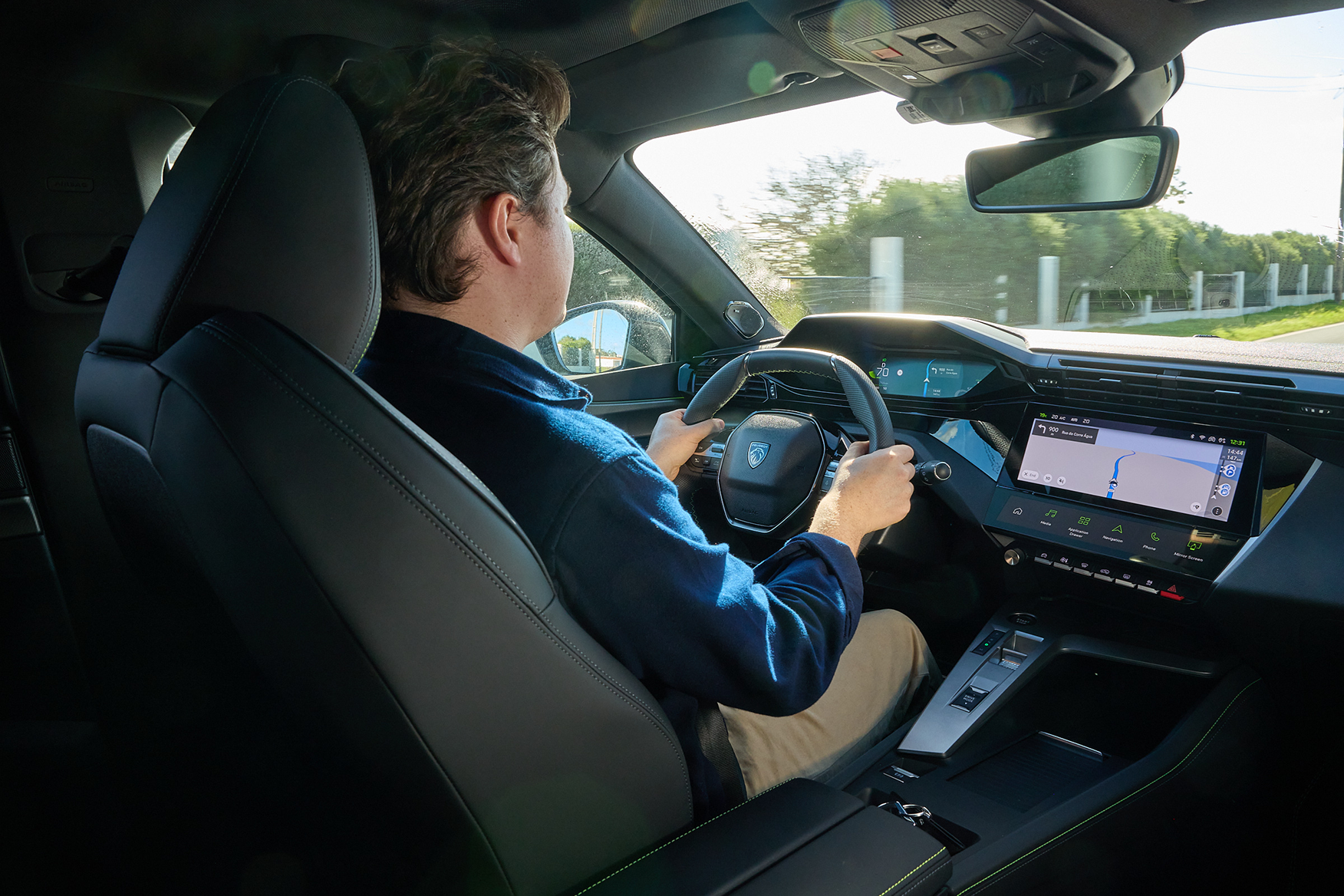
Annoyingly, the climate controls are all buried in the 10.0-inch infotainment screen, with what Peugeot calls i-toggle nestled below. This is a second screen below with large configurable icons that act as shortcuts for the infotainment screen. On lower spec examples this second screen is replaced with buttons. They’re non-toggleable, but far more tactile.
The infotainment system itself is responsive and looks sharp. Some of the icons could be bigger, but on balance it’s better than what you get in a MG4 EV. Quality is a cut above most rivals, with plenty of soft-touch plastics and rich-feeling materials giving an upmarket ambiance. Squint and you’ll quickly find the same switchgear it shares with its Stellantis stablemates. Peugeot has at least gone to good lengths to disguise them.
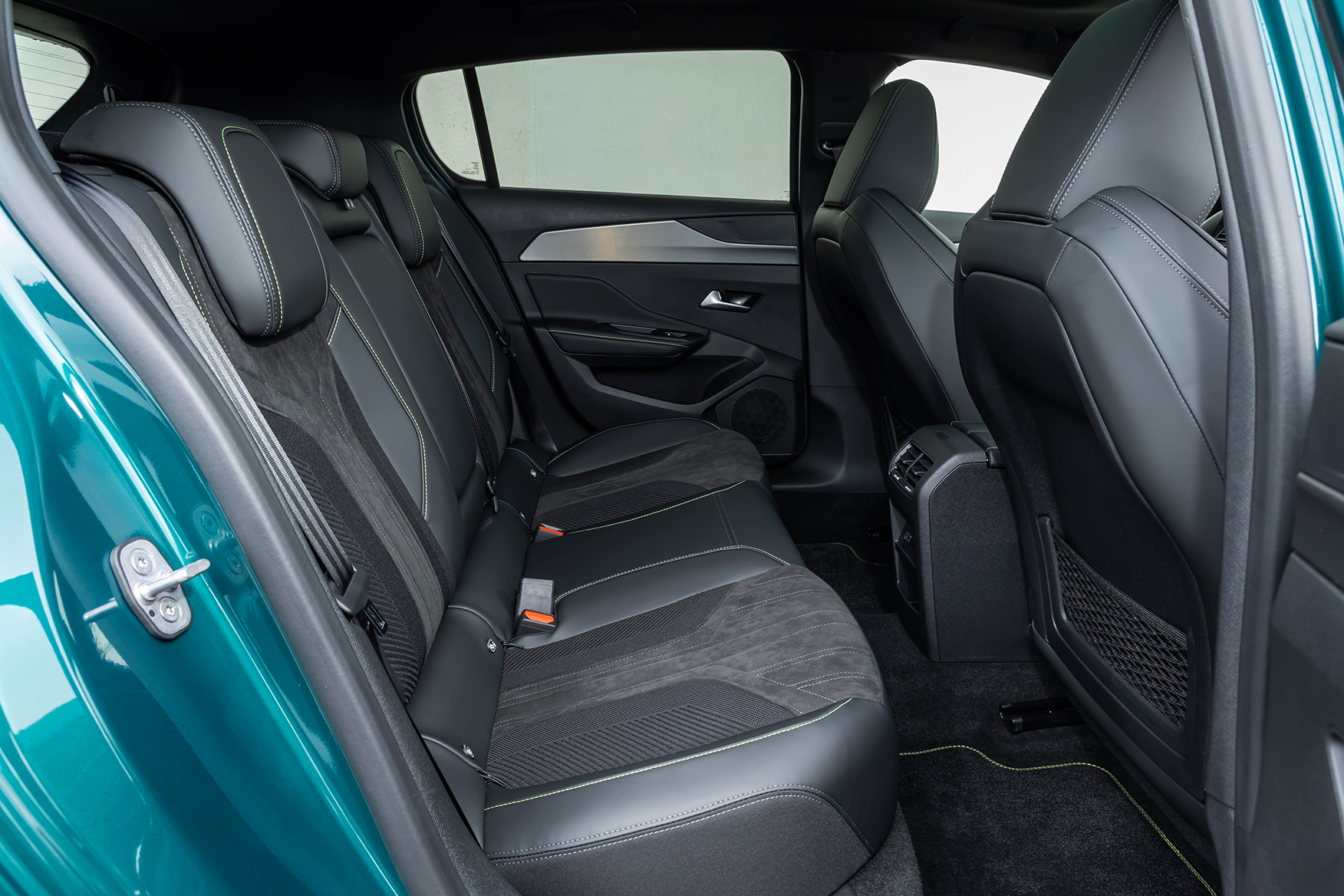
Space up front is good, with excellent front seats that now boast the stamp of approval from the Aktion Gesunder Rücken (AGR), a German body for promoting back health. The rear seats aren’t as spacious as you’ll find in an ID.3 and taller rear occupants will find their knees pressed against the plastic backs of the front seats, while rear headroom wasn’t exactly sparkling for my 5’7” frame.
Boot space is identical to plug-in hybrid versions of the regular 308 at 361 litres, a reasonable but not outstanding amount.
Before you buy
There are three trim levels to choose from in the UK; Allure, GT, and GT Exclusive. Allure trim starts at £29,495, GT trim costs £31,495 and GT Exclusive costs £32,995. These figures include the £1,500 Electric Car Grant that the E-308 is eligible for. This means it’s no longer fighting a losing battle by pricing itself against Tesla Model 3s, it’s now more in line with the likes of the Volkswagen ID.3 and other electric hatchbacks.
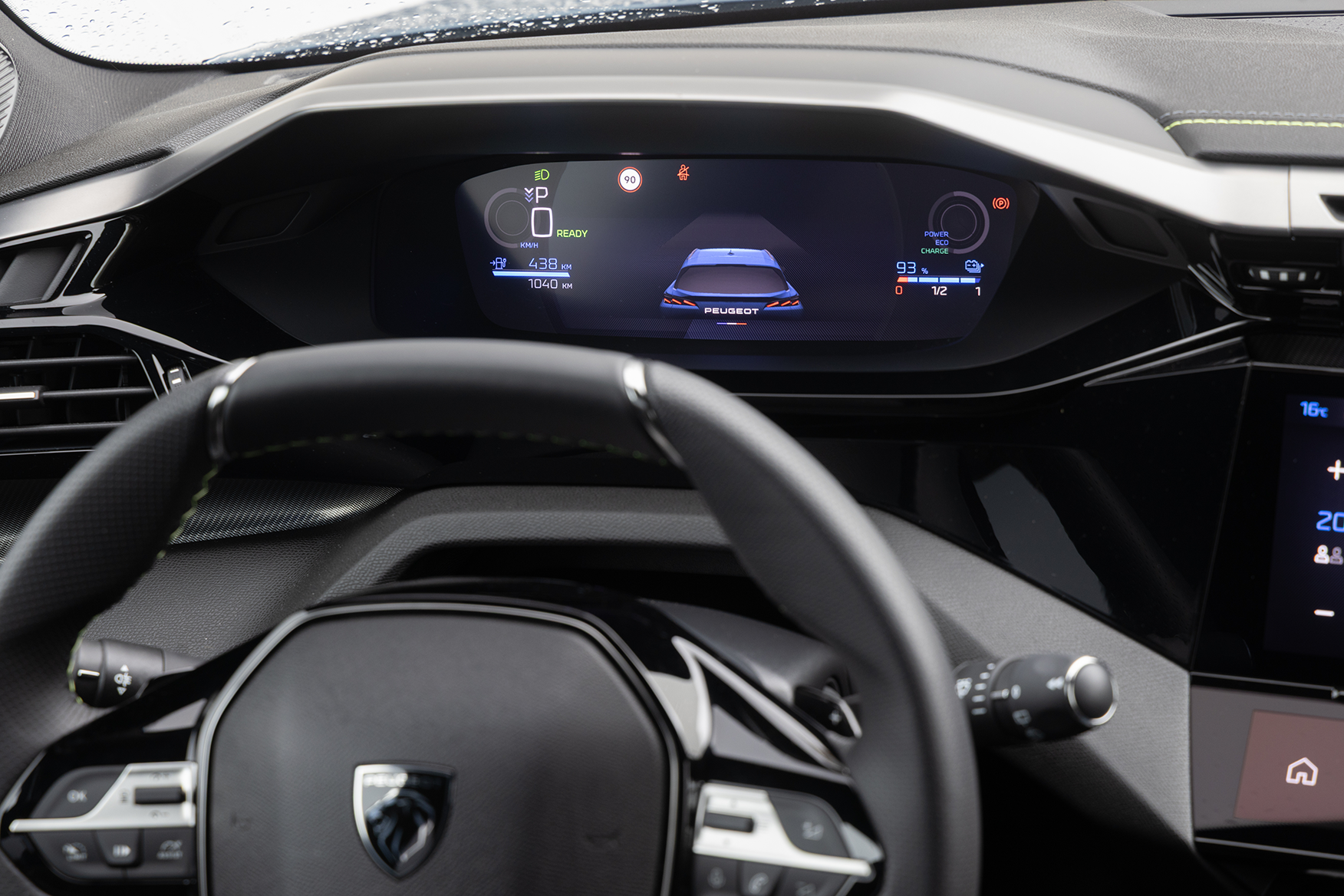
Allure trim features 17-inch alloys, a HD parking camera and LED headlights. GT gains Matrix LED headlights, front and rear parking sensors, wireless entry and start. It also gains the i-toggle screen. GT Exclusive builds on GT trim and adds Alcantara seats complete with heating and massage function for front occupants. A fancy Focal speaker system and sunroof are optional extras on all trim levels.
The MG4 EV still undercuts it but has some notable reliability woes. The Renault 4 E-Tech is a tempting alternative with larger boot and better performance, although the interior isn’t as classy and it doesn’t ride as well.
Verdict
The big problem is now gone, the Peugeot E-308 no longer prices itself out of the market. That means I can look past the raft of larger, better equipped rivals Peugeot tried – and failed – to bat against, and view this car for what it is, a classy and mature electric hatchback.
It has class-leading interior quality, a refined driving manner and efficient battery pack. The i-Cockpit will always be divisive, and it still offers far from electrifying performance. However, the biggest thorn is that the far more practical Peugeot E-308 SW isn’t that much more to buy and offers all the same positives.