► Nio’s affordable urban EV driven
► Coming to the UK in 2026
► Clever and oddly cool, but needs to be cheap
Before you scroll on, and write this off as yet another odd Chinese brand that’s planning world domination, consider this: If Tesla made an affordable £20k-ish supermini, it’d be just like the new Firefly. In fact, I even felt like there was something of a cut-price Honda e about it. You get the picture; this is a small electric hatchback of 4,003mm long, with five doors, a 41.2kWh LFP battery and a WLTP range of 205 miles, and some intriguing design appeal.
Firefly is a new sub-brand from Chinese manufacturer, Nio – itself a brand that sells well in China, and which has been making inroads into various European markets for a few years. It’s well known for tech features including a dashtop talking-head AI assistant, advanced semi-autonomous driver aids and even battery-swap technology that allows you to pull into a battery swap centre and have a fully charged, new battery installed within a few minutes.
Nio is appealingly ‘Tomorrow’s World’, then – and if you’re not old enough to get that reference, then the Firefly may well be exactly your cup of dairy-free matcha latte, because this is a cool, urban electric car that’s designed to appeal to the younger buyer with its pared-back styling, clever practicality and funky, Warhol-esque infotainment graphics. Even if it is a bit weird that, with this model being called the Firefly and from a brand called Firefly, that makes it the… Firefly Firefly. Yes, really. So you’ll forgive us if we’re calling it the Nio Firefly for now, so that you know what we’re on about.
Should you buy a Nio Firefly? You can’t just yet. Firefly has confirmed that it’s coming to the UK in 2026, but pricing and specifics on how it’ll be sold are still unconfirmed.
At a glance
Pros: Clever storage solutions, smart infotainment, fun to drive
Cons: No long-range version confirmed, needs to be cheap given the competition
What’s new/What’s different?
Everything, really. Even the brand. The Firefly sits on a new, dedicated-EV platform that Nio has developed in-house. The TF1 platform is a skateboard-style platform, and in the Firefly it uses a rear-mounted, 141bhp electric motor.
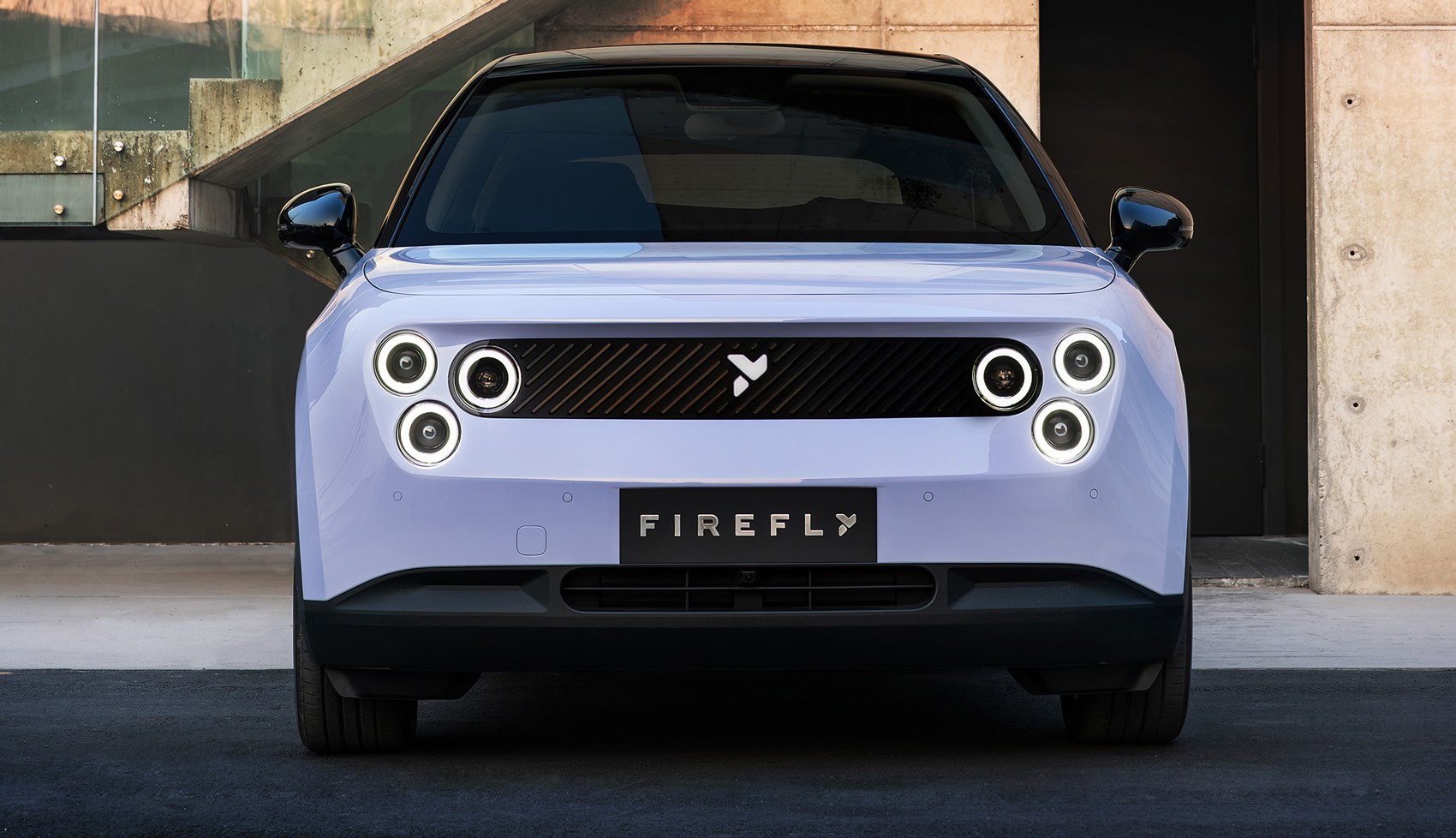
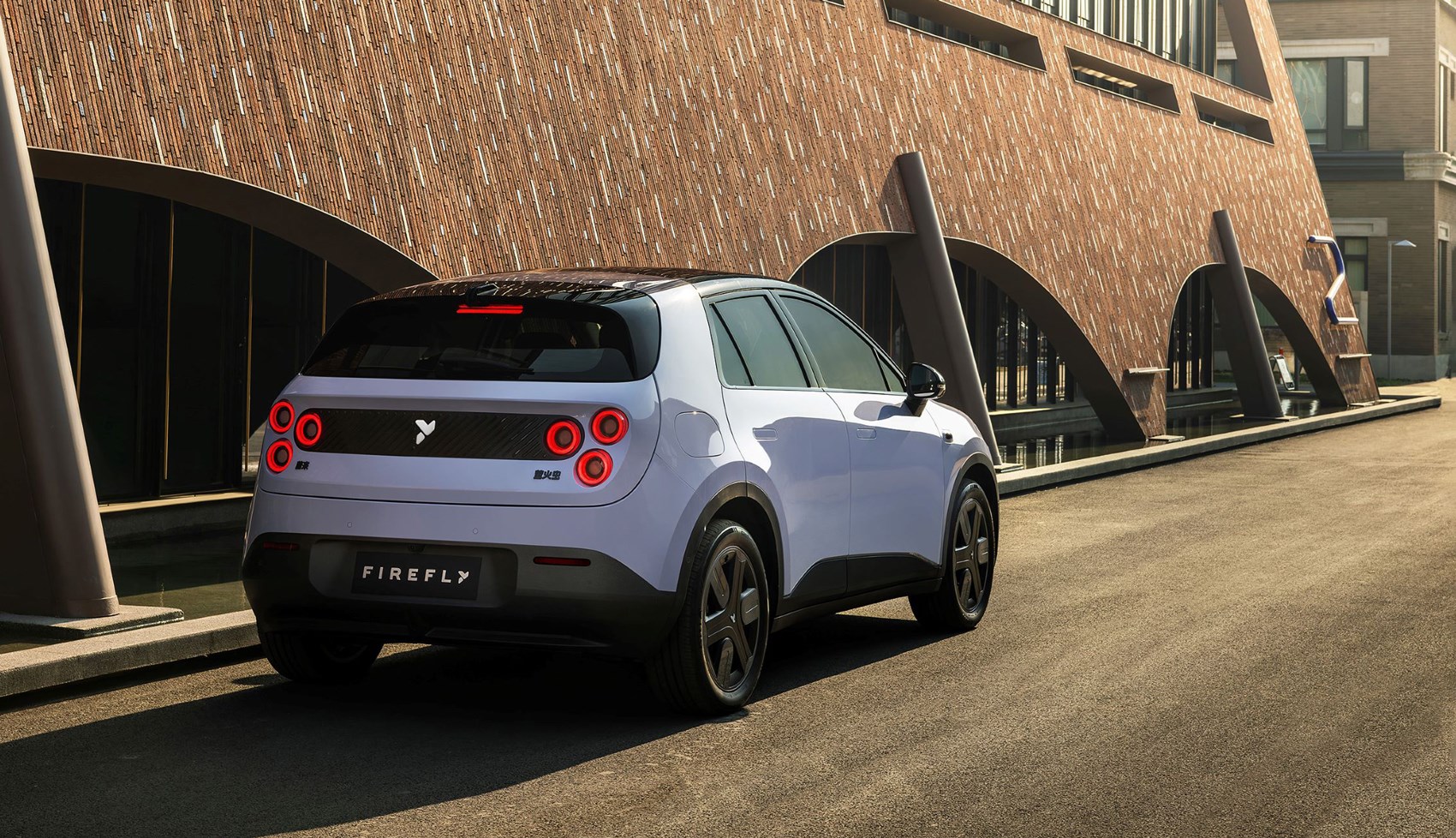
It’s a completely new design language to go with the shiny new brand, and it’s kind of cute and appealingly straightforward. There’s echoes of the Honda e in its owlish expression, although we’re not sure if the back of it looks a bit odd? Those round rear lights are reminiscent of a Noble M600, though, which is an excellent obscure car reference that you can bore your mates with.
What are the specs?
The Firefly is a relatively lightweight small EV, coming in at under 1,500kg, and allowing a 0-62mph time of 8.1 seconds despite the modest 141bhp power output. It’s all very close to the performance and size of the Renault 5 E-Tech, of course, which is likely to be the Firefly’s biggest nemesis. We’re not sure that the 41.2kWh battery on its own will cut it for the UK market. It’s a good entry point, but with a lot of rivals offering longer-range alternatives with more like 250 miles of WLTP range, the Firefly’s claimed 205 miles might put buyers off when there are plenty of rivals offering 250-ish miles of range.
Nio’s certainly got the tech and the resources to offer a second, larger-capacity battery for the UK market, so here’s hoping that it manages to broaden the Firefly’s offering on that front. For now, the 41.2kWh battery is the only option, and our mixed route in mild temperatures returned a real-world efficiency of 4.0miles/kWh, which is good enough for a real-world range of around 160 miles.
Maximum DC rapid charging speeds are 100kW, although Firefly claims that a 10-80% charge will take around 30 minutes which suggests that the average charging speed will be noticeably lower.
The Firefly’s platform does support battery-swap technology, which Nio is famous for masterminding in its domestic market, but with Nio not yet in the UK and no guarantee that it will bring battery swap stations over here (we find it highly unlikely given the unique difficulties presented by our awkward and crowded road network), that’s unlikely to be a selling point for the British car buyer.
Vehicle-to-load (V2L) charging is offered on the Firefly, but it doesn’t get a heat pump.
How does it drive?
It’s surprisingly light-footed and fun. The steering is linear and has more heft to it than you might expect of a city-oriented EV, but the driver controls are intuitive, and feel easy to predict from the moment you whirr out of the car park. The Firefly’s turning circle of 9.4m gives you an idea of how easy it is to flingthis little EV gamely through tight direction changes and into awkward spaces, too. For some context, a Renault 5 manages 10.3m, which is on par with most small cars, so is hardly barge-like.
Ride comfort could be more pliant. There’s a bit of patter from the 18-inch wheels and Giti tyres fitted to our European-spec test car, although it calms down at higher speeds and isn’t ever restless around town. Performance is good, with nippy response up to faster B-road speeds, although it can feel a touch wheezy in faster motorway merges and higher speed progress. It’s certainly a lot better than the Citroën e-C3 and Fiat Grande Panda in terms of the pace it delivers, even if a Mini Cooper Electric or Renault 5 feel a touch zippier and more engaging generally.

There are three levels of brake regen in the Firefly, plus an adaptive mode, so you’ve got the versatility that you want with the brake regen system, and it’s easy enough to make smooth progress regardless of which mode you’re in. What is annoying is that you have to switch modes via the screen, and there’s no true one-pedal mode. While we’re talking about the annoying stuff, it’s too tricky in the Firefly to turn the driver assistance aids on- or off, and they’re intrusive when do you leave them to blip and beep freely.
What about the interior?
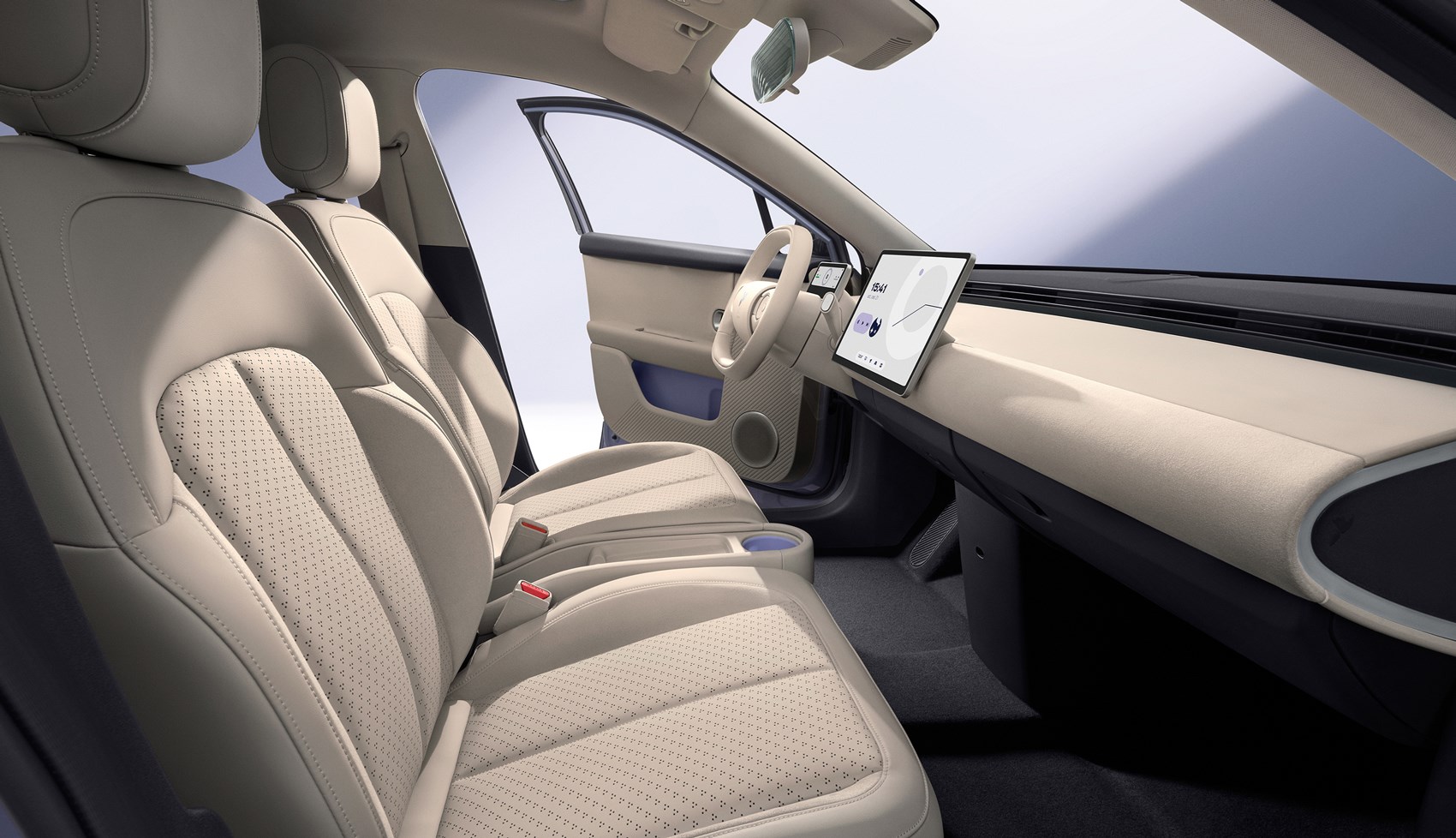
The infotainment graphics are a real feature of the Firefly. Not only the bright, moving graphics that characterise the home screen, but the fact that the icons are really big and easy to hit on the move is also a refreshingly practical touch that still manages to look interesting and suitably hipster. It’s a very Tesla-style interior otherwise, in that it’s quite austere apart from the landscape touchscreen and the small but perfectly effective digital screen that behind the wheel. Having said that, design touches like the oval steering wheel and oval door handles, which mimic the graphics design on the screen, make it feel well thought out.
Although the Firefly is almost exactly the same size as a Renault 5 – and is a bit bigger than a Dacia Spring or Hyundai Inster – it’s still a useful little car. The 348-litre boot is decent by class standards, and you can fold the rear seats down for a fairly flat extended load bay. More unusual is that you can also store stuff under the rear seats; Flip the seat squab forward and it reveals a moulded plastic storage area with 29-litres of space.
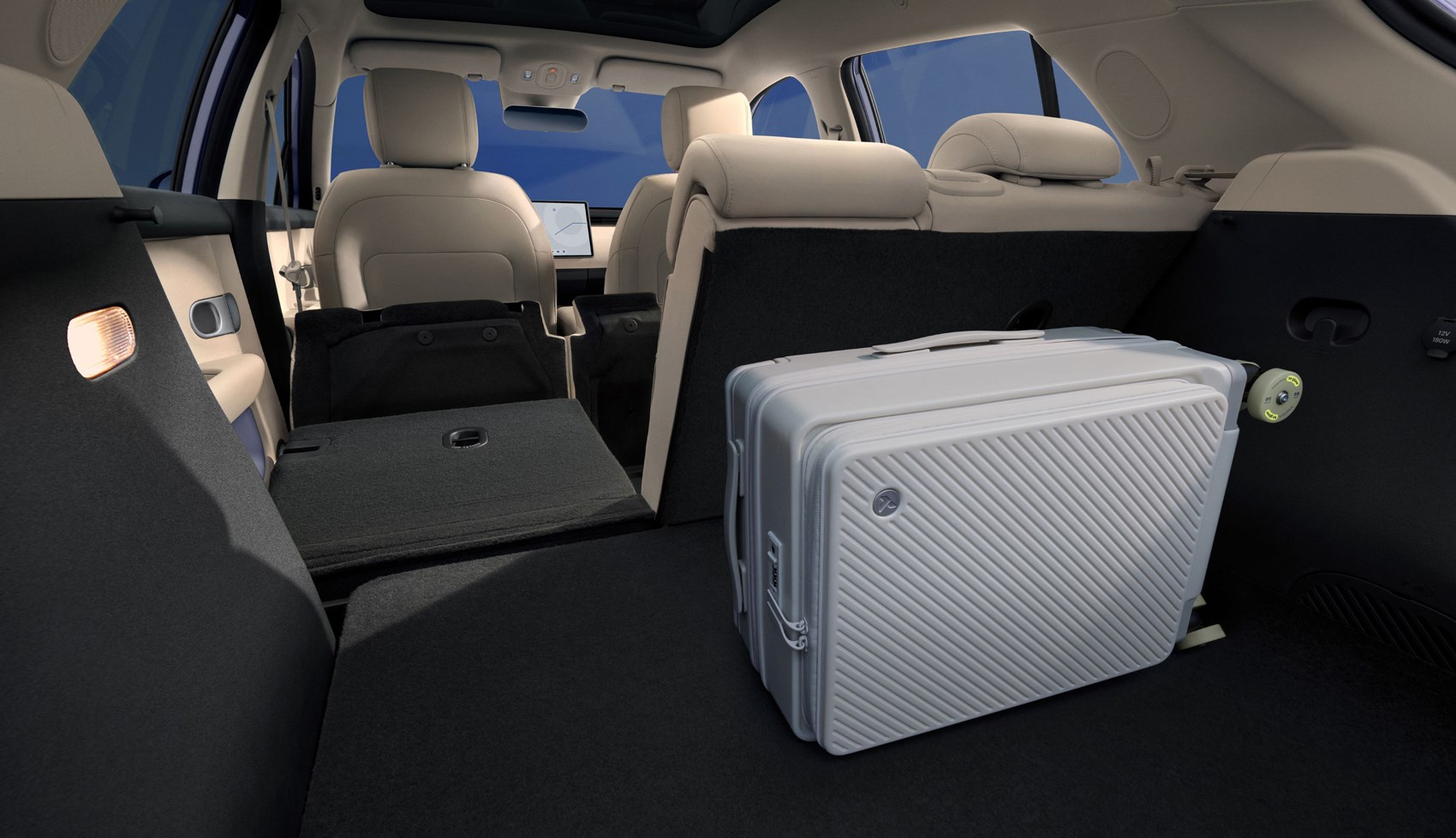
Add the 65-litre frunk to all of that, and you’ve got one of the most useful small electric cars in the class. There’s also enough space on the three-person rear bench for a couple of adults, with reasonable leg- and headroom – albeit not as much as you get in a Citroen e-C3 Aircross or Vauxhall Frontera.
Before you buy
The Firefly hasn’t had UK pricing and specifications confirmed, yet. We don’t even know whether Nio will set up its own dealer chain or if it will sell through established franchises, as other Chinese brands – including BYD – have done very successfully. Currently, the Firefly is on sale in the Netherlands for the equivalent of roughly £26,000.
To be blunt, if Nio doesn’t cut that price significantly for the UK launch, the Firefly is going to struggle. Even with a five year, 93,205 mile warranty in Europe (assuming the UK gets the same cover as its continental cousins) and the usual eight-year, 100,000 mile battery warranty, when you can get a Renault 5, Nissan Micra, Citroen e-C3 and Fiat Grand Panda for usefully less, the Firefly doesn’t make a lot of sense.
This is a weirdly cool car that has more ingenuity and heart to it than the luxury Nio models we’ve driven before. But the small EV class is a competitive one, and no matter how funky and cleverly packaged it is, the Firefly needs to be cheap on monthly finance, leasing and list price if it’s to succeed. We’ll have to wait and see.
Verdict: Firefly hatchback
I like the Firefly. There’s hints of Tesla, old-school Smart, Honda and more in its simple yet distinctive style and clever practicality. It’s unassuming yet thoughtful and fun, which is quite a hard trick to pull off. There are cars that are more fun (the Renault 5) and cars that are more compact yet more versatile (the Hyundai Inster), but if Nio can get the monthly finance right, and ideally also introduce a longer-range model with a WLTP range in the region of 250 miles, then Firefly could do well with its cute little electric hatchback.