► Driving the Singer Vehicle Design Turbo
► Exploring the Golden State
► Have we found driving nirvana?
Keys to special machines have been flung my way before; LaFerrari Aperta, 250cc Honda Grand Prix bike, my mate Andy’s self-restored Triumph Herald when he was too hungover for the McDonald’s breakfast run. But this is right up there. Without fanfare Singer Vehicle Design’s Maz Fawaz hands me the key to the ‘Fuji’ Classic Turbo restoration and we walk to the car – a car that, it should be noted, is beautiful like a desert dawn. And as we get closer the Porsche refuses to get bigger, steadfastly remaining 964-era petite.
I’ve driven a ‘reimagined by Singer Vehicle Design’ 911 before, a naturally-aspirated Classic restoration that redefined my understanding of what an old car could feel like, mostly because everything that matters – and with Singer everything does matter; it’s been the mantra since day one – had been lovingly remade, restored or upgraded. Though the Classic restorations look older and curvier than their type 964 911 source material, they drive like something more modern (they’re far faster, grippier and well-braked than even a period RS, for example) while retaining the dinky size and timeless silhouette that makes pre-996 911s so special.
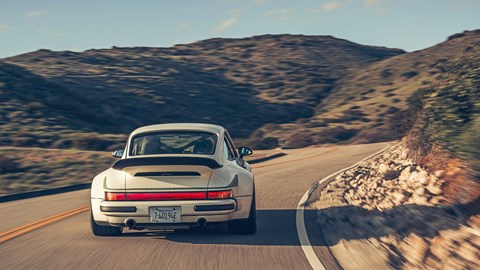
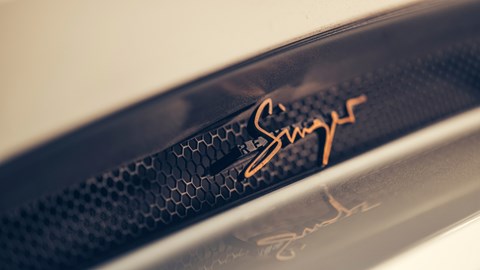
But the Classic is now closed for orders and, while much has stayed the same, at least in terms of the mission statement, Singer has gone supernova in recent years, trading its boutique hot rod shop vibe for a vast and modern facility (complete with its own spray booths, not easy in air quality-obsessed California, and home to 450 employees), pushing the limits of what might still reasonably be called a restoration (or a 964) with its outrageous DLS and DLS Turbo services, establishing an engineering facility in the UK’s F1 belt (another 200 employees) and pulling together a dazzling collection of top-tier collaborators, including Williams, Brembo, Bosch and Red Bull Advanced Technologies. It’s also introduced the ’70s 930 Turbo-inspired Classic Turbo – one of which we’re driving today – as its main offering.
‘They [the Classic and new Classic Turbo] share almost nothing; I mean, nothing,’ confirms Fawaz. In part, this is Singer flexing the engineering ambition it’s shown from the start (though 964-based, as all Singer’s work to date has been, the Classic restoration I drove a decade ago had neatly integrated 993-derived all-wheel drive) and capitalising on lessons it learned during the DLS projects. And in part it’s a deliberate move away from labour-intensive and potentially inconsistent techniques, to reduce build times while increasing accuracy and structural stiffness.
It’s working. The lag between ordering and delivery is coming down as annual output rises, from less than a car a month in the old days to 27 restorations in 2021 to 140 in 2023 (its intended output for the foreseeable) – and this despite a paradigm shift in technical ambition. ‘The level of complexity is a different order of magnitude, not least modern traction control and stability control,’ explains Fawaz. ‘With Classic it was just ABS; it didn’t really need any more than that. But with the Classic Turbo that’s changed, and the systems required to support that meant we had to make a giant step forward.’
Fast forward a couple of hours and heart fluttering, mouth parched, I pull off the road, kill the engine and climb out of the 911 with as much grace as my quivering limbs can manage. The quiet that follows is almost as beautiful as the flat-six racket that’s soundtracked my last hour. A gentle breeze rattles through the dry, scrubby undergrowth. Hot components cool with a frantic ticking. And hundreds of feet below, the hypnotic Pacific pounds the Californian shoreline with a muffled roar like a distant storm.
Too often complacency steals the really special moments before you get a chance to notice they’re in your hands. Not this time; I am under no illusions. These hours – in this car, on this road – will be with me until the big sleep comes (and possibly even after that, who’s to say?). And as I take a moment, the fact that this 911 and I find ourselves together feels like both a miracle of good fortune on my part and somehow inevitable.
Talk to Singer Vehicle Design founder Rob Dickinson about origin stories and he smiles at the butterfly effect of one song: Black Metallic. Over seven minutes long and big on mood shifts, it didn’t look, smell or sound like a hit single when Dickinson wrote it, sitting on his bed at his parents’ house, or when his band’s label released it, in November 1991.
But fate had other ideas. Out in the world, the tune was adopted by LA juggernaut KROQ. The station loved it, cut a radio edit and played it on heavy rotation. California found itself falling in love with Dickinson’s band, Catherine Wheel. And Dickinson, who’d studied car design and worked as a car designer before going all-out to make music work, found himself falling in love with California. (Coincidentally, I studied the same course, and briefly met Rob when Catherine Wheel did a record signing in Coventry.) Later, he’d move to LA to pursue a solo career. (And less exotically, I moved to Peterborough to pursue my dream of a job in magazine journalism.)
Again, fate had other ideas. Inspired by hot rod culture, California’s Porsche obsession and a mental scrapbook of lightweight 911s, Dickinson built his dream car. It became, in his own (only half-joking) words, the coolest car in the city. And the demand it unearthed (he could have sold it scores of times over) gave him the push he needed to establish Singer Vehicle Design. So now here he is, living in California creating exquisite Porsche restorations. And here I am, accepting invitations to leave Peterborough (a wrench…) and drive special 911s like this one, a smile on my face and Black Metallic in my Spotify downloads.
An hour ago, heading north on the Pacific Coast Highway, getting a feel for the Classic Turbo Restoration’s meaty clutch, re-adjusting to floor-hinged pedals and even reaching gingerly across its bonnet to top up the tank (the central screw-off filler cap, helpfully labelled ‘Fuel’, is a tactile joy). Early days, sure, but the contradiction at the heart of this car was clear. For while the Classic Turbo’s remit was always meant to include grand touring (plenty are being spec’d with comfy seats and cruise control, and the nose lift is fast and effective), just as Porsche’s original 3.0-litre and 3.3-litre 930 Turbos bundled refinement and distance ability in with their fiercely boosted straight-line speed, every Singer restoration is a sandbox. Its makers may have lavished thousands of hours on reduced NVH, flawless midrange flexibility and Bosch traction and stability control, but if you want your Classic Turbo restoration hard-edged and track-ready, that’s cool too.
This ‘Fuji’ commission is proof of that. Finished in Turbo Racing White, its set up firm, it runs bucket seats in lightweight green tartan together with very little carpet and, though it has seatbelts, racing harnesses hang from a half-cage in the back. So yes, you could tour in it. But you could also find a road worthy of the car and drive it like it wronged you in a previous life. A road like Deer Creek in the Santa Monica mountains, perhaps.
Climbing from the ethereally spray-wreathed highway, Deer Creek is steep, sinuous in the extreme and sensational. A ruthless cross-examiner of a car’s dynamics, not least its ability to change direction quickly but without instability and to stop hard without burning its brakes, it’s also mostly deserted, its chunky cambers, wicked curves and gut-churning drop enough to discourage anyone looking for an easy life.
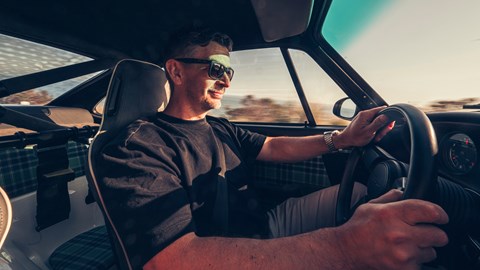
First impressions are all good. The seats – a Dickinson obsession – are perfect; all-day comfortable but so supportive you’re never distracted by having to hang onto the steering wheel mid-corner. Given the grip available on this afternoon’s hot, dry tarmac (tyres are 18-inch 245/35 Michelin Pilot Sports on the front, 295/30 at the back), that’s no mean feat. And because this remains a 964, it’s everything a 992.2 can’t be, so light (circa 1280kg, depending on spec), compact on the road, big on glass rather than pillars and alive with feel through the hydraulically-assisted rack (Singer rebuilds the 964 power steering system with faster gearing, bringing sharper responses and – together with the wider front tyres – a additional heft).
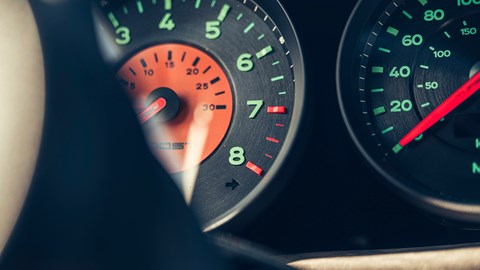
Tyres, brakes, engine oil, cabin… everything’s warm now, so I click the air-con up a notch and quit the short shifting. The alacrity with which the 911 punches up to speed should be startling. Like falling out of a plane, speed is acquired instantly and without effort. And yet there’s nothing startling about it, so smooth is the delivery and so honest and open your dialogue with the car. The gearshift, like a proper espresso, is short, sweet and powerful in its effect on your heart. Created by Ricardo for Singer, it’s a bespoke six-speeder (the 993-derived ’box Singer uses in its Classic resotarations couldn’t handle the Classic Turbo’s torque). You always get the shift you wanted, quickly and with such matter-of-fastness you wonder why we ever thought to leave manuals behind. Incidentally, Singer’s dabbled with PDK ’boxes in CAD; too big, thankfully.
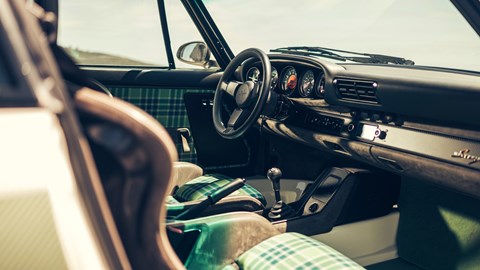
With the first hairpin comes a reminder to adjust the stability control. It defaults to a very conservative setting, such that as the 911 and I arc into the corkscrewing second-gear left-hander and then go to explore the rear Michelins’ limits on exit, wheelspin is massaged away so discreetly it just feels like the twin-turbo 3.8-litre six has dozed off momentarily. It’s an impressive display of delicacy, but I want to feel the full force of this money-no-object motor, a 3.8-litre evolution of the ‘Mezger’ flat-six with twin variable-vane turbochargers borrowed from the 992, complete with electronic wastegates and air-to-water intercoolers. Outputs start at 450bhp, though this ‘Fuji’ example’s dialled up to a little over 500bhp.
Playing with the stability control setting, Sport (dubbed ‘lap times for dummies’ by Fawaz) and Track (‘expert play time; it’ll try to save you if you’ve really fumbled things but it’s not guaranteed’) offer more scope to let the car move. And move this thing does. From the hairpin, Deer Creek climbs at a ferocious rate, weaving with every ridge and fold in the mountainside as it makes for the sky.
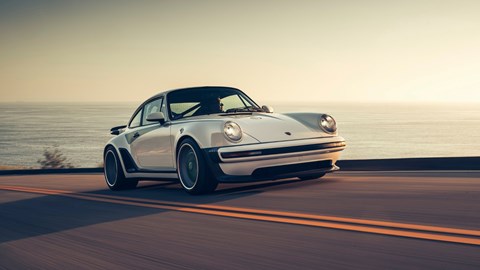
Acceleration is delivered in a single thick seam from next to no revs, and the sensation is entirely unlike that of a similarly quick modern car. Where so often the sense is of huge power moving a lot of weight, here it’s of a healthy glut of grunt meeting with very little resistance, like a little sailing dinghy in storm-force winds. The result is more satisfying somehow, and purer. And then there’s the noise. Relatively unobtrusive at a cruise, the twin-turbo six’s soundtrack – broadcasting via a titanium sports exhaust – is now hard-edged and multi-layered, every shift in load, throttle position and revs bringing out more of its meaty musicality.
Earlier on, this example of the Classic Turbo service adhered absolutely to Fawaz’s description of the project’s dynamic character: ‘Wanted something that gave you a tremendous amount of confidence; locked down, like you’re driving a piece of granite,’ he told me.’ If you want to drive something that scares you, we’ve got that. But here we wanted the car to feel like you could hammer it as hard as possible and it’d never get out of line.’
Sure enough, this thing’s doing nothing to undermine my growing suspicion it might be some kind of Michelin-shod cheat code, so faithfully does it it respond to my every input and so ridiculously unstressed does it feel running the the kind of corner speeds that reel in normal traffic like it’s not moving.
Then, just as I’m worried this new turbocharged era might be a little more mono-dimensional and less exciting one than Singer’s first age, amazing things start to happen. I’m pushing harder, the electronics are leaving me to it and the tactility this new/old 911 begins to demonstrate is on a level I’m not sure I’ve experienced before; its mix of monumental mechanical grip and high-definition adjustability confusing at first. I tend to think of the two things as mutually exclusive, but Singer’s inspired blueprinting of 40-year-old 911 dynamics is begging to differ.
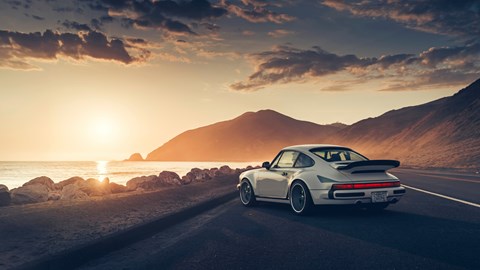
The sheer grip on offer means you can drive quickly and neatly until the sun’s dipped beneath the horizon and the surfers are towelling the sand from between their toes, guiding that low and very pretty nose with direct, almost kart-like steering. And yet every little lift, modulation of the brake pedal and squeeze back on the throttle has a pronounced on the car’s balance, trajectory and attitude, the unique 911-ness – trailing arm rear suspension; rear-engined weight distribution – the ghost in the machine that keeps it from becoming in any way inert or passive. That old-school interactivity is still there, just filtered, massaged and made more predictable than it ever was in-period.
The only rough edge in this hypnotically cohesive driving experience is the first degree or two of brake pedal movement, in which not much happens. Such is the power and feel at your disposal thereafter that the impotence in that first millimetre or two of travel can be distracting, occasionally derailing your flow until muscle memory gets a fix on exactly where the pads begin to work the discs in earnest.
Explains Fawaz: ‘Where you’re really happy to have the carbon ceramic brakes is on a circuit, where the stopping power is off the chart. This car was one of the first to be restored, ahead of Goodwood Festival of Speed last year, and some of the calibration and systems are still earlier versions. We’ve since developed changes to the clevis and the brake booster geometry to optimise the feel at the pedal.’
California has a way of calling time too soon, the sun dropping to the horizon fast and early. It’s getting dark as the Fuji car and I work our way back to LA, the indigo sky backlit and luminous. And out there – omnipresent and brooding in the half-light – is the Pacific, a shimmering, black metallic expanse.
Price: £810,000 (typical specification, plus taxes)
Powertrain: 3746cc twin-turbo flat-six, six-speed manual, rear-wheel drive
Performance: 503bhp @ 6500rpm, 442lb ft @ 2500rpm, n /a sec 0-62mph, n/a mph
Weight: 1280kg
Efficiency: n/a mpg, n/a g/km CO2
On sale Now
The Golden State’s golden blacktop
Angeles Crest
Famous and popular and therefore plagued with too much attention, ‘the Crest’ is nevertheless a must-drive for anyone in the area with a hire car they need to exercise. Even if you keep you speeds down the place is just so stinkingly beautiful you’ll still have a ball.
Little Tujunga
A stone’s throw from the Crest are the lesser know Tujunga Canyon roads, and of them Little Tujunga is the bigger drive. A ferocious test of car and driver, its climbs and descents never stop turning and love to lob lumps, dips and meaty cambers your way without notice. Locals prioritise suspension tuning over power, and it’s not hard to see why.
Pacific Coast Highway
Mostly far too open for fast fun, the PCH is more about the views and the vibe along most of its length. But there is one sensational stretch between Morro Point and Carmel which, if you time right, is one of the very finest places on the planet to drive a motor car. Good seafood is plentiful from start to finish, so don’t bring your own sandwiches.
Maricopa Highway
Just north of LA’s Oxnard and Ventura, the town of Ojai is one of those cute little California places you drive through thinking, “Yep, I could retire here – nice”, only to check the property prices and realise it’s never going to happen. Largely deserted, the 33 north to Maricopa is mostly sensational, and eventually hooks up with the 5 if you’re looking to head north to Carmel and San Fransico.