► Omoda’s PHEV-only flagship
► 93-mile electric range, 0-62mph in 4.9sec
► Top-spec luxuries at poverty-spec prices
Building on the runaway success of the 5 and E5, the Omoda 9 is the ‘affordable premium’ brand’s shiny new D-segment plug-in hybrid SUV. It’s appeal is simple to understand, with the single lavishly equipped model costing around the same as the entry-level Skoda Kodiaq and Volkswagen Tayron PHEVs.
The 9 is better equipped and outguns its rivals on the spec sheet, too. A giant battery gives best-in-class electric range and a sub-5.0 second 0-62mph time is claimed. All very impressive, but the 5 and E5 are best described as unpolished, has the 9 played truant at finishing school, too?
We’ve now spent a week and covered hundreds of miles in the Omoda 9 to answer that question and more. If you’re curious about how we test at CAR, take a look at our explainer page.
At a glance
Pros: Keenly priced, strong acceleration, mostly pulls off the premium feel
Cons: Fidgety low-speed ride, fiddly infotainment, more polish required
What’s new?
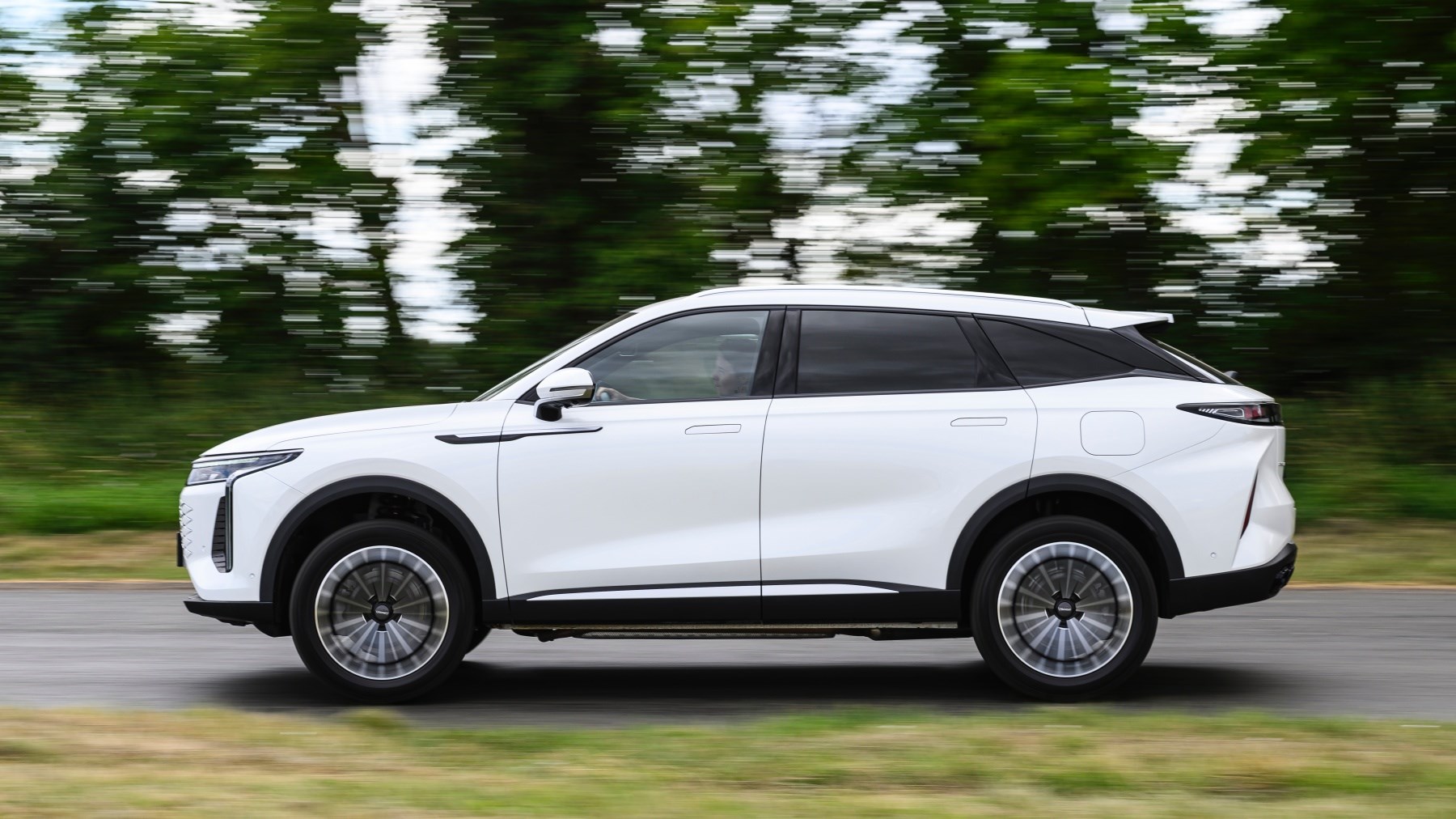
The Omoda 9 is all-new, though it shares an inoffensive design language with the popular Omoda 5 and E5. Like some other Chinese products, the Omoda 9’s styling is a hodge podge of the brands it’s aspiring to, so there’s a dollop of Lexus at the rear, a pinch of Land Rover at the front and a big helping of Mercedes inside. The four black plastic fake exhausts are pure Temu, though.
Underneath the Omoda 9 is somewhat familiar to what we’ve already seen from the Chery group. Like the Jaecoo 7, there’s a ‘Super Hybrid System’ under the bonnet. Unlike the Jaecoo, it gets an additional electric motor on the back axle for four-wheel drive and more than double the power. At the launch of the Omoda 9, executive vice president Victor Zhang told us that the SHS powertrain was most suited to the big SUV, so don’t expect pure petrol or EV versions.
What are the specs?
The plug-in hybrid system at the heart of the Omoda 9 combines a 1.5-litre petrol engine, three-speed automatic gearbox, an electric motor for each axle and a 34.46kWh lithium-ion battery. The engine itself boasts a thermal efficiency of 44.5% and usually acts as a generator if you don’t charge the 9 up. At moments of additional load it can also drive the front wheels directly.
For instance, in traffic jams you’ll get a single EV motor, while long distance driving will have the engine powering the wheels directly. At lower speeds, the SHS system will drive and charge itself, while full throttle wakes up both electric motors and gets the engine driving the front wheels.
The result is a 443bhp of power and 516lb ft of torque, good for a 0-62mph sprint of 4.9 seconds and top speed of 124mph. Fuel efficiency – along with smooth delivery – is the key focus though, with the SHS giving an EV-only range of 93 miles (WLTP) with a full battery.
However, the engine is designed to come on a 20% charge so the official economy figure is a relatively low 201.8 mpg, though that scales to 43.6mpg over a full WLTP cycle. That checks out with our driving, although gentler runs that avoided motorways would see the average mpg creep towards 50mpg.
Even braking has two separate behaviours: low speed stopping uses just one motor for regeneration, while higher speed braking makes use of two. This and the huge – for a PHEV – battery means seriously effective regen braking, with up to 160kW recovery seen on the driver’s display during our drives.
Expect an electric range of above 50 miles even if you let the engine fire at 20%. Why do this? It ensures you’ve always got 443bhp at your disposal and should improve battery longevity. You can run it to 0% if you want via the infotainment, but you are warned against it.
How does it drive?
It’s hard to fault the 9’s hybrid system, not so much the rest of the driving experience. The SHS powertrain is as smooth as you’d hope and happily as frugal as Omoda promises. In Eco mode its delivery is stodgy but predictable and everything you’d expect from a petrol-sipping mode. Rotate the driving mode knob to Normal or Sport, and things get more linear and more responsive.
The most impressive thing here, though, is that despite having nine driving modes, the SHS system seems to seamlessly shift between each one. Like a duck in water, it appears to be busy under the surface, but relatively graceful above. Only when you demand full acceleration do you feel a slight jolt as the three-speed auto shifts, and performance drops notably until the engine comes back on the boil. Still, acceleration is brisk in full electric mode and forceful when the engine joins in.
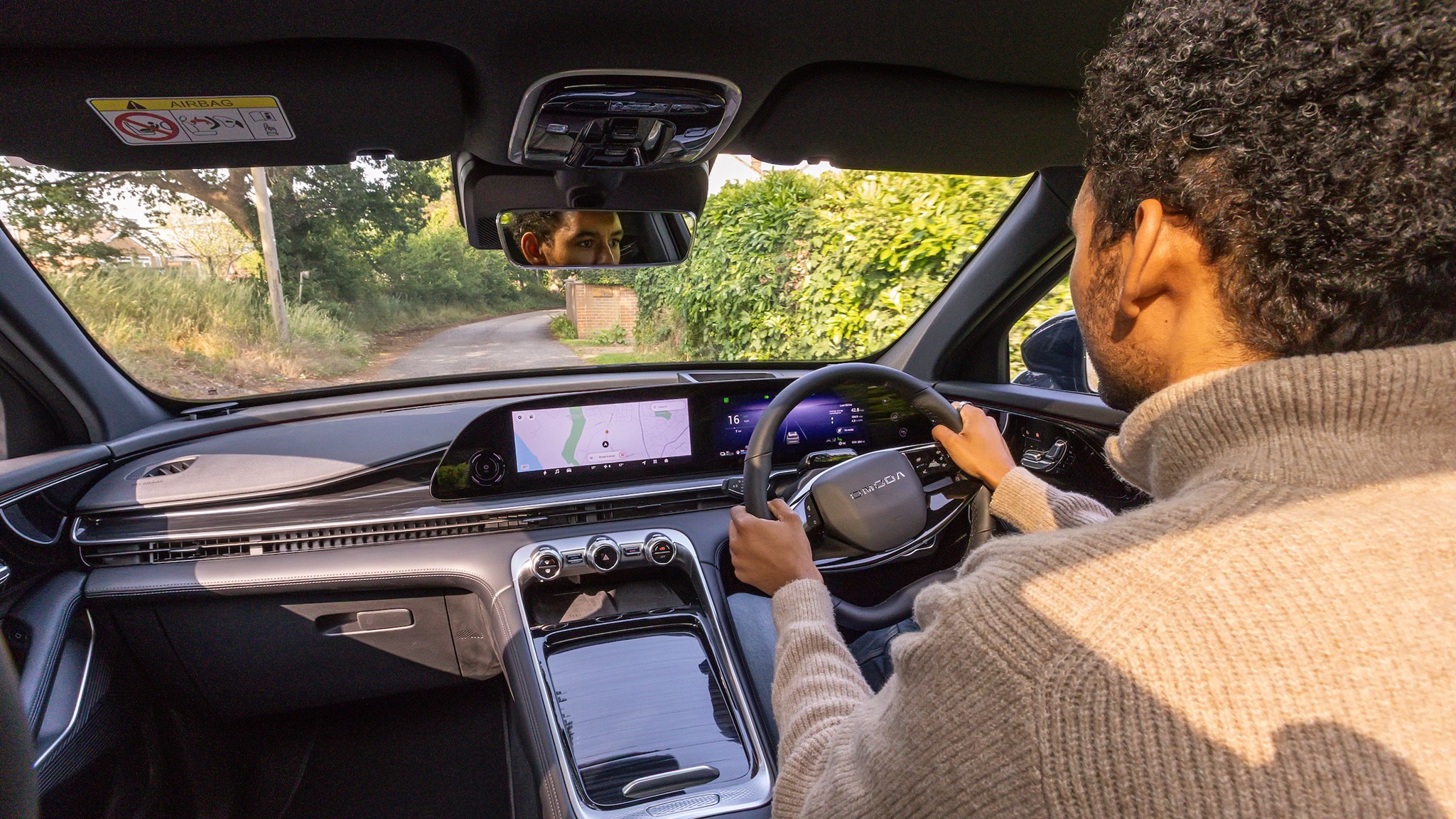
There’s no mushy push through regen when you press the brakes, with their initial response perhaps a bit too sudden at times. Steering weight is on the light side if accurate enough to manoeuvre through town and at high speed. Combine all the above with decent visibility over the never-ending bonnet and the Omoda 9 is no sweat to drive, despite its size.
So what’s wrong? That’ll be the ride primarily, which varies between fine and choppy depending on both the speed and the road conditions. It’s on the soft side when in Normal and Eco modes, allowing some not unpleasant waft and providing decent comfort at speed. This is assuming the Tarmac is smooth as surface imperfections are the 9’s undoing.
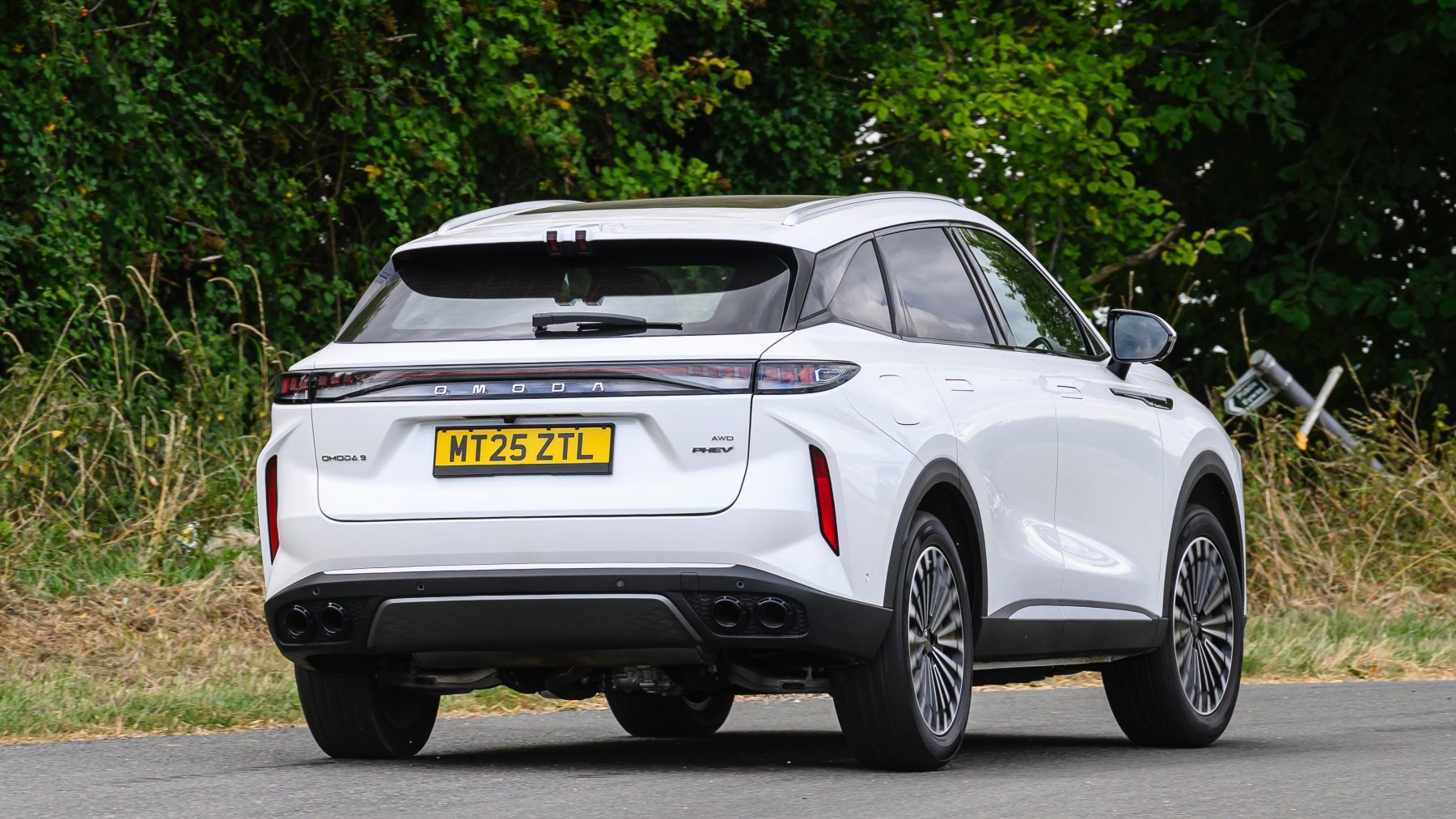
It patters over pockmarked surfaces and jiggles around town despite chunky sidewalls covering relatively modest 20-inch wheels. Sport mode firms things up thanks to adaptive dampers, bringing a useful degree more body control with a more stiff-limbed feel. No matter what you do it rolls into bends feeling every bit its 2.2 tonne weight. Some useful rear bias to the drive means it pings out of corners effectively, but the 9 makes it clear it doesn’t appreciate being cornered quickly.
What about the interior?
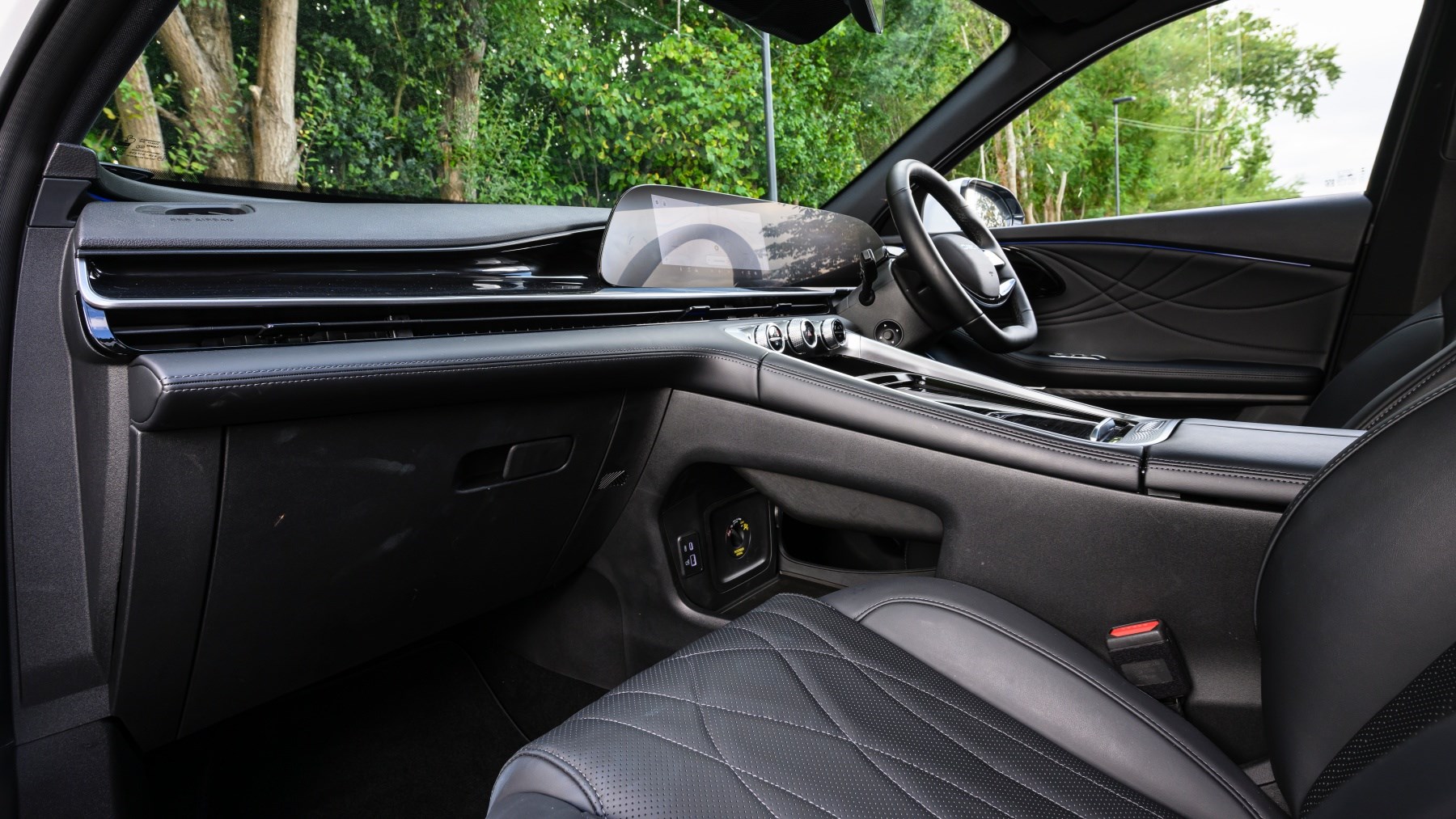
There’s no doubt the 9 pulls off the premium thing pretty convincingly. Save for some nasty, easily scratched black plastic on the door cards and a couple of questionable trims, it’s mainly soft touch plastic and not unpleasant faux leather.
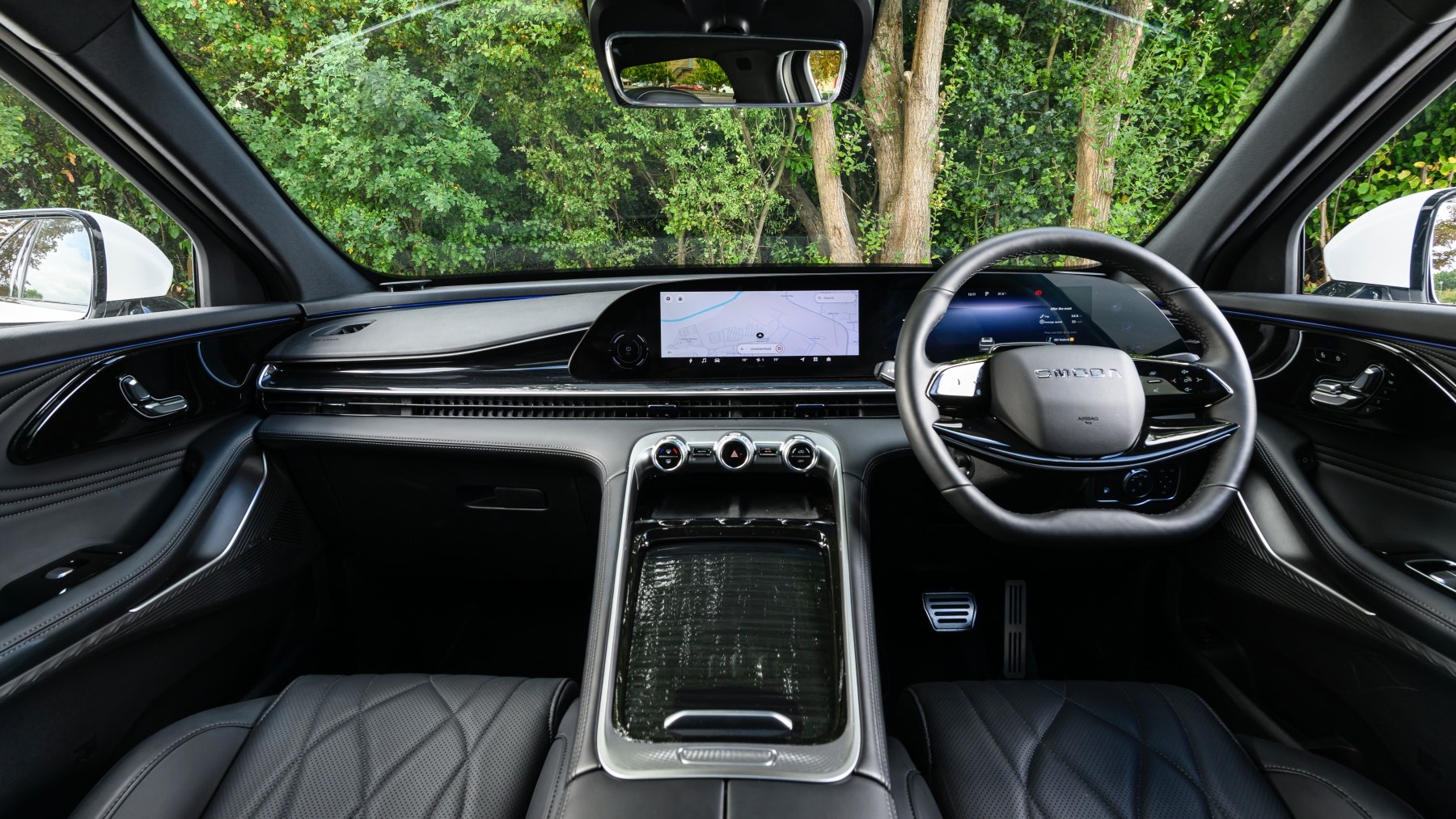
There are two large 12.3-inch screens which are sharp and as a large as you’d hope, if saddled with tricky to navigate software with some small icons on the central touchscreen. Swipe up from the bottom of the screen and you reveal the full air-con menu, swipe down from the top and you can access the driver assist settings
Thankfully, the A/C and driving modes both have physical controls, although there are no proper buttons on the steering wheel. Seat controls on the door are very Mercedes minus the buttons for the heated and ventilated seats. You’ll be two screens deep into the air con menu for that.
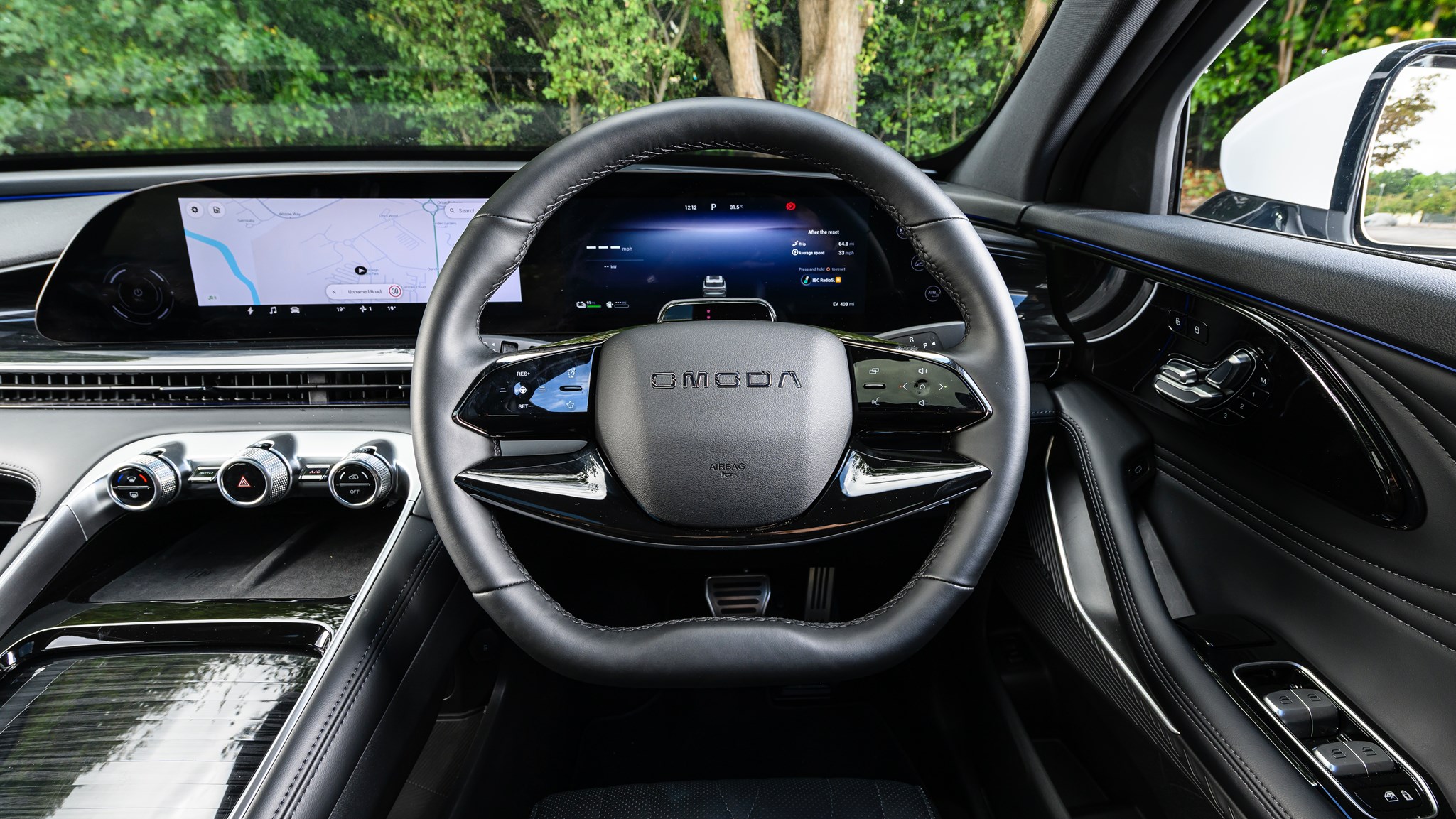
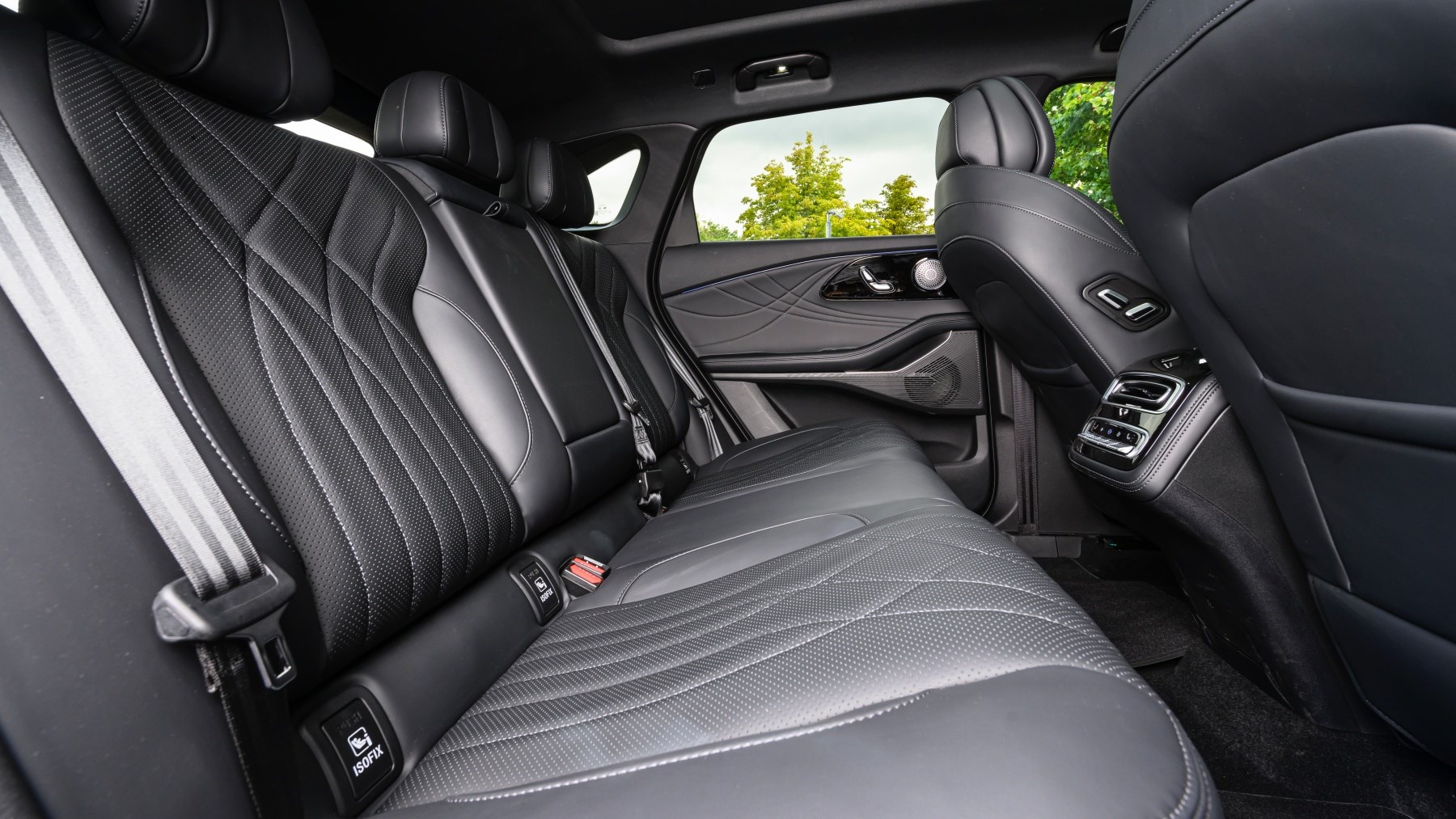
Elsewhere, you get other creature comforts like reclining rear seats that are both heated and ventilated, plus there’s a panoramic roof above. You have both Apple CarPlay and Android Auto if you need it, and there’s also a 14-speaker Sony system which sounds better than other car’s basic stereos at this price. Interestingly it comes with headset-mounted speakers too.
That’s about it for tech, but the key thing here is that this is all standard – continuing the now customary kitchen sink approach we see from Chinese brands. The only thing you pay for is paint colours.
Before you buy?
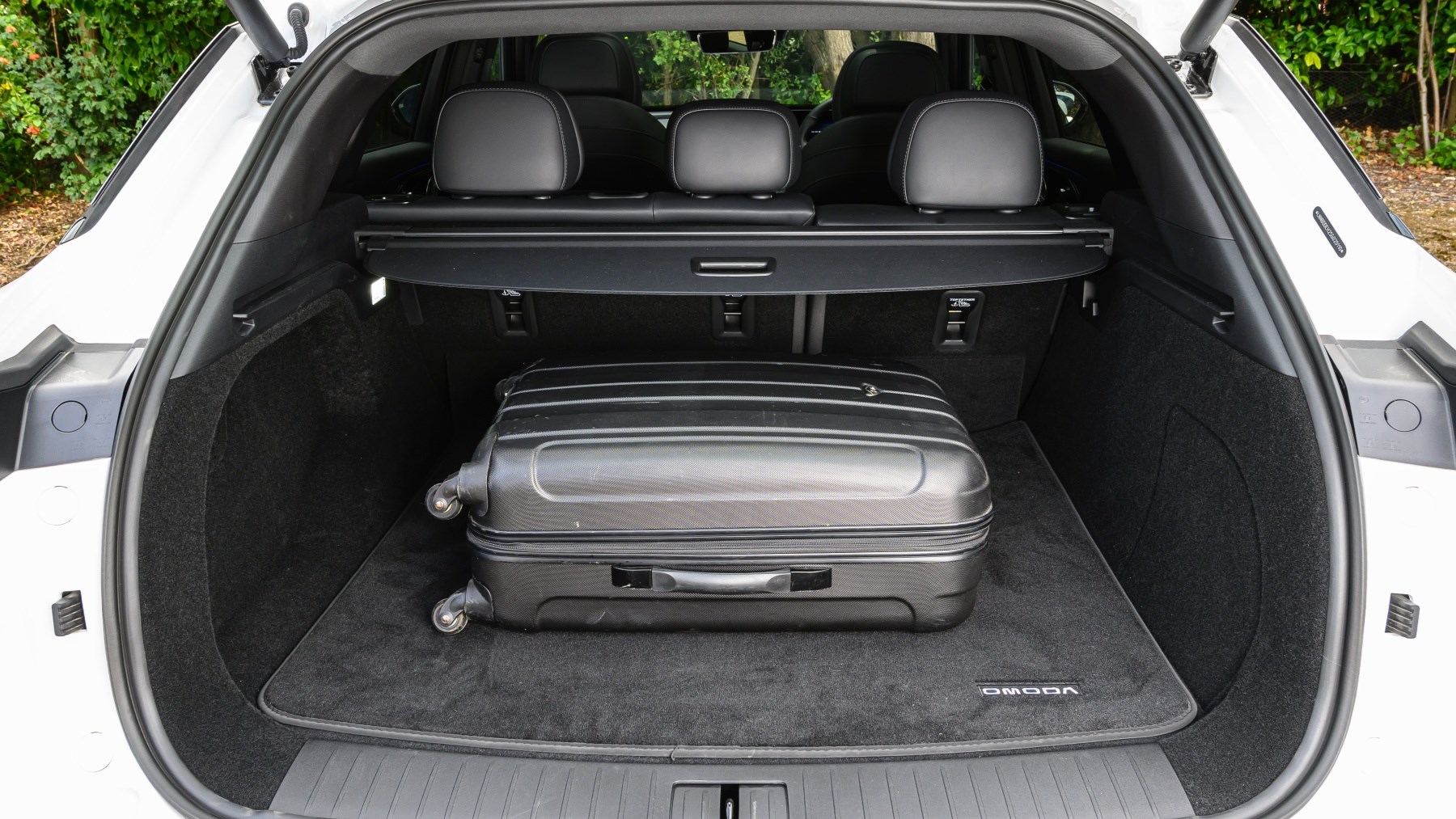
With just one powertrain on offer and most equipment as standard, there’s very little to choose within the Omoda 9 range. It’s priced inline with entry-level two-wheel drive plug-in hybrid versions of the Tayron and Kodiaq, with neither offering four-wheel drive or anywhere near this level of performance. A seven-year or 100,000 mile warranty also beats almost every rival.
Verdict
This is easily Omoda’s best effort yet, proving better to drive and plusher than either the 5 or E5 SUV. Chery’s Super Hybrid System really is the star of the show, combining strong performance with an exceedingly useful electric only range, good efficiency without plugging in and smooth operation almost all of the time.
Usefully big and keenly priced it may be, but its clumsiness over surface imperfections and lumbering handling make it feel less well sorted than key rivals. A few unacceptably cheap interior plastics disappoint, as does the bewildering infotainment menus. As the Omoda 5 and E5 are already getting updated to address complaints made by us and other publications, maybe wait six months if you fancy a 9.