► We drive a near-finished Polestar 5
► Four-door GT takes on Taycan and Emeya
► Tested at UK’s Millbrook proving ground
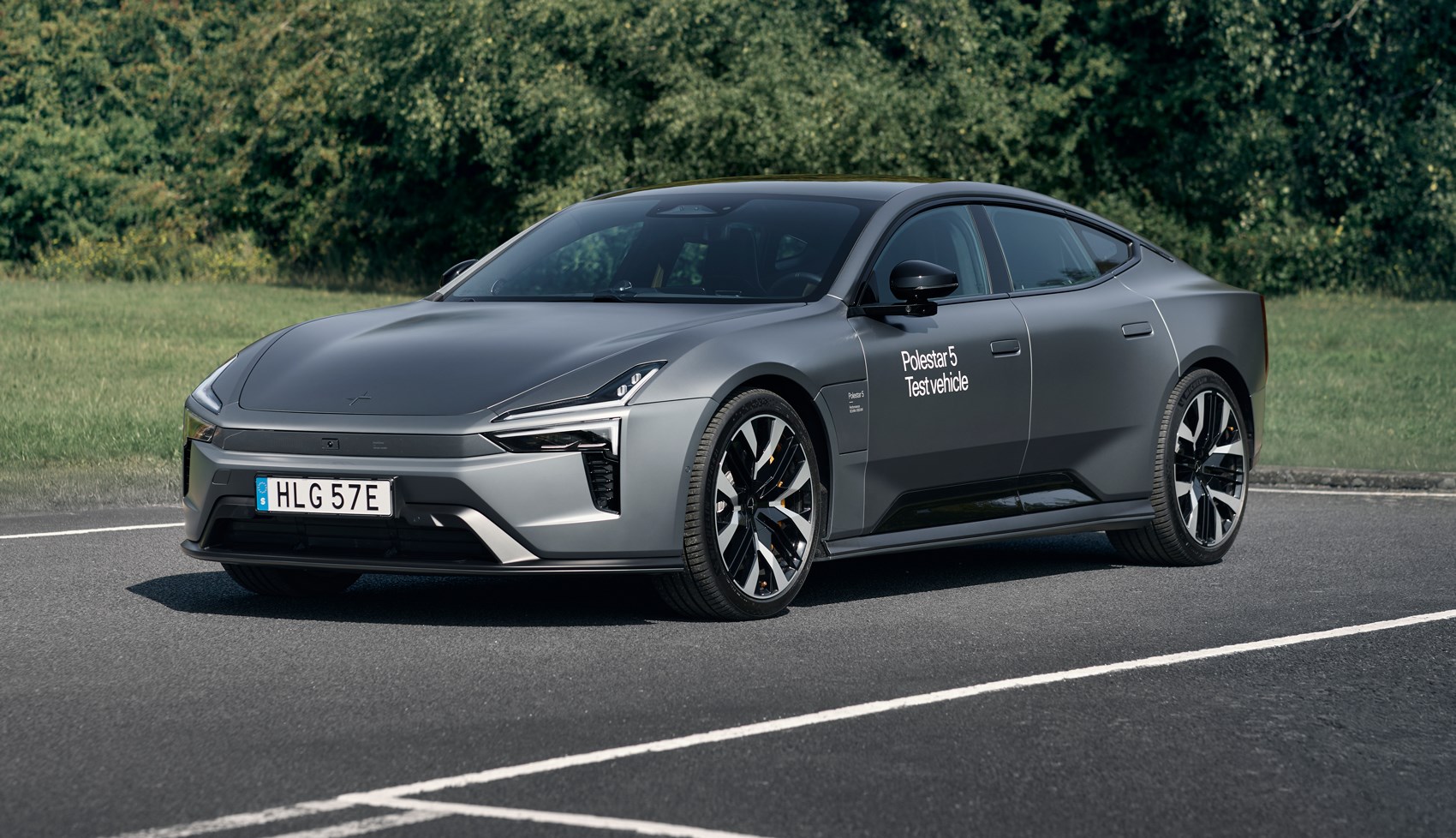
No, you’re not reading an old review – this really is the first time we’ve actually driven the Polestar 5. This is the Scandi brand’s four-door GT that’s designed to compete against the Lotus Emeya, Audi e-Tron GT and Porsche Taycan and is a car that’s seemingly had one of the longest public gestation periods in recent memory.
It’s also being described as a ‘paradise for nerds’ within the brand – engineers who’ve been obsessive about every detail – and yet promises ‘no bullsh*t for those who take the plunge.
We’ve driven a pre-production model at the UK’s Millbrook proving grounds, testing it across the windy hill route, banked high-speed circuit and blasted off down the facility’s mild straight. Let’s get into it.
At a glance
Pros: Feels light and nimble despite weight; well built, clever interior
Cons: No rear window; real-world efficiency is TBC; we’ve only driven it on a test track
What’s new?
The 5 is the production result of the near-identical Precept concept that was unveiled way back in 2020. It’s the first model on a dedicated architecture designed by Polestar, with the 6 convertible set to follow.
The Polestar Performance Architecture, as it’s called, uses bonded aluminium, setting the 5 apart from cars like the 2, 3 and 4 which all use common Geely/Volvo architectures. The electric motor on the rear axle is developed in-house (the front one is supplied by ZF), with much of the 5’s development work being done at Polestar’s UK base at MIRA.
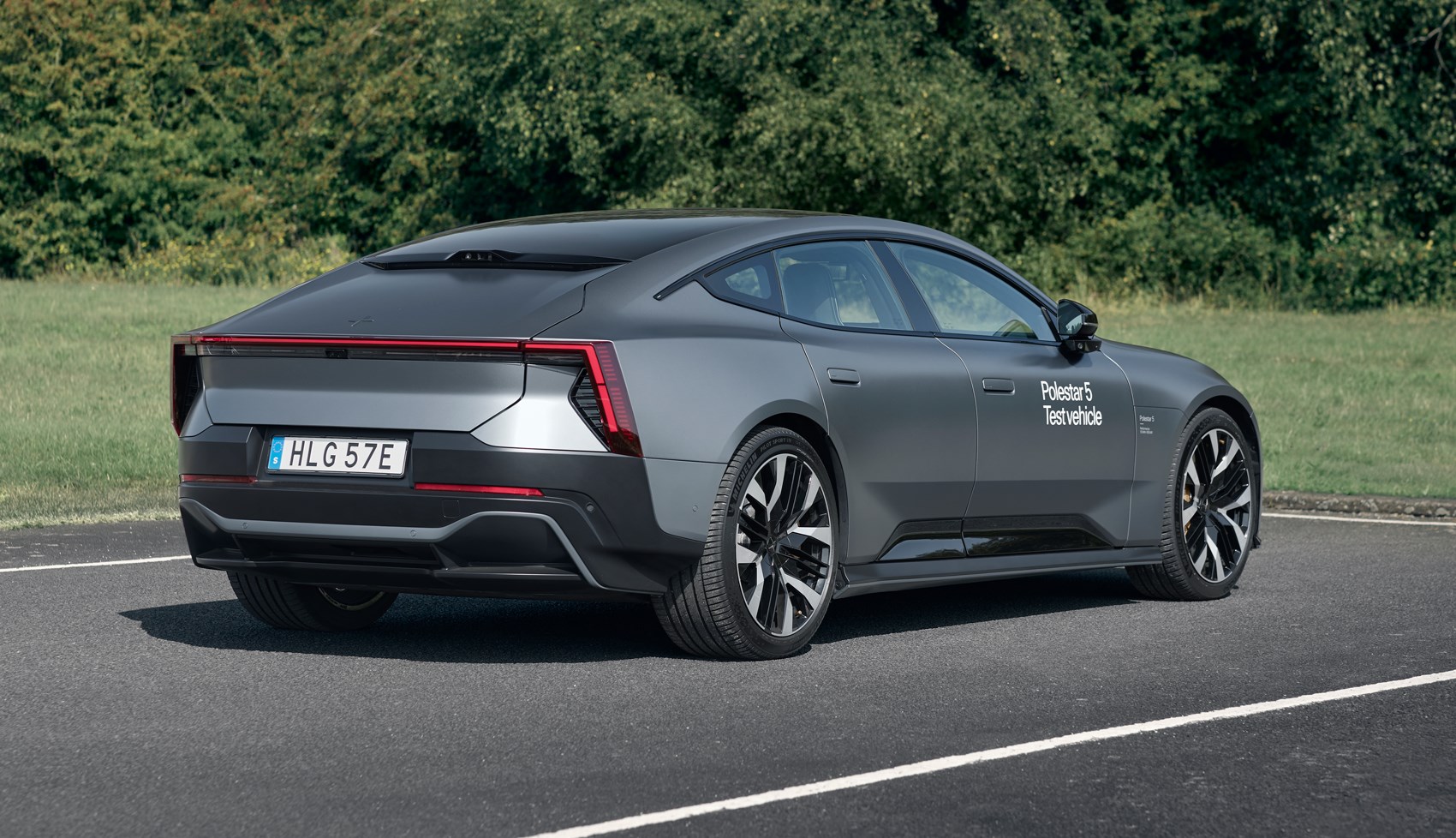
Design details include a ‘smart zone’ that bundles much of the car’s driver assistance tech into the nose, as well as a clean rear end that’s been designed in such a way so you don’t need a rear wing. And, like the 4 crossover, the five does without a rear window.
What are the specs?
Both launch versions of the 5 – Dual Motor and Performance – are confirmed to come with a huge 112kWh battery pack, and the car runs on an 800-volt architecture enabling up to 350kW charging speeds via fast DC chargers. Polestar claims a 416-mile WLTP range from the Dual Motor model, and 351 miles from the Performance version.
As for outright performance specs, there isn’t actually that much difference. The Dual Motor model develops 737bhp and 599lb ft, good for a 3.9sec 0-62mph sprint. The Performance model, meanwhile, ups that to 871bhp and 749lb ft, dropping the launch time to 3.2sec.
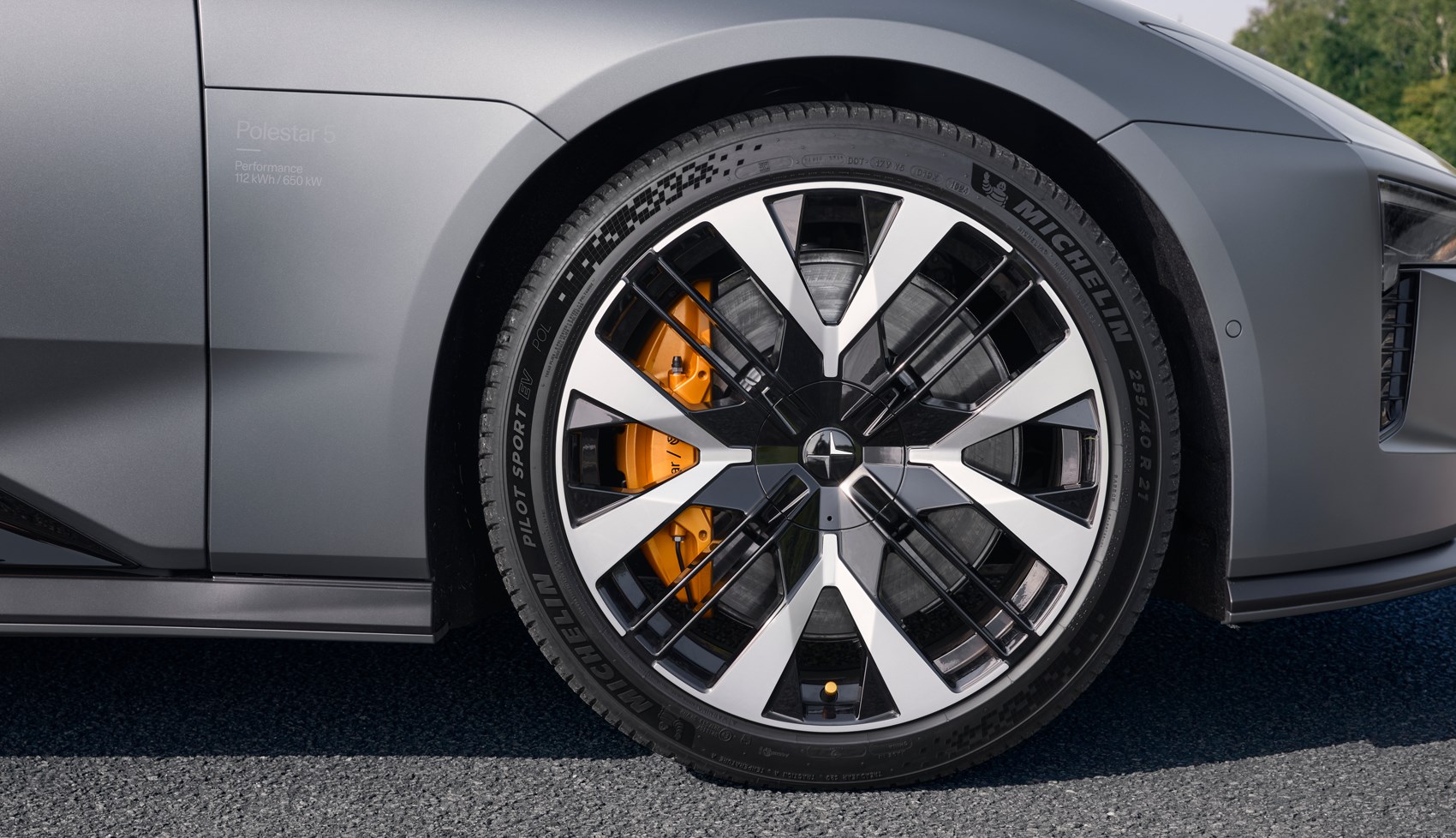
Of course, the main benefit of choosing the Performance version is the additional, er… more performance-y stuff. Larger wheels are standard, and you can swap out the standard Michelin Pilot Sport EV ones for Pilot Sport 5S rubber if you like. Performance models also benefit from semi-active MagneRide dampers and a specific chassis tuning the Dual Motor doesn’t get. Throw in some ‘Swedish Gold’ details and you’re all set.
What’s it like to drive?
Our near-finished prototype is a Performance model, with all the bells and whistles and all of the… performance, funnily enough.
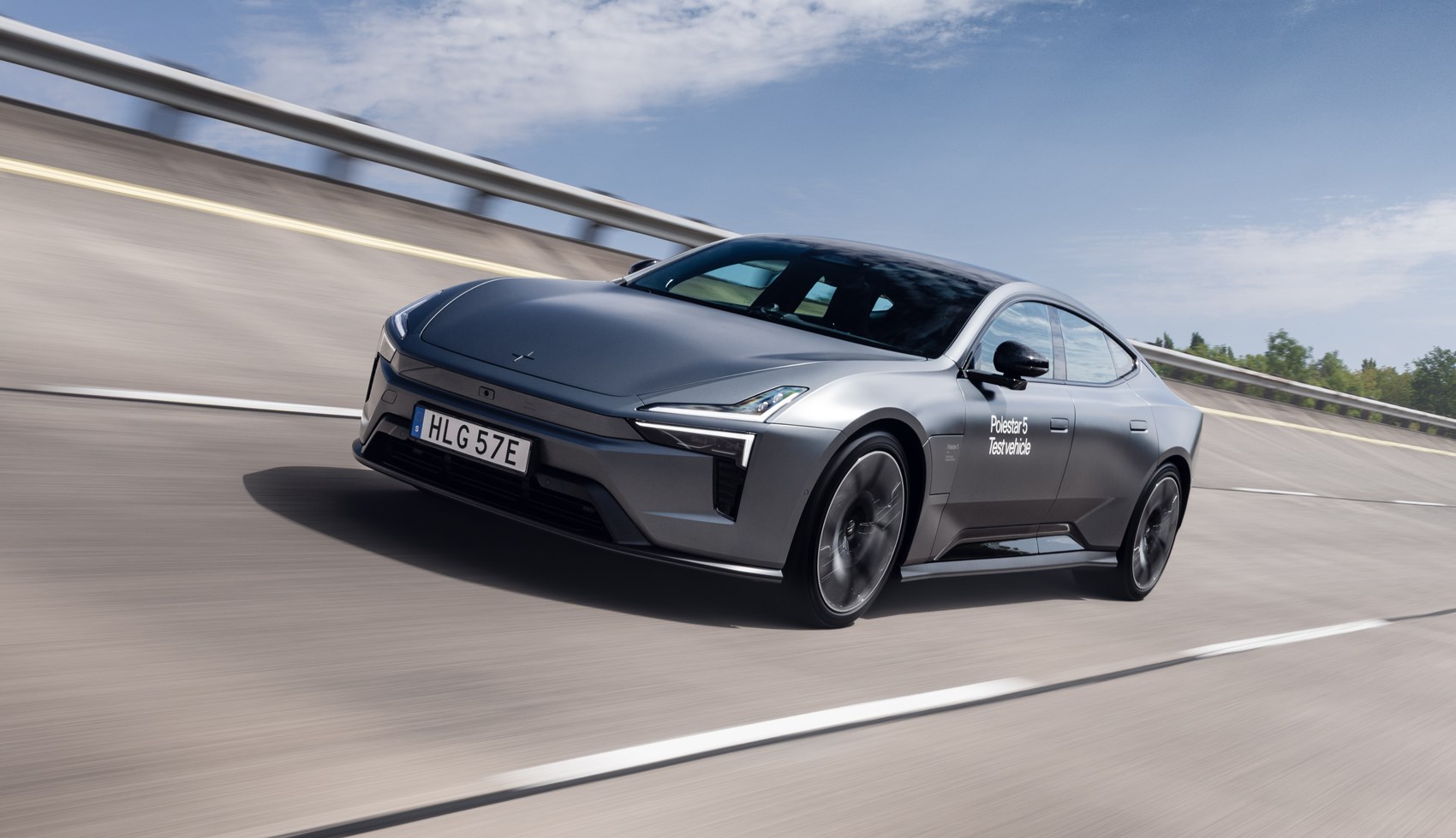
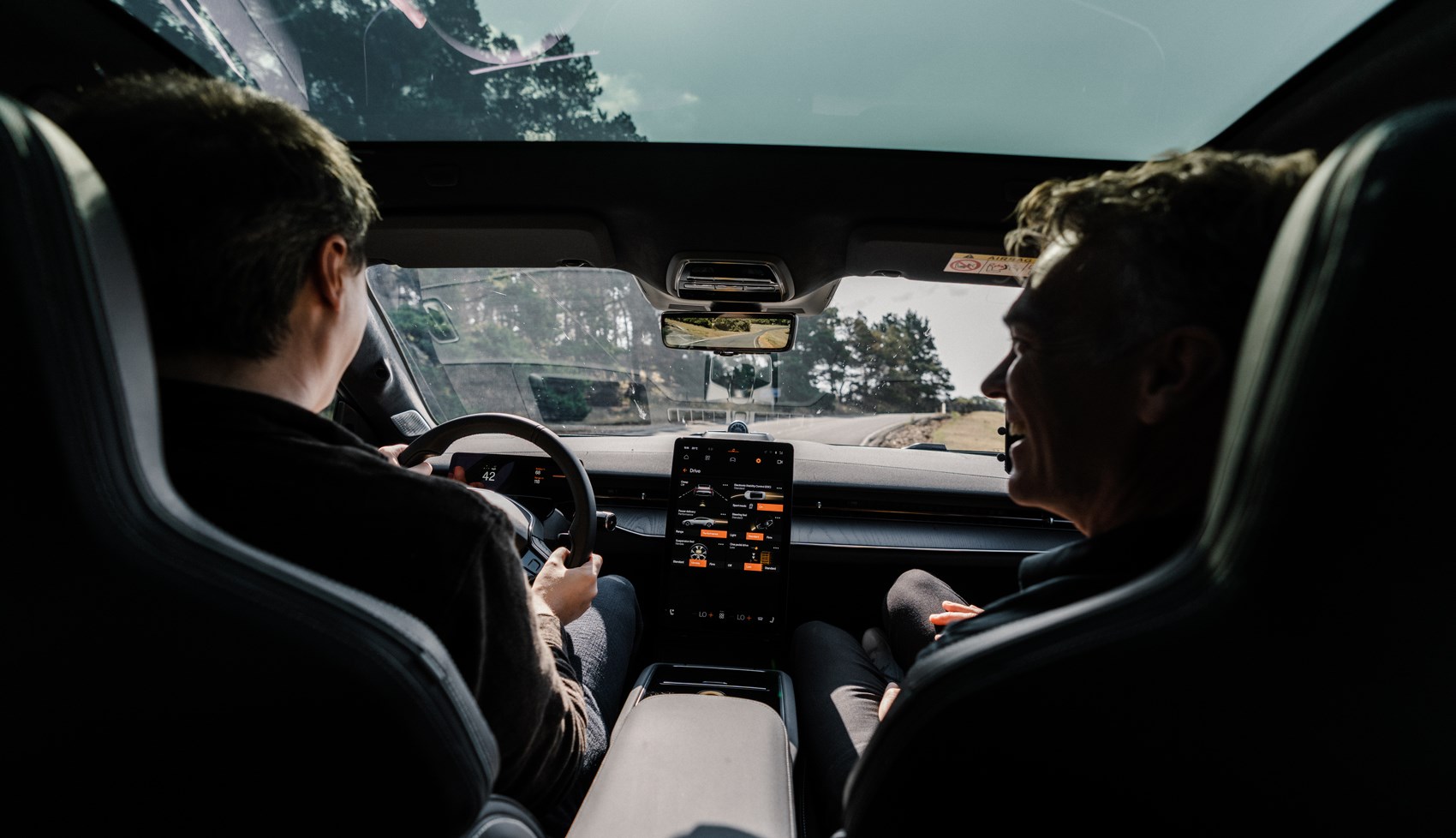
As you’d expect, with 871bhp, the 5 Performance is chuffing quick. Some 0-62mph launches at Millbrook’s proving ground came with the appropriate (and metaphorical) gut punch, propelling myself and Christian Samson, head of vehicle attributes (and my guide for the day) down the facility’s mile straight with ease. We also manage to clock a better sprint time via the car’s in-built timer on the infotainment screen, nailing two separate 2.8sec runs. It’ll also really do its max speed, too, having experienced the 5 hurtling around Millbrook’s high-speed bowl at VMax from the passenger seat.
What cuts through most while chucking the 5 around the twisty and incline-ridden Alpine route at Millbrook, though, is just how light on its feet (wheels?) it feels. The steering, while a little synthetic for my liking, is accurate and well-judged, giving this sense of nimbleness to a car that just so happens to be five metres long and weighs more than 2.5 tonnes. As well as the power on offer, you can really hustle the 5 into tight corners with confidence; body control is properly tied down and sharp changes of direction don’t unsettle it.
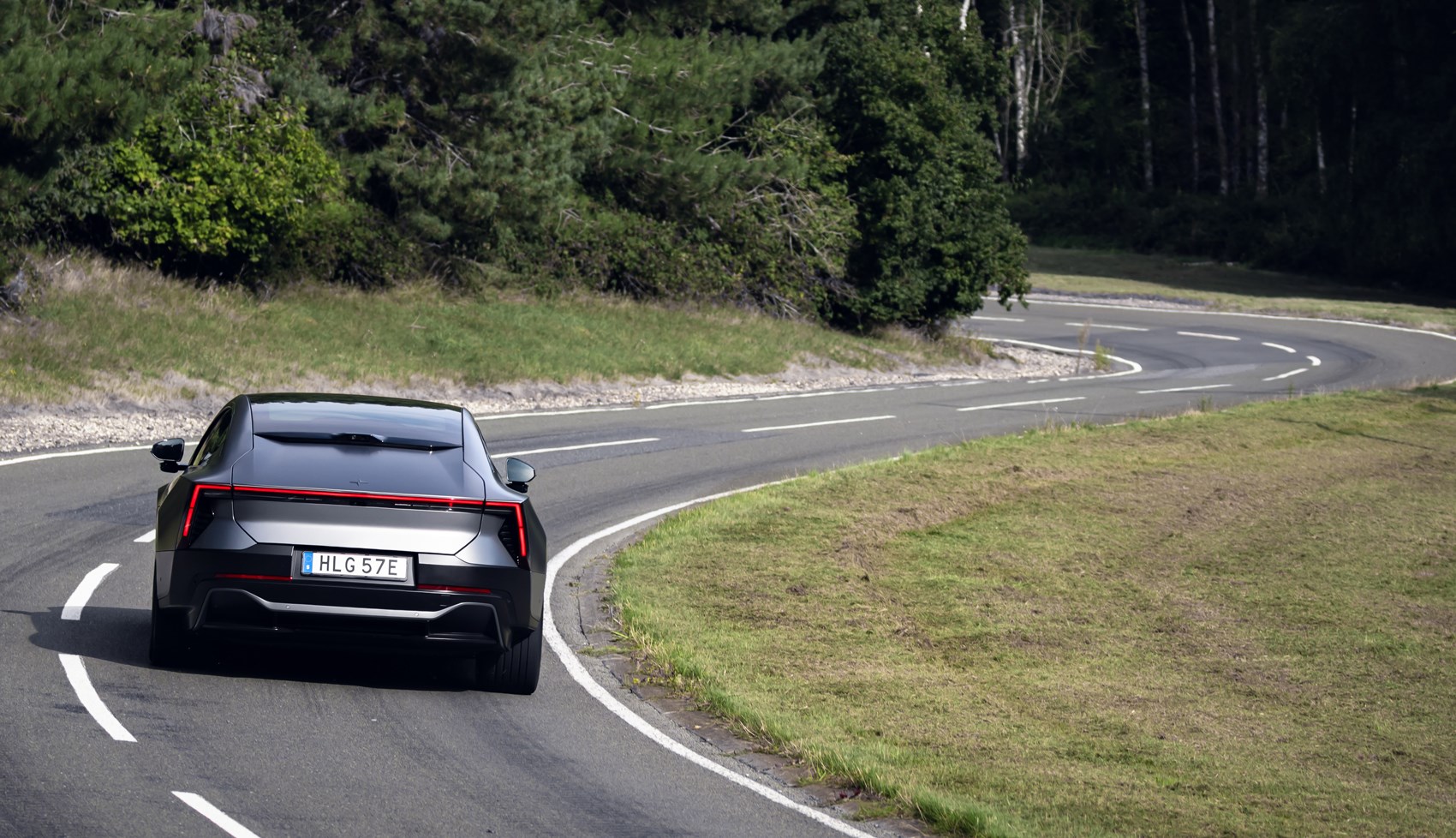
Is the ride firm? It is, yes. Unbearable? Far from it. Unlike my prior experiences with Polestar Performance models running on passive Öhlins dampers, the as-standard MagneRide setup on the Performance version strikes a fine balance no matter what mode. There’s a little jittering over rough tarmac at slower speeds, but impressive stability while at a motorway cruise and beyond. Definitely the sweetest-sprung Polestars I’ve experienced – although we’ll need to try the passive damper’d Dual Motor model at some point for a better comparison.
I’ll also admit that, because I was having such a hoot chucking the 5 around that I did manage to get all four wheels off the ground driving over the Alpine route’s most famous crest. Sorry… (he says, with a big grin on his face).
What’s the interior like?
There’s a lot of familiarity in here, particularly if you’ve been close to the 3 or 4 SUVs. If you haven’t, it’s worth flagging that many of the 5’s controls are lifted out of those cars; the steering wheel, stalks and large central touchscreen are broady what you’d find there, too. That also means a general lack of physical switchgear, save for a very tactile volume wheel in the centre console.
The driving position is very adjustable (though my back may call the seats in our Performance test version a bit hard), and you’re cocooned inside – it’s definitely a sporty driving position.
The overall build quality is great, too, even in this not quite full production prototype model. Particular attention should be given to the interior materials; Econil – a recycled material that uses old fish nets – is used for the carpet material, and recycled polymers are found in the doors and in the seat backs.
Polestar says these materials shave off 7kg, and generate half the CO2 of a newly-made material. Polestar still uses real leather, though, claiming that the carbon footprint is better than synthetic alternatives, and is working with Bridge of Weir – the company that works with the likes of Bentley.
Technically, the 5 is a five-seater, but it’s more ideally set up for four to sit in proper comfort. The two outer rear seats include their own electric adjustment, and the central seat folds down to show a display that can control media and climate.
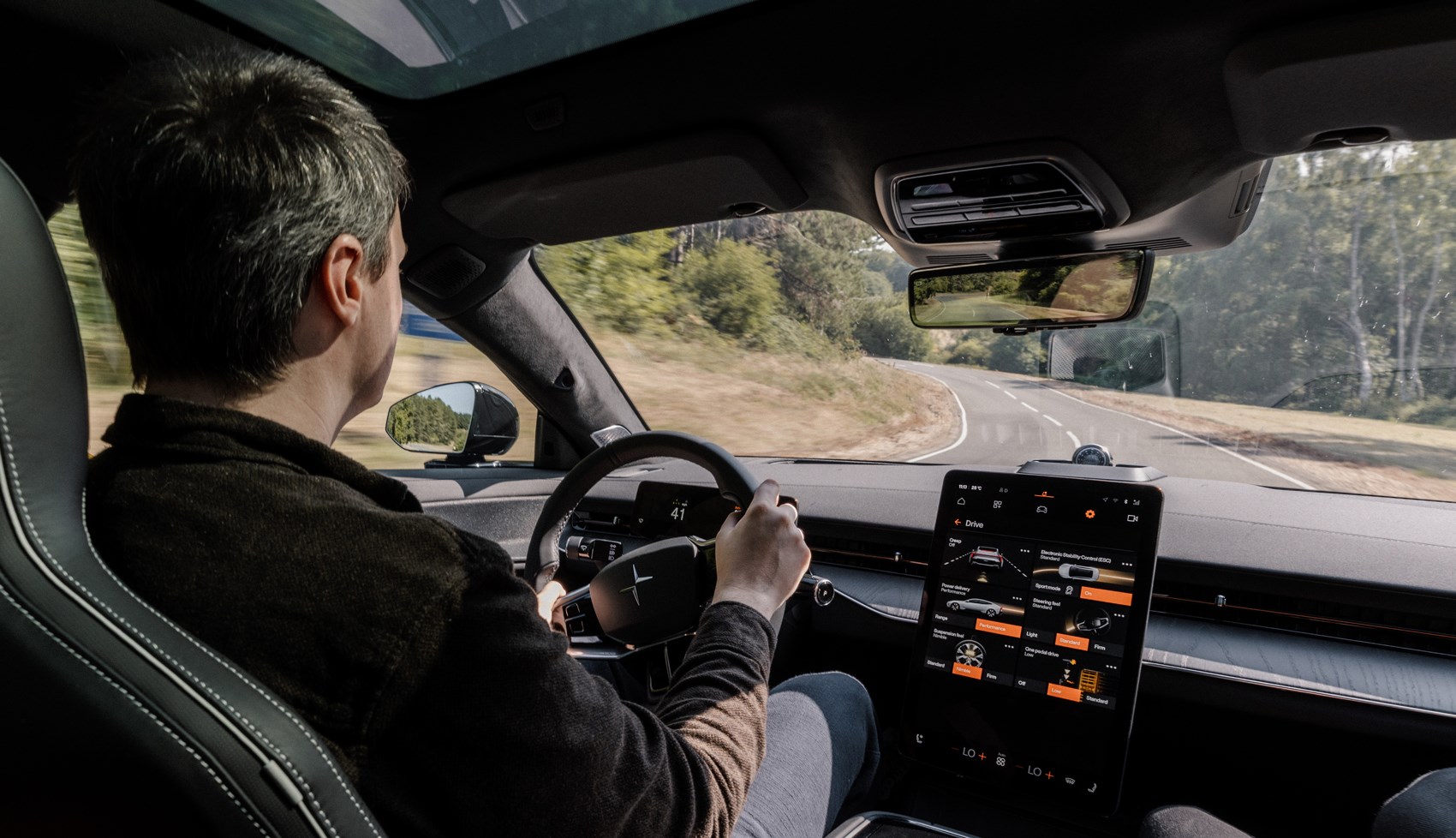
Like the 4, the cocooning nature of not having a rear window is odd at first, and means you have to use a digital rear view mirror. But Polestar’s engineers have worked on how the tech works with your eyes by upping the frame rate of the mirror’s screen and positioning it further away so your eyes can adjust faster. Overall, while I’d personally prefer to still use a rear window, I’d also say it’s the best ‘virtual’ rear-view mirror I’ve experienced.
Boot space is a pretty reasonable 365 litres, which is complemented by a 62-litre frunk.
Before you buy
Polestar has confirmed ‘launch edition’ UK pricing for the 5 already – the launch model having every option ticked before reaching those quick enough to order one. The Dual Motor launch edition model is priced at £89,500, with the Performance launch edition requiring £104,900.
That pricing is extremely competitive in the UK, undercutting the Polestar 5’s closest competition. The Dual Motor model is closest on paper to the Audi RS e-Tron GT, which is around £26k more expensive than the Polestar. The Performance model is a stonking £38k less than the RS e-Tron GT Performance.
That said, a new Porsche Taycan is a little closer – with a similarly-powered 4S model around £7k more than a 5 Dual Motor and a GTS being around £14k more. The closest is the Lotus Emeya, with the 600 version starting from £89k.
First impressions: Polestar 5 prototype
It’s tricky to make something this large and this heavy feel as athletic and yet, with this unfinished prototype, Polestar seems to have managed it. The ride errs on the side of firm and you’ll have to get used to not having a rear window, but the 5 largely feels like a handsome and well-balanced four-door GT that’ll be competitive on price compared to the compeition.
And is it really ‘bullsh*t free’? My in-built detector barely registered anything above zero.
Specs are for a Polestar 5 Performance