► The cheapest pickup truck you can buy in the UK
► Honest and capable off road
► Poor on road ride mars overall experience
Timing can be crucial when it comes to launching a new vehicle. Arguably ‘Straight after a really favourable tax benefit has been cancelled’ isn’t the greatest moment.
The GWM POER300 has to play the hand it’s been dealt though as it’s trying to find new pickup truck buyers at a time when they are facing tax bills that are around five times higher than they were prior to April 2025. Company car (truck) tax is now based on CO2 emissions – previously pickups got away with being classed as commercial vehicles and paying a lot less as a result.
One way to get around paying more company car tax is to make your vehicle really cheap in the first place. So, this is GWM’s approach, and the POER300 is launching as the cheapest pickup truck you can buy in the UK, starting at a shade under £31,500 (not including VAT – you can still reclaim that on your pickup purchase.)
The influx of Chinese brands in the passenger car market has been exponential, but the relative size of the pickup sector meant it hasn’t happened until now. The GWM POER300 is the first, and it’s hard to predict whether it will be the last or not. The GWM bit stands for Great Wall Motors and that’s the company that is also behind the likes of the Ora 03 and the Haval Jolion Pro. (It also makes the gloriously named ‘Tank’ SUV, which we don’t get over here.)
The POER is actually, despite what your instincts might tell you, pronounced power. We didn’t land on that on first reading either, so top marks if you did. It’s not a brand new vehicle, as it’s been on sale in Australia as well as its native China. Although they call it the Ute in the former.
Should I buy a GWM POER300? Yes, I guess, but it depends on what you’re using it for. My initial drive suggests your back would be happier if you shelled out the extra for a Ford Ranger if most of your driving is to be on tarmac.
At a glance
Pro: Covers all the pickup needs, strong diesel engine, clever loading bay step, loads of dealers
Cons: Unheard-of brand, poor on-road ride, slightly strange steering, clonky differential
What’s new?
Everything’s new but nothing is at the same time. Given GWM is asking buyers that are generally relatively conservative and need their vehicle to be a tool first and foremost to consider a new brand, it’s perhaps unsurprisingly taken a fairly traditional approach with the POER300. This means you get space for five, a solid 2.4-litre diesel engine, an even-shaped loading bay and no funny business. It sits on a ladder style steel chassis, has a range of modern safety measures and
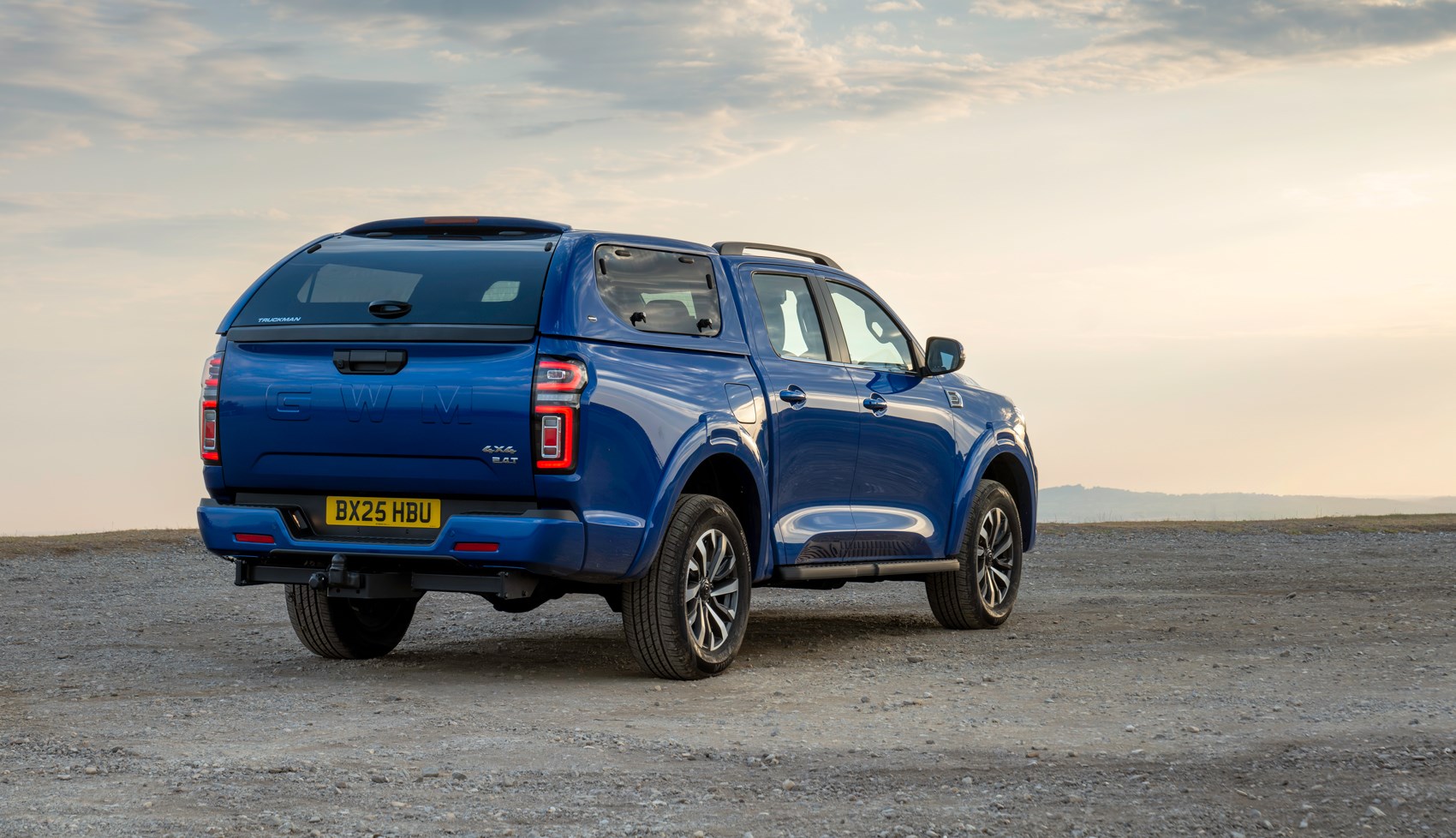
The range is easy to navigate, with one double-cab bodystyle, three kit-stacked trims and only a few colours to choose from.
What are the specs?
There’s nothing here that will cause your standard pickup buyer to get too confused about – the POER300 deals in terms that are long-established and familiar to farmers and lifestyle buyers alike. The 2.4-litre diesel packs 181bhp and 354lb/ft of torque. It also has a few figures that are up with, if not ahead of, the best in class. The economy figure of 32.7mpg is, on paper, better than anything else you can get, albeit only by a few fractions. This translates to a 230g/km CO2 figure.
If such things matter to you then the official 0-62mph figure is 11.0 seconds and the top speed is 99mph. Again, the former of these is fractionally faster than you’d get from the competition, but really it’s mathematical as it doesn’t mean it’s a swift vehicle – it has a kerb weight of 2220kg after all.
Speaking of which, it ticks all the necessary boxes on the weights front too, with a payload of 1050kg, a maximum towing capacity of 3500kg and a gross train weight (the amount the trailer and vehicle can weigh as a combo) of 6200kg.
How does it drive?
It’s not meant to be damning when I say that one of the most reassuring things I can say about the GWM is that there is nothing untoward about how it drives. It’s perfectly easy to get into the POER300 and get going. It’s a simple push-button start, slot the nine-speed auto gearbox into drive and head off.
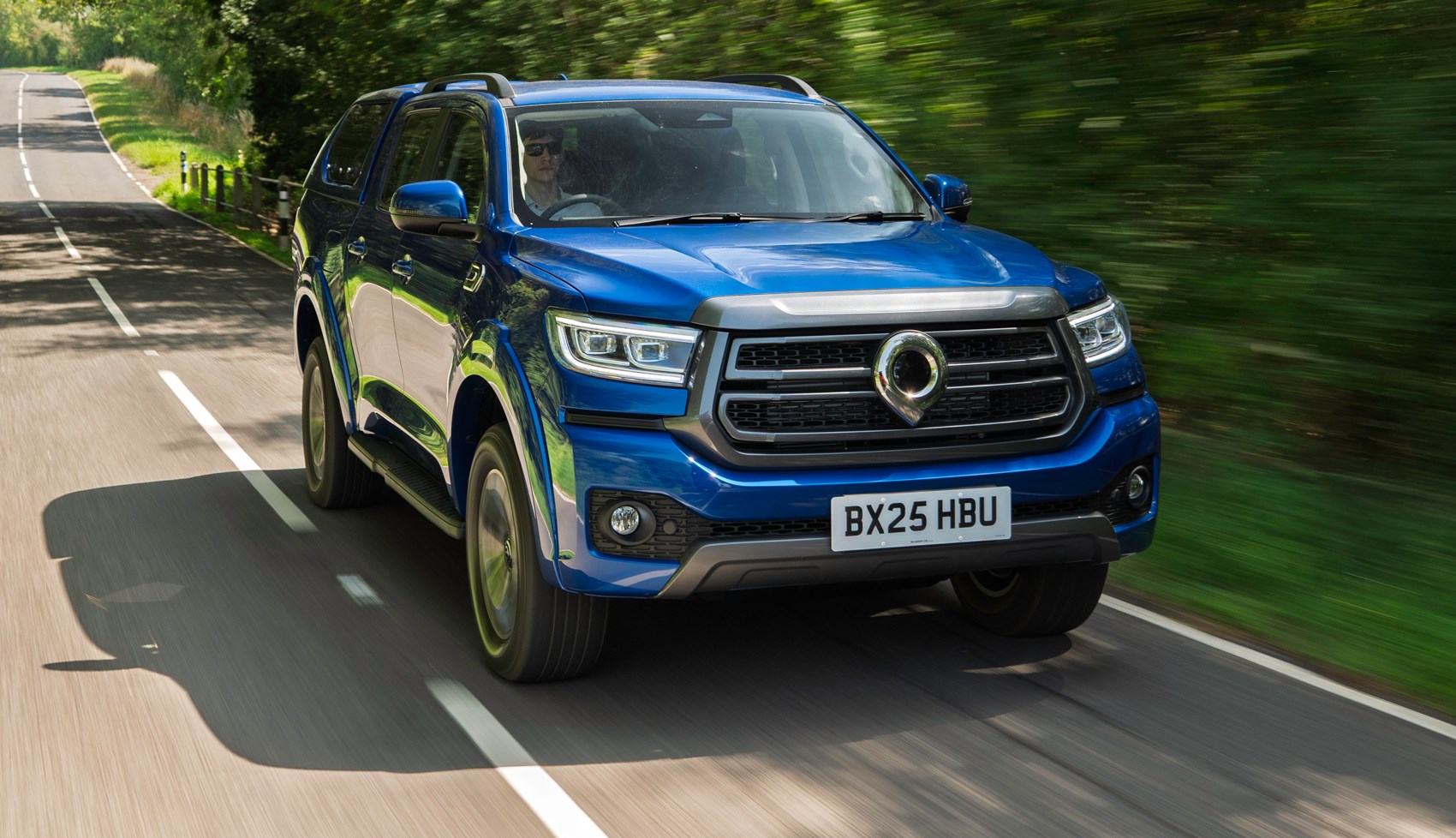
The diesel engine is basic in how it works, being largely responsive enough to deal with the admittedly relatively simple and short rural route we went out on. There’s a slight delay in power arrival when you put your foot down, but this is no different to many other diesel engines that rely on a turbocharger to deliver their power. It’s a little noisy and grumbly on the move, but again this isn’t anything too untoward. The sunroof that came fitted to our test vehicle that is standard from mid-range Ultra trim might have had a little to do with this too.
The biggest issue is one that has also been present in many a pickup truck over the years, although the class best have started to improve things on this front in recent times. It’s the on-road ride quality. Sure, pickups are often poor at damping out the bumps and potholes we see so many of, as their suspension has been designed to deal with carrying a tonne of weight in the back. But the POER300 felt particularly bad on this front and it seemed to be able to transmit even the imperfections I couldn’t see, in addition to the ones that I could and was unable to steer around.
This wasn’t an issue to start off with but the more it went on the more tiring it felt, and I got out at the end of the road route feeling like the journey had lasted longer than it really did.
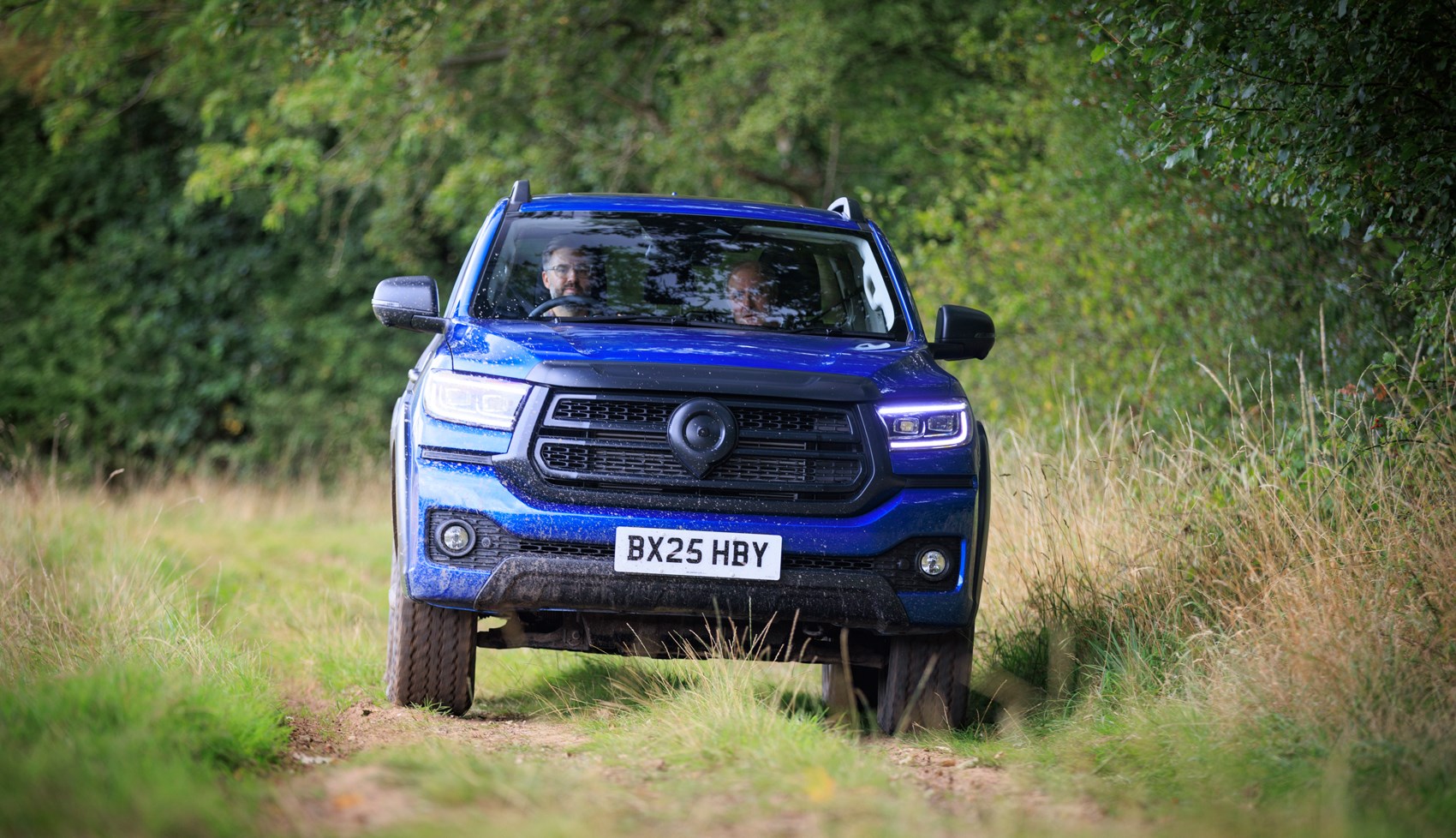
Off road, none of this matters, not least because you expect to be jolted around. Switching to low-ratio gears is simple – stop, pop into neutral and press a button and you are good to go. The course laid on wasn’t the most testing, but the POER300 dispatched it with ease. When not in low range it defaults to rear-wheel drive, using sensors to switch to four wheel drive when it detects the need. Requests as to at which point of the powerslide it switches into 4WD were treated with the probable respect they deserved…
The one oddity of the off-roading experience comes via the differential. It can be locked for use in tough conditions, but occasionally sees fit to wind off the tension with a loud and unnerving clonk. You might well get used to this, but you will have to explain that it’s nothing to worry about whenever it happens with a new passenger on board.
What about the interior?
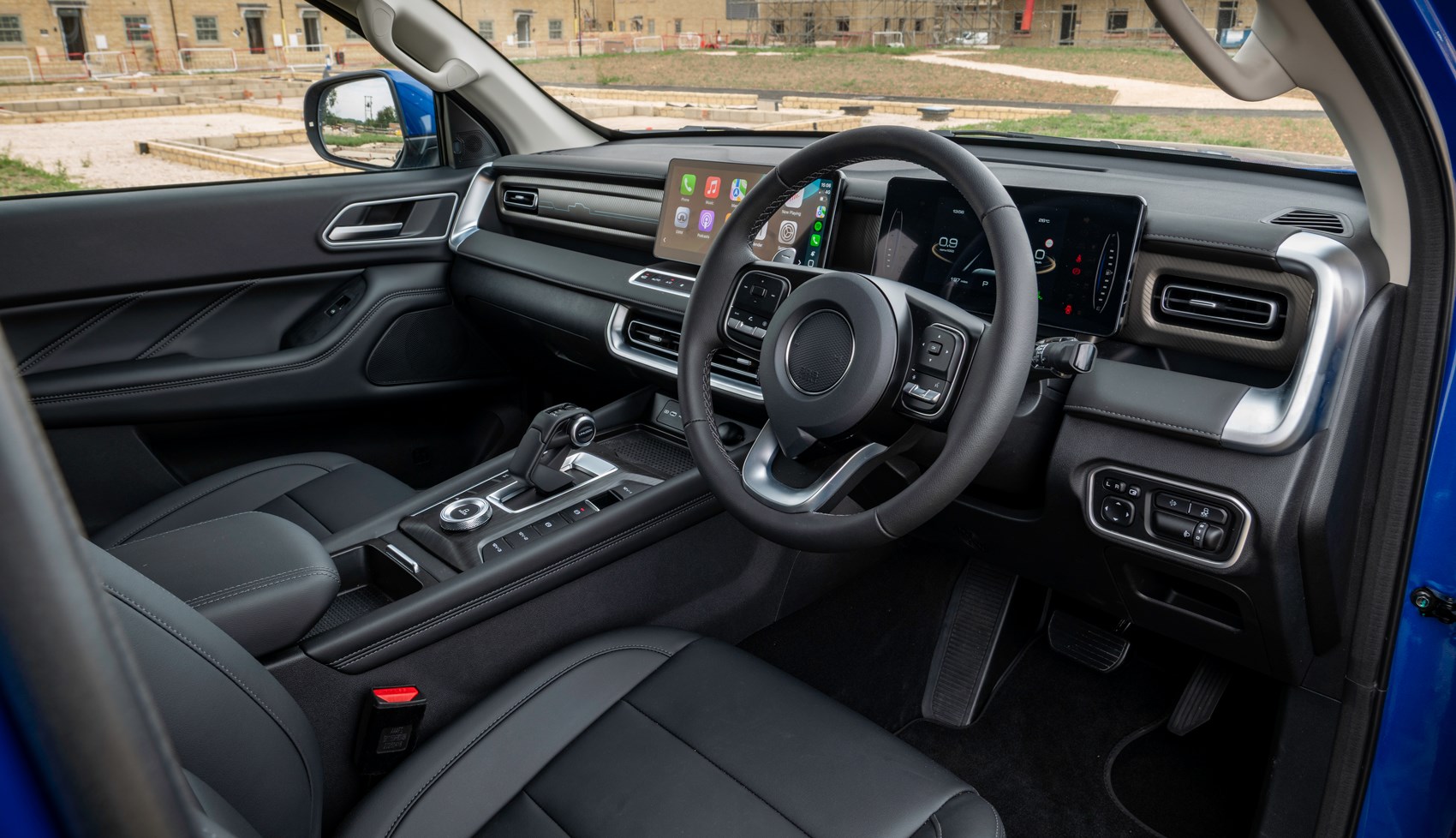
The cabin is another simple and well laid out area, with a seating position that is by-and-large easy to get right. The only caveat to this is the slight intrusion into the footwell by your left shoe. It’s not huge, but it means there is no wide platform on which to rest your dormant foot.
The rear space is good, with room for three across the bench and seat backs that are pleasingly angled – pickups can often leave you sitting bolt upright in a bid to maximise the space in the loading bay. There are easily accessible Isofix points on both the outer seats.
The infotainment screen looks a little bolted on, but it’s easy to use with some welcome physical buttons below it for some of the climate controls. There’s no in-built navigation, but wireless smartphone connectivity and charging comes as standard. The materials throughout are a mixture of hard wearing and slightly softer. None are top-tier premium, but it is several steps above outright utilitarian.
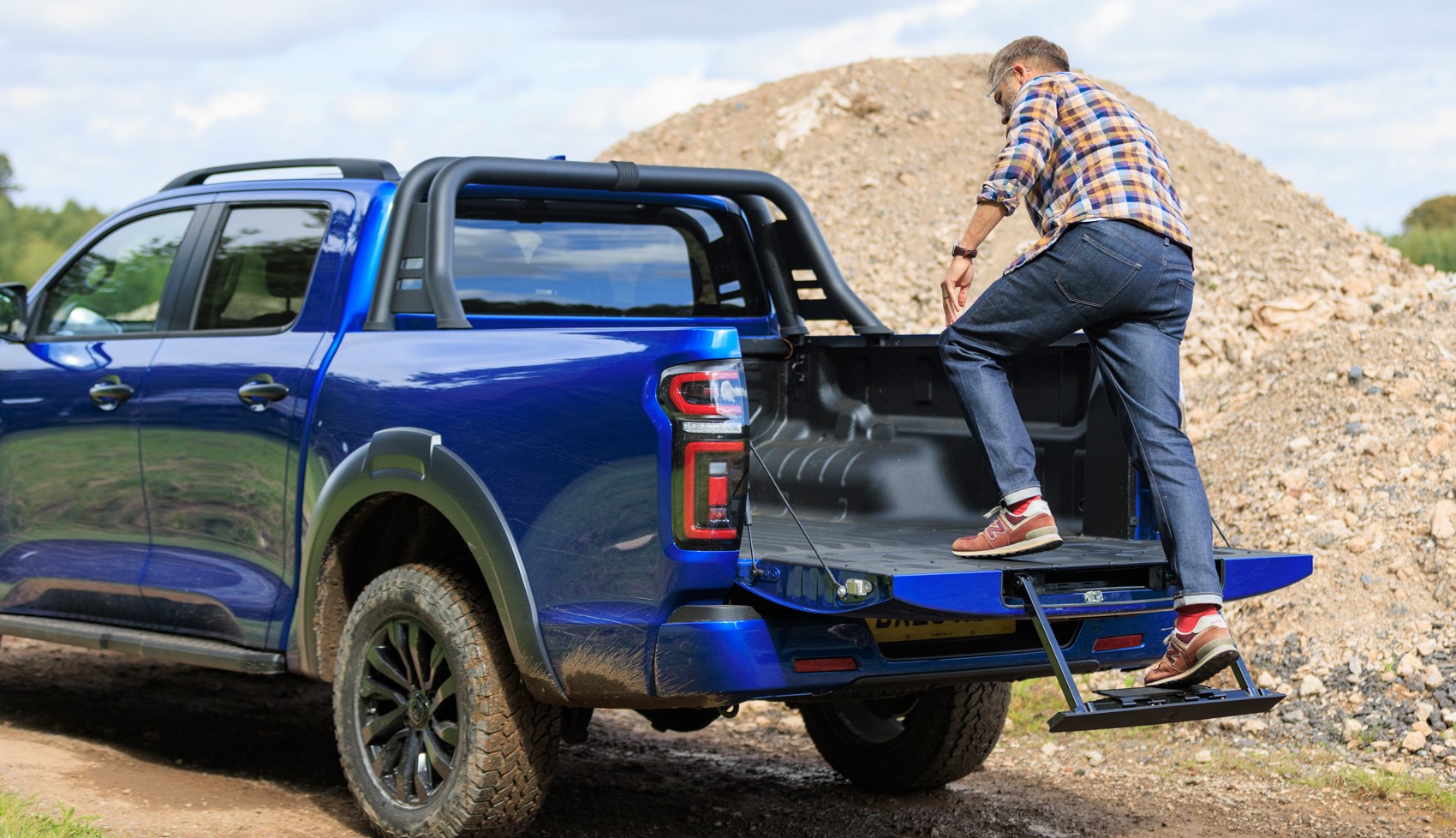
The loading bay features the POER300’s most welcome trick – an integrated step that fold out of the tailgate to allow easy access to the rear. It can be operated with one hand and opens up the ability to get into the loading bay to more people. It’s one of those simple but clever things.
Before you buy
Value for money is a really tricky concept in the pickup market right now. If you are buying one as a company vehicle – even as a sole trader – and intend to use it for work and family trips then it’s a lot more expensive to do so as of April 2025. The POER300 aims to lessen the impact by being both cheaper and stacked with equipment. There are three trims – Lux, Ultra and Vanta – but the only difference between the top two are cosmetic features.
Lux starts at £31,495 (not including VAT – you can still reclaim that despite the tax changes) and brings leatherette upholstery, wireless smartphone mirroring and charging, a 12.3-inch touchscreen infotainment system, 10 ADAS safety systems, rear parking sensors and park assist. Ultra is the pick, as it starts at £34,830 (exc VAT) adds a heated steering wheel, powered, heated and ventilated front seats, leather, cabin lighting, front parking sensors, a sunroof, a 360-degree camera and that tailgate step. Vanta paints the wheels, mirror covers, sidesteps, door handles, grille, GWM badge, wheel arches and sports bar in black and takes the price up to a still reasonable-for-the-class £36,830.
Spec for spec, and on an outright basis, this is lower than all the value-based competition such as the KGM Musso, Maxus T60 and Isuzu D-Max.
Verdict: GWM POER300 pickup
There is plenty to commend on the POER300 – it doesn’t try anything silly, is pretty good off road and has a lot of practical elements that suggest it should be a worthy tool without being utilitarian. It might be that the ride would get wearing after a long trip, but if you can live with that then it is a more affordable way to combine family and farming duties in one hardy vehicle.