► Driving the original version of Renault’s Estafette
► Why Renault is bringing back more than the name
► Charming but tiring for a long day’s work
Renault is reviving more than an old name when it launches the Estafette van in 2026 – the new model has more in common with its old-school 1950s ancestor than you might think.
The all-new Estafette was launched in concept form at the 2024 IAA commercial vehicle show, looking for all the world like the sort of modern and futuristic show vehicle that would go through multiple rounds of diluting and committee-led dialling back until it is suitably anonymous to go on sale. Mercifully – and surprisingly – this would seem to not be the case, with Renault saying that the electric van at the show is very close to production.
However, I had a recent encounter with one of the original vans to bear the Estafette name, which showed that perhaps the new model isn’t as forward thinking as first thought.
At a glance:
Pros: Designed to jump out at speed, easy access to the rear, retro charm that isn’t the ubiquitous VW
Cons: Sliding door wouldn’t pass any safety standards, unfamiliar gearing layout, knackering over a short drive let alone a long day
What is it?
There’s an episode of 1990s sitcom Men Behaving Badly where the new landlord of Tony and Gary’s pub redecorates in what he thinks is a traditional style, inspired by an old photo he has found, only to discover that the picture is of his two customers from the previous year. In short – development just goes around in a circle, eventually repeating the same things over and over. You might get a similar sense of deja-vu in the modern Estafette too, no matter how they dress it up as being innovative and new. Is anything really new these days?
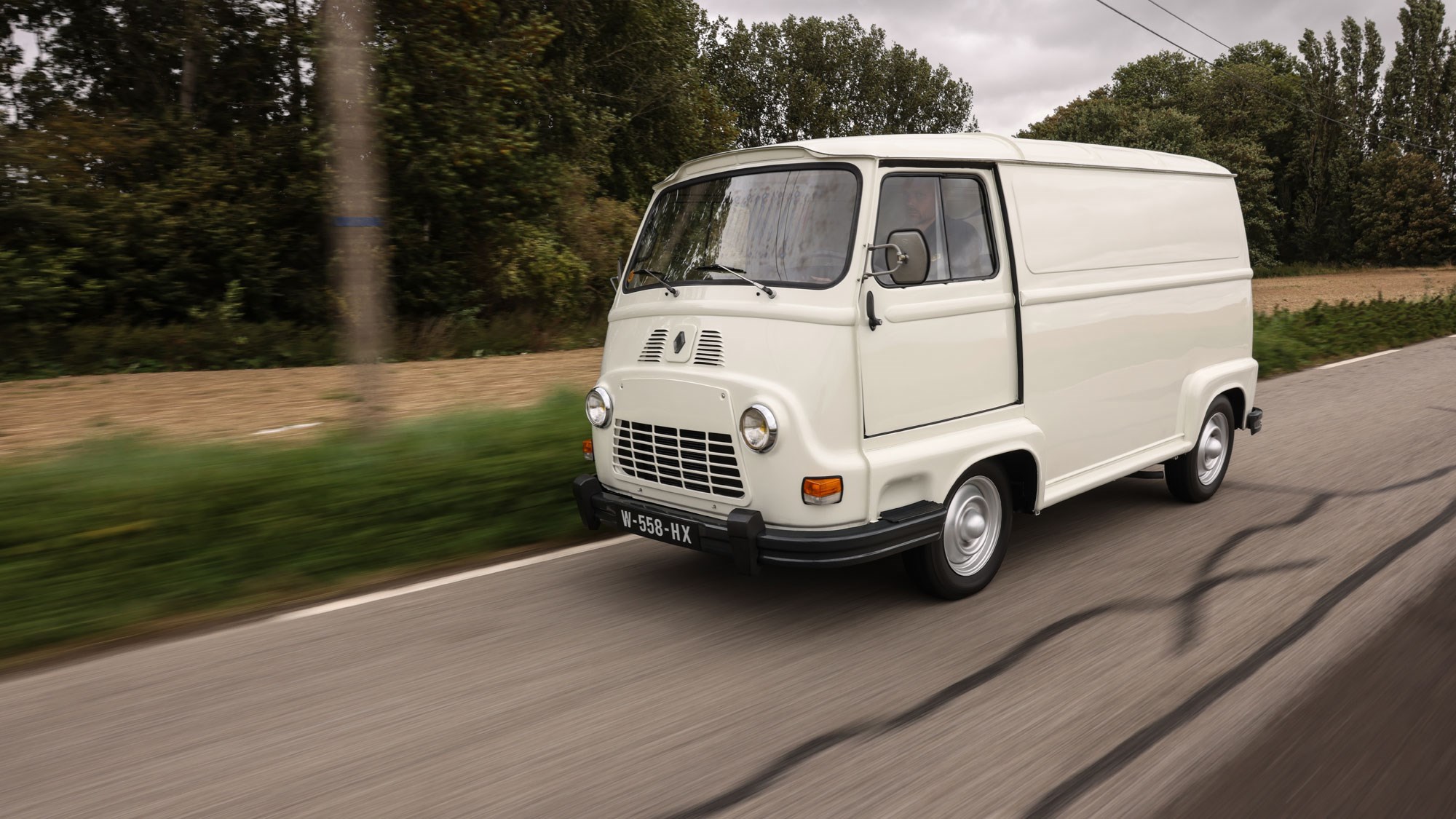
To celebrate 60 years of its LCV R&D centre in Villier St Frederic, Renault threw open the doors and allowed us to see how it creates its vans. As an added bonus it also left the keys in a few of its original Estafettes. A red bus didn’t quite offer what I was after, while the police-liveried version was in hot demand. I chose to jump into an immaculate white version, wanting the full panel van experience.
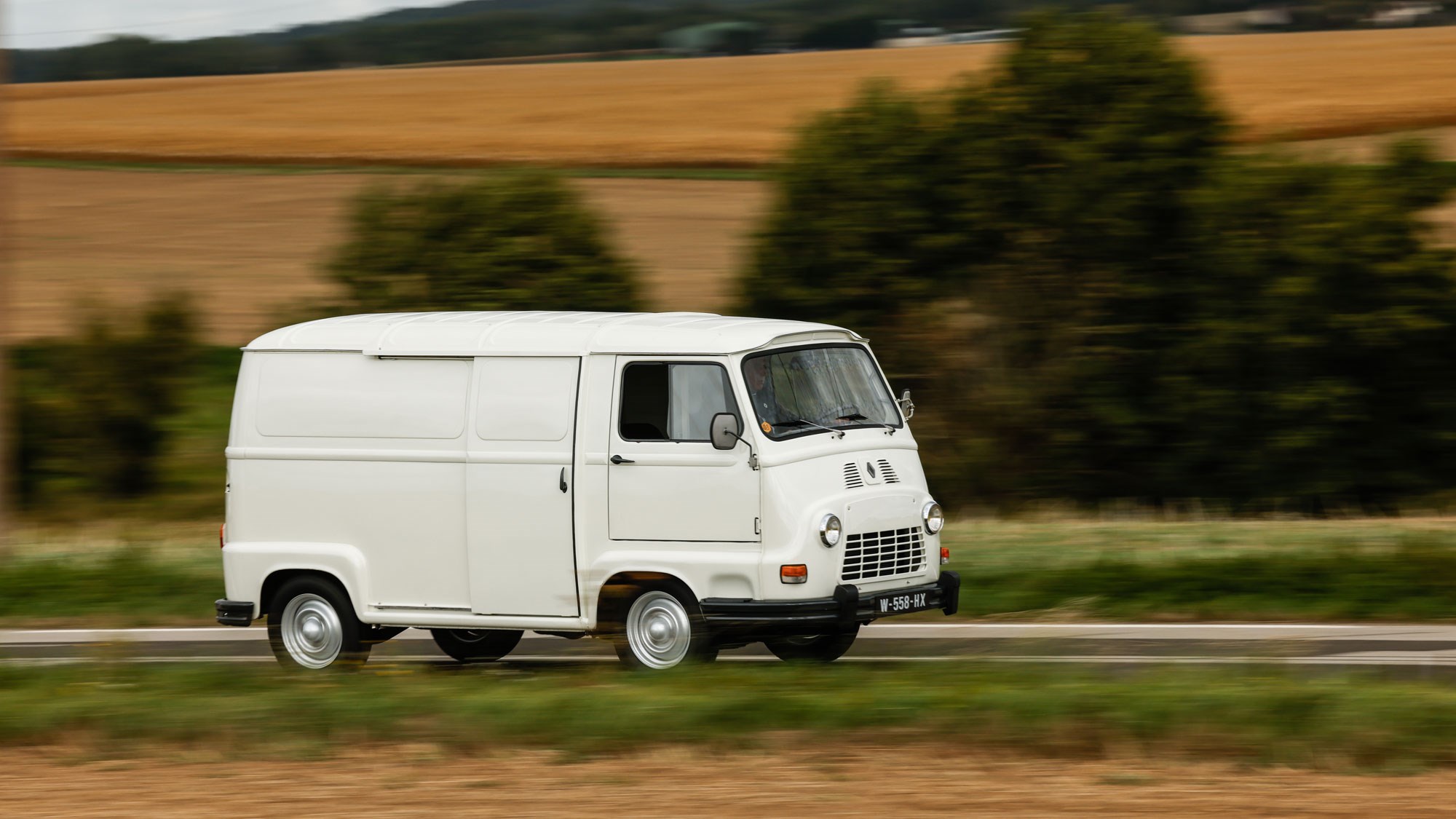
With its tiny steel wheels, curved roofline and low-set round headlights there is more than a touch of the VW’s famous panel van that launched 10 years earlier than the first Estafette. If you can’t beat them…
What was most striking about this version was that I only learned it was actually a 1980 model, making it one of the last models to roll off the line as that was the year it ended production. Renault can’t have gone for comprehensive mid-life updates as I could have sworn it was a decade or two older, such were the quirks awaiting me.
What are the specs?
The 1980 version of the Estafette I jumped into came fitted with a 1289cc four-cylinder engine boasting a whole 44bhp. Given it weighed only 1130kg, this isn’t quite the issue it might be if this was translated to a modern equivalent. This was a significant upgrade from the 845cc engine that it launched with back in 1959, though.
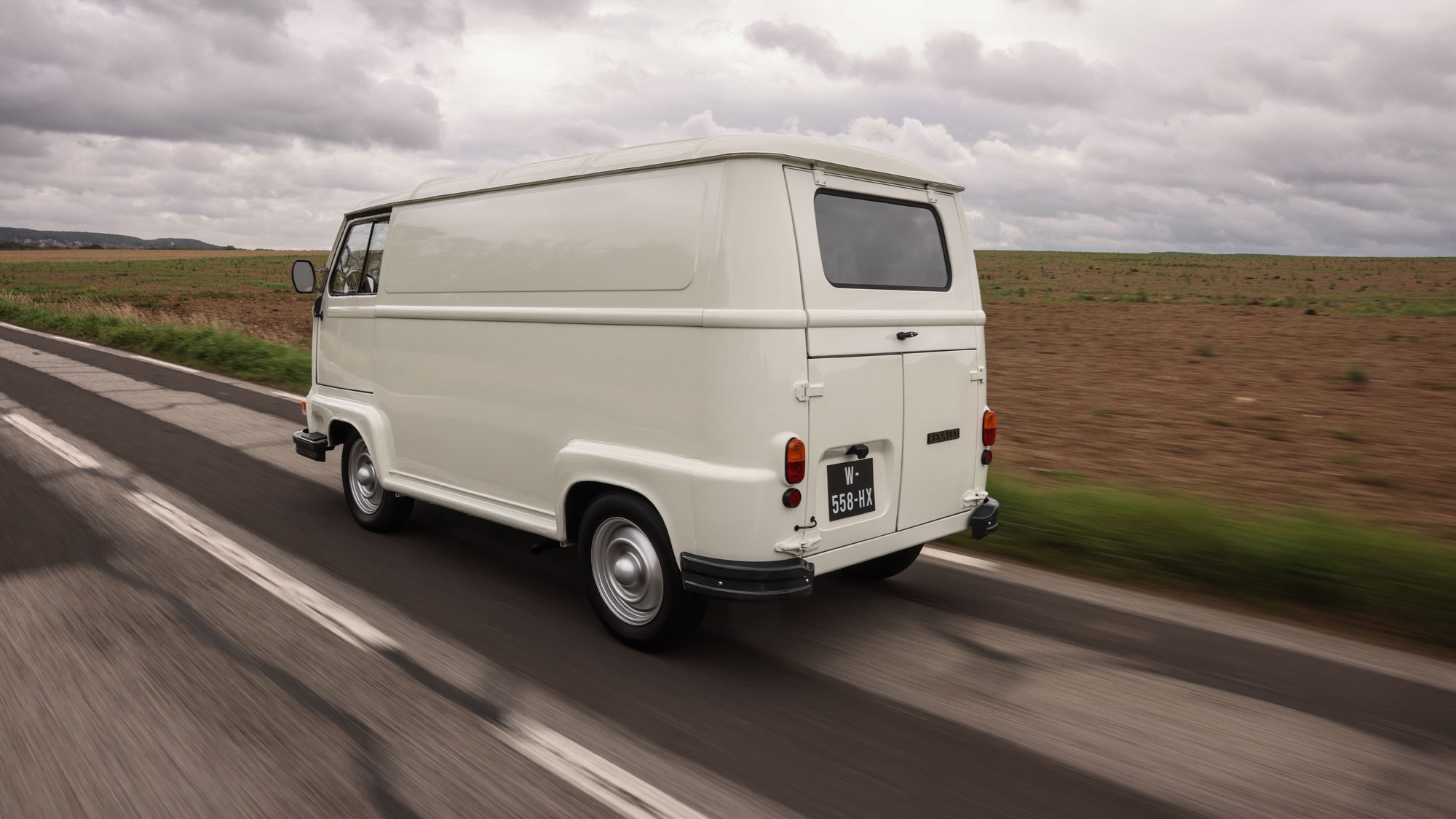
Despite this comparatively diminutive powertrain, it still boasted a 600kg payload. The shorter version of the electric Renault Kangoo is only able to carry 608kg in 2025 – another indication that things haven’t changed all that much in the van industry…
It measures up at 4090mm in length, and is 1,950mm high – less than 40cm shorter than the Kangoo and just over 8cm taller. Granted it’s quite a bit narrower, at a skinny 1780mm. All the better for squeezing down those French alleyways.
What’s it like inside?
You can forget your modern comforts, this is a basic place to spend a working day. There’s almost nothing to get between you and your view of the road, and it won’t surprise you to know that you clamber up into an upright seating position. There are two seats, no headrests, a couple of grab handles and no bulkhead.
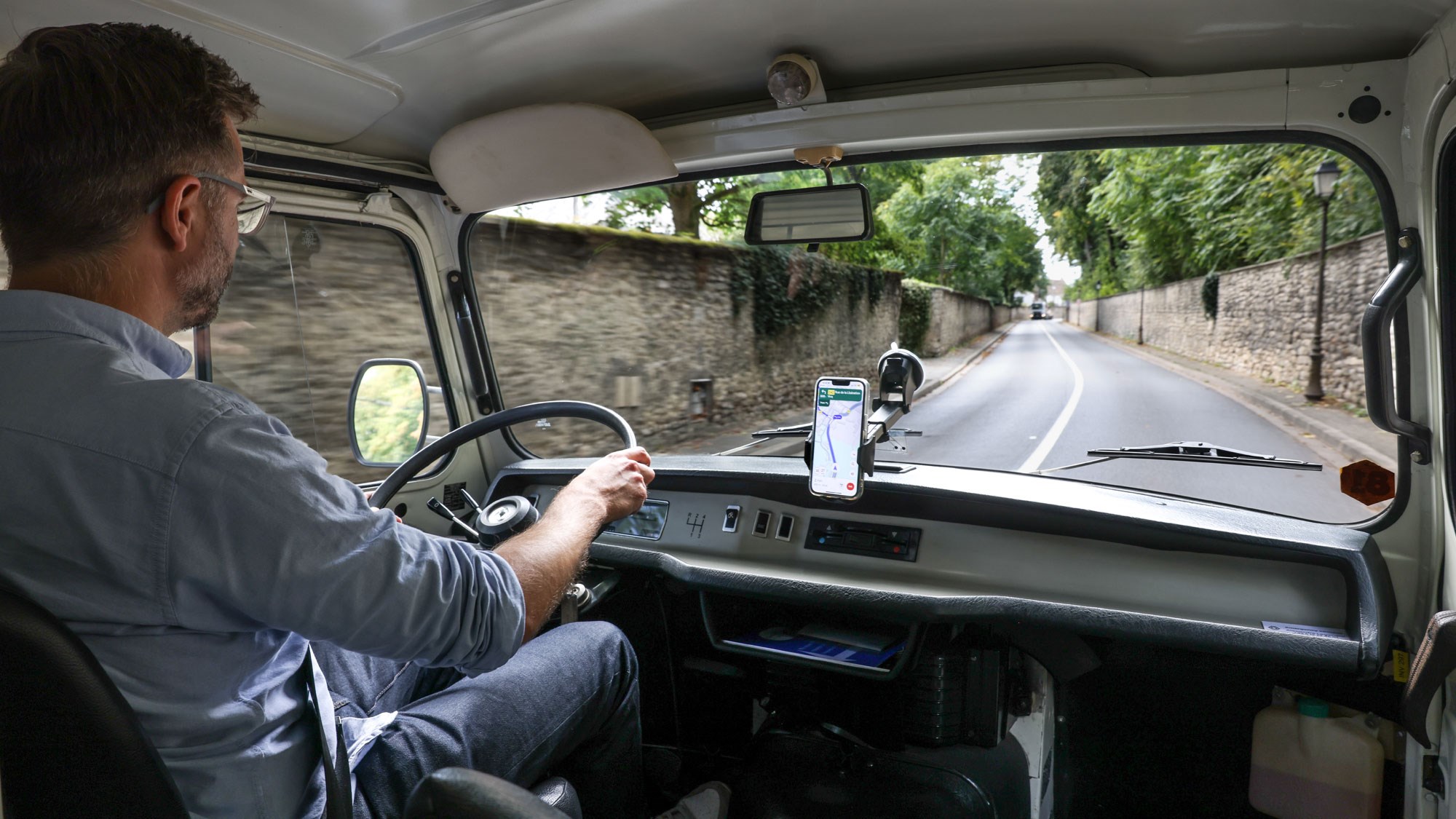
But as upright as you are, the steering wheel takes the opposite approach, being angled well past the 45 degrees to the point that it’s closer to the horizontal than the vertical. Picture one of those kids’ plastic dashboard toys and you aren’t far off.
Said toy would have more in the way of features than the Estafette though, with very little on the dash beyond an indicator stalk, a toggle switch for the wipers and the most rudimentary of heater controls. None of your fiddly touchscreens here (so long as you ignore the iPhone suckered to the windscreen to act as satnav).
Mercifully there was one more thing on the dash – a little diagram describing the layout of the gearbox. Whether this was something the originals featured or if it was painted on due to the ham-fisted assumptions of one-too-many journalists I didn’t want to ask. There certainly wasn’t anything on the gear lever, and given it was somewhere behind my right hip it wouldn’t have mattered if there was.
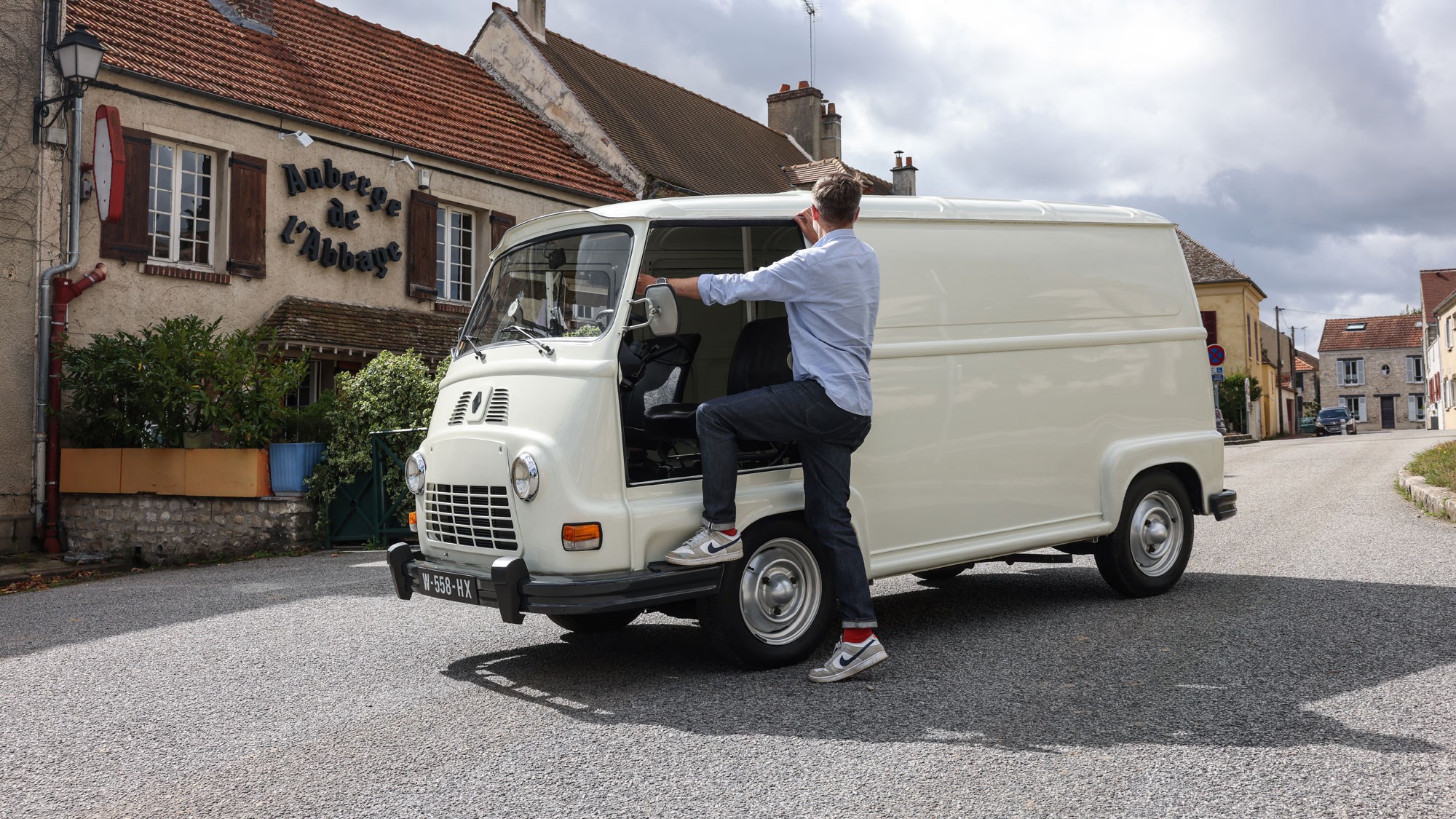
There were two features that brought the modern Estafette to mind, the first being the sliding side doors. Not doors on the side of the loading bay, but on the side of the cabin. They disappear into the body, just as the new model’s do. As part of our tour of the factory, Renault showed off an AI studio where it workshopped every element of the delivery driver’s drop-off routine, showing how the sliding door makes getting in and out easier. A big investment in time and money to realise it was just going back to a design it cooked up in the 1950s…
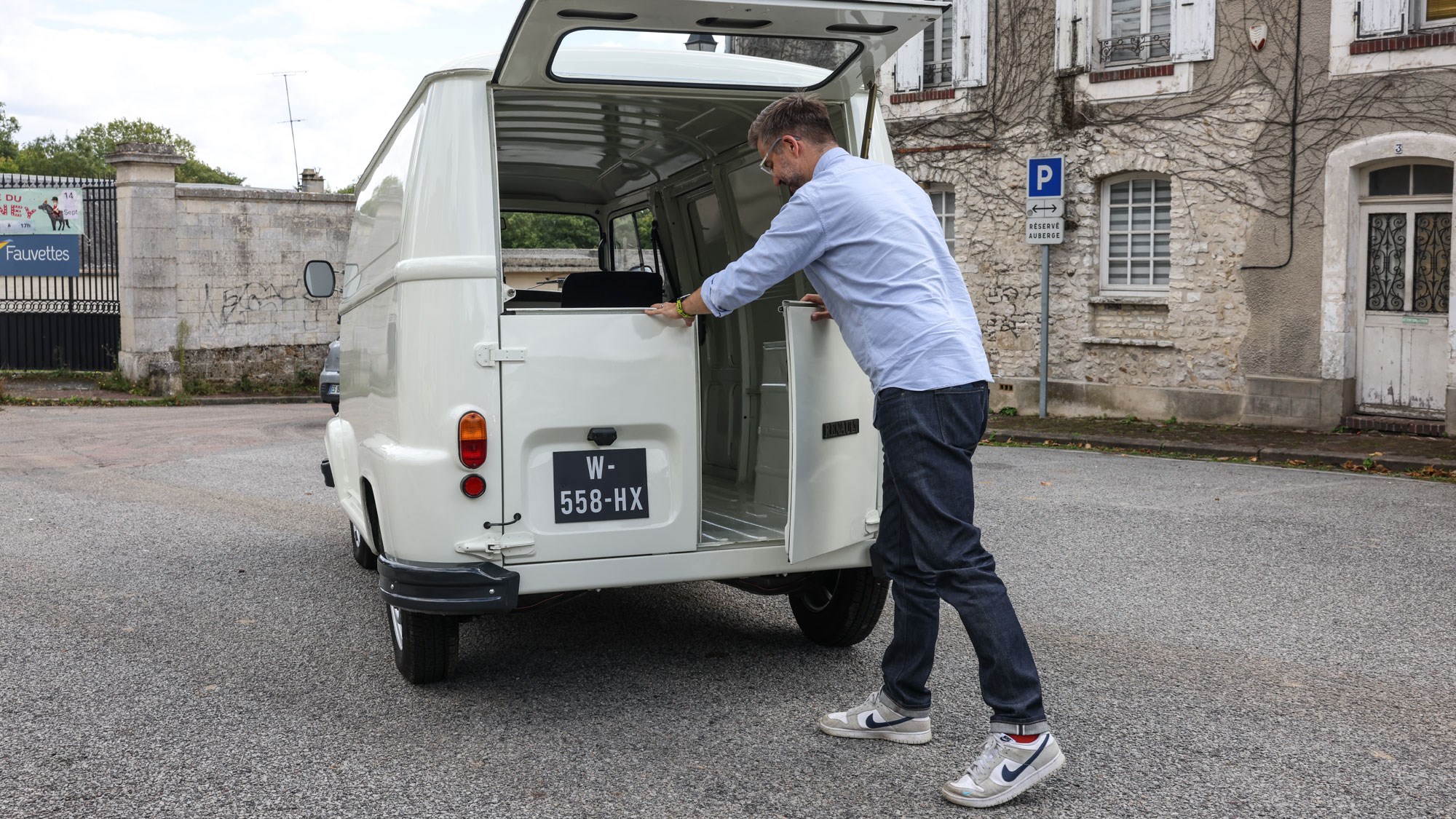
The modern version takes things a little further though, as it allows you to close it with your elbow, with the door handle needing only a slight nudge. This means you can get out with your hands full and still secure the van while you head to your drop off. It can also automate various functions as soon as you pull up for a delivery, so it will, say, put on the hazard lights and open the side door for you.
What is it like to drive?
In the confusion of getting myself and photographer Greg settled in I missed being asked whether I was ok with the gears until it was too late and the questioner wandered off. Pride and the snapper’s insouciance combined to convince me it would be fine until I stalled, seconds later, having failed to locate first. In my defence, it was on the bottom left of the gate, and needed a little more coaxing into place than first thought.
Thereafter things got steadily less stressful, as it turned out that I hadn’t prodded the tiny clutch pedal far enough to the floor and subsequent changes were easier, even if it took a glance at the diagram for the first few shifts before I committed.
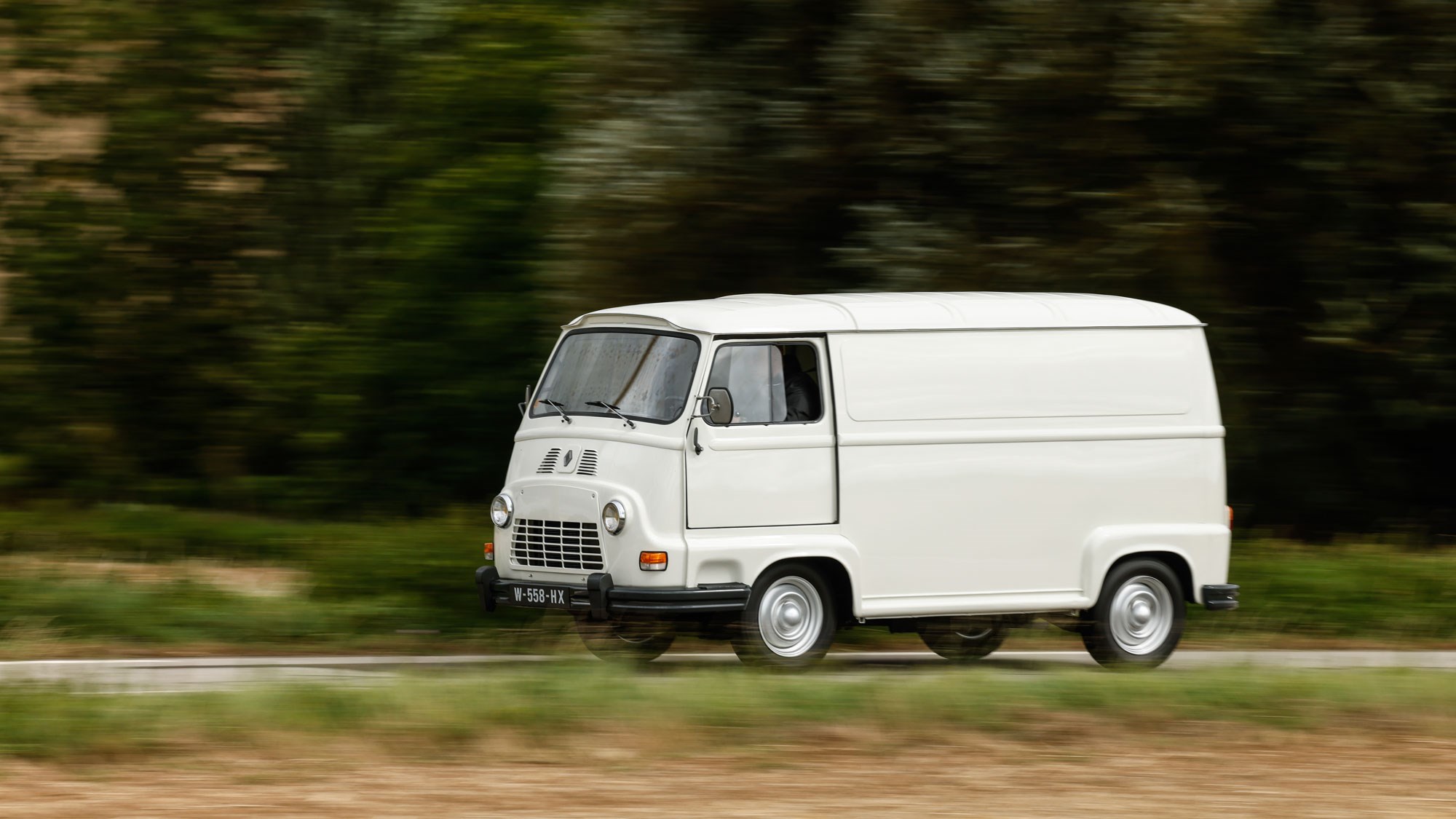
It was when we were on the move that the second feature of the modern Estafette came to mind. It turned out the photographer had brought a lens for longer-distance work, and not the close-up version that a driving shot necessitates. ‘Don’t worry, I’ll pop back here!’ quipped the snapper, heading between the seats into the loading bay. (We were stationary, I hasten to add, and never travelling more than about 10 miles an hour down French private roads when he was back there.)
This direct access to the loading bay is another feature that Renault has trumpeted as being a clever innovation on the latest model. Granted the new electric version has a door in the bulkhead and an adult driver can walk through without resorting to a stooped shuffle, but the principle of being able to reach your parcels without getting out in the rain and walking to the rear of the van remains.
I realise at this point I haven’t really touched on how the Estafette was to drive, other than requiring a delicate touch and mental awareness about the gear layout. Suffice to say that it is a full-on assault on the senses, but not in a fast way. It’s loud, bouncy and brilliant fun at very low speeds. The other benefit of those sliding doors is that you can fling them open on the move and merrily wave your apologies to the long line of traffic you’re holding up. There’s even a little retainer that you can string across the opening to make sure you don’t fall out. Euro NCAP would have a fit of the vapours.
Renault didn’t list a top speed, but it’s definitely slower than almost anything that is likely to come up behind you and the idea of going above about 60mph felt as though it was an intimidating prospect.
Verdict: Renault Estafette
Whether the Estafette is a charming vehicle to pootle around in or not depends on your perspective. As a classic, particularly if it is in the condition that the Renault fleet are, it is equal parts hilarious and endearing and a wonderful way to step back in time to a bygone era. But it feels crazy that something that feels like it belonged in the 1960s at best was still being made in 1980. My first car – a Mk2 Ford Fiesta – was made only four years later and my memories of that are of a car that felt worlds apart. I suspect I would view the original Estafette with less fondness if I had had to rely upon it for daily work. You’d have completed your deliveries despite its qualities, not thanks to them.
Thankfully, Renault’s modern engineers have decided to adopt the more desirable elements of its original Estafette. Whether it needed to spend vast amounts of money creating a VR simulation of a delivery driver’s routine is possibly debatable, but there is plenty to look forward to on the new model.