► We drive DS’s new pure-electric hatchback
► EMP2 platform with bigger battery and motor
► But can it topple the purpose-built Cupra Born?
Upmarket electric hatchbacks are few and far between. Audi, BMW and Mercedes haven’t yet built a car to compete in the space, while the electric versions of the Peugeot 308 and Vauxhall Astra are just a bit too mainstream to appeal to premium buyers. So, DS is hoping to capitalise on the tardiness of its competitors with this – the new No.4 E-Tense.
It’s an updated and rebadged version of the DS 4 hatchback that’s been around since 2021. It sports fresh exterior styling inspired by the No.8 fastback SUV, a mildly updated interior and a new pure-electric powertrain that improves on the technology we’ve yet seen from similarly sized hatchbacks in the Stellantis stable.
The question is, has DS done enough to convince traditional luxury hatchback buyers to take a chance on the No.4? Or will the pull of the slightly less upmarket but similarly priced Cupra Born prove too strong to resist? Scroll down to find out – and if you’re interested to learn more about how I reached my verdict on the No.4 E-Tense, check out our how we test cars explainer page.
At a glance
Pros: Comfortable ride, unusual French interior design, plush upholstery
Cons: Clunky infotainment system, tight rear headroom, lethargic motor tuning
What’s different?
The styling tweaks are pretty minor. Like it’s combustion-powered siblings, the No.4 E-Tense has the same square nose and fang-shaped daytime running lights as the No.8 – and the old car’s chrome trim has been ditched for more environmentally friendly gloss black items. That lost bling has been replaced by a new full-width light bar and backlit badge.
Inside, there’s a new 10.25-inch digital gauge cluster and an updated infotainment system that now houses more of the cabin controls. As part of that latter tweak, DS has ditched the old 4’s impractical centre-console-mounted trackpad in favour of a similarly useless storage tray. It can’t hold anything larger than a credit card.
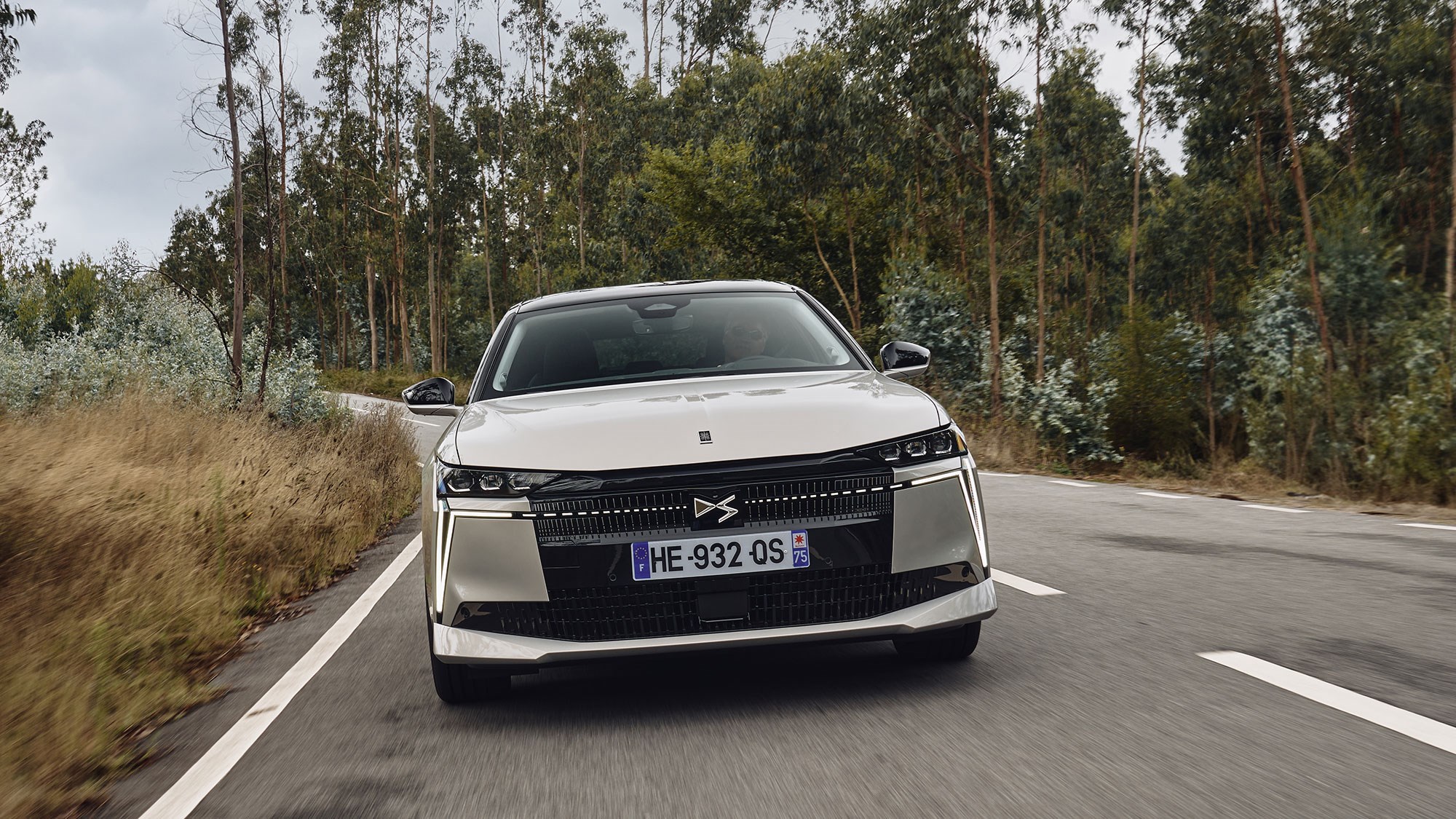
The EV’s mechanical changes for the E-Tense model are far more interesting. Despite the fact it’s based on the same EMP2 underpinnings as the Peugeot e-308 and Vauxhall Astra Electric, it has more range, more power and better acceleration. As I’ll now explain.
What are the specs?
Better than the e-308 and Astra Electric. Those cars both have 54kWh battery packs, but DS has managed to squeeze a more energy dense 61kWh unit into the same space on the No.4’s chassis. That extra capacity boosts the car’s official range to 280 miles, compared to the 250-ish miles of its lesser-badged siblings.
The No.4 has more poke, too. You get 210bhp and 253lb/ft of torque, which is 56bhp and 54lb/ft more than we’re used to seeing from Stellantis EVs of this size. That results in a 0–62mph time of 7.1 seconds, which is 2.7 seconds faster than the 308 and Astra. In short, DS has positioned itself right at the top of Stellantis’s C-segment electric hatch range.
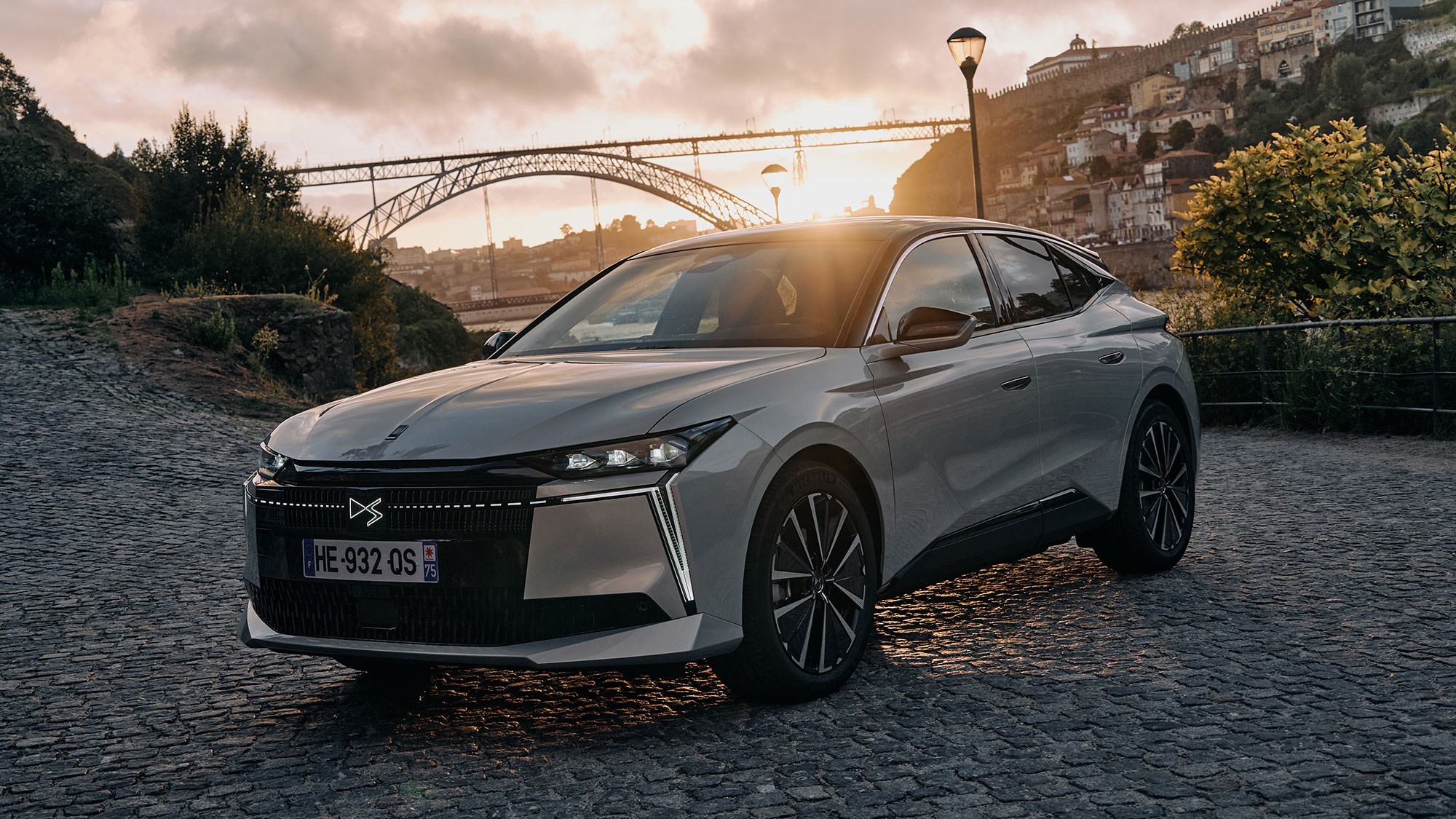
Charge times aren’t bad, either. DS says the No.4 can accept rapid charging speeds of up 120kW, which is enough to thrash its battery from 20 to 80% capacity in around 30 minutes. These specs are standardised across the entire No.4 range, too, from the cheapest £36,995 Pallas model to the £41,860 Etoile trim.
However, I should mention that you get much better value for money by splashing the same amount of cash at a Cupra dealership. Spend £36,995 on a Born V1 and you’ll drive away in a car with a more powerful 228bhp motor, a faster 150kW charging system, a larger 79kWh battery pack and a longer 346-mile driving range.
How does it drive?
The DS No.4 E-Tense is unashamedly biased towards comfort, which is quite refreshing in a market that’s so pathologically obsessed with sportiness. It’s far more compliant than both its chassis siblings and the Cupra Born – in fact, it’ll waft down the motorway like a saloon from the class above, which is mightily impressive when you consider its wheelbase is only 5mm longer than a BMW 1 Series.
Another thing to bear in mind if you’re cross-shopping powertrains is the EV is the most comfortable model in the No.4 range. It carries a lot more weight, but it’s all concentrated low down between the axle rather than directly over one set of struts. That makes it better at dealing with motorway imperfections, as it’s more balanced front to rear.
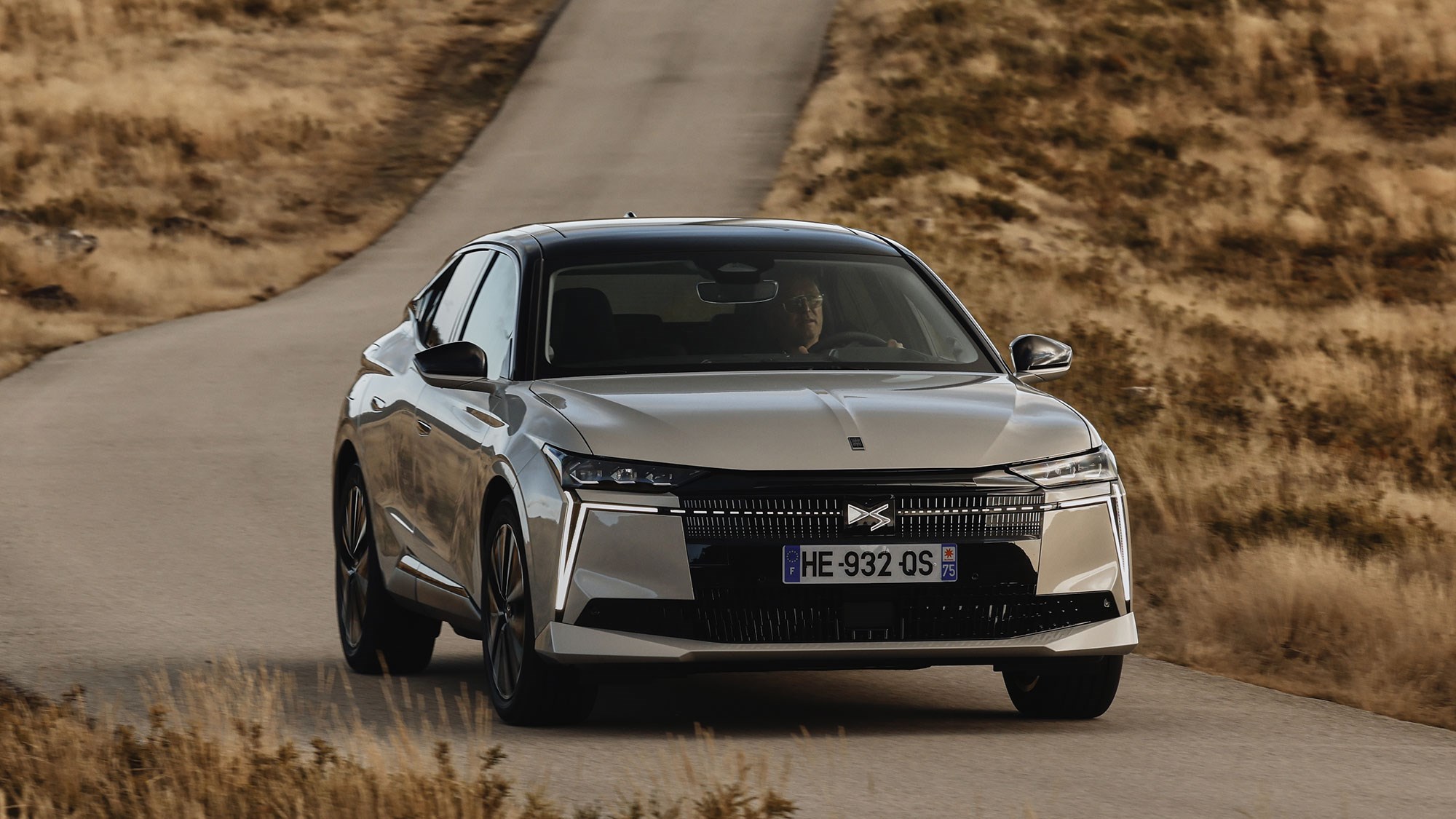
That improved balance doesn’t really benefit the handling, though. The DS No.4 is quite softly spring, so it doesn’t respond anywhere near as well as the rock-solid Cupra Born to being thrown around a twisty B-road. There’s a lot of body roll and I found it tends to wash wide sooner if you tackle a motorway slip road a little too enthusiastically.
I wasn’t bowled over by the steering, either. It’s a bit too light and vague for my liking, irrespective of the driving mode. That means you never have the confidence to drive it quickly. But I reckon DS did that on purpose, as it’s pitching the No.4 as the Harley Davidson of electric hatchbacks. It’s supposed to be comfortable, easy and lazy.
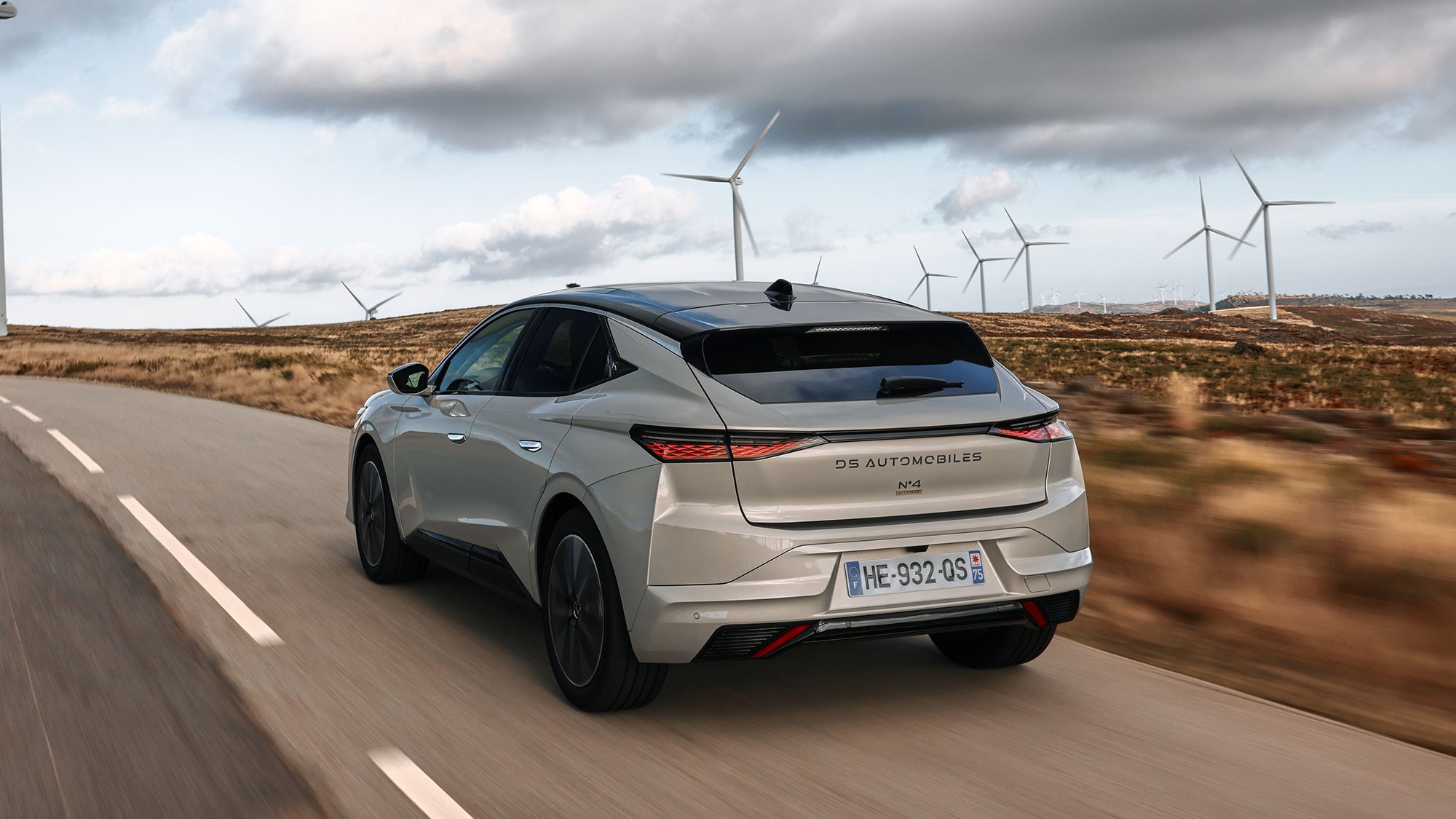
This laidback brief probably explains why I found the motor’s performance disappointing. The No.4 E-Tense feels far more lethargic than DS advertises – you really need to mash your foot in the firewall to complete an overtake, which is odd for a car that’s very nearly as powerful as a Volkswagen Golf GTI. It isn’t as if the DS No.4 is especially porky, either. It weighs less than 1,800kg, which doesn’t seem bad when you compare it to the two-tonne big-battery Born.
The motor did at least prove itself to be quite efficient, though. I averaged a respectable 3.8 miles per kWh during my test drive, which puts its maximum real-world range at around 220 miles. That’s not bad considering the No.4’s battery capacity, but it’s still a long way behind the easy 300 miles you can get from the most long-legged Cupra Born.
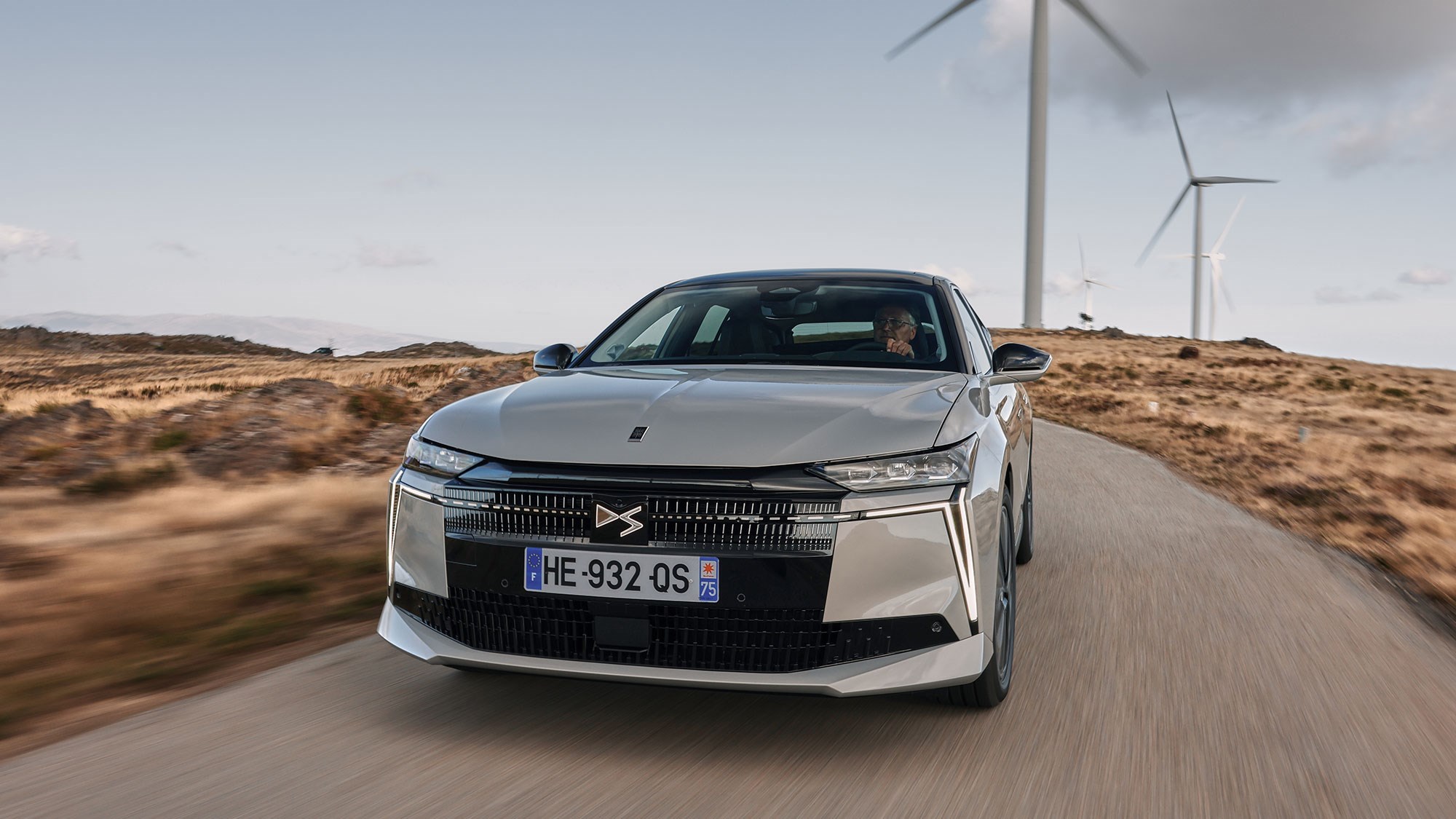
Refinement is good. The motor is quiet, road noise is well stifled by the sound deadening and the body does a great job of directing the air away from the seals and door mirrors. I found it very relaxing to drive on the motorway. Plus, it’s worth flagging the No.4 E-Tense is far more refined than the rather crude plug-in hybrid model.
I’ve got one more fault to flag before I move on which, oddly, worked in my favour. My car’s lane assist system didn’t work. I’m not sure whether it was an issue with the car’s hardware or that it was simply struggling to read Portugal’s unusual road markings, but it didn’t care if I strayed into oncoming traffic. I hate lane assist, so this suited me down to the ground – but it’s a bit of an oversight in a car designed to take as much strain off the driver as possible.
What about the interior?
Much like the driving experience, I found the DS No.4’s cabin to be rather hit and miss. Superficially, it’s great. It’s trimmed in upmarket materials (I’m particularly fond of the Etoile model’s suede dashboard), the funky buttons and air vents are interesting to look at and the seats are comfortable. But the more you dig, the more problems you find.
I’ll start with the ergonomics. Some of this (such as the mirror adjustment switch above the driver’s knees and the funky air vent controls) can be written off as quirky French charm. But the electric window switches are completely idiotic as you need to rotate your wrist against its intended direction of travel to operate them.
The infotainment system isn’t fantastic, either. It’s laggy when swapping between menus, which is frustrating considering how much is now controlled by it. What’s worse is that it can only display one item at a time. So, when you’re using it to adjust the climate controls, you’ll lose your navigation instructions and inevitably make a wrong turn. I wish DS had given the screen a fixed climate hot bar at the base of the screen, like a BMW 1 Series.
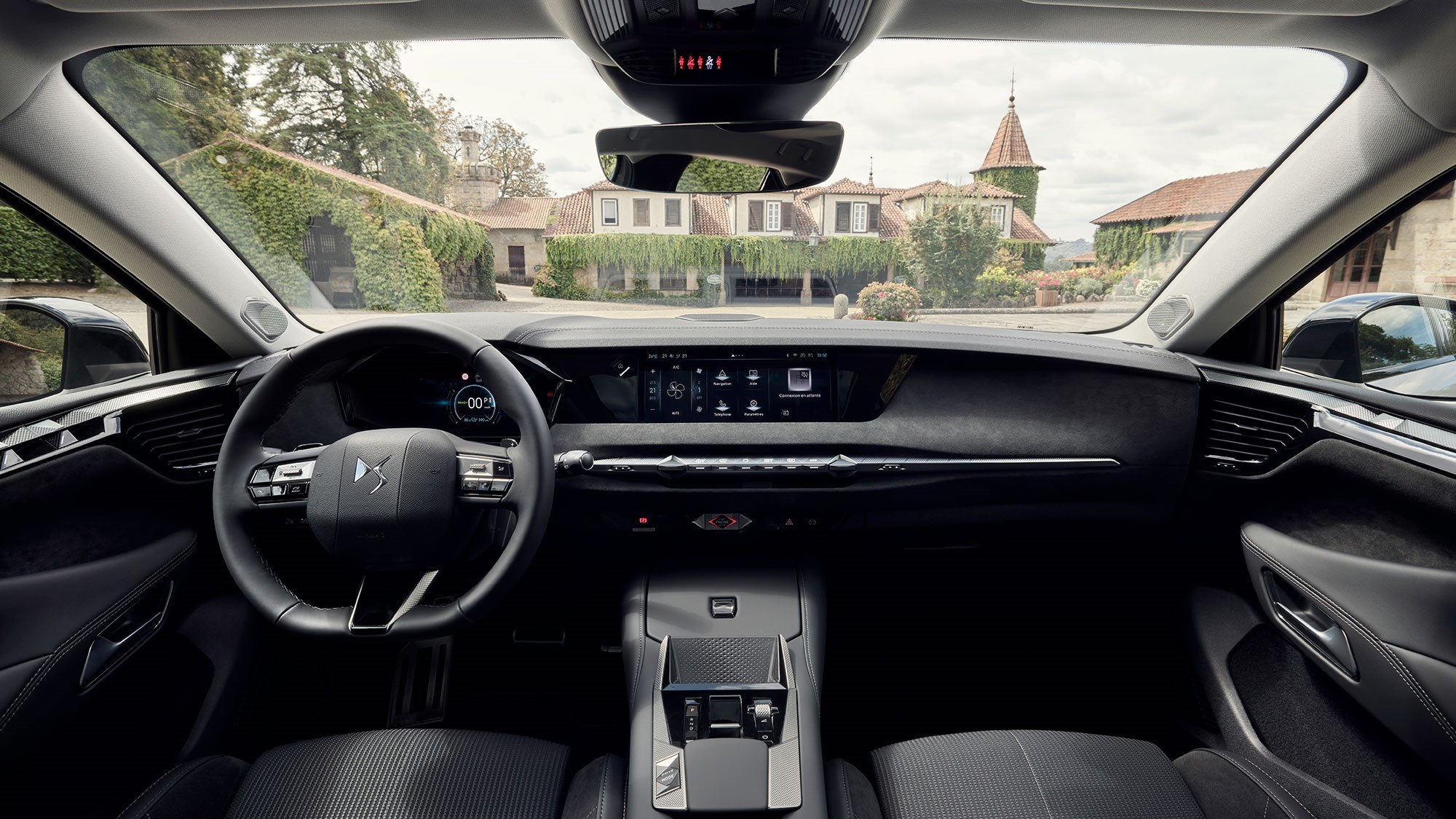
DS’s built-in sat-nav feels outdated, too. It looks and works like a TomTom device from the early 2010s – and it has some very irritating habits. The worst is how it homes in on your upcoming junctions, zooming the map down to molecular levels of detail and preventing you from planning your next turn. That’s especially annoying in an unfamiliar city. Mercifully, Apple CarPlay and Android Auto are standard.
DS hasn’t quite got its build quality nailed, either. The No.4 is built better than the equivalent Astra, but it’s not good enough to compete with the Cupra Born. Two of the three cars I drove on the launch event had very irritating trim rattles – one due to a loose instrument binnacle cowl and one because of a loose trim on the passenger door card. DS’s coffee-coloured leather dashboard is also very easy to scratch, which is a shame considering how sharp the trim package makes the rest of the cabin look.
Space in the rear is average for the class, too. It’s broadly the same as its Stellantis stablemates, albeit with a bit less headroom. You need to watch out for the No.4’s C-pillars – they’re very broad, surprisingly low and well ahead of the rear bench, which means they’ll assault you if you’re not on your guard. Both me and one of my six-foot colleagues clattered our heads into them on our descent into the rear seats.
If you need a posh electric hatchback with plenty of space in the back, you’ll again be better served by the Cupra Born. Because its platform doesn’t also need to accommodate a combustion engine, more of its footprint is reserved for passengers. Plus, it has a completely flat rear floor as it doesn’t need to make space for an exhaust – and that makes it more comfortable when you’re carrying five passengers.
Before you buy
Ask yourself what you really need from your car. If all you need is a wafty couch to ferry you and your other half around locally, the DS No.4 E-Tense could suit you well. But you need to be willing to accept its foibles – and you absolutely shouldn’t buy it as a workhorse, no matter how attractively priced it looks alongside its premium equivalents.
My colleague, Alan Taylor-Jones, who’s probably the industry’s leading automotive Francophile, summed the DS No.4 well. It isn’t a car you buy while wearing your rational trousers. If you’ve got a shred of common sense, you’ll spend the same amount of money on the objectively better Cupra Born. You buy the No.4 because you like characterful, slightly mad French cars – and this is one of last authentically French cars on sale.
If you fall into that camp, I strongly recommend you spend the least amount of money possible on your car. The entry-level Pallas trim is more than plush enough and it swerves the government’s luxury car tax. Crucially, it also rides on 19-inch alloys, which do a far better job of soaking up bumps.
Verdict
The DS No.4 E-Tense is an interesting car but, despite the company’s efforts, it doesn’t feel premium enough to be a pure-electric alternative for the Audi A3 or BMW 1 Series. It also isn’t mechanically capable enough to pull sensible EV buyers away from an equivalently priced, longer-range Cupra Born.
DS has taken a step in the right direction, though. The No.4 is a more convincing luxury product than it was before its facelift – especially as an EV. In fact, the E-Tense is probably the best C-segment electric hatchback in Stellantis’s current line-up. It outclasses its siblings on range, refinement, comfort and ride quality.
However, if I had to spend my own money on a posh electric hatch, I’d overlook everything in the Stellantis stable and head straight to my nearest Cupra garage for a Born. It’s better in almost every way – it’s sharper to drive, it has a longer range, its infotainment system is easier to use and there’s more space in its cabin.
I really don’t want to discredit the work DS has put into this car, though. The brand is starting to get there. It just needs to chuck a few more euros at its infotainment system and screw a few more miles into its battery packs. Who knows – in a few years’ time, it might be running with the big brands.