► Toyota’s latest EV driven
► Solid, competent, and even stylish
► But no 338bhp AWD version for us
For a brand that dominated hybrid tech for so long, Toyota hasn’t had the easiest time when it comes to electric vehicles (EVs). For us in the UK, the Toyota bZ4X took a hefty facelift to be properly good, while the Urban Cruiser is shaping up to be perfectly fine, not exactly ringing endorsements from the world’s largest car maker. But maybe the C-HR+ can knock it out of the park from the off.
To find out, we’ve driven a front-wheel drive prototype in France, covering a variety of roads that even included the cobbles of Chateau de Chantilly – the perfect test for comfort. Click here to find out how we test cars and why you can trust us.
Pros: Usual Toyota refinement, solid and roomy cabin, keen handling
Cons: Irritating safety aids, backwards brake regen paddles, no glovebox
What’s new?
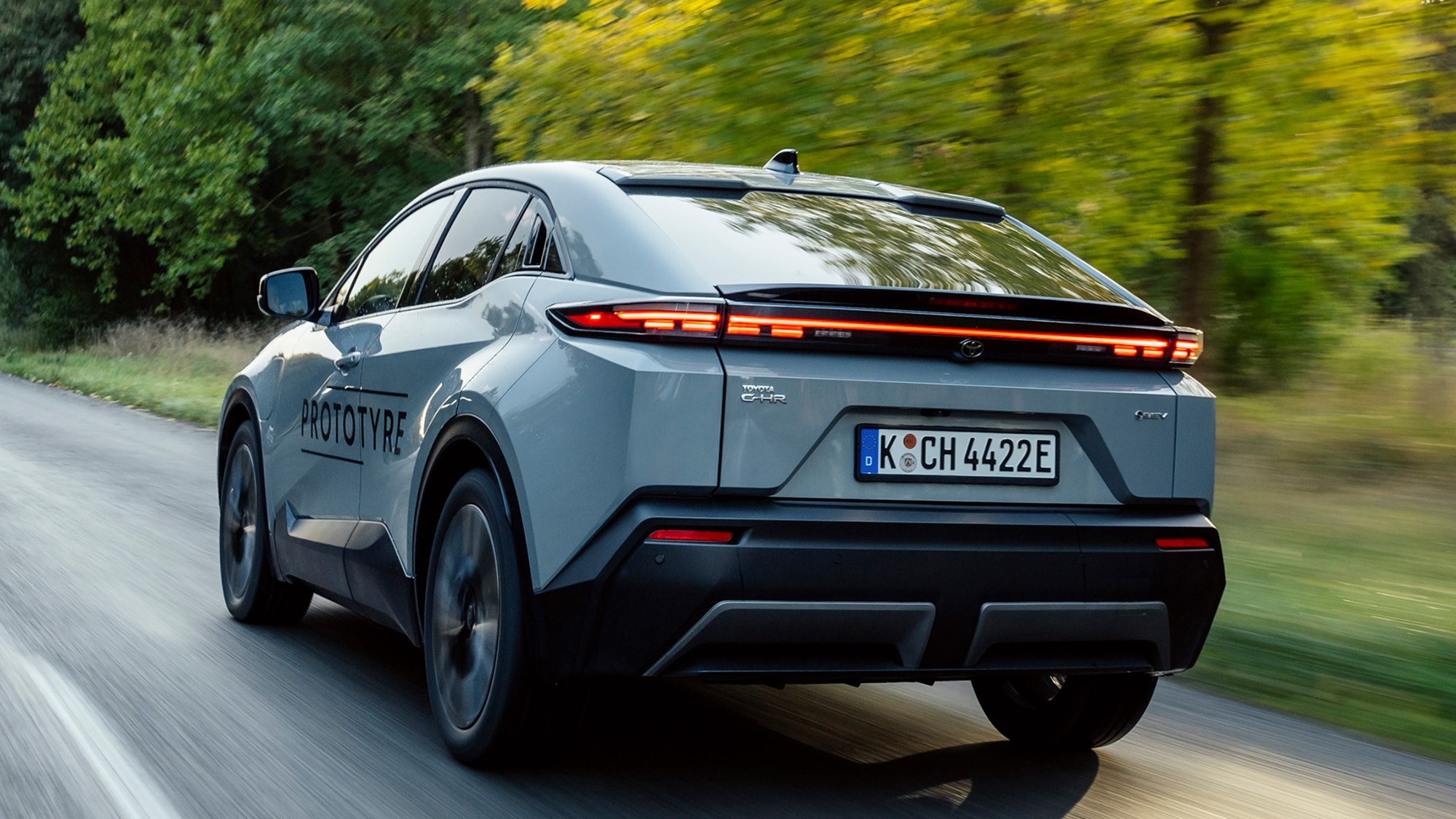
This may have a C-HR badge on back, but this has been built from the ground up as an EV on the e-TNGA modular platform that’s shared with the bZ4X.
The C-HR+ also follows a tradition of Toyota sharing development of its EVs with other manufacturers. Just as the bZ4X was built in collaboration with Subaru (sold as the Subaru Solterra), the C-HR+ is a twin of the Subaru Uncharted, save for styling and trim differences.
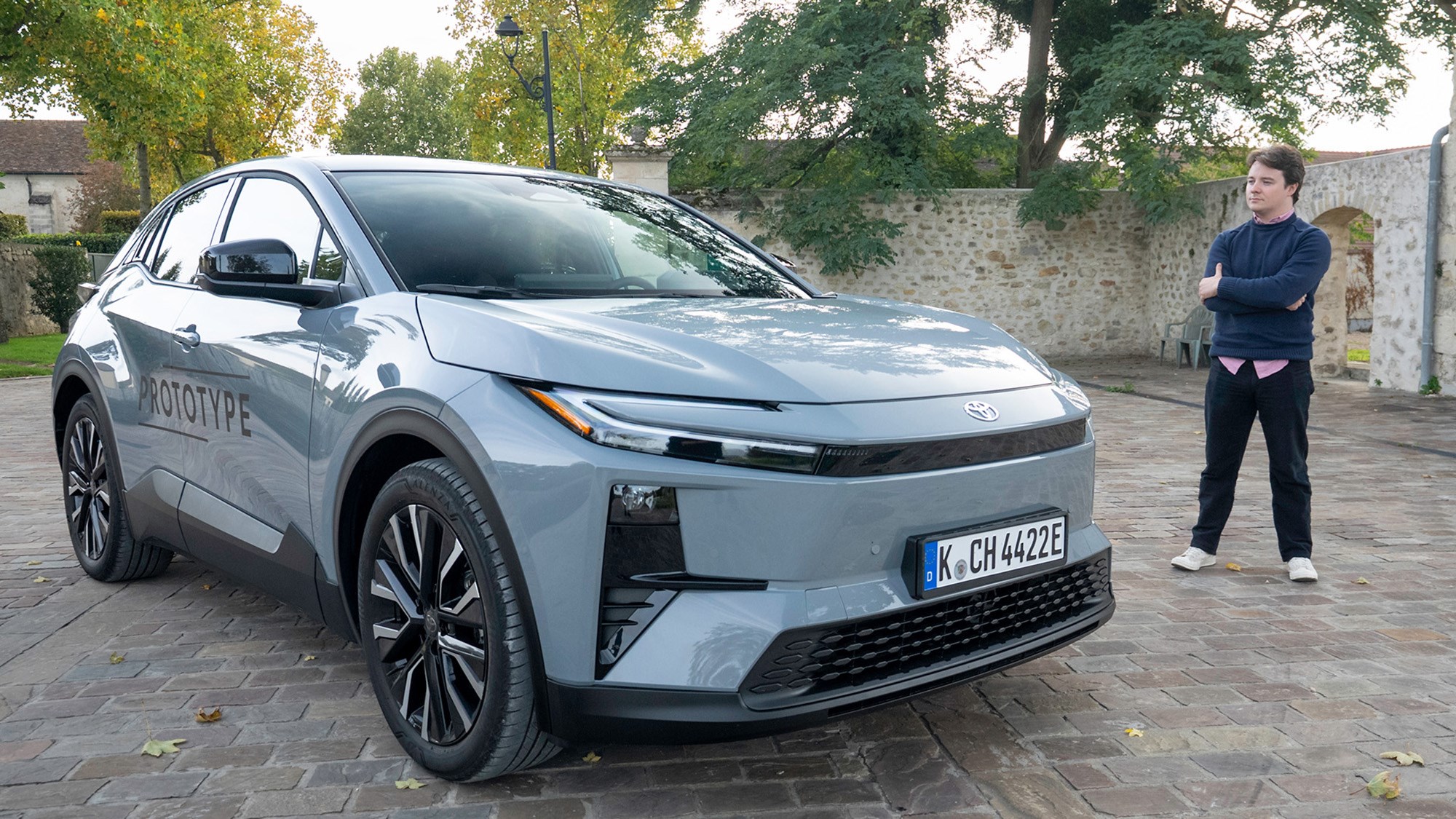
And while Prototype may adorn the sides of the car, Toyota told us that it’s only a few bits of interior trim that are expected to change before the car launches in the UK at the tail end of 2025.
What are the specs?
There are two lithium-ion battery sizes available – a 57.7kWh and a 77kWh – and both send power to the front wheels. The smaller battery offers a 283-mile WLTP driving range while the larger offers a very respectable 378 miles.
The C-HR+ gets a 11kW AC charger as standard, doubling to an impressive 22kW for higher trim levels. Both batteries will support 150kW DC fast charging and make use of battery pre-conditioning to cut down charging times. Toyota’s engineers tell us that a 10 to 80 per cent charge will take 30 minutes, even with outside temperatures as low as -10°C.
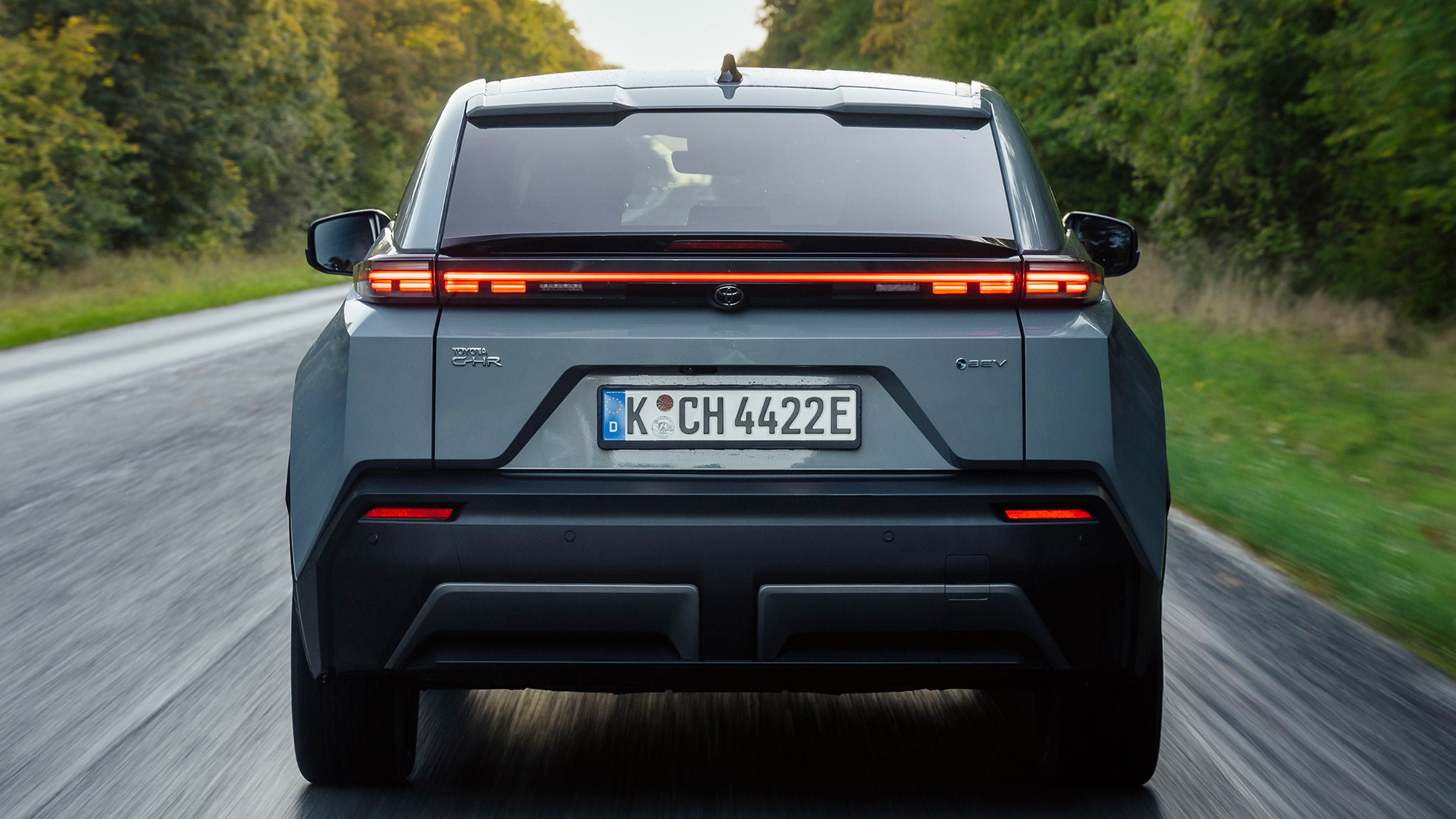
Power for the smaller battery is rated at 165bhp which is good for a 0-62mph time of 8.4 seconds, and a top speed of 87mph. The 77kWH option can manage 0-62mph in 7.3 seconds and manage 99mph.
There are three trim levels, Mid, Mid+ and High. Mid is only available with the smaller battery size, Mid+ adds the larger battery, privacy glass and an electric boot lid, while High adds a panoramic roof and a slew of other premium bits, including additional safety aids. Prices haven’t been confirmed for the UK yet and Toyota expects the Mid+ to make up the bulk of UK sales.
What’s it like to drive?
It’s enjoyable to drive, especially for a FWD electric coupe SUV. Toyota’s engineer’s spoke about the chassis being 30% stiffer than a regular C-HR, and that translates into a welcome agility and good body control in corners. It’s a neat car to drive, with nicely weighted steering and smooth power delivery, only an over-eager traction control stops it being properly fun.
It’s comfortable too, even sitting on gargantuan 20” alloys (UK Mid+ examples will get 18” alloys). It wasn’t pillowy soft, and the occasional bump would make itself known, but even the worst French cobbled roads were unable to upset the C-HR+ too much. There was a little rattling to be heard from the interior, but I put that entirely down to it being a prototype.
There are adjustable regenerative braking paddles behind the wheel, and I think they’re the wrong way round. The right side reduced regen and the left paddle added it – something that took getting used to. There was no option for one-pedal driving either, odd.
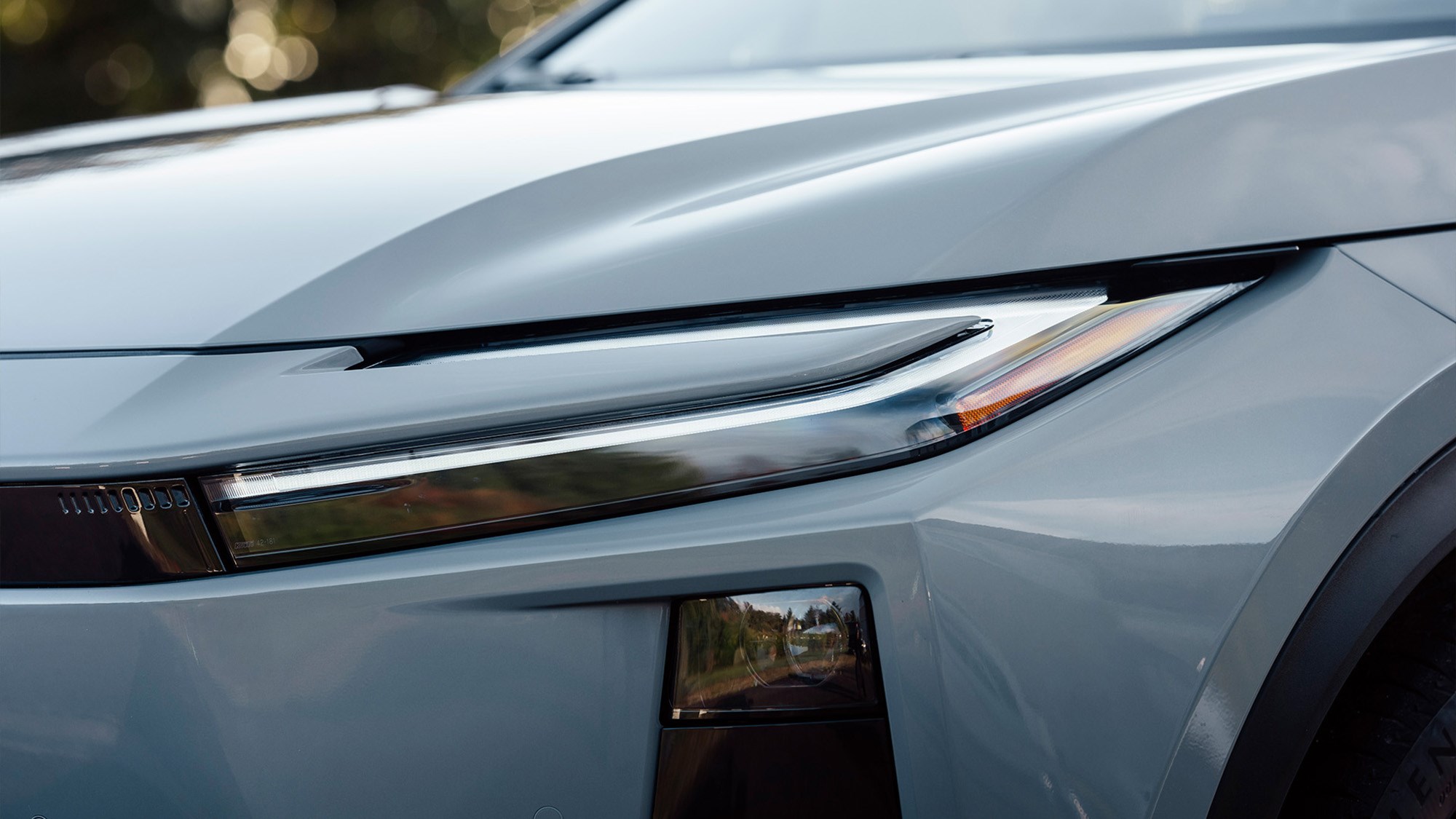
I spent my time driving a FWD 77kWH Mid+ example but also had a quick go in the range-topping 338bhp AWD example – even though it’s not destined to come to the UK. There’s an extra motor for the rear wheels and the 0-62 time is reduced from a decent 7.3 seconds to a quick 5.2 seconds. It loses a step of agility but makes up for that with brute force. If you are desperate to experience the AWD version here in the UK, the Subaru Uncharted will have optional all-wheel drive.
What’s it like inside?
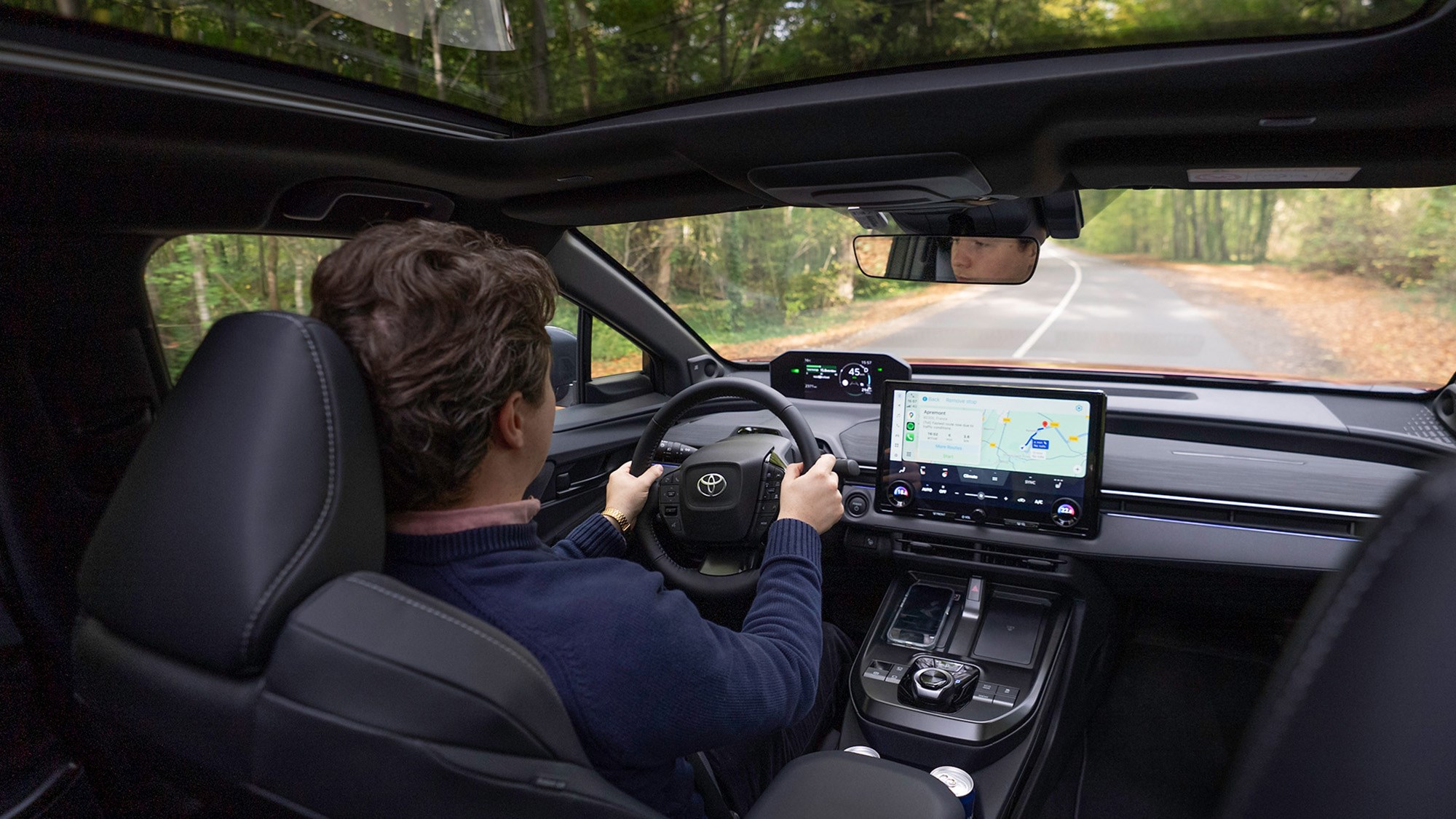
It’s the usual Toyota build quality here, and there’s a pleasing array of buttons and screens available.
The 14-inch screen dominates the front and is menu-heavy, although it’s quick to navigate. Wireless Apple CarPlay and Android Auto are included as standard. The physical climate dials are a personal highlight – not only do they look good, but they also neatly combine the tactility of physical controls with the versatility of a digital screen.
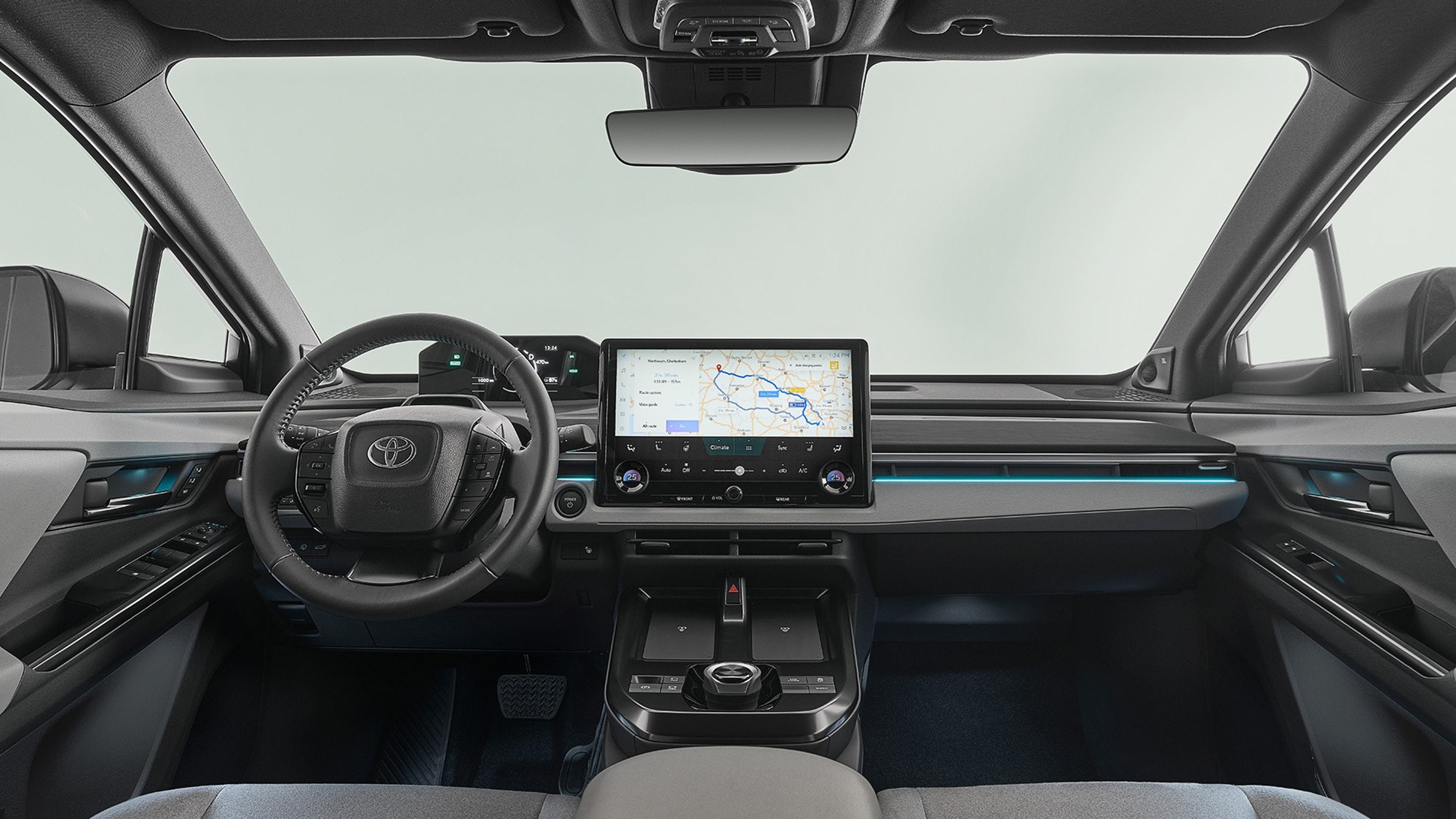
Space is good in the front and rear, even if the high floor meant I sat higher up than ideal even with the seat lowered as much as possible. Headroom takes a knock for rear occupants and it’s dark in the back too, a feature shared with the regular C-HR. Blame that coupe roofline.
All cars get two wireless phone chargers as standard, as well as heated front seats to help reduce reliance on battery-sapping heating. A heat pump is also standard.
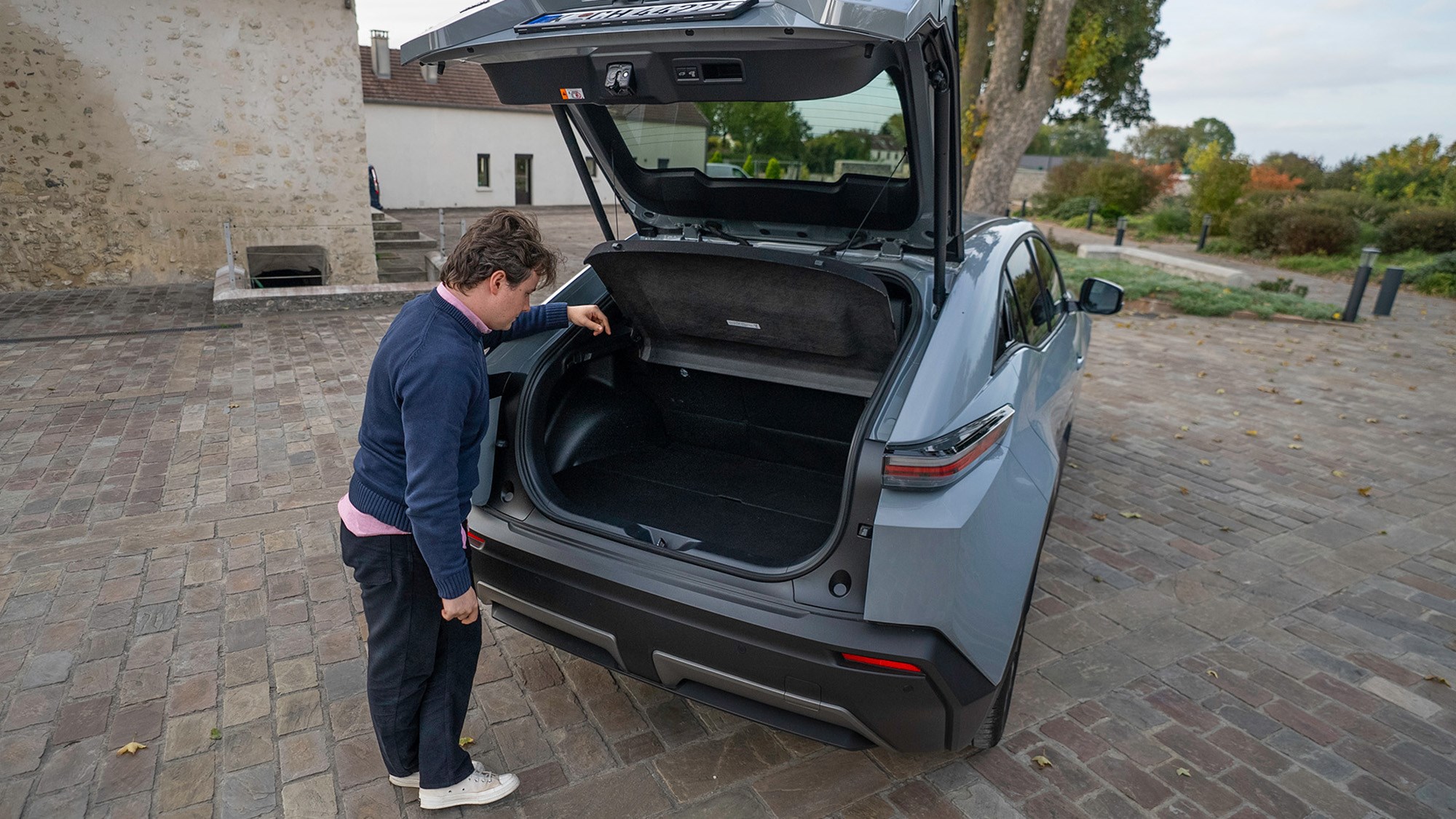
The boot is 416-litres, comfortably larger than the CH-R PHEV, and it has a tiny loading lip and a variable floor. Interior storage space is mostly good, with generous door bins line each door and there’s a shelf underneath the centre console. There’s no glovebox though, an annoying quirk first seen on the bZ4X.
Before you buy
As for rivals, the C-HR+ will be fighting against the likes of the Skoda Elroq, Kia EV3 and Hyundai Kona Electric, all mid-sized electric SUVs with more conventional shapes. The closest thing to the swooping coupe looks of the Toyota is the Smart #3, or, obviously a Subaru Uncharted.
There’s also the undeniable lure of Toyota’s cast iron 10-year warranty and 10-year/million-kilometre battery warranty to mention. This is subject to annual servicing and battery checks but offers exceptional peace of mind.
Verdict
There’s a lot to recommend about the C-HR+ and that extends beyond the usual Toyota build-quality and reputation for not going wrong. It’s nice to drive, the battery tech is competitive and its undeniably stylish.
Arguably, it’s not quite as versatile as a Skoda Elroq or Kia EV3, and try as they might, it’s still not brimming with personality. If it’s reasonably priced, the C-HR+ will prove to be a safe bet and easily recommendable. Now, if only we could get the 338bhp AWD one in the UK…
Specs are for a Toyota C-HR+ 77kWh