► A Toyota Corolla you might actually want
► Fifth-gen hybrid system works well
► Actually pretty decent to drive, too
The Toyota Corolla probably isn’t a car that’s going to keep you up at night. But it is highly reliable, reasonably good looking, and – since the 2023 facelift – deploys the fifth-generation of Toyota’s hybrid system. So while it no longer makes it directly onto our list of the best hybrid cars on sale today it remains an incredibly worthy and pragmatic choice.
Why? Because it is genuinely fuel efficient in the real world. The latest self-charging hybrid tech brought in lighter components and a big boost in performance for the 1.8-litre model in particular, as well as improvements to refinement and response. This has made it a much less jarring car to drive as well.
The most recently announced changes for 2025 introduce more sustainable materials, plus new paint and alloy wheel options. There’s also quite a significant power cut for the 2.0-litre model, but the 1.8 was the better buy anyway.
Should I buy a Toyota Corolla? No need to be embarrassed, this is really rather a good car now. If you like the way it looks, the tech is easy to use and the hybrid system very effective. Just don’t expect much room in the back.
At a glance
Pros: Very efficient, much better to drive than it used to be, reliable and well put together (in the UK)
Cons: Rear seat space is cramped, the 2.0-litre loses quite a bit of boot space, not exciting
What’s new?
The car itself isn’t massively different – the Corolla still comes as a family hatchback or Touring Sports estate in the UK (a saloon is available elsewhere). But as well as the updated hybrid system, the 2023 facelift brough a new set of lights front and rear, tweaked bodywork and redesigned bumper elements, as well as minor revision to the crash structure and the suspension.
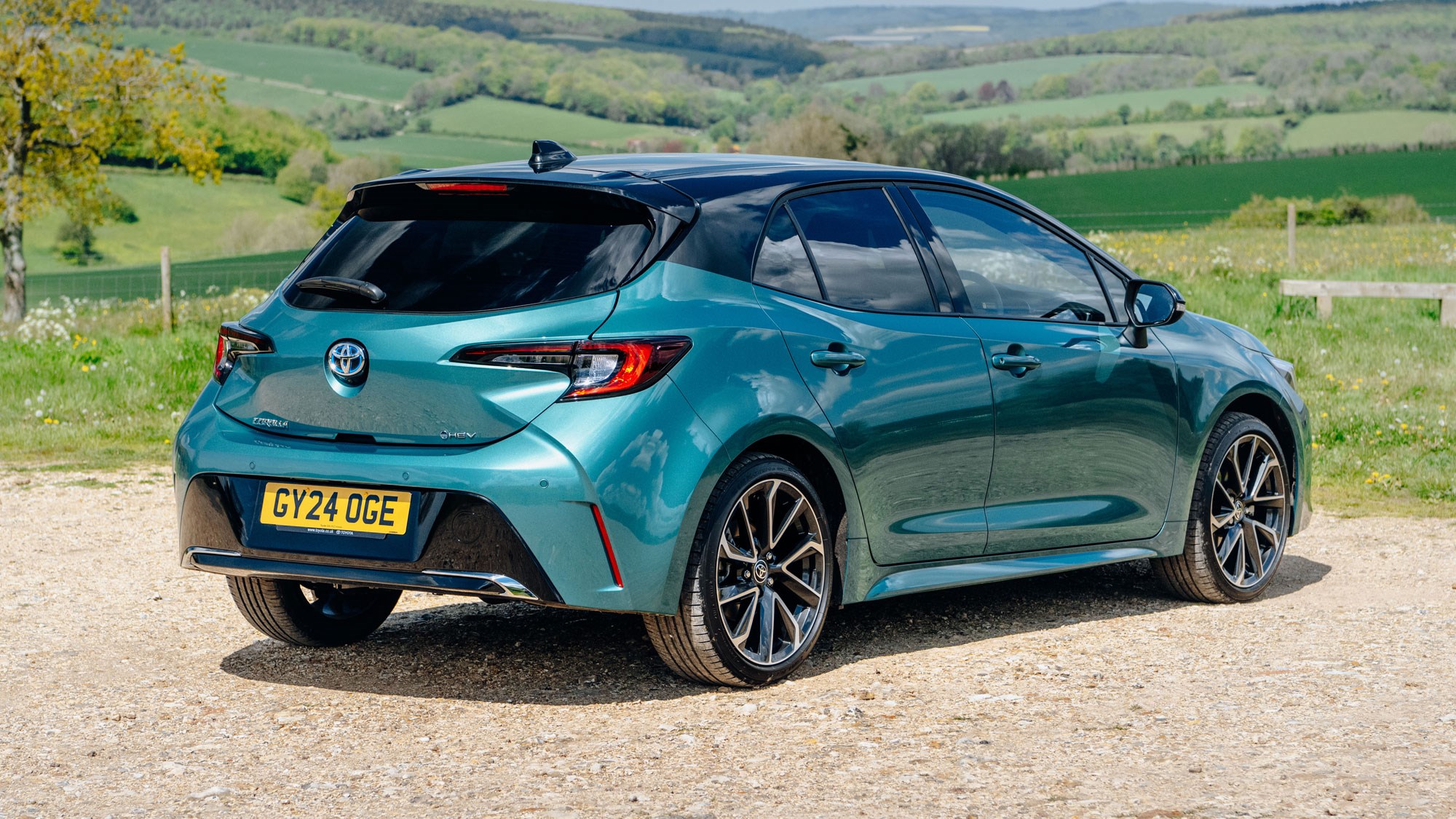
The safety and infotainment tech also got an upgrade, on which more in a moment. Fundamentally, this remains a sharp-looking, comfort-orientated family car, with cramped rear seats but a petrol-electric hybrid powertrain line-up that’s become an increasing viable alternative to diesel over the years – and shouldn’t be sniffed at as a stop-gap to going full EV.
Updates for 2025 are superficially limited to some artificial leather for the steering wheel and gear selector, recycled fabrics for the seats and some minor styling changes – limited to new paint, new wheels and gloss black mirror caps. However, the 2.0-litre model is about to see its power-output cut from 193hp down to 176bhp; the 1.8 remains at the 138bhp level introduced with the 2023 facelift.
What are the specs?
For that facelift, every element of that hybrid system has was overhauled. The lithium-ion battery pack got a 14 per cent greater output, a 14 per cent (18kg) lower weight and became more compact. The control electronics are more efficient and quieter. And the electric motors are more powerful – the one in the Corolla 1.8 jumping 23bhp to 94bhp, the one in the 2.0 increasing 4bhp to 111bhp – while also being 16kg and 18kg lighter, respectively.
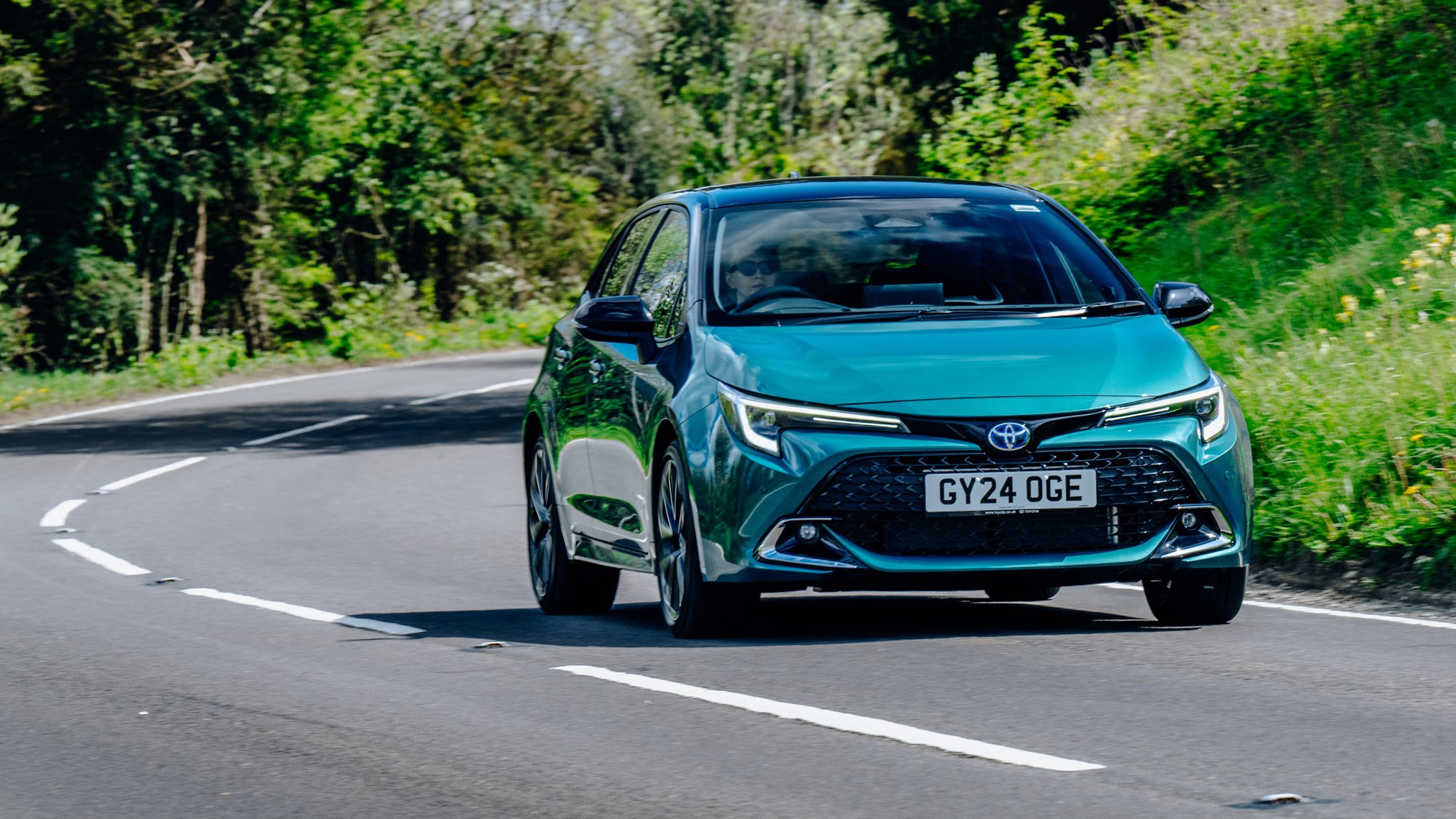
All told, this results in the 1.8-litre Corolla now delivering 138bhp combined – up from 120hp – while the 2.0-litre Corolla rose from 181bhp to 193bhp (though as mention, this is shortly set to be restricted to 176bhp). CO2 is now rated at 100-111g/km, while the WLTP fuel economy figures are 57-64mpg combined. In our experience you can get surprisingly close to this, to the extent that 50mpg+ is genuinely easy and 60mpg far from impossible.
Put this together with a substantial amount of recalibration and the additional torque-fill now available from the gutsier e-motors. And it all adds up to a faster, quieter, more satisfying car to drive that’s also more efficient.
How does it drive?
There was nothing particularly wrong with the previous 1.8-litre Corolla, in a relaxed, meandering, CVT-governed kind of way. It was never quick, but once you accepted that, you tended to arrive at your destination reasonably unruffled – more interested in how often the car runs in EV mode than the 10.9sec 0-62mph time. There’s a gauge for that.
As such, going from that to the new 1.8-litre Corolla is more of a surprising transition than the 18bhp overall increase might lead you to suspect. The updated car is immediately more brisk, with an almost muscular level of response that feels comparatively manic.
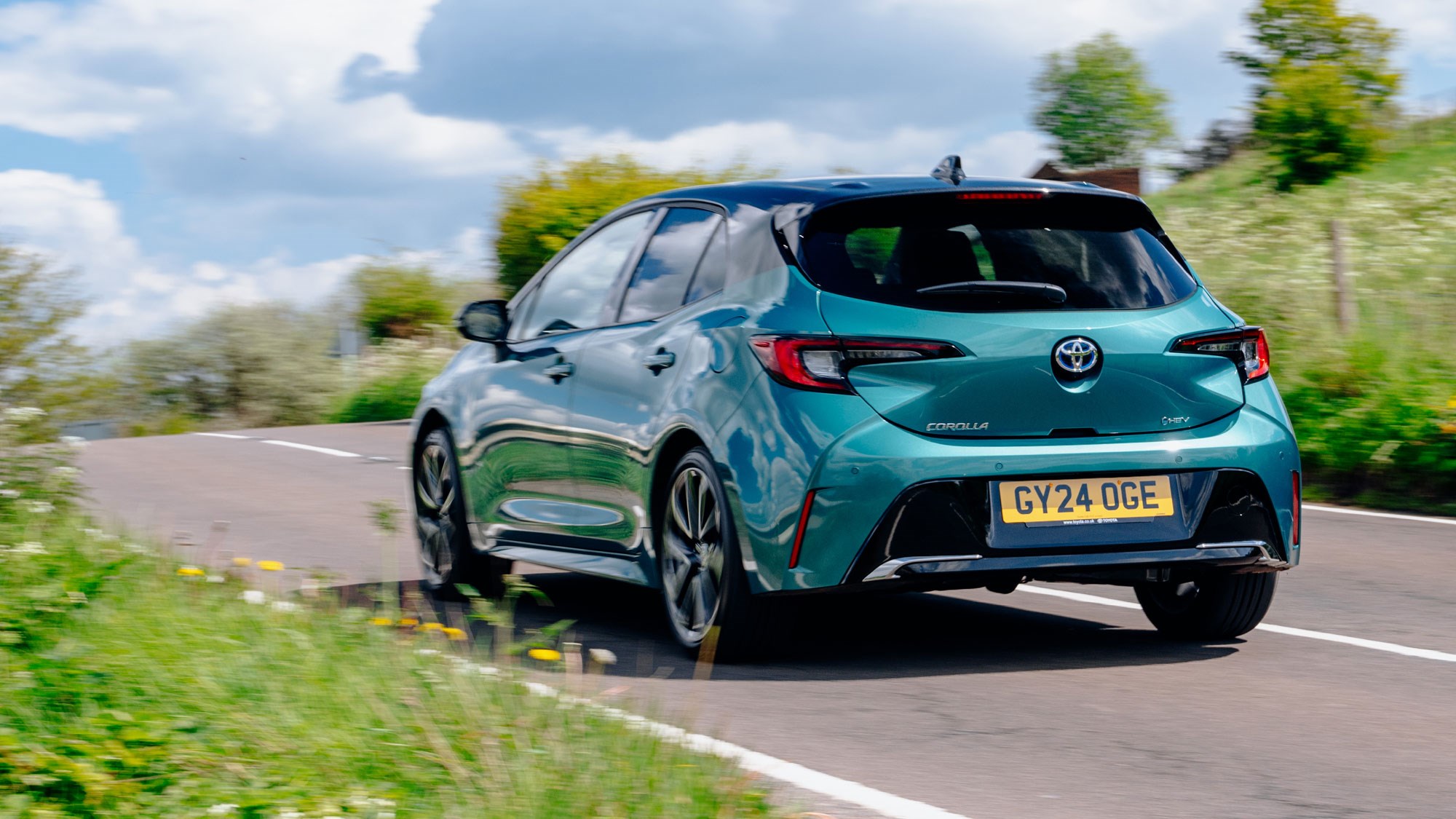
It isn’t, of course. But while this is still a modest family car above all else, a 1.7sec reduction in the 0-62mph time gives you a clue that there’s more to this than the combined outright power figure. A lot of work has gone into remapping the accelerator response so it better matches driver intentions, for example, and dialling back the revs the CVT requires for a given amount of progress. Something that much bigger increase in electric motor performance no doubt assists.
So it is faster. It is also quieter at speed (though think lessened rather than absent when it comes to that characteristic CVT lowing noise). More efficient? Well, consider that over one very mixed driving route that included sections of motorway in addition to urban and countryside elements, the car was reporting it had been in EV mode 72% of time and was returning over 60mpg.
That’s without driving deliberately for economy.
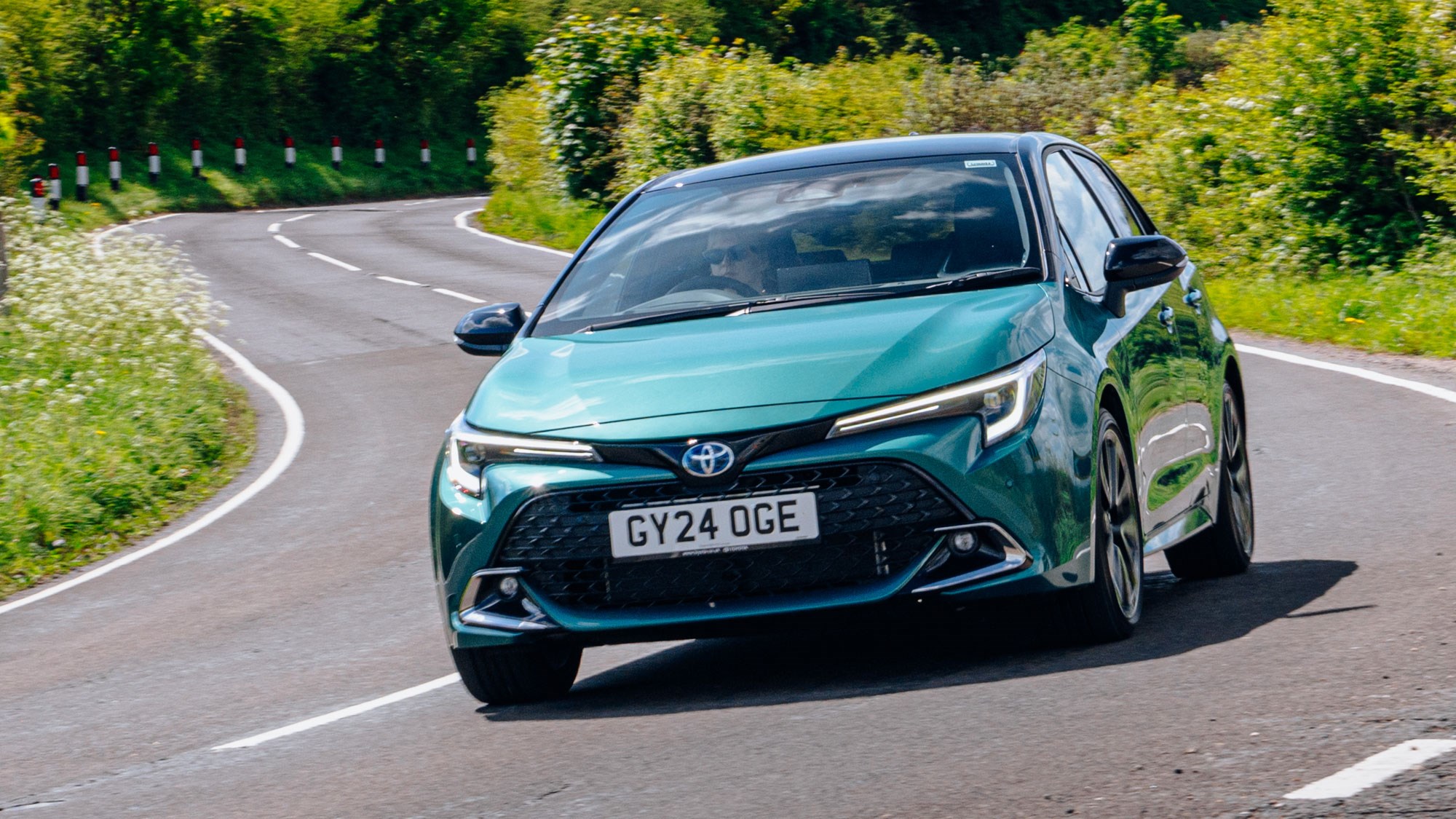
It’s still more of a cruiser than a bruiser – but that’s quite refreshing these days. Ride comfort is good, and the suspension is rarely upset by mid-corner bumps, even on the 18-inch wheels of the higher trim levels; on which subject, the UK’s Corolla GR Sport is most definitely not to be confused with the full-fat GR Corolla hot hatch now offered in the USA and Japan (Toyota will start building the GR Corolla for export at its UK factory in Burnaston in 2026, but there’s no word yet that it will be sold here, too).
The steering is light and – if you’re clumsy – the body roll is substantial. And even the improved CVT leaves a lot to be desired versus a manual gearbox, a decent conventional automatic or a dual-clutch transmission. But in less spirited driving the Corolla acquits itself just fine, as all modern Toyotas do.
What about the interior?
The facelift introduced an all-new infotainment system, with a bigger 10.5-inch anti-glare touchscreen. And you now get a full 12.3-inch digital instrument cluster. Both as standard.
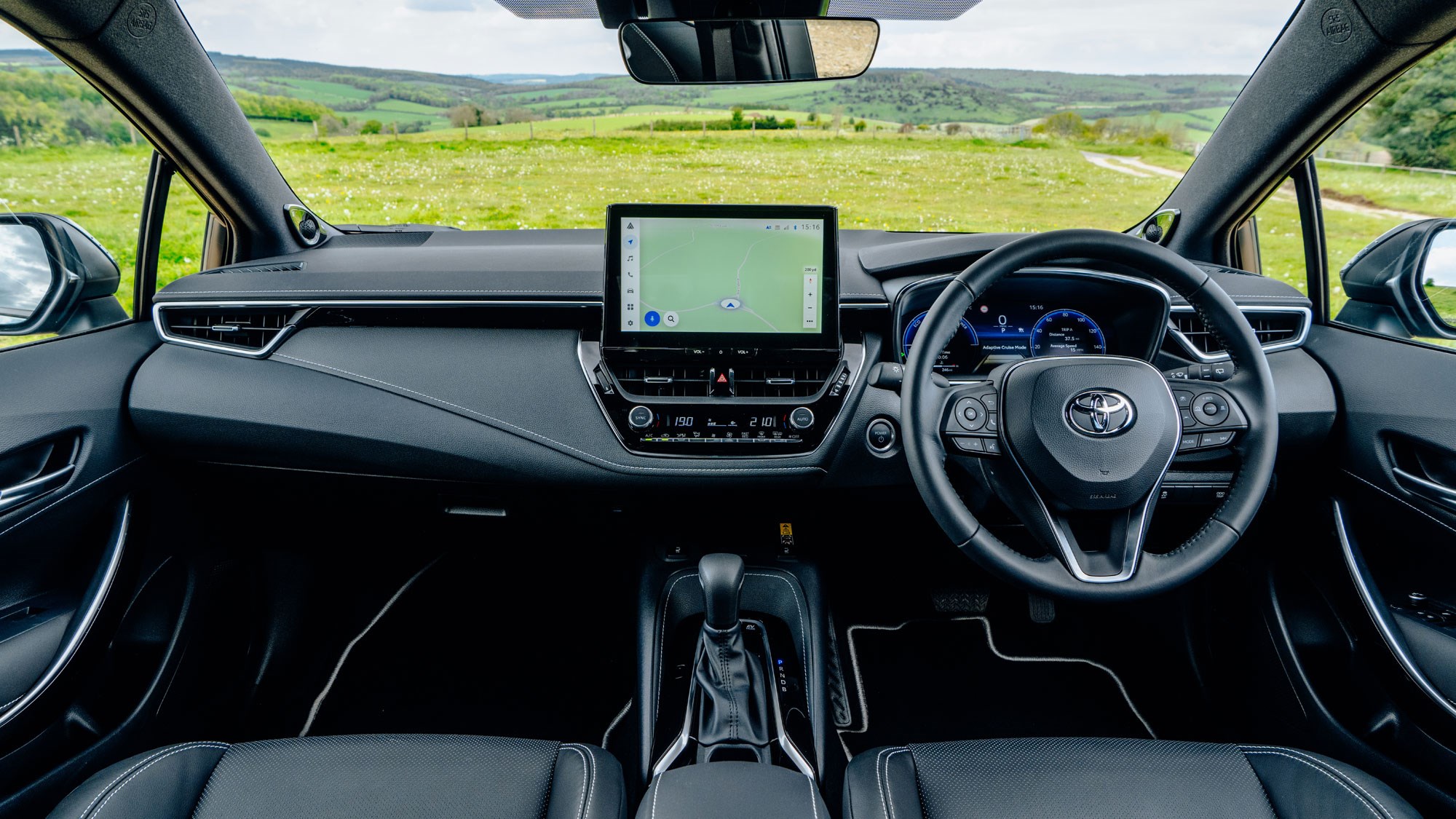
The former loses the physical buttons around the bezel but is easy enough to use that this shouldn’t be a major problem, and at least Toyota still gives you proper ventilation controls.
The latter offers a considerable amount of customisation, so you can tailor what it displays to suit your preferences as well as the way it looks. This is best done before setting off, however.
Upgraded safety features include low speed Accelerator Suppression (intended for those instances where you’ve accidentally stood on the right pedal instead of the left…), Emergency Steering Assist that can now detect and help you react to on-coming vehicles, Safe Exit Assist (warns you if you’re about to open a door into a cyclist), and Rear Seat Reminder.
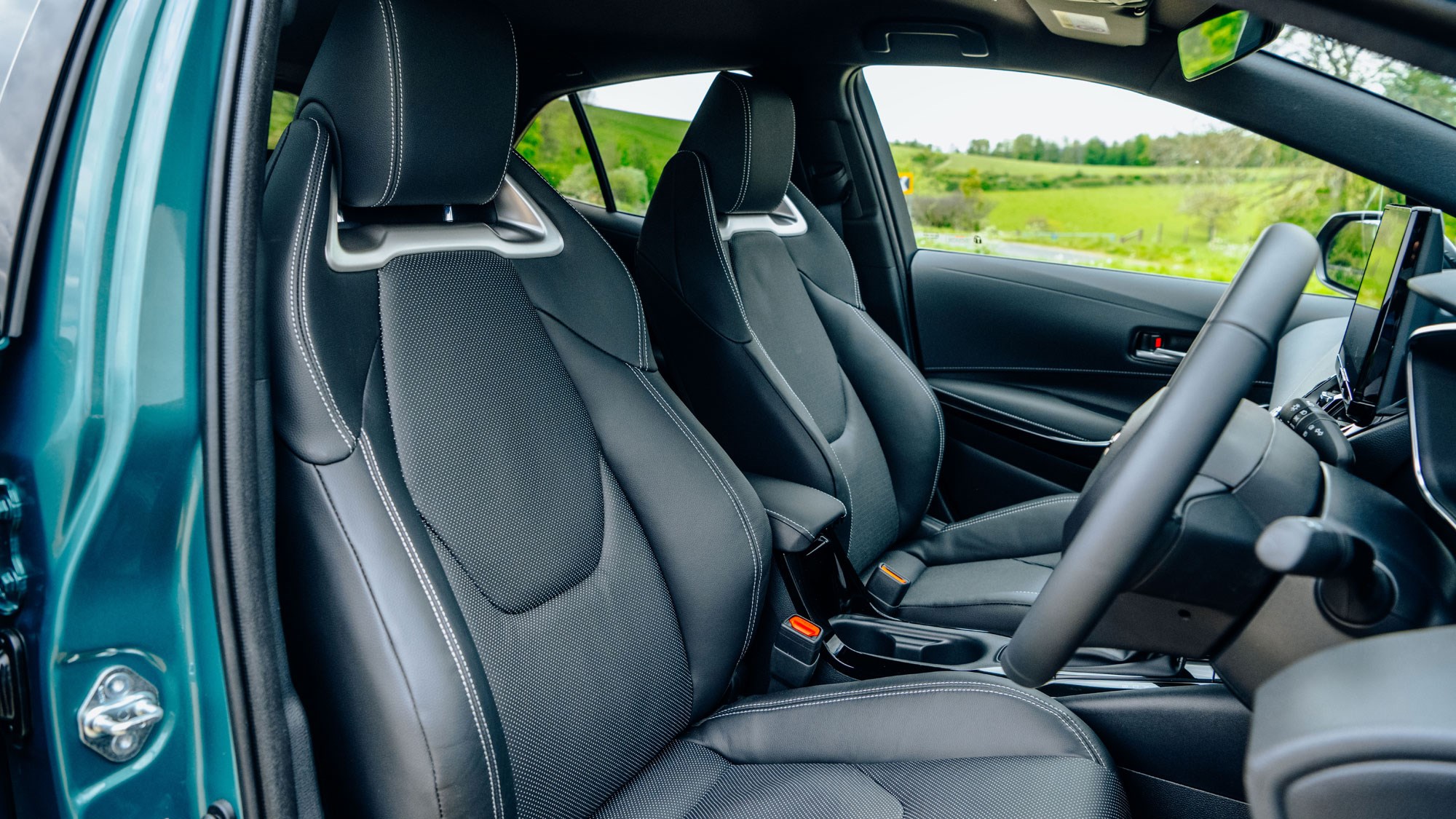
The latest Corolla also has over-the-air update capability, while the MyT app means you can remotely operate the locks, pre-condition the cabin and set-off the hazard lights via your smart phone.
The rear seats are cramped, though. The 2.0-litre model also still suffers with a boot that’s 48 litres smaller than the 1.8’s (313 litres instead of 361), because the 12v battery has to go back there instead of under the bonnet.
Before you buy (trims and rivals)
The 2025 Corolla comes in four trim levels: Icon, Design, Excel and GR Sport. None of them are short of kit, and if you opt to stick at the entry-level Icon you get delightfully tiny 16-inch alloy wheels, and the best possible ride comfort. There would be no shame in this – after all, sat-nav, LED lights, wireless phone charging, dual-zone climate, keyless go and heated seats are all included.
The upgrade to Design adds 17s, better LED headlights, automatic lights and wipers, auto-folding door mirrors; Excel (pictured) is on 18s, gets ‘multibeam’ LEDs, a head-up display and some useful extra safety kit in the form of blindspot monitors and rear-traffic alert – plus sports seats and Alcantara upholstery.
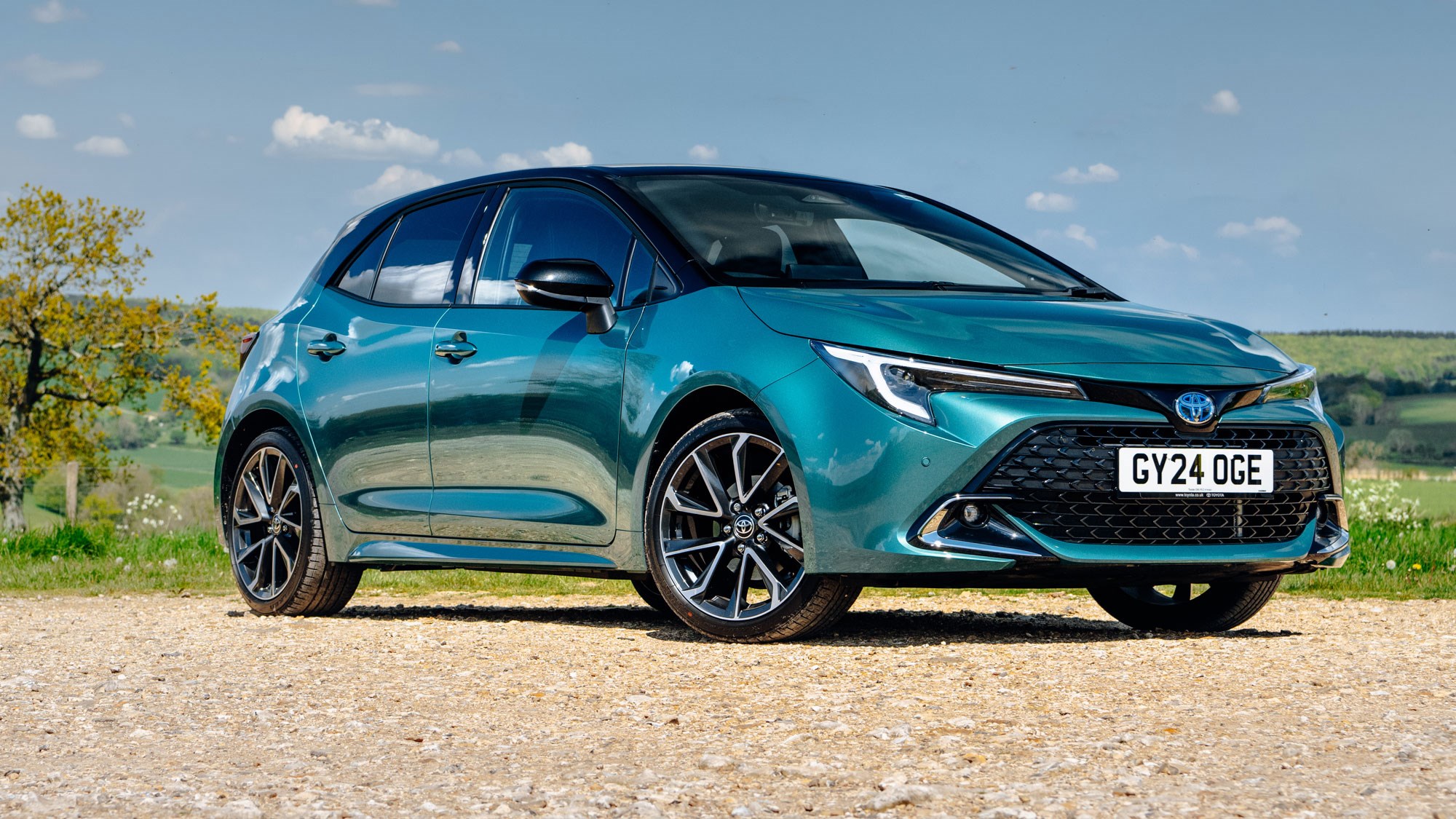
GR Sport is a parallel grade to Excel, gets an exclusive 18-inch wheel design and trades the luxury equipment for GR Sport visual elements, including red stitching.
As for rivals, well, there’s now plenty of them, as most carmakers offer you a self-charging hybrid in place of design in the family hatchback market these days. Our top pick is typically the Honda Civic, which is pricy but has a clever drivetrain, lots of interior space and a lovely driving experience.
Verdict: Toyota Corolla
Come for the looks, stay for the fifth-gen hybrid system. For whatever you think of that self-charging marketing schtick, Toyota’s hybrid tech has really come of age.
That the Corolla is also comfortable – up front, at least – safety conscious, and endowed with one of the best aftercare packages in the business means that for many buyers, Toyota has surely got an overall package here that outweighs the lack of driving excitement. And even so, the drivetrain performance is now substantially improved.
Pricing has crept up, in part because Toyota has combined the two previous entry-level trims into a single Icon specification – meaning you now have to pay upwards of £30k,. However, for that you do get an upgraded roster of standard equipment as well as the improved hybrid drive and up to 10 years of warranty coverage. So all things considered it remains excellent value.
Specs below are for the Toyota Corolla 1.8