► Hybrid and PHEV Toyota C-HR driven
► Doubles down on distinctive looks
► Fifth-gen hybrid system
In many ways you can blame the original Toyota C-HR for the profusion of small coupe-SUVs we’ve had inflicted upon us in the intervening years since its launch. Rather than chase practicality, style seemed to be the C-HR’s main purpose, and it proved quite a hit with buyers – so no surprise that rivals wanted a piece of the action.
With the availability of frugal hybrid engines, the C-HR combined sensible running costs with a sweeping roofline and a distinctive angularity. It paid off handsomely for Toyota even if it wasn’t practical enough to be one of the best SUVs out there.
After six years on sale, it was time for its replacement. No surprise that Toyota concentrated on delivering more of what made the original C-HR stand out: wacky coupe-inspired styling, hybrid drivetrains and its SUV-style attitude. It arrived in the UK in 2024 months before its TNGA-C platform mate, the Toyota Prius.
Should you buy a Toyota C-HR? If you value stand-out styling and hybrid efficiency over ultimate practicality, then this remains a tempting choice. Be prepared to be surprised at how well it drives.
Here’s how we test cars, and why you should trust us.
At a glance
Pros: stand-out styling, impressive hybrid efficiency, refined cruising
Cons: rear space still tight, not the sharpest drive, rivals catch up fast
What’s new?
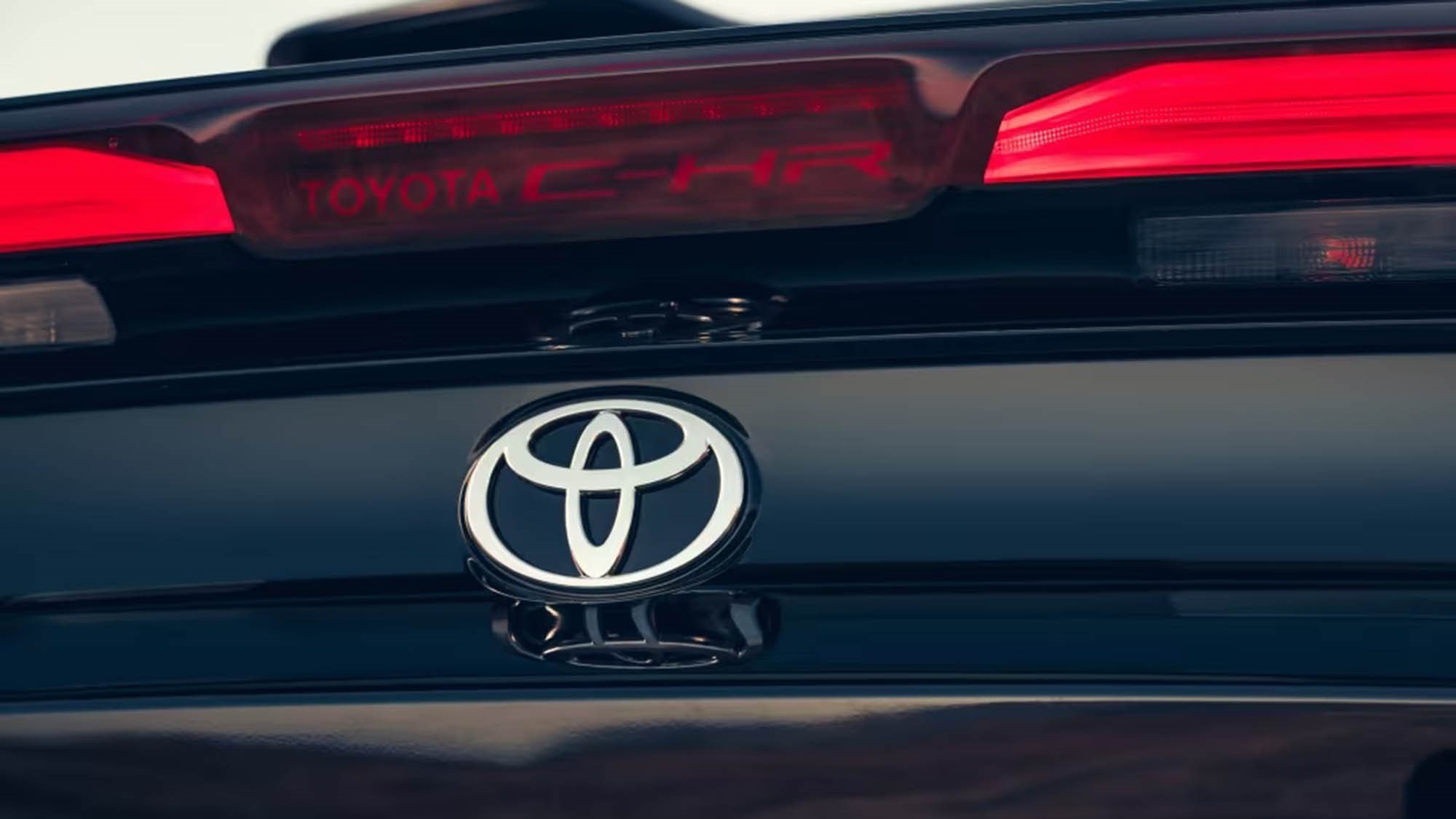
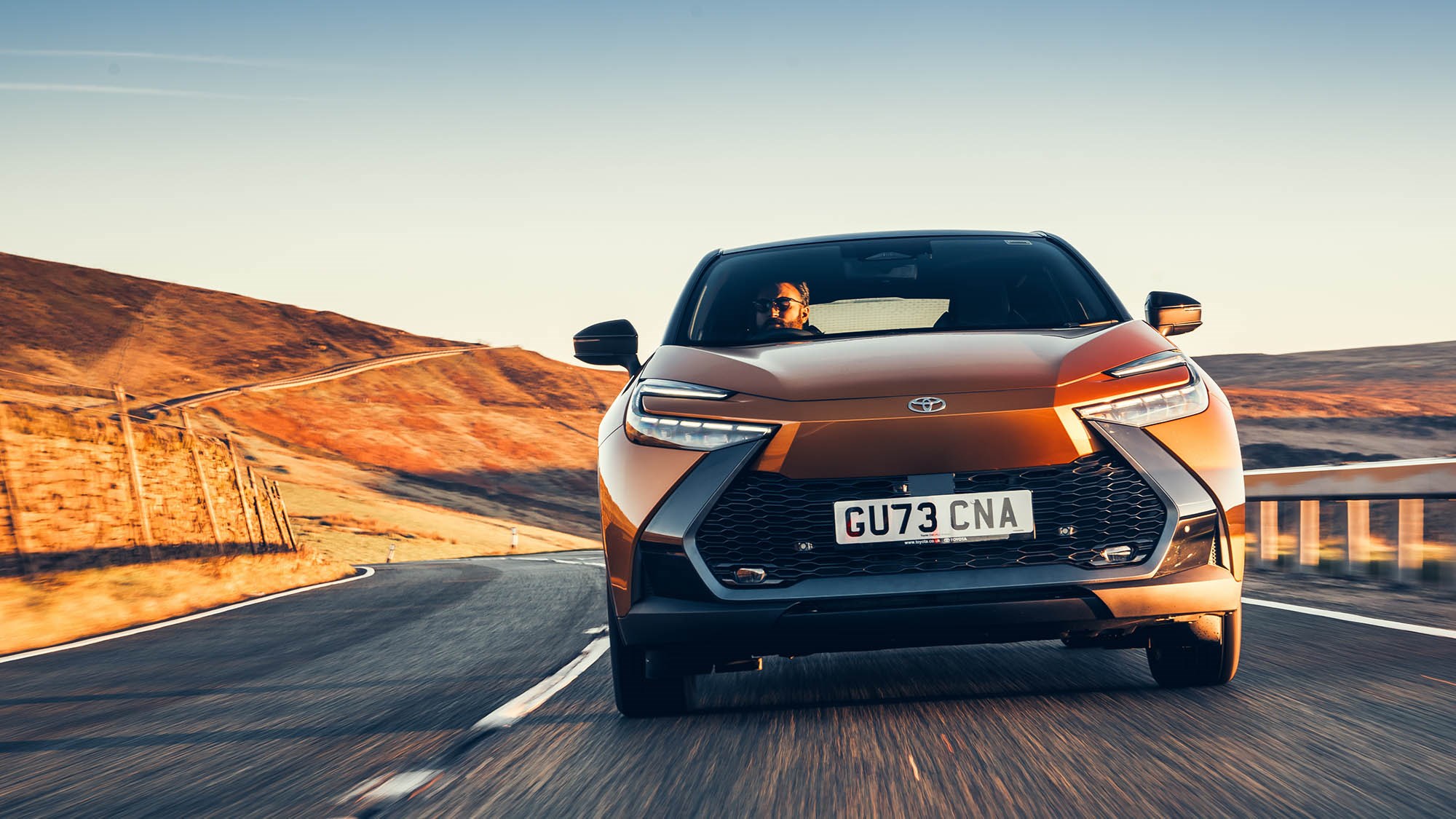
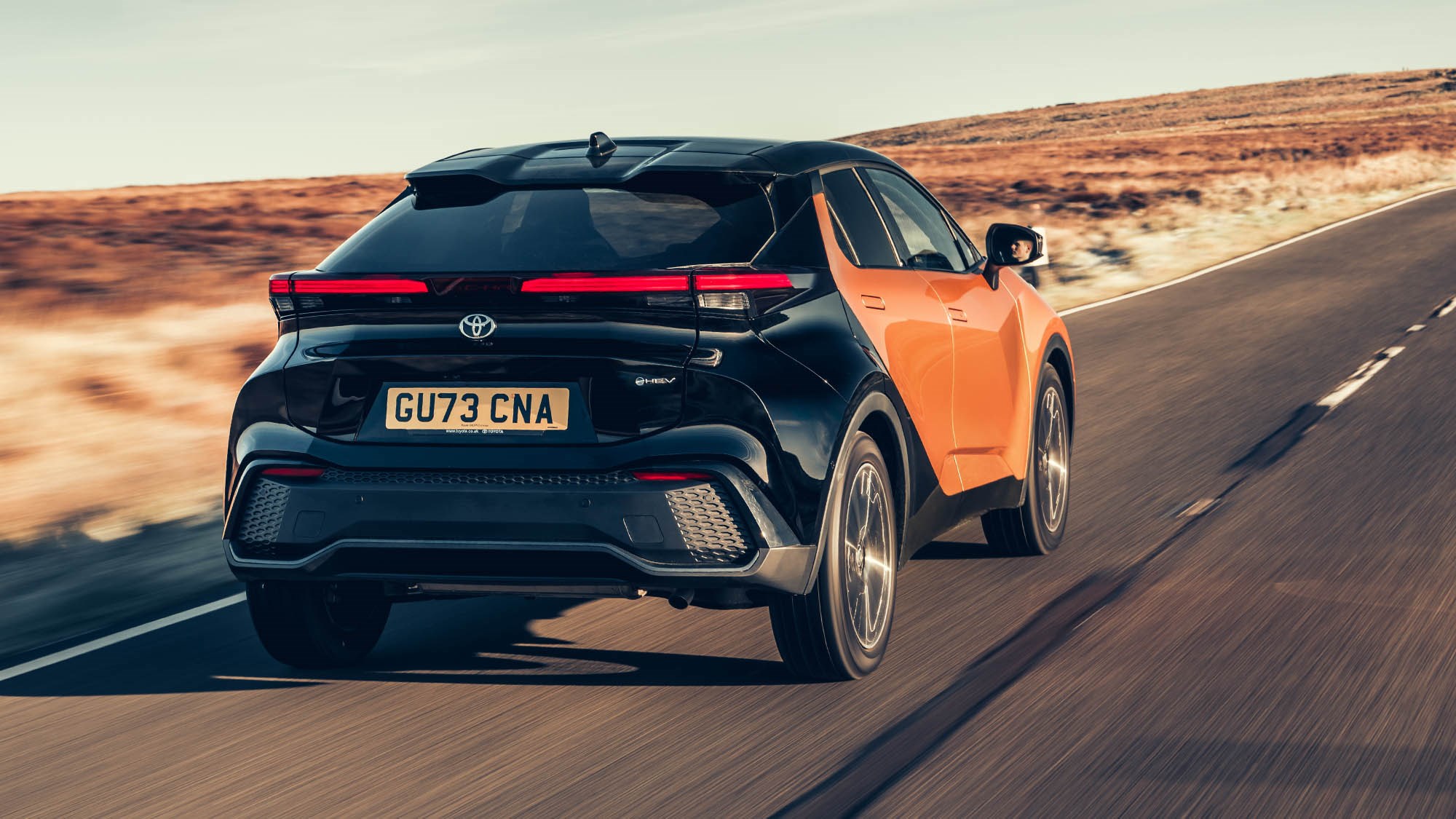
The C-HR went into its second generation in 2023, with styling that’s clearly evolutionary yet more polished and cohesive than before. It retains the sloping coupe roofline, but LED lights front and rear are now better integrated, and subtle tweaks such as pop-out door handles replace the previous hidden rear pulls. Rear visibility improves marginally thanks to slightly larger rear-side windows.
Under the skin, the latest C-HR uses Toyota’s TNGA platform, which now underpins a huge chunk of the brand’s line-up. The big news was the introduction of a plug-in hybrid option for the first time in this model, alongside updates to the fifth-generation self-charging hybrid system promising smoother driving and greater efficiency.
What are the specs?
The Toyota C-HR’s engine line-up ranges from a 1.8-litre self-charging hybrid producing 138bhp, through to a 2.0-litre self-charging hybrid with 195bhp. The range-topping option is the 2.0-litre plug-in hybrid with 220bhp and a 13.8kWh lithium-ion battery, offering a claimed 41 miles of pure-electric driving and CO₂ emissions as low as 19-20g/km. That’s covered in more detail in its own review.
Transmission remains a CVT, which has been tuned to avoid excessive droning under acceleration—a long-standing Toyota criticism. Efficiency is a strong point across the range, with over 50mpg easily achievable in mixed driving. The PHEV option particularly appeals to company car drivers thanks to low BIK tax implications.
In terms of tech, the interior gains Toyota’s latest infotainment system, featuring a large, bright screen, crisp graphics, and over-the-air update capability. Safety kit is comprehensive, with Toyota’s Safety Sense suite standard across the range.
How does it drive?
We’ve driven the 1.8 and 2.0-litre full hybrids, and they are surprisingly different in character. Both aren’t what you’d call quick – the engine note is gruff, and far less sweet than Honda’s rival offering. It’s muted enough most of the time so you soon dial out its gravelly engine note and appreciate the low overall levels of noise. And yes, less mooing than the old C-HR. Although it’ll hold revs at a constant level if you really push it, gentler acceleration has the engine note being modulated to irritate your ears less.
The self-charging 2.0-litre gets from 0-62mph in a not especially impressive 8.1 seconds. It’s sufficient for most scenarios, although not what you’d call quick. The 1.8 is slower at 10.2 seconds, but on part throttle it feels reasonably muscular and sounds far smoother than the 2.0-litre.
While the steering isn’t exactly brimming with feel, it’s well weighted and nicely geared. The brakes are easily modulated, blending regen and friction braking with aplomb. It’s pleasant enough to mooch along in, but push on and Toyota’s claims of improved dynamism fall a little flat.
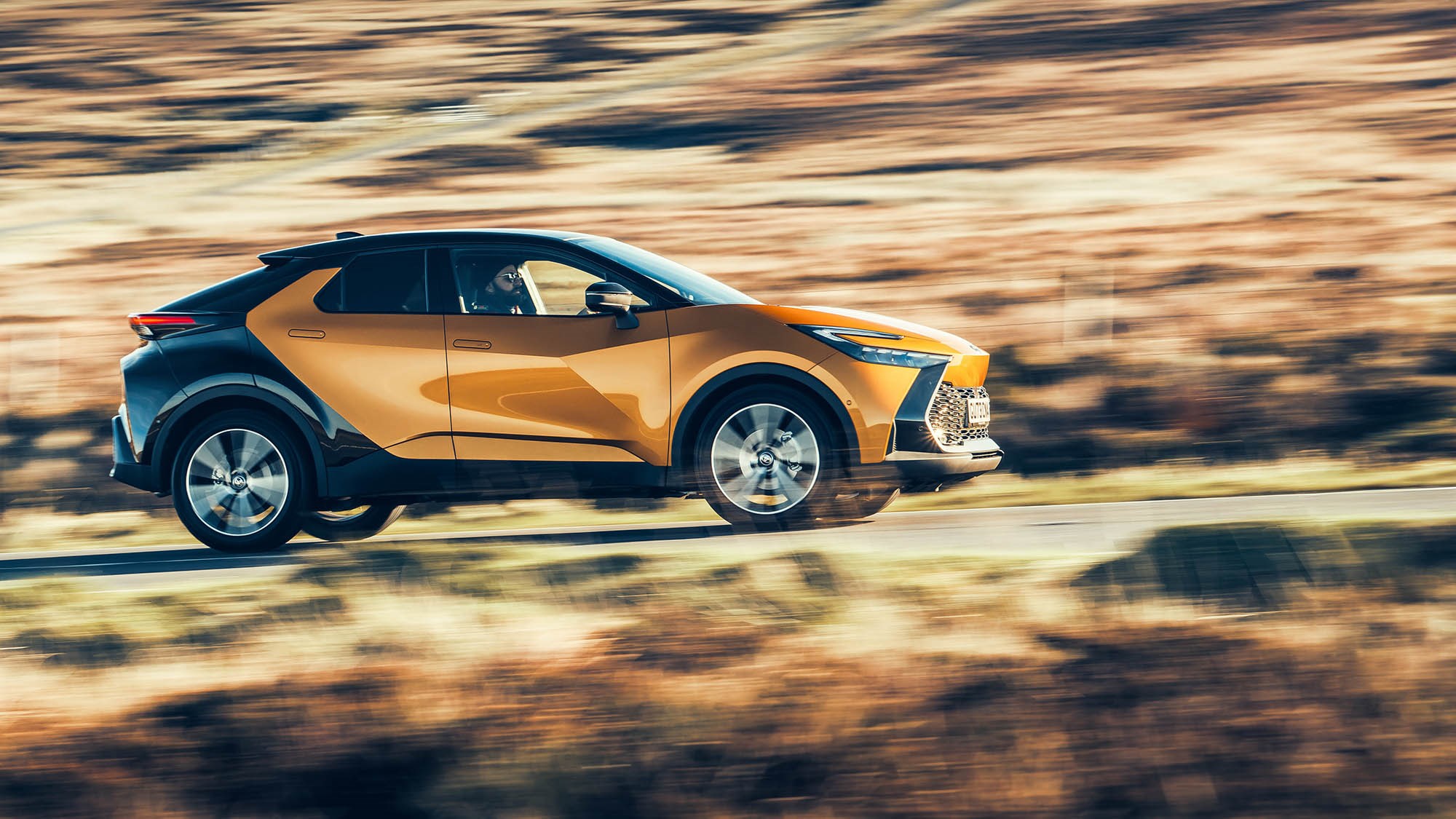
Body roll is quite noticeable and hurts the C-HR’s agility, especially through S-bends, but it’s all well reigned in. Grip levels are decent enough, but it doesn’t take much for the car to push wide at the front, making for safe but not particularly involving handling. The ride and damping are well sorted, offering a solid feel on the road. A few ridges and imperfect surfaces reveal an underlying firmness, suggesting larger wheels may be worth avoiding in the UK.
If you want a fair turn of speed, to go with the competent suspension set-up and well-weighted steering, then head for the more expensive PHEV. The claimed 0-62mph time is 7.3 seconds and maximum speed is limited to 112mph. When you’re cracking on, it certainly feels quick and responsive on anything other than the lightest of throttle inputs.
What about the interior?
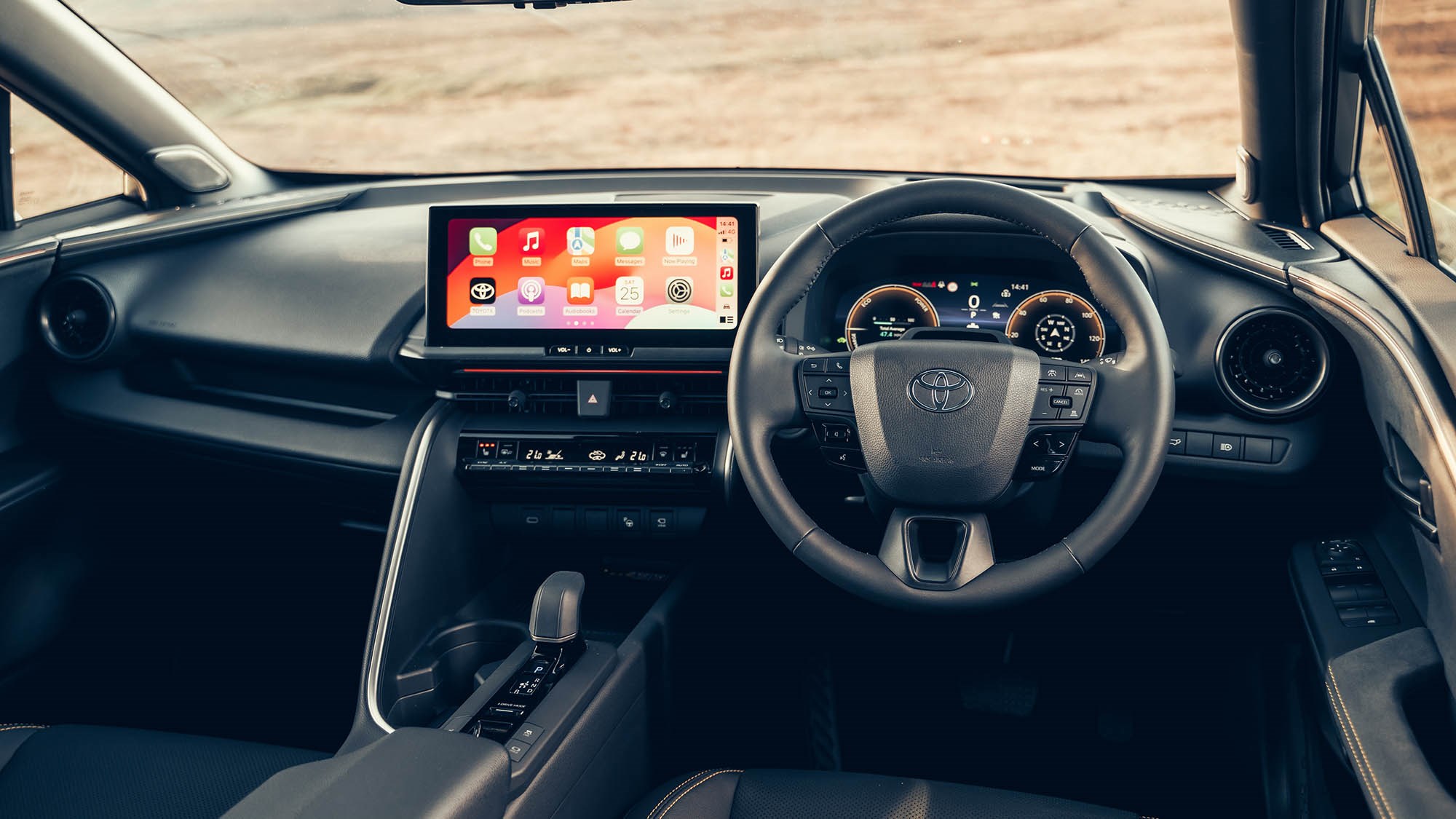
The interior quality up good in places, and tightly put together with solid material quality. Poke your head into the back and it’s a sea of hard, unyielding plastic just like the old model. The C-HR’s vast swathes of dark surfaces have been given a big lift with contrasting soft-touch areas, and a pair of ‘sail panels’ stretching from the dash top into the doors.
More importantly, the large central infotainment screen is nicely integrated, bright, responsive, and easy to use. It sits atop a bank of physical controls for the air conditioning and comes across as being a lot more well-considered and mature than before.
It’s probably worth commenting on the overall accommodation and visibility at this point, seeing as they were such a criticism of the original C-HR. As before, its rakish shape does not translate into particularly good visibility – with not much to see through the letterbox-like rear screen, in particular. Over-the-shoulder isn’t as bad as it was, although that’s really damning it with faint praise.
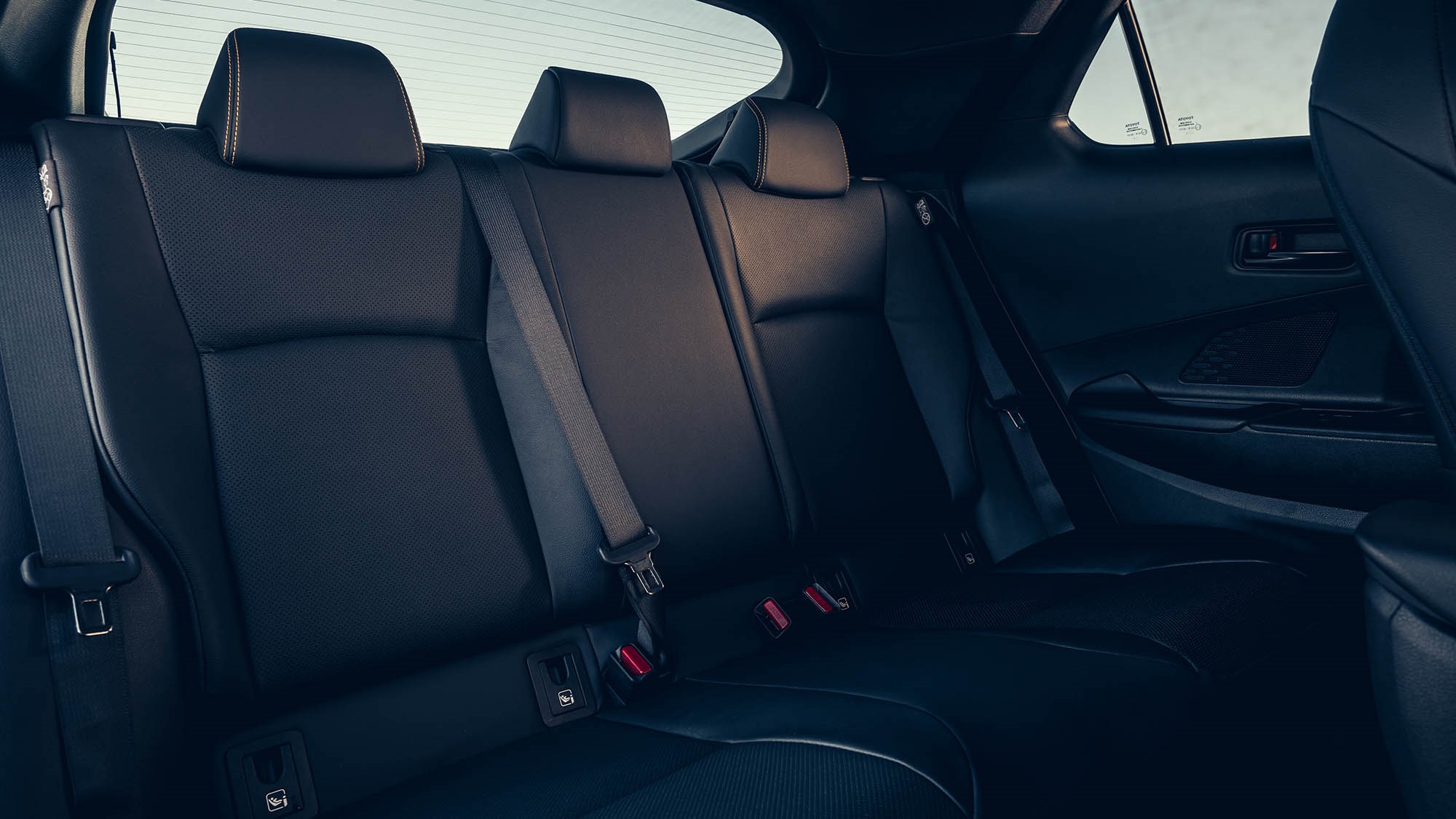
The front seats are accommodating, and we like the high-mounted centre console, but the rear is nothing to write home about. It’s not as dark as some coupe-SUV rivals, and the addition of a panoramic glass roof is definitely worth having. But a six-footer is not going to fit at all comfortably behind someone similarly tall. A family car this is not.
Before you buy
Toyota offers the C-HR in Icon, Design, Excel and GR Sport trims. All are generously equipped with Toyota Safety Sense, while higher trims add features like larger wheels, part-leather trim and premium audio systems.
Key rivals include the Nissan Qashqai e-Power, the Peugeot 3008, the Volkswagen T-Roc, Renault Symbioz, and stalwarts like the Skoda Kamiq and Ford Puma. Many of these offer strong hybrid or plug-in options and sharper driving dynamics, so it’s worth test-driving widely.
As of mid-2025, C-HR pricing starts at around £31,645 for the 1.8 hybrid, rising to around £42,000 for the PHEV in high trim. PCP deals remain competitive, reflecting Toyota’s strong residual values.
Verdict
The Toyota C-HR stands out from the crowd thanks to its range of striking colours, two-tone paint jobs, and angular styling. But it’s up against some strong rivals now who have copied Toyota’s successful formula and improved on it. As such, the C-HR needed to stay ahead of the opposition. For the most part, Toyota has done just that.
It’s solid, stands out, is capable of over 50mpg in the real world with ease, and is a refined drive that’s easy to live with. If cars were bought purely on rational grounds, the C-HR wouldn’t get a look in against legions of more practical rivals, such as the Skoda Kamiq, Nissan Juke and Ford Puma – but it does, and that’s undoubtedly going to continue.
If the C-HR does appeal to you, we’d keep it simple and stick to the 1.8 hybrid. It’s not fast, but given the car’s slightly stodgy handling it’s enough. Besides, there’s a handy saving to be made, it’s more refined and you gain a bit more boot space, too.