► Toyota GR86 driven on road and track
► Final drive in soon-to-retire sports coupe
► Bargain £32,495 price – but sold out!
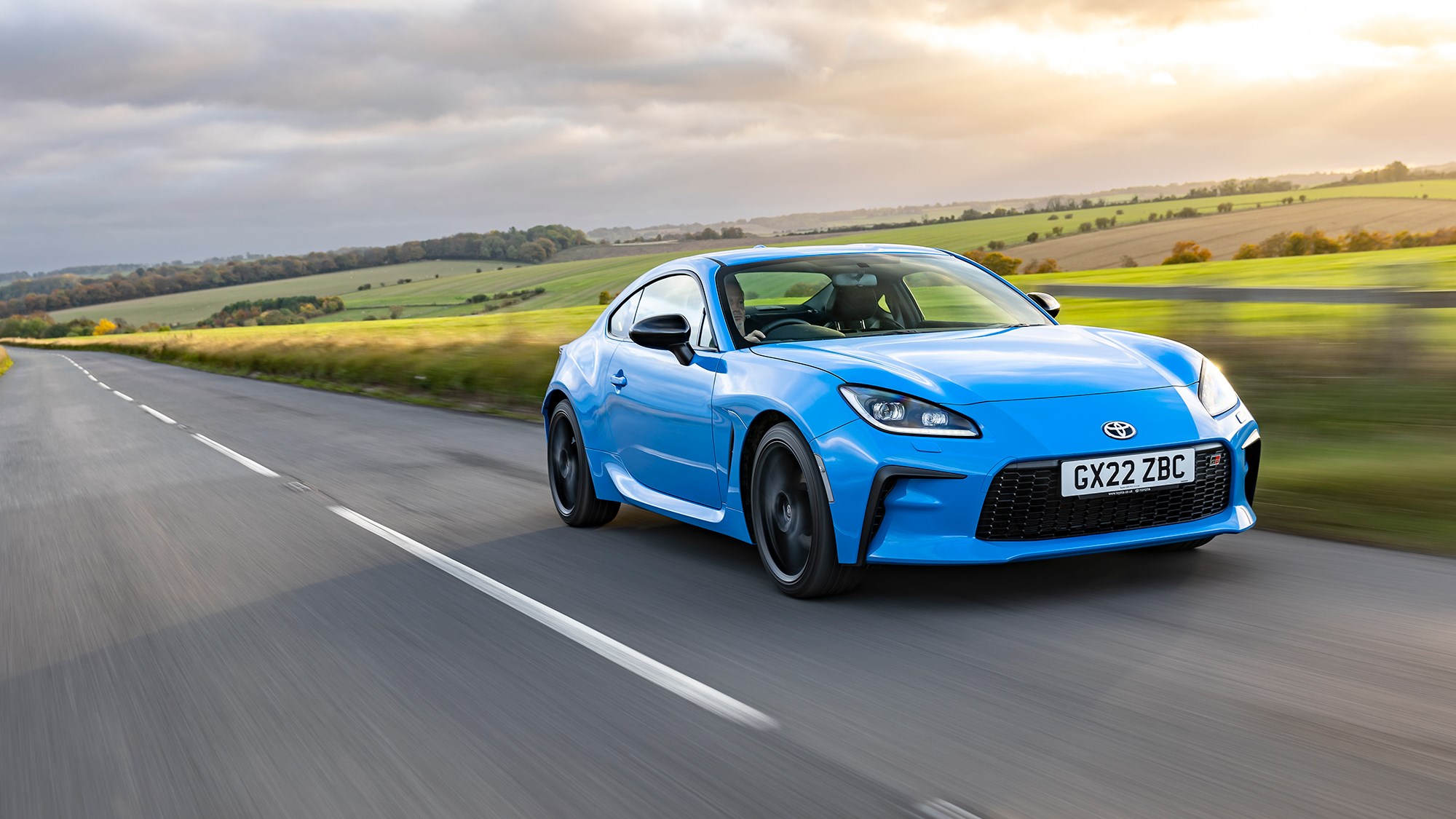
The Toyota GR86 coupe is another icon lost to the winds of time: along with other mainstream sports coupes, for decades pedalled by brands from Ford to Vauxhall, Audi to Peugeot, it’s now officially off sale. It’s part of a bigger trend for models that were once a commonplace fixture in any volume brand’s range, providing aspirational allure to the mass market. The achievable sports car is sadly disappearing from our streets.
Toyota UK dealers will of course still sell you a used one, but we recommend you’ll be better off browsing for secondhand ones on a site like Parkers. Because there you’ll find yourself a sports car with racy, yet understated looks, a keen engine and – key to its appeal – rear-wheel drive sports car handling. Sure, European safety regs that would’ve mandated a technical overhaul to the GR86 that killed the business plan. But it was good when we had it. Very good. As our thorough CAR test reveals below.
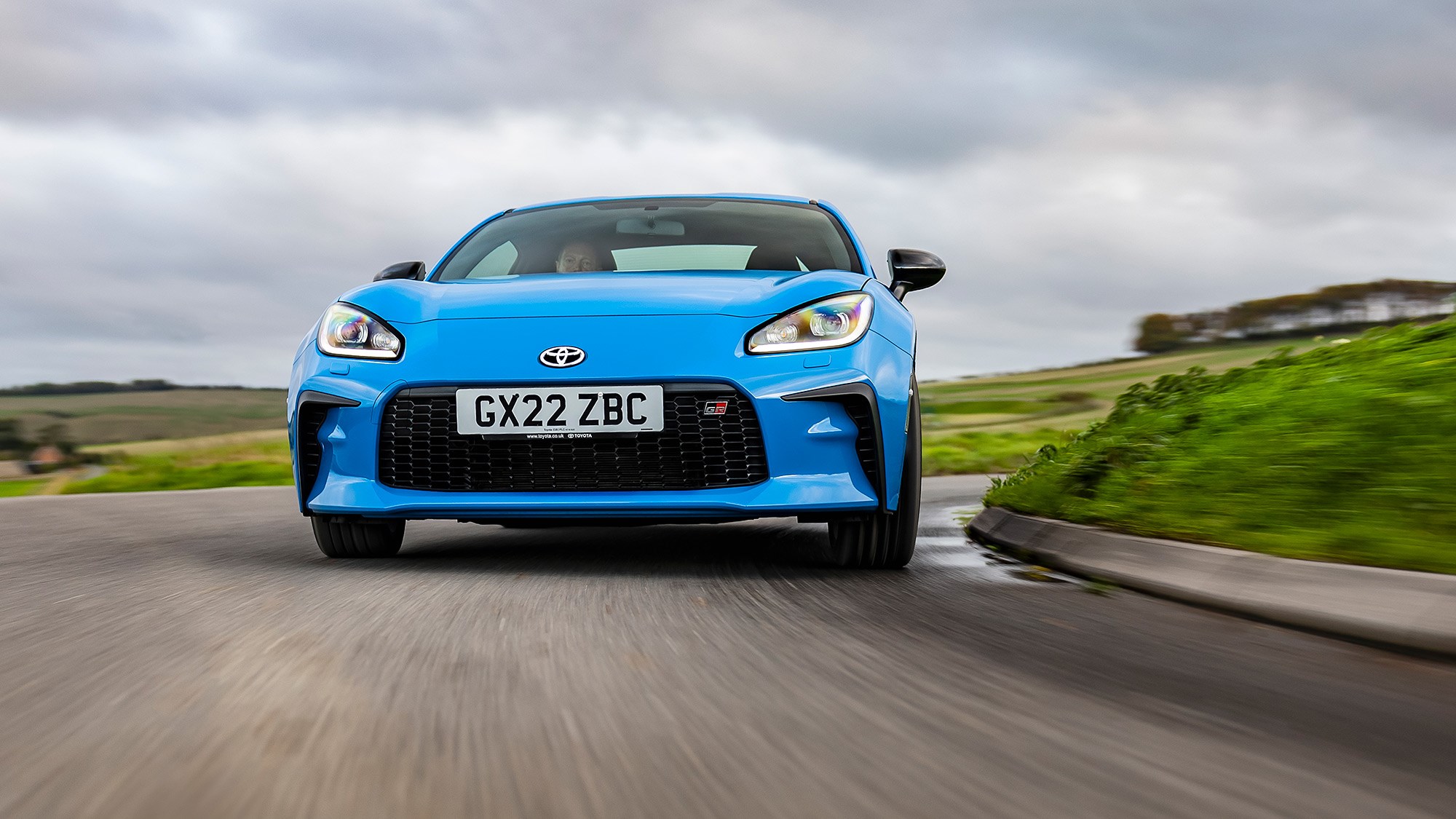
Should you buy a Toyota GR86? If the Mazda MX-5 isn’t powerful enough – or if you prefer a coupe to a convertible – the GR86 really is one of the finest affordable sports cars money can buy.
At a glance
Pros: Sublime rear-wheel drive handling ensures big engagement and fun. Relatively low price and maintenance costs make the GR86 attainable.
Cons: Boxer engine still doesn’t feel as Subaru as we’d like in tone (read: burble). It’s no longer on sale. Used is your only option.
What’s new?
The GR86 – which came from Toyota’s Gazoo Racing sub-brand alongside the GR Supra and GR Yaris – was given a larger, more muscular four-cylinder engine than its predecessor to address the complaints some owners had about average mid-range performance. Of course, the GR86’s 2.4-litre block was just one of several key changes over the GT86 – of which just one-third survives within the GR86’s ingredients. But it was a key one.
Also new for the GR86 was a stiffer bodyshell to improve handling, a fresh wardrobe and a much improved interior.
What are the specs?
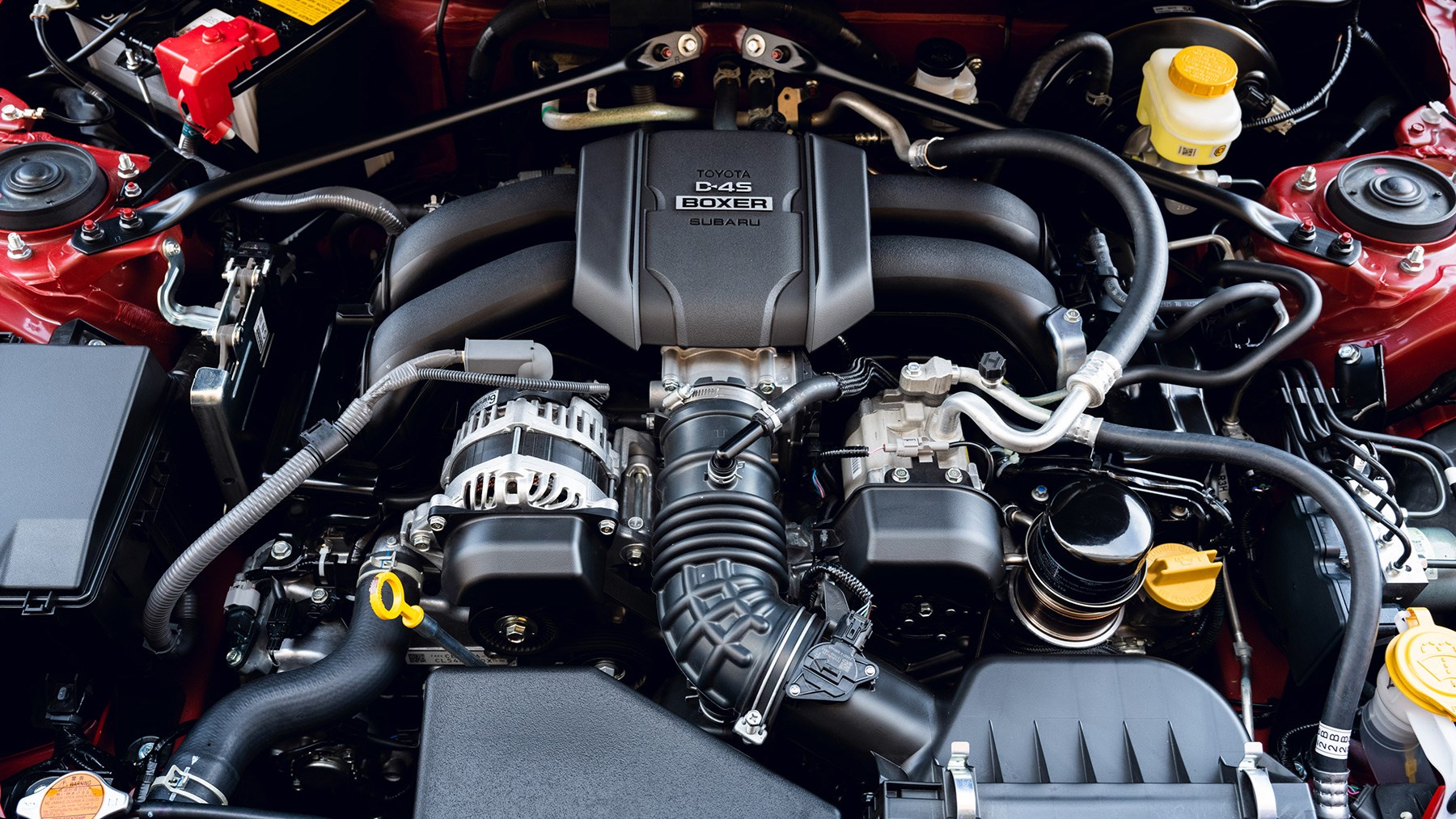
The GR86’s engine is still a boxer, and it uses the same block as the previous GT86’s 2.0-litre lump, but bored out to 2.4 litres. Impressively, the engine is no heavier, thanks to thinner cylinder liners, resin rocker covers and a redesigned water jacket, among other measures.
Torque has risen from 151lb ft to a stout 184lb ft, and power has risen by 35bhp to 231bhp. A new fuel injection system and redesigned air intake and manifold sharpened the throttle response, too. More to the point, peak torque is developed at 3700rpm rather than the GT86’s 6700rpm, making the engine far more flexible and muscular. Cooling has been improved too.
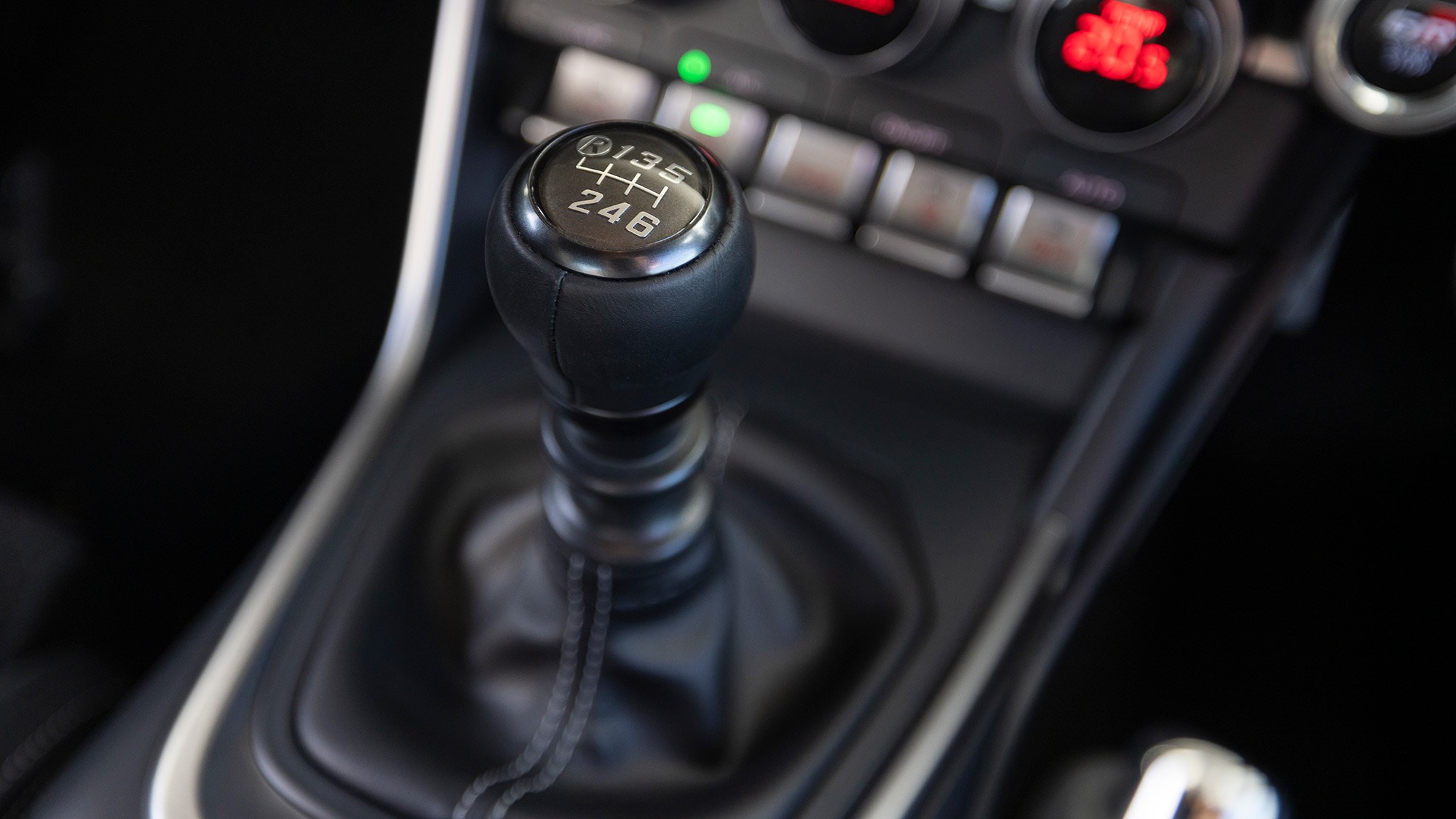
The six-speed manual gearbox is the same as the previous car’s but its shift has been tightened up a touch, with a shorter throw and new synchroniser and bearings. A torque converter auto is an option; but this is very much a car about involvement and only really feels right with three pedals.
Suspension and body
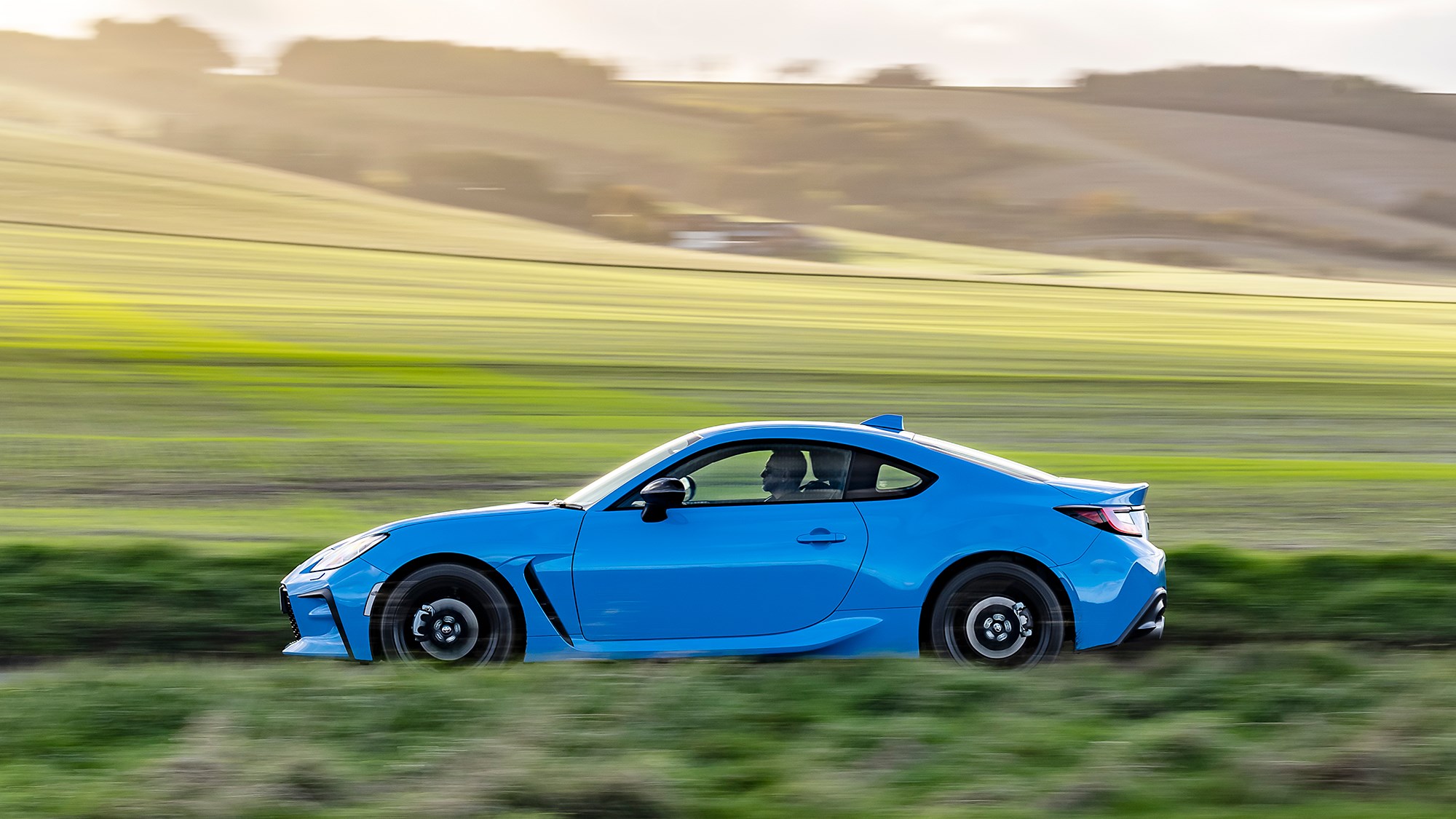
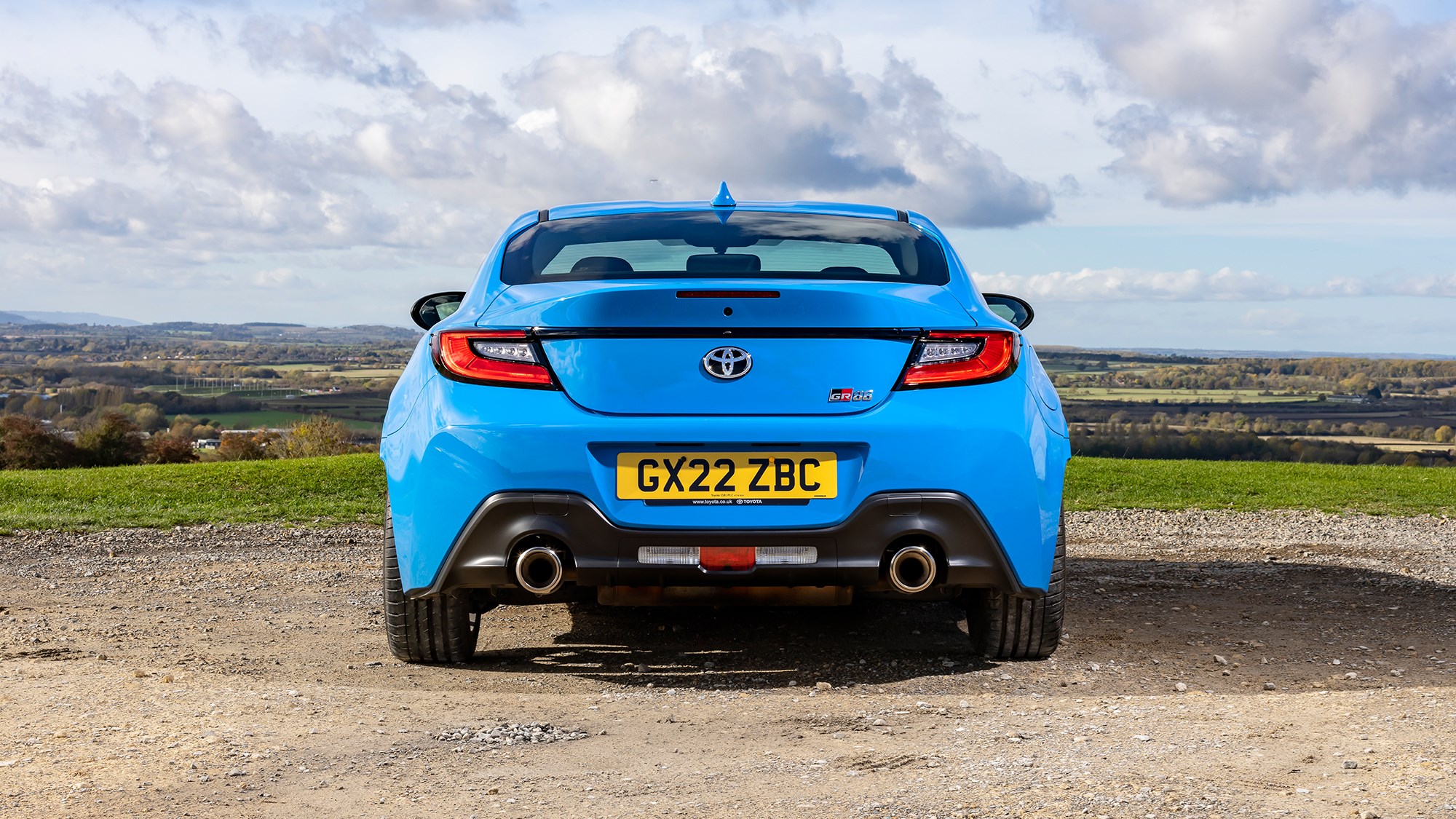
As before, suspension is by MacPherson strut at the front axle, double wishbones at the rear but with reinforced mountings, altered springs, dampers, geometry and a 10mm lower ride height. The anti-roll bar is now connected directly to the rear subframe for increased stability. The rear track has increased slightly in width for the same reason, given the extra torque. It looks planted, squat, purposeful…
A great deal of extra bracing has been added between the suspension and frame, and together with new fasteners and internal stiffening measures within the shell, body rigidity has increased by as much as 60% at the front and 50% at the rear, Toyota claims. You can feel this on the road, with impressive engineering integrity and a lack of flex, even over rough surfaces.
Using more aluminium in the construction means kerbweight has increased only slightly over the GT86, at 1275kg. Engineers claim that, like for like, the Toyota GR86 is actually 10 kilos lighter, thanks to details such as the new aluminium roof saving nearly 2kg.
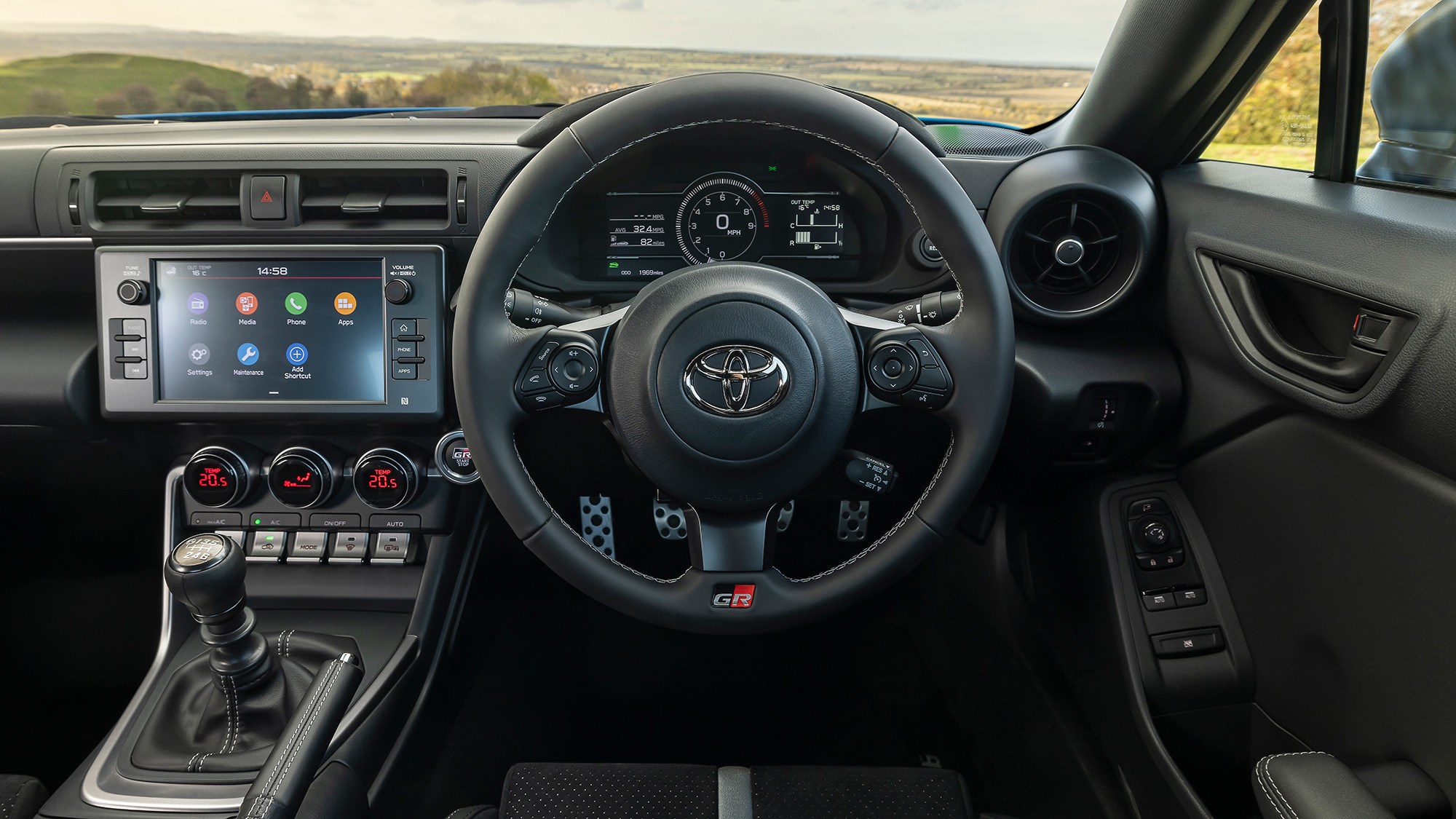
The wheelbase is 5mm longer, and the driver sits 5mm lower in the cockpit, the better for stability and centre of gravity respectively. You certainly feel snug and low-down when you slide over the sill and perch in the grippy, heavily bolstered sports seats. It’s a great cabin: purposeful, driver-focused and with a good view out. We particularly enjoy the analogue switchgear, the handbrake sprouting from the centre console and a good, old-fashioned manual gearlever. It’s refreshingly simple.
We particularly enjoy the analogue switchgear, the handbrake sprouting from the centre console and a good, old-fashioned manual gearlever. It’s refreshingly simple.
We particularly enjoy the analogue switchgear, the handbrake sprouting from the centre console and a good, old-fashioned manual gearlever. It’s refreshingly simple.
You feel it instantly. We initially tested the car on hilly and beautiful roads to the west of Seville, with climbs that would have necessitated a downshift or two in the GT86. In the GR, they’re loped up easily in fourth gear. It’s the same story in the UK: we’ve lived with a GR86 for several months and can report that the performance is right-sized for British roads, too.
Torque delivery is smooth and flexible – enough to easily lug your way out of roundabouts in a higher gear without a struggle – and peak power is developed up at 7000rpm, so there’s a reward to extending the GR86 in every gear.
Does it sound nicer than before?
The GT86 could sound a bit industrial and the GR86 makes a slightly smoother, moderately more pleasant noise. It’s partly artificial, enhanced by the cabin’s speakers. That can be disabled if you don’t like it, but that might necessitate a trip to a dealer to switch it off. It’s not as rumbly as you might expect from a Subaru-designed boxer engine (as with the GT86, the GR86 is a joint venture between Toyota and Subaru but only the Toyota version will be sold in Europe this time) but it’s less phlegmy than the old car, and more pleasant than a four-cylinder Porsche 718 to these ears.
How does the Toyota GR86 handle?
Beautifully. The electric power steering is light but laser-accurate and there’s very little body roll, the GR86 settling quickly into a pancake-flat stance. You feel the low centre of gravity in every movement, and feel very much in tune with the car’s every movement. It’s responsive, yet predictable.
The ride is firm but far from uncomfortable. Find a patch of broken asphalt and that stiff damping becomes apparent, but it’s a well judged balance, we’d say. It can jiggle over broken road surfaces, but we find the chassis well tuned for its target purpose.
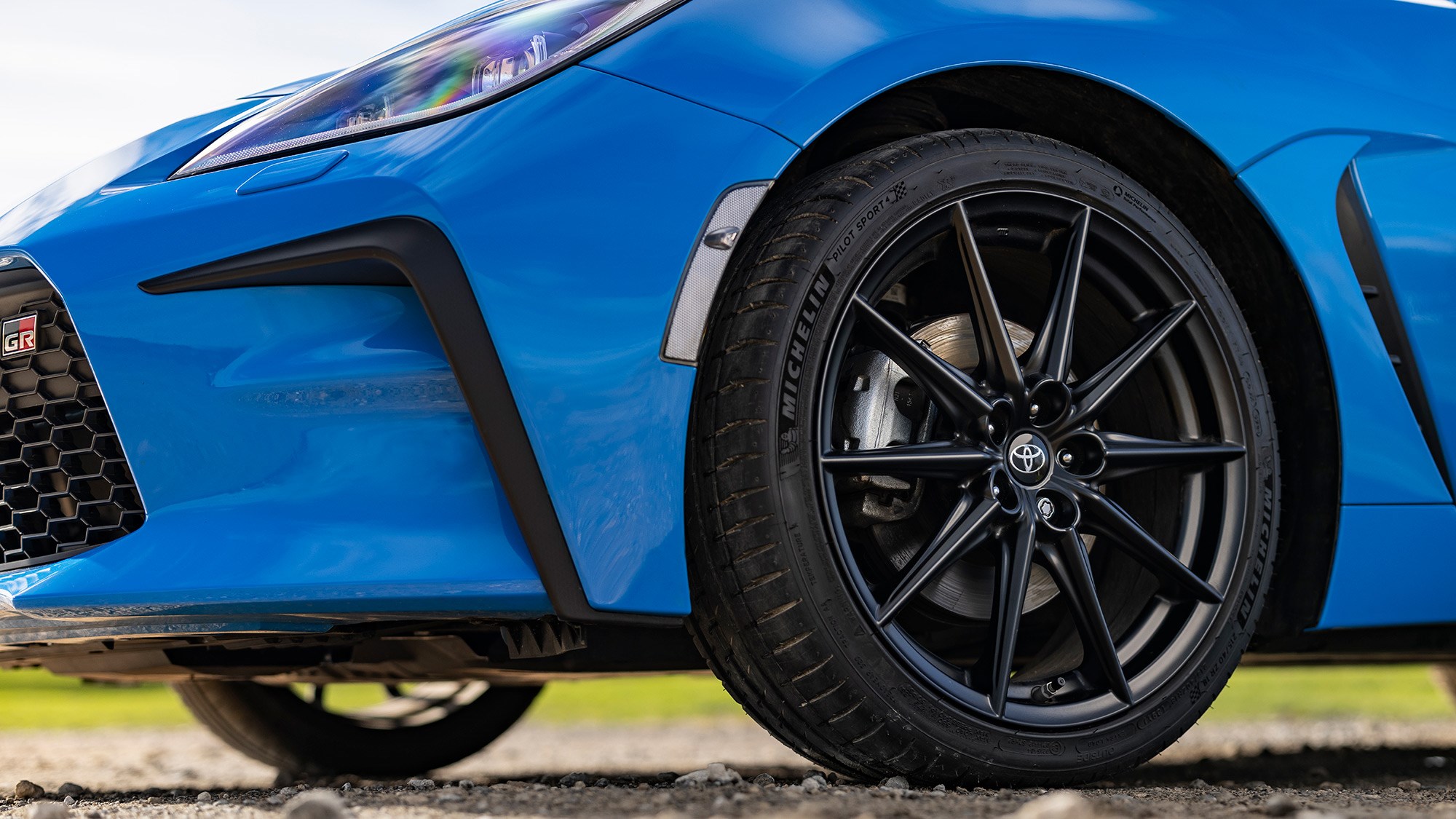
Tail-happy handling was part of the GT86’s appeal but its low-resistance Prius-spec Michelin Primacy tyres meant that when it did slide, it could do so in quite a binary way, and its stability control system then grabbed brakes to pull the car straight, which could make it feel clumsier than it really was. Versions fitted with wider, grippier tyres ironically felt more delicate and precise.
For the GR86, sportier Michelin Pilot Sport 4 tyres are standard on the 18-inch wheels that all UK models will wear; other markets can still pick a smaller 17in alloy shod with the lairier Primacy tyres or the bigger rims. Result? You can still provoke a wiggle, especially on a damp roundabout or pulling out of a slippery junction – but you’ll have to provoke it.
The CAR magazine guide to the best sports cars
What’s the GR86 like on track?
At the international launch in 2022, we visited the fabulous expanse of the Monteblanco circuit in Spain, where there’s space to explore the outer limits of the GR86’s handling safely. The gearchange is still a little knuckly in feel – an MX5’s shift is sweeter – but better than before, and it’s a joy to be using in combination with the nicely weighted and positioned pedals. Blipping the throttle on downshifts is a cinch.
The extra torque means the 86’s playfulness can be unlocked more easily and smoothly – oversteer is instigated much earlier and more precisely, and once it’s sliding, it’s easier to keep it going. And when you’re not being a hooligan it has a lovely neutral balance – very little understeer, positive front-end response and an eagerness to change direction without ever feeling nervous or spiky, even with the stability control turned off. And in its halfway-off track mode, you barely feel it intervene.
The brakes perhaps could be stronger; but then, carrying beefier brakes at each corner would spoil the unsprung mass. They’re fine for the road and should manage a trackday without too much nursing. The Toyota GR86’s modest 1275kg kerbweight is a boon here; lack of mass = lack of stress and wear on components.
What about the interior?
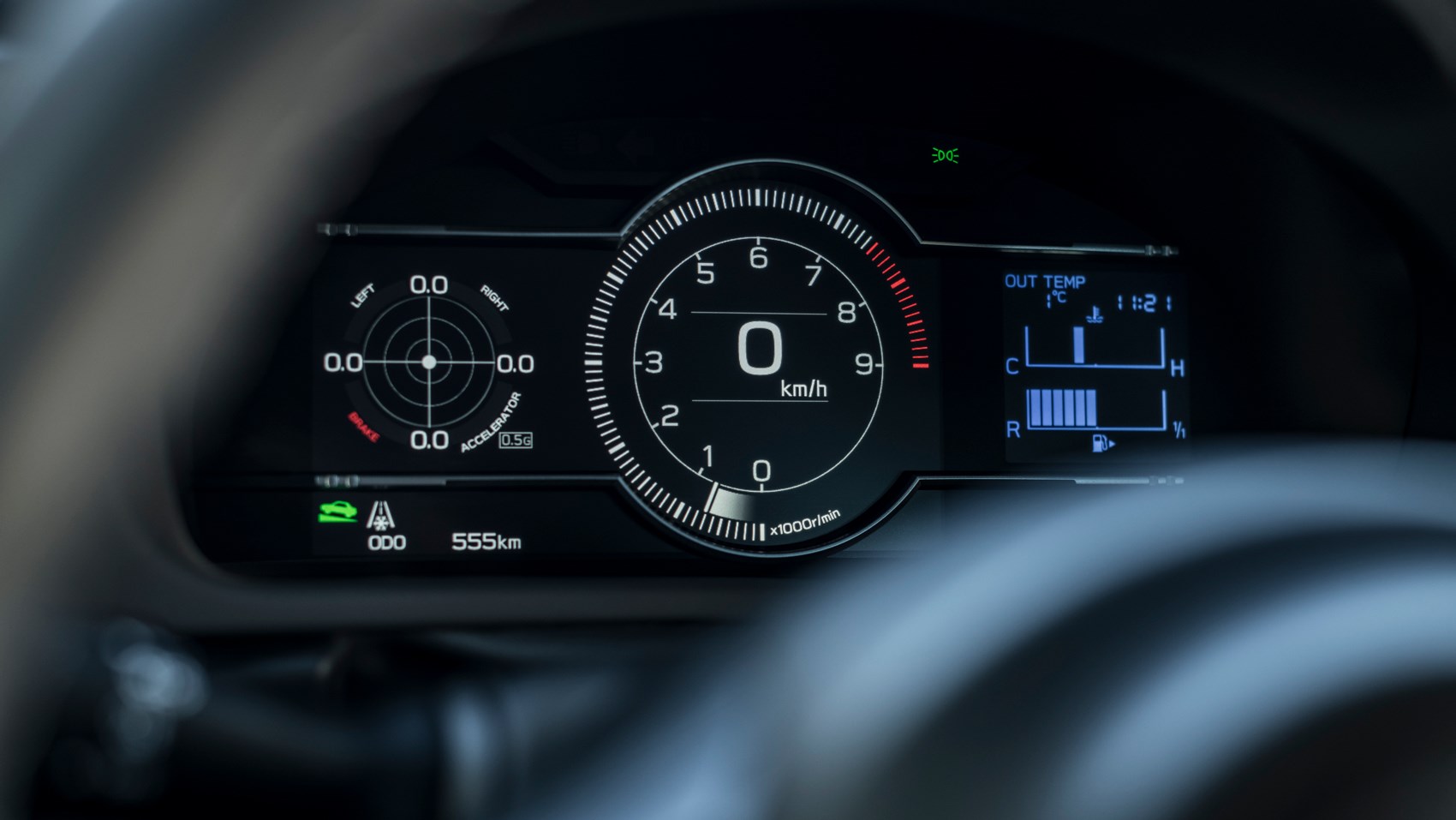
It’s still full of hard plastics but it’s less dated-looking than the GT86’s cabin, and the bits your hands and elbows touch are padded, softened and upped in quality. There’s a touchscreen mid-dash which is small-ish but legible, and doesn’t dominate your view.
Apple CarPlay is standard, so you can sync your digital life and use Google Maps to navigate. It’s not wireless though, so you’ll have to plug in. Android Auto is also standard.
It’s roomy and even large passengers will find enough space and cubbies for a road trip. Those two rear seats are tiny, but perfect for slinging bags in and young kids will be fine (if you don’t expect much legroom… there is none when the seat is pushed back for a six-footer up front).
Now we’ve lived with a Toyota GR86, we can report that even mid-sized teenagers can fit back there. The +2 rear seats have decent headroom – but it’s the legroom that’ll get you. One passenger back there is viable, if you push the front passenger seat forward and sacrifice their legroom. The same is not possible behind most drivers, so we’d call the seating 2+1, in effect.
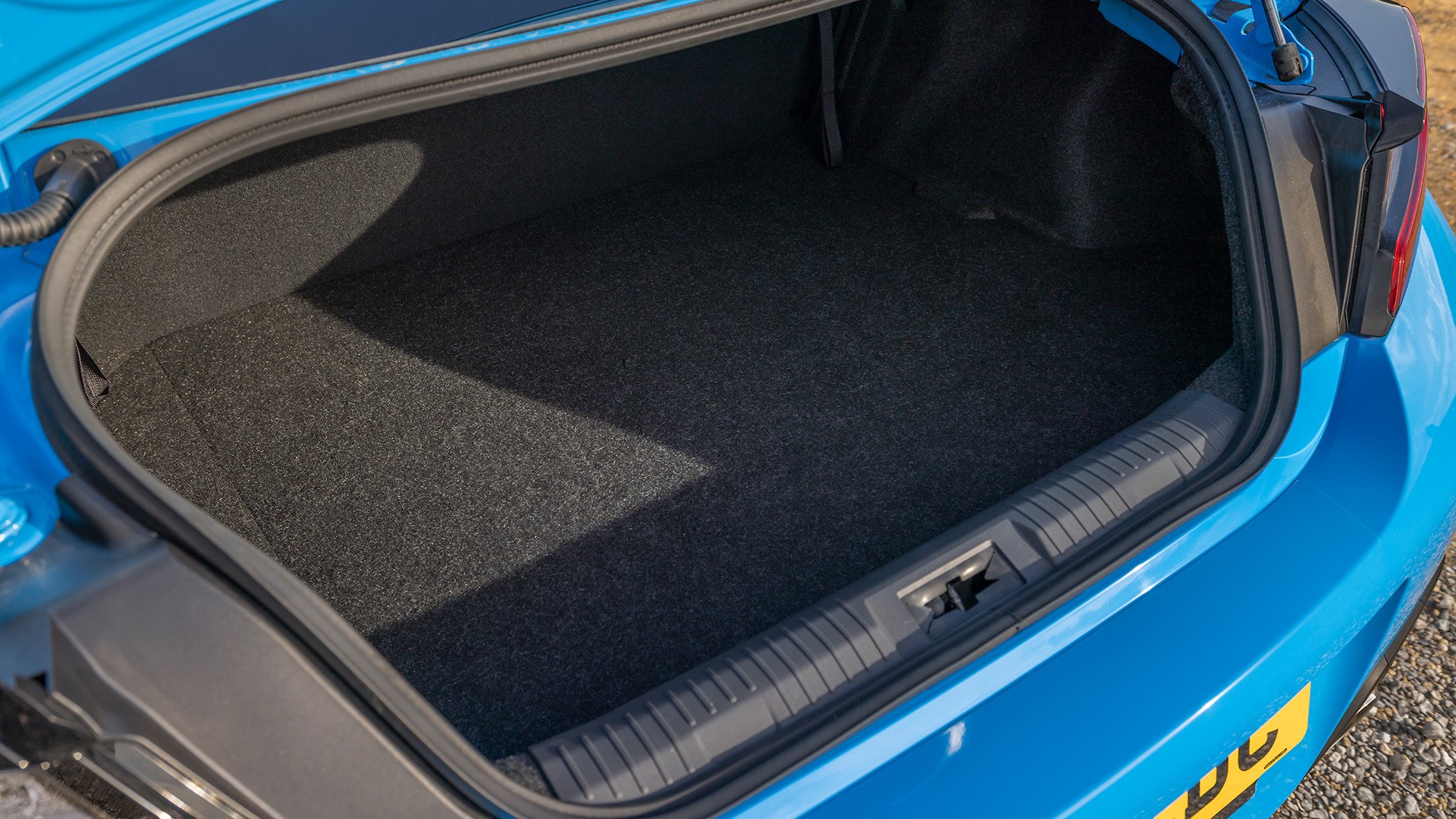
Boot space is pretty decent for a mainstream sports car. The front-mounted engine means there’s a perfectly acceptable 276 litres in the luggage compartment.
Before you buy
At launch, the manual GR86 cost just £29,995, while the automatic GR86 was priced a little higher, at £32,085. Two years down the line, and the Toyota GR86 manual cost £32,495 at run-out in the UK. Not surprisingly, given how brilliant these cars are, prices have held, meaning in 2025, you’ll still need over £25,000 just to get a look in. At least it suggests prices should remain resilient for a long time.
Plus, don’t forget how few alternatives there are. The Mazda MX-5 is about the same price and while it’s lighter and is a brilliant drop-top, it’s not quite as muscular – nor does it have the rear seats and overall space of the Toyota. You quite literally get more for your money with the GR86.
Verdict
This is a great sports car, full stop. The 86 has always been a great entertainer, but the evolution into the GR86 has made it more well-rounded and usable, too. A long journey in the GT86 could leave you drained but thanks to the stiffer structure and liquid-filled engine mounts, refinement has improved greatly.
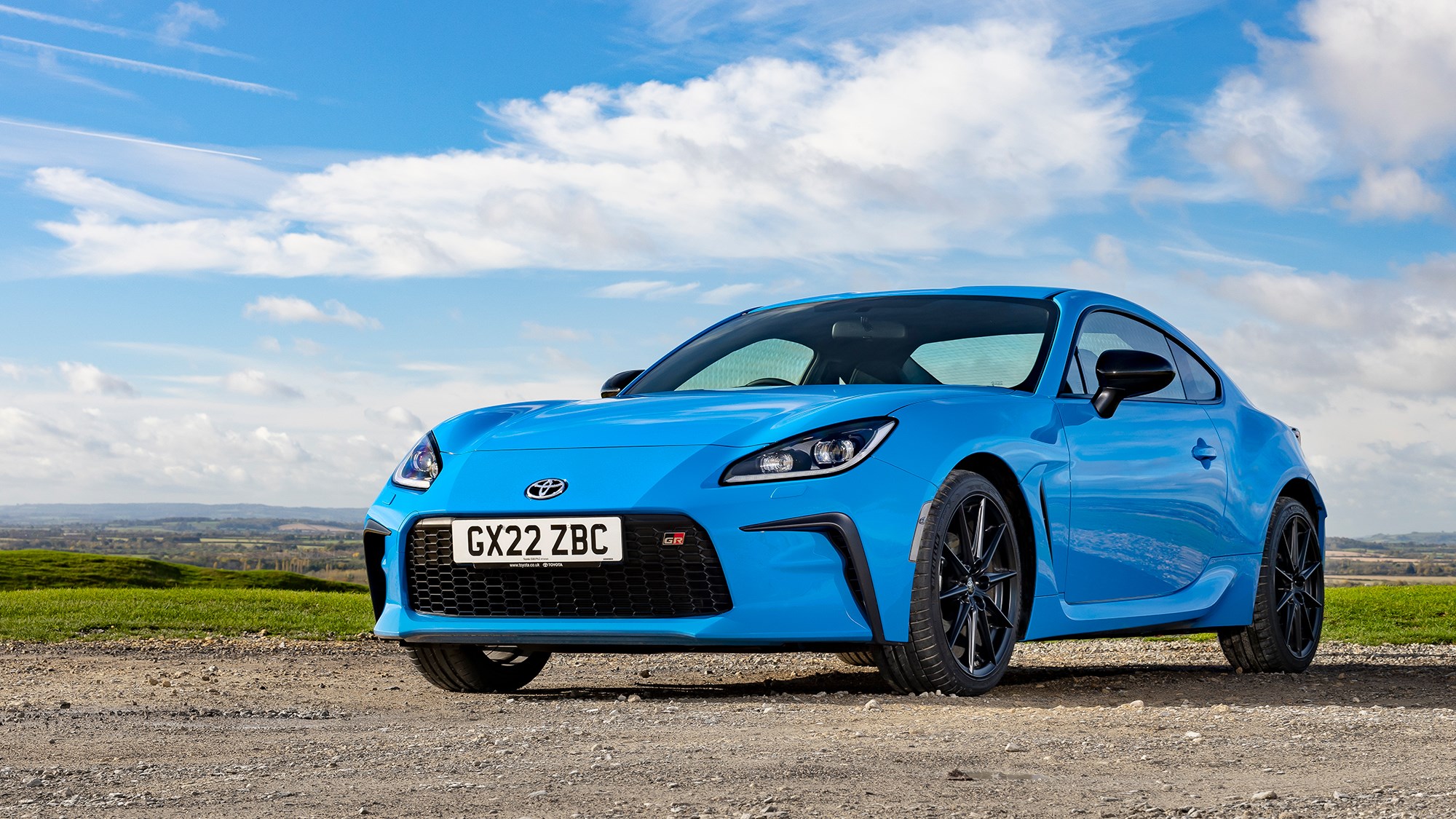
The Toyota GR86 has a broader spread of ability: it’s still thrilling, yet it’s also less draining as there’s ample performance on tap to keep pace with traffic without the car feeling overpowered or too fast for public roads.
Toyota fixed what was broke, and lost none of the 86’s character in the process. It’s like a Porsche Cayman with two extra seats for £20k less. A future classic for sure.
All our Toyota car reviews