► Underpowered petrol engine is out
► More powerful and efficient hybrid is in
► Lowest CO2 of any non plug-in vehicle
The petrol city car market is dead in Europe, or so we’re told. But it appears that memo never made its way to Toyota, which has sold more than 210,000 of its funky crossover-inspired Aygo X hatch since its introduction in 2022.
It’s true that while there’s a growing number of electric city cars sprouting out of the woodwork, the number of petrol options in this class these days is miniscule, and is pretty much limited to the Aygo X or the Hyundai i10 and Kia Picanto.
Tighter emissions regulations and increased manufacturing costs mean that keeping small ICE cars alive – and profitable – is a challenge. While Toyota’s engineers said they could still make the Aygo X’s ageing 1.0-litre petrol unit compliant, they said now was the right time to move to an electrified powertrain, which is how Toyota has managed to squeeze in the same hybrid powertrain of the Yaris.
Promising the lowest CO2 emissions of any non-PHEV or EV, and without any need to faff about with the plug, is this actually a better look at what the future should be?
At a glance
Pros: Exceptional fuel economy, excellent hybrid system, functional yet stylish interior
Cons: Limited rear seat space, will command a big price premium compared to old version, compromised visibility
What’s new?
A quick recap of the Aygo as a whole. Originally produced alongside the Citroen C1 and Peugeot 107 (and later 108), it was a joint project between Toyota’s European division and the former PSA Group.
In the late 2010s, Peugeot and Citroen decided they didn’t want to make petrol city cars any longer and left the partnership. Toyota persisted at it alone and launched the Aygo X in 2022, with a rugged look and a significant improvement on the tech front.
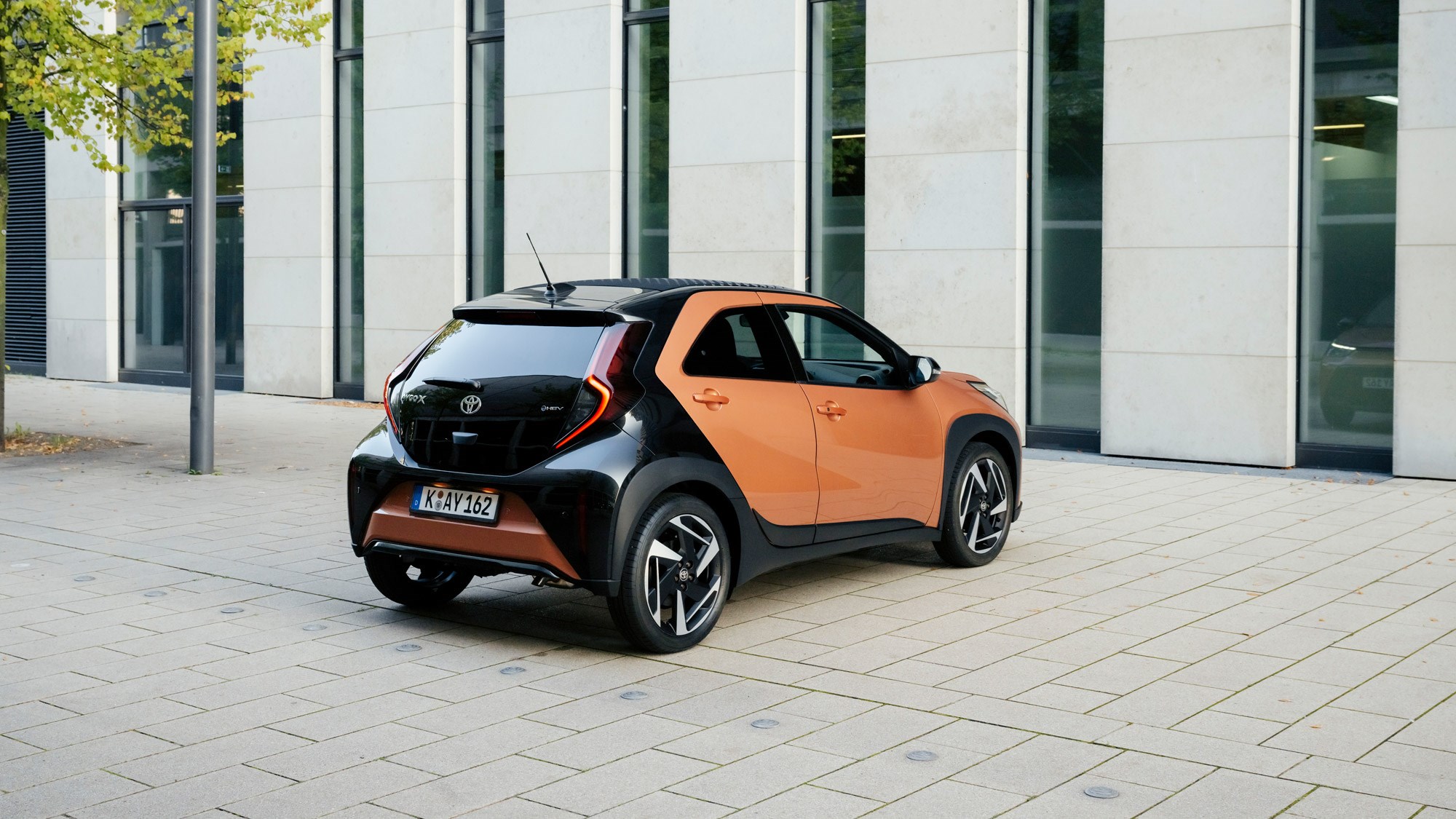
The main change as part of this update is the hybrid system, which now means that every core Toyota model in Europe is now electrified in some way. It also means there are significant improvements in fuel economy and performance compared to the lethargic old ICE model.
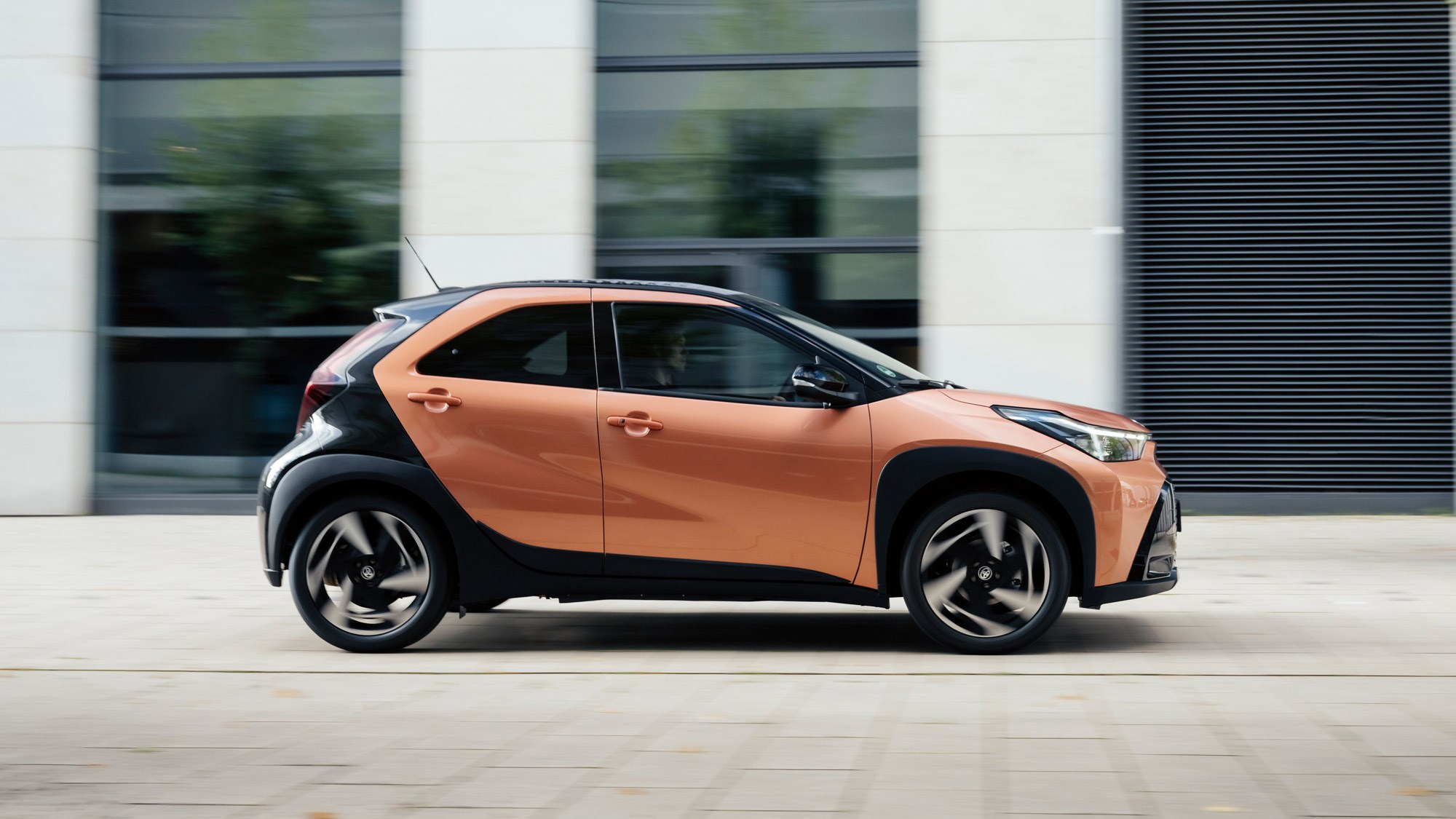
To accommodate the hybrid’s larger engine, the Aygo X’s front overhang has been extended by 76mm and a new design introduced, incorporating a new bonnet, grille, bumper and headlights. A GR Sport trim has also been launched, bringing slightly racier looks, including an unusual black bonnet but also tuned suspension and steering.
What are the specs?
Though the Aygo X sits on the same platform as the Yaris supermini, squeezing the same hybrid powertrain into a package that’s 20cm smaller proved to be a game of Tetris. Whereas Toyota’s usual hybrid battery cell stacks are usually in parallel, on the Aygo X they’ve had be longitudinally placed otherwise it would never fit under the rear seats. The usual 12-volt battery has also been relocated to under the boot floor.
A 1.5-litre petrol engine is joined by two electric motors, with the combined output of 114bhp. A quick reminder that the regular Aygo X’s 1.0-litre naturally aspirated unit made just 71bhp.
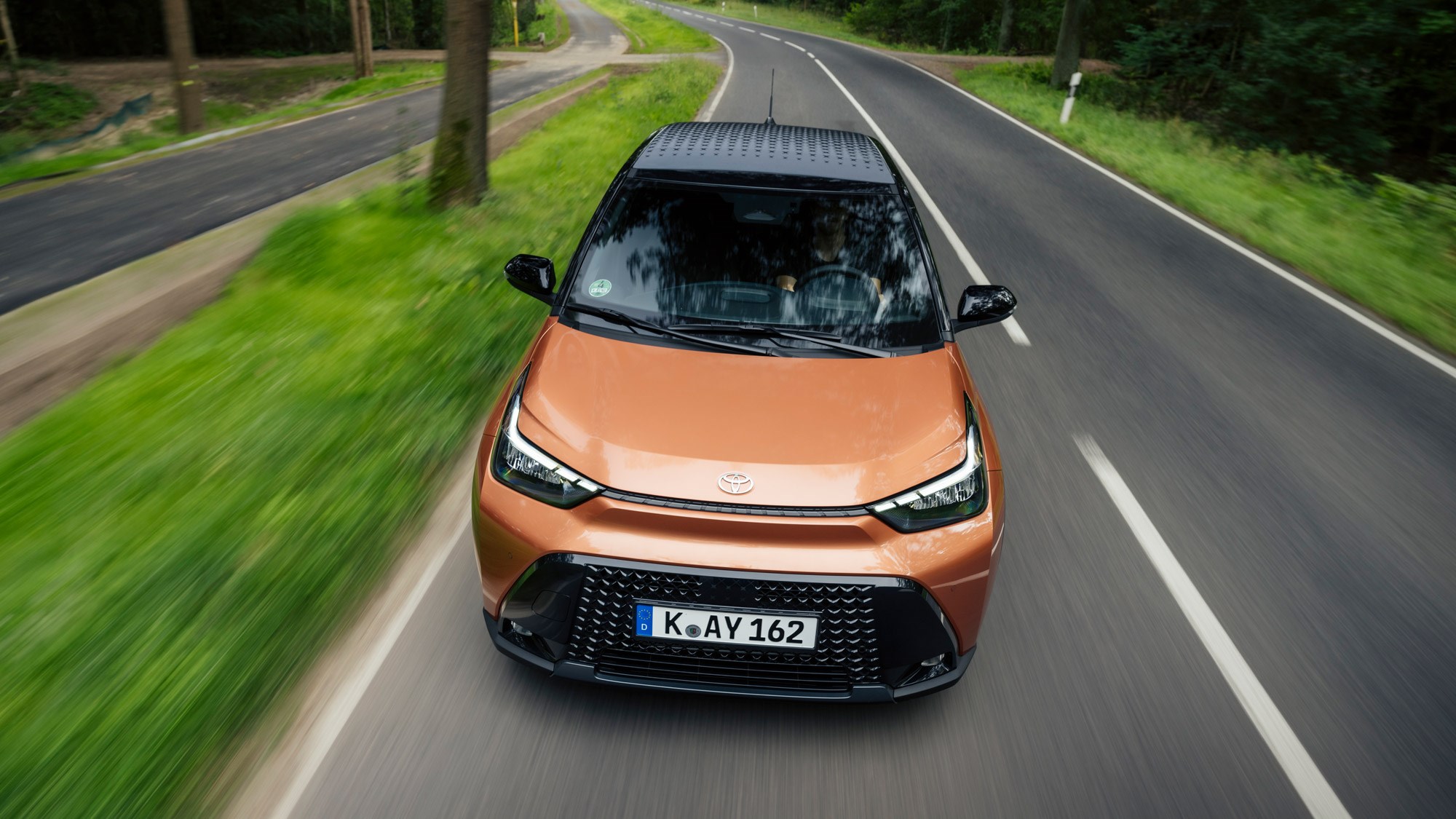
Such a glut of extra power unsurprisingly makes this hybrid version substantially quicker. In fact, it’s a staggering six seconds quicker to 62mph, now taking 9.2 seconds as opposed to three to five business days.
But it’s the running costs that are perhaps the most useful improvement. CO2 emissions of 85g/km are the lowest of any non-plug-in car on sale (down from110g/km of the previous Aygo X). Toyota’s claimed 76mpg fuel economy also seems somewhat conservative – we matched that figure driving with a degree of enthusiasm. Makes you wonder what would be achievable with a more delicate right foot.
How does it drive?
It’s a testament to Toyota’s confidence in the Aygo X’s improvements that it let us drive the old version back-to-back with the old car, and what an improvement – especially in the engine department. Toyota’s 1.5-litre hybrid is still by no means an oracle of serenity, but it’s considerably quieter than the painfully vocal 1.0-litre that had perhaps the worst noise to performance ratio.
Plus, there’s now enough performance for it to get out of its own way – there’s now no need to fear when joining a motorway down a short slip road and overtaking doesn’t need years of forward planning. It’s perhaps not as immediately nippy as I expected. Where a Yaris is able to dart off the line on electric-running, the Aygo X’s engine fires into life almost instantly after accelerating (though soon turns itself after). An EV driving ratio above 70 per cent isn’t uncommon.
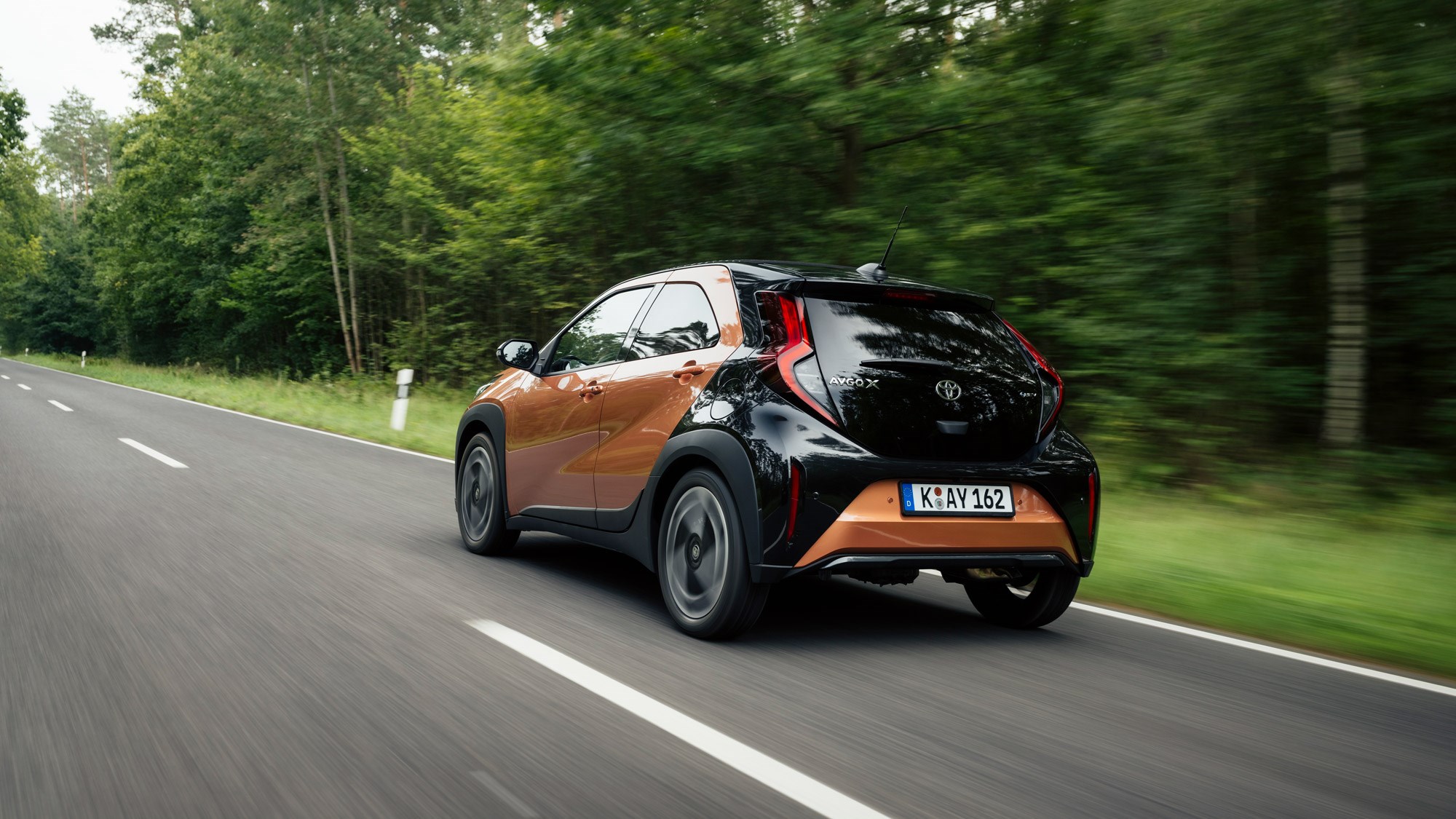
Our test cars were still deemed as hand-built prototypes, though felt almost production ready for the most part – a few trim niggles and a slight window seal issue on one car being the only clues. It’s a well-judged car in general, with changes to the steering and suspension being welcome. The ride on our test cars, all equipped with 18-inch alloys (ridiculous on a city car, we know), were on the firmer side, though was never uncomfortable.
A brief go in a new GR Sport car, which comes with tuned shocks and springs and revised electric power steering, resulted in few discernible changes, though pleasingly the ride comfort didn’t deteriorate further. We did only get to try this model on an urban test route, however.
And though growing in size, the Aygo X remains an excellent town car. Its turning circle is superb and the slightly elevated driving position is welcome. An impressive amount of safety kit further adds to the appeal. Visibility is an issue, though, with small rear windows and chunky c-pillars compromising it in this respect.
What’s it like inside?
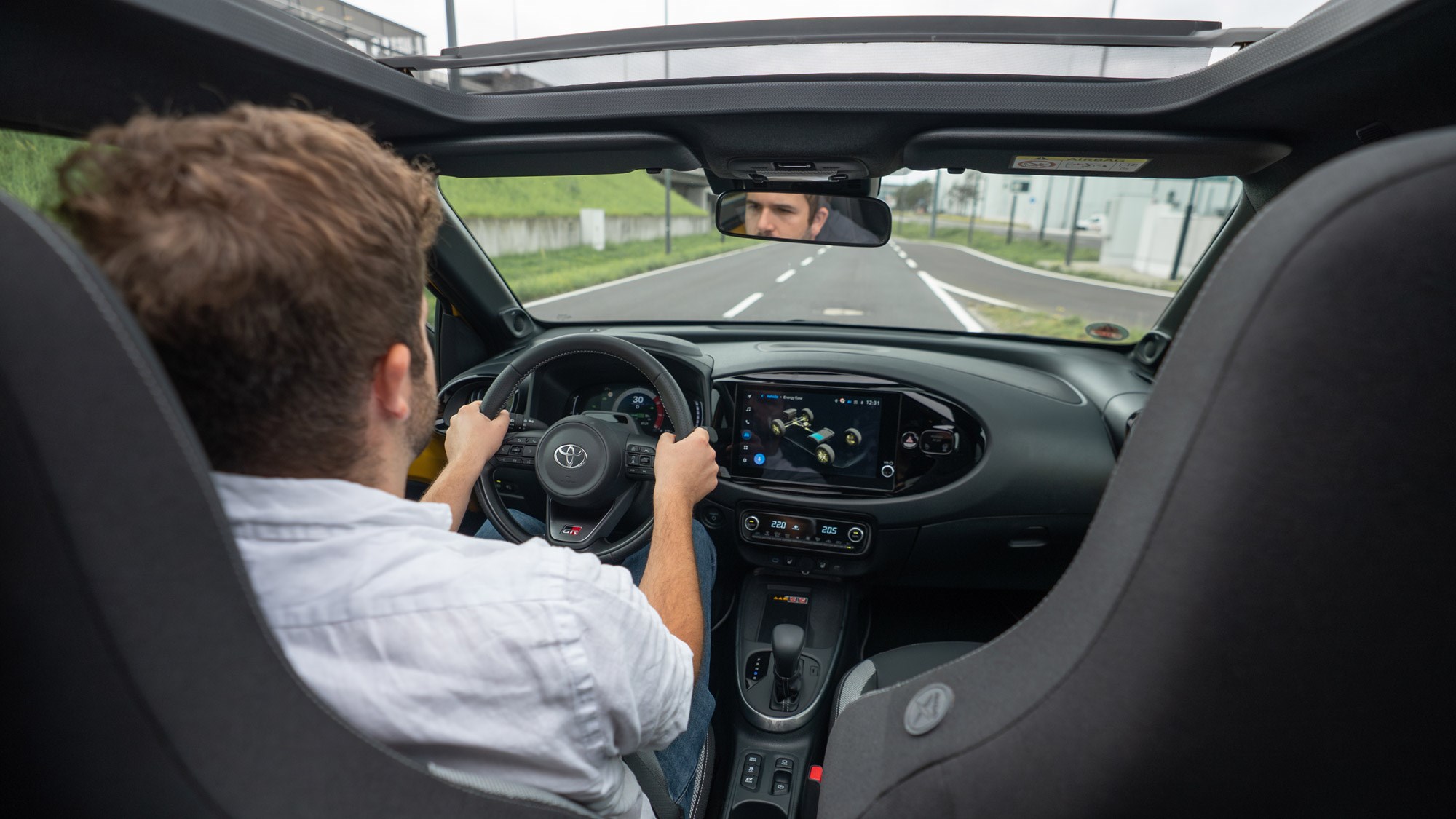
The Aygo X has always had a decent interior by city car standards and this new model introduces some useful changes. A new heater panel is super easy to use and something plenty of other manufacturers could learn a lesson from. There’s also a new seven-inch digital instrument display and a redesigned centre console as it no longer has a manual handbrake.
Higher-spec models get a 10.5-inch touchscreen, too, which feels huge in such a small car, yet is clear and easy to use, while inner door panels of the car are finished in the same colour as the exterior. Yes, we know this is cost cutting but if this isn’t the incentive to choose the Aygo in one of the many funky colours (amusingly-named Cinnamon, Jasmine, Tarragon, Mustard and Lavender shades are available), I’m not sure what is.
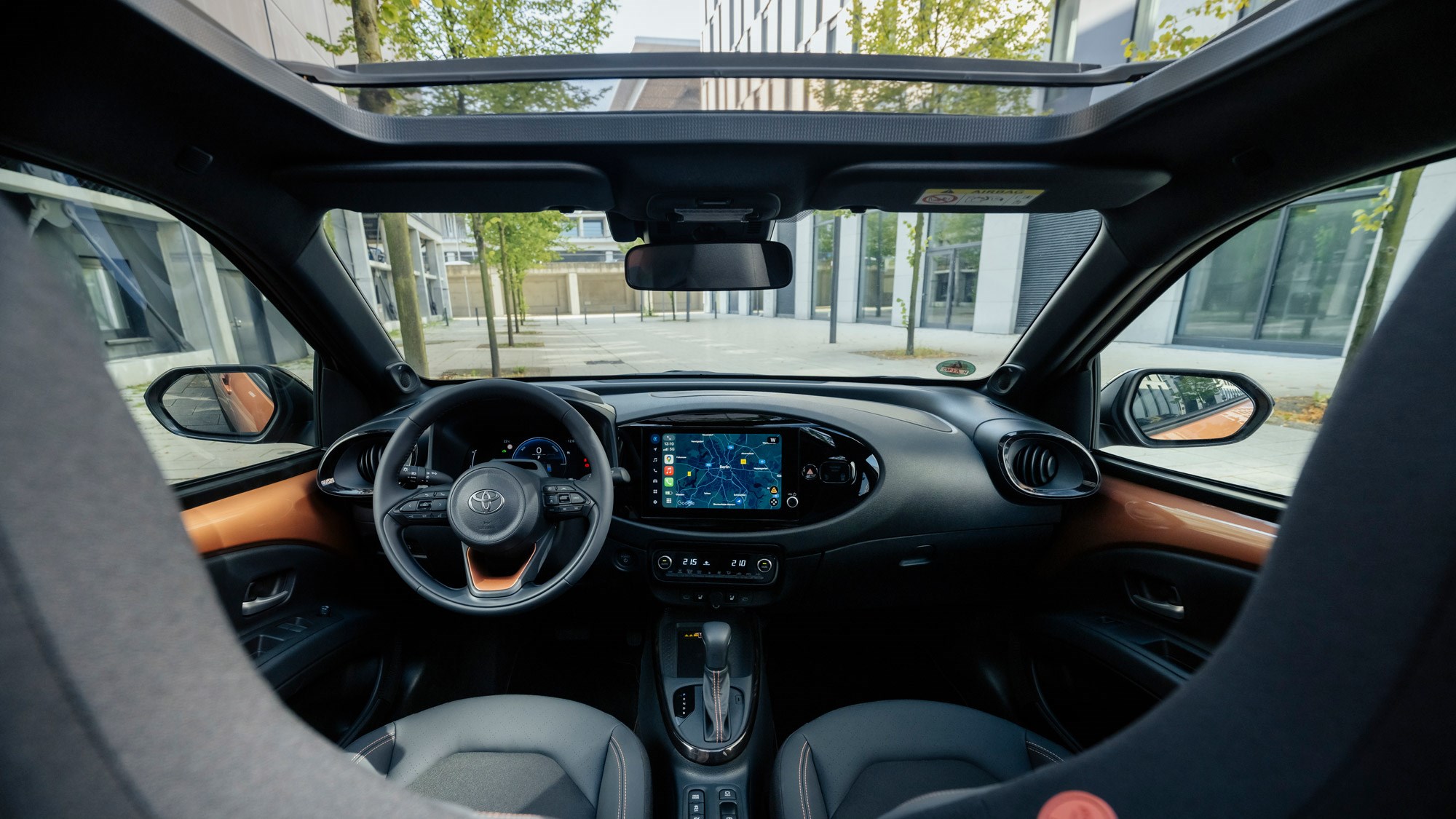
While we have few doubts about the build quality, the materials are still on the cheap side, and though this was forgivable on the older model, a few softer-touch materials would be welcome given the expected price premium. We’d also like if the steering wheel could be moved out rather than up or down – such a small change that really would make a difference.
And a reminder that the Aygo X’s rear space is compromised. Adults will struggle to sit in the rear with limited legroom especially and the cool electrically retractable canvas roof puts a big dent in the available headroom. Toyota must be praised for managing to install the hybrid system without diminishing space further, however.
Before you buy
Full pricing and specifications for the Aygo X won’t be announced until when it goes on sale later in the year, but it’s expected to command a fairly significant premium over the current car’s £16,845 starting price. Around £20,000 is likely, though, pushing it well above the starting price of an i10 or Picanto, though these are down on power. The closest hybrid rival for price is the MG3, which gets a punchy 194bhp, and starts from £19,245, but feels somewhat unfinished in various areas.
Toyota will discontinue the 1.0-litre engine completely and, though understandable, I can’t help but wish the two had co-existed, as for all its slowness, it made a lot of sense in manual form as a learner or new driver car.
The update will also see the Aygo X’s current trim levels be replaced by Toyota’s now-commonplace grade structure, with Icon, Design, Excel and GR Sport versions to be available.
Verdict
The Aygo X now feels like it has the engine should have been available from the start. It’s a significant improvement over the tired and slow 1.0-litre, and the fact it’s considerably faster but also much more efficient is a true best of both worlds. Even if it does mean it now needs to cost a lot more, at least by city car standards.
If you don’t need much in the way of rear space or a boot, the Aygo X makes more sense than the larger Yaris, and will still be backed up by Toyota’s warranty lasting up to 10 years and outstanding reliability reputation.
But ultimately the Aygo X no longer feels like a car best confined to the city and is more than capable even at autobahn speeds. I can’t help but feel a small, ultra cheap-to-run hybrid car (which weighs ‘just’ a little over a tonne) could be a far better direction for the future of motoring than big, heavy and expensive electric SUVs.