► Skoda’s smallest SUV gets updated
► New engines and styling
► Does it stand out in its class?
The Kamiq is the smallest SUV in the Skoda’s line-up, sitting below the Karoq and Kodiaq. It could fall into several different classes and yet also none – not quite a hatchback, not quite an SUV, not quite a crossover. We’ll just call it a baby SUV for now, but what the Kamiq absolutely has been is a smash hit for the marque.
It’s now the overall second best-selling model in the range, and the best-selling in a number of Western European countries. And that was before the mid-life facelift. To find out why it’s so popular, we tested the it on UK roads.
Should you buy the Skoda Kamiq? Yes. The Kamiq is a refreshingly honest SUV that is performs well in all areas. It just doesn’t shout about it.
At a glance
Pros: Facelift gets bolder styling, great interior space, strong ride comfort.
Cons: Other cars are more fun to drive, base engines struggle with larger loads.
What’s new?
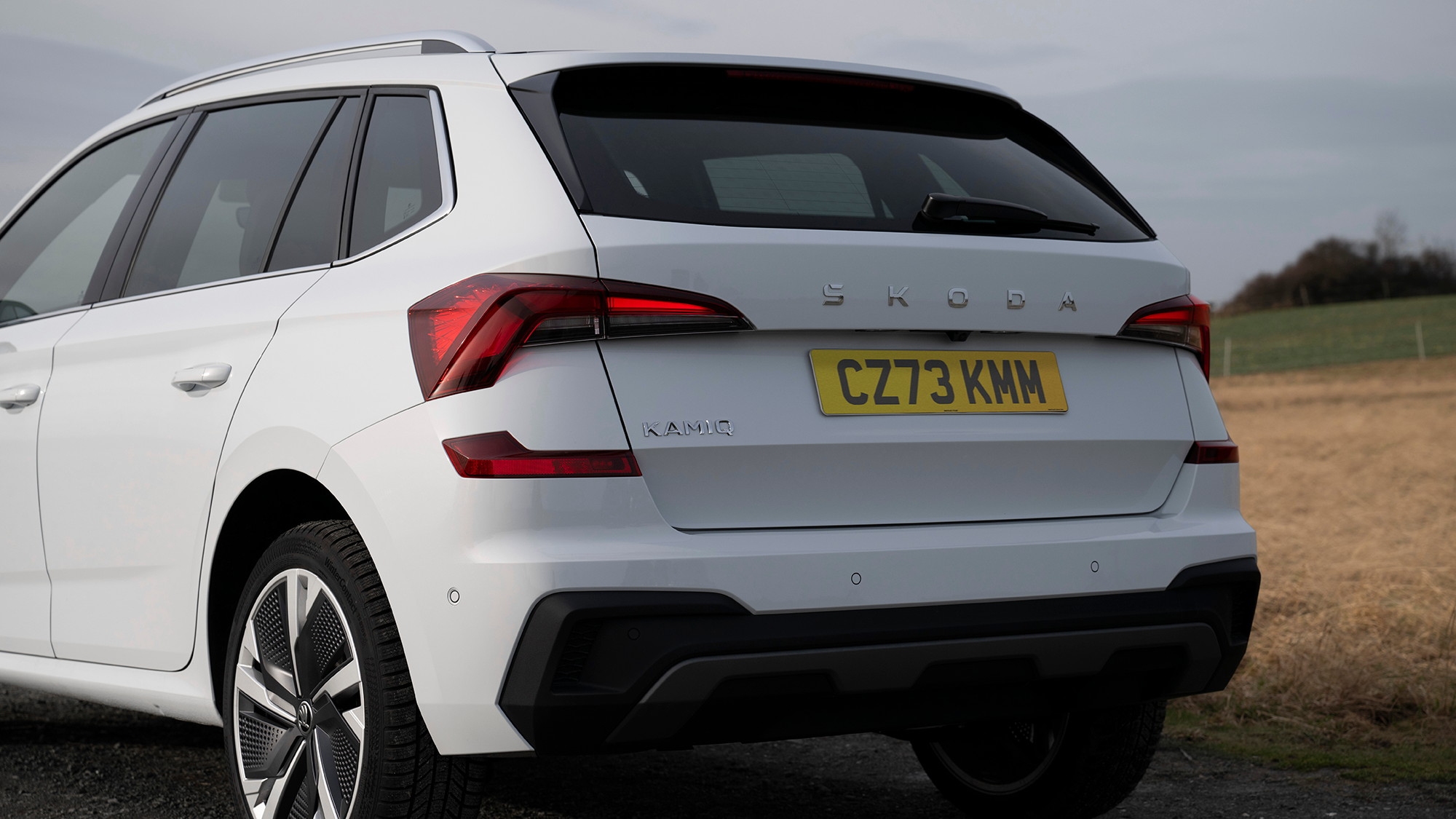
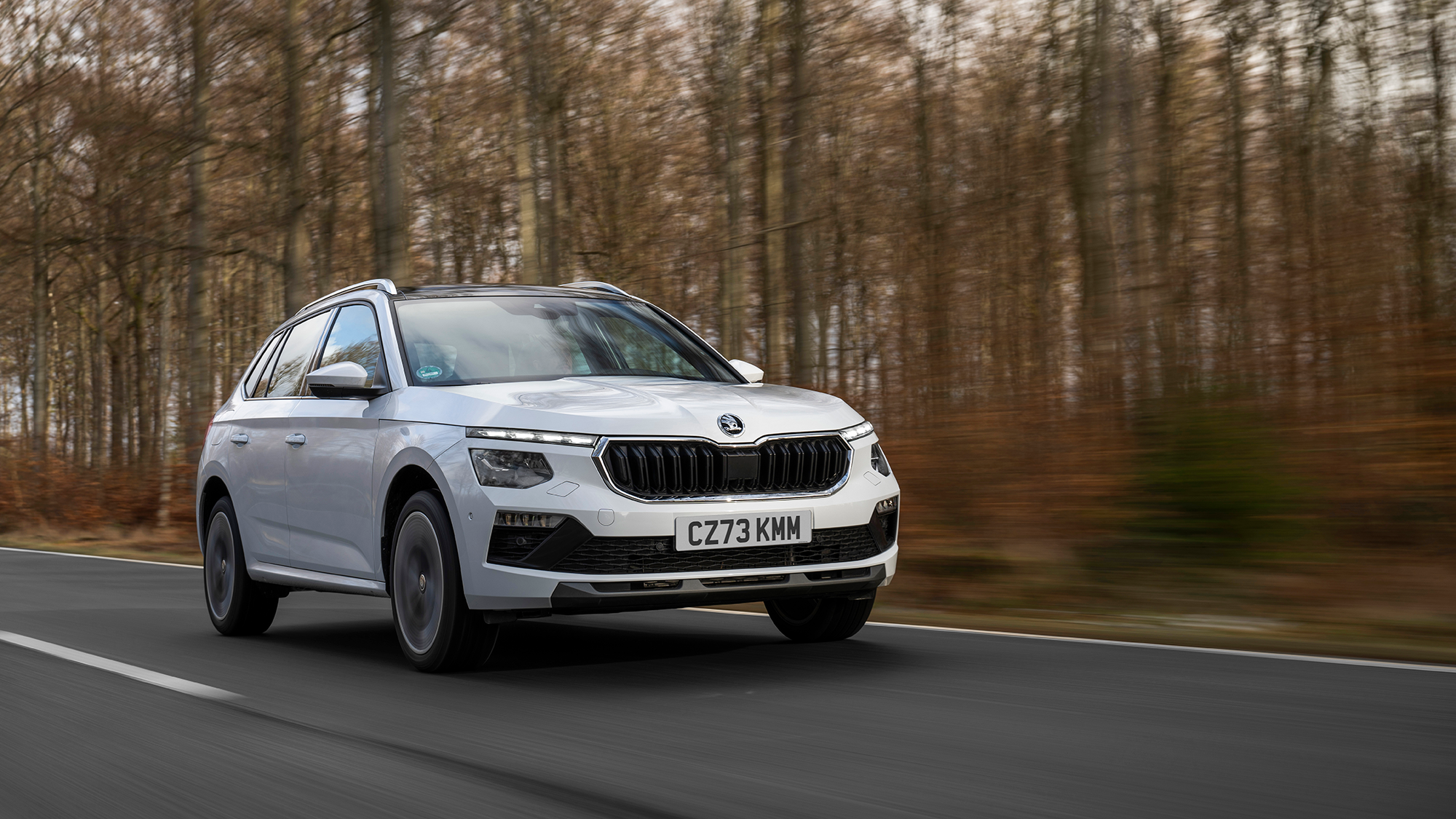
On the surface, this is a light facelift, but it lands where it counts. Skoda has tried to rectify the Kamiq’s self-effacing image with a few styling tweaks to push its likeness closer to that of an SUV.
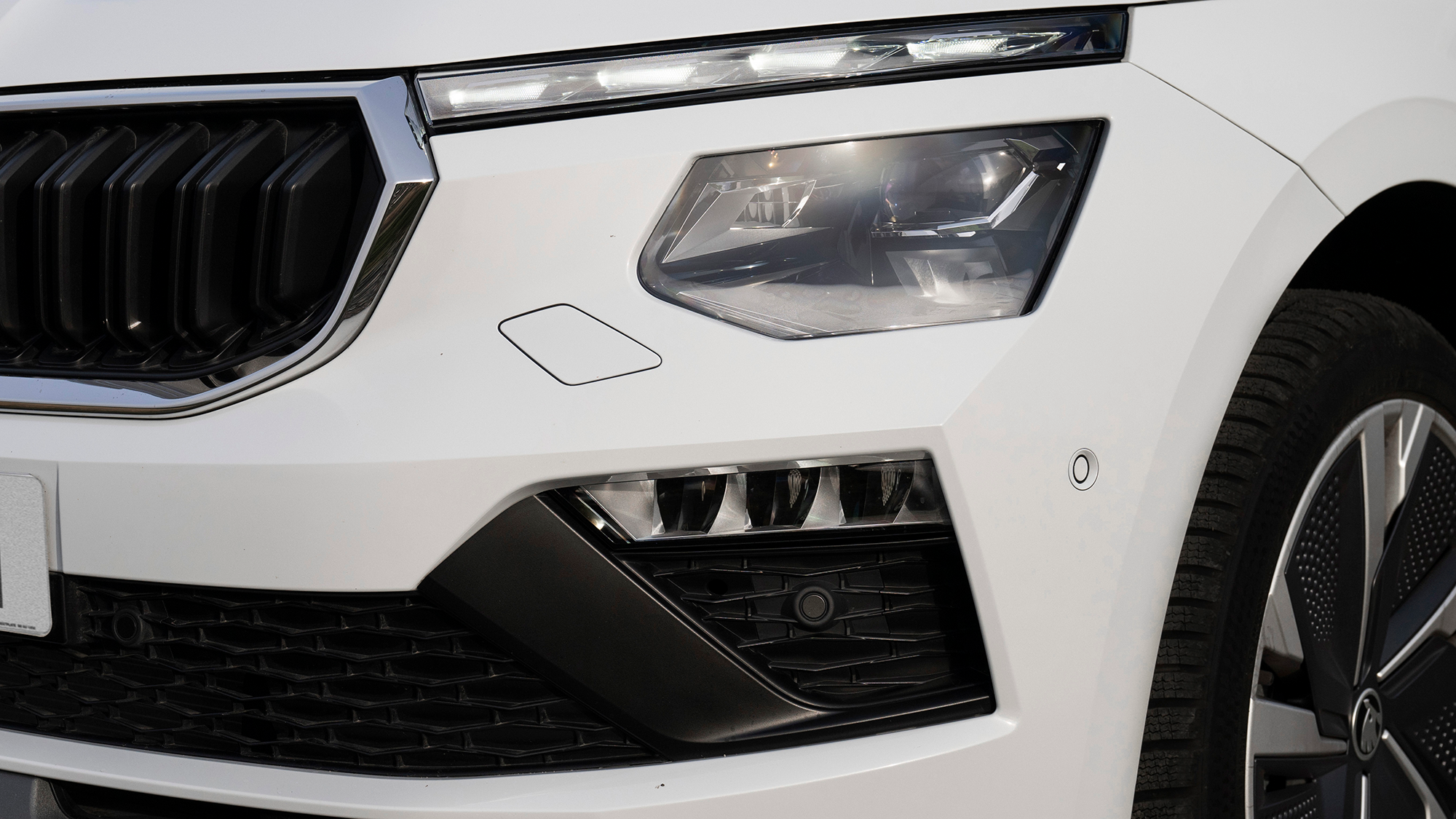
The front grille is taller and more upright, the headlights are slimmer and now available with Matrix LED tech, and the bumpers have a more chiselled, purposeful look. It now feels more ‘SUV’ and less jacked-up hatchback.
Sticking to the headlights, Skoda has made subtle tweaks to the Kamiq’s headlight design with slightly thinner daytime running light strips and larger, brighter high beam lights.
What are the specs?
You’ve got three petrol engines to choose from, all turbocharged and all front-wheel drive. First up are two 1.0-litre TSI engines from the evo2 generation of Volkswagen’s EA211 engine family. The more powerful of the two engines has 114bhp – 6bhp more than its predecessor – while the entry-level version remains at 94bhp.
For a little more kick, the Kamiq is also available with a 1.5-litre engine that produces 148bhp. Both the top-end 1.5-litre and 114bhp 1.0-litre cars are available with either a six-speed manual or seven-speed DSG automatic gearbox. The bottom spec car has to do with a five-speed manual only.
Thanks to a long wheelbase, it feels roomy inside, especially in the rear, and the 400-litre boot is one of the biggest in class.
What’s it like to drive?
The little three-cylinder engine sounds has a distinctive hum that never quite becomes intrusive, but still you’re aware it’s there. It is not an engine for any sort of enthusiast though, especially in a car of this size and with a full load of bodies on board.
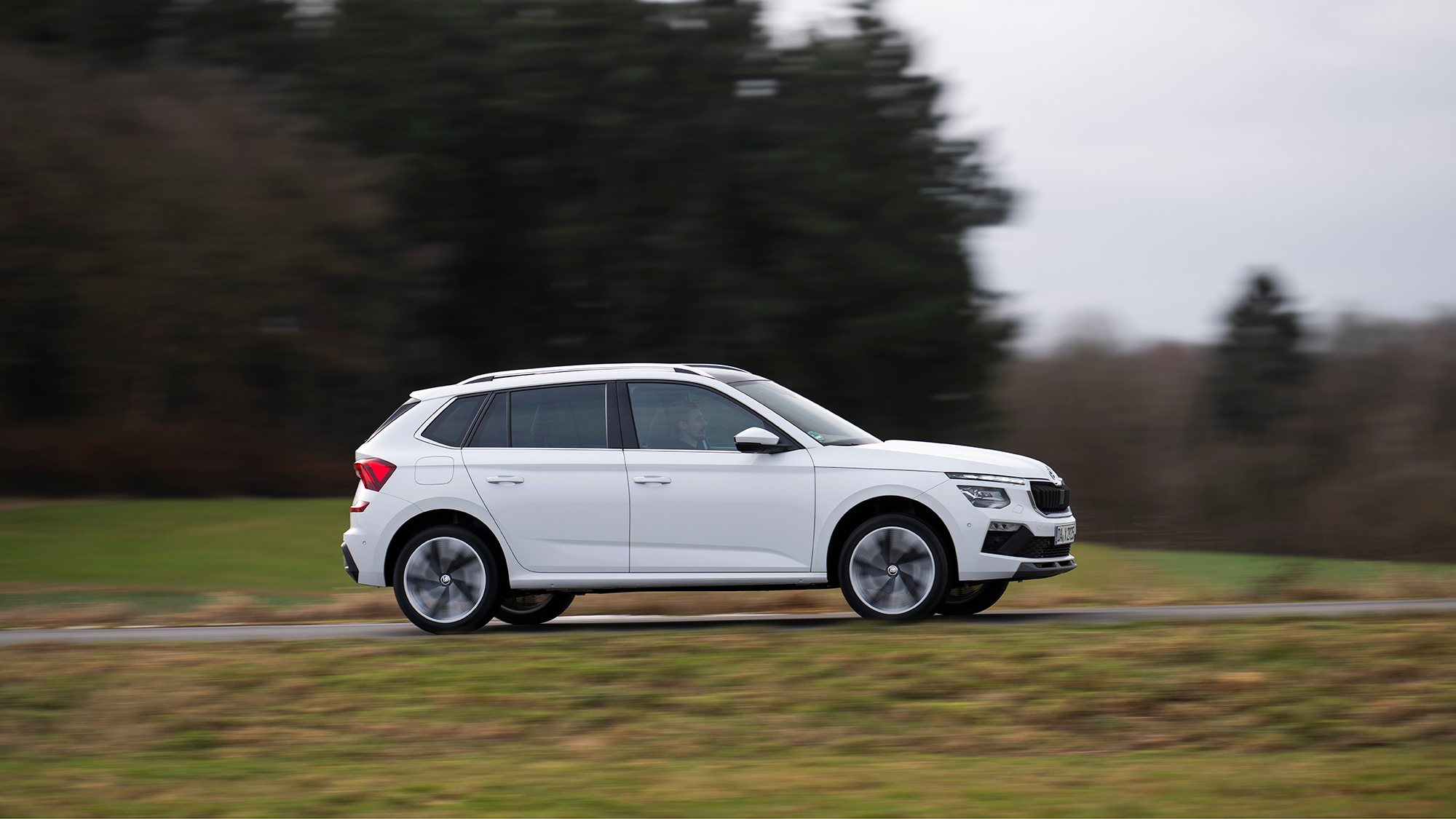
The car we drove was fitted with Volkswagen’s DSG automatic gearbox, which was adequately smooth and better than rivals, but could still be spooked into a frisson after even lightly depressing the accelerator. Initially slow to react, then eager to reach the higher rev range with a sudden change down then quickly back to sedate once more.
Switch the driving mode to Sport and the electronically adjustable shock absorbers become stiffer, and the steering becomes heavier. Such is the inoffensive nature of the Kamiq, and a nice balance between comfort and control in corners, I cannot see why you would tick this particular box.
The Kamiq is a weirdly passive-aggressive on occasion. For a start the lane keeping system quietly switches itself back on every time it starts up, and then gently yet insistently tugs at the wheel like a parent who has grudgingly let their kids push the supermarket trolley, but keeps redirecting it. I’m also not entirely sure what it is picking up as a white line. Variously I reckon it mis-detected mud, potholes and chip wrappers as road markings and the steering reacted.
It also kept telling me to put my hands on the wheel and resume steering. I was steering, just not very much, what with it being a straight road. This is a typical electric-steering issue, though, especially within the VW Group.
What’s the interior like?
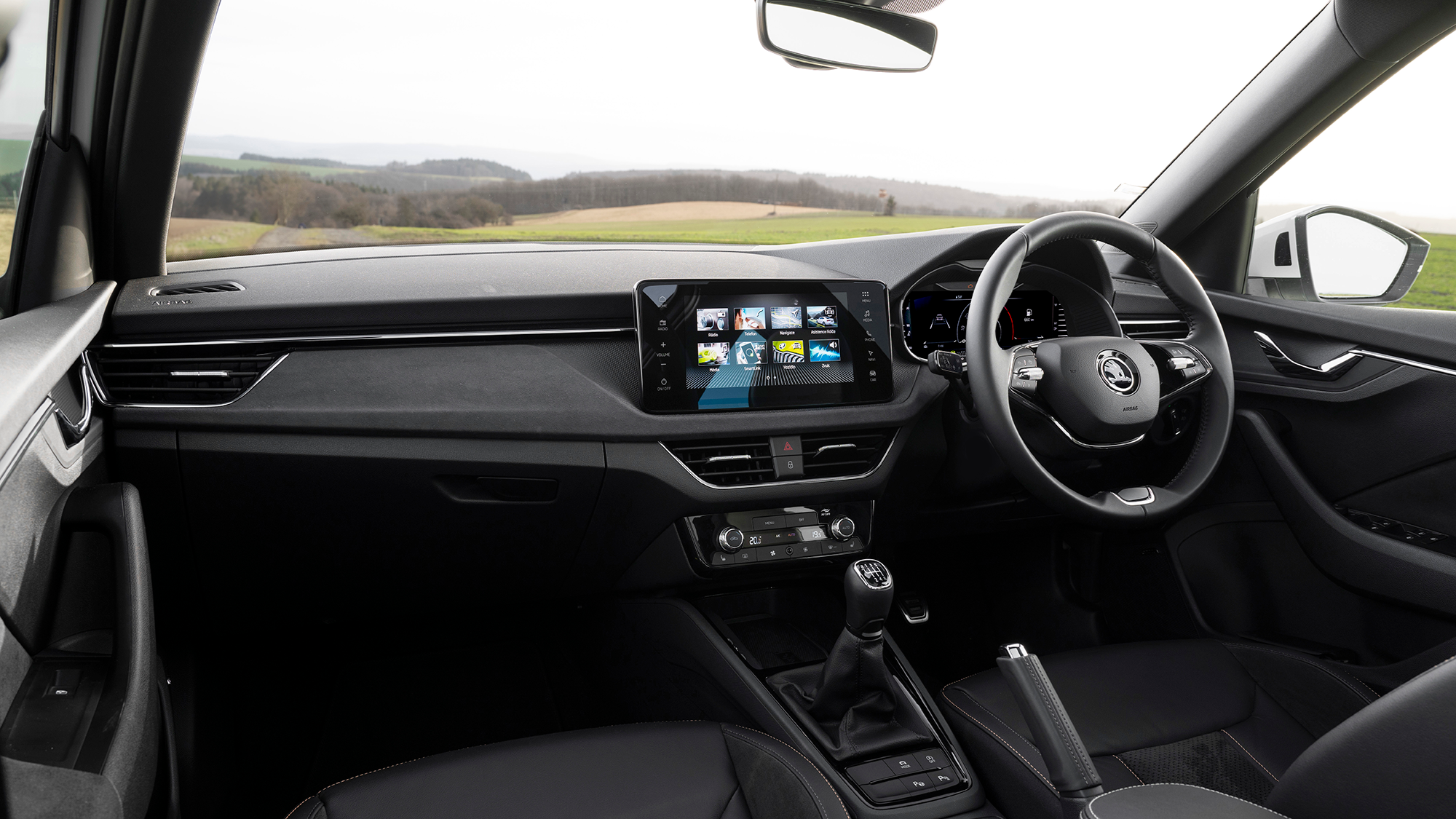
The Kamiq offers one of the most spacious cabins of all the compact crossovers; space in the rear is impressive, even with a pair of adults in the front.
Overall, the interior is very pleasant; very sensible; very Skoda, and finished like a new budget airline jet. The car is now available in three trim configurations: S, SE and Monte Carlo. Skoda has adorned the interiors of the lower two trims with new soft materials for a ‘living room’ feel, including a splash of cloth on the passenger side of the dashboard.
The SE Kamiq now features an 8.25-inch infotainment display as standard while the SE L and Monte Carlo editions receive a 9.2-inch touchscreen infotainment display as standard.
The wireless charging phone box is now three times more powerful and features a cooling system so as not to overheat phones on charge as you drive along. The unit also features more powerful USB-C ports, increasing from 15 to 45 watts.
Skoda has also responded to criticism of the previous Kamiq’s dire air conditioning usability. The new Kamiq now has a Climatronic panel that is much easier to use, and gone is the infuriating fogging up effect that was all-too common in the last car.
Before you buy (trims and rivals)
The Kamiq range kicks off with SE trim, which includes alloy wheels, LED headlights, rear parking sensors and an 8.25-inch infotainment system. SE L adds larger wheels, a larger central screen, and upgraded upholstery and climate control. There’s also a Design edition which adds contrasting black roof and body colours. Finally, the Monte Carlo models bring a sportier design inside and out.
Prices start at around £25,000 and rise to just under £30,000 for a fully-specced 1.5 TSI Monte Carlo. That makes it competitive with the likes of the Ford Puma, Hyundai Bayon and Peugeot 2008.
The Kamiq isn’t as stylish as a 2008 or as sharp to drive as a Puma, but it beats them for space, practicality and comfort. If you want an SUV that gets the basics right – and then adds a few thoughtful touches on top – it’s hard to beat.
Skoda Kamiq: verdict
The Kamiq was already a good car, and the facelift update enhances its virtuous qualities. Some of its insipidity has been addressed with styling tweaks and interior embellishment, but the Kamiq still remains an honest, family-friendly car with a spacious and cleverly laid-out interior.
There are also no complaints about the way it drives, as it’s easy, refined enough and handles tidily, while the engine range does the job asked of it. No complaints about value, either. Starting at just under £25k, the Kamiq is very competitively priced and a lot of car for the money.
However being so quietly proficient means this Skoda is in danger of being entirely passed by, as customers look for something with a bit more spice.