► Skoda’s updated Enyaq vRS driven
► Hot-ish SUV gets range and power boost
► And is actually cheaper than the old one…
Skoda’s first electric vRS model caused some raised eyebrows when it first launched in 2022. It came in a retina-searing green colour, had super aerodynamic wheels and a light-up grille and… not a great deal of performance edge over a regular one.
This new one is goes further on a charge, sprints faster, looks more aggressive and happens to be cheaper than before. Job done?
At a glance
Pros: Impressive ride, still very practical, loads of standard equipment
Cons: Wooly steering, too soft and sober for a performance version
What’s new?
Just like the regular Enyaq, the hot vRS model has been given a bit of a refresh in 2025. Part of that is visual, with this latest version featuring the same ‘tech deck face’ that’s on this as well as the Elroq SUV. Details like matrix LED lights and an illuminated grille are standard equipment, and you can still get it in a very lurid green colour.
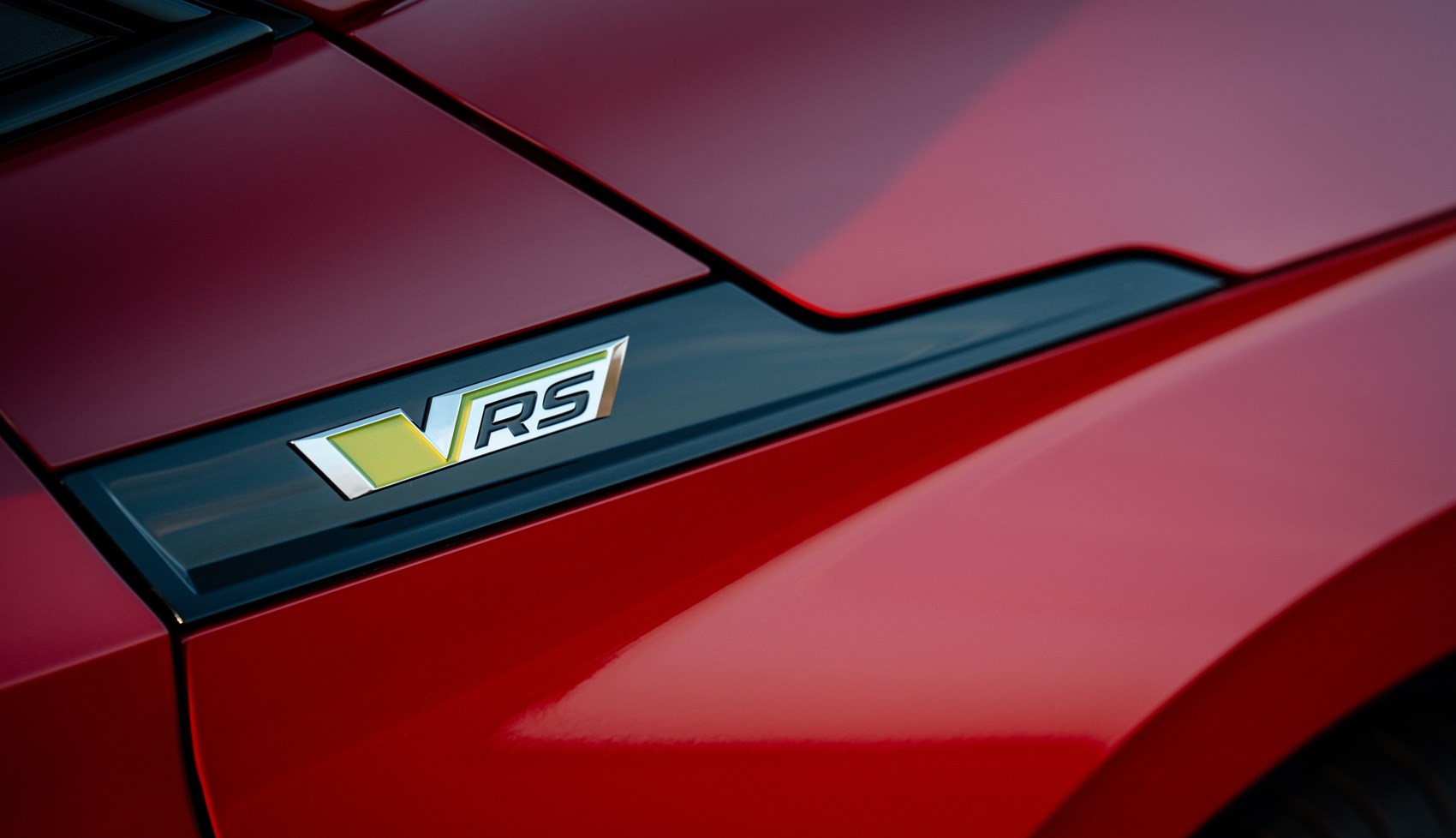
Inside, there are arguably fewer changes. vRS editions of the Enyaq still include some sports seats and lime green piping (that can be deleted), as well as lots of microfibre materials. Skoda says it’s added a few more of its ‘simply clever’ details, including wireless phone chargers with active cooling and smarter keyless entry that locks and unlocks on proximity.
The vRS is also subject to a power boost from its twin motors, and it claims a longer range. Skoda has also added better brakes, driving sounds and a new ‘Traction’ drive mode for slippery conditions. All this for an entry price that’s around £1000 lower than it was when it launched in 2022 at the time of writing.
What are the specs?
You can still spec your Enyaq vRS as an SUV or as a Coupe model if you like, with the Coupe model commanding a £1900 premium at the time of writing. Other than that, though, there’s just one version of the vRS, meaning a high standard of equipment and all the relevant sporty trimmings inside and out.
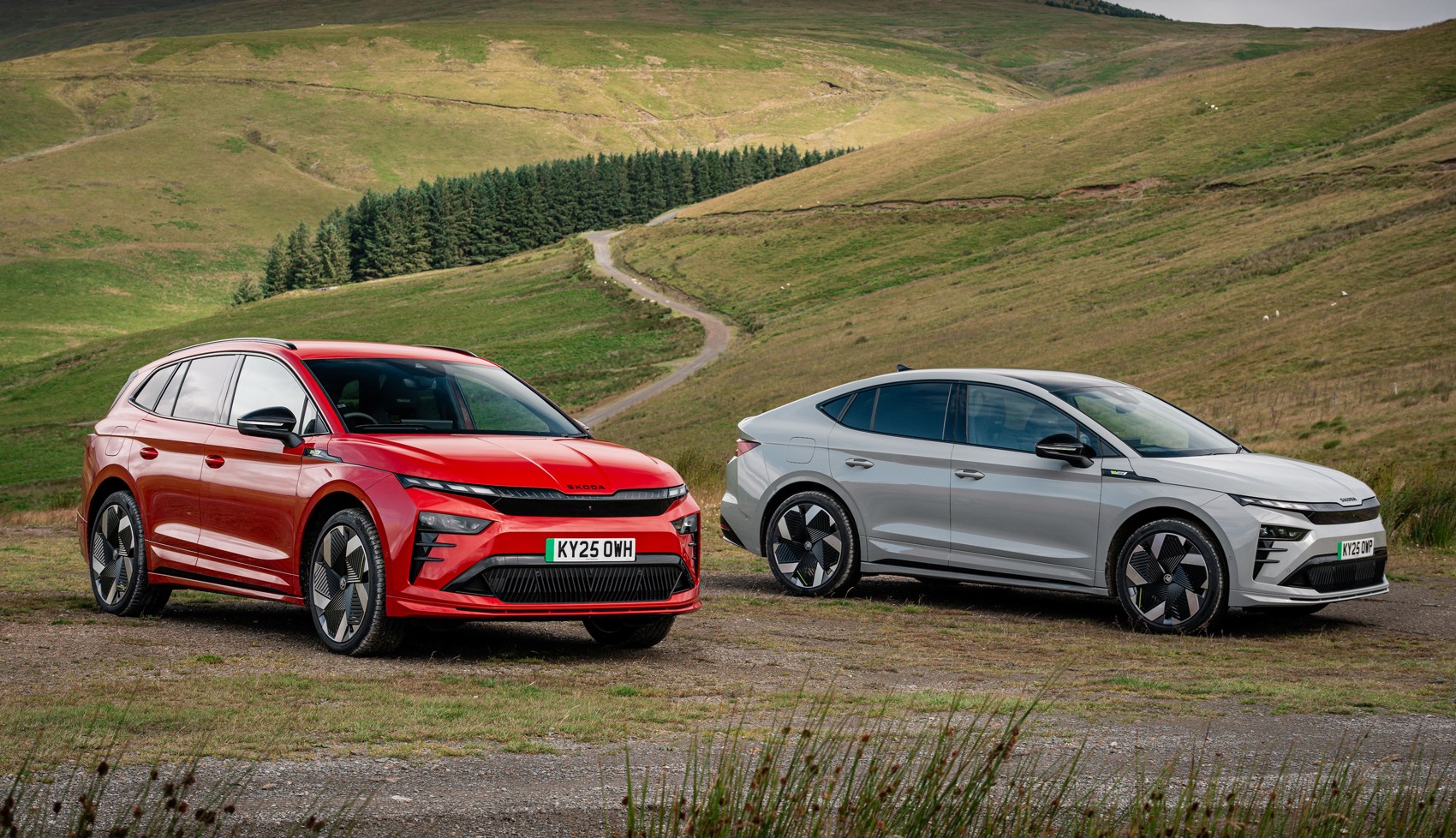
The Enyaq vRS comes with a 79kWh (net) battery pack – a smidge larger than a regular Enyaq model – and is exclusively available with two motors. It develops 335bhp – 30bhp more than before – which drops the sprint time down from 6.5sec pre-facelift to a sprightlier 5.4sec here. As before, the vRS model sits lower and includes Skoda’s ‘dynamic chassis control’ (a.k.a.: adaptive dampers) as standard.
As for range and charging, Skoda claims 344 miles WLTP for the SUV, and 347 miles for the slightly more aerodynamic coupe and can be charged at up to 185kW DC.
What’s it like to drive?
Like an Enyaq.
No, really. Despite, the performance additions, lower suspension, more power… the Enyaq vRS doesn’t feel all that different to drive compared to a regular Enyaq.

That, in reality, isn’t actually a bad thing. Power delivery from the twin motors, for example, is smooth and consistent, sprinting with some considerable shove. What also impresses most is the ride. Despite large wheels and low-profile tyres, the Enyaq vRS’s dynamic chassis control works wonders, shrouding you from potholes, ruts and rough tarmac impressively well. Body control is composed enough, too.
While out testing the Enyaq vRS, we were in central Wales and around some of the finest roads in the UK. It’s what you’d definitely call vRS country. But, when we could take advantage and enjoy some of them, the Enyaq vRS simply didn’t want to play ball.
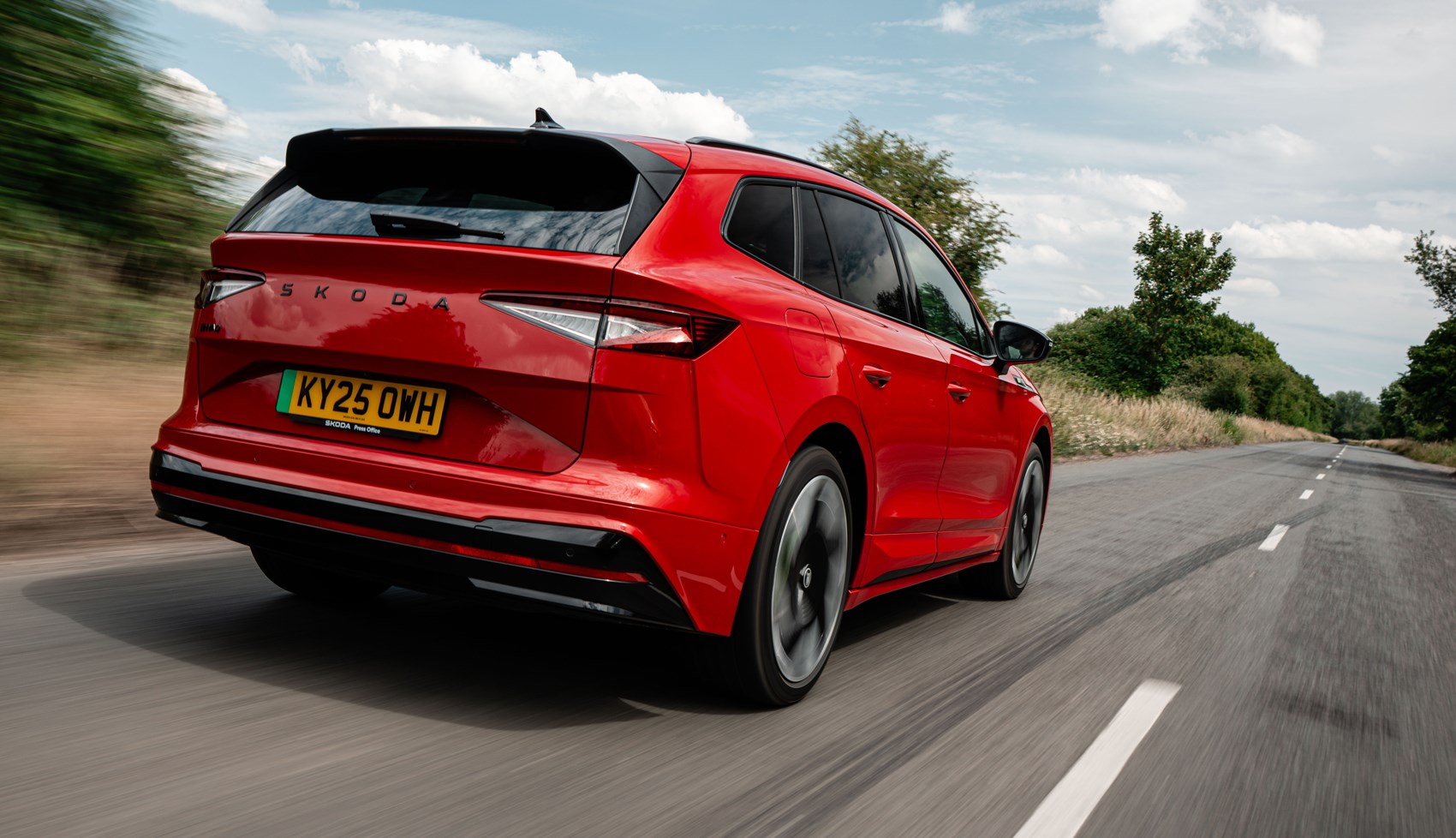
The steering, while fluid and smooth, provides very little feel – to the point where you can waggle the steering wheel mid-speedy-corner and precisely nothing will happen to your trajectory. Get over eager with your exit speeds and the traction control kills power like an over-eager referee, too.
Skoda says vRS is all about ‘accessible performance’, but that shouldn’t be at the expense of losing the little bit of sparkle that other vRS models have had in the past. It’s all very dry and buttoned down; great for the school run or a boring commute, but when you’re able to open the taps and have a laugh, the vRS becomes rather po-faced.
What’s the interior like?
Still fundamentally as it was pre-facelift, which is no bad thing. There’s a sweeping dashboard panel, dinky instrument display accompanied by a MASSIVE central infotainment display and a row of physical buttons for quick access to certain menus. We’d have liked to have seen the Smart Dials seen on the Kodiaq and Superb applied here, as doing so much on the screen is fiddly, but it’s a neat and tidy interior.
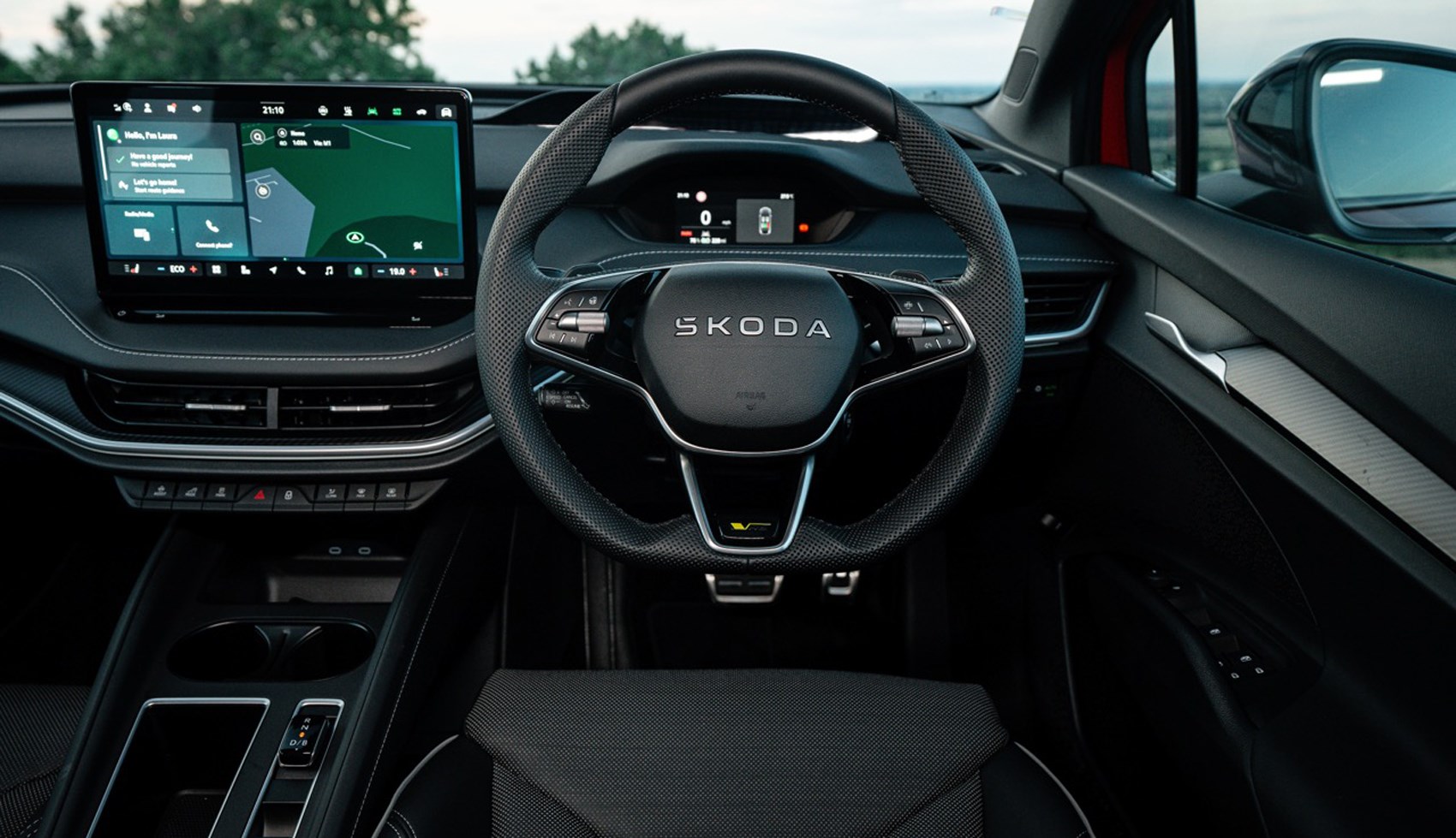
vRS models include properly sporty seats. They feel great, offering great lateral support in those side bolsters and even come with a massage function. It’s a pretty basic one, though, moving the lumbar bar in and out to keep you mobile more than anything.
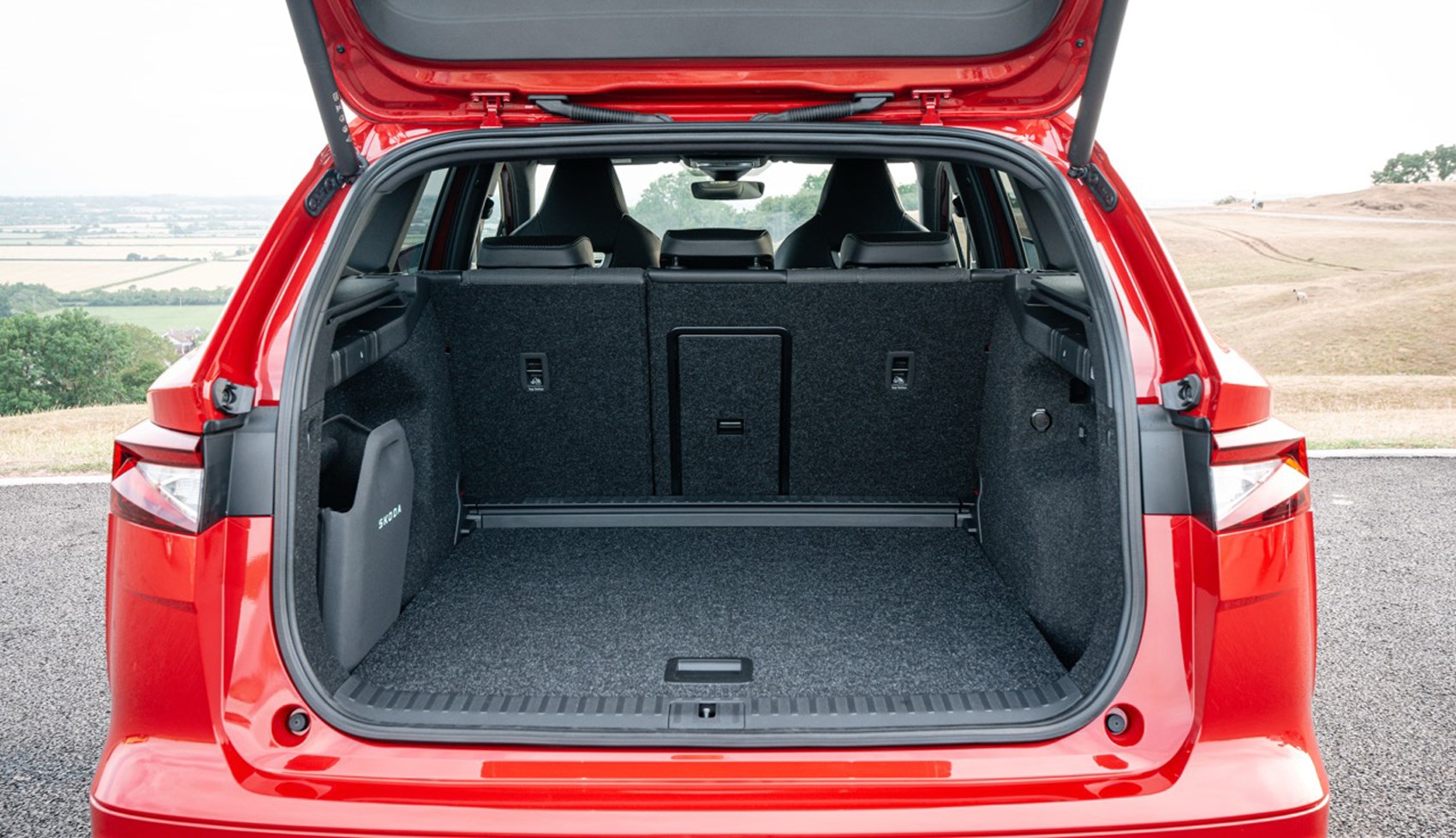
There’s no trade-off in space if you get an Enyaq vRS. Rear space is still impressive for three, and the 585-litre is still one of the biggest in its class.
Before you buy
Given our sentiments, it feels a must to suggest going for a lesser or lower powered Enyaq if you’re just looking for something well equipped and long-range one. The Edition 85 with some options ticked can get you almost to a vRS specification and it’ll come out cheaper. And, whether Skoda will like us pointing this out or not, the smaller Elroq vRS offers the same performance, a copycat interior and similar interior space for around £5k less.

As for rivals, the Enyaq vRS’s performance envelope plots it in a bit of an odd place. Not quite Hyundai Ioniq 5 N or Kia EV6 GT power or money, but newbies like the MG IM6 and Cupra Tavascan are very competitive on paper.
Verdict: Skoda Enyaq vRS
Frame this as a well-appointed, quick and long-range version of the Enyaq and it makes a case for itself, mainly because – fundamentally – the Enyaq is a damn good car, and this one has all the bells and whistles.
But look at it expecting the sparkle and bonus bit of excitement you’d come to expect from a vRS model, and you’ll be left wanting. A sporting version shouldn’t be this sober to drive.
Specs are for a Skoda Enyaq vRS SUV