► Skoda’s electric coupe-SUV gets a facelift
► Big battery only, and vRS available
► But would you have it over a standard Enyaq?
We like Skoda. Its focus on practical, easy-to-use and well-priced cars continues to make its models a hit with more sensible car buyers, and especially its Enyaq. So what on earth is it doing making a coupe-SUV, the type of cars renowned for trading actual substance for style, and sometimes even the latter is questionable.
But in characteristically Skoda style, it’s managed to make the Enyaq Coupe nearly every bit as useful as the regular Enyaq, and now there’s a mid-life update to freshen it up further. So is it an electric SUV we could actually recommend?
At a glance
Pros: Smart interior, useful rear seat space, good electric range
Cons: Firm ride without DCC, can get expensive with options, you pay more for… less
What’s new?
Skoda has been pretty good at updating the Enyaq since it was first introduced in 2021, so this latest facelift is mainly focused on the looks. It adopts the same design language introduced on the smaller Elroq electric SUV, primarily with a new gloss black front end that Skoda calls a ‘Teck-Deck face’. When I first saw it, I really wasn’t a fan, but I already quite like it. It also benefits the Enyaq’s aerodynamics, bringing a small uplift in electric range.
The touchscreen has been revised with new shortcut buttons and the steering wheel has also been redesigned. But this is largely still business as usual. The most interesting part of the car, the C-pillar, is particularly sharp and shapely – sharing the same stretched Hoffmeister Kink used to great effect in the Octavia and Superb.
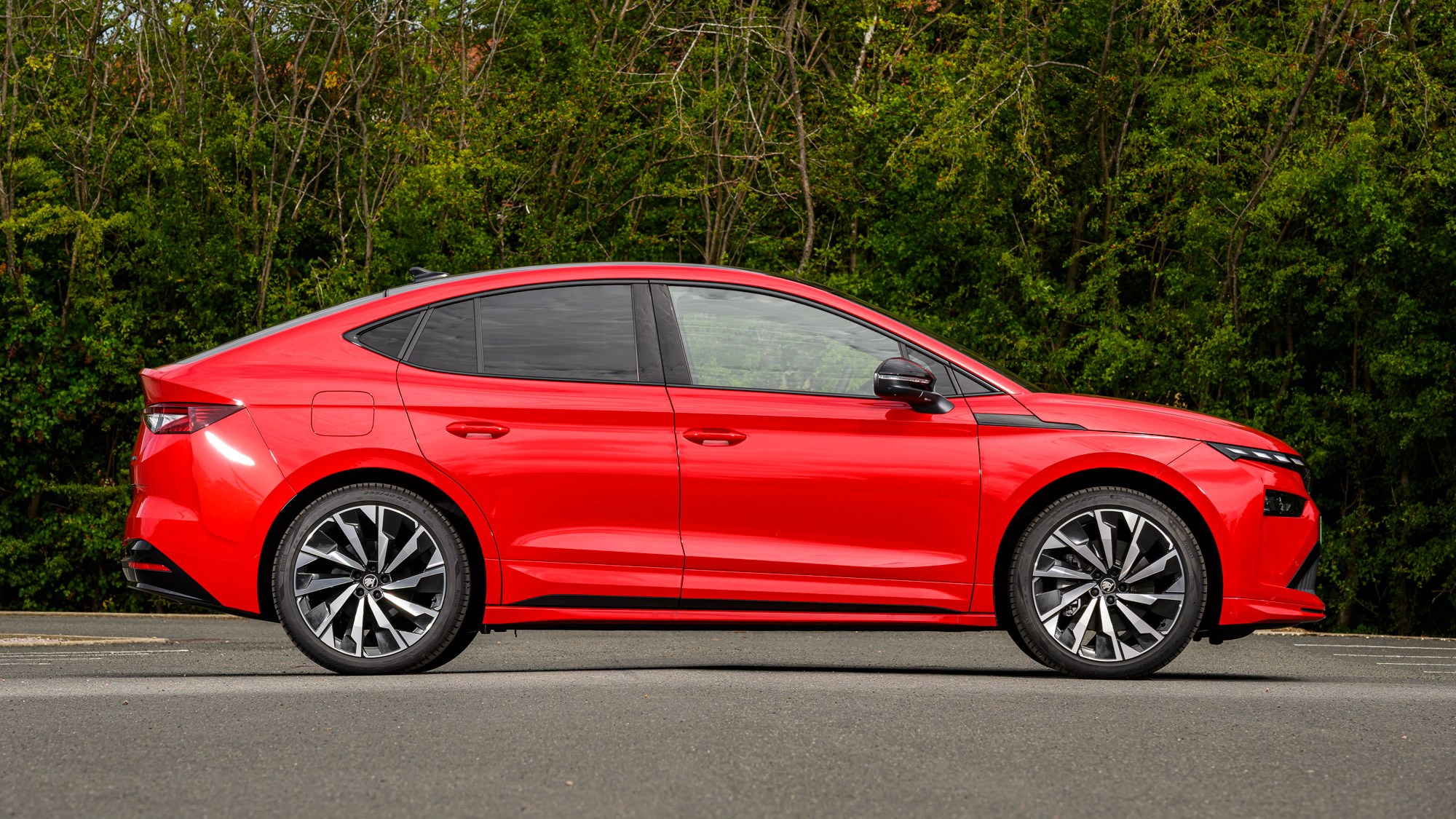
Skoda engineers say that the Coupe’s sleeker body improved the Enyaq’s already impressive battery range between 10-15 miles in real world driving, although that’s not fully reflected in the WLTP figures.
What are the specs?
This Coupe version isn’t available with the entry-level 58kWh battery powertrain on the standard Enyaq SUV, with all versions getting a 77kWh (usable capacity) instead. Skoda also sells a sportier version, though we’ve covered that separately in our Enyaq vRS review.
There’s a choice of the rear-wheel-drive 85 and all-wheel-drive 85X (as tested), with the latter getting an additional smaller electric motor on the front axle. But each develops the same 282bhp, enabling a 0-62mph time of 6.5 seconds.
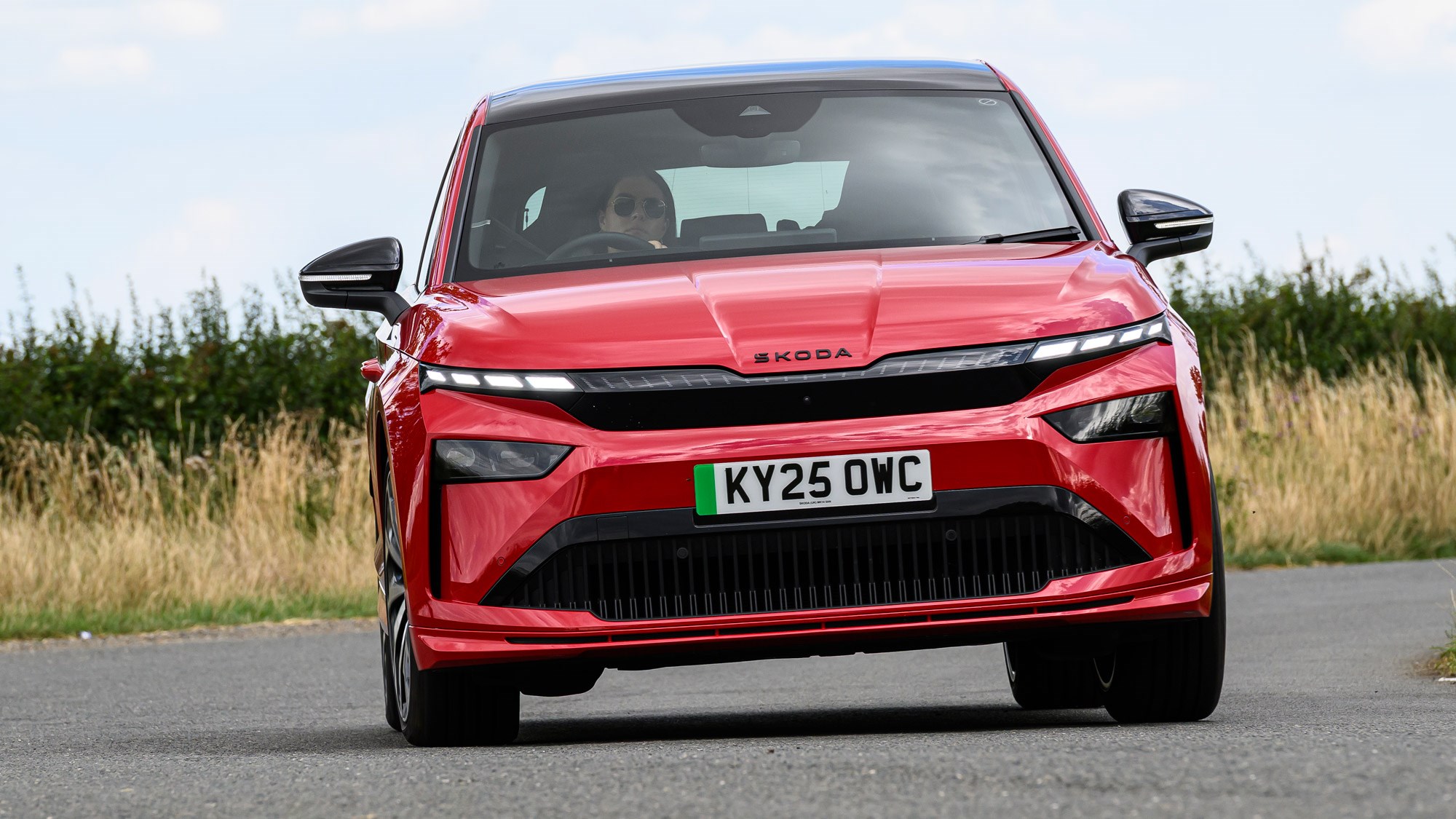
The only real difference between the two is range, as while you can get up to a claimed 365 miles from a charge in the Enyaq Coupe’s most efficient form (and around seven miles more than the standard SUV), this drops to 334 miles in the 85X. In fact, even the sportier vRS can travel further according to the stats.
The good thing, however, is that the Enyaq’s real-world efficiency is impressive. We saw close to 4mi/kWh (miles per kilowatt hour) during our summer testing from the 85X, meaning that 300 miles could be achievable in the warmer months.
Improved charging speeds also mean that the Enyaq can now charge at up to 175kW, meaning a 10 to 80 per cent charge can be completed in under half an hour in ideal conditions.
How does it drive?
We should start this section by saying our Enyaq Coupe test car is not the version you should buy – all-wheel-drive is rather surplus to requirements, and the impact on electric range is just not worth the advantage that a slight improvement in traction brings.
We also know from driving other versions of the Enyaq Coupe that the optional 21-inch alloy wheels fitted to the Sportline model aren’t the best fit as it can be quite firm, albeit far from uncomfortable. You really need the optional dynamic chassis control if you’re going to choose these larger wheels, and that’s only available as a £1,700 option as part of a ‘Maxx’ package. Lower-spec Enyaqs on smaller wheels are far more preferable, with a more supple ride with less interference.
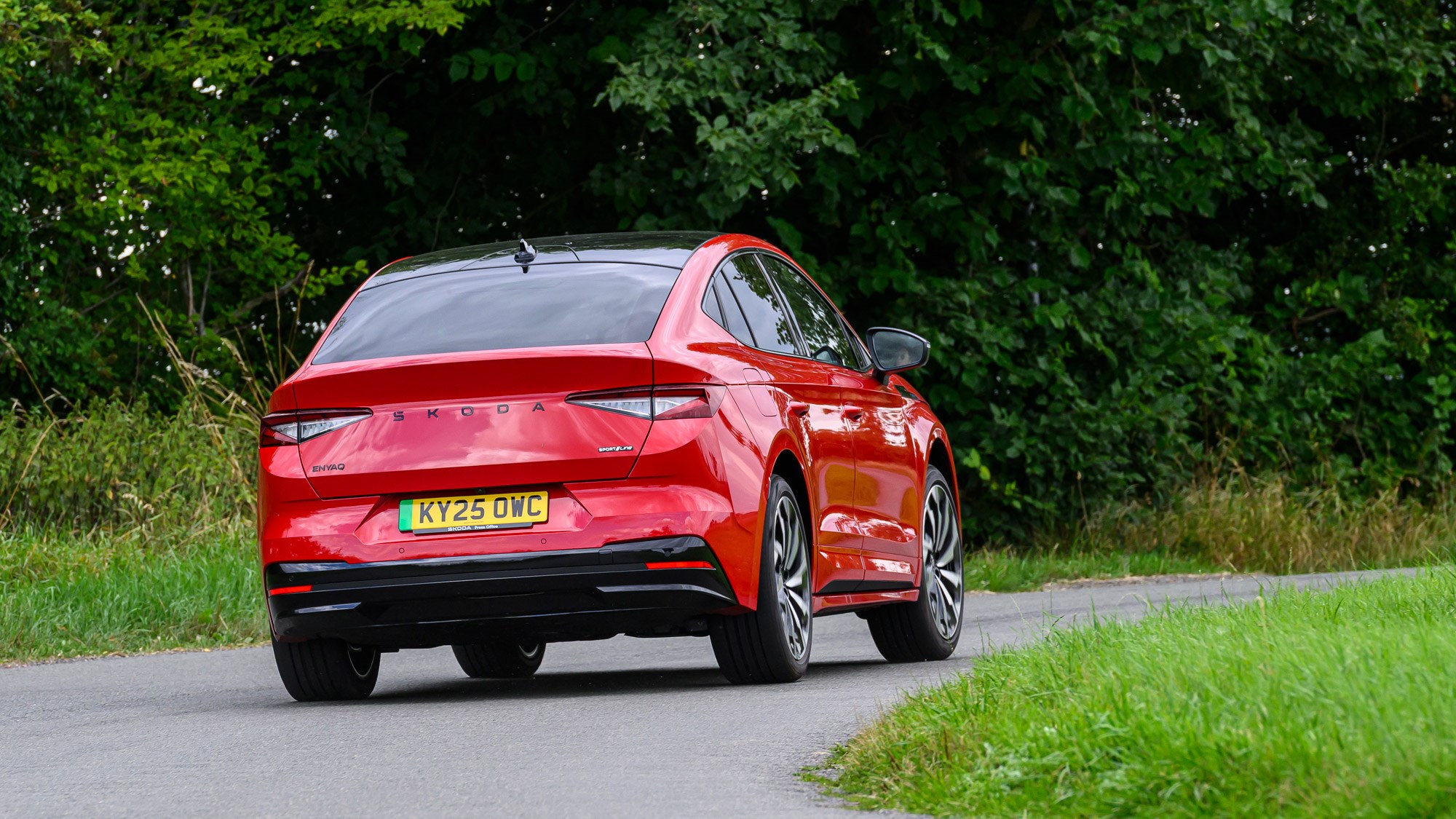
Performance is strong with a keen amount of pace up to motorway speeds, and the steering has a decent amount of feel to it for a car of this type – you can make it firmer in the settings but the standard setup is perfectly fine. There’s plenty of grip, too, and the slightly stiffer chassis on this Sportline car means there’s next to body roll. Pity the brake pedal is so rubbish, with a ridiculous amount of travel before the car actually starts slowing down. It’s a trait of most cars based on Volkswagen’s MEB platform.
What’s it like inside?
The good news is that despite the sloped roof, there’s still plenty of space in the Enyaq Coupe. Rear-seat space is particularly impressive, helped by a standard panoramic glass roof, with roof for three adults across the rear bench. Even the person in the middle rear seat won’t feel short changed.
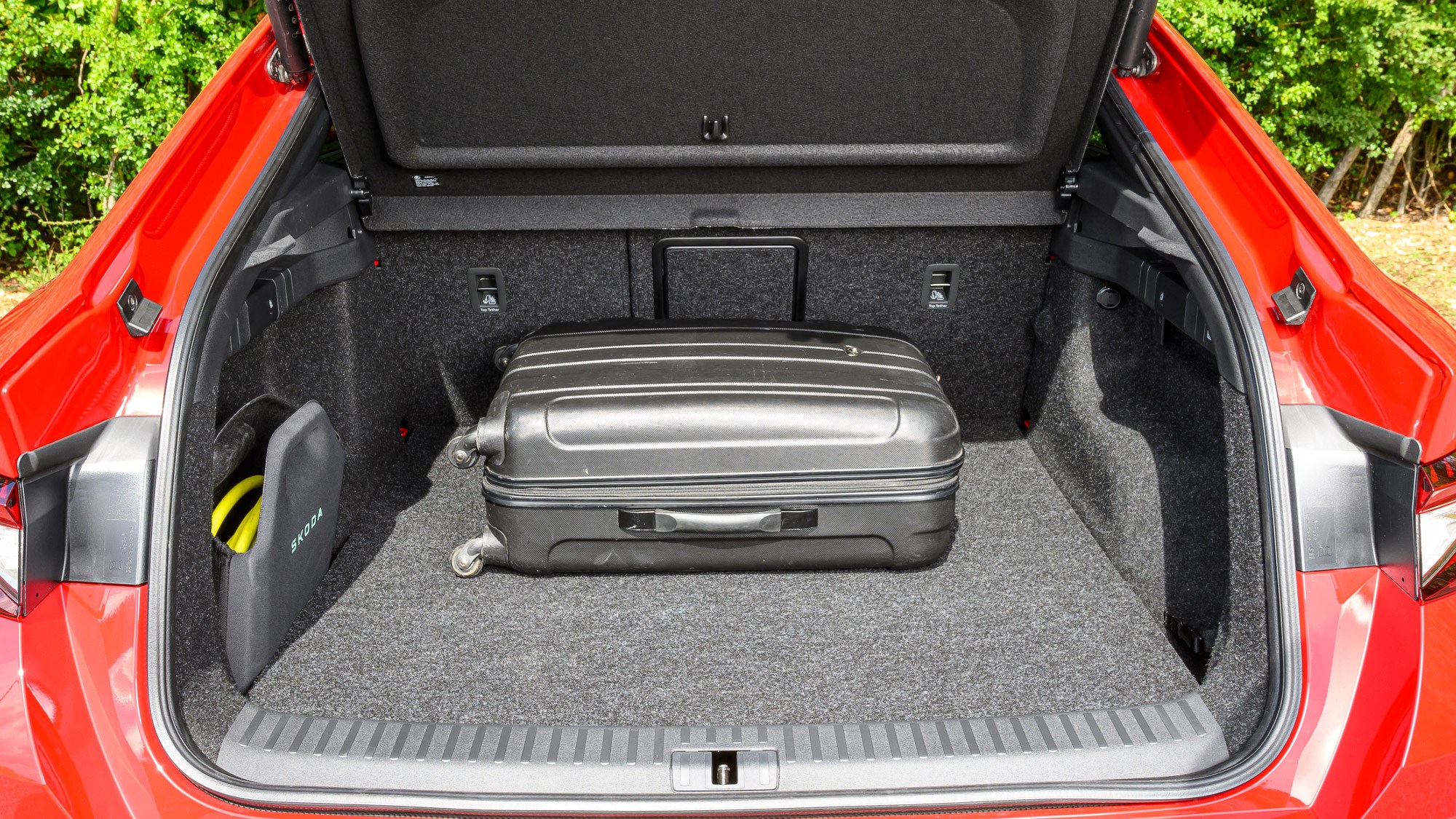
The sloped roofline drops the standard Enyaq’s boot from 585 to 570 litres, though it’s still a useful space that should still suit family needs, unless you really need something with a more square shaped boot. Various underfloor storage is available, though we found it intruded a bit too much into the available space, leaving quite a shallow. We’d find it easier to remove all of this and just to have the floor in its lowest position.
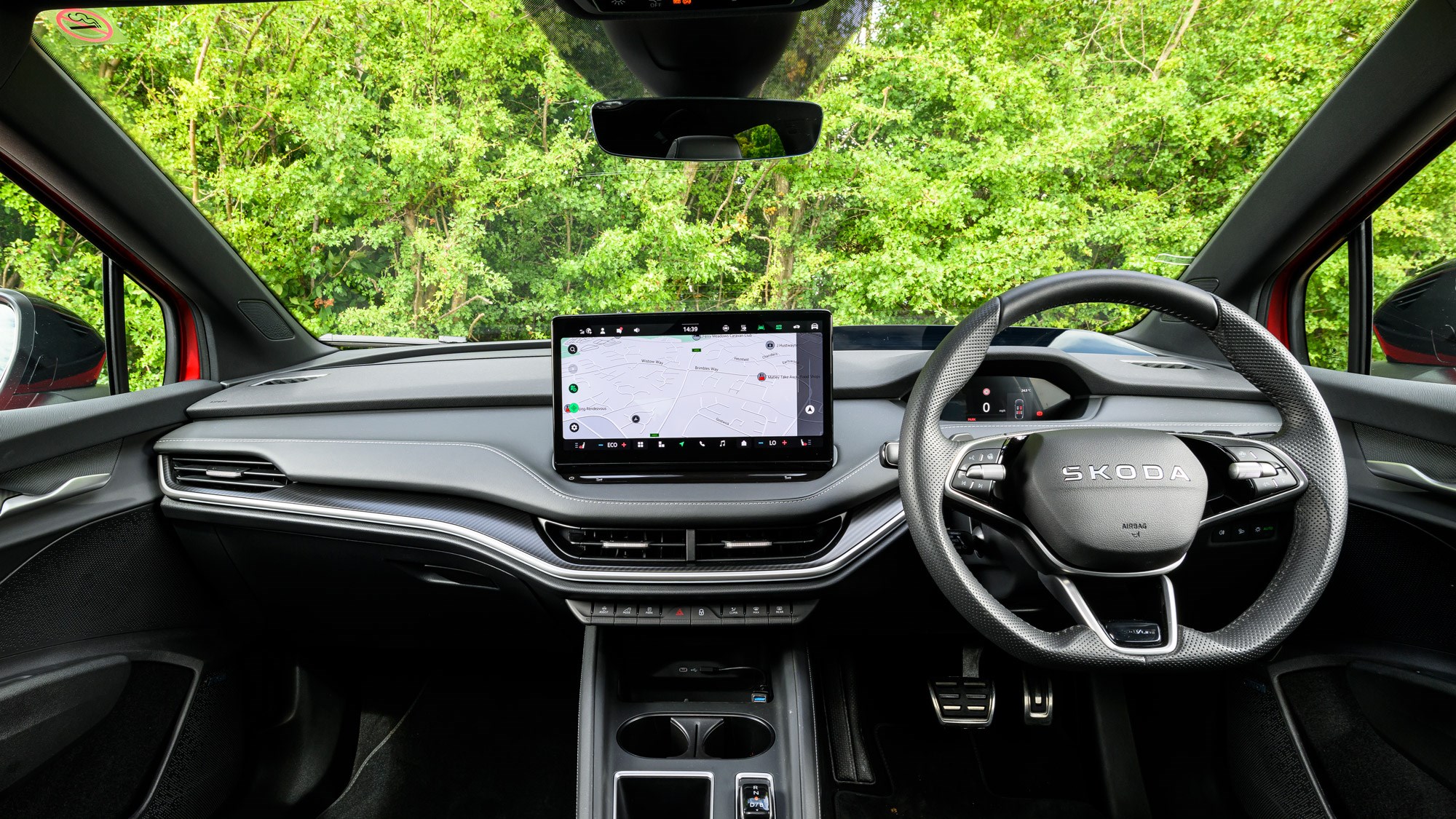
The rest of the Enyaq’s interior is business as usual. You get a 13-inch touchscreen controlling most of the key functions, though unlike other its Volkswagen ID.5 and Cupra Tavascan siblings, you at least get a few physical shortcut buttons. We also appreciate a new fixed icons on the screen to quickly disable the lane assist without having to navigate various menus. It feels well-built, too, with the suede-like sports seats on higher-spec models being a real highlight.
Before you buy
With the Coupe not available with the smaller battery size, or the entry-level SE L grade of the standard Enyaq, its starting price is naturally inflated. Starting from £45,535, it costs £1,900 more than its SUV equivalent.
Standard equipment is generally good, though, with the Edition trim coming with Matrix LED headlights, an electric and massaging driver’s seat and a great range of driver assistance kit.
The Sportline trim costs from £49,160 in RWD guise and £50,660 with all-wheel-drive, with extra kit including 20-inch alloys, a head-up display, a Canton sound system and a sportier bodykit.
As for rivals, the Enyaq’s closest competitors are its stablemates, the VW ID.5 and Cupra Tavasvan and Audi Q4 e-tron Sportback, though we’d take the Skoda over them all. We’d also recommend looking at the Kia EV6 and Hyundai Ioniq 5, while it’s still hard to ignore the Tesla Model Y if easy charging is of maximum importance.
Verdict
Coupe-SUVs are always divisive, and one wearing a Skoda badge probably doesn’t fit with the brand’s best-known strengths of offering practicality and keen pricing. You quite literally pay more for less.
But the Enyaq Coupe is perhaps the best coupe-SUV of its kind because of its ability to retain almost all the practicality of the standard car, as well as the core car’s strengths, in a package that’s arguably more desirable. I for one think it looks great, but is it worth an extra £1,900? Objectively, no, but I also couldn’t blame you if you went for it.