► Seat’s small crossover refreshed again
► We drive new 2026 model
► Mild hybrid versions due in 2027
Ah, yes – that classic adage rears its head again. But, hey – it still carries weight… and seemingly is still something to live by if you’re Seat’s product planners.
The Arona is a big seller, having clocked 750,000 sales since its launch in 2017. How will this refreshed version – launching at the same time as the latest Ibiza – affect that?
At a glance
Pros: Roomy, well built, easy to use, tech isn’t OTT
Cons: Slow auto; top 1.5-litre engine isn’t worth it; base seats are firm
What’s new?
The Seat Arona has received its second facelift since its original launch in 2017, with first deliveries of this model landing in the first months of 2026.
For this model, the Arona has undergone a similar (read: light) design refresh as the Ibiza supermini. The refreshed look is designed to inject a bit of life into the Arona as the Seat brand does a little bit of soul searching.
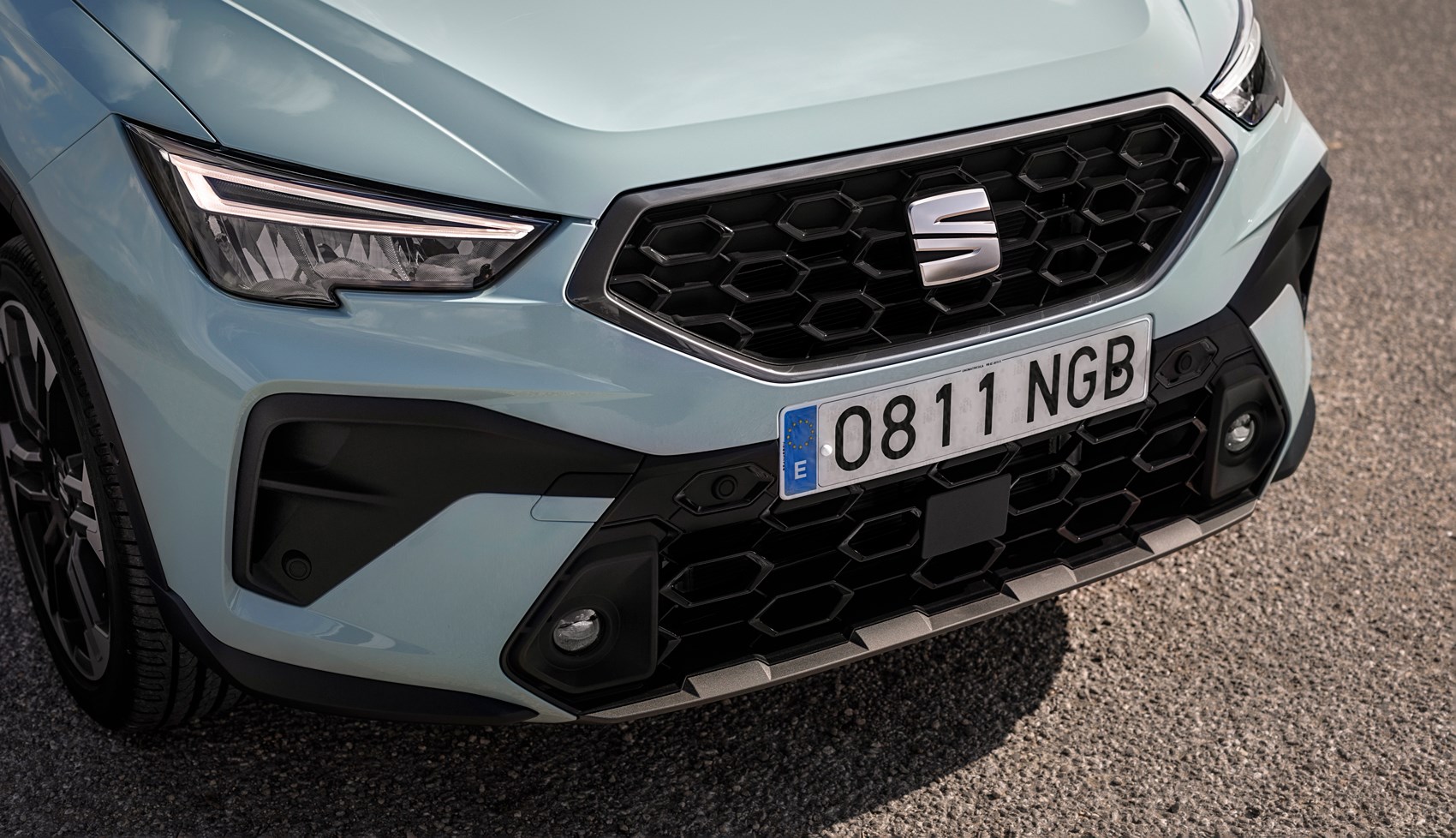
New headlights, bumpers and wheel designs all arrive with this update, as well as some new colours. It’s the same story inside; light trim tweaks and mild technology refreshes.
What are the specs?
The engine range hasn’t really changed from before – they’re all turbocharged petrols that can be had with a manual or a DSG dual-clutch (depending on which one you choose), and they’re all front-wheel drive. The range starts with a 94bhp three-cylinder petrol, with a 113bhp option too. There’s also a 1.5-litre four-cylinder engine that the Ibiza doesn’t get, mated exclusively to a seven-speed dual-clutch transmission.
There will, however, be some changes in 2027 with Seat confirming the addition of mild hybrid combustion options coming then. They’ll likely be badged as eTSI and will add a bit of extra torque boost, as well a more sophisticated start/stop functionality.
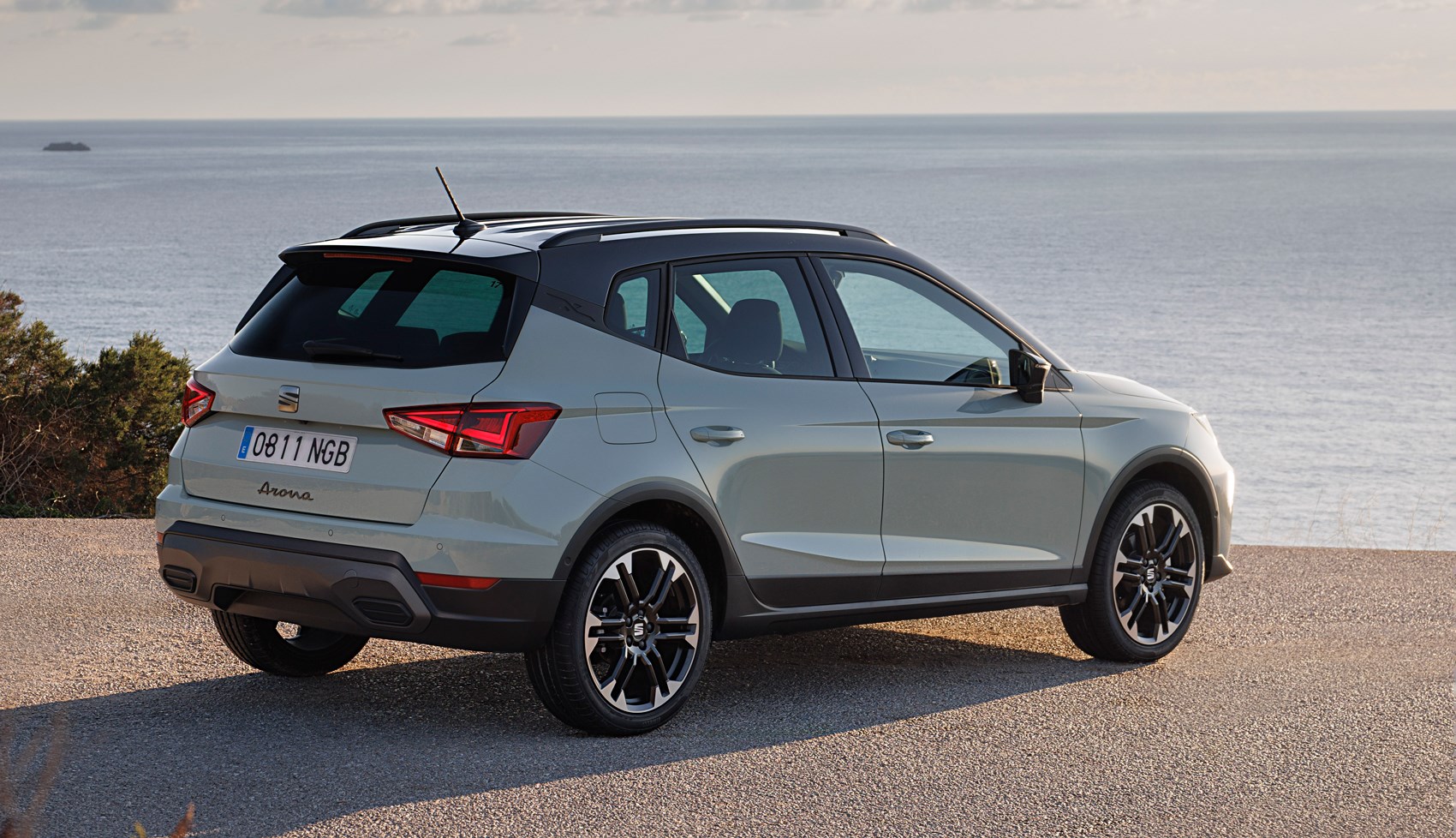
The trim structure has been simplified, whittling down the old specification ladder from eight down to four for the UK market: SE, SE Tech, FR and FR Sport. Like the Ibiza, the latest Arona has plenty of stuff standard in the base SE spec with nice-to-have luxuries being added on upper trims. FR models, for example, have slightly sportier details and wheel designs as well as better parking assistance, selectable drive modes and thicker-bolstered seats. Depending on spec, your wheel options are either 16, 17 or 18 inches.
What’s it like to drive?
We’d suggest you stick with the smaller 1.0-litre engine options, saving you some cash and some fuel. The flagship engine is that 1.5-litre four-cylinder, which we’ve tested here, but we just don’t really think it’s worth it. It’s raspy and sounds harsher than the buzzy-but-well-damped three-cylinder engines and – despite a 1.6sec quicker 0-62mph time than the 113bhp engine, doesn’t feel any quicker.
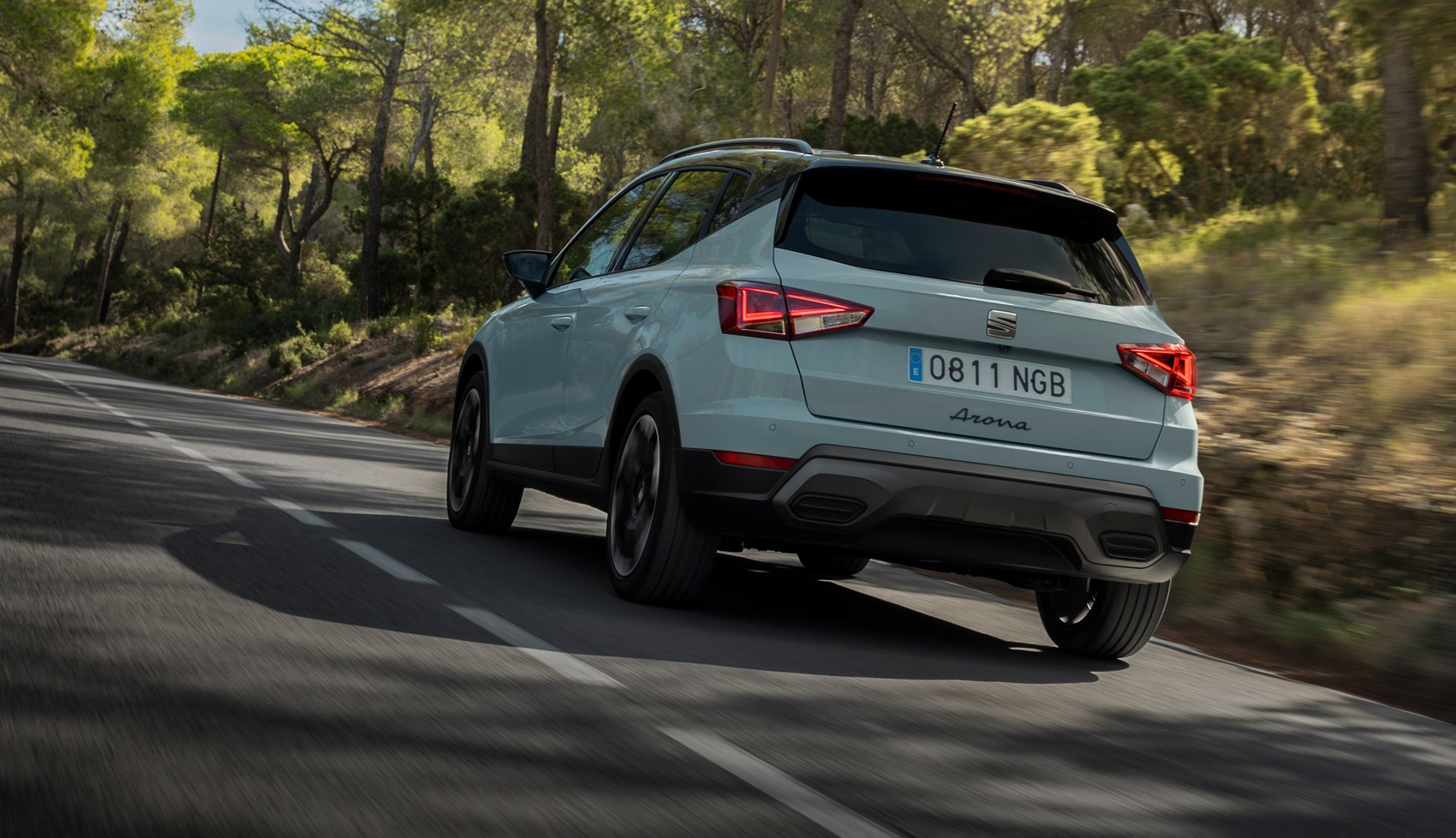
We’ve only tried the DSG auto here, which can be a little slow to change down for our liking when left to its own devices. We can assume why; its programming will be designed to keep emissions low, but it means it can be a bit ponderous.
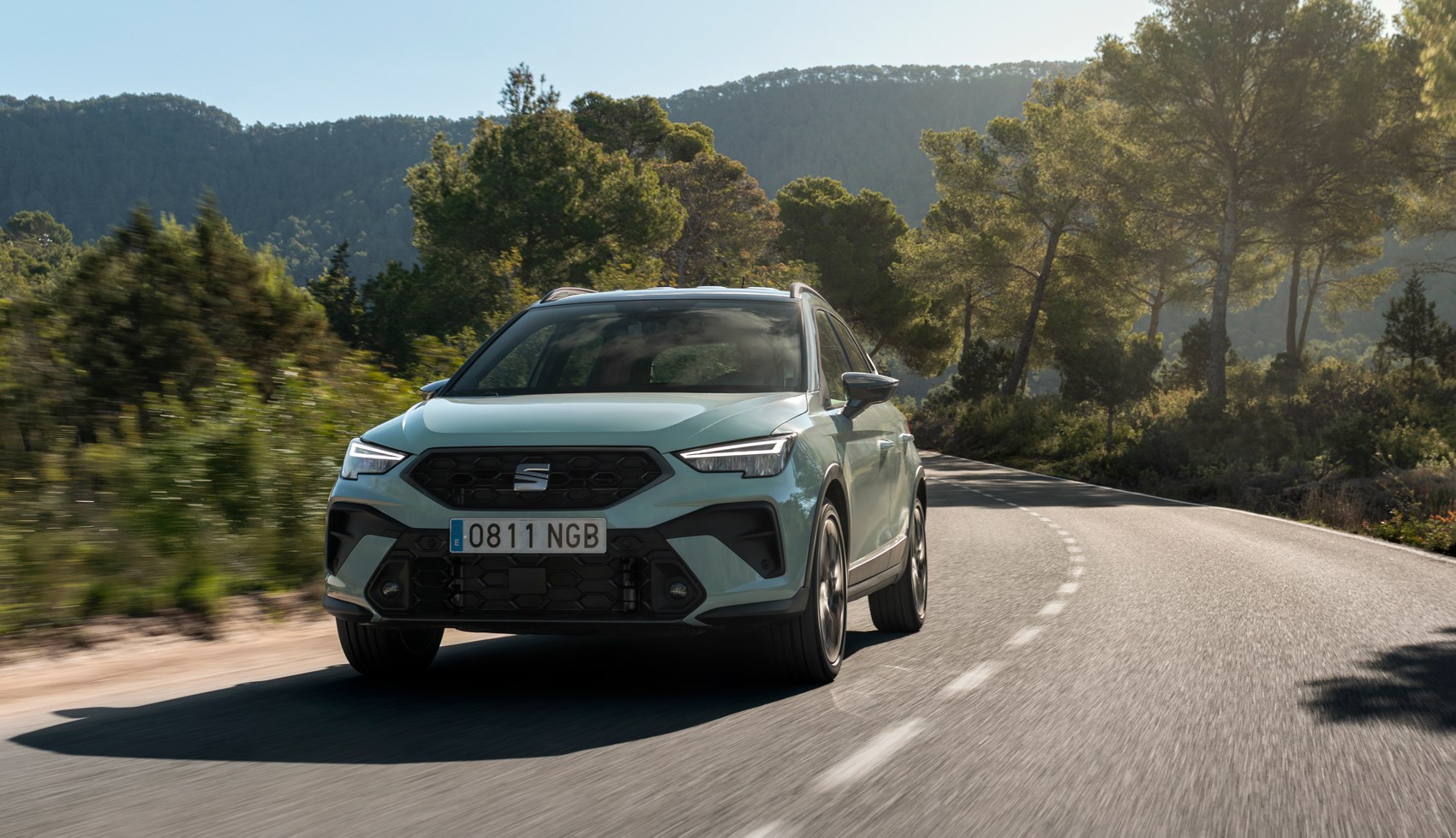
Simple physics come in to play with the Arona, which does lean a little more into corners than the Ibiza supermini does – but it’s not a drastic difference. Overall, the Arona is a perfectly neat small crossover to drive around in; the steering is smooth and fluid and the ride is perfectly good. We did, however, drive a lower-spec model riding on 16s here – we’re yet to test the 18s. However, when we drove an Arona on 18s in 2024, the ride did feel more brittle; best to keep to the smaller sizes if you can.
What’s the interior like?
Largely logical and with easy-to-use technology on board. The new trim bits are barely noticeable, really, but the new seat patterns look rather fetching and feel durable despite being all fabric. The base seats feel pretty firm, though – the thickly-bolstered ones you get on FR trims are more supportive.
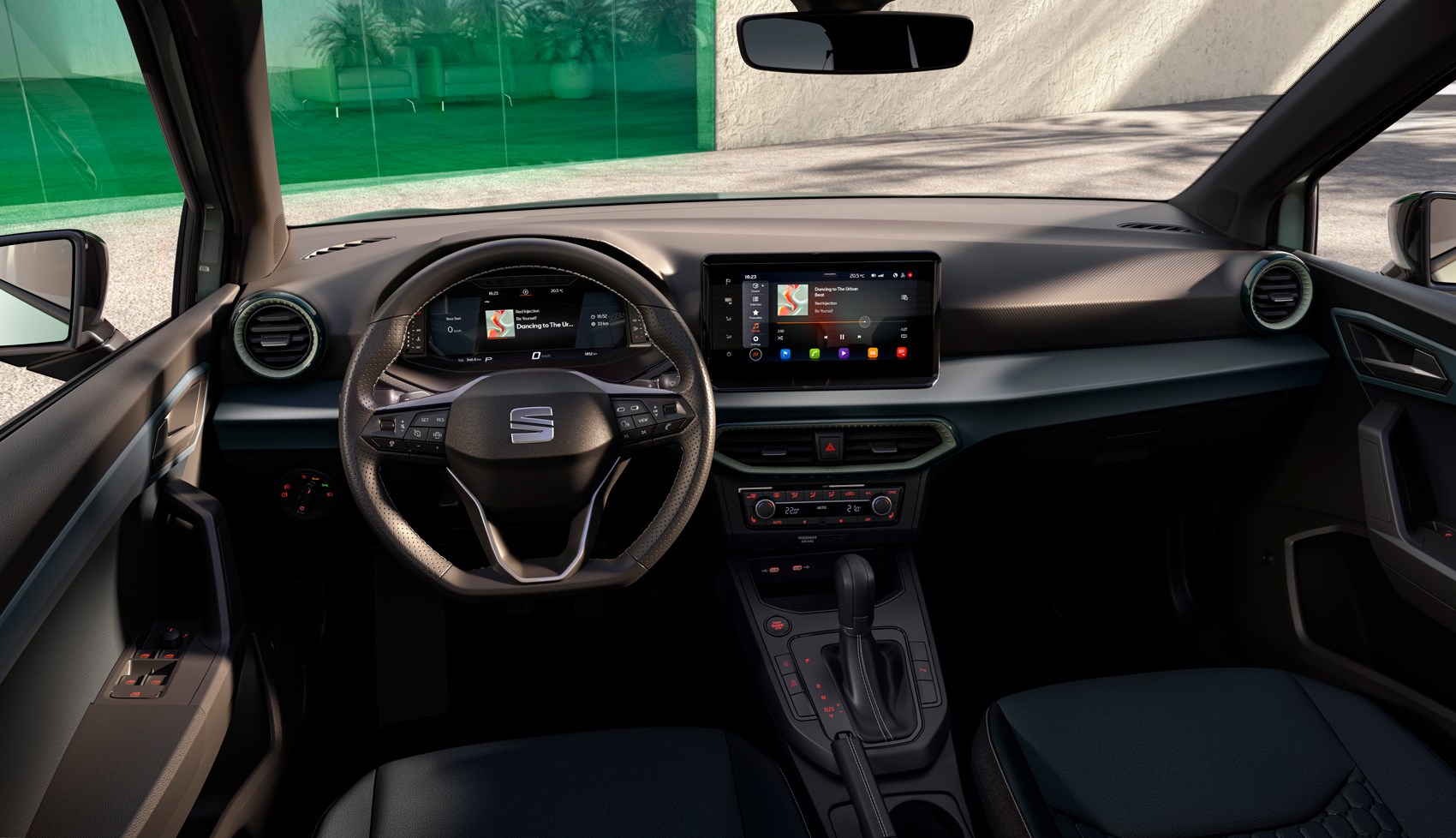
Base Aronas come with an 8.2-inch infotainment screen as standard, with upper models coming with a larger nine-inch display. Either works perfectly reasonably, working to a Seat-themed version of the same infotainment seen on the VW Golf and countless other cars. Lower-end Aronas have physical instruments, while upper ones can be spec’d with digital ones.
All in all, though, it’s a perfectly good place to spend time. Plenty of physical switchgear means there’s much less fumbling around on screens to make settings changes (aside from the new ADAS menu accessed via the steering wheel buttons – difficult to learn, but easy to master). It’s also just built well in here – there are plenty of dark plastics, but everything feels durable and solid where it counts.
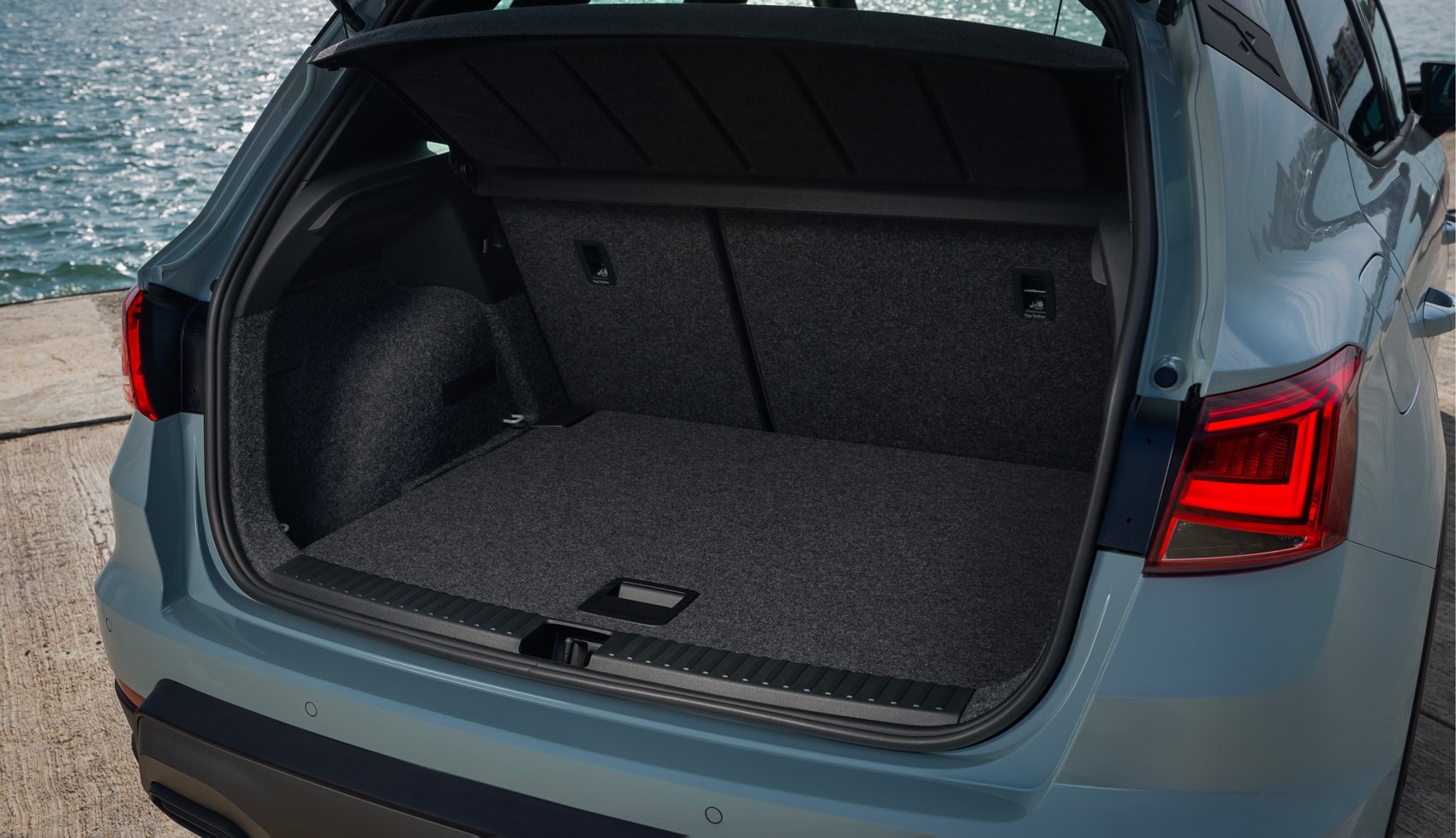
Rear space is fine for adults, offering a little more room than in the Ibiza supermini for adults. The 400-litre boot, meanwhile, is above average in this class – it’s bested by the Ford Puma (mainly because of that Megabox technicality below the boot floor) but larger than a Vauxhall Mokka or Mini Aceman.
Before you buy
Best to keep the Arona at the cheaper end of the spectrum. This isn’t some wild hot hatch, so you don’t need tonnes of power; when the 1.5-litre engine option is unrefined and not that much quicker compared to the three-cylinder engine, it’s just not worth it. Given the amount of standard kit, too, we see no reason to really venture beyond SE Tech – unless you’re keen on the FR version’s extra design elements or those more supportive seats.
We’ll have to hang on a bit for prices, but they should be competitive when the UK market announces them; Seat is repositioning itself as the entry-level brand in the VW Group, meaning it should undercut the similar Skoda Kamiq and Volkswagen T-Cross.
Verdict: Seat Arona
When not much has changed, there’s not much for us really warrant changing our verdict – the Arona is still a solid small crossover that feels well built, is roomy enough and is perfectly good to drive. Is it a bit traditional? Compared to the techier and funkier Mini Aceman or the more fashionable Peugeot 2008, it is. But that’s not a bad thing.
Specs are for a Seat Arona 1.5 TSI SE Tech