► Rolls-Royce’s Series II Cullinan driven
► New tech and updated look for revised version
► Still impressively quiet and comfortable
When Rolls-Royce said it was going to make an SUV – or, rather awkwardly, a ‘high-sided vehicle’ – there was much bluster, huffing and disgruntled coughing that those at Goodwood could create such a thing. It perhaps didn’t help that the resulting Cullinan is monolithic in shape an size – controversial to say the least.
But was Rolls-Royce bothered? It was not. The Cullinan has been a key driver of the company’s growth in recent years, with only a small Covid blip. Not only have sales soared – 2023 was an all-time record, and 2024’s were still impressive – but average transaction prices have gone up, small international markets have become big markets, and the average age of Rolls-Royce owners has gone down: 56 in 2010, low 40s now.
And an ever-increasing number of customers are taking the Bespoke route: way beyond simply ticking a few boxes on an options list, this is an interactive process whereby customer and Rolls experts liaise on personalising the car to suit the buyer’s tastes and lifestyle. We had a taste of that process by building our own Ghost, which was made into a real car.
Phantom aside, the typical Rolls-Royce is now driven by its owner, rather than by a chauffeur. So, what is the Cullinan like if you’re piloting it yourself?
At a glance
Pros: Extremely quiet, refined and comfortable; fascinating details; isn’t short of X factor
Cons: Enormous; thirsty; not exactly for the wallflower
What’s new?
Series II is a rather literal version of the midlife facelift. The main change is to the appearance of the front end. The new grille has crisper edges, less roundness, more sheer surfacing. There’s a new V-shape to the area under the grille – Rolls suggests we imagine a motorboat pushing the water aside. There are new daytime running lights, which have a slightly slimming effect on the front end, as well as reshaped air intakes.
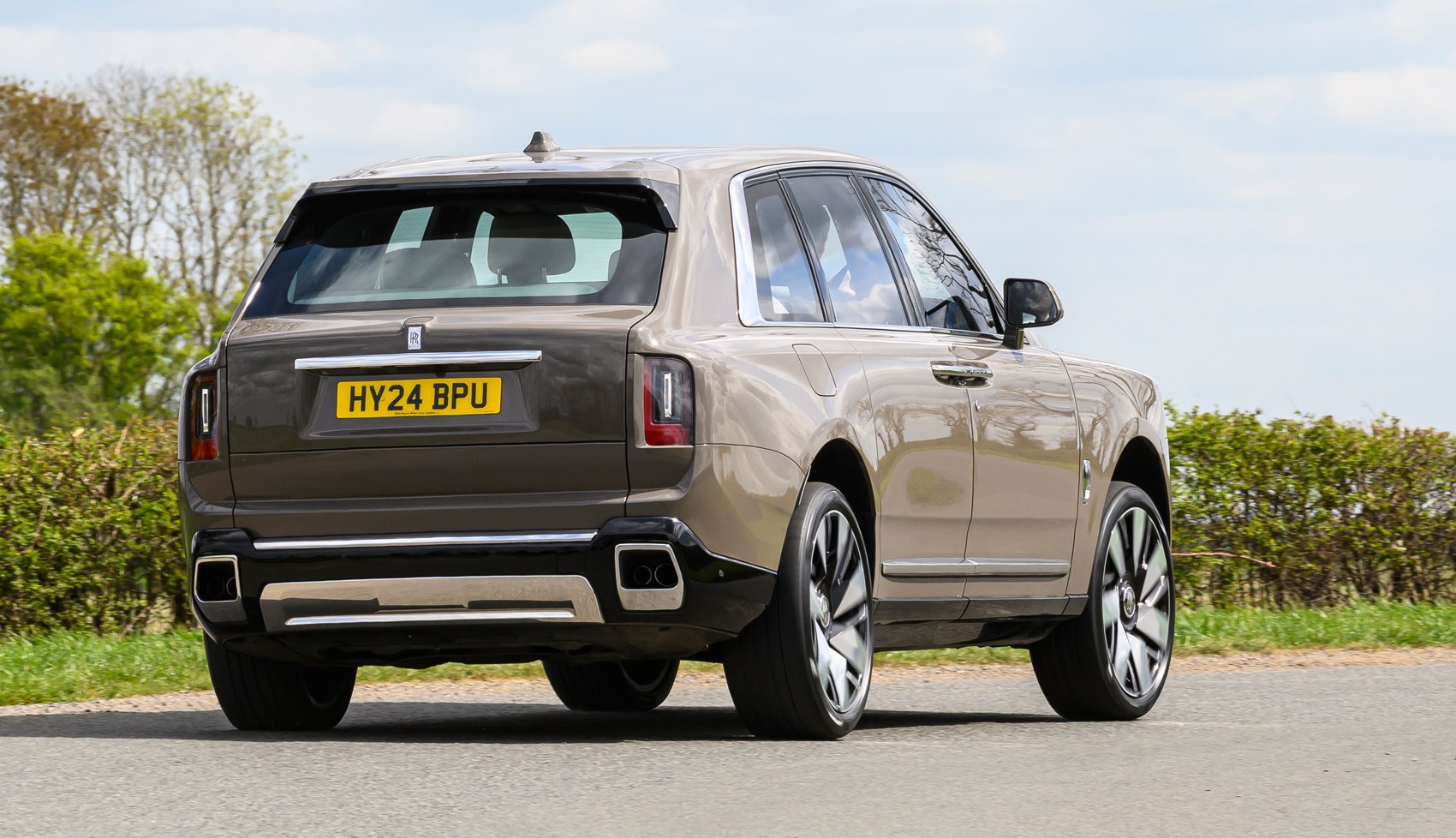
The rear end also gets some visual tweaks – new surrounds for the exhaust exits, a more prominent bash plate, a new section of gloss black bodywork – and the sides, where the sills that used to be matt black are now gloss black. There are new wheels, a multi-faceted seven-spoke design available in either part-polished or all-polished finish.
It’s still huge, squared-off in places and won’t be for the shrinking violet, but some of the new details help make the Series II easier on the eye.
Inside, there’s a new facia, similar to that already seen in the Ghost and Spectre. There’s also now the option of non-leather upholstery for the first time on a series-production Goodwood-era Rolls-Royce, with the arrival of a bamboo-based fabric.
Mechanically, very little has changed. The increase in wheel size from 22 to 23 inches has required the engineers to recalibrate the air suspension.
What are the specs?
Under the vast bonnet you find exactly what you found before: a 48-valve twin-turbo 6.75-litre V12, essentially the same as that employed in the Phantom and Ghost. There’s no hybridisation. Unavoidably, because it’s a big V12 pulling a heavy, un-aerodynamic car, it’s not clean or frugal; the official fuel consumption figures are 16.8-17.7mpg, and the CO2 emissions 363-380g/km.
The engine drives all four wheels through an eight-speed automatic transmission. There’s no manual gearshifting by paddles or stick – you engage D or R with a stalk on the steering column. There is, however, an old-fashioned ‘Low’ mode for maintaining a lower gear where required.
Cullinans are a foot longer than a Range Rover and slightly wider, but not as tall – and the occupants benefit hugely from this cubic capacity, although the rest of the world may occasionally scowl at having to squeeze over a bit for an SUV that’s about the same size as a long-wheelbase Ford Transit van. In the US, its size is much less likely to raise any eyebrows than here in Europe.
The air suspension system uses a double-wishbone front axle and a five-link rear axle. It has electronically actuated active anti-roll bars and electronically controlled dampers. The road ahead is scanned to help the suspension system anticipate the condition of the surface.
In Off Road mode, the air suspension increases the car’s height by 40mm to improve clearance over rocks and ruts. The gearing and traction control are automatically adjusted to cope with loose surfaces. There’s also a hill descent control system to take the strain out of going downhill off-road, by precisely controlling the engine for you in a low gear setting, rather than using the brakes. The air suspension can also be lowered at the touch of a button to make it easier to get in and out without losing your dignity.
How does it drive?
If someone had ever invented an isolation chamber on wheels, this is arguably the closest you’d get to it. You barely notice there’s an engine, let alone a hulking-great V12 getting on with propelling the Cullinan forward. My mother, who got to experience the Cullinan, even asked if it was electric.
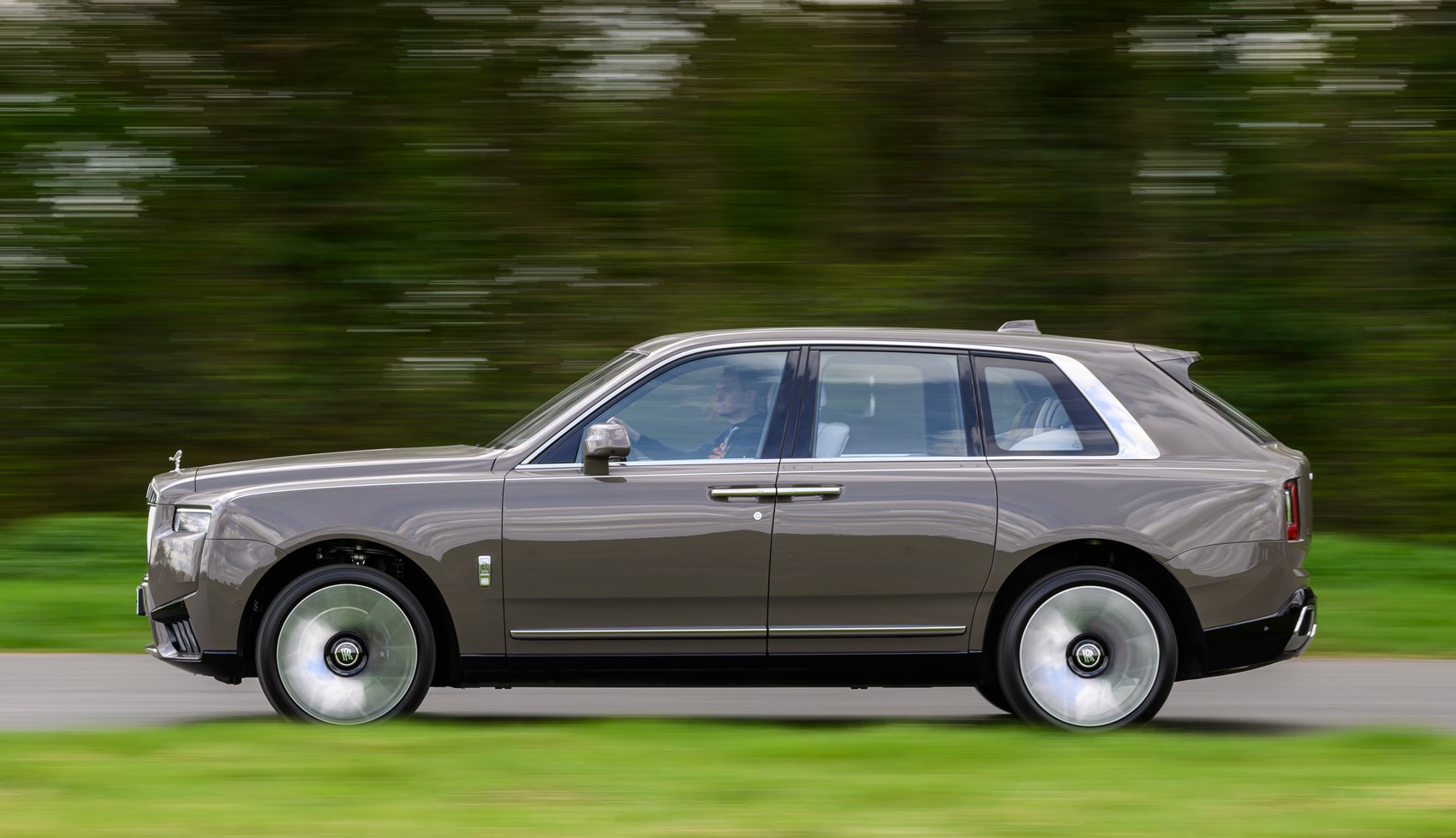
Yes, it’s still very heavy, and yes, it now has even bigger wheels than before. And yet it rides and corners impressively well. The calibration adjustments to the suspension have been carried out with aplomb, resulting in a remarkable ride quality even over rough tarmac. There’s still some lean in corners, but it’s less than you’d expect from something this tall/large/heavy [delete where appropriate].
The brakes, as before, could be more powerful. You always stop in time, but there are occasions when you’d want a bit more power and a more direct-feeling connection between pedal and retardation. Low button on the gear stalk is effectively a sport mode in all but name. It holds on to a low gear for longer, letting the revs go higher, and firms everything up slightly.
The steering is lovely and natural. Relaxed and low-effort, but fluid and accurate. It’s a big car, but you get a good view of the extremities – helped by cameras if need be – and you soon learn the trick of using the Sprit of Ecstasy’s wing tips as a guide to how close to the edge of the road you are. Once you’ve relaxed into it, which really doesn’t take long, you just point the prow where you want it to go and it goes there.
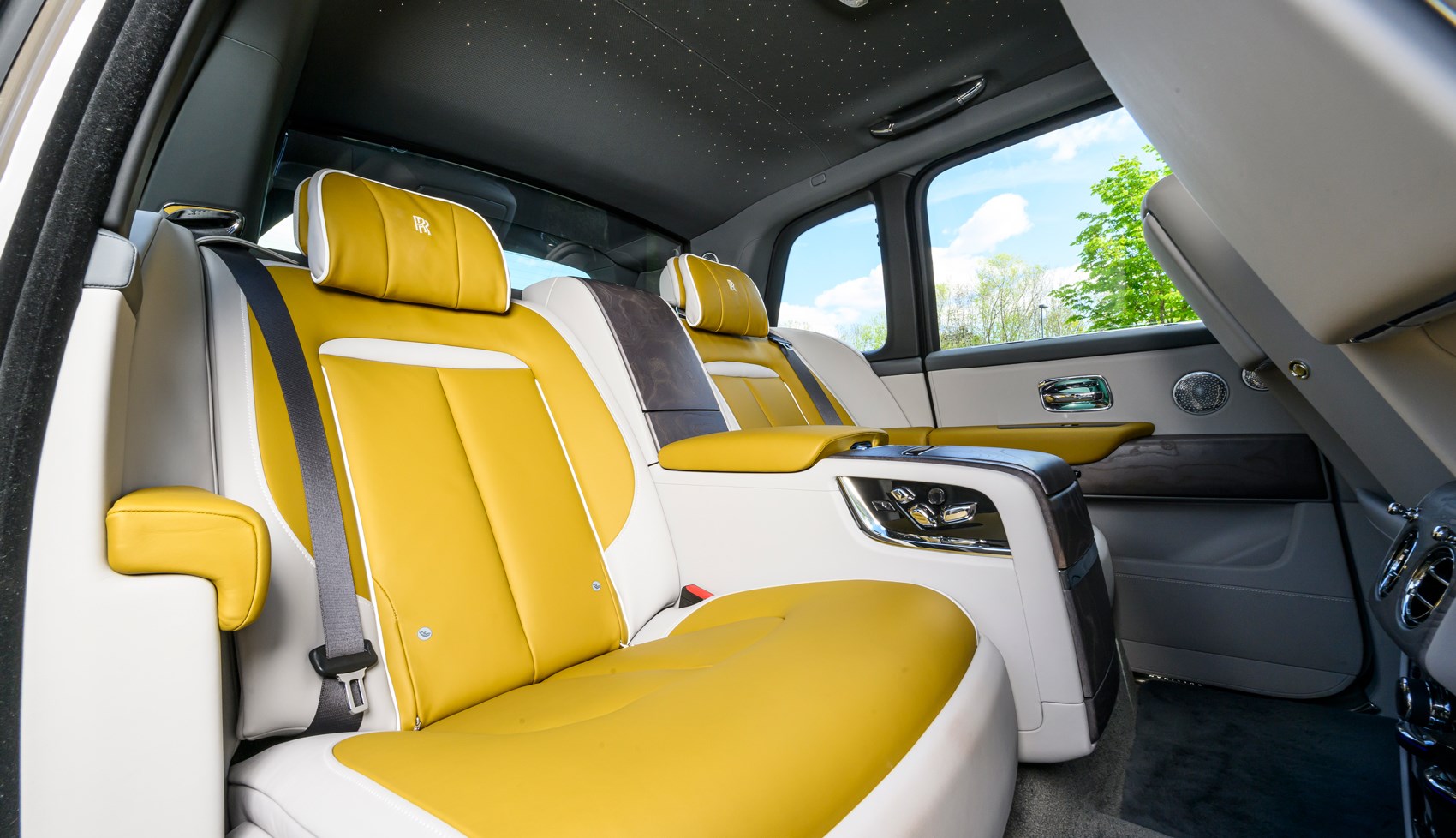
In the back it’s divine. Take your shoes off, enjoy the carpet, adjust the air-con to your precise requirements, and revel in the vast amounts of room in every direction. It all very hushed, even at those times when the driver is making haste. It feels more like floating than riding along on big wheels. And you get to look up at the fake night sky, which can be oddly calming.
What about the interior?
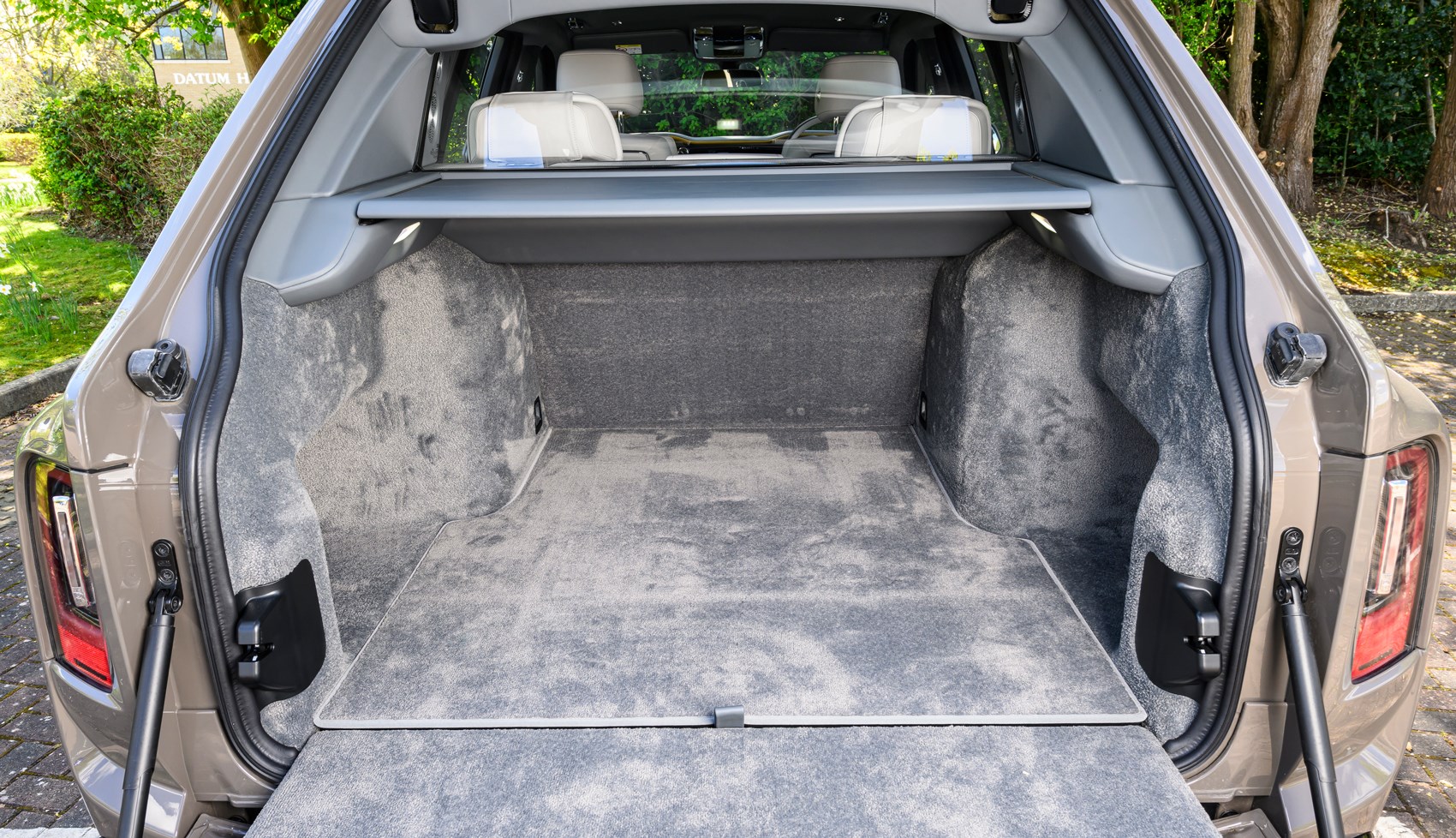
The boot is a useful 600 litres, or 1930 litres with the rear seats folded, and access is easy thanks to a top-hinged hatch and a bottom-hinged lower section, pick-up style. That lower section is sturdy enough to be sat on while you watch the polo etc.
You can specify four seats or five – and if you go for three seats in the back, there’s still plenty of room for all. Front and rear, the seats are not particularly plush but they are multi-adjustable and well shaped to support you comfortably over long distances.
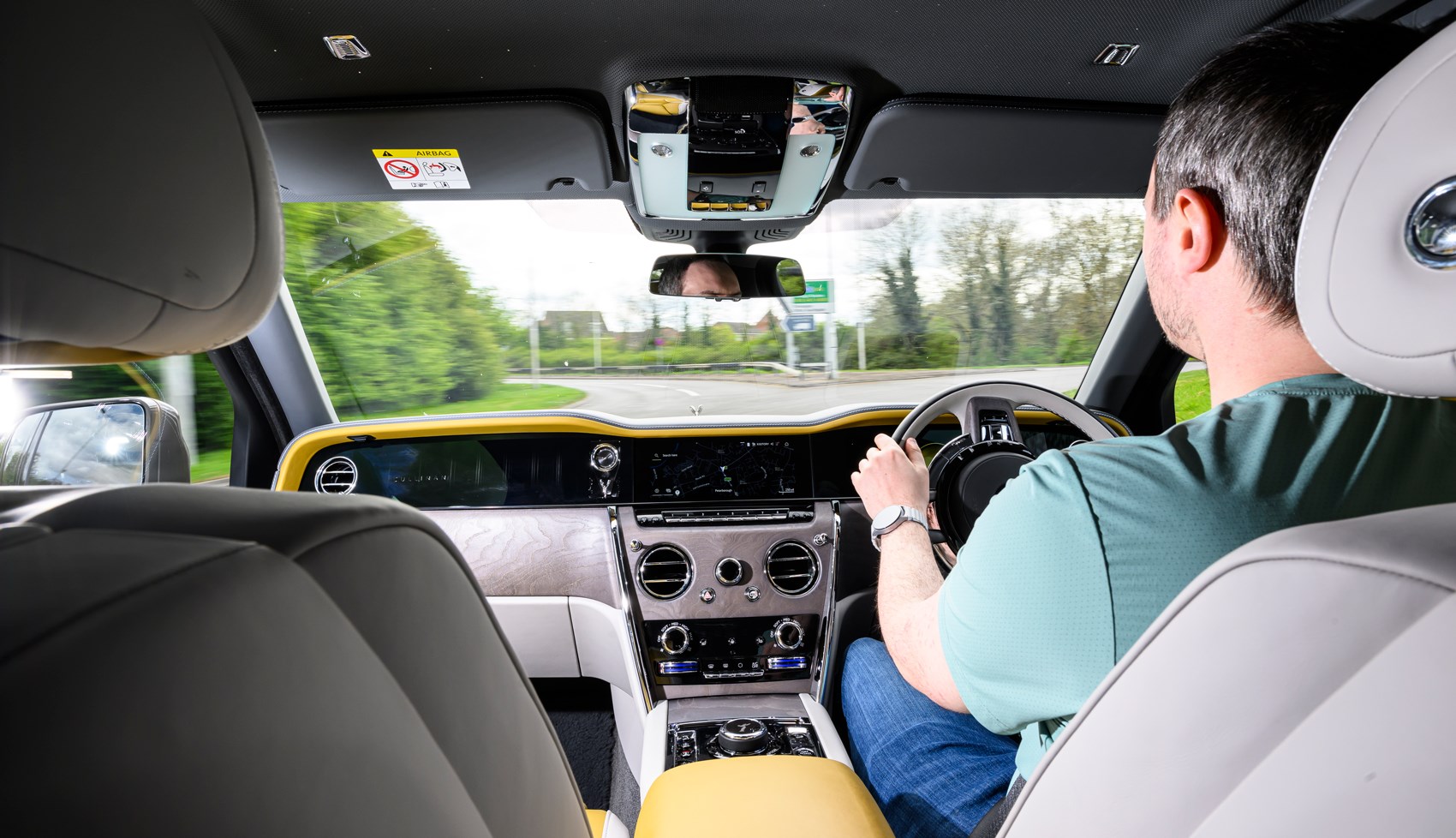
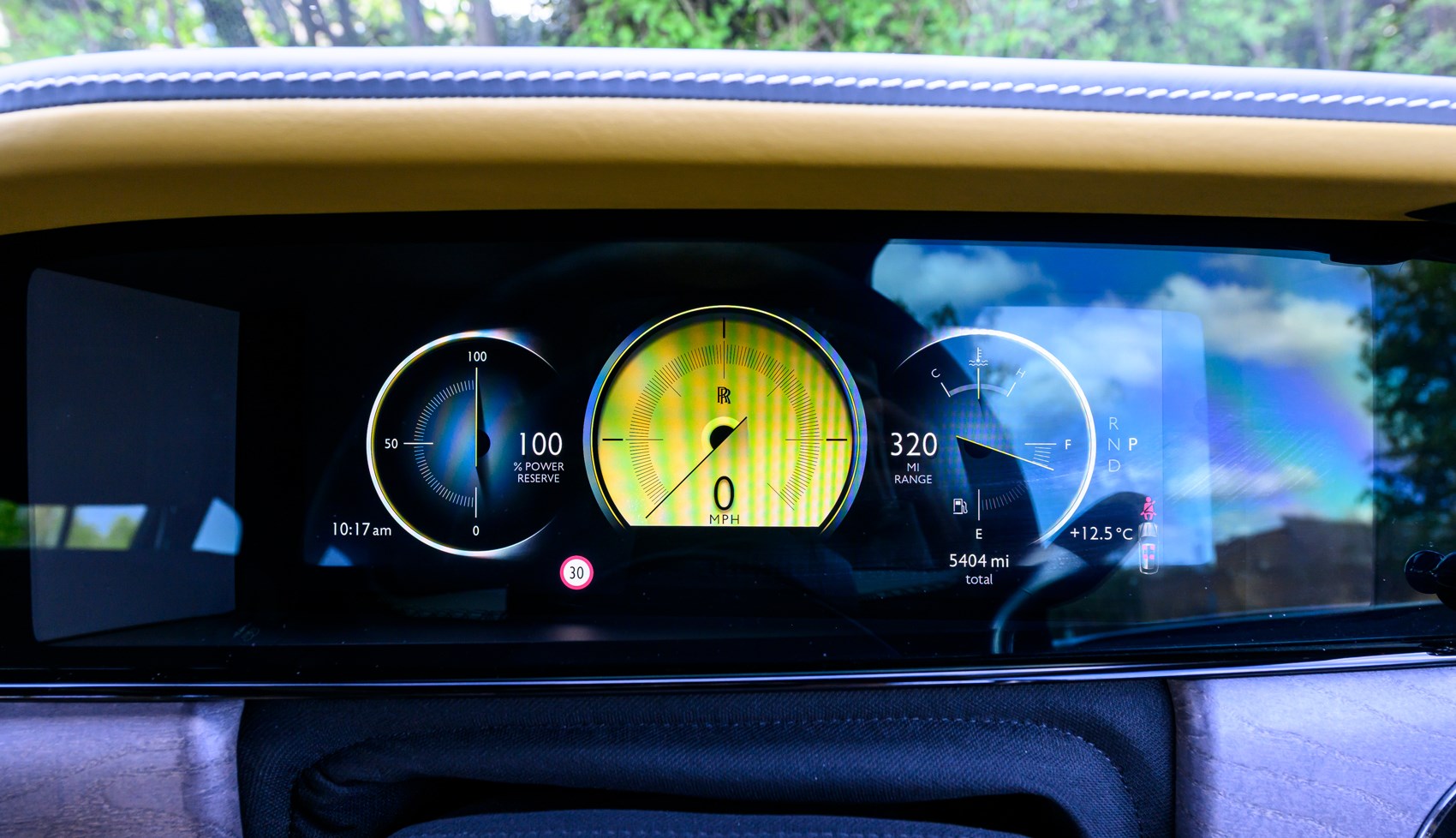
The cabin is more digital than before, but that’s still mixed with a lot of physical switches and dials. The driver’s instruments are digital now with the Series II, with a central screen that can be operated by touch or by the iDrive rotary controller, and many functions can also be operated by voice.
There are soft keys under the touchscreen for quick access to most-used functions. It’s a big car, so it has room to offer this belt-and-braces approach without feeling cluttered. The climate control system is entirely physical, making it very easy to accurately adjust on the move without taking your eyes off the road.
Big interior changes include the new pillar-to-pillar glass dash, which is functional on the driver’s side and in the middle, and decorative on the passenger’s side. Between them is a new analogue clock with, for the first time, an in-cabin Spirit of Ecstasy. The dash lights up in three phases when you open the door. First the driver’s instruments, then the passenger’s section, and finally the clock cabinet and mascot. It’s quite an event after dark.
Before you buy
There are two versions, the regular Cullinan (referred to by some as the ‘Silver Badge’) and the Black Badge, reviewed separately. The Black Badge has more black trim inside and out. It also has more power and torque – up by 28bhp and 37lb ft on the regular car, giving a token 0.1sec improvement in the 0-62mph time – and a slightly louder exhaust note.
There is, however, the caveat that a wealthy customer can work with the Bespoke department to turn a Silver Badge into something closely akin to a Black Badge, or vice versa.
There are other big and expensive SUVs, other SUVs that don’t like being called SUVs, other SUVs from extremely prestigious brands, but there is nothing very close to the Cullinan. The Bentley Bentayga and Range Rover do many of the same things, but in their feel and details they offer a slightly different kind of luxury, and they’re dynamically sharper. A lot less expensive too. The Ferrari Purosangue has the glamorous name and the price, but is much lower and less roomy, and isn’t pretending to have any significant off-road ability.
And from Rolls-Royce’s point of view, its customers tend to be so very, very rich that they don’t need to choose between a Rolls-Royce and a Ferrari – they buy both.
Verdict: Rolls-Royce Cullinan Series II
In the cold, hard light of objective reality, Series II isn’t drastically different from the Series I, but with a new dash, new wheels, some slight visual changes and a handsome price rise. If you weren’t interested in Cullinan before, you likely won’t be now either. The new tech and suspension changes improve an already refined and user-friendly car, but many of the Cullinan’s base attributes happily remain untouched.
Just as any Rolls-Royce should it is an impressive lesson in refinement and comfort; the Cullinan is impressively quiet, remarkably well put together and supremely comfortable. If you buy into the Rolls-Royce idea of luxury and sophistication, the Series II is a step forward – albeit not a big one.