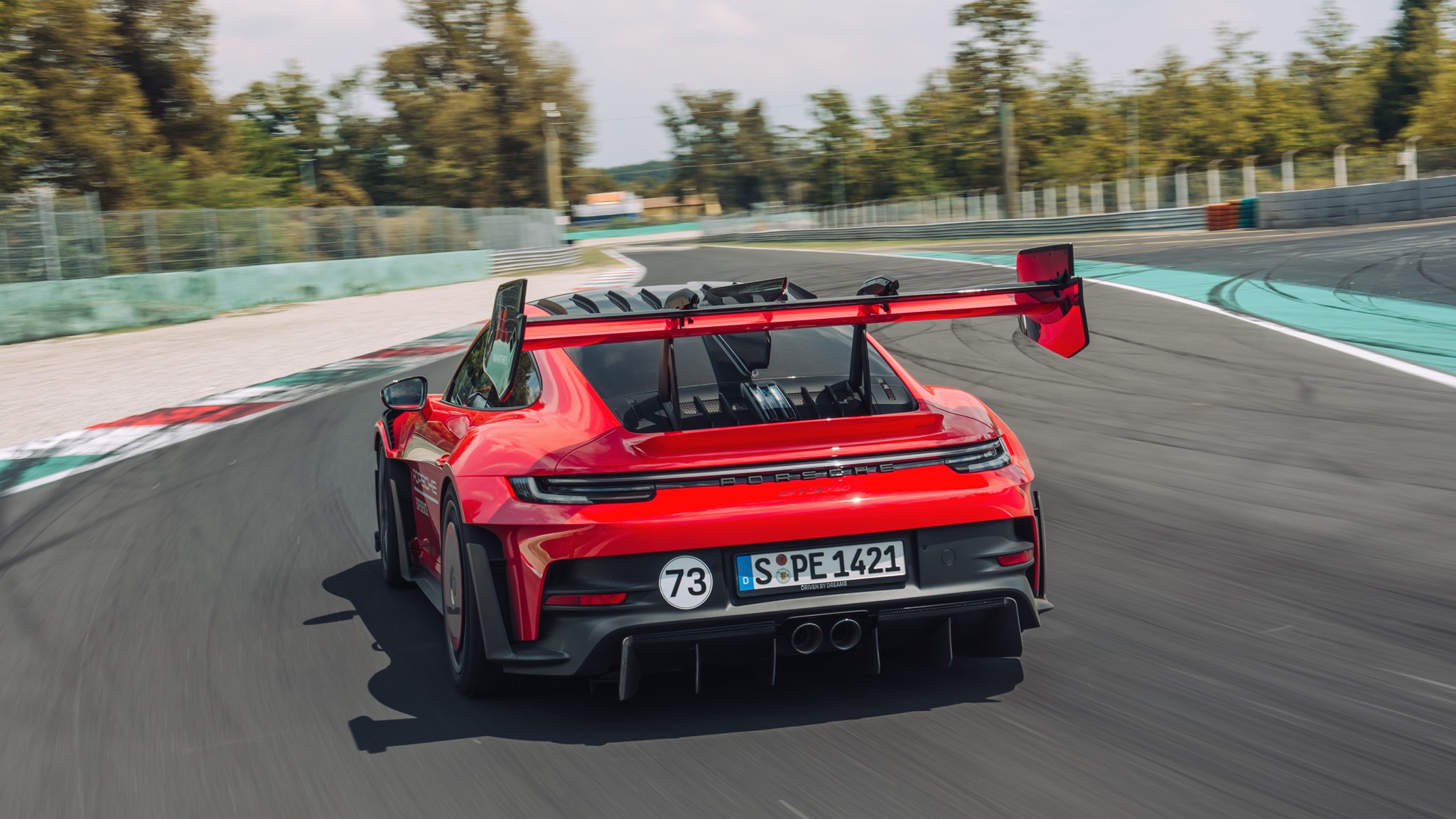
► Upgraded aero and suspension kit for the GT3 RS
► Over 1000kg of downforce at 177mph
► An additional £100k
Few among us would look at a Porsche 911 GT3 RS and think ‘yeah, I could do better’. It’s akin to viewing the Mona Lisa and critiquing the colour palette or picking apart the brushstrokes. But that’s exactly what Manthey Racing has done – with Stuttgart’s blessing, of course.
For the sum of £100,000, they’ll retrofit a full aero and suspension upgrade designed not just to improve outright pace, but also driveability. Does it work? We’ve got behind the wheel of the 911 GT3 RS both at the Goodwood Festival of Speed and Monza circuit in Italy to find out.
At a glance
Pros: Improved driveability, quicker lap times, looks outrageous
Cons: Big cash for a kit, no rear window
What’s new?
The Manthey kit can only be retrofitted to a 911 GT3 RS – it can’t be added on the production line – and includes upgrades to the brakes, an overhaul of the aerodynamics and new suspension. The drivetrain remains unchanged. If customers wish, they can get the suspension and brake changes without the aero, but not vice versa.
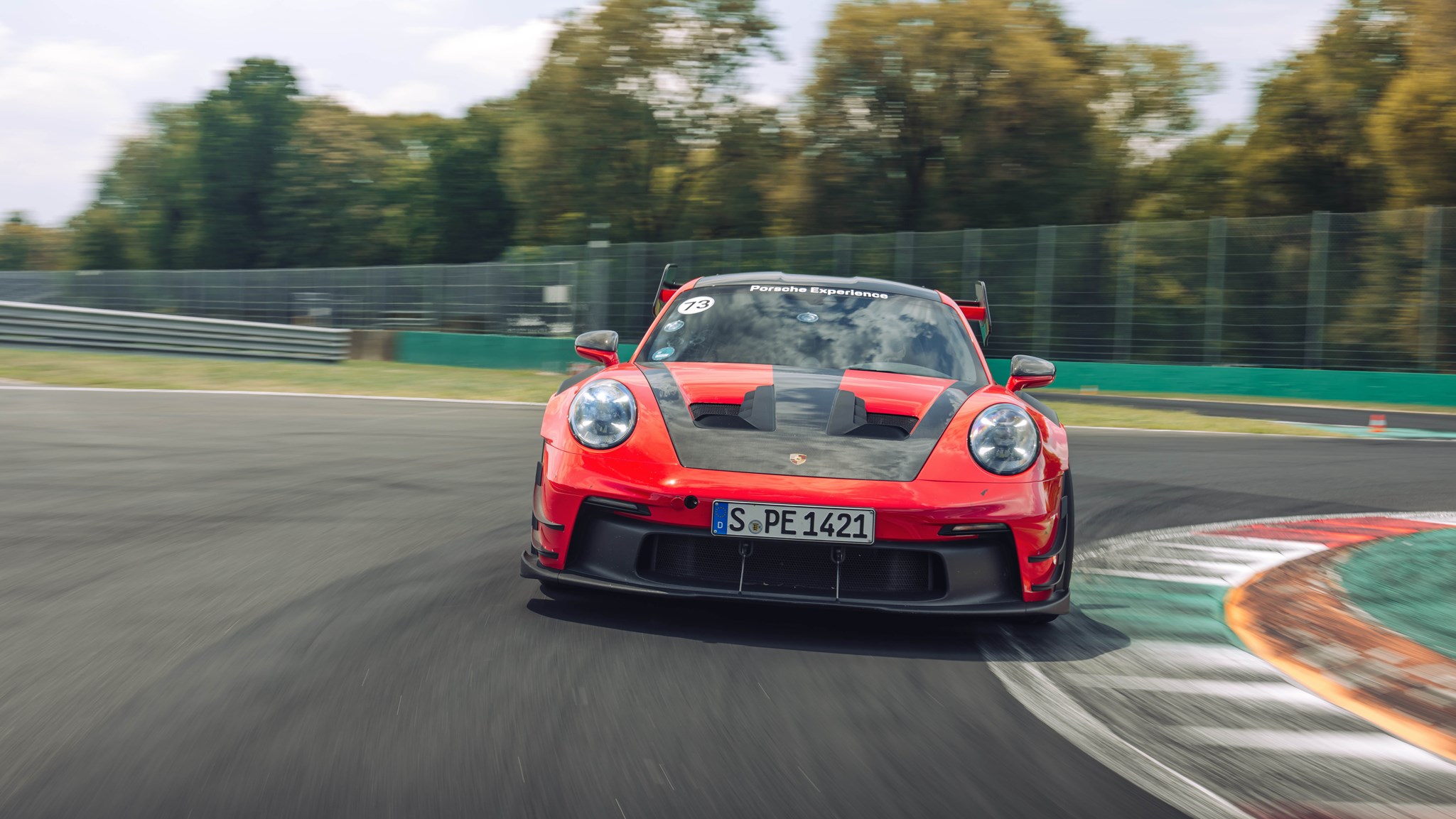
Headline figures (with the full kit) are an increase in downforce from 860kg at 177mph to over 1000kg at the same speed – all without a drag penalty. They’ve done this by adding carbon-fibre aero elements pretty much every on (and under) the car. At the front, there’s a deeper splitter with carbon fibre rods for additional support (such is the downforce it’s creating), as well as new dive planes on the bumper.
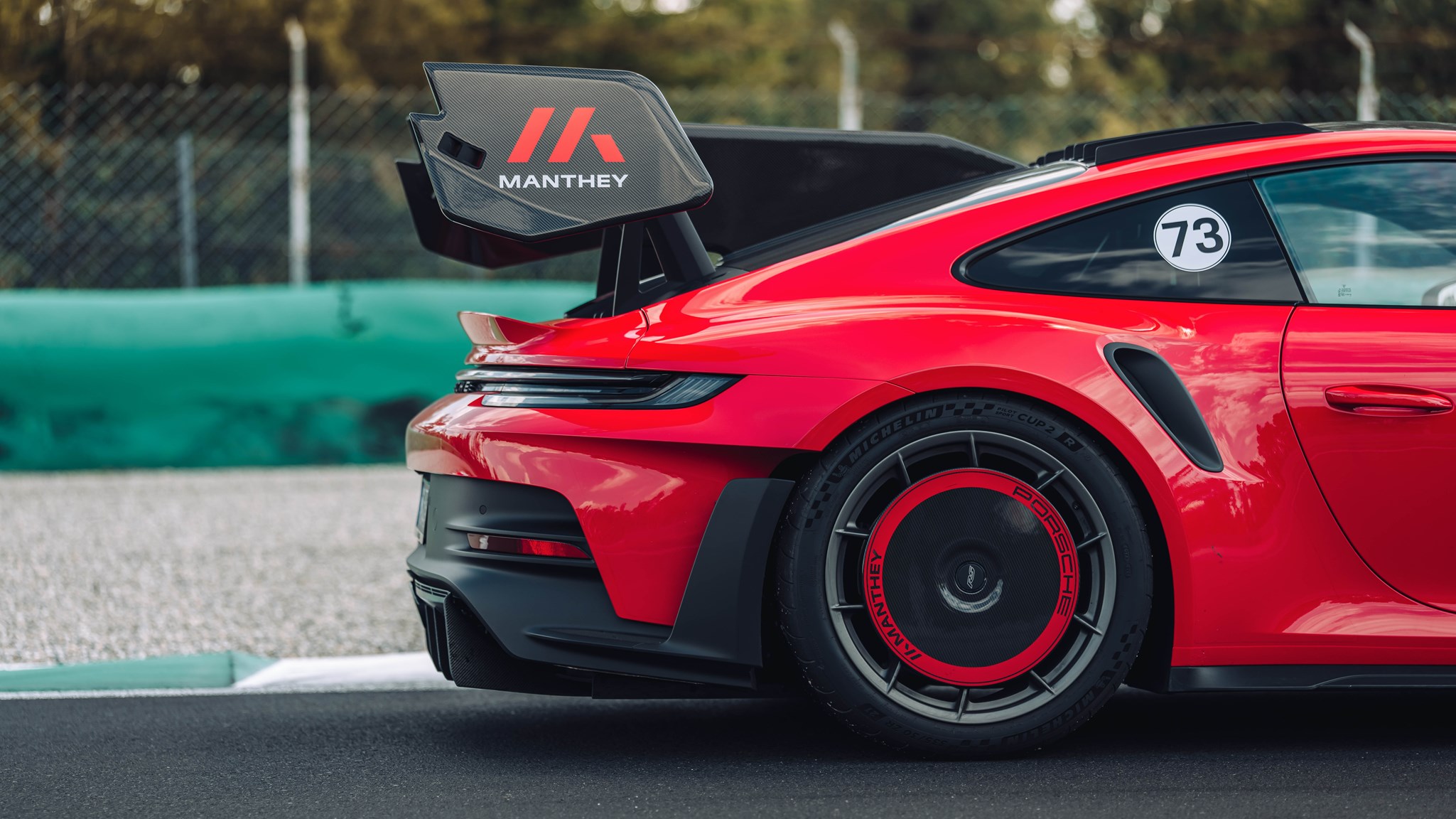
Moving further back, the number of roof fins has been increased from two to eight (a recommendation from Porsche given they were unable to do this on the standard car) and deflect hot air away from the intakes. What’s more, the rear wheels are covered by aero discs which help control turbulence (spinning wheels are always an aero issue), but don’t cover the entire rim so as not to cause overheating issues with the brakes.
Meanwhile, the massive carbon shark fin (inspired by the 963 Le Mans car) dominates the upper rear end and provides high-speed stability, while the active rear spoiler, endplates and diffuser control and deliver enhanced downforce.
Next up, suspension. Manthey usually fits passive dampers, but in order to stick with the configurability of the setup on the 911 GT3 RS, the 992 gets dual-valve semi-active coilovers by KW. This not only means that there’s individual control over bump and rebound (the standard car has single-valve dampers that have to take care of both), but also the GT3 RS now gets separate damper settings for Normal, Sport and Track. Before, Sport and Track had to share one.
One of the benefits of this is that the Normal drive mode now delivers the best ride comfort, whereas before Track mode with bump and rebound dialled back was superior. The new suspension also gets a new control unit that can take data points at 1,000 times a second, with an adjustment rate at 50 times a second. Finally, front and rear spring rates are up 30% and 15% respectively.
What are the specs?
The headline downforce figure is sensational, but otherwise the Manthey kit car is – on paper – the same as a regular GT3 RS. They don’t quote a weight, but it’s likely to be very similar to the standard car, while the 4.0-litre flat-six with 518bhp remains unchanged.
Around Monza – the track we’ve spent most time on with the car – Manthey estimates a 4-second improvement in lap time vs the 911 GT3 RS we were comparing it against. However, it’s worth noting that half of that is likely down to the tyres – the GT3 RS was on Michelin Pilot Sport Cup 2s with the Manthey on Cup 2 R rubber.
How does it drive?
Nobody is denying that £100,000 is a lot of money, but boy does it give you something extra from your 911 GT3 RS. For a benchmark, we got behind the wheel of the standard car first and it was predictably brilliant. Sound, responses and grip were all phenomenal, but there were times were it felt a little nervous and edgy, especially through the high-speed sections.
Contrast this to the Manthey and while it wasn’t night and day and any improvements have to be tempered with the tyres variance mentioned above, there’s an appreciable difference over the course of a lap.
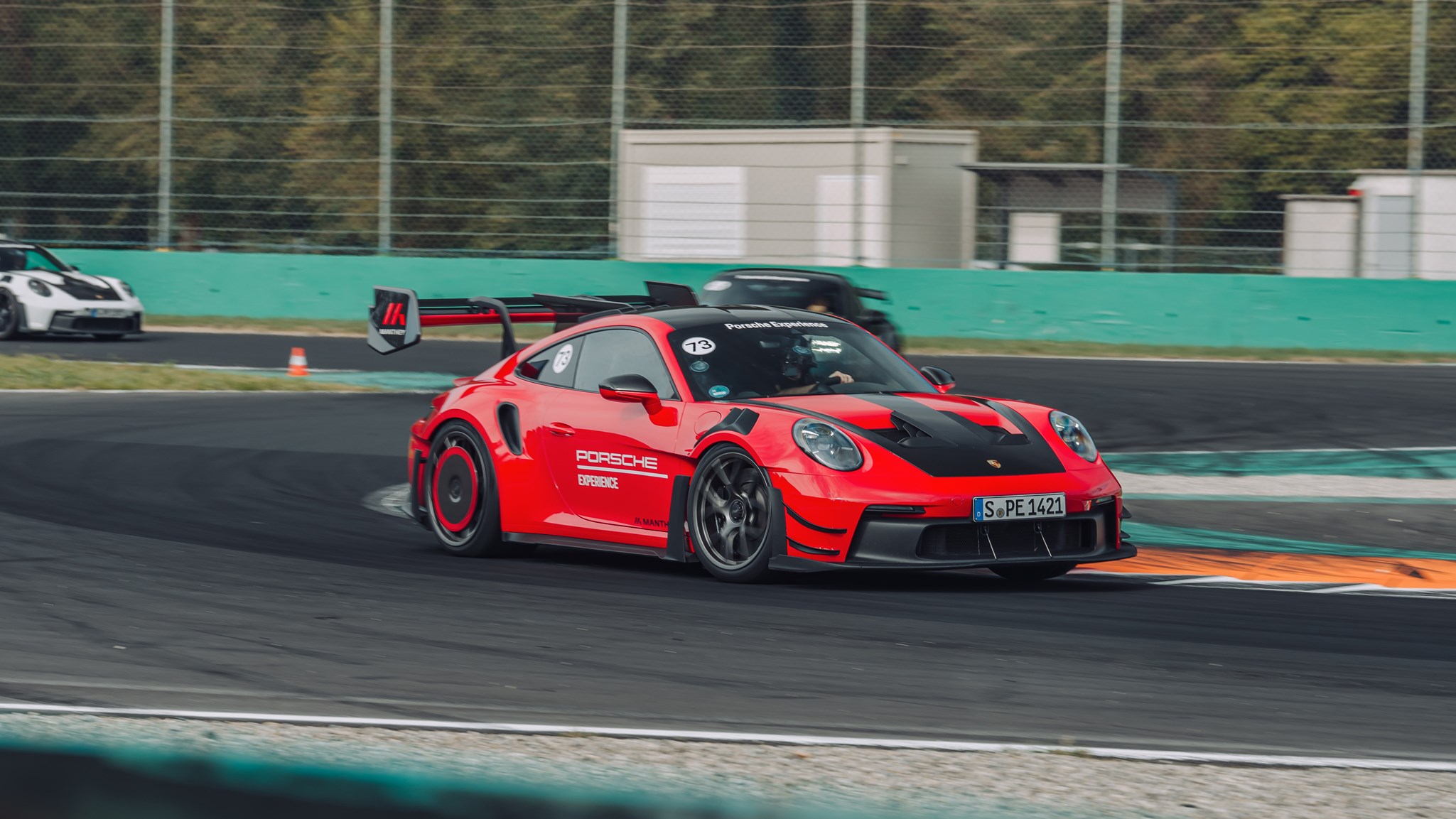
Coming into the 1st of Monza’s famous chicanes, the stability under braking (from around 160mph) was deeply impressive. Interestingly, the Manthey was fitted with steel brakes (most will surely go with carbon), but the ability to hit the pedal hard and keep the car settled does a lot to inspire confidence.
Coming into the second chicane after more heavy braking, there’s much more invitation to take the kerbs to save a bit of time or widen an exit. Doing so properly is hugely satisfying, but the downside (especially in road cars) is that unsettling the car may mean it takes longer to get the power down.
Not so in the Manthey – kerbs are brushed off like nothing, dual-valve dampers giving a more polished, assured sense of composure than the more basic variants on the standard car. At times, you do have to remind yourself that the Manthey is a road car such is its comfort on track.
Variante Ascari is another prime example of where the combination of aero and suspension upgrades work their magic. A fast left hander followed by another quick right and then left again onto the back straight, it’s a sequence of bends that demands speed and patience. Carry too much into the first part and you’ll be losing speed all the way down the back straight.
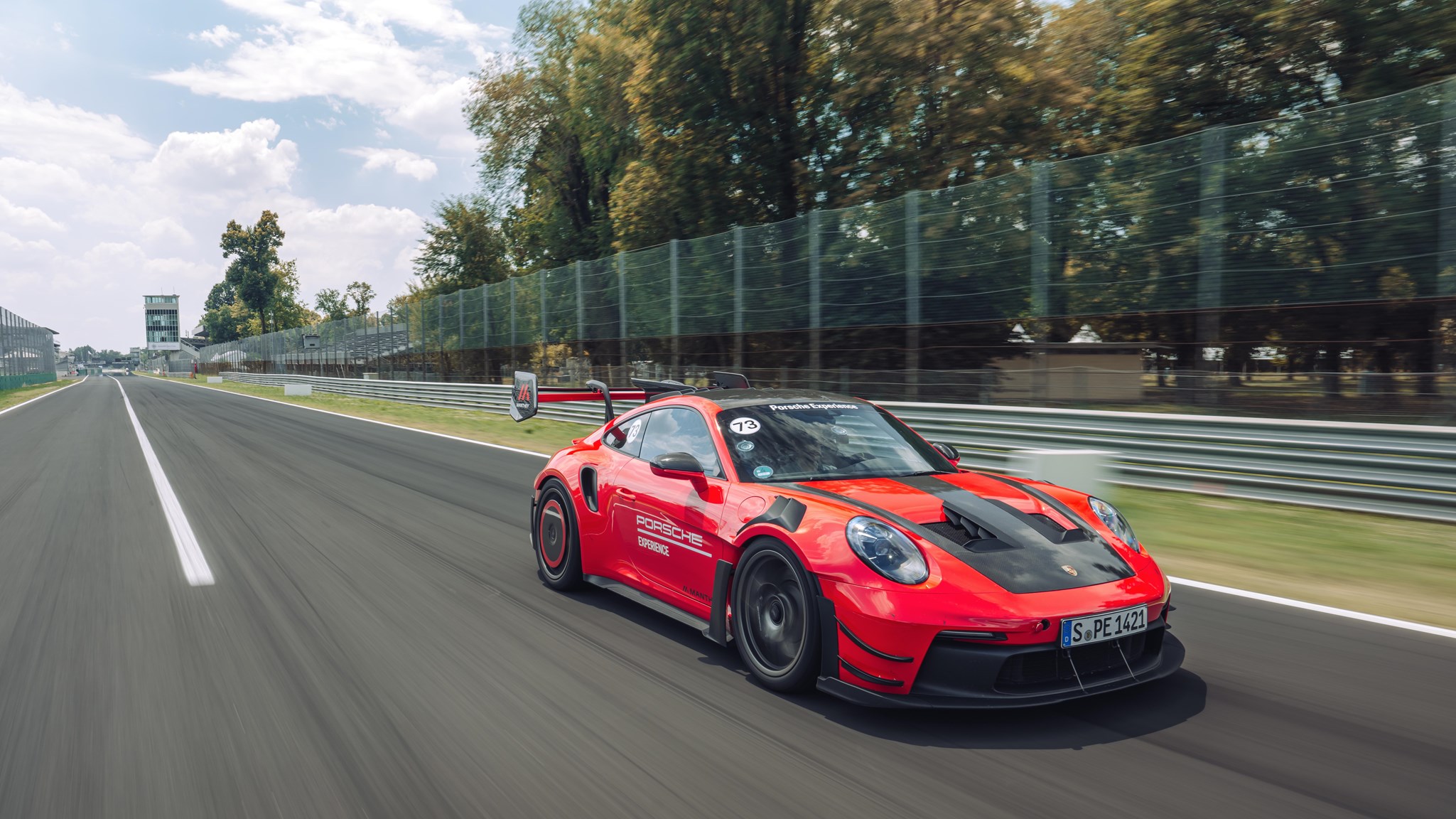
The Manthey is, once again, in its element. The increased aero clearly helps, but the feel of approachability is where most drivers will really appreciate the improvement. The feeling through the front end (where the aero balance has shifted forward a touch) is more confidence-inspiring than the regular GT3 RS and after just a few laps it’s clear that the rear is more than capable of keeping up.
Such a fast set of corners should be scary – daunting even. Yet the Manthey settles everything down so it feels a touch less frantic than the GT3 RS. It’s small improvements across the board, but the manner in which it imbues confidence is worth far more. The braided brake lines and upgraded pads are also worth a mention. The latter improves feel but the former really helps if you’re putting in the laps and stops the pedal from losing consistency with increasing levels of heat.
What’s it like inside?
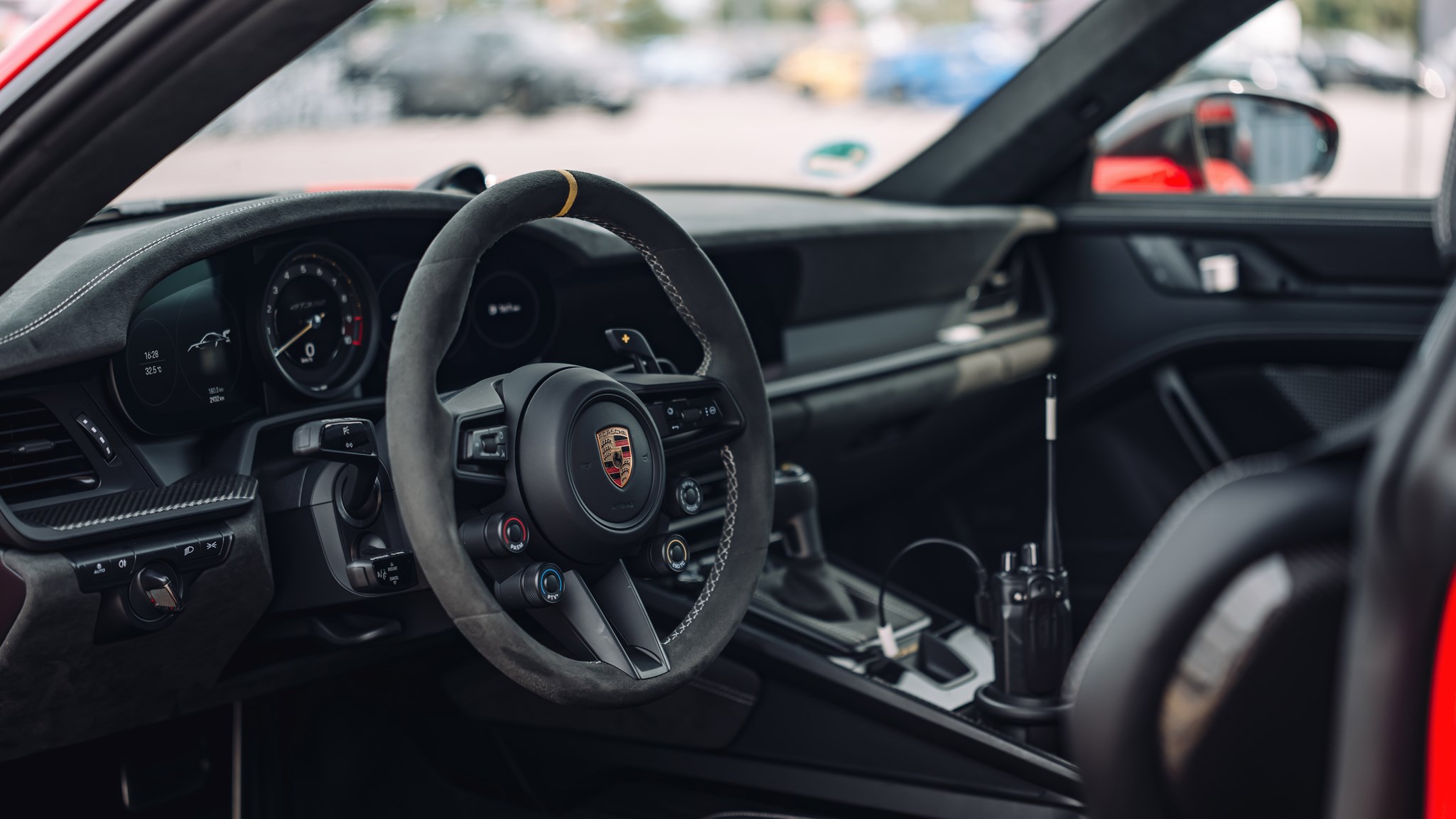
As standard, the 911 GT3 RS Manthey is virtually unchanged inside. You can get illuminated door sill guards in carbon fibre with Manthey lettering and a few other visual tweaks, but otherwise the biggest difference is the view out of the back. Owing to the carbon fibre rear panel (25% lighter than the existing window) the rearview mirror is rendered useless and visibility is significantly reduced. Not the end of the world, but potentially worth investigating a rear-view camera mirror.
Verdict
It’s easy to dismiss the Manthey kit as an unnecessary extravagance for those that can afford it and at £100k it matches the price of a base 911. However, while the improvements in outright pace are one thing, it’s the upgrade in driveability where the Manthey kit really shines. The changes imbue the driver with confidence and give them encouragement to extract more from the car’s outstanding limits. In short, it makes you feel like you’re getting more out of the GT3 RS and it’s hard to put a price on that.