► We drive Porsche’s third EV, the Cayenne Electric, in prototype guise
► The most powerful production Porsche yet
► On sale 2026
Porsche has made navigating the stormy seas of electrification look easier than most. Its first effort, the Taycan, looked, felt and drove like a big, four-door 911 – a smart, sports car-shaped sugar coating for the engine-less pill.
The electric Macan that followed had the tougher brief in many ways, being a replacement for an existing model rather than an expansion of the range (even if it’s sold alongside the existing, petrol-powered Macan in some markets). But Porsche pulled it off, delivering a compact SUV that delights urban commuters and backroad heroes alike.
And now the big one, the Cayenne. All-new and vitally important (the Cayenne accounts for a third of global sales, and possesses the fattest margin), Porsche can’t afford to drop the ball on this one. As a result, it’s taking a two-pronged approach. The new EV will be sold alongside an updated version of the current car, giving customers choice. It’s also throwing everything at the Cayenne Electric, dubbed E4 internally, including active suspension, cutting-edge battery and motor tech, and the most powerful platform in the Group.
Months ahead of its world premiere, we gatecrash a development drive in Spain to get behind the wheel of one of 2026’s most important new cars.
At a glance
Pros: Wild performance, sumptuous refinement, next-gen tech, more space, serious off-road ability
Cons: Bigger, heavier and more expensive than the current car (though it’s also way faster)
What’s new?
The car. Put it to Cayenne vice president Michael Schätzle that the platform’s the same as the Macan’s and he’ll immediately strike you from his Christmas card list.
‘No. We have a new platform, PPE41C, owned by Porsche. It’s our platform and if someone in the Group wants to use it, they have to buy it from Porsche. We started with the joint platform, but the changes are so big that this is now our own platform, with new motors and a new battery. At the moment it’s the most powerful platform in the Group.
‘We have five different options in the new Cayenne; two different motors at the front – motors shared with the Macan but with more power – and three motor options on the rear. The base motor on the rear is also shared with the Macan. But then for the S and the Turbo we have a completely new motor with oil-cooled stators – very efficient, very light, very powerful. And we have this completely new battery, much bigger than in the Macan [113kWh] and with double-sided cooling. It’s very special. We have so much power in the car [towing capacity is a hefty 3500kg].’
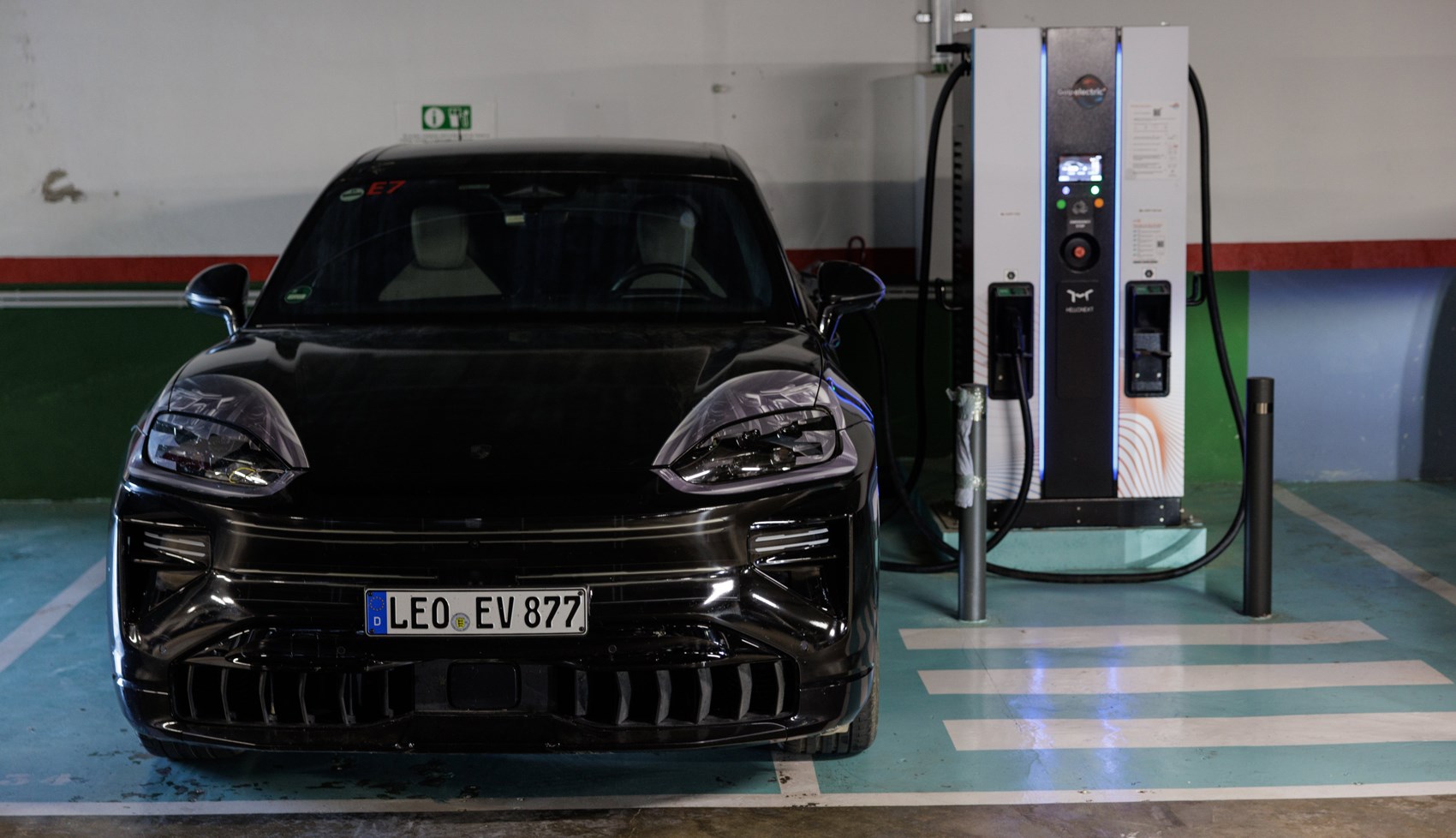
All of which serves to underline just how seriously Porsche is taking the new Cayenne. The pressure on Schätzle’s broad shoulders is considerable, but so too, clearly, is his R&D budget.
A bigger car in every dimension than the current car, it offers a lower driving position, loads of interior space, a far bigger boot, a 90-litre frunk and more legroom in the back. It’s also being cut zero slack when it comes to bettering the current car in every Cayenne role, from off-road to high-speed cruising.
Because life’s too short for range anxiety, hypermiling and turning the air-con down so low your shirt turns see-through, battery capacity is 113kWh gross, for a headline range figure of 373 miles. Enjoy the Turbo’s muscle and you’ll be looking at 2.4/2.5 miles per kWh. Go steady in the less powerful variants and you’ll likely get more like 3.5 miles per kWh, making that 373-mile range look almost feasible.
What are the specs?
Power is… plentiful. Porsche is saying ‘more than 1000PS/986bhp’ for the Turbo, but it’s also claiming it’s the most powerful production Porsche yet, so the truth is likely north of the Taycan GT’s 1020bhp. That’s a hefty margin of superiority over even the fruitiest current Cayenne variants, such as the 650bhp Turbo GT and the Turbo E-Hybrid.
Based on the existing Cayenne’s £77k starting price, the Cayenne Electric is likely to start at around £85k. Given the gulf in performance between the low-powered versions (less than 500bhp but still under 5.0sec 0-62mph) and the 1000bhp-plus Turbo, flagship Cayennes may eclipse even the £161k Taycan Turbo S.
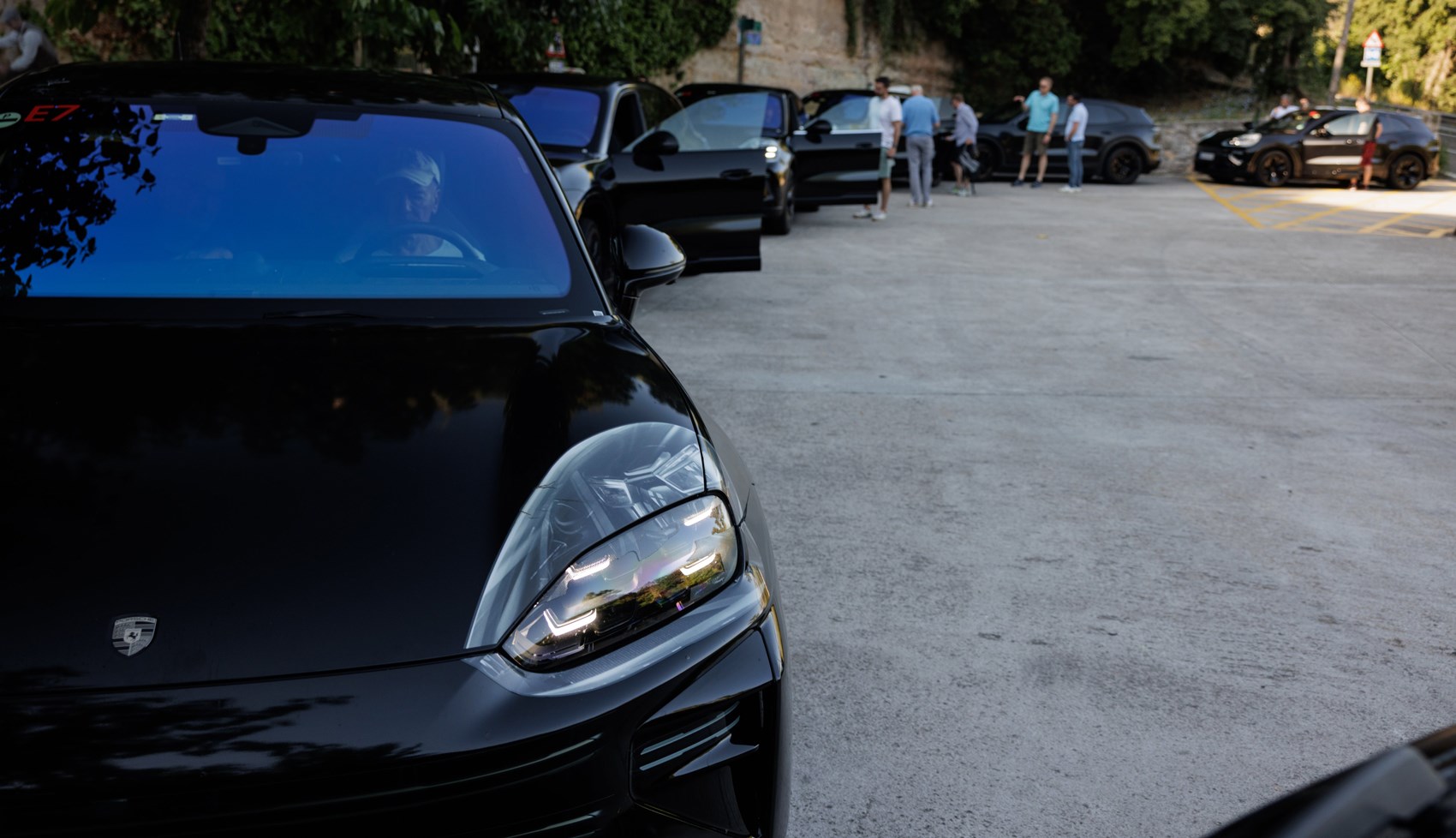
Weight is around 2550kg to 2650kg depending on spec, with a loaded Turbo coming in at around 2700kg. The chassis uses every trick in the book to feel lighter and nimbler than it is, with optional Active Ride Control (as seen on the Panamera and second-gen Taycan), rear-wheel steering and ceramic brakes.
How does it drive?
Porsche’s SUVs have long managed to feel more like Porsches than SUVs on the move, with sweetly judged steering, wicked turns of speed and enough body control, grip and brakes to have a good time. The Cayenne Electric is no different.
I kick off with the base car. We don’t know its precise numbers but circa 2500kg, between 450 and 500bhp and 0-62mph in less than five seconds give you a steer. We’re on narrow, ultra-twisty Spanish mountain roads – by rights a daunting place in which to try to get to know a car this big and this fast. But, helped perhaps by the relative simplicity of this car’s spec (no active ride, no rear-steer and no ceramics (they’re only available on cars with 21- and 22-inch wheels), I feel at ease right away. You feel the mass moving at times but it’s all very composed and benign, the nose tucking in with ease even when it feels like understeer is inevitable.
At no point do I want for more of anything, really, and yet that’s precisely what the Turbo delivers – and to a degree that calls to mind the best iterations of the current car, including the addictive GTS. Just with a boatload more performance.
Up and down a quite breathtaking stretch of deserted hill road the Cayenne Electric Turbo is absolutely monstrous, luring me deeper and deeper into a world of stupendous acceleration, outrageous agility and no little driving enjoyment. As ever, it’s that perfectly weighted and laudably slack-free steering that sets the tone – the keystone around which everything else hangs. It gives you confidence right off the bat and, together with the unintimidating power delivery, works to put you at ease with the kind of shove you used to have to be an F1 driver to experience. The powertrain doesn’t so much work to create speed as just kind of hand it to you fully formed the very moment you ask for it.
Schätzle: ‘We have three levels of power in the car: a certain amount on the pedal, more on the push-to-pass button, and then another little bit with launch control. We had big discussions around how much power we put onto the pedal so that it’s usable to the customer – so that it’s not too much power for normal driving. We have a good compromise, I think.’
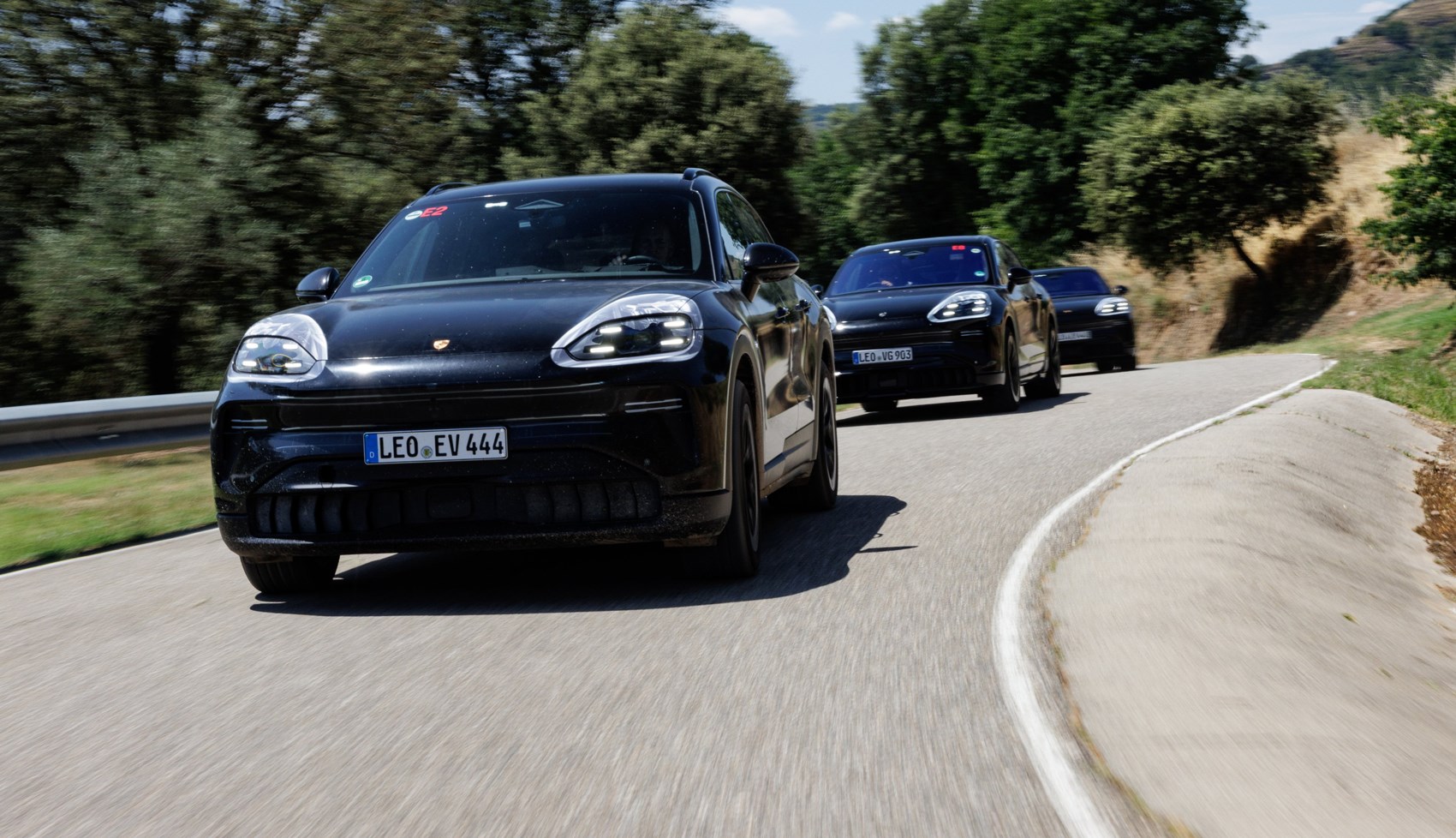
And when you’re not flying about the place, the new Cayenne’s a monumentally refined big-distance tool, like a 1000bhp pile of bubblewrap. Bumps, vibrations, wind and road noise – none are present in anything beyond trace quantities, the comfort luxurious but without the squidgy decadence that word can imply. The ride quality is sublime in every variant but hits a new high in the cars equipped with Active Ride Control. Even ridged, cracked concrete is smothered, and regardless of setting. At one point, in a fit of investigative journalism, I even drive a broken stretch of mountain road in Track mode without so much as a tremor.
Roll-on performance is predictably awesome. The numbers at this stage are sketchy but for the Turbo it’s ‘much less’ than 3.0sec 0-62mph and 0-124mph in less than 10. At one point the lane between us and our motorway exit is nose-to-tail with slow-rolling trucks. In an instant the Turbo leapfrogs the entire convoy, its fluency with huge changes in speed, up and down, wholly convincing.
‘I guess in the UK you don’t have the possibility to drive very fast on your motorways but this car is really impressive on the autobahn,’ says Schätzle. ‘With the longer wheelbase it is so stable going through the fast corners and, more than the absolute speed, it’s how the car accelerates from say 120mph to 150mph that is really crazy.’
He’s not wrong. So, is this now Porsche’s electric flagship? I catch Schätzle grinning as he answers. ‘There’s quite a nice competition between Kevin [Giek, Taycan product line VP] and us for the faster car – it’s quite funny. Sometimes he surprises us with new stuff, and vice-versa. There’s internal competition. He’s improving the acceleration of his car all the time – I could kill him…’
Interestingly, the Cayenne eschews the Taycan’s two-speed rear gearbox. ‘We save weight without it, and we don’t need it because the motors are so powerful. We’re slipping the tyres up to 40mph [without a lower ratio]… We don’t need any more acceleration than that.’

Schätzle is particularly proud of the active ride system, though admits it won’t be an auto-include, so good is the passive car. ‘On the non-active car we have air suspension, adaptive damping on both compression and rebound and we have conventional roll bars. But the active system can move the wheels to follow the road surface – it’s completely different.’
For drive system director Denis Rancak, the active advantage is clear. ‘It’s the benchmark,’ he explains. ‘I’ve driven the car more than 10,000 kilometers, and with the active system it’s like the tyres are glued to the road. Of course in this car that is crazy because if the tyre never loses contact then you’re always able to use the massive torque to accelerate in the right direction.’
Pushed to choose, I’d go with rear-wheel steering and without active ride, for the more natural, confidence-inspiring body movements of mechanical roll bars and the modest cost and weight savings. I also find myself wanting for a sportier brake pedal at times, so capable are the faster variants. As it is, the pedal’s intuitive, with plenty of stroke and power. It’s just that there’s so much talent in the chassis and so much sheer performance that when you’re really in the groove I’d love less travel, a firmer pedal and a more direct feel, but concede it likely wouldn’t be the right call.
‘You have to find the best compromise between having a brake pedal that is very direct, like in a sports car, but that’s also not confusing or uncomfortable in everyday use,’ explains Rancak. ‘It is a compromise at the end of the day. It wouldn’t be a problem to make the braking feeling like that of a sports car. But most of the customers would not appreciate it.’
What’s it like inside?
Spacious – but largely under wraps when we drove it. Porsche is yet to reveal much detail, but suffice to say the cabin forgoes giant screens or cinema gimmicks in favour of level-headed usability. The neat, curved infotainment screen, which follows the contours of the dash, sweeping from the vertical to a flush fit with the centre tunnel, is uncluttered and crisply responsive. And for those who wish to turn off some of the more intrusive assists and warnings, doing so is the work of moments. You can do the same with the V8-esque sport soundtrack, too, though you might find you like it.
‘There were a lot of people, even on the board, who were not convinced,’ says Schätzle. ‘But when it was ready and they drove the car, everybody preferred it. And if you don’t like it you can switch it off in every mode.’
When we see the finished production car it’ll feature an optional panoramic roof with sunshine control, electric rear seats, mood modes, ambient lighting and, for those cold winter mornings, surface heating beyond the seats themselves.
Before you buy
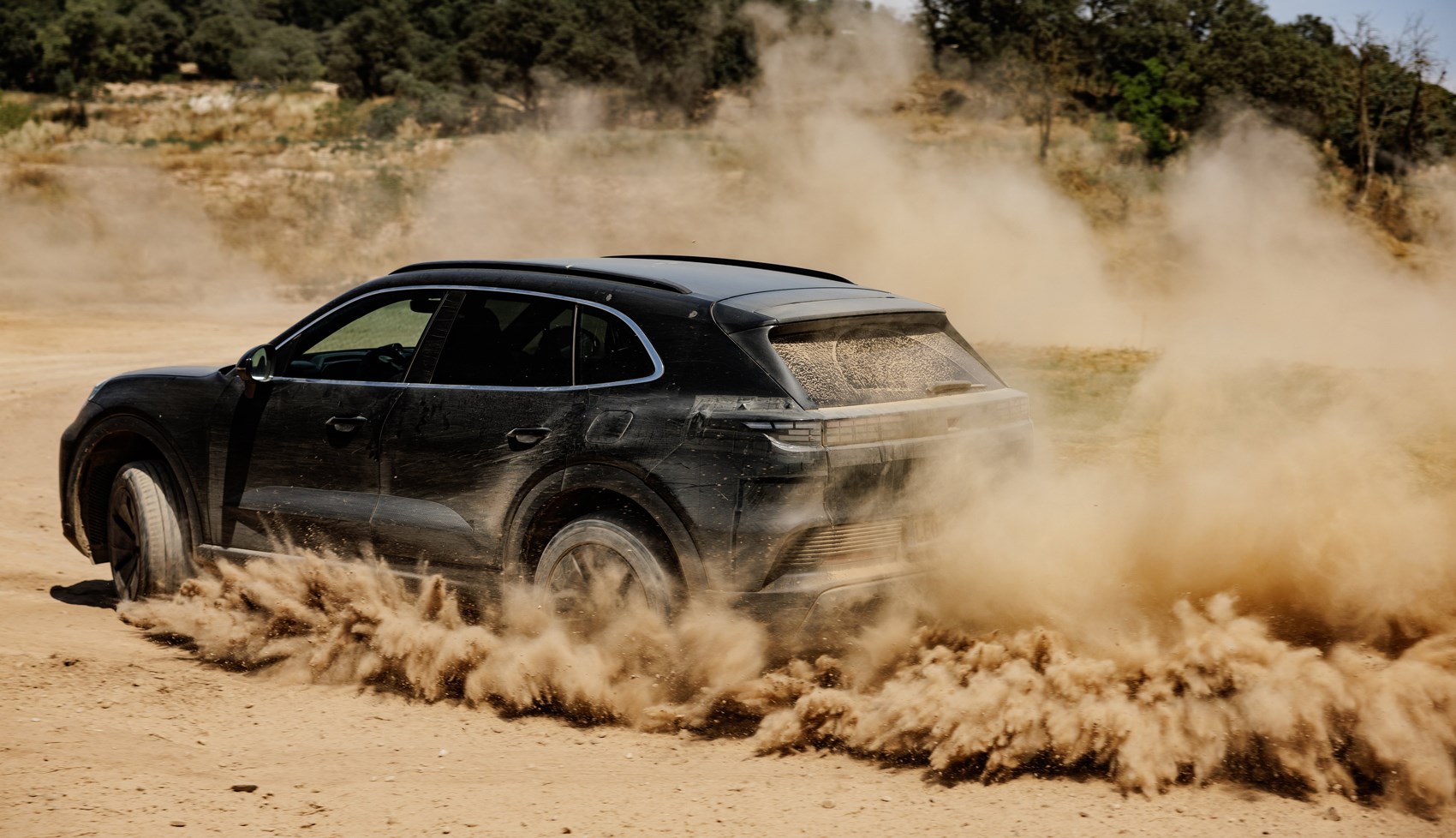
The electric Range Rover will arrive within a few months of the Cayenne, offering buyers in this rarefied part of the market two very different ways to skin the electric SUV cat. We’ve driven the Cayenne Electric off-road and it’s unreasonably good in an environment most owners will never visit, and comfortably superior to the existing Cayenne when the going gets technical.
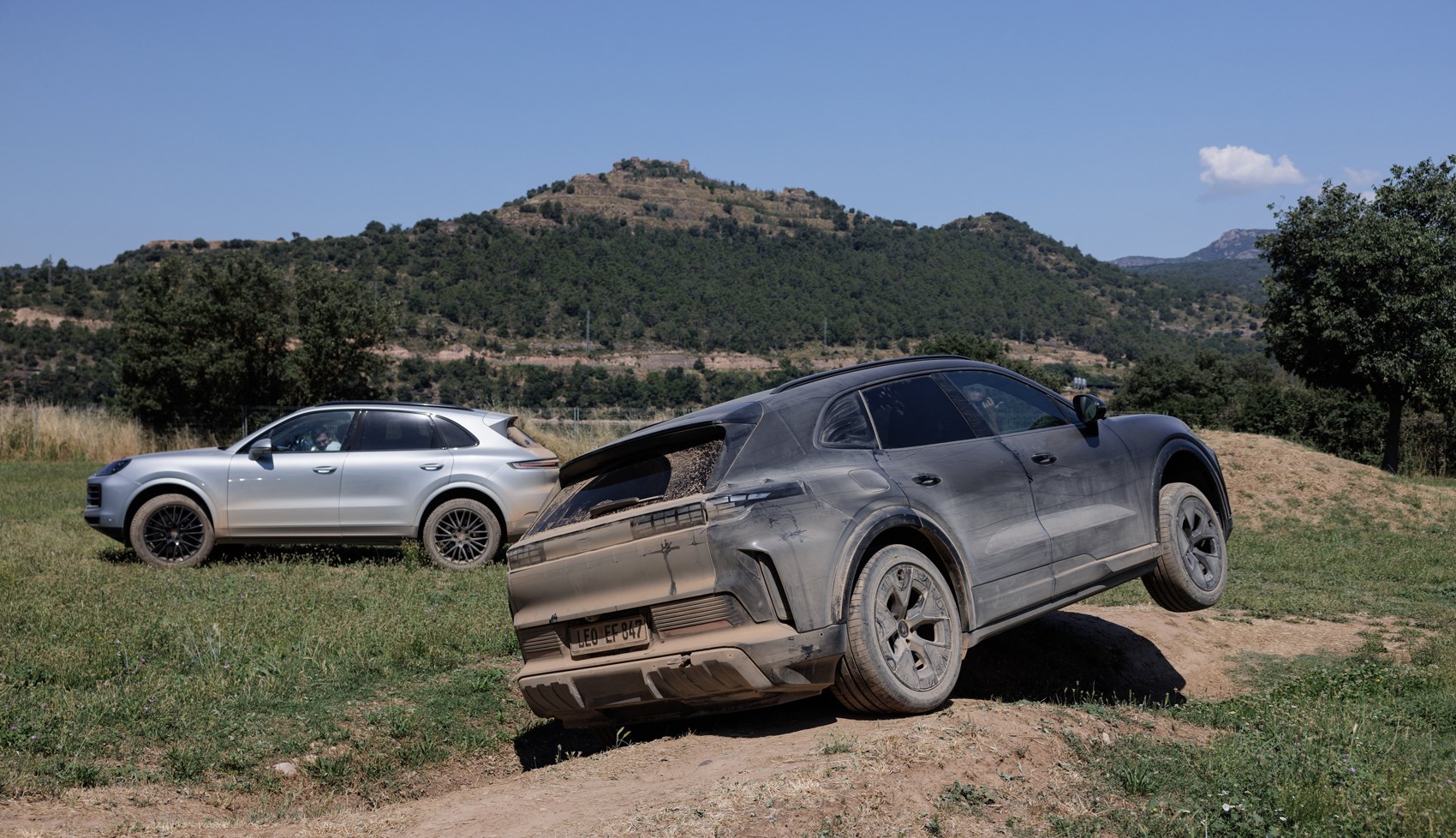
Will the engine-less Range Rover be better still? Impossible to say at this stage, but the Porsche will undoubtedly be the more sporting option. With hundreds more horsepower, more direct steering and iron-fisted body control in active spec, this will be the one for keener drivers. ‘Twas ever thus.
Verdict: Porsche Cayenne prototype
It may not be quite finished but already the Cayenne is shaping up to be one of the most compelling, capable and comfortable SUVs we’ve ever driven. Notice I didn’t say ‘EVs we’ve ever driven’? By turns sumptuously comfortable and sensationally good driven hard, it’s also spacious, practical and quick to charge.
Thanks to PPE’s 800-volt architecture and the Cayenne’s advanced battery-cooling technology (the unit cools its pouch-type cells from above and below; other Porsche EVs cool only one side), it offers a 400kW peak charging rate, for theoretical (we didn’t get a chance to try it) 10-80 per cent charges in just 16 minutes if you can find an appropriately punchy charger. The car can also regen at up to 600kW under deceleration, a wickedly high figure that’s way above even the second-gen Taycan (400kW) – further evidence of the Cayenne Electric’s robust thermal stability.
Stay tuned for more.