► New 911 Turbo S from passenger seat
► Ride along with Jörg Bergmeister at Weissach HQ
► Hybrid power for the first time on a Turbo S
Porsche hasn’t held back when it comes to its second take on the 992 generation of the Turbo S. The changes might be subtle on the outside, but underneath the skin there’s a whole new powertrain, suspension system, aero package and upgrades to the brakes and tyres.
This has all culminated in a frankly astonishing Nürburgring time of 7:03:92 – approximately 14 seconds faster than the 992.1 Turbo S. For context, the improvement from 991.2 to 992.1 was only around a second, so to make such huge gains requires major changes.
We’ve covered those in depth in our first official pics story of the 992.2 Turbo S, but here we’re going to talk about what it’s like to ride in the new car with one of the fastest 911 drivers on planet earth. Keep reading for the full report.
At a glance
Pros: Faster and more driveable than before, yet still less hardcore than a GT
Cons: T-Hybrid system adds an extra 85kg
What’s new?
As mentioned above, we cover a lot of the new stuff in our first official pics story but here’s the headlines. Gone is the twin-turbo 3.7-litre straight-six of the 992.1 911 Turbo S and in its place comes a 3.6-litre twin-eTurbo T-Hybrid unit. You’ll recognise the hybrid tech – it was debuted in the 992.2 GTS – and indeed the tiny 1.9kWh battery and electric motor within the eight-speed PDK ‘box has been carried over.
However, this time there’s two smaller eTurbos rather than one larger unit – thus giving an even higher peak eTurbo RPM and improved performance as a result. In fact, the hybrid system alone delivers 81bhp and 139lb ft of torque.
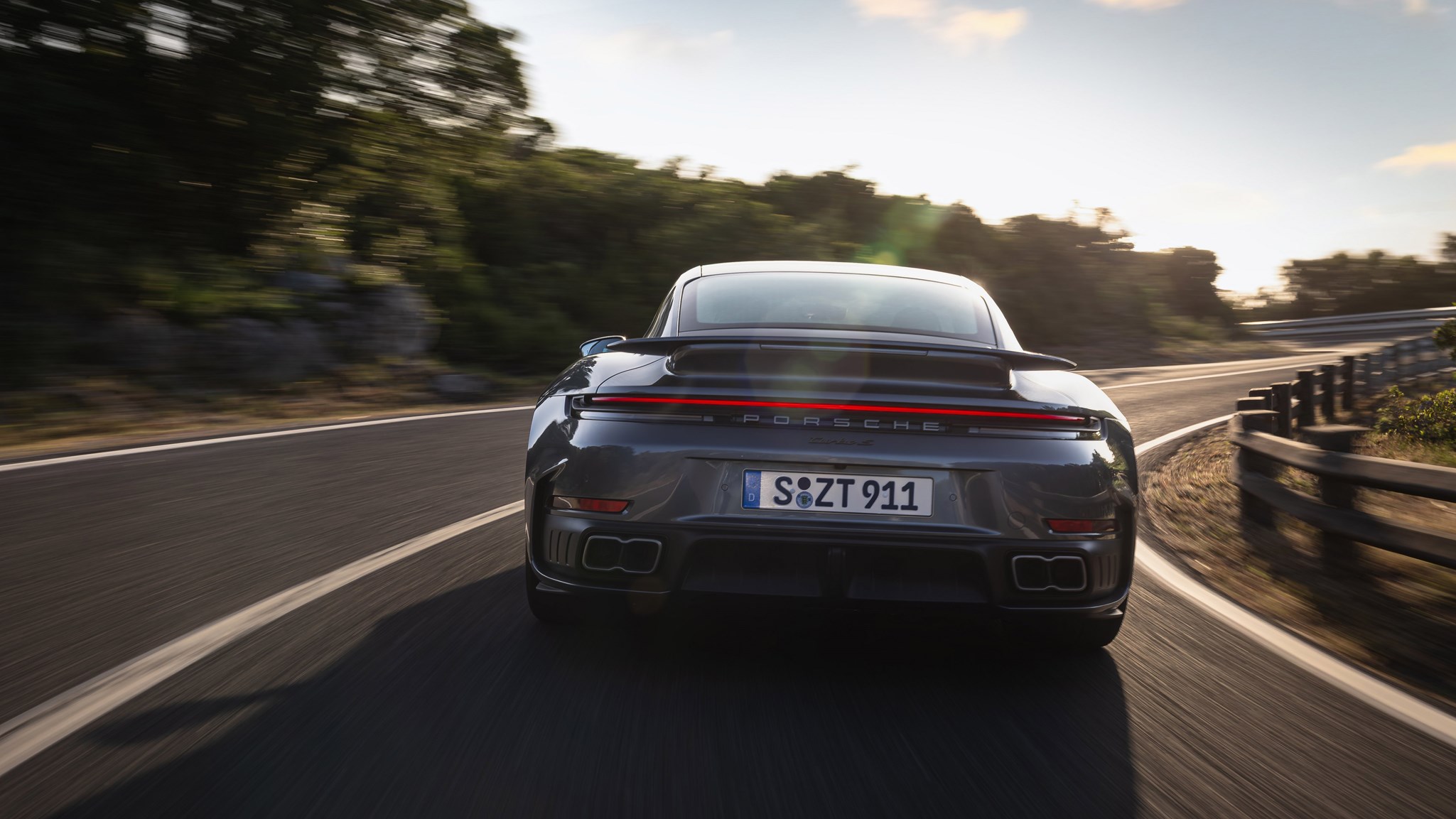
Having the 400V architecture has also opened the doors to electro-hydraulic Porsche Dynamic Chassis Control (ePDCC) whereby faster responses from the suspension mean better control and outright stability. Bigger brakes at the rear (and new pads all-round) plus much-improved tyre compounds (also wider at the rear) further boost handling. Active aero hardware has also been upgraded with new vertical slats and a diffusor at the front end (in addition to the front and rear spoilers).
All of this must be offset with the inevitable weight gain, however. Despite avoiding a much heavier plug-in hybrid system, the T-Hybrid unit aboard the Turbo S still bumps the total DIN kerb weight up to 1,725kg – 85kg more than its predecessor.
What are the specs?
The 911 Turbo S makes 701bhp and 590lb ft of torque, meaning 0-62mph in just 2.5 seconds and a top speed of 200mph. What’s perhaps more impressive compared with its predecessor, however, is the broader spread of peak power and torque. The former is from 6,500-7,000rpm while the latter ranges across 2,300-6,000rpm – all of this Porsche credits to the new T-Hybrid tech.
What’s it like inside?
Really very similar to the 992.1 911 Turbo S. Changes are minimal but the new dark Turbonite colour (exclusive to Turbo variants) can be found in the door panels, steering wheel, dashboard, centre console surrounds, decorative stitching, Sport Chrono stopwatch and instrument cluster.
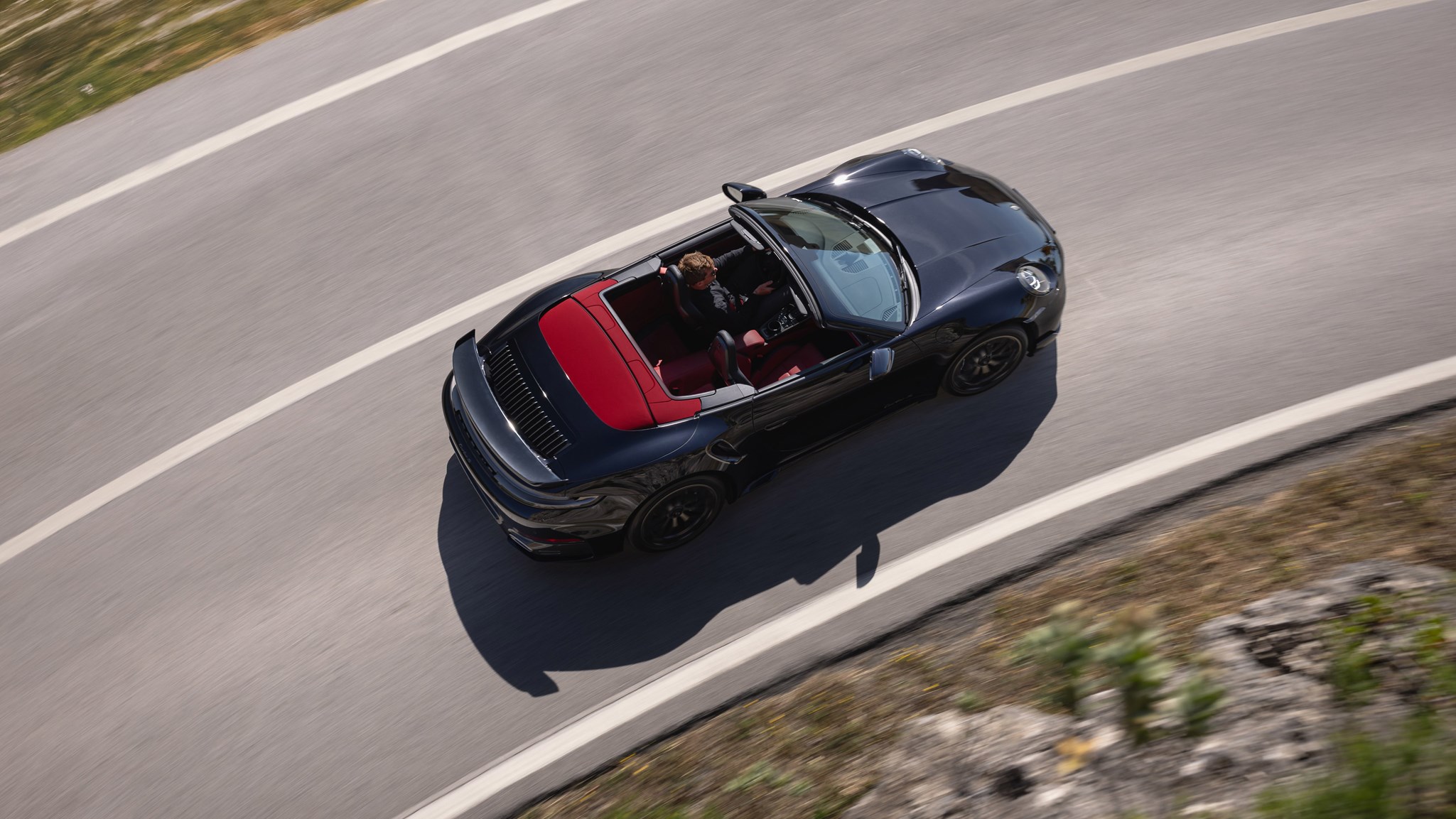
As standard, the Turbo S is offered with two seats yet a rear-bench (comprising of a further two seats) can be added as a no-cost option.
What’s it like to ride in?
First things first. The location of our passenger ride is Weissach’s own test track – a mix of fast, wide corners and tight, B-road-style bends – and our driver is Jörg Bergmeister. He knows his way around a 911 (he won five American Le Mans Series championships) and it takes a second or two to get used to his sheer confidence in the car – and his own ability.
Launch control from the pits is stomach turning. Like, really something else. Jörg doesn’t think we got the cleanest launch but it doesn’t feel like much over 2 seconds let alone 2.5. From there it’s clear that, in addition to the extra punch, the ability to sustain that surge for longer is a game-changer.
Through the first corner – a long, wide right-hander – Jörg is playing with the balance of the car on the throttle. It’s something he says he wouldn’t be able to do anywhere near as well in the old car, but now it responds much more like a naturally aspirated engine. It’s more predictable, more responsive and just a better tool to get from A to B quickly.
Thing is, Porsche knows that very few customers will take the Turbo S on track. It’s predominantly a road-based sports car with GT credentials and as such the increase in performance and changed in suspension setup hasn’t simply transformed the Turbo S into a GT3.
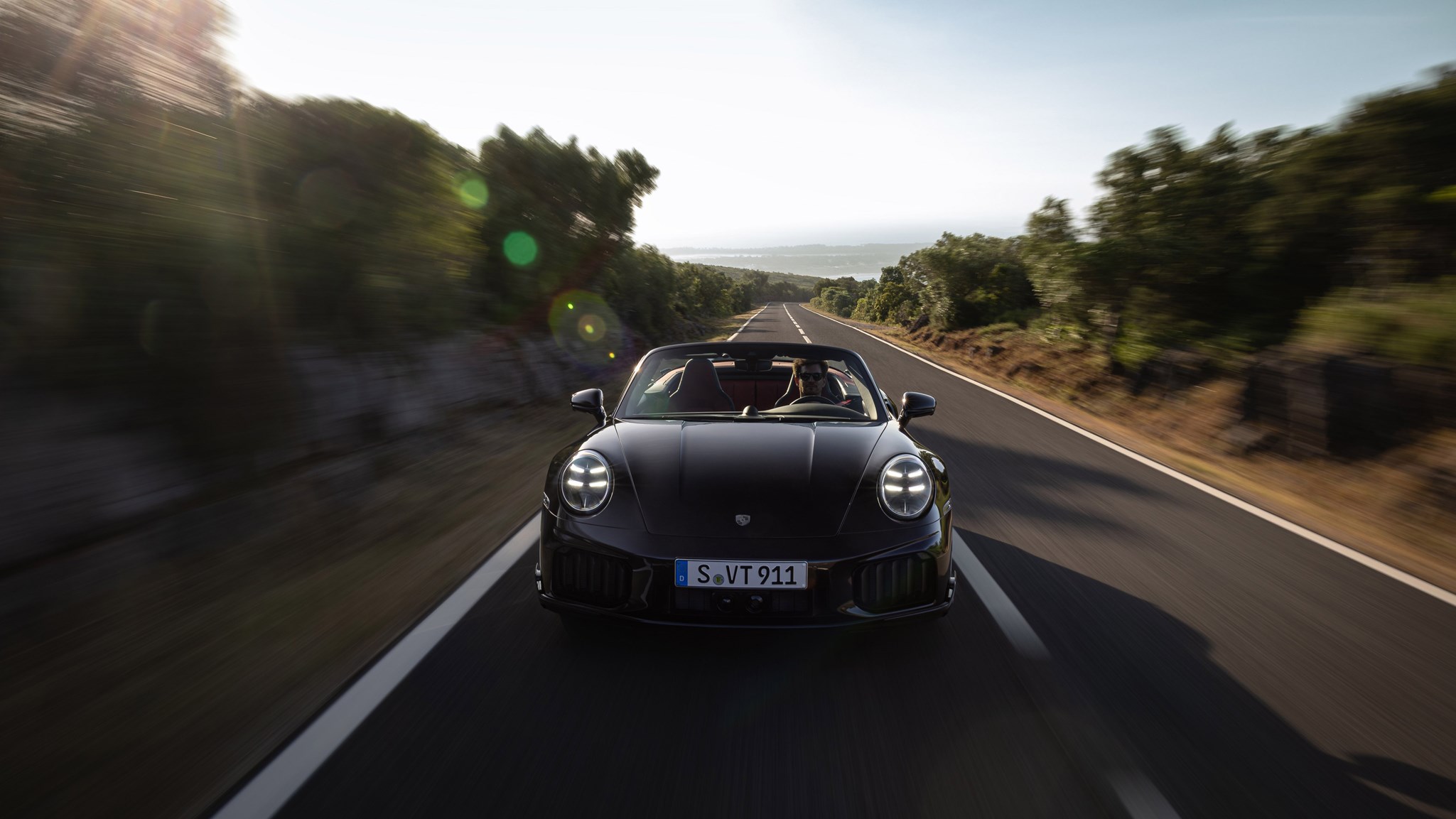
It still feels notably softer and more compliant. There’s small amounts of roll and direction changes – in Jörg’s expert hands – are tight and controlled. It certainly doesn’t feel like 1.8 tonnes with both of us onboard.
But there’s none of the raw feel of the road and every lump and bump its surface has to offer like you’d experience in the GT3. It’s still quintessentially Turbo – fast, devastatingly capable, but always keeping the driver an arm’s length from the harsh forces that are going through the car during heavy cornering.
The good news, then, is that the extra 14 seconds of time at the Nürburgring does not appear, on the surface at least, to have cost any comfort or refinement. Just before we come into the pits, there’s a quick demonstration of the braking. Jörg knows what he’s doing in order to get the best out of them, but the stopping power is ferocious.
Also noteworthy is the way the car tackles a suddenly banked section of the track. For all the world it looks like we’re going to scuff the nose, but the Turbo S takes the sudden surface change in its stride. 2.4 degrees of increased ramp angle on the 992.2 is a small but important detail easy to overlook.
Early verdict
The difference from 992.1 to 992.2 Turbo S is startling. It appears that in transitioning to hybrid Porsche perhaps unlocked more performance than even it expected to. The result is – on first impressions – everything that a Turbo S should be. Devastatingly fast, but also easy to live with and drive everyday. We’ll find out for sure in the coming months, but for now the signs are extremely promising.
The 911 Turbo S is open for orders with first deliveries targeted before the end of 2025. The Coupe version is priced from £199,100 while the Cabriolet is set to come in at £209,100. A Turbo version has not been announced, but Porsche has been careful not to rule it out.