► 992.1 Turbo S donor car
► 907bhp, nearly a tonne of downforce, full carbon body
► Incredible attention to detail and polish
There’s a good chance you’re already familiar with the RML GT Hypercar, just not under that name. That’s because it has gone by the RML P39 moniker up until now, a nod to this being the firm’s 39th complete project car – not that you’d know about most of the other 38.
That’s because RML carries out plenty of ‘white label’ engineering for various OEM across the world, and not just for the best sports cars. While this British company is responsible for all sorts of clever EV, engine and chassis tech, in many cases it can’t claim credit for its ingenuity. Think of the GT Hypercar (GTH) and Ferrari-based Short Wheelbase as rolling adverts for RML’s abilities.
Previous projects include racing cars such as the Nissan R90CK, Saleen S7 and BTCC-winning Nissan Primeras, to road and track cars for various OEMs. That includes the record breaking Nio EP9 that Georg Kacher drove in 2022, hybrid batteries for the Czinger 21C and – as rumour has it – even the McLaren Senna GT-R.
However, we’re keeping firmly to the road for a few hours behind the wheel as that’s where RML thinks the GTH will spend 75% of its time. Let’s find out if this 907bhp monster really can be used everyday, even when the roads look more like rivers. If you’re curious about how we test at CAR, have a look at our explainer page.
Should you buy one? In a heartbeat. RML takes the already incredibly capable 992.1 Turbo S and turns up the wick without losing the feel or drivability of the donor car. Given RML’s record with track cars, it should be at least as impressive on the circuit, too.
At a glance
Pros: Makes 907bhp not feel scary, compliant ride, insane on track ability, still feels like a quality item
Cons: No boot, you’ll need a good donor car, I can’t afford one
What’s new?
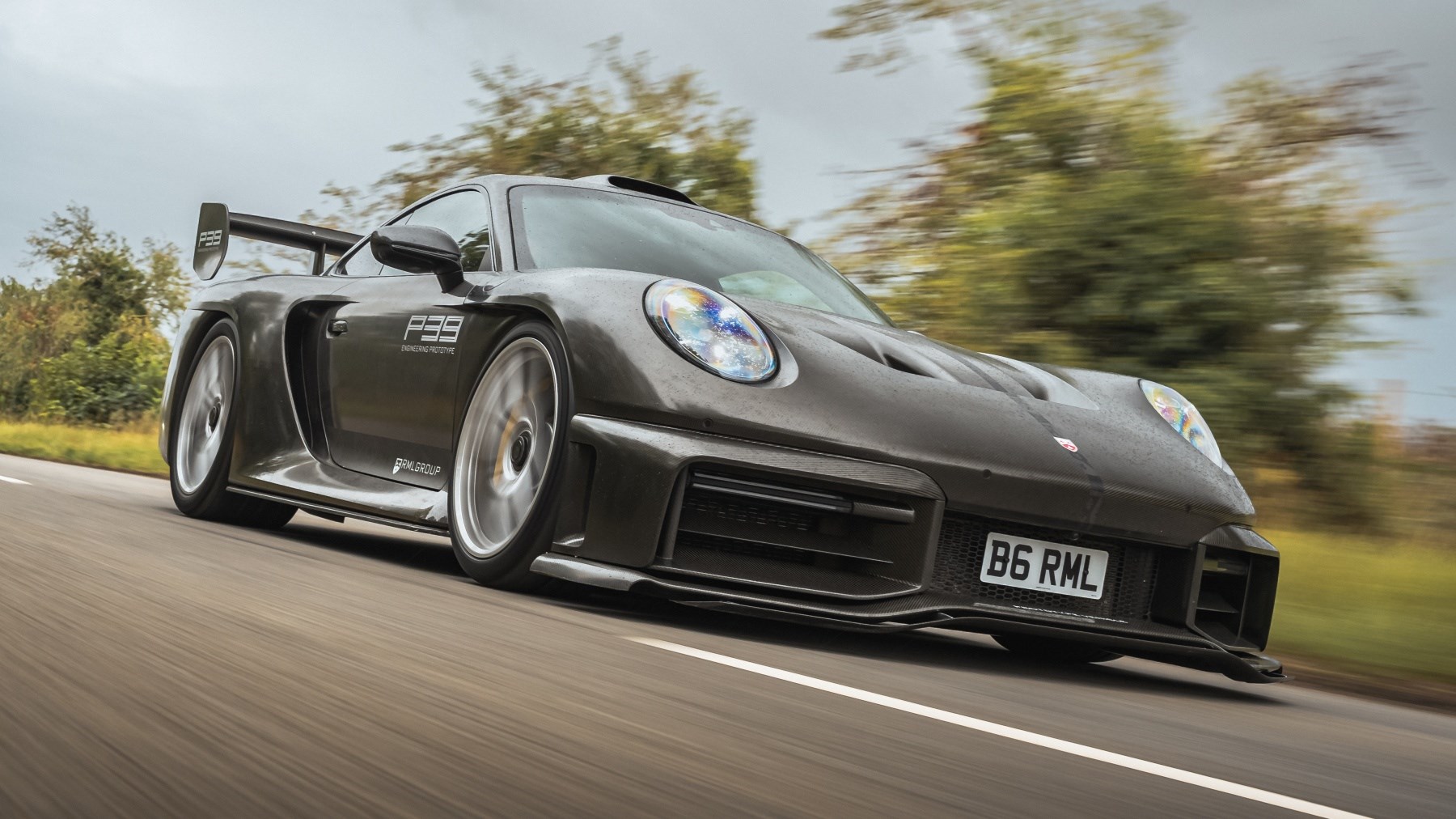
Lots, but only where it’s necessary. RML starts with a 992.1 Porsche 911 Turbo S donor car before stripping away all the bodywork for replacement in full carbon fibre. As Michael Mallock, head of RML’s bespoke cars division and son of founder Ray Mallock, will happily admit, the 911 GT1 served up a big helping of inspiration.
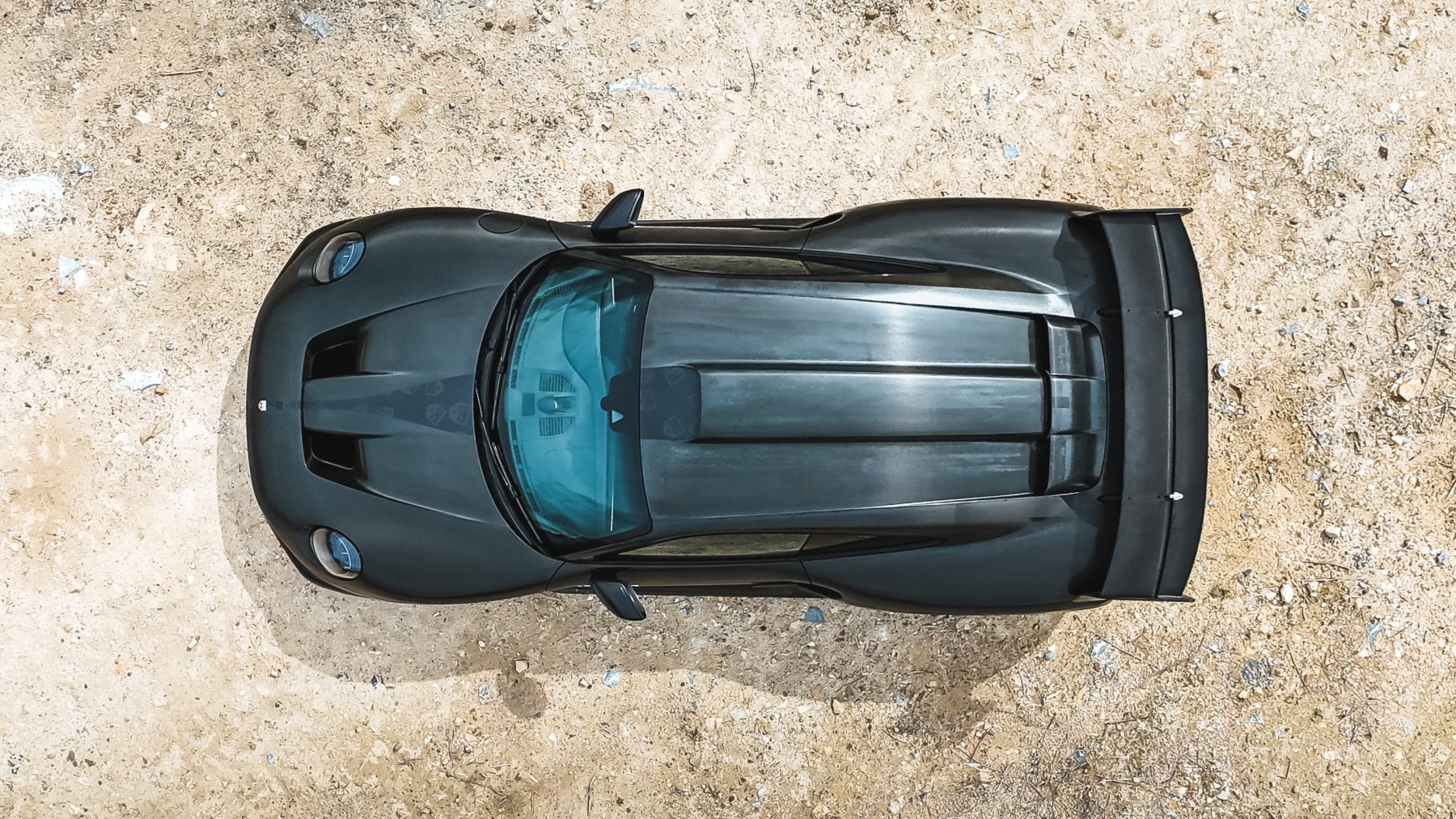
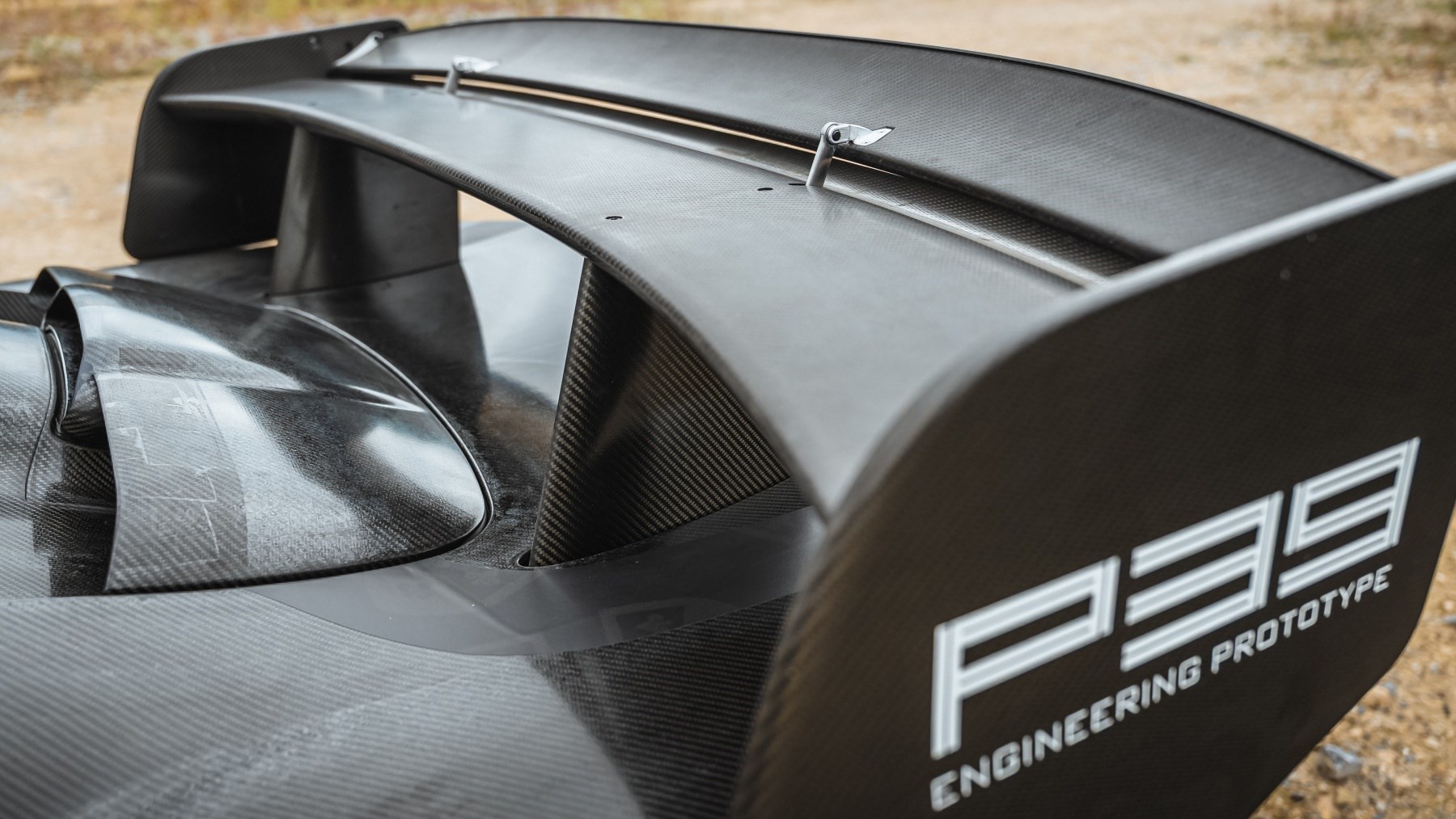
This is best evidenced in the big roof scoop that feeds the turbocharged flat six, front wheelarch cutouts and giant rear wing, all of which serve a proper purpose. Make no mistake, this isn’t a simple tune and tart up job, it’s a heavily re-engineered car that’s all about going exceptionally fast, not posing in Kensington.
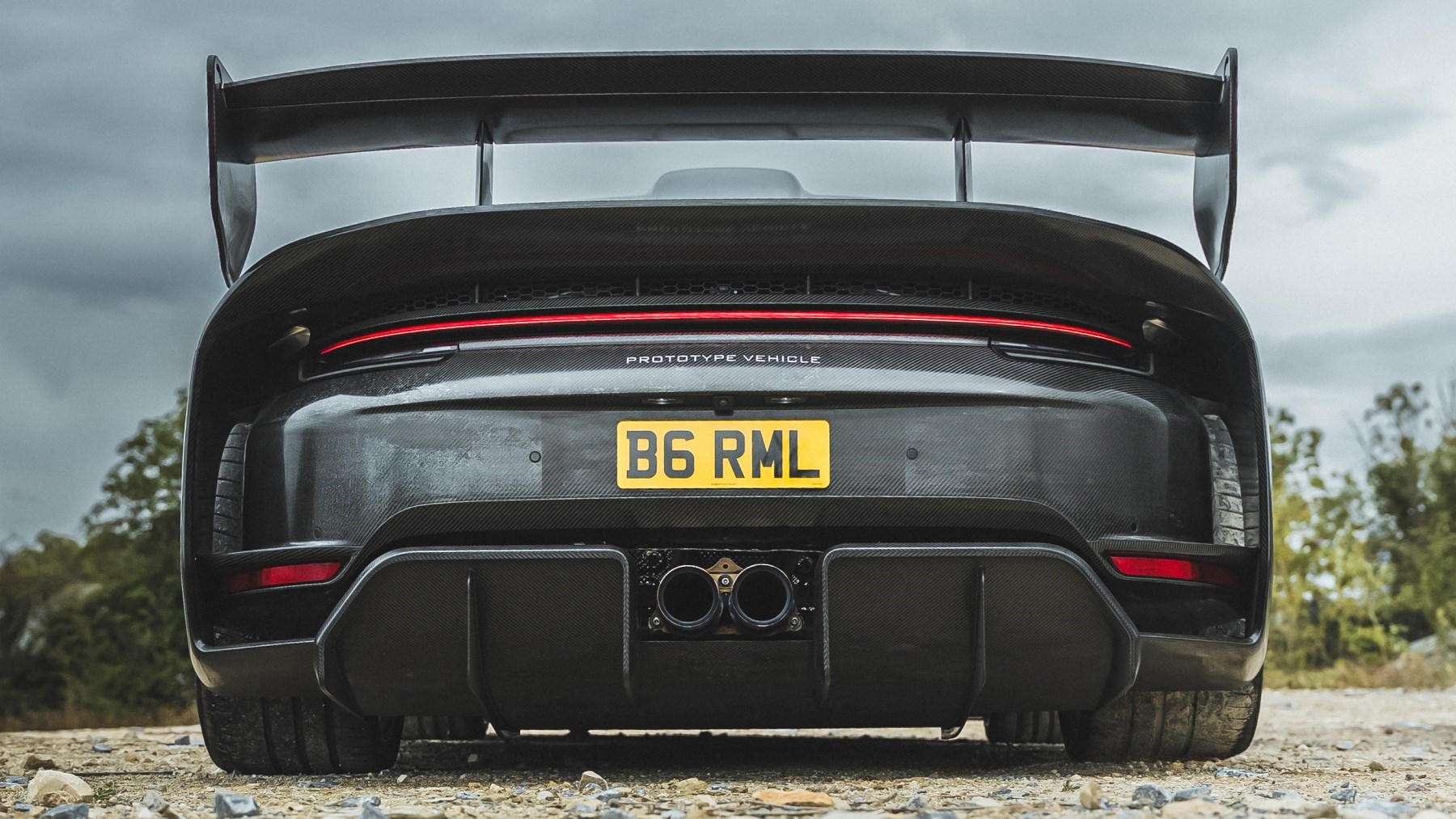
You get a whopping 923kg of downforce with the front splitter and rear wing in their fully extended positions at 177mph. To put that in perspective, it’s enough for sub-GT4 racing car lap times whilst retaining the Michelin Pilot Cup 2s the GTH comes with as standard. Cup 2 Rs are optional, but they bring a negligible boost in performance with far faster wear rates.
Weight has been trimmed, yet this isn’t some gutted racer for the road. Most of the interior is recognisably 911 – if entirely retrimmed for customer cars – save for RML’s decision to have four rotary selectors on the wheel to alter all manner of parameters on the road. Like most of the GTH, the new controls look and feel like something Porsche would have done itself.
A glance at the spacer-free rear wheels highlights the new suspension that helps bring that race pace. All-new wishbones increase the track significantly whilst also stretching the wheelbase a little, too. Porsche’s rear-wheel steering and active anti-roll tech stays (assuming it’s on the donor car) but there are new coils that effectively give two spring rates, a four-corner hydraulic lift that’s also able to slam the car into the deck, and new centre lock wheels. Brakes are the standard carbon ceramics as they’re already more than up to the job.
What are the specs?
Ditching the rear seats and going on a carbon intensive diet gives a weight of around 1600kg without fuel and driver, but with all the other fluids you need to run. A standard 992.1 Turbo S is 1640kg with fuel in comparison – although this is shorter and without a giant rear wing, dual springs and a four corner hydraulic lift. Wheel size remains at 20 inches up front and 21s out back with tyre width up front and rear.
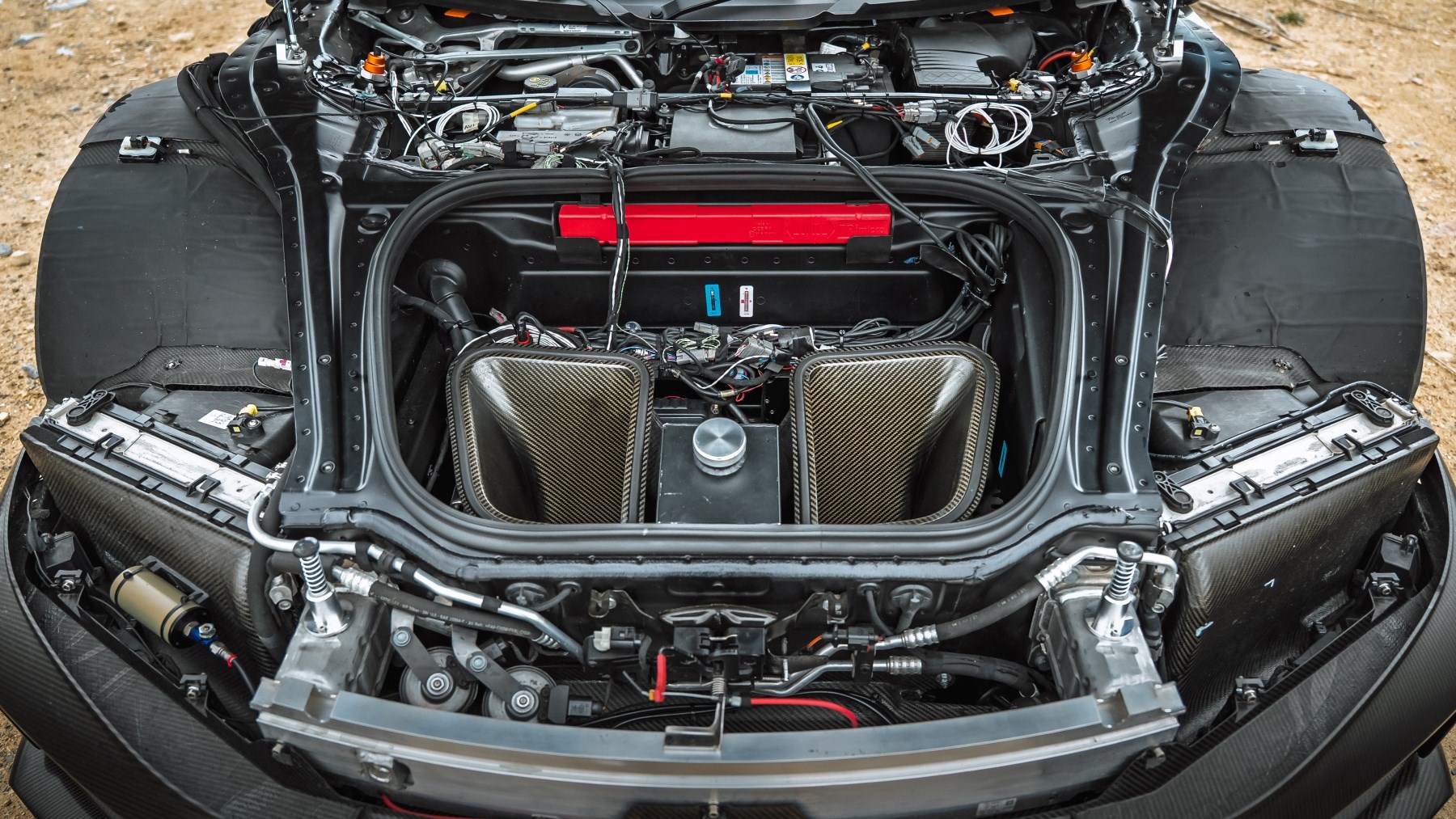
Performance is up significantly thanks to the work of Lichfield. The flat six itself remains unchanged, with the turbos, intercooler, exhaust, intake and tune all new. Power is up to a conservative 907bhp with torque at 738Ib ft, both generous gains on the standard car. You still get a standard Turbo S-matching 590Ib ft of torque at 3000rpm – just 500rpm more than the base car.
That’s enough to drop the 0-62mph time down to 2.4 seconds, with 0-100mph taking 4.5 seconds against a standard Turbo S at 2.6 and 5.3 seconds respectively. With downforce up over 500kg at 150mph and 700kg and 177mph, a simulated Nordschleife time of 6:45 against a standard car’s 7:17 seems entirely plausible.
What’s it like to drive?
So familiar, yet so alien at the same time. Twisting the now familiar starter nubbin reveals a much deeper, bassier idle than a 911 Turbo, and there’s a lot more huffing and sighing from the new turbos. Even so, this is a tractable engine that’s perfectly content to mooch about as the PDK ‘box shifts as Porsche intended despite the sizeable power boost.
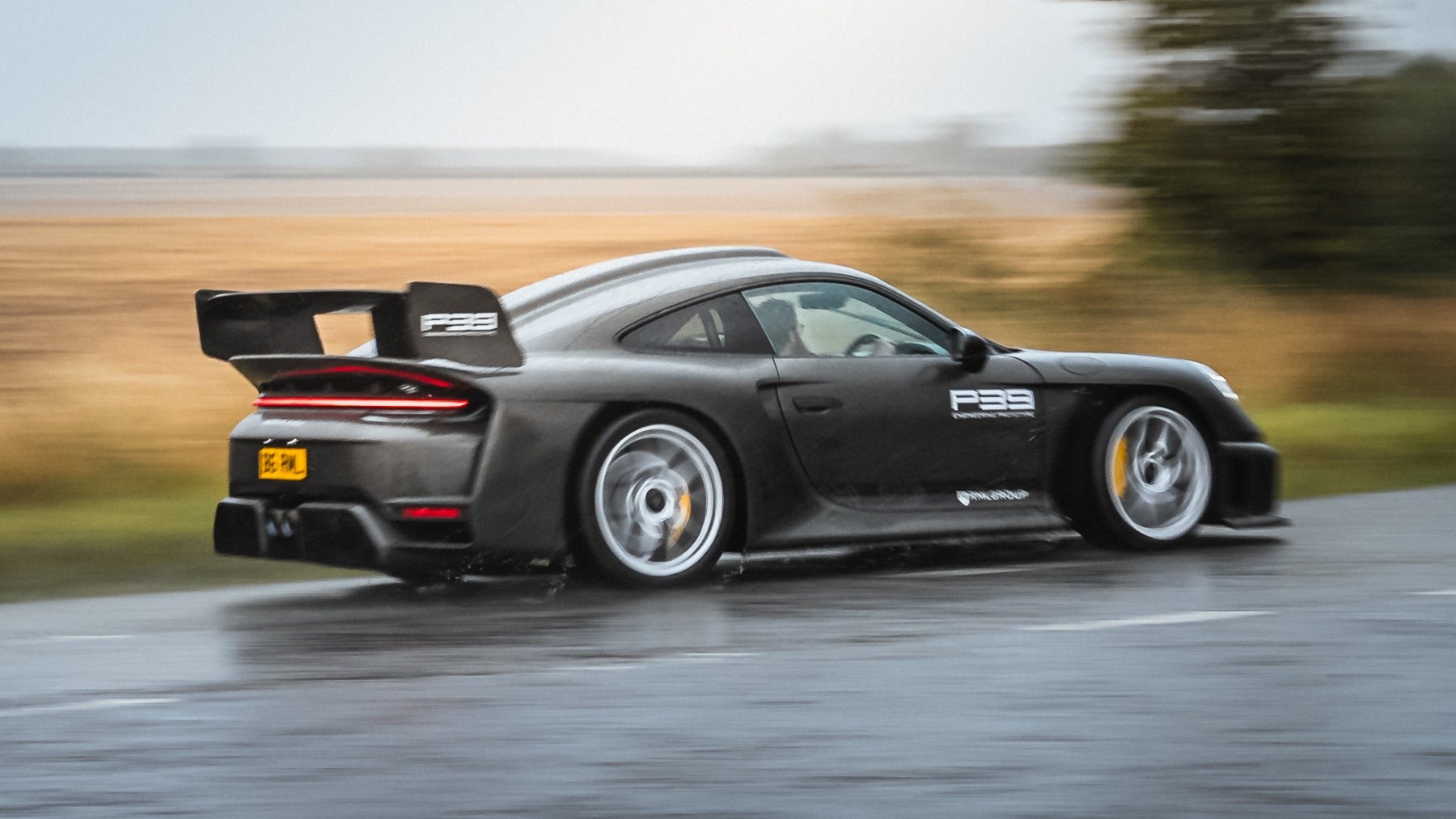
New suspension brings new geometry with a lot more negative camber for extreme cornering without corrupting steering feel with tramlining and general bad behaviour. Don’t expect GT3 RS levels of information – this is four-wheel drive after all – but there’s enough to key you into the road’s surface and build confidence. In other words, it feels like something Porsche would happily sign off.
I suspect the mothership would approve of the suspension, too. There’s enough compliance in its softest setting to make long motorway schleps comfortable and take the sting out of poorly surfaced roads. Pimples and potholes are certainly felt, albeit with the sharp edges expertly rounded off. Sport is still absolutely usable on the road, the big suspension drop and fully deployed front splitter not so much.
I had worried the 950bhp of the P39 development car would make it something of a handful. A few exploratory squeezes of the throttle reveal a bit more lag and far more dramatic sucking noises than a Turbo S. Post pause the boost builds in a predictable and addictive fashion, each pause in throttle accompanied by dramatic blow-off noises. Chances to use full throttle are rare, brief and brutal.
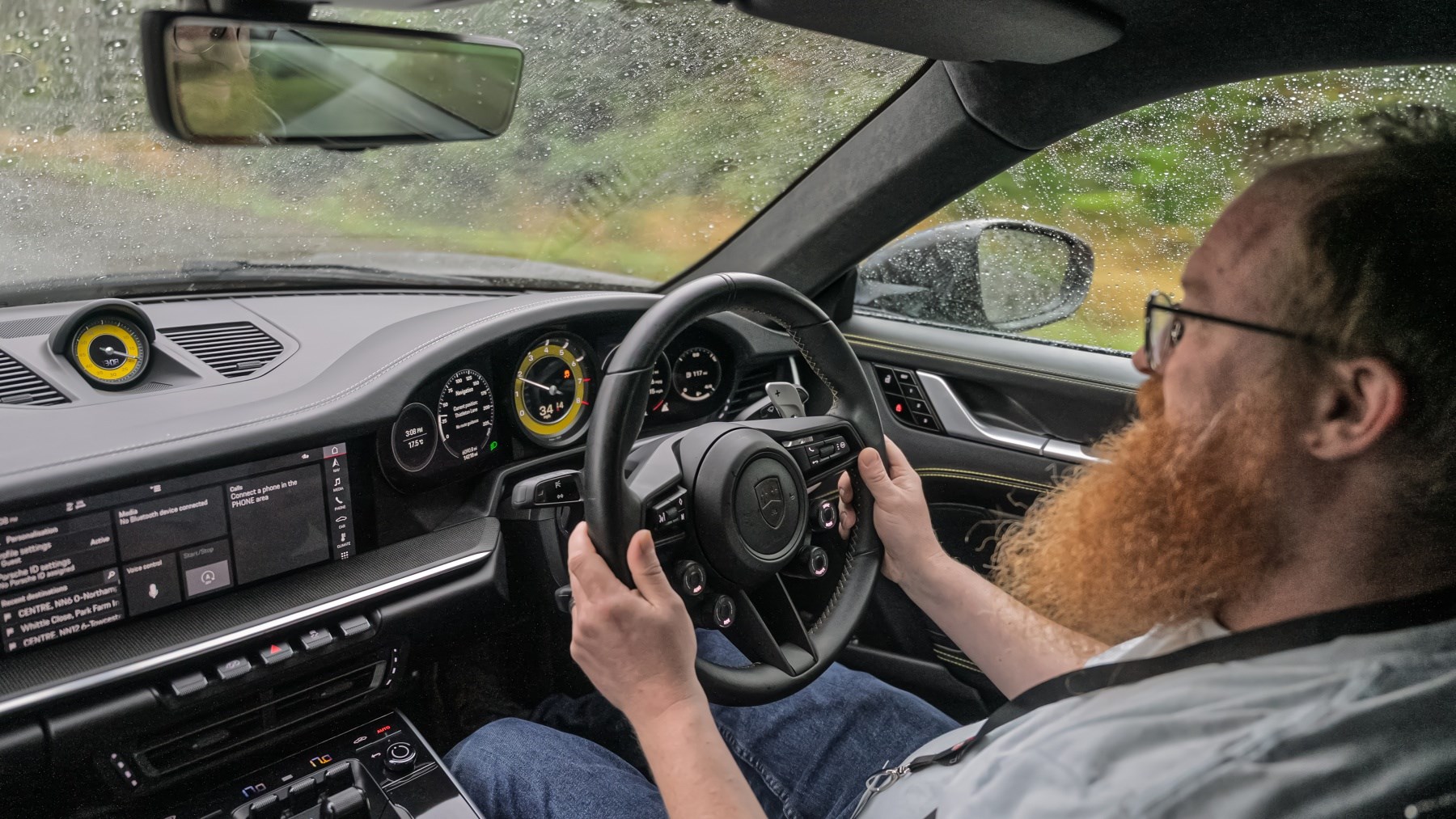
Traction proves no issue in the dry allowing me to relax and enjoy a few hours behind the wheel. All is going well until torrential rain hits just as we’re getting to the cornering shots. I try Wet mode to knock power back to a mere 650bhp and things feel shockingly undramatic, the four-wheel drive system finding terrific traction and ESC intervention being minimal.
I’ve soon cranked the boost back up and started leaning on the P39 harder. The balance feels very Turbo S yet the chassis responds to inputs with a sharpness more akin to a GT3. While I cannot speak for its performance on track, RML’s racing history and the GTH’s chassis development by BTCC racer Tom Chilton are both encouraging.
What about the interior?
It would be unfair to draw too many conclusions from the well-worn P39 development hack which does without the reupholstered interior of customer cars. Plush materials will cover a familiar 911 dash, with the big changes occurring behind.
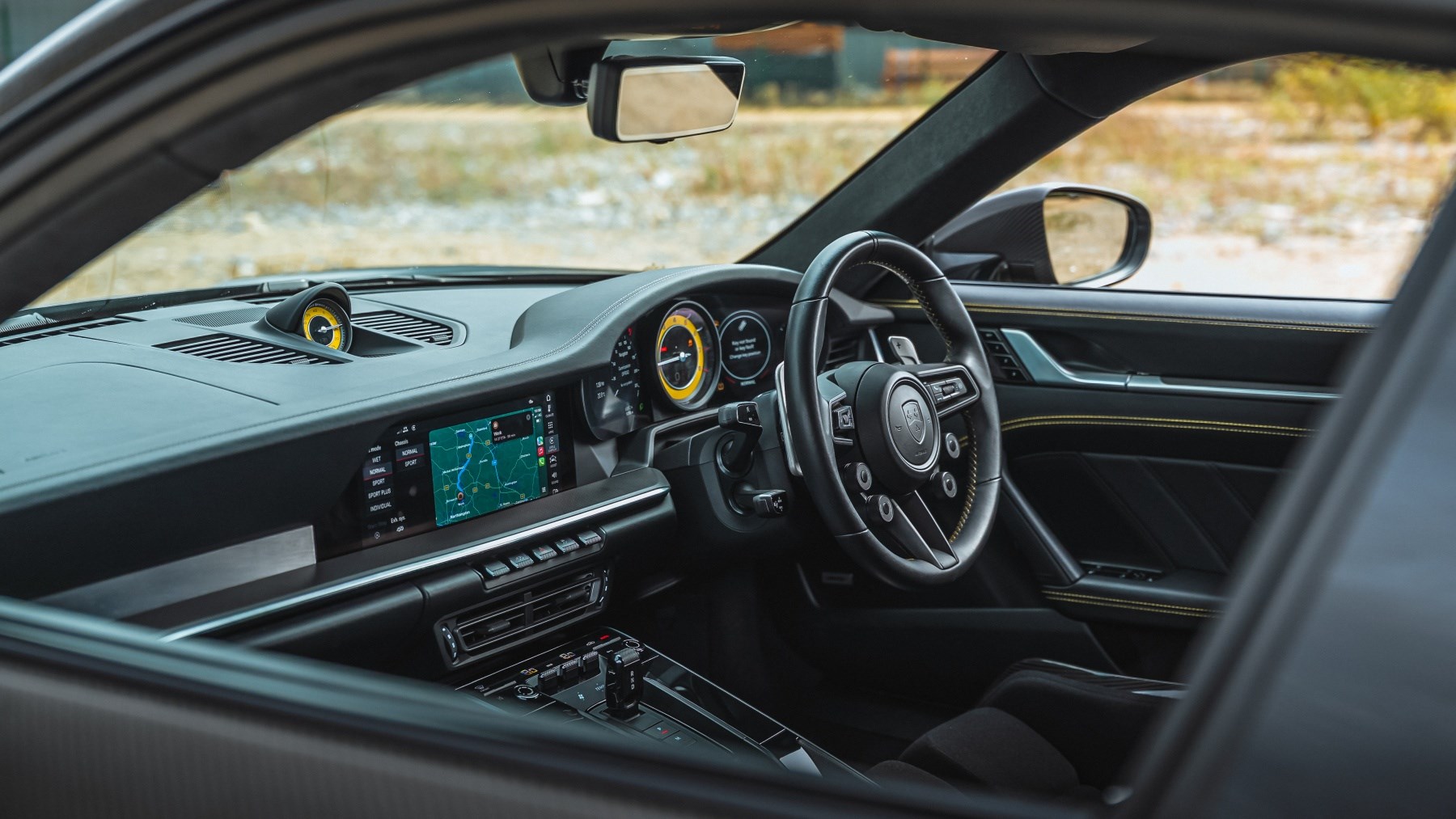
There’s no rear window on account of the roof snorkel, with a camera mirror sitting in place of the regular one. A half-cage for the six-point harnesses means no rear seats although if you’re happy with four-point harnesses, RML can ditch the cage and keep the seats.
Before you buy (trims and rivals)
You’ll need to find a donor 992.1 Turbo S with all the optional chassis goodies to match the P39 development car’s tech specs, and then spend several hundred grand to convert it with bespoke paint and interior. Expect to pay around £600,000 for one of 39 examples RML will build.
That’s significantly more than a Lamborghini Revuelto or Ferrari SF90, if less than the Aston Martin Valhalla.
Verdict: RML GT Hypercar
If you’re thinking £600k for a tuned 911 is a bit steep, you’re missing the point. RML has thoroughly reworked the base car to enhance its already extraordinary capabilities without completely ruining the whole point of a Turbo S. This is still an all-weather performance weapon that doesn’t intimidate and is capable of long distance comfort, just a lot faster.
So that’s 75% of the GTH’s remit sorted, what about the other 25%? A track test will (hopefully) have to wait until another day, as will a poke around a production interior. If they can live up to the on-road dynamics, £600k is a steal.