► Cayenne E-Hybrid range now three strong
► 468bhp V6, 512bhp V6 S and 729bhp Turbo
► Up to 48 miles electric-only range (WLTP)
The Cayenne has long been Porsche’s best-selling model globally, and the introduction of the E-Hybrid model has only served to increase the model’s appeal in an increasingly electrified world. Handily for E-Hybrid buyers, this 729bhp brute – which offers a faintly ridiculous blend of chunky zero-emissions capability and supercar humbling performance – is the most powerful Cayenne yet.
It’s easily one of the best hybrids available, and not just if you’re looking for speed. The third-gen Cayenne is fresh as ever, having been given recent tweaks to the exterior design, a heavily revised interior with additional tech, an overhauled engine line-up – including the new hybrid systems – and changes to the passive and adaptive suspension offerings. It’s modern luxury with a high-rise twist.
As such, the list of rivals covers ground that starts with the Range Rover Sport and BMW X5 and goes all the way up to the Lamborghini Urus, Bentley Bentayga and Ferrari Purosangue.
Read on for our full Porsche Cayenne E-Hybrid CAR test and find out why it’s good enough to join the ranks of the best plug-in hybrid SUVs on sale today.
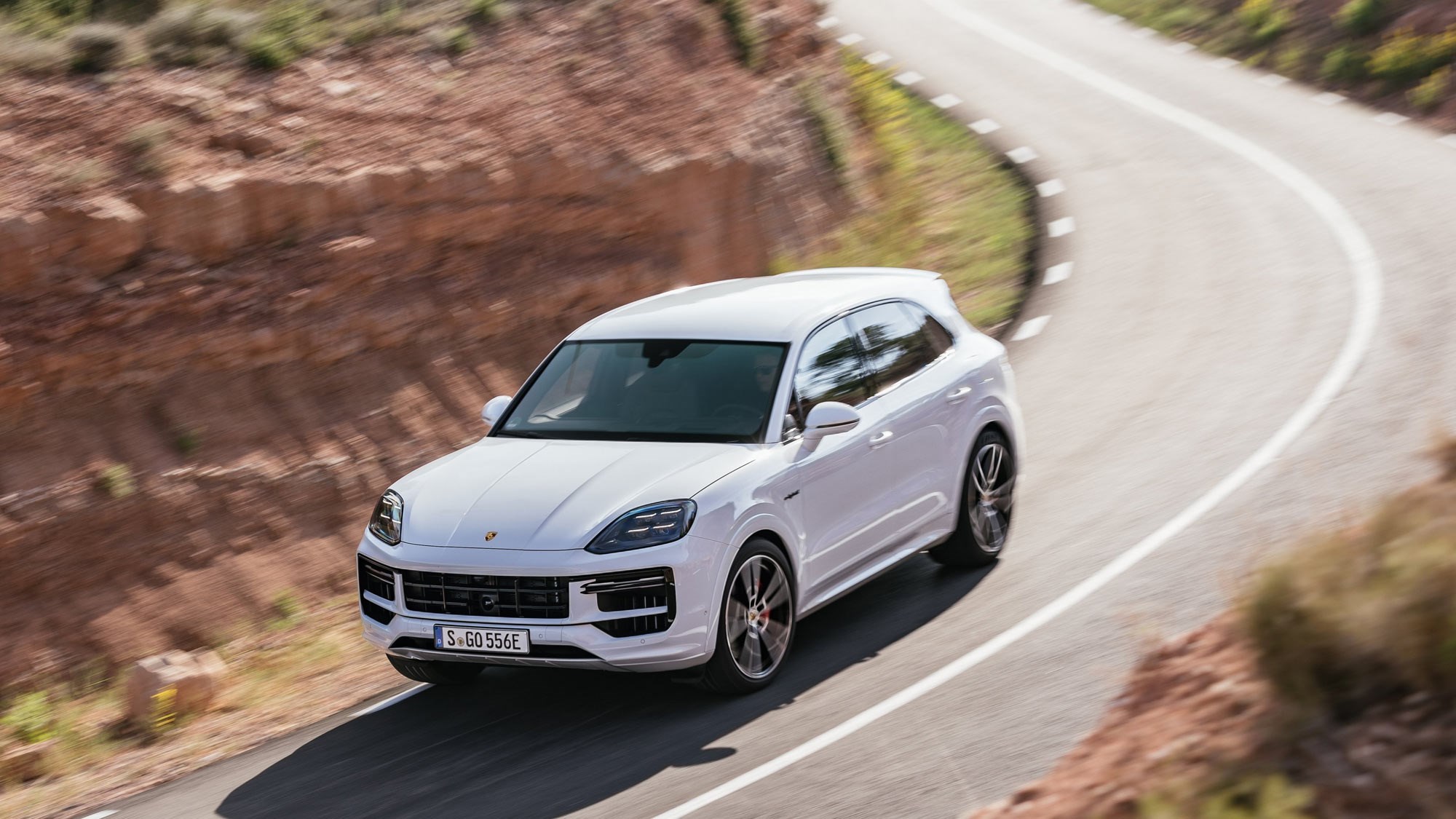
Should you buy a Porsche Cayenne E-Hybrid? With a breadth of talent not offered by rivals, and a blend of efficiency and performance that means it’s both supercar fast and hatchback efficient, the Cayenne E-Hybrid’s latest updates make it a top-rank model of the class. If you’re after a powerful SUV that’s cheap to tax, look no further.
At a glance
Pros: Stunning performance and handling mix with luxury and high-tech. Low CO2 means it’s a perfect high-earner’s company car.
Cons: You need to spend well over £100k to get the best of E-Hybrid.
What’s new?
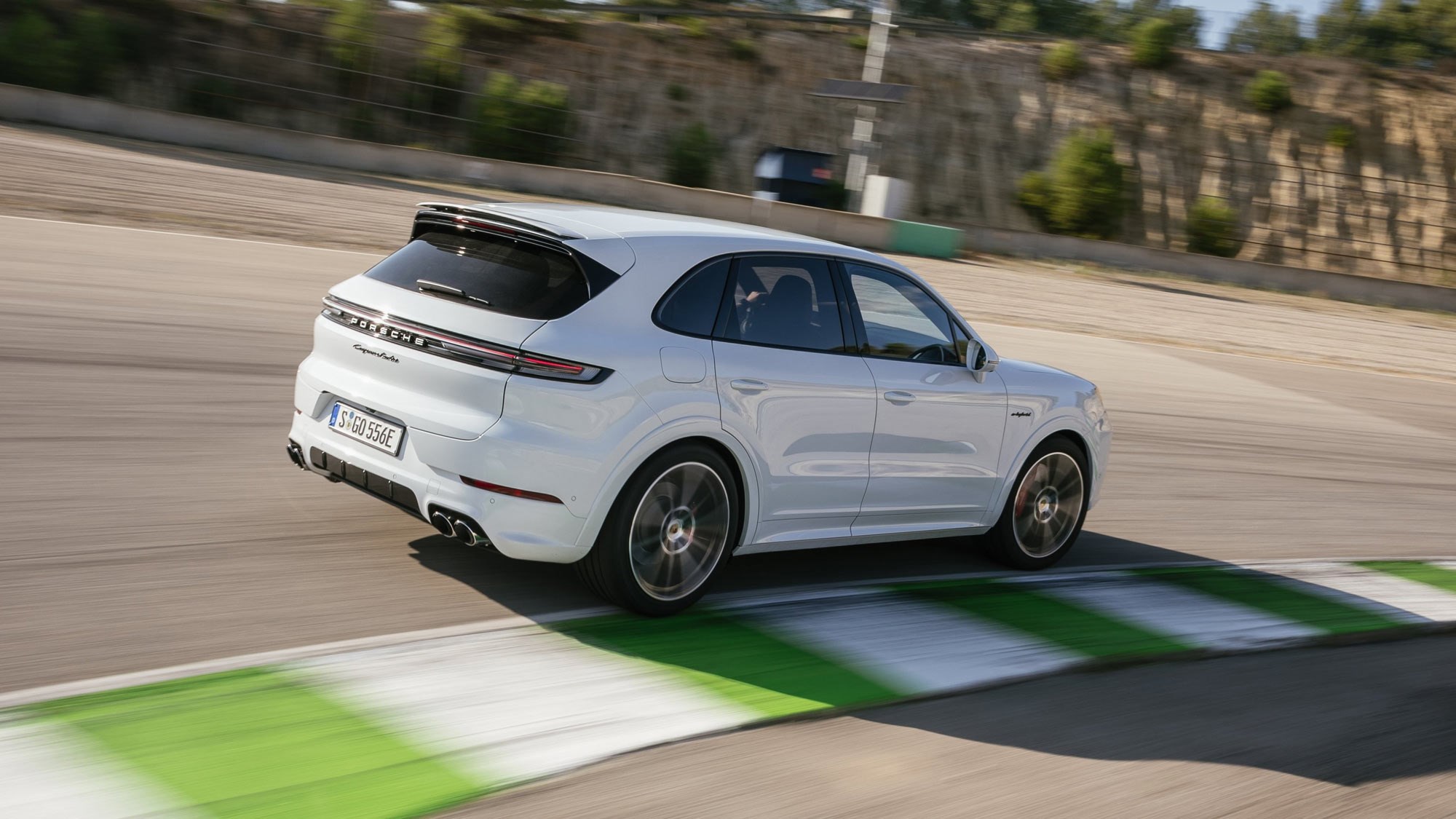
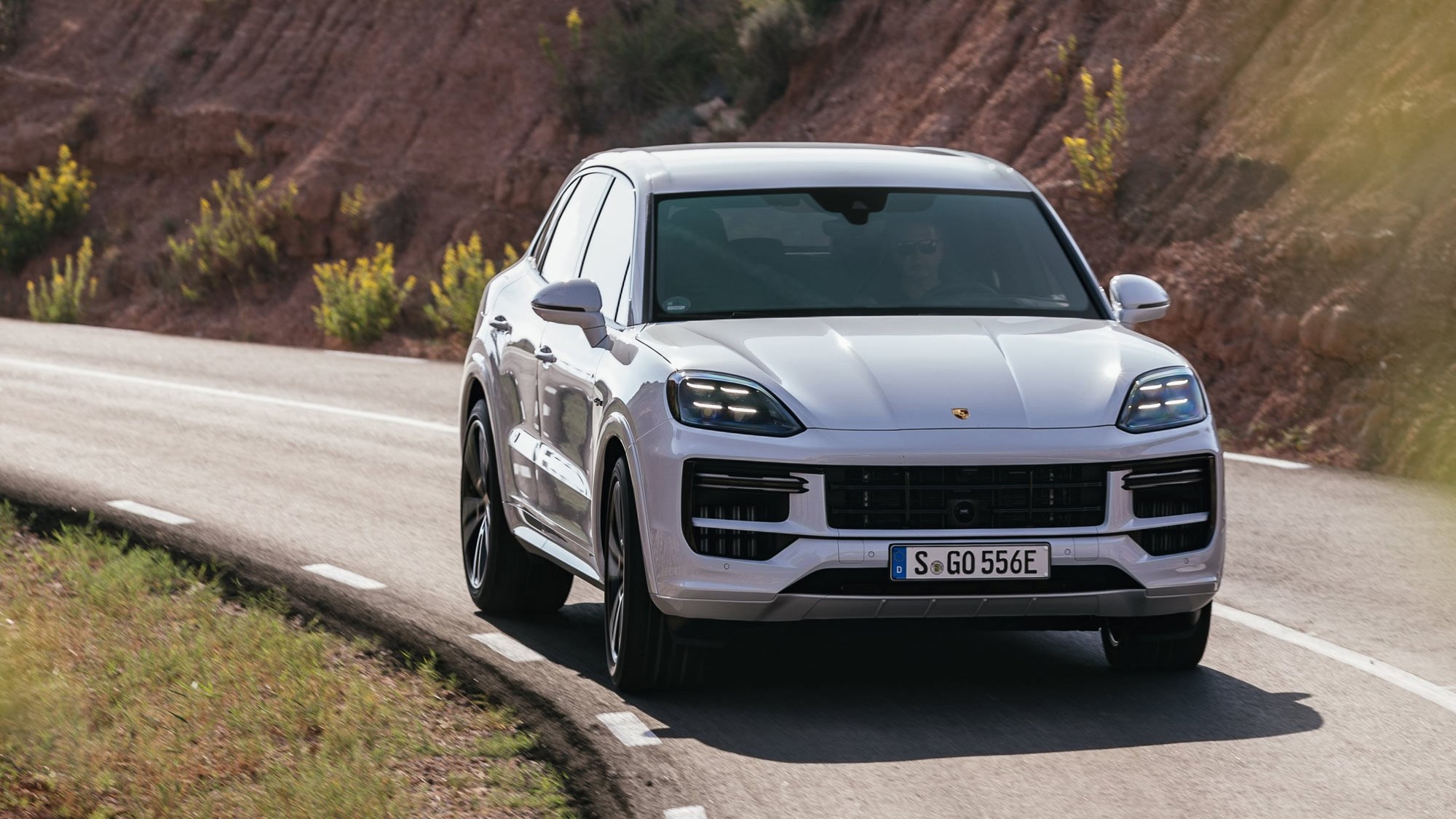
First off, the looks. On the outside there’s a new (as of 2023) front and rear end design complete with reimagined taillamps, as well as more strongly arched wings. The headlamps have also been tweaked, with Matrix LEDs now standard. Optional HD Matrix LEDs feature more than 32,000 pixels per headlamp, with 1000 steps of brightness depending on the driving situation. Clever.
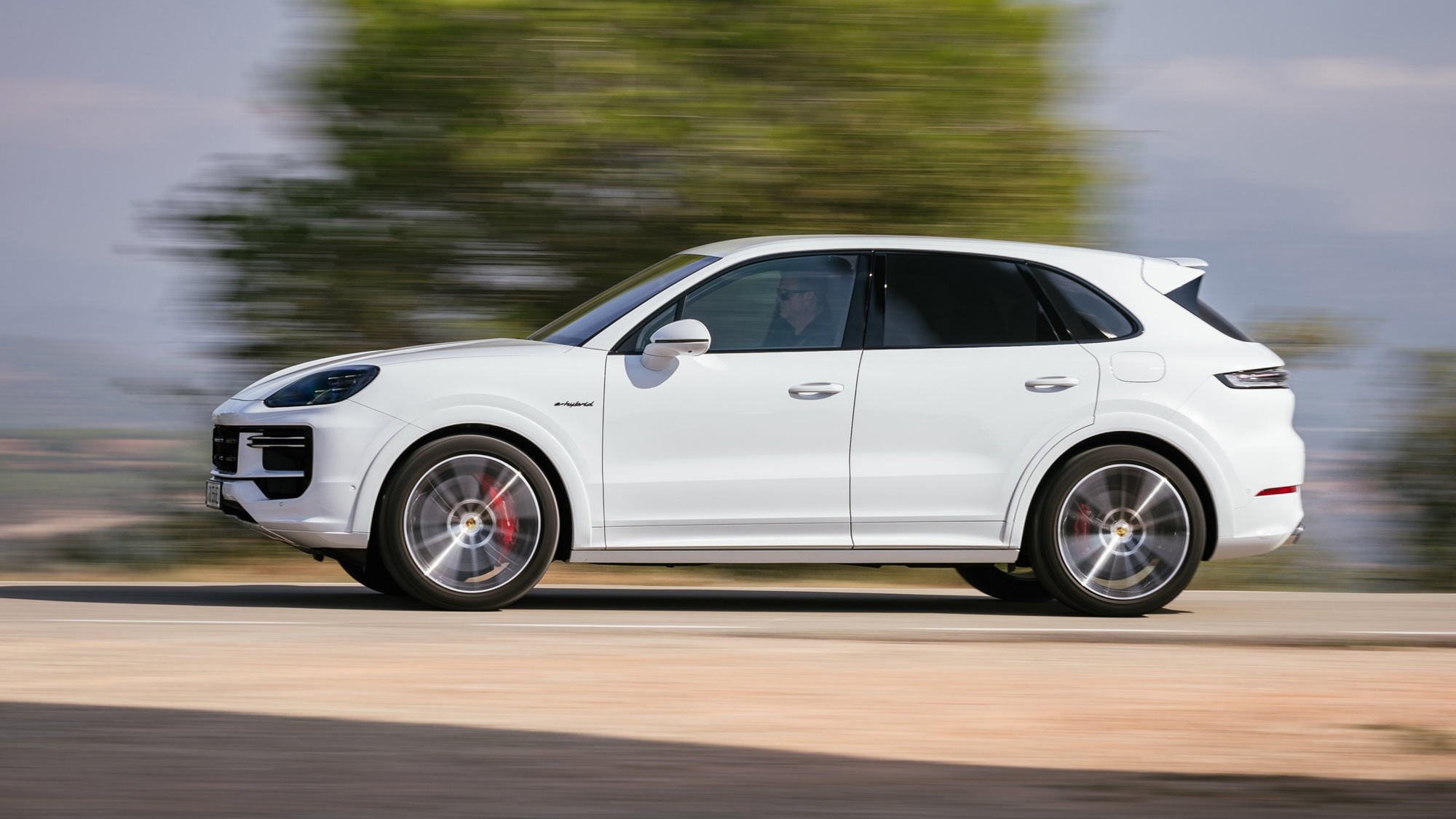
The range of colours on offer was also expanded at the last update, while wheel designs have also been refreshed and go through 20-, 21- and 22-inch sizes. In short, you’re not going to mistake the latest model for a pre-facelift variant, especially if you have a peek inside. More on that in a moment.
What are the specs?
There are now three E-Hybrids to choose from, each featuring a 130kW electric motor integrated into the eight-speed Tiptronic S transmission and a battery pack that’s grown from the previous 17.9kWh to a sizeable 25.9kWh. That’s enough to up to 48 miles of electric-only driving according to the WLTP numbers (45 miles for the Turbo), though a heavily revised and much more effective recuperation system means mixed driving in Hybrid mode may see you on e-power alone for longer than even that suggests.
More importantly – from our slightly twisted perspective – the electrical assistance is on hand for maximum power more of the time as a result of the updates. Considering the e-motor now offers 174bhp (up from 128bhp) and 330lb ft of torque, that difference can be considerable. An 11kW onboard charger as standard means 0-100 per cent charge in just under 2.5 hours when plugging the Cayenne E-Hybrid into the mains.
With a combined system output of 463bhp and 479lb ft of torque, even the regular Cayenne E-Hybrid is brisk for a 2.4-tonne SUV, able to achieve 0-62mph in 4.9sec and 154mph. It features a down-rated 300bhp version of the 3.0-litre turbocharged V6 fitted to standard entry-level Cayennes, and offers smooth, effortless momentum that silkily switches between petrol and electric power.
At 370kg heavier than that conventional model, you do pay a dynamic penalty for that conscience-easing EV ability. But that’s relative, given how good the facelifted Cayenne is to start with, and the degree to which the chassis can be enhanced via the options list (more on this below).
The Cayenne S E-Hybrid gets the full-fat version of the 3.0-litre V6 – meaning 348bhp – and a total combined output max of 512bhp with 553lb ft. Enough for 0-62mph in 4.7sec and 163mph flat out. That’s not a huge step on paper, but a useful enhancement on the road for the comparatively little extra it costs, considering it also includes the now improved air-suspension as standard.
We say comparatively. While there’s still over £7k difference between these V6 models, stepping up to the V8-powered Cayenne Turbo E-Hybrid will cost you £43k at best – at £130,200, it’s around 50 per cent more expensive than the £87,100 Cayenne S E-Hybrid. But for that you’re getting the most powerful drivetrain ever fitted into a Porsche SUV.
For the Turbo E-Hybrid glories – yes, glories – in 729bhp and 700lb ft, can unquestionably do 0-62mph in 3.7secs and is unlikely to struggle reaching its rated 183mph. The Turbo SUV can’t be further focused by the GT Package available for the equivalent Cayenne Coupe Turbo E-Hybrid we were able to test at the same time, but nevertheless has enough traction to make the most of that performance a remarkable amount of the time…
How does it drive?
The most basic E-Hybrid gets steel springs with new two-valve shock absorbers as standard. A modified setup compared with the previous model, this is claimed to deliver greater comfort at low speeds and better pitch and roll support during faster driving.
Sounds promising, as the Cayenne was never previously at its best without adaptive air suspension (a £1760 option here). But all of the examples available to drive on the initial launch of this model were upgraded to air anyway. So we can’t be sure of the stated improvements.
Exactly how much it contributes to the sportier aspects of the Cayenne driving experience is a little harder to define, as all of the S and Turbo E-Hybrid test cars available to us on the launch were loaded up with the full gamut of Porsche chassis technology. Turbo models get torque-vectoring as standard, but even on these you have to pay extra for rear-wheel steering and Porsche Dynamic Chassis Control active anti-roll. All of which was also fitted to the S E-Hybrids we’ve so far sampled.
It’s not really surprising that the combined power of these systems makes the plug-in Cayenne fearsomely capable on a mountain road. The real magic is in how authentically natural it all feels, working together. So while E-Hybrid Cayennes don’t quite have the other-worldly resistance to bodyroll some older high-spec non-hybrids used to exhibit, the sensation of movement you do get only adds to the confidence you have in the car’s ability to dispatch a sequence of corners.
The brakes are going to have a hard time. The V8 Turbo is nearly 2.6 tonnes, and although the standard stoppers are deeply impressive, really, rarely announcing the balancing act between friction and regen, you should seriously consider the carbon-ceramic option if you’re consistently keen on demonstrating the full 729bhp.
If you’re not so when in doubt, flat out, the V6 S E-Hybrid isn’t the disappointing downgrade you might fear. Sure, it’s slower. But you can still frighten more sensitive passengers in a straight-line and the reduction in weight in the nose means the turn-in is a little crisper. And the luxurious enveloping available from the rest of the package remains undiminished.
Concerns? Well, the sheer weight of these things, with the difference largely concentrated in the boot-space-robbing battery pack, means a non-hybrid Cayenne S with that punchy V8 is a still sweeter steer. These are very, very impressive hybrid SUVs, but they aren’t quite the Cayenne at its dynamic best.
Considering the way these E-Hybrids can so easily leave aside their sporting abilities for a secure, relaxed gait that every luxury SUV ought to specialise in, they set a different kind of standard. And that’s before you consider the satisfyingly useful electric-only operation that they also offer. All told, it’s probably the most luxurious experience you’ll find in a car from Stuttgart.
What about the interior?
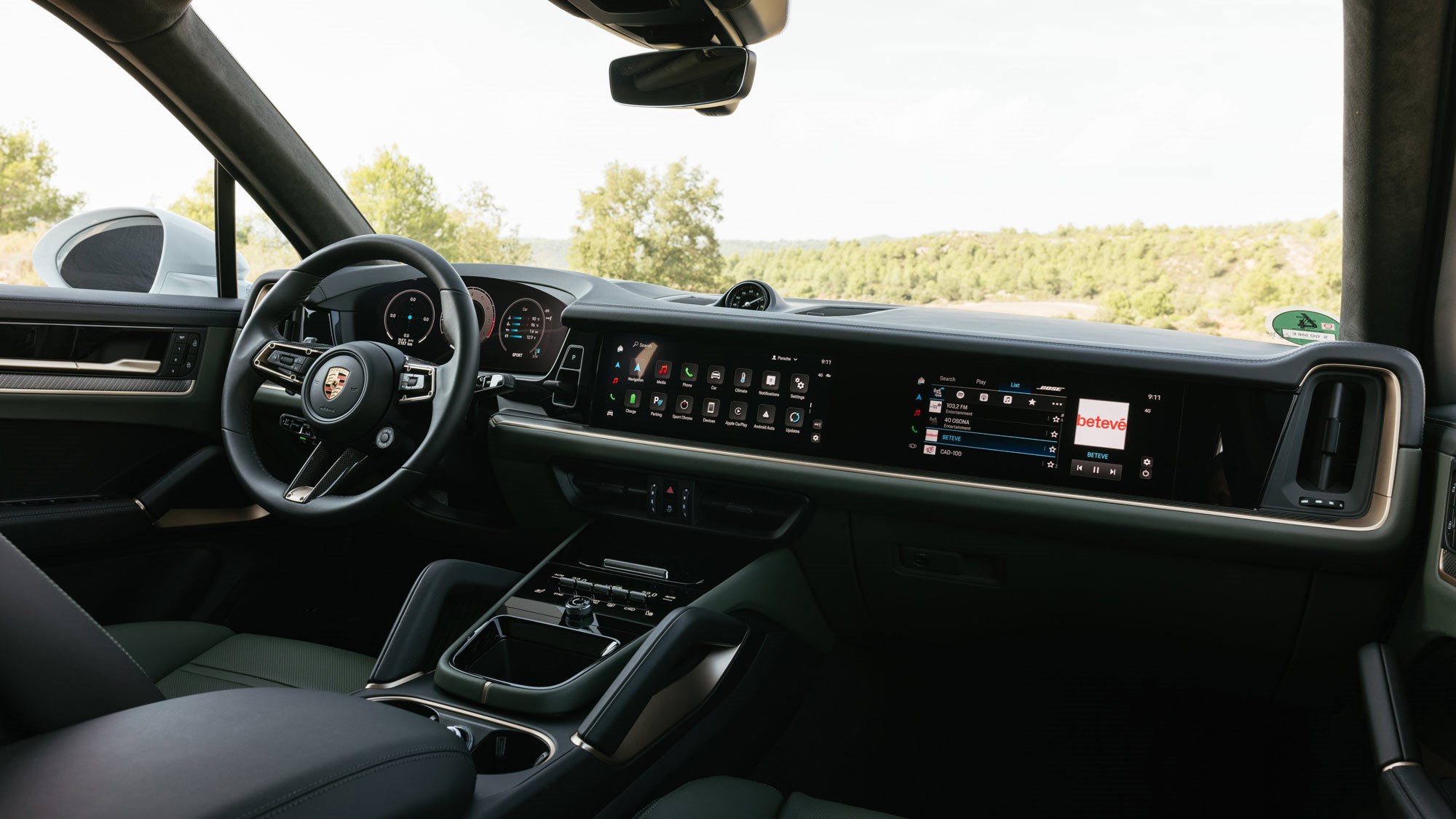
As is now the norm, the cabin is dominated by digital displays yet, as is the Porsche way, it doesn’t feel OTT and – rejoice – you’ve still got physical controls for the air-con and heated seats.
That’s due to the repositioning of key controls, including the gearlever being shrunken down to 911 size and moved up to the right of the steering wheel just like on the Taycan EV. Controversial, but not as much as the nice, tactile Porsche starter ‘key’ being replaced by a button now positioned on the left of the steering column. Boooo.
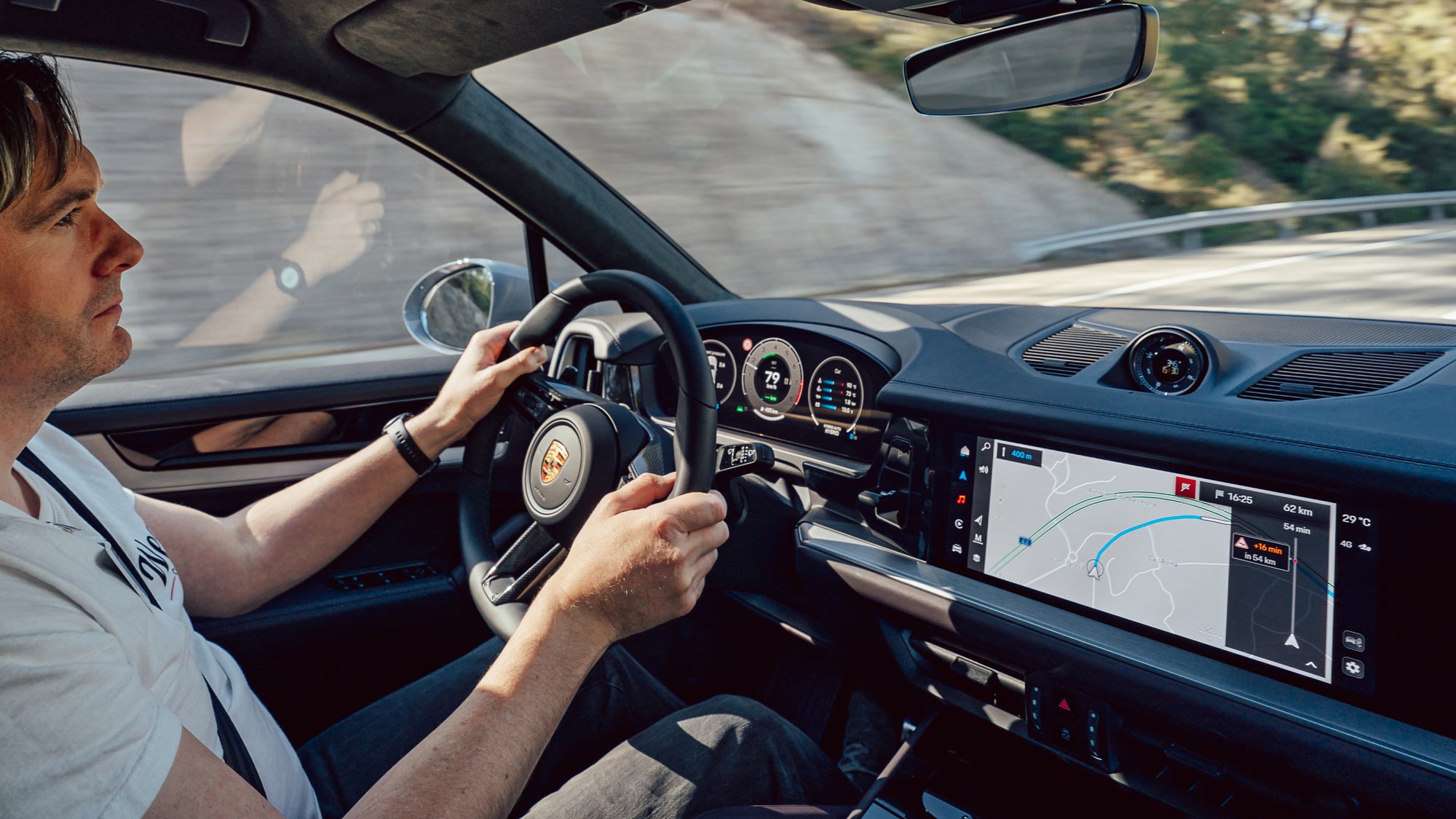
Look past this and the 12.6-inch digital instrument cluster and optional head-up display sits dead ahead of the driver, with the former offering several different configurations. Thankfully, these include a digital equivalent of the five Porsche dials with rev counter in the middle that, although not as classy as the physical equivalents, are still super clear and easy on the eye.
Glance across and 12.3-inch Porsche Communication Management (PCM) display is as crisp and up-to-date as the latest iPhone, yet it’s the screen next to it that stands out.
Available as an option, the 10.9-inch passenger information display shows performance data and infotainment functions (including watching a movie) yet avoids distracting the driver thanks to a reflective film that blocks out the view. Just like the age-old Jaguar twin-screen tech.
Another interior detail that deserves a mention is the cooled wireless phone charger. Ever had to stop using one because your phone has overheated? The cooling element allows optimised charging of up to 15 watts and will make sure your mobile won’t frazzle with contactless charging. Sounds like a gimmick, yet it actually works well in reality.
Before you buy
The Cayenne E-Hybrid’s main rivals are worth considering, because the list is so talented. The BMW X5 xDrive45e, Audi Q7 TFSI e (a group sibling of the Porsche) and Volvo XC90 Recharge T8 are all powerful and comfortable, while the Range Rover Sport PHEV is the most plush of that bunch, followed closely by the Mercedes-Benz GLE and GLS.
Of course, if performance is your priority, there’s always the Lamborghini Urus, which shares parts with the Porsche under a far more brash exterior, while the Aston Martin DBX offers performance with a dynamic focus. It’s arguably the best handling of the bunch. But you have to spend well over £200k to access the DBX707, which is the new entry version of the car.
This leaves the Cayenne E-Hybrid, with its £86,300 starting price, looking like excellent value for money. Naturally, you can add tens of thousands to that price to access the top versions (the Turbo E-Hybrid’s £140,600), but you’re still getting a heck of a lot of punch for your pounds.
Porsche Cayenne review: verdict
Just as rivals may have been sensing blood at the apparent ageing of the Mk3 Cayenne, Porsche went and delivered a significant makeover that sent its halo SUV back to the top of the pile. As is often the way, Stuttgart has ruthlessly identified areas for improvement and – by facelift standards – thrown the kitchen sink at them.
The end result is a car that is better to sit in and – we think – better to look at than ever, with a driving experience that offers an even broader scope of appeal than before. You’ll need to be free with the options spending, but little else on sale can provide such scale from a single variant as the Turbo E-Hybrid – from silent running to full-blooded 729bhp screaming – while the rest of the hybrid Cayenne range carefully balances luxury and performance in a manner that outshines the available contemporaries at their price points.