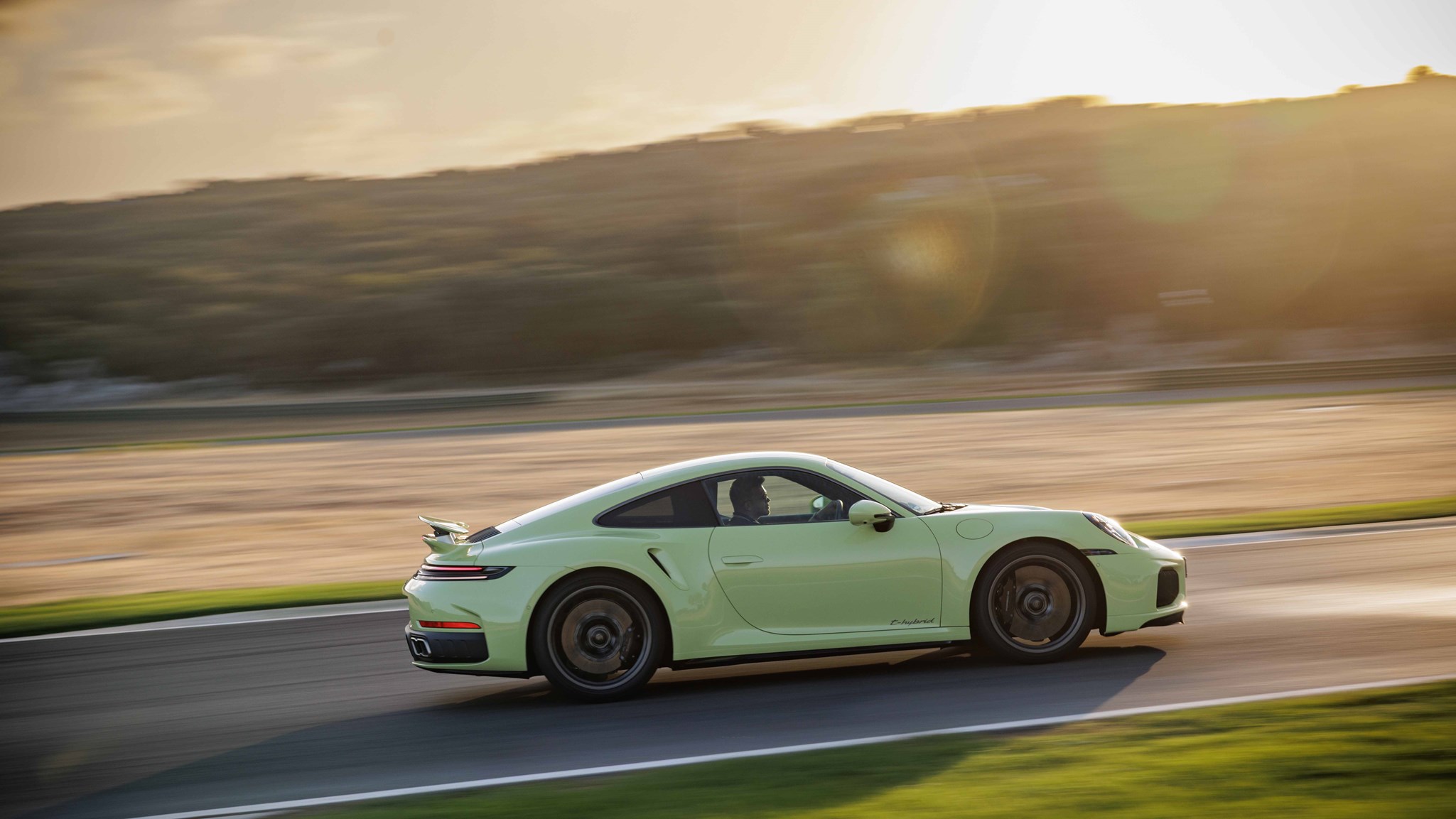
► New 992.2 Turbo S driven
► Over 700bhp from T-Hybrid system
► Priced from £199,100
The Porsche 911 Turbo S 992.2 is not your normal facelift. As while we’re very much still in the 992 generation, the decimal point carries some serious weight. With 701bhp, the T-Hybrid powertrain delivers 60bhp more than the previous Turbo S, while Porsche’s Dynamic Chassis Control also benefits with an electro-hydraulic element to improve body handling and comfort.
This, along with a range of other changes, means the Turbo S recorded a 7:03:92 Nürburgring lap time – some 14 seconds faster than the previous iteration. Improvements like that don’t come easily, so has Porsche had to sacrifice some of the Turbo S’ famed useability to achieve it? Keep reading to find out.
At a glance
Pros: Devastating performance, improved refinement, lovely balance
Cons: Powertrain feels a little clinical, engine sound is merely OK
What’s new?
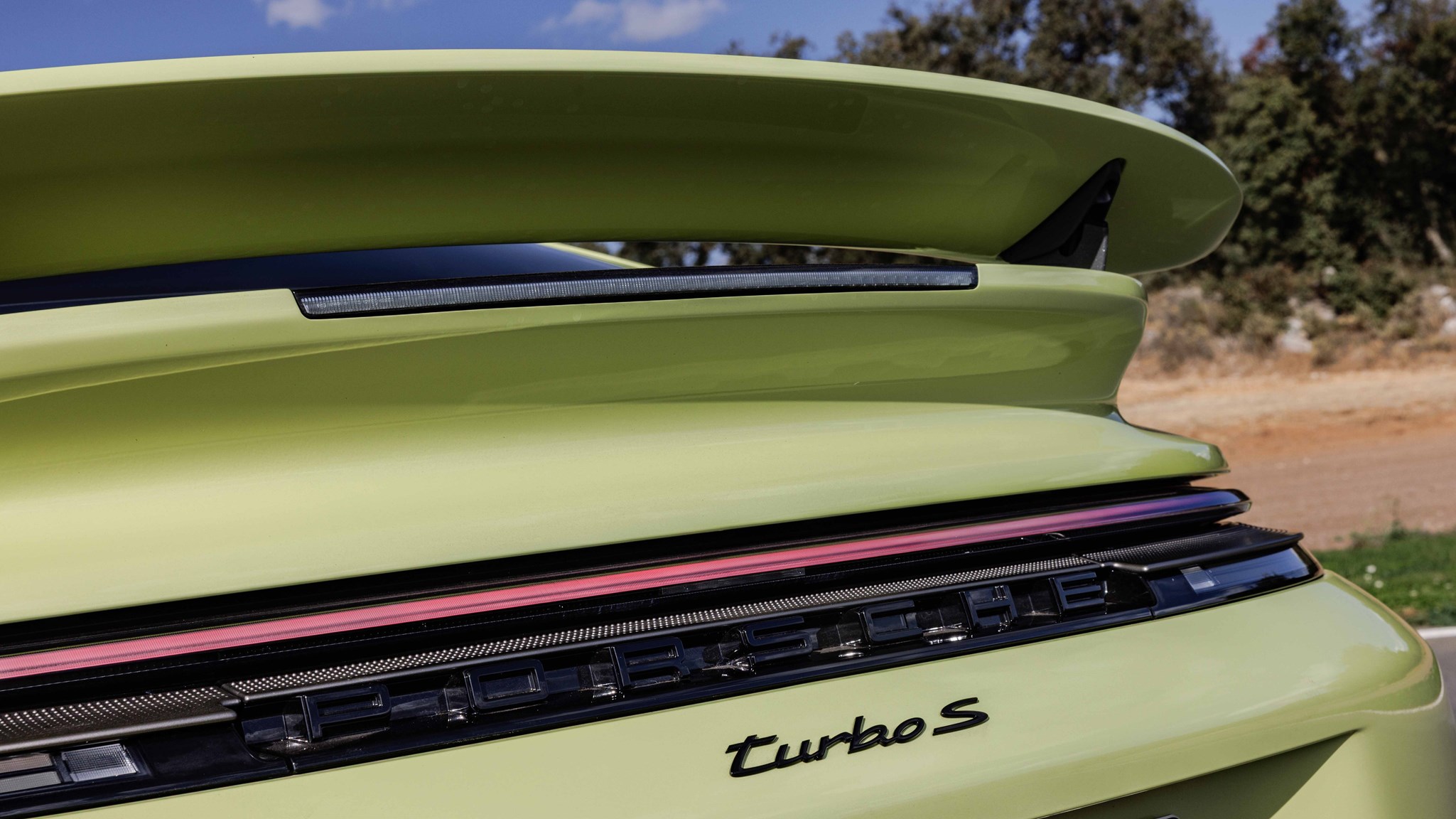
What isn’t? While the car looks similar on the outside (that’s how the customers like it, according to Porsche), key differentiators between the 992.1 and 992.2 include a new LED headlight design, vertically arrange cooling flaps at the front of the car, Turbonite detailing throughout, a more aggressive rear bumper design and revised rear light signature.
You’ll also spot larger carbon ceramic brakes (now 410mm at the rear, with 420mm ten-pots carried over at the front – the largest combination Porsche has ever fitted to a two-door model) and rear tyres that are 10mm wider. Drag is also down 10%, despite the introduction of a new active front diffuser to go alongside the existing active front and rear spoilers.
Delve into T-Hybrid powertrain and there’s even further change afoot. Now a 3.6-litre (downsized slightly from a 3.8-litre), the flat-six engine is helped along by a 1.9kWh battery and a 60kW electric motor integrated into the eight-speed PDK transmission. This alone delivers 81bhp and 139lb ft of torque.
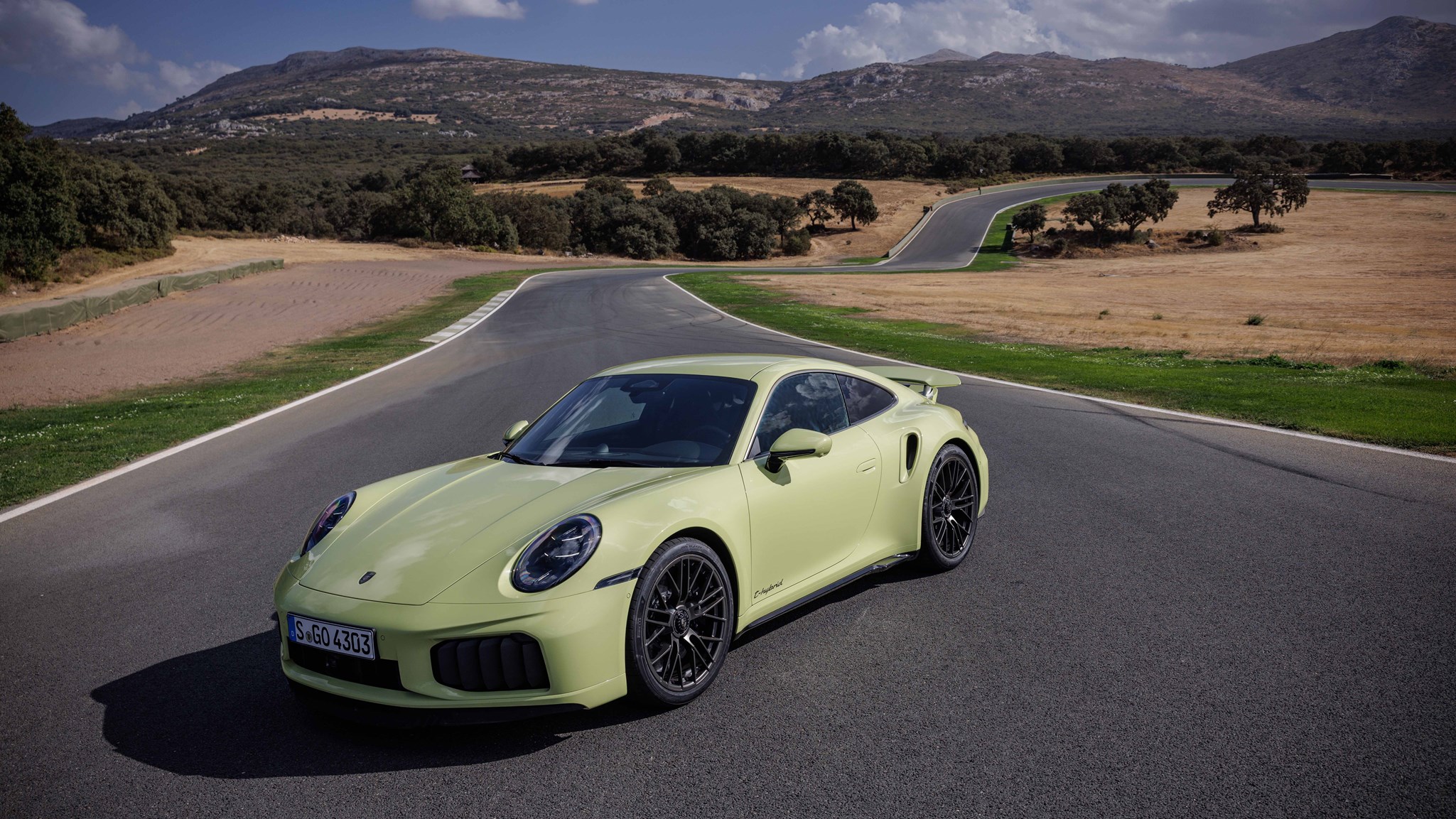
The engine itself gets a lighter valvetrain and crankcase, as well as new pistons and a different compression ratio, while the turbos have also received the electrification treatment. It follows the same principle as the Carrera GTS (an electrically assisted turbo – eTurbo – that can spool up incredibly quickly regardless of engine speed), except the Turbo S gets two, smaller eTurbos rather than one larger one. That means more punch and even greater responses, with the two electric motors able to reach up to 145k RPM.
Finally, Porsche’s PDCC suspension is now ehPDCC – or, electro hydraulic Porsche Dynamic Chassis Control – and utilises the 400V architecture from the hybrid system in order to reduce body roll and increase agility, as well as improve ride comfort and quicken up the front axle lift.
What are the specs?
As ever with the Turbo S, the on-paper figures are mind-blowing. 701bhp and 590lb ft of torque means 0-62mph in 2.5 seconds, 0-100mph in 5.5 seconds and 0-124mph in 8.4 seconds. Top speed is 200mph.
Perhaps more impressive is the spread of torque. Whereas the previous Turbo S delivered peak twist from 2500-4000rpm, the 992.2 extends that to 2300-6000rpm. A huge improvement largely down to the hybrid element, however it does come at a cost.
The Turbo S comes in at 1725kg (DIN) – 85kg more than the previous car. Clearly, the number could be far worse (Porsche deliberately avoided a plug-in hybrid solution because of the additional weight), but it’s still the equivalent of carrying an additional male passenger around at all times.
How does it drive?
We’ll start with the Turbo S’ on-track performance. After all, if it’s ‘Ring time is anything to go by, it should excel here. The increase in power is noticeable, but the way it responds to the accelerator pedal is the stand-out from a powertrain perspective. It’s not quite as crisp or alert as a naturally aspirated GT3, but it’s close enough that you can drive it like one.
Controlling oversteer on the power is far easier than before owing to the responsiveness through the pedal, plus there’s a superb inherent balance to the car (not to mention decent feel through the steering) that means it’s easy to put it where you want it.
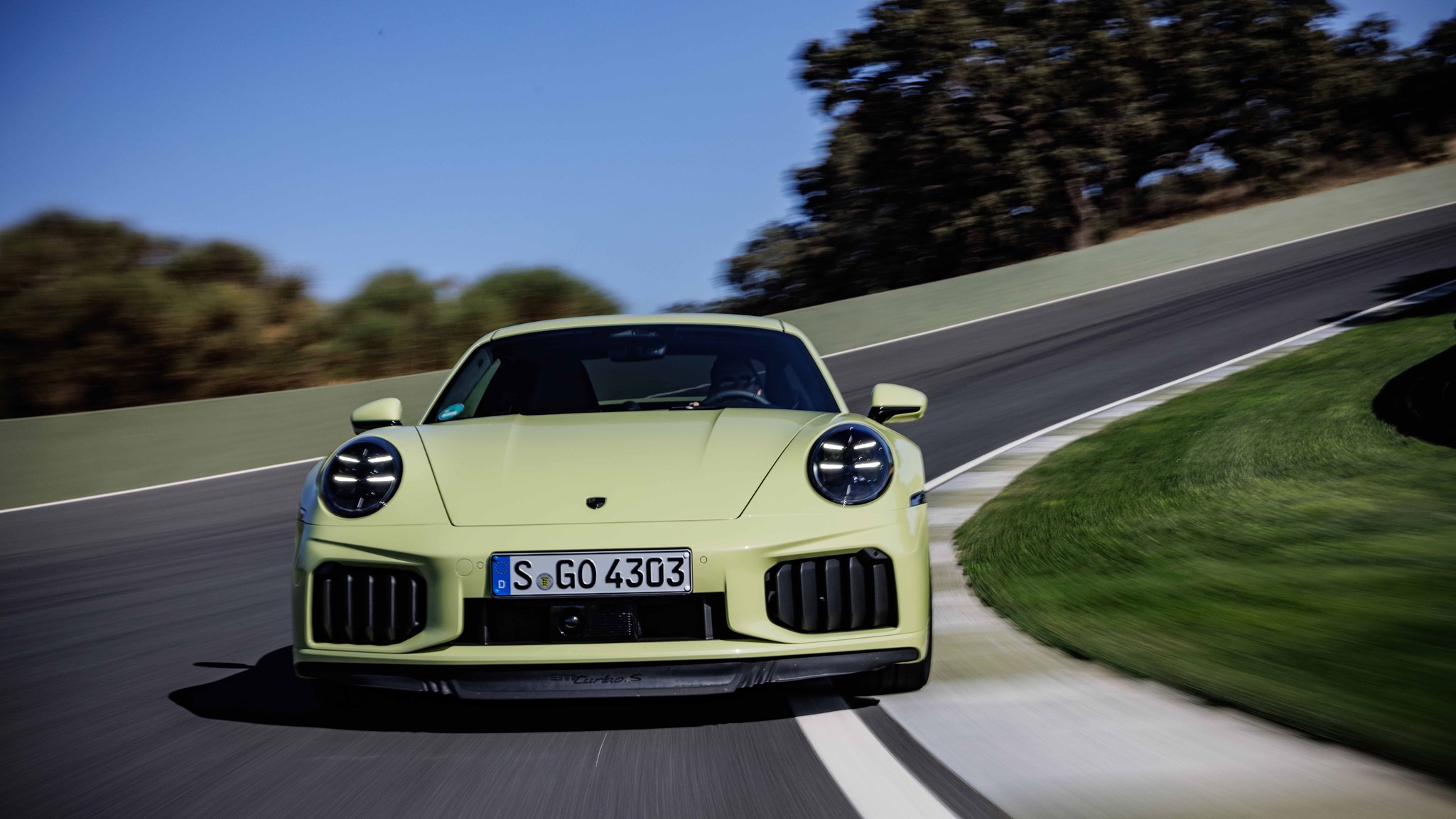
Braking is strong but not overly grabby even when cold, while the extra traction from the wider rear tyres is welcome. The front end (with MacPherson strut hardware) certainly feels more old school 911 (less responsive, not as pointy) than the double-wishbone GT3, while the gearbox is also little slower.
Of course, this is to be expected and it’s unfair to compare Porsche’s dedicated track weapon with the Turbo S, yet it’s highly plausible that – at certain circuits – the far more powerful Turbo S would return a quicker lap time.
The tidal wave of torque from low revs means even slower corners can be done in third, plus there’s huge urgency in the powertrain right until the 7k+ rev limit. Body control is also notably improved with ehPDCC and does allow a little more precision on the limit, yet this isn’t the kind of car you would push for multiple laps for the sake of it. Patience is still required, as is management of the weight (this being no different to the last Turbo S), but it’s an effective tool regardless.
Out on the road the improvement in comfort is somewhat surprising given, on the face of it, the focus has been on track ability. The ride has taken a step forward (no doubt helped by the ehPDCC) while tyre roar (always a 911 bug bear) has also been muted. Only a squeak of wind noise from the driver’s side mirror let things down a little.
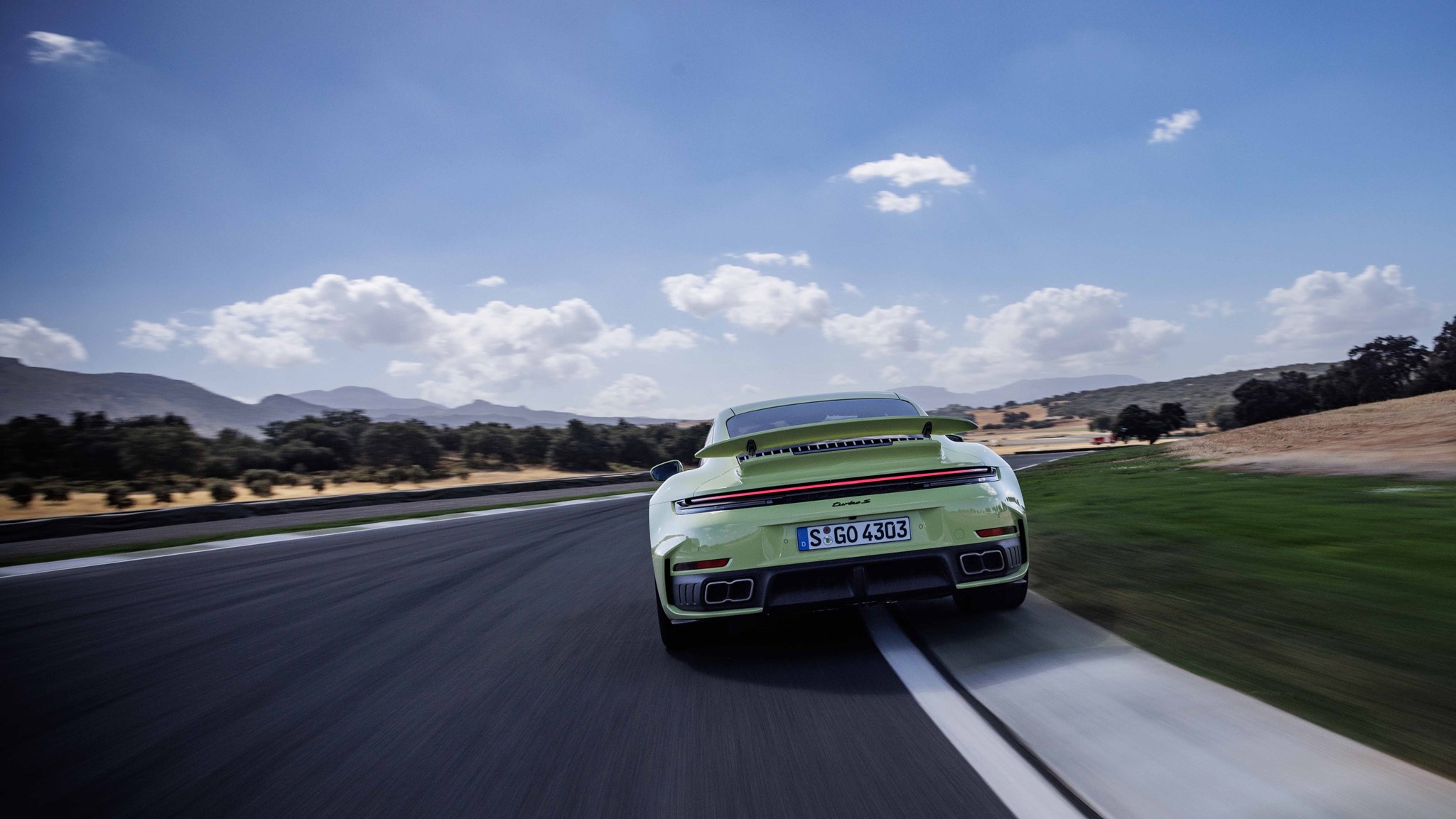
That said, while the responsiveness of the powertrain is hugely impressive, the overall experience left us feeling a little cold. Despite a new titanium sports exhaust system saving 6.8kg, the sound is deep and doesn’t have that flat-six rasp you’d hope for, plus the piped in engine sound feels exaggerated. Of course, not every 911 engine can be a naturally aspirated 4.0-litre, but thus far the T-Hybrid units have been effective but lacking in a little character.
What about the interior?
The differences between the 992.1 and 992.2 Turbo S interiors are minor. It’s a shame to see the analogue central rev counter go, but the digital replacement works exceptionally well despite looking more generic. Turbonite detailing features throughout, plus there’s no-cost option rear seats if you wish.
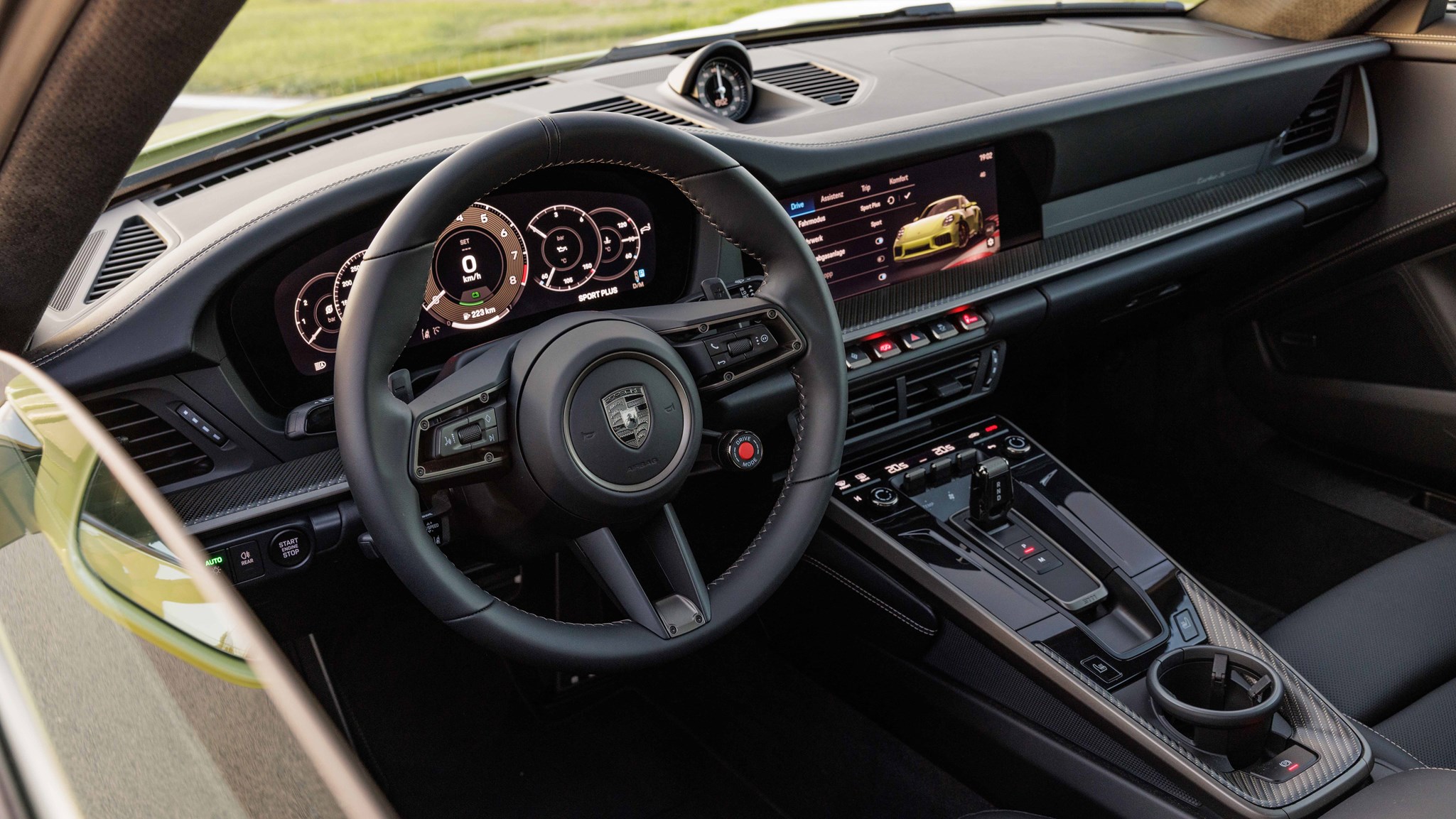
Otherwise, the interior is the usual 911 fare. Exceptional driving position, a great view out, comfortable seats and a crisp and polished infotainment system. It’s hard to fault.
Before you buy (trims and rivals)
The Turbo S is available both as a Coupe (£199,100) and a Cabriolet (£209,100), with the latter coming with rear seats as standard. Rivals include the Aston Martin Vantage and upcoming Ferrari Amalfi.
Standard equipment on the Turbo S is predictably excellent, but you can still spend extra cash on the front axle lift or 10mm lowered sport suspension with helper springs added to the rear, for example. Additional cameras, Night Vision Assist, adaptive cruise and a number of different design packages are also available.
Meanwhile, if you fancy a roof-down version then the Turbo S Cabriolet is available from £209,100.
Verdict
The changes to this latest 911 Turbo S are neither small nor subtle, yet there’s little evidence that the formula has changed dramatically. On road, the Turbo S delivers even greater comfort than before while on-track, the Nürburgring numbers speak for themselves.
This is the 911 that can do just about everything and while it’s never going to hit the exciting highs of the naturally aspirated GT3 or GT3 RS, it’s value as an everyday car is beyond question. It might not be the dream 911, but it is the most versatile.