► New 321bhp, 4WD version tested
► Big performance improvement at expense of range
► Can it improve this somewhat disappointing SUV?
Peugeot is on to a winner with the new e-3008. Over 140,000 have been ordered since its 2024 launch, and it’s even made an appearance in the list of the UK’s best-selling cars every so often.
The severe cooling in demand for EVs would make you think the mild the standard mild-hybrid model is the one selling like hot cakes, but it’s actually the electric e-3008 that has done a lot of heavy lifting: 45 per cent of 3008 customers are opting for the electric version of the 3008. Of course, that’s considerably higher than the current 20 per cent market share electric cars make up overall.
Peugeot always promised more models would follow since this car’s introduction, and that’s what it’s delivering. A Long Range model has been revealed, but for now we’ve got our hands on the standard and dual motor versions of the e-3008. It promises a noticeable uplift in power, but is it the version we’d recommend? Read our full, in-depth review to find out.
Should I buy the Peugeot e-3008? It’s not cheap, but it delivered everything you’d want besides driving engagement. It’s worth a look, for sure.

At a glance
Pros: Striking styling, refined, high-quality interior
Cons: Unsettled ride, not very spacious in the rear, expensive
What’s new?
Before we talk about the new dual motor version we’ve driven, it’s important to look at the third generation as a whole. Peugeot has chucked all the toys at this new SUV, and it was the first car across all of Stellantis to use its new STLA medium platform, which you’ll see on the new Vauxhall Grandland as well as the latest Citroen C5 Aircross.
On paper it ticks all the boxes: it’s a swoopy electric SUV with a smart interior and now packs in enough range and speed to entertain more sceptical customers. With that in mind, there’s a lot of new technology here.
Not only is the platform new, there are also brand-new batteries and electric motors delivering more range and power than what you’ll find in the smaller E-2008 SUV. The interior builds on the outgoing 3008’s dramatic design with BMW-esque curved digital screens that spread across the interior.
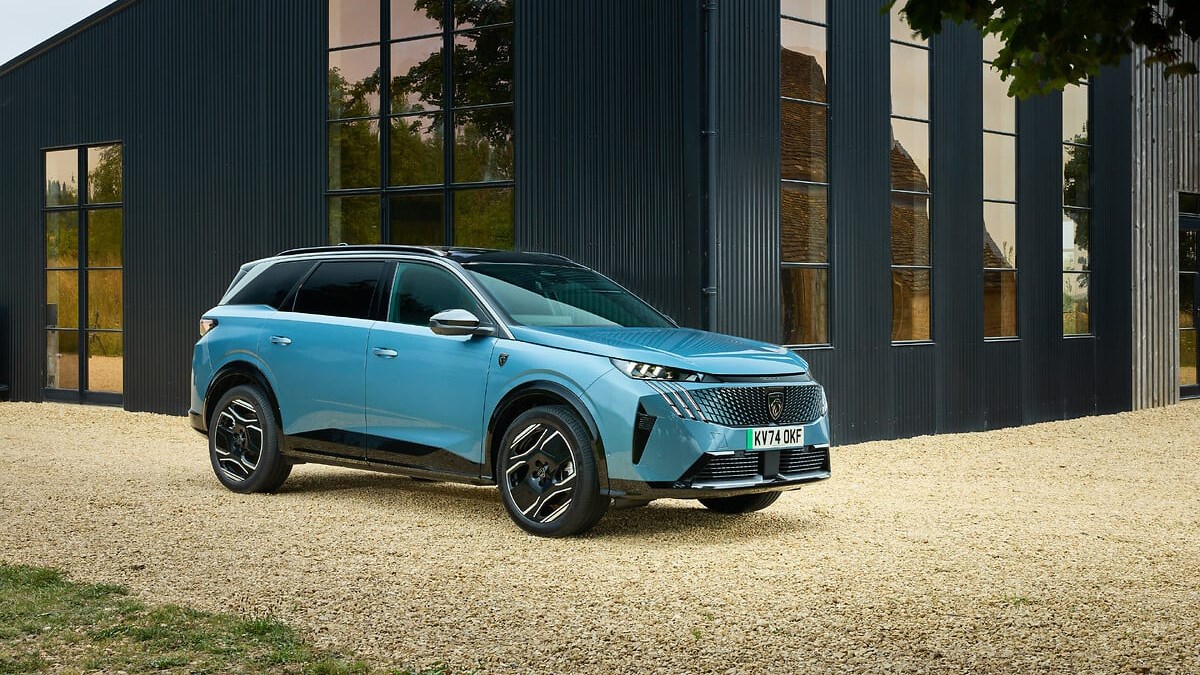
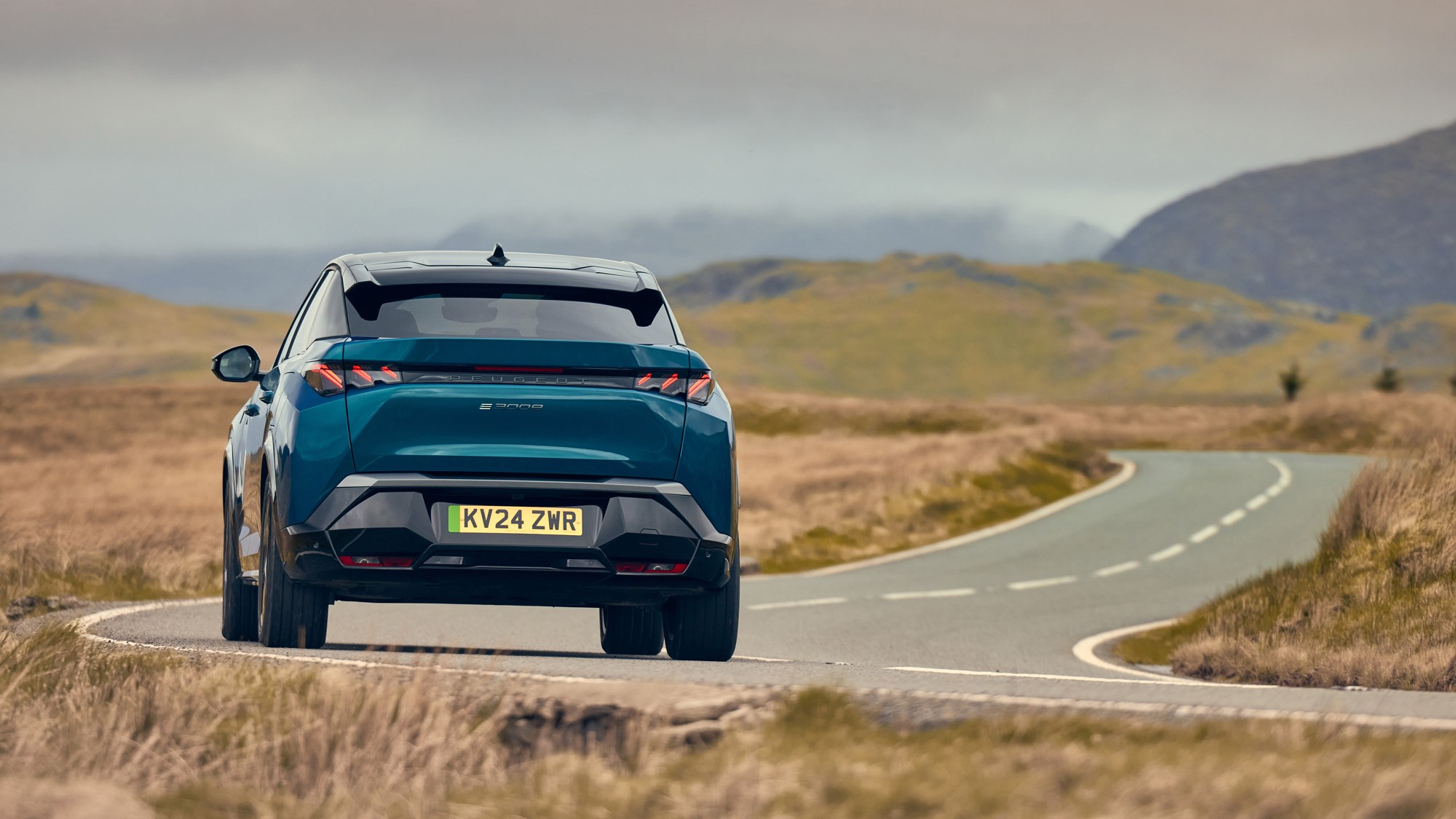
It’s got a more rakish look than its predecessor, with details such as a fancy frameless front grille and Peugeot’s latest lighting signature. It’s got a more coupe-like profile than before, though its designers prefer it to be called a ‘fastback’.
The Dual Motor gets a second electric motor on the rear axle, though Peugeot has also revised the chassis, with a tighter anti-roll bar, stiffer springs and shock absorbers and also revisions to the steering. Now that the Peugeot 508 PSE is dead, it’s the French firm’s most powerful car.
What are the specs?
The e-3008 launched in 2024 with a single version – and it’s the one that will remain the most popular. Pairing a 73kWh battery with a 210bhp front-mounted electric motor, Peugeot claims a 0-60mph time in 8.8 seconds and a max speed of 105mph. Its on-paper electric range is 326 miles, though expect 260 miles based on our tested 3.7mi/kWh efficiency figure. It’s also capable of 160kW rapid charging speeds, allowing for a 20 to 80% top-up in 30 minutes.
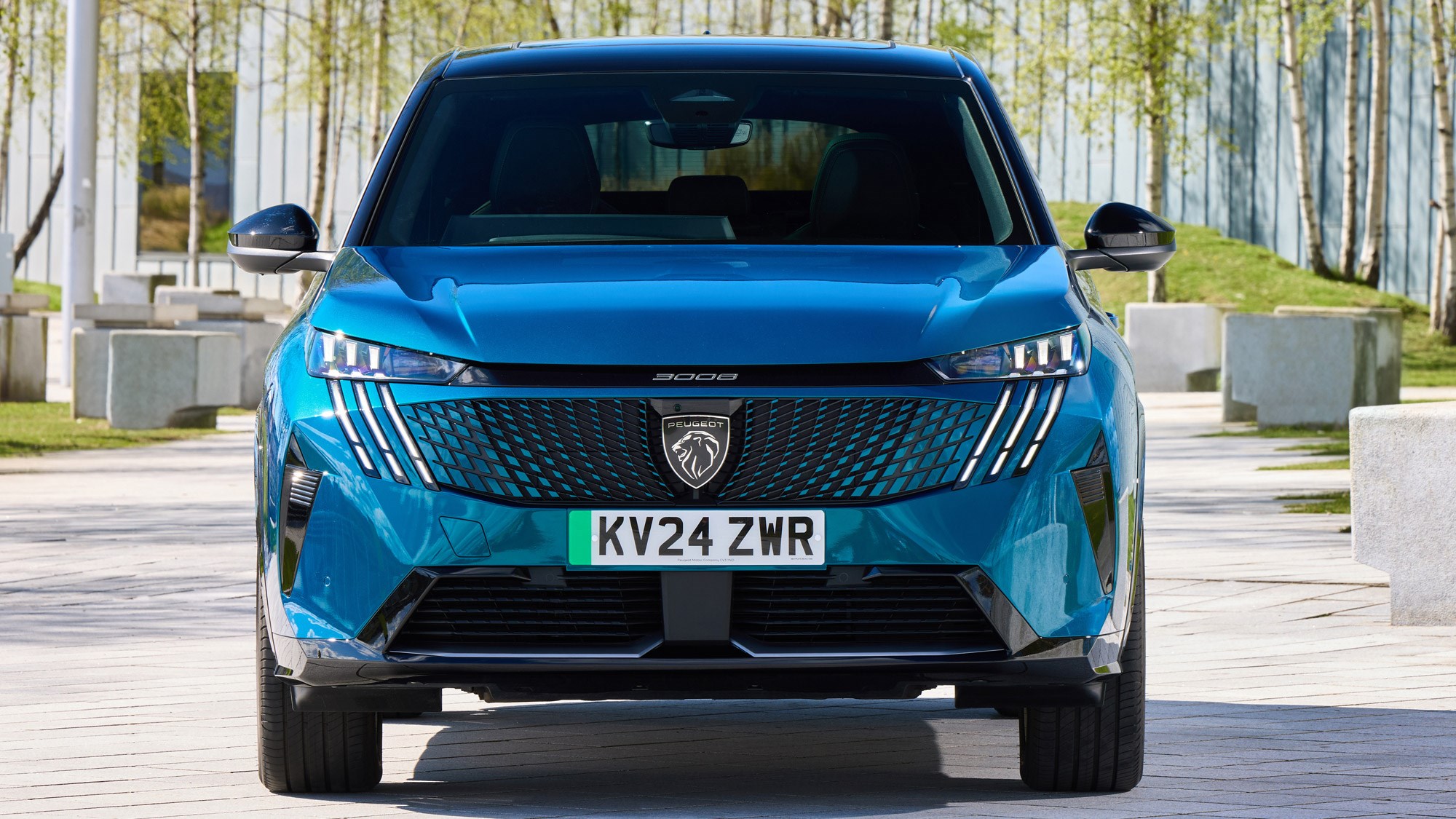
The Dual Motor model, which is visually only differentiated by a badge on the rear, gets the same front motor as the standard car, but adds a 111bhp motor on the rear axle, taking the combined figure up to 321bhp. Torque also jumps from 253 to 375lb ft of torque, helping to shave the 0-62mph time down to six seconds. It packs the same 73kWh battery as the standard car, though the range drops to 304 miles, or likely 240 miles in the real world.
We’re yet to get behind the wheel of the e-3008 Long Range model, but Peugeot claiming up to 435 miles from its 98kWh battery, making it one of the longest-range electric cars available.
A 1.2-mild-hybrid is also available, reviewed in our separate Peugeot 3008 review, while a plug-in hybrid version expands the appeal.
What’s it like to drive?

You sit nice and high up (if that’s important) and Peugeot’s often-criticised driving position is improved courtesy of the new interior design. It’s remarkably refined too, with little wind or road noise and a near-silent electric motor, even at speed.
But it doesn’t take long before this goodness is undone. The ride quality on all but the smoothest roads is disappointing. Big standard 19-inch alloys (or 20s on the top-spec GT that most will choose) don’t help, as the 3008 never settles down. Instead, it prefers to constantly jiggle around on the UK’s crumbling roads. Smaller wheels seem to make minimal difference, too. At best it’s annoying, at worst downright uncomfortable.
The steering is light and effortless, but a step down from recent Peugeots’ quick and surprisingly granular steering. The rack swings nonchalantly side to side, changing direction well enough, but not really involving you, the driver, in the process.
The car is also terribly heavy – more than 2.1 tonnes in its standard guise for what isn’t an especially large SUV. It’s more than 200kg heavier than the Renault Scenic and Tesla Model Y too, both of which have larger batteries. That’s not progress.
The standard e-3008 feels cumbersome to drive too, falling over itself more than we’d expect through the corners with a feeling that it may tip into oversteer. Goodness knows how it’ll perform when Peugeot slaps in that gigantic 98kWh battery. We’ll find out soon enough.
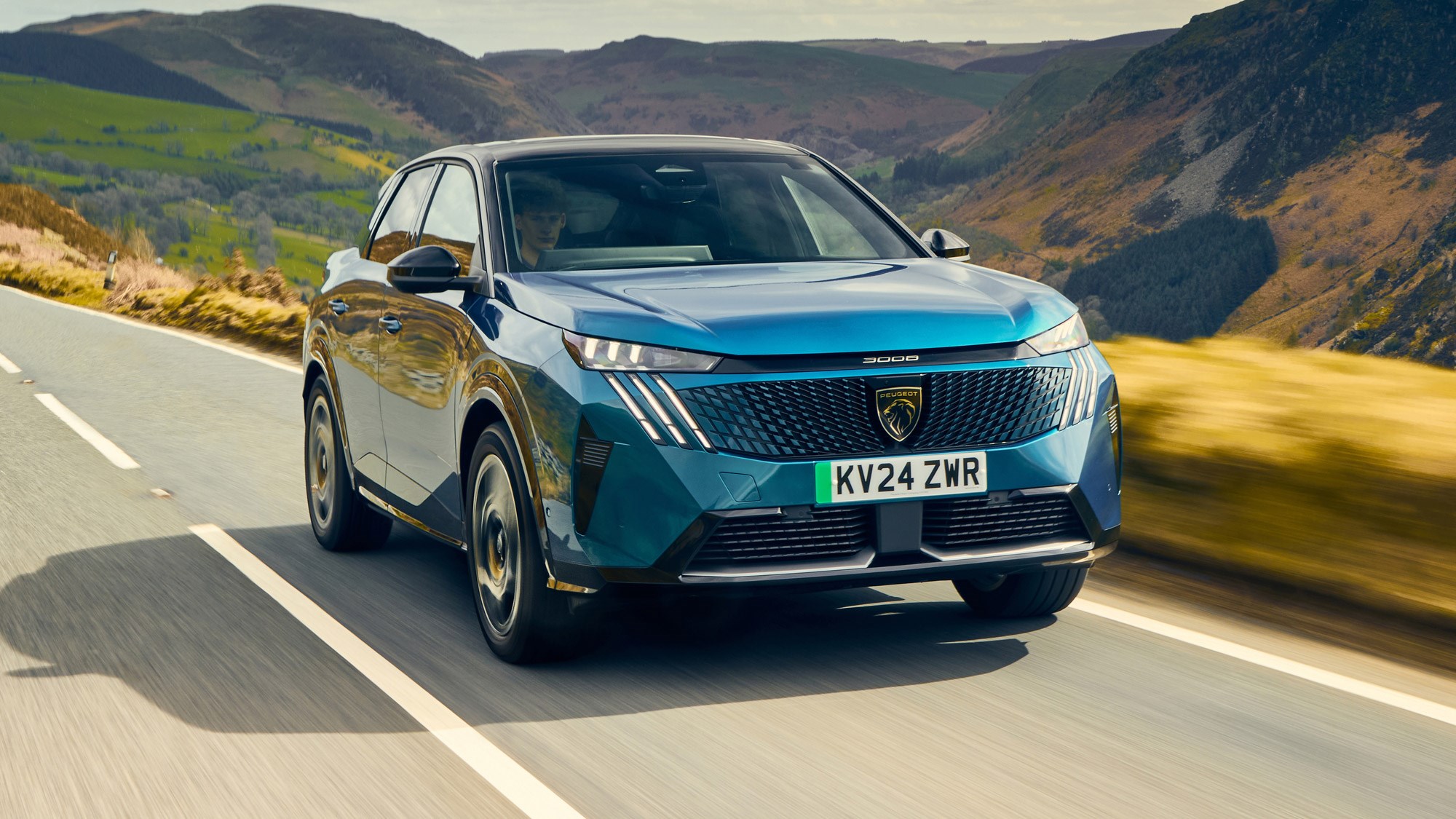
The Dual Motor, however, is an improvement to drive. The leisurely, if perfectly acceptable pace of the standard e-3008 is addressed here. The accelerator pedal has a slight resistance if you mash your foot down, but it quickly unlocks an extra degree of travel that enables max power. It’s by no means a performance SUV but it’s usefully quick, and easy to modulate – you won’t discover max power by accident, and we rate that on a vehicle like this.
Though we’ve only tried the Dual Motor on smoother German roads, that extra stiffness makes it seem a touch more tied down, and it doesn’t roll in corners in the same way. Traction is also impressive courtesy of its additional rear motor, while a dedicated 4WD mode means there’s plenty of grip even in the wet.
It’s still far from comfortable, most noted when we found a rougher road on our Black Forest test drive – and the brake pedal’s sponginess is disconcerting. Still, it is an improvement compared to the standard car for sure.

What’s the interior like?
Where the e-3008 claws back points when it comes to its interior, at least visually. It’s the first to usher in Peugeot’s new look ‘Panoramic i-Cockpit’, essentially 21 inches of screen curved around the driver. The look is nothing new, BMW does it on pretty much every car it sells these days, but Peugeot’s execution is good.
Previously, taller drivers especially would struggle with the driving position, the top of the small steering wheel often blocking the view of the dials, but Peugeot largely seems to have fixed this here – a big win.
Both the main infotainment screen and instrument cluster have excellent graphics and feel like they’ve been taken out of a premium product. Peugeot’s configurable touch keys can do whatever shortcuts you’re most likely to use and strike a good balance between a lack of physical buttons and usability, though the general ergonomics do still leave a lot to be desired. Style over substance, for sure.
That said, the quality and overall design throughout is generally excellent, with a brilliantly sculpted centre console and woollen dashboard and door cards feeling straight out of a premium product. It’s certainly a lot more interesting than an Audi Q4 e-tron.
But in the name of design, Peugeot seems to have forgotten about the need for its family SUV to be practical. Despite being 10cm longer than its predecessor, rear-seat space is cramped for a car in this class, with tight headroom (especially with an optional panoramic sunroof fitted) and limited legroom for a taller adult. Many far smaller SUVs manage more rear space. That said, at 588 litres the boot is an excellent size with dedicated room to keep the charging cables out of the way.

Before you buy
Peugeot wanted to stay up market with the 3008 – so its priced in line with other premium products. The range kicks off from £36,790 for the mild-hybrid, but going electric is far more expensive £46,060 for the Allure trim and £49,440 for the top-spec GT. Choosing the bigger 98kWh battery brings the price to £52,290.
The Dual Motor model, despite driving better, is harder to justify. Peugeot has priced it form £56,290. It should be said that Peugeot’s current finance offers are quite attractive, however.
Still, this isn’t cheap. Choose a few options and it’s possible for this SUV – even in this trim – to cost £55,000, a price it just can’t justify. You can pick up a Skoda Enyaq and Tesla Model Y for less. Peugeot’s eight-year electric warranty, providing you have it serviced at one of its main dealers, is an attractive package, though.
Other than that, the standard equipment list is impressive, though. Allure models come with the 21-inch panoramic i-Cockpit, 19-inch alloy wheels and keyless entry, with the GT trim adding an electric boot, adaptive cruise control and matrix LED headlights. One option that shouldn’t be is the £700 heat pump – we’d expect it to be included on a family SUV like this.
Verdict
On a purely aesthetic level, the Peugeot e-3008 ticks every box. It looks the part and genuinely stands out in a market that tend to all look very same-y, while the interior is up there with Audi and BMW levels in look and feel, even if it’s not as easy to use as posh rivals.
The Dual Motor version certainly improves the way the e-3008 drives, albeit its steep price increase makes it hard to justify over a regular version unless you’ll really benefit from having four-wheel-drive.
But given the e-3008’s importance, it’s a bit disappointing that it remains slightly off the mark when it comes to the way it drives and its rear-seat space and doesn’t even have attractive pricing on its side. There are better electric SUVs on the market, if perhaps none quite so distinctive.
Specs for standard EV.