► We drive all-new 2026 Nissan Leaf
► Nissan gets its EV mojo back
► Priced from £33k in the UK
The Nissan Leaf is the godfather of the modern, mainstream electric car. Peculiarly, Nissan has languished behind other rivals in recent years despite the head start that it gained with the original Leaf which launched all the way back in 2010 – and it’s hoping to fix that with this newcomer.
The all-new, third-generation model arriving in British showrooms in February 2026 brings impressive aerodynamics, longer range, new tech and a more modern, uncompromising attitude towards family electric transport than its predecessors. Read on for our new Nissan Leaf review.
At a glance
Pros: Efficiency, vastly improved infotainment, built in the UK, more normalised looks
Cons: Sunroof pinches rear headroom, there’s little for enthusiast drivers, rivals have bigger boots
What’s new?
The new third-generation Nissan Leaf sits on a modified version of the CMF-EV platform that sits underneath the Nissan Ariya and Renault Megane siblings in the Franco-Japanese alliance. It gets the option of two lithium-ion NMC batteries with usable capacities of 52kWh or 75kWh, but it says a lot for the Leaf’s impressive aerodynamic and powertrain efficiency that it manages WLTP range of 271 and 386 miles respectively.
For some context, the Kia EV3 key rival manages a lesser 375-mile maximum WLTP range, but needs a bigger 78kWh battery to achieve it – and the EV3 is already one of the more efficient cars in this class.
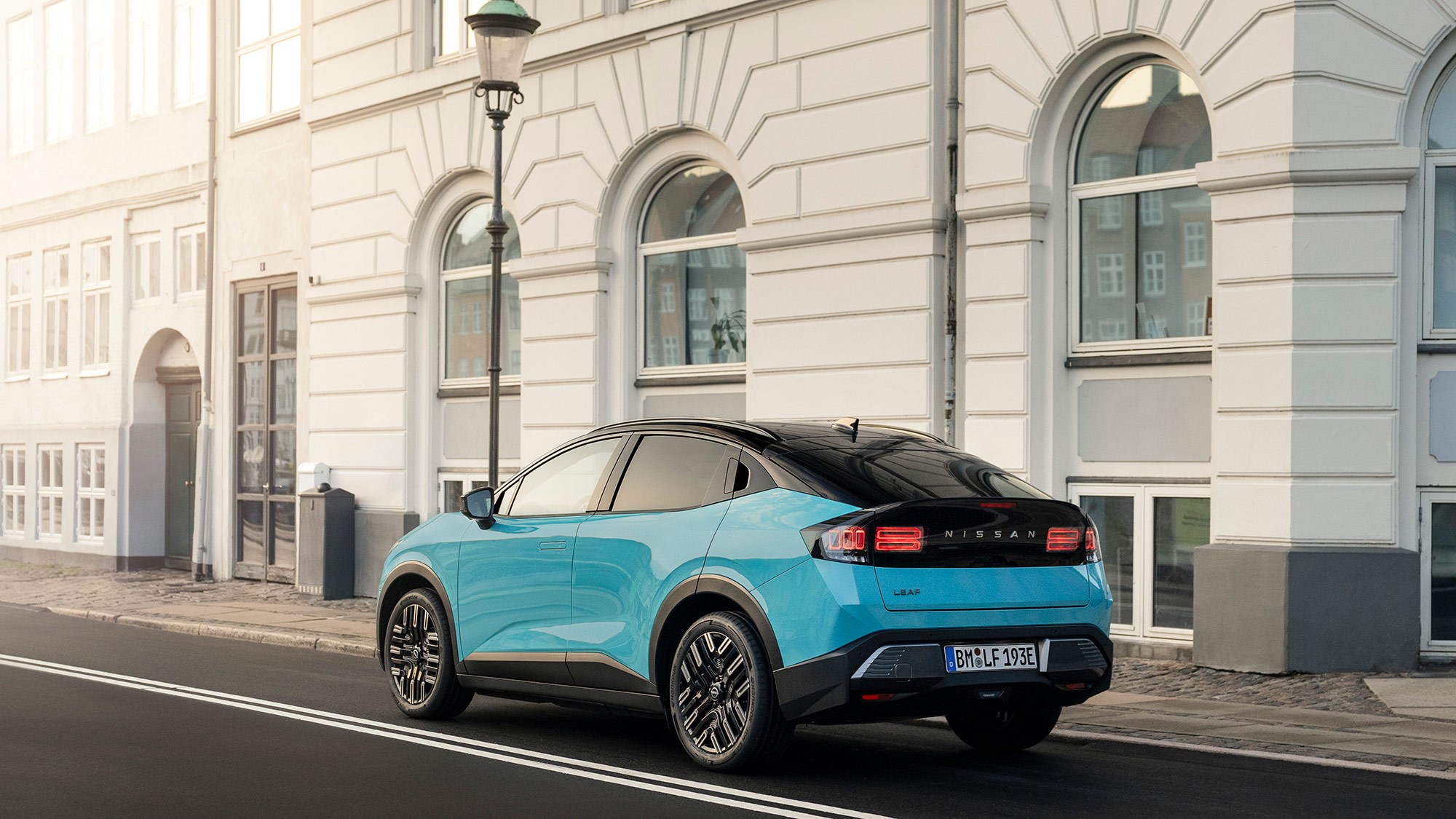
So that teardrop shape, the active aero flaps shuttering the front grilles on demand, the flat underbody, new permanent magnet electric motors, the liquid-cooled battery and clever thermal management, plus that cool ducktail rear spoiler, are definitely working. In fact, talking of the quasi-Kamm rear end… Is there something of the original 1980s Honda CRX in that black-panel rear end? Or is that really a dash of Pontiac Firebird Trans Am in the new Nissan Leaf? (Now there’s a sentence we never thought we’d write.)
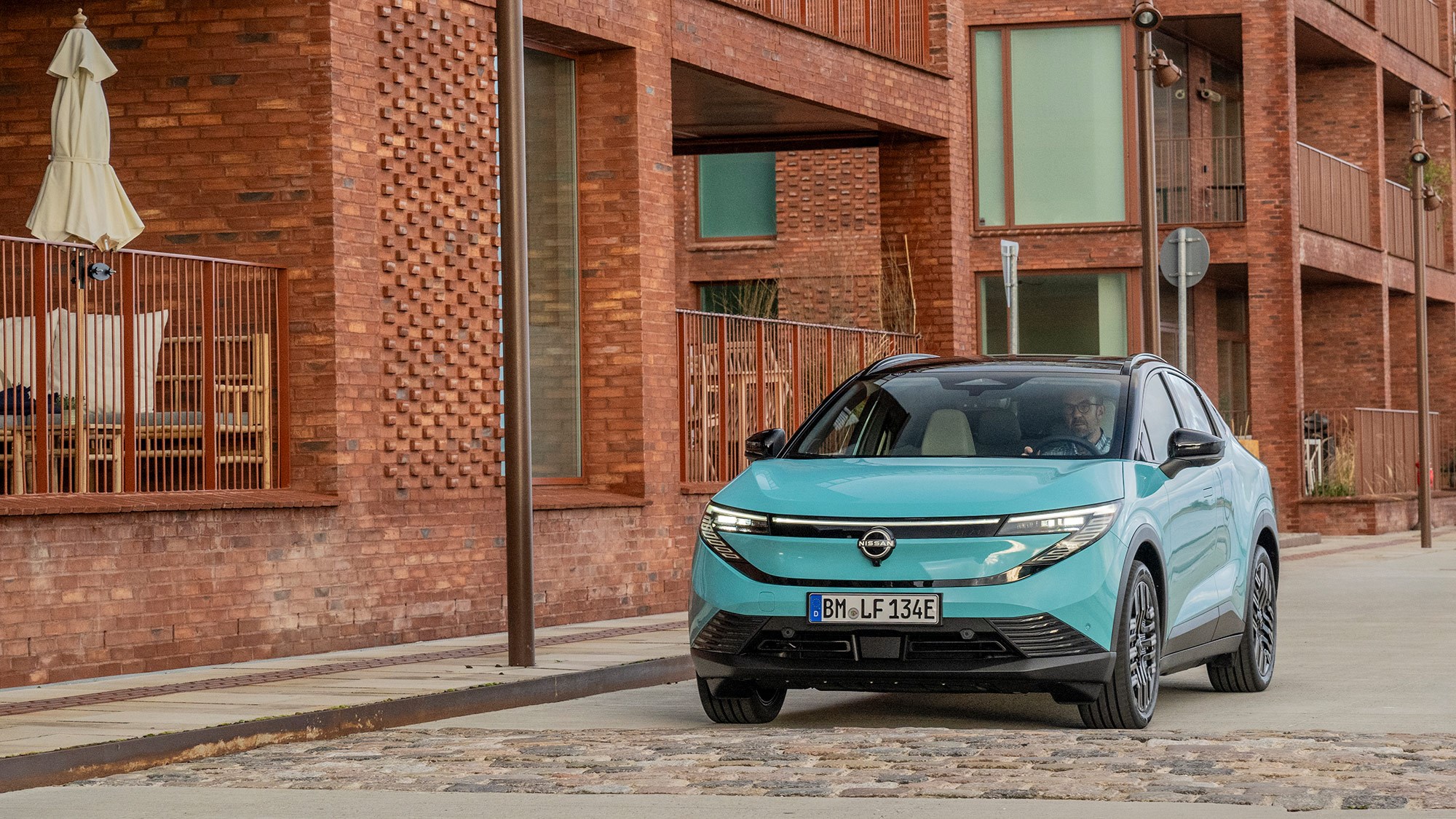
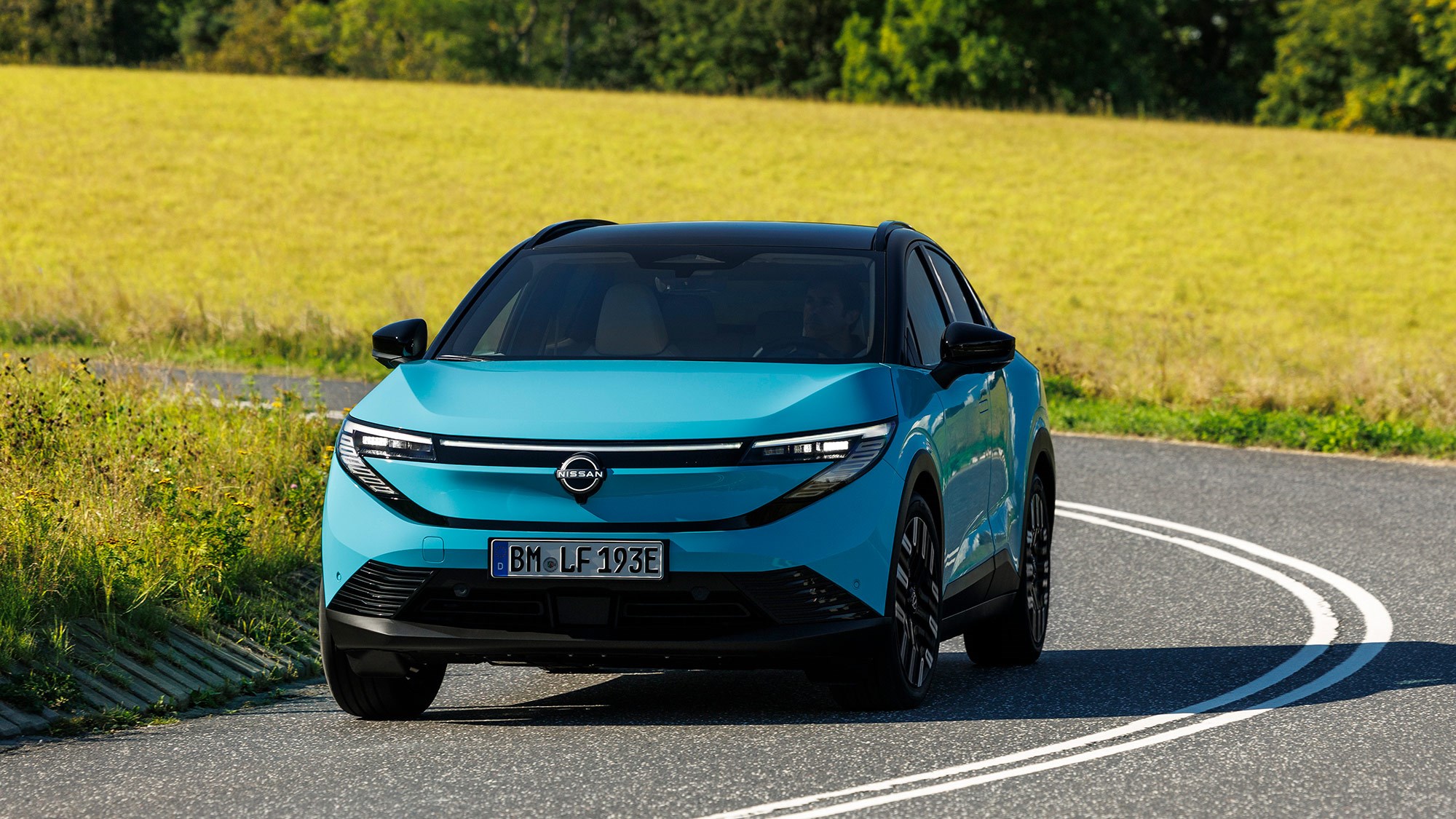
Styling is always a subjective topic but, to these eyes, Nissan has done a good job of making the new 2026 Leaf look distinct from the many and varied rivals that will compete with this, and while the front is slick but maybe a bit more derivative, the back end is particularly cool. And, crucially, it doesn’t look at all like a Renault. Everything about it looks and feels like a ‘proper’ Nissan, so don’t worry – this is anything but a rebadged Megane.
What are the specs?
The new Nissan Leaf has strayed marginally from its original family hatchback positioning – becoming something more of a crossover with its taller, shorter stance. It’s a tricky car to pigeonhole, but there’s something of a shrunken Tesla Model Y to it from some angles, especially the rear.
It will compete with everything from conventional electric hatchbacks like the VW ID.3 to crossovers like the Citroen e-C4 and Kia EV3, or SUVs like the Skoda Elroq. This is the competition that swamped and overtook the previous-generation Leaf. The new one – being a 4.35-metre long, five-door liftback – must fight its corner much more convincingly.
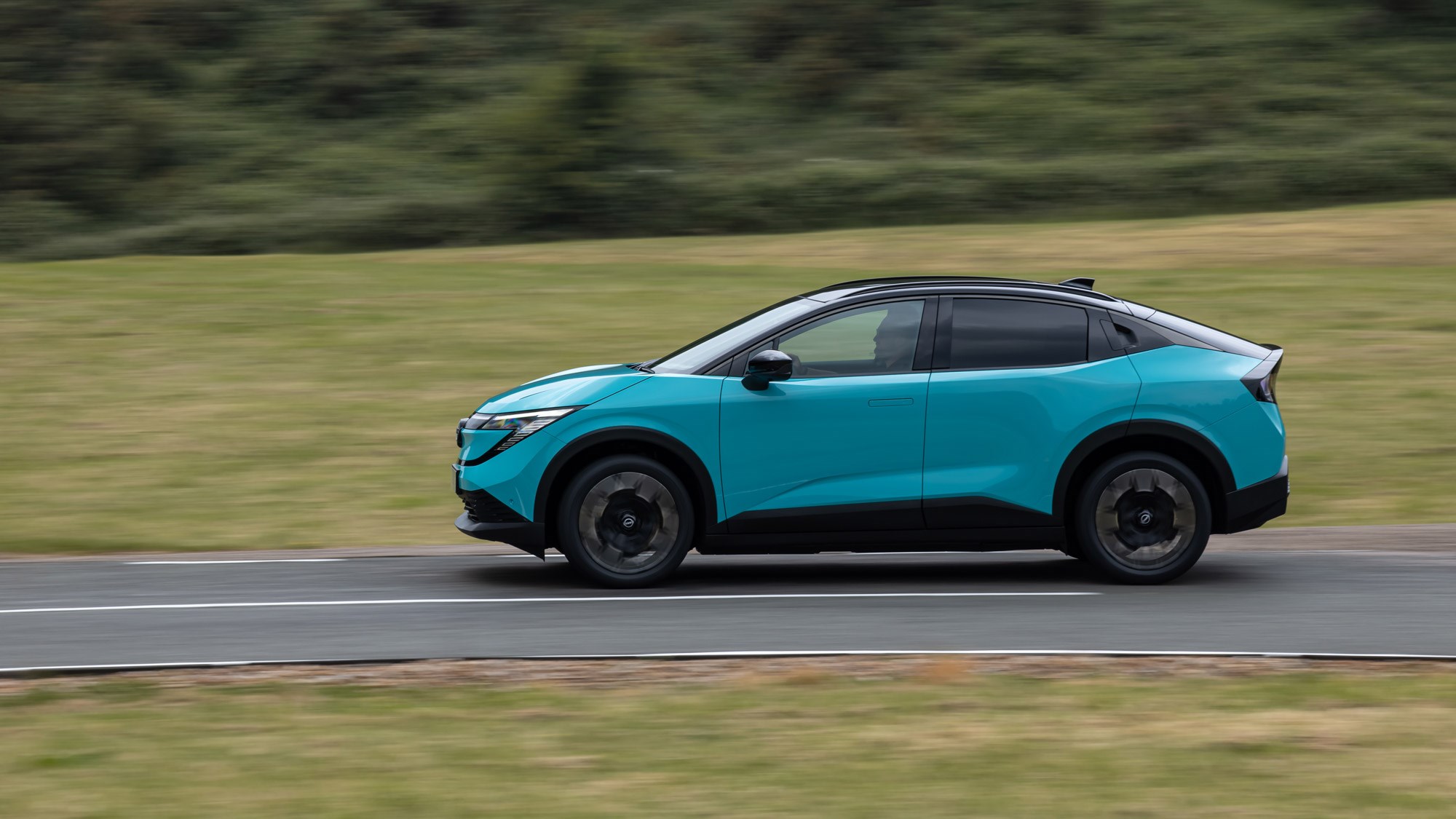
That swooping silhouette is all about boosting efficiency and a super-slippery 0.25Cd aero figure is designed to carve through the air with minimal drag, boosting range. For now, this is a front-wheel drive only car with either 174bhp or 215bhp electric motors, depending on which battery you go for. They are good for 0-62mph sprints in 8.3sec or 7.6sec, respectively, when in Sport mode. All Nissan Leafs are capped at 99mph top speed.
The platform can take four-wheel drive, though, and while Nissan engineering bosses said that there are no current plans for now, all-wheel drive could be on the cards in the more distant future. Look out for a Nismo-badged variant later this decade, we’d predict…
How far will the Nissan Leaf go on one charge? To their credit, Nissan’s execs were open about the fact that the top model’s 386-mile WLTP claim is unhelpfully optimistic, especially at motorway speeds, so for a more real-world estimate they told us that the new Leaf will do 269 miles of range at a steady 70mph. Which is rather refreshing info, we think you’ll agree? Drive more carefully, or at lower speeds, and that range will surely top 300+ miles, by our calculations.
We can confirm encouraging efficiency figures now we’ve extensively driven the final production version of the Nissan Leaf. We managed real-world consumption figures of:
- Mixed faster driving, including motorways: 3.7 miles per kilowatt hour
- Gentler cross-country and town work: 4.1 miles per kilowatt hour
Charging speeds are up to 150kW, which will (of course) do a 10-80% charge in around 30 minutes if you find a rapid charger, which has become something of a default claim from every EV these days.
Again, Nissan has bucked the trend by deciding to give us some actual useful information, and clarifying that the fairly flat charging curve will see the Leaf gain as much as 273 miles of range in 30 minutes. A more useful metric for most drivers, let’s face it, and it’ll be interesting to see if the car lives up to these claims.
How does it drive?
The new Nissan Leaf drives with a mature, hushed, comfortable bias. It’s an easy car to thread across town and it isolates occupants from the outside world with impressive refinement.
It’s not remotely sporty, but you may be pleasantly satisfied by the way it turns in keenly, and the nice, oily build of weight to the steering as you feed through corners. Stick it in Sport mode, which is accessed via a physical button on the dash, and it suddenly weights up noticeably – although it doesn’t actually make the Leaf feel a whole lot more engaging.
Brake regen has four fixed modes that you can control via paddles, ranging from completely off to very heavy deceleration, plus the adaptive ‘e-Pedal’ mode for one-pedal driving around town. Regardless of mode, the regen eases in nicely as you modulate the throttle and proves predictable and easy to use. We like how you can now tailor the braking so easily using the paddles; it’s very intuitive.
Our 75kWh test car rode on 235/45 R19 Hankook rubber, and being the bigger battery it’s also the heaviest of the Leaf models at 1937kg. You do feel that weight in big direction changes – even though body roll is pretty undramatic and the Macpherson front- and multi-link rear suspension keep the tyres neatly in contact with the road even over mid-corner bumps. Ride comfort is decent, too. You notice more abrupt intrusions, like expansion joints, but the Leaf remains settled even over coarse road surfaces.
We’ve driven early Leaf prototypes and now final-spec production versions and it’s clear that it’s no handling thriller. Rather, it’s unflappable and cohesive – a crossover with its eye firmly on comfortable and quiet progress; a car that you feel instantly at home with. Which is precisely what it needs to be.
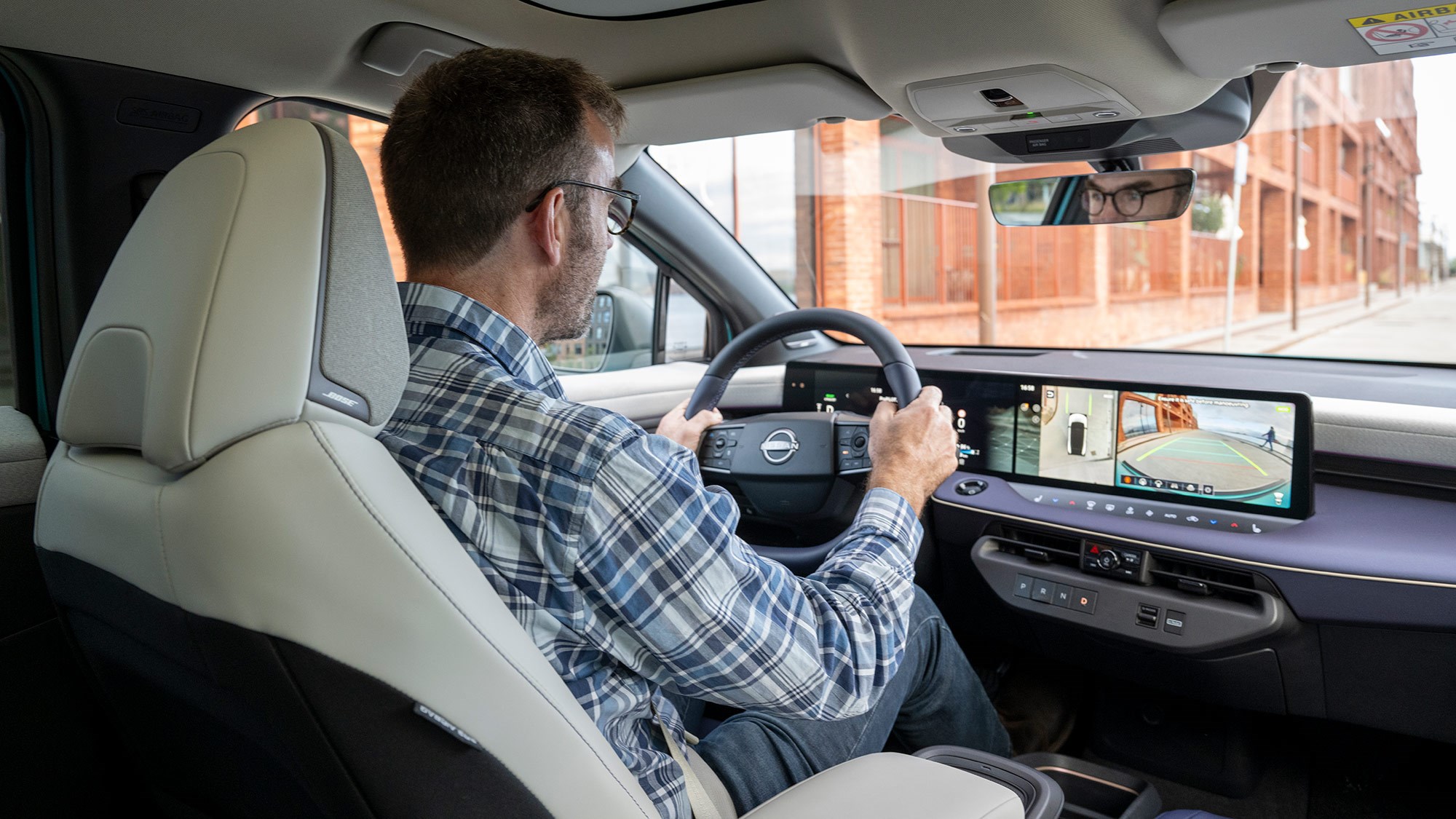
Quick word on the excellent cameras (see above). They make it really easy to manoeuvre at low speed, providing a clear 360-degree view around the car for parking.
What about the interior?
The interior of the Leaf is dominated by huge twin 14.3-inch screens stitched together as if they were one ultra-wide display dominating the dashboard. It’s got all the features you expect including configurable home page and wireless Apple CarPlay and Android Auto connectivity to sync with your smartphone.
More than that, the graphics are sharp, the screen is glossy and it all seemed to respond quickly. Built-in Google maps and app services means that the software generally works in a way that we’re all familiar with, too. This system feels light years ahead of any previous Nissan system and is very easy to operate, with unusually accurate voice recognition.
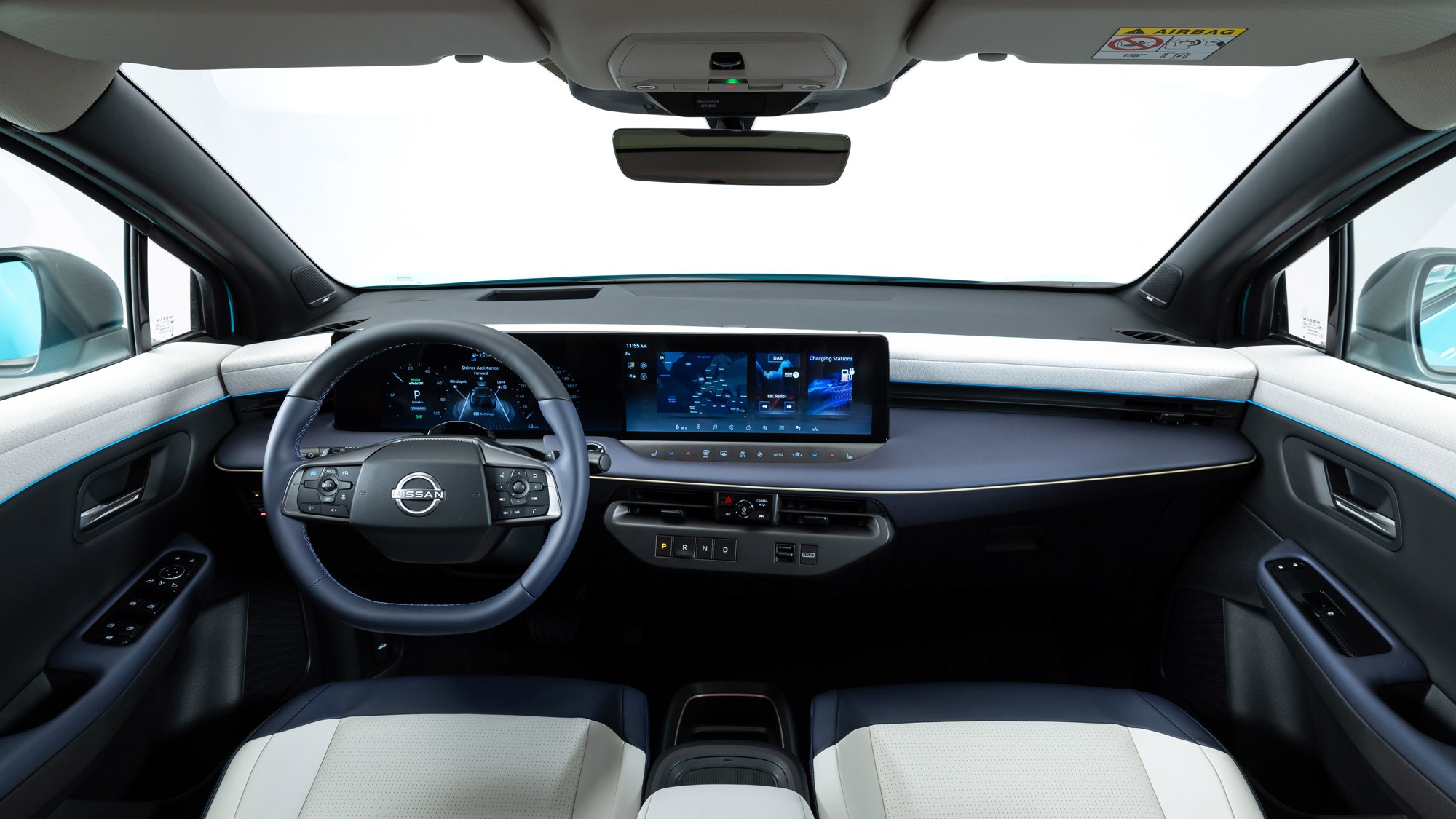
Recycled materials abound in the cabin, including some very nicely textured finishes and a few flourishes of colour. Plus you can even have a massage seat if you want on the top spec models, not to mention a head-up display, and the top two trims will get the fixed panoramic roof with variable opacity. It even has the LEAF name mirror-written into the roof graphic so that the shadow it casts on the back seats reads… well, LEAF. Just in case you forget what you’re driving.
Our test car had a band of ligh-coloured fabric around the door tops and dashboard; choose your trim carefully if you have young children with mucky fingers, is our advice… Overall, the quality of materials is decent and the interior feels built to last.
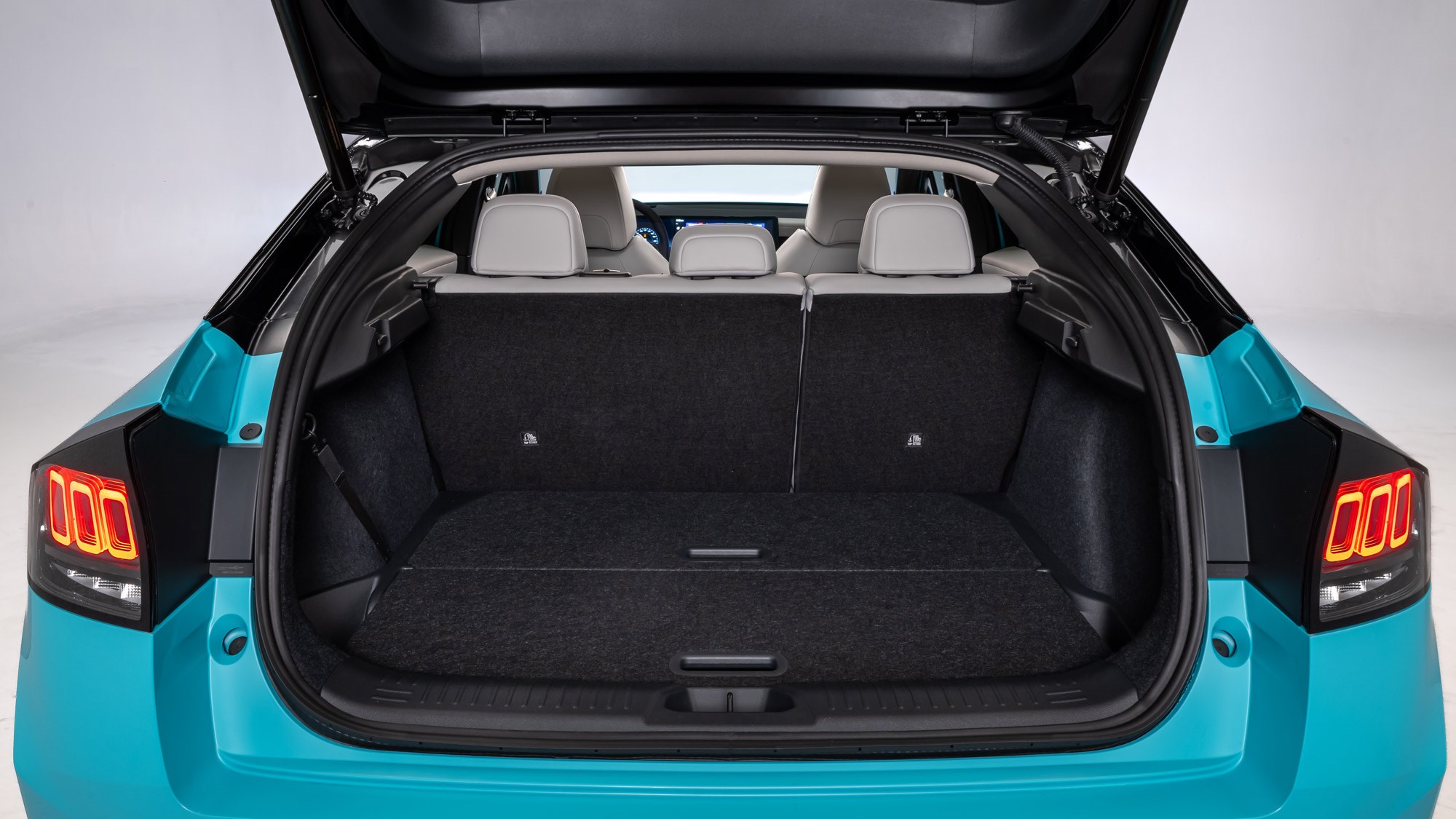
The 437-litre boot feels a tad cramped, though it’s much bigger than it first looks if you remove the false floor to extend the depth. There is no front boot (or “frunk”) on the new Leaf.
Before you buy
Production starts at the UK’s Sunderland factory at the end of this year, with sales to begin in February 2026. And, even better, the batteries will also be built at Nissan’s AESC battery factory just across the road from the vehicle plant. And yes, when the factory is fully up and running that will include the battery cells themselves; it’s not a glorified assembly plant that’s slotting third-party cells into the pack. You will finally be able to buy a British-built EV with British-built batteries.
And if that’s not reason for celebration, we don’t know what is. We’ll have to wait until later this year for specifics, but the Leaf will certainly be well equipped, and the top-spec models will have all the luxury trappings as standard.
Prices for the new 2026 Nissan Leaf will start at around £33,000 for the smaller battery, while the bigger battery model will start from £36,000, the company has confirmed. And with the government’s latest Electric Car Grant as good as confirmed on this British-built and batteried EV, it seems likely that the private retail price will start with a ‘2.’
Verdict
Nissan has nailed it with the new 2026 Leaf. It has delivered a sensible, practical and polished electric car that builds on the technical achievements of the Mk1 and Mk2, but removed the quirky Japanese-ness of the originals. Let’s face it, earlier Leafs were a bit oddball, best left for early adopters.
The new Mk3 Nissan Leaf is anything but strange. It’s morphed into a distinctive, more sophisticated EV with clever-clogs tech that does the important stuff really well. The focus on efficiency is welcome. The new Nissan Leaf is a complete departure from its predecessor, but in a good way. Not just in the styling, but in the sense of solidity that permeates the cabin and the way it drives, and in the tech that quietly makes this such an efficient and capable car.
It’s no purist’s dream, but it’s stuffed with tech goodness. And it feels like a ‘proper’ Nissan. A thoughtful Nissan. Something that the company has put all of its substantial cleverness, individuality and ability into. And that makes us very happy, indeed.