► Quintessential Morgan Plus Four driven
► Still available with manual gearbox
► BMW turbo power makes it quick
We came away impressed from our drive of the brand-new Morgan Supersport – so how does the far more established Morgan Plus Four compare? Described as very much the core of the company’s ethos and a nameplate that dates back to 1950, the Plus Four is the model Morgan says it least likes to meddle with. So even though it was last updated in 2024, the fundamental formula and that distinctive silhouette remain instantly recognisable.
As a Morgan, and if you’re a car enthusiast, anyway. Spotting exactly which Morgan has been made easier by the more radically refined look of the Supersport, but telling a Plus Four from the now defunct Morgan Plus Six is a different matter – and as ever it seems ordinary people have basically no idea what the car is. Only that it seems strange to see it with an up-to-date number plate.
The basic cheat sheet is that the Plus Four is smaller – most obviously in terms of width and the size of the wheels – while the name indicates four cylinders. Like every other modern Morgan car, the Plus Four uses turbocharged BMW power, but this is now the only four-wheeler from the company available with a manual gearbox.
At a glance
Pros: Classic looks with modern attitude, great manual gearbox experience, involving to drive
Cons: Cabin ergonomics are a compromise, not as evocative as six-cylinder Morgans
What’s new?
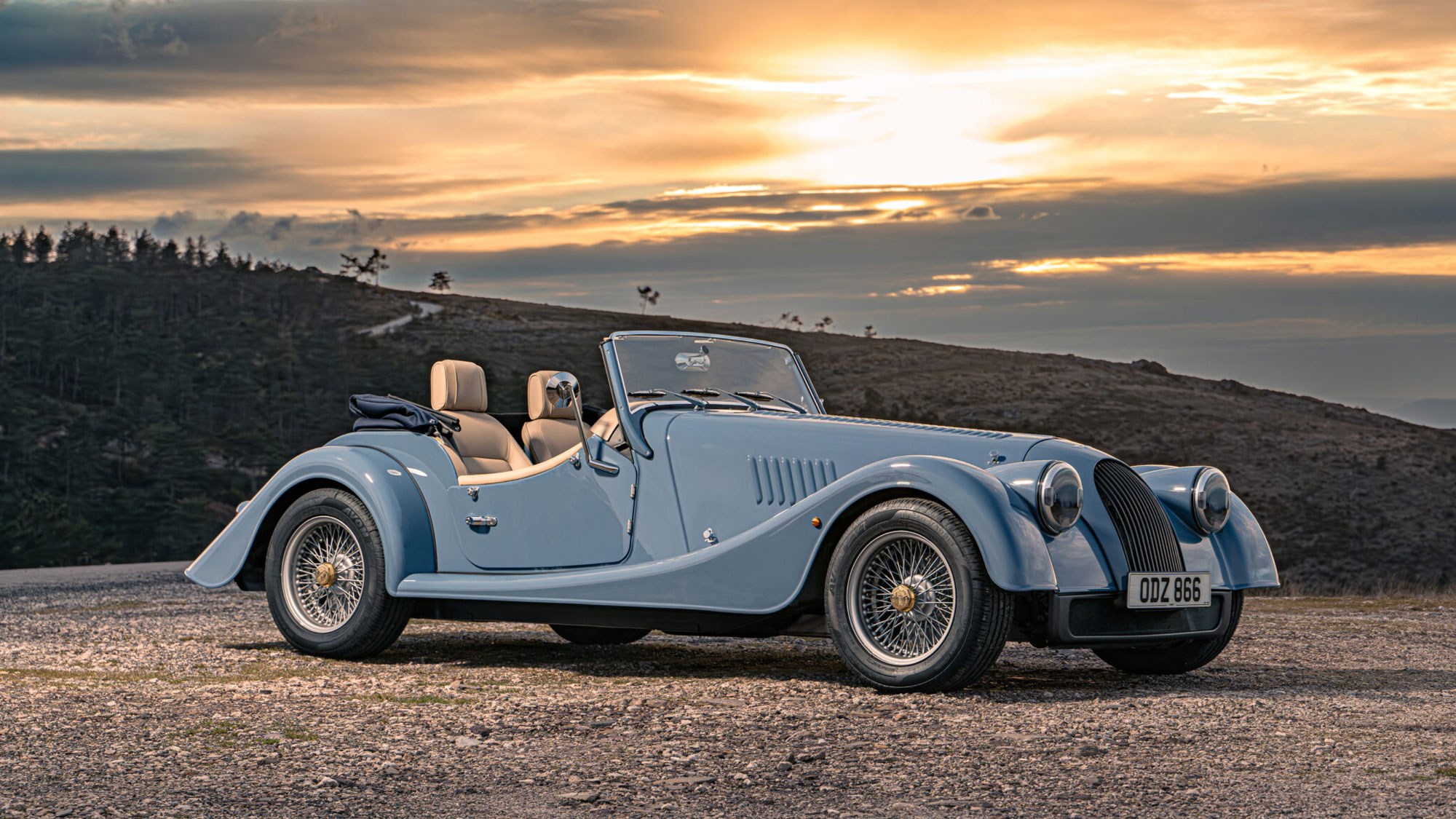
The styling upgrade for the 2024-onwards Plus Four is relatively subtle, but depending on the choice of wheel, still somehow has a more serious and racier vibe. A chunky athleticism to early cars’ delicacy.
The most obvious tell are the headlights, which now incorporate a sort of half-moon daytime running light profile and the front indicators. They are also an inch larger than before. Other changes include the cold-formed and more heavily surfaced front and rear wings, plus a front splitter and rear diffuser finished in dark grey matte paint to stealth their presence.
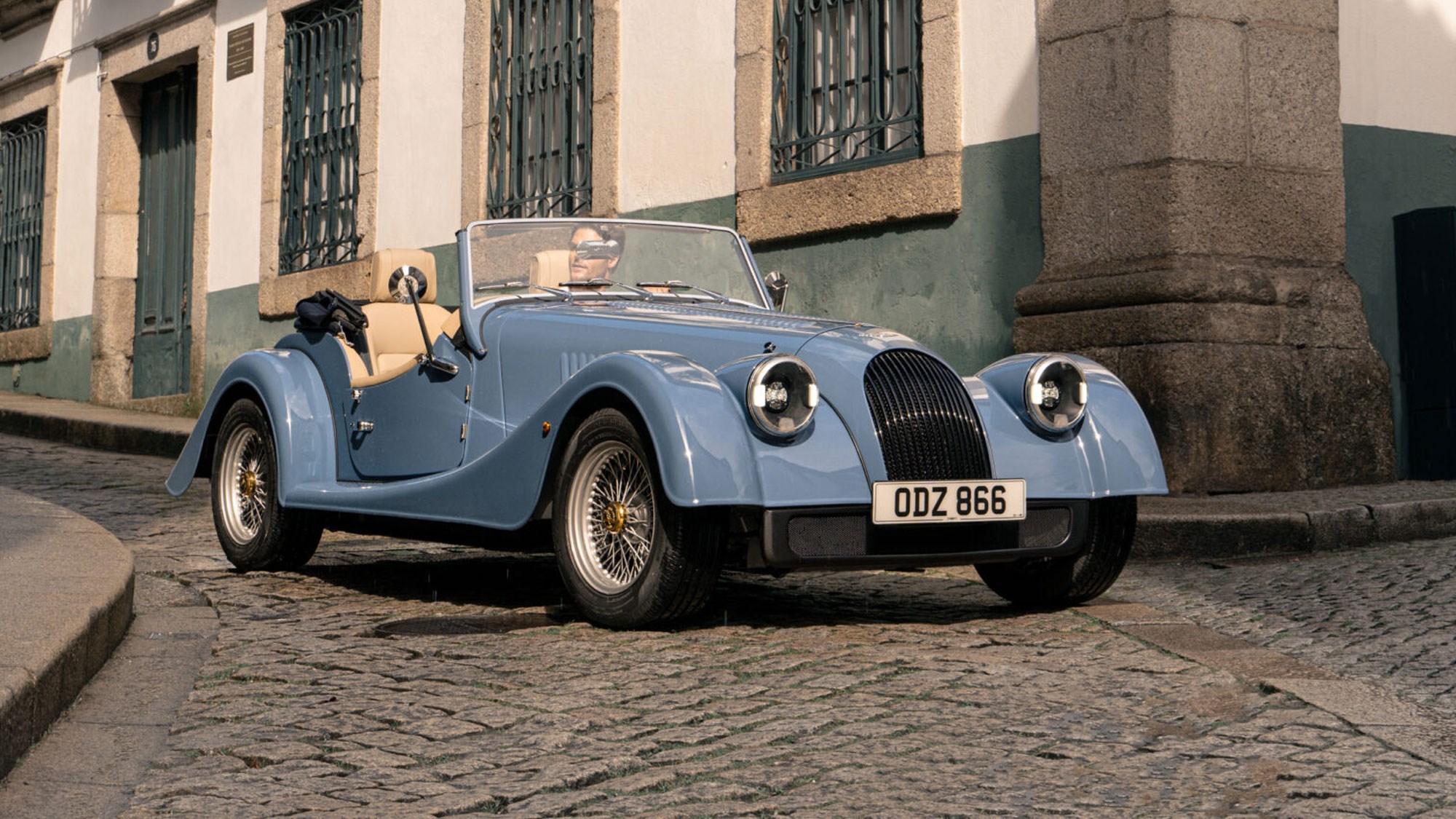
Under the skin is the aluminium CX-Generation platform first introduced in 2020, rather than the evolved the CXV variant of the Supersport. So the Plus Four isn’t as torsionally stiff but it’s certainly a fair step on from the wooden chassis cliché of yore.
The door mirrors are now an in-house design rather than off-the-shelf, while key options include an upgraded Sennheiser hi-fi and a Dynamic Handling Pack with Nitron adjustable dampers, revised rear spring rate and the addition of a rear anti-roll bar. Both the Handling Pack and the Sennheiser kit were fitted to our test car. Note that you also have to pay extra for such niceties as air-conditioning and heated seats (again, fitted here).
What are the specs?
The Plus Four is propelled by a 2.0-litre BMW TwinPower Turbo petrol engine with 255bhp and 258lb ft, a neat little four-cylinder unit that punches with plenty of conviction when mated to such a compact roadster. Weighing in a 1044kg with the standard six-speed manual gearbox, 0-62mph takes 5.2sec and top speed is 149mph – something you’d need to be both brave and earplugged to contemplate.
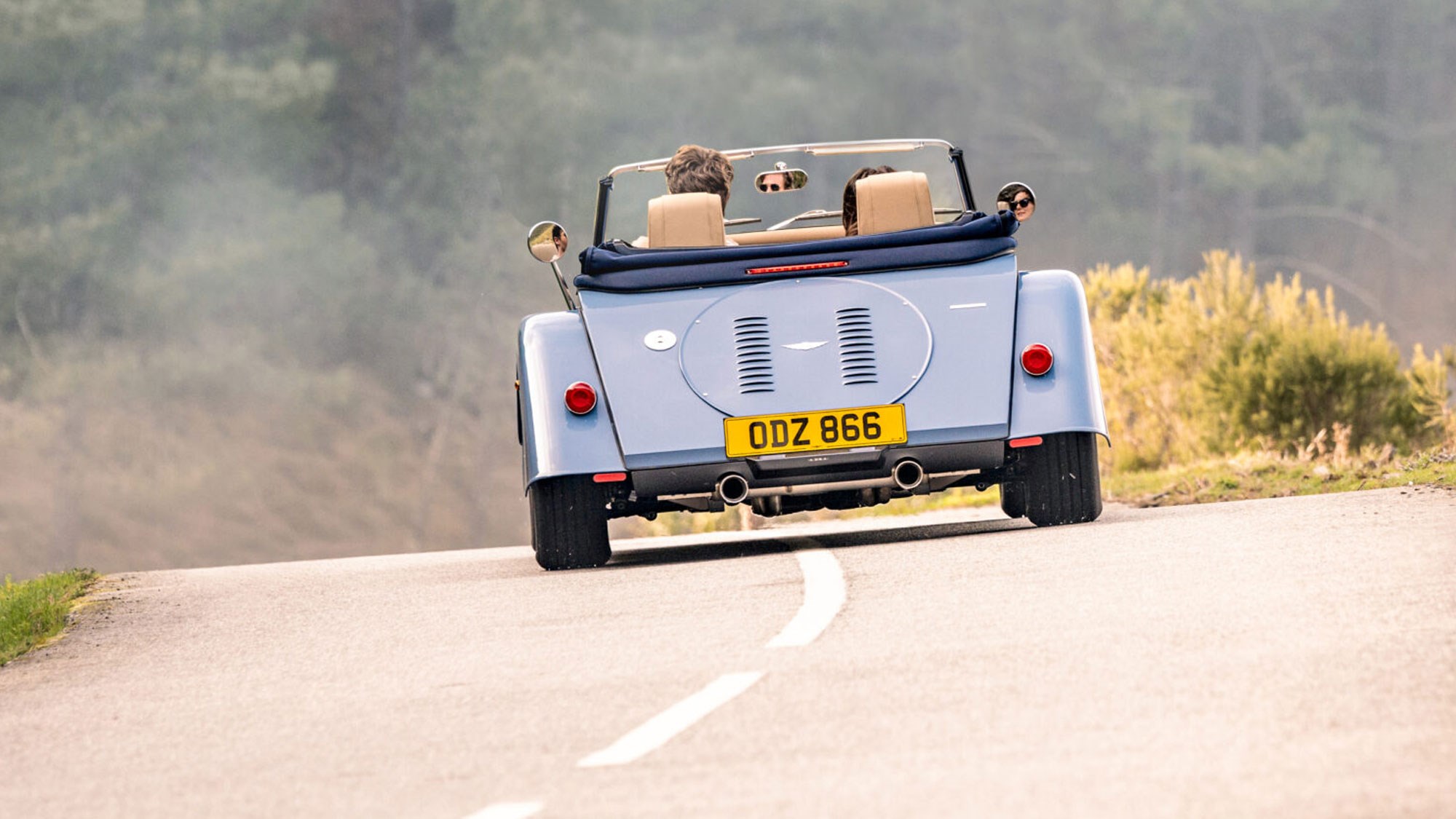
Fuel economy is officially 39mpg with CO2 emissions of 169g/km. I didn’t quite match that efficiency, but you can easily get into the 30s on the motorway, and it certainly sucks the fuel down far less swiftly than the Plus Six when pressing on.
The eight-speed automatic version cost £4.5k more and will likely be derided by purists. But it’s actually 4kg lighter, cuts 0-62mph down to 4.8sec and promises 45mpg with 142g/km CO2. Also consider that the manual test car had a hilariously heavy clutch, which was a pain in traffic. Gear-selection using the six-speed’s lever is deliciously tactile, though.
How does it drive?
Driving the Plus Four is suffused with the experience of being inside it far more than in most other cars. The cabin is narrow, there’s nowhere for your right elbow, and I found myself forced to sit far closer to the – rather ugly but airbag-equipped – steering-wheel than I really wanted to, a feeling like being folded inside like a human capital L. It is noticeably compromised compared with the larger Plus Six in this regard.
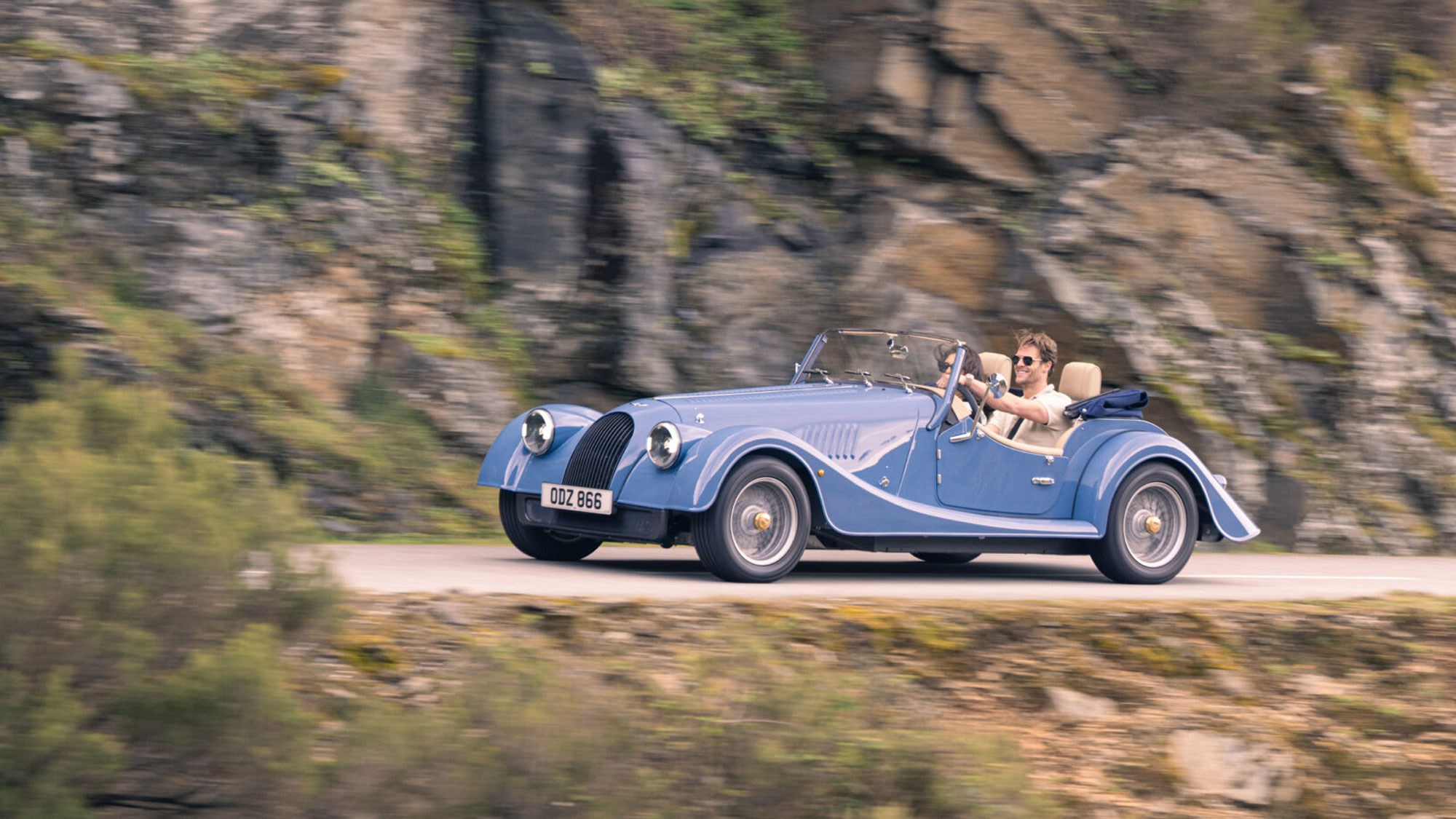
It’s also hard not to be disappointed by the noise. Even with the optional sport exhaust system the four-cylinder motor is far less evocative than the larger straight-six – as well as being appreciably slower. So, if you don’t care about having a manual gearbox and can afford the price difference, going for the full six-cylinder retro hot-rod has plenty of appeal. The new Morgan Supersport even more so.
However, if you can get past these compromises, there’s plenty of fun to be had in the Plus Four. That Morgan feeling of being virtually sat on the back axle is here combined with a deftness and lightness of being that quickly becomes quite intoxicating on the right sort of road. The snickety gearbox is magic, even if the clutch isn’t, and you can zip along very rapidly.
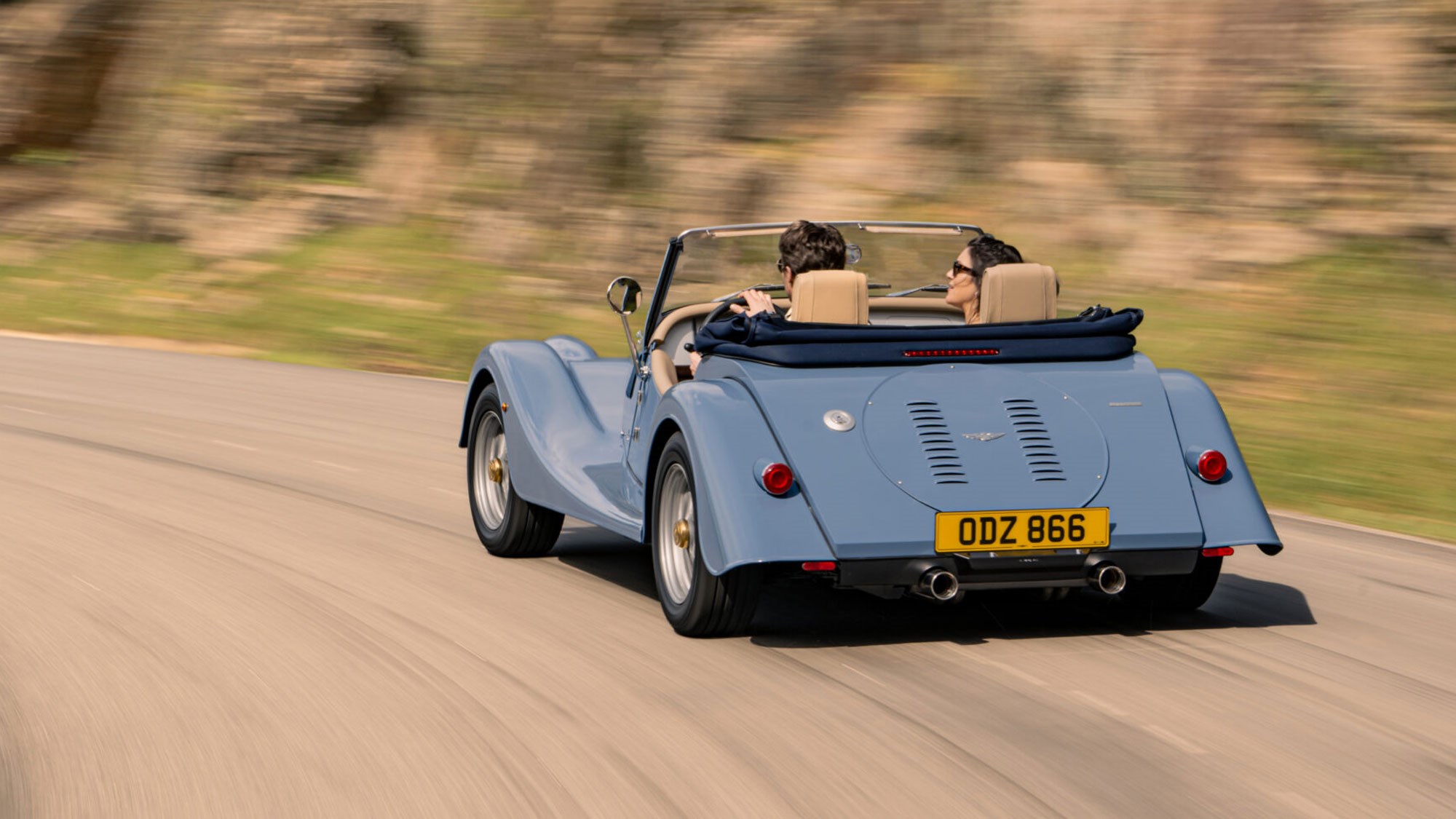
It does keep you on your toes, though. While the upgraded and mildly firmer Dynamic Handling Pack suspension rides reasonably comfortably for the most part, sudden dips that instantly unload the car are a little unsettling. Fast-paced cornering is entirely possible, but it doesn’t like you to lift off and the steering isn’t that quick so judge your entries and angles carefully.
In contrast to the clutch, the brakes and the steering feel very light, so that the addition of a rear anti-roll bar hasn’t completely eliminated the body roll is generally a good thing. The shifting momentum that builds through a sequence of direction changes underlines the need to pay attention – but also drives you on to try and get the dance steps right.
I found myself enjoying the experience, eventually. But it’s definitely the kind of car you drive quickly to in part enjoy the sense of relief at the end of the trip. In terms of how much it puts you in touch with the processes of progress, it’s very different to archetypal modern machinery you might buy instead.
What about the interior?
The Plus Four’s cabin is lovely to look at and clearly lovingly made. The basic digital screen in front of the driver makes up for the beautifully wrought analogue dials being in the centre of the dashboard, way out of your eyeline, while the quality of the materials and the impression of craftmanship makes it feel special.
The hidden Bluetooth-only audio system is neat, too, though good luck actually hearing anything at motorway speeds because the amount of wind and road noise – roof up or down – borders on the incredible. And as already discussed, the ergonomics are distinctly secondary to the ambience; there really is no room for outer elbows, and they’ll also get chilled by the wind coming through the gaps at the back of the door.
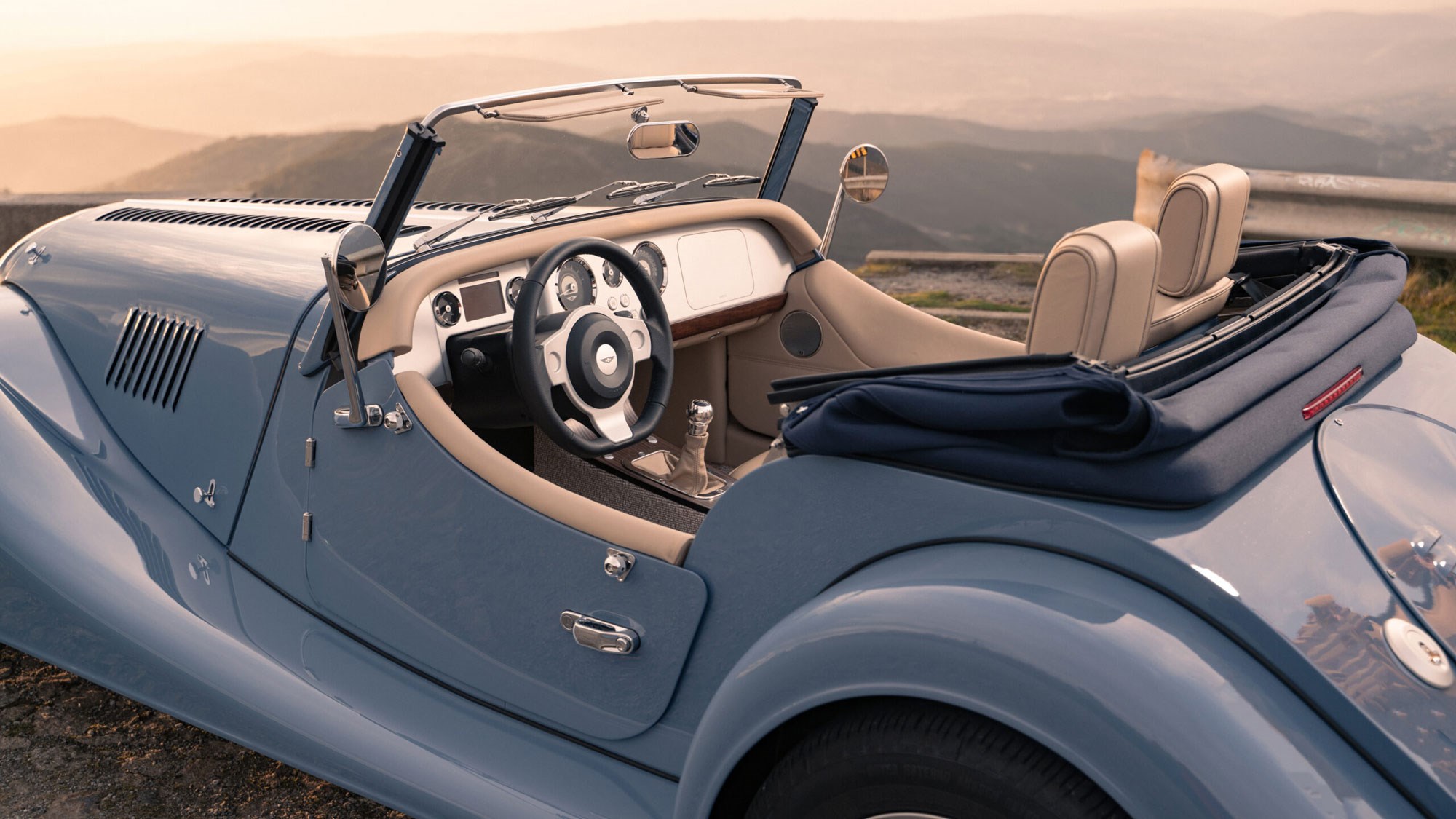
The roof isn’t exactly a work of engineering genius, either. The top catches on this test car were very tight – and as with the Plus Six, this means they’d taken the paint off the windscreen surround. The tightness was presumably an effort to keep the rain out, but if so, it wasn’t a very successful one. Reminded me of my dad’s old MGB in this respect.
Let’s call it character. The lack of luggage space, however, may be a real inconvenience – there’s room for a couple of squashy bags behind the seats but that’s it unless you pay extra for the luggage rack and splash out on waterproof receptacles. Thinking about it, having waterproof kit inside the cabin might also be wise.
Before you buy (trims and rivals)
Morgan doesn’t do multiple trim levels, but it does have a very extensive options list. As in, three pages on wheels extensive. There are various options packs that bundle key upgrades together, but you should still consider the basic on-the-road price as a bare minimum – and starting at £71,730 it’s not shy at that point and having to pay extra for air-con seems a bit wild.
That’s £16k more than an entry-level Porsche 718 Boxster – a car that’s both quicker and far more civilised. If also rather predictable. Probably Plus Four buyers don’t cross-shop in this manner, but you’d even get £5k change if you opted for a 345bhp Boxster S. Worth keeping in mind. As is a 2.0-litre Mazda MX-5, which is half the price of the Morgan and still a great way to enjoy two-seater roadster vibes.
Verdict: Morgan Plus Four
Call me a heathen, but I’d trade the manual gearbox here for the extra performance of the six-cylinder Morgans any day – though of course they are quite a lot more expensive as well. The Plus Four is a diverting experience, but the compromised ergonomics and the uninspiring sound of the four-cylinder engine erode what would need to be an entirely evocative experience to make total sense at this price level.
But then, this kind of car is hardly about making sense, is it? A pleasure to look at and largely a pleasure to drive, it could be exactly the event of a driving experience you’re looking for if truly modern cars no longer hit the spot.