► In showrooms mid-September
► Twinned with the IM5 hatchback
► MG’s premium journey begins
MG’s push to the premium market has begun. Not content with pumping thousands of MG 4s and MG ZS EVs onto UK roads, the brand is now looking at conquering more corporate, affluent consumers. MG’s – or rather SAIC Motor’s – approach comes in the form of two electric cars: the IM5 hatchback and the IM6 SUV this review deals with.
Both are electric, and both debut an all-new EV platform. Both also promise the highest level of technology, performance and safety yet seen in an MG, in a package designed to compete with the Teslas and possibly even BMWs of the world.
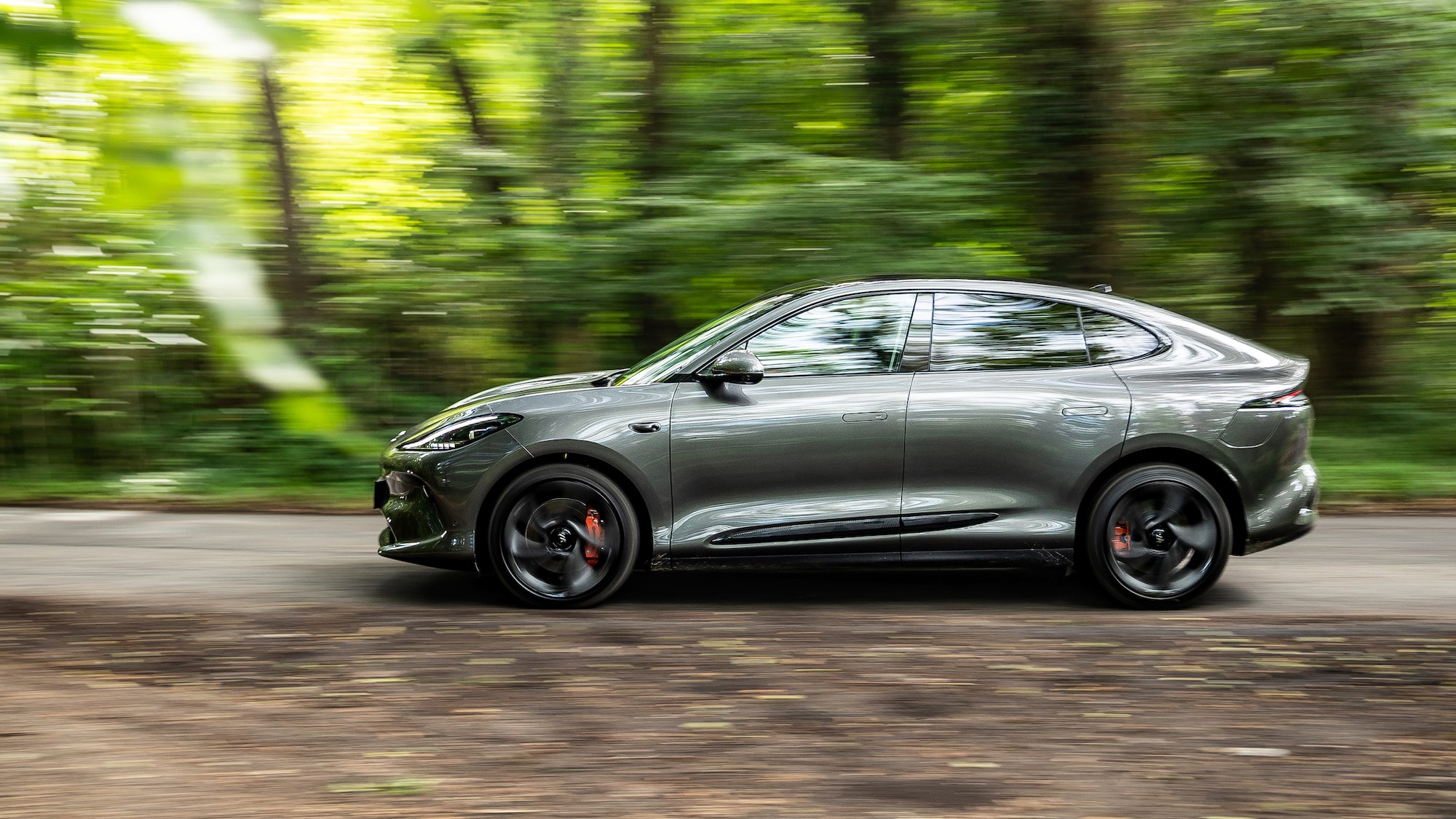
Comparisons to the Tesla Model Y and BYD Sealion among others are too obvious to ignore, but before all that, we’ve driven the IM6 SUV on UK roads. Keep reading for our full, thorough review. If you want to know how we test, we have an explainer page for you
Should I buy the MG IM6? Yes. It’s got bags of power in the Performance trim, but the ride, interior and refinement shine as much if not more in the long-range model.
At a glance
Pros: Impressive infotainment, pleasing speed, 800v systems.
Cons: Firm low speed ride, unintuitive steering, brakes could be stronger.
What’s new?
Everything, for the UK at least. SAIC Motors has decided that volume isn’t everything and now wants MG to get a slice of the premium, corporate market. With that in mind, it’s pulled two models from its IM (Intelligence in Motion) brand that are already on sale in China and brought them to the UK under the MG umbrella. It’s a move we’ve seen before from Chinese brands – just look at the Denza B5, which is a Fanchengbao in other markets.
Measuring 4904mm in length, the IM6 SUV is a bit shorter than its hatchback twin, but uses the same all-new EV platform (interestingly the same used in the AUDI sold in China). Level 2+ autonomy is baked-in, and the new skateboard is also solid-state battery ready – though MG reckons the cells themselves are something like two years out. On top, you’ll find a typically ‘swoopy’ design language, with the SUV getting a drag co-efficient of 0.226Cd. Squint hard enough and it looks a bit like a DBX. Maybe.
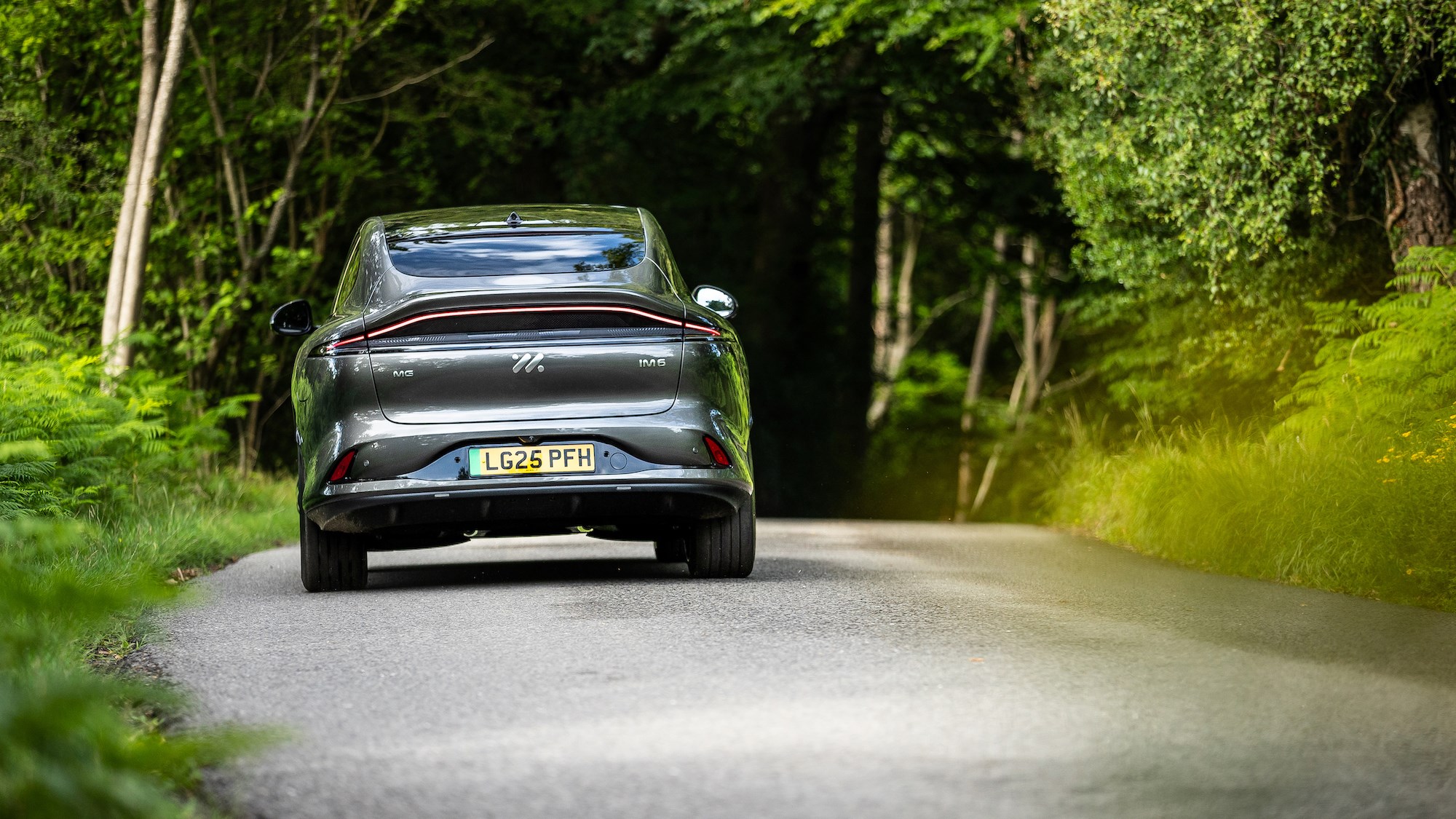
More seriously, the IM6 and its twin score a lot of firsts for the MG brand (even though they’re badged an IM, with MG also written at the rear). The interior promises to take things up a notch, four-wheel steering is standard, the range is over 300 miles regardless of powertrain, and there’s also bags of performance and useful safety features too.
What are the specs?
SAIC Motors, MG, IM – well, all the above – have packed in some impressive technology. The IM6 only ever comes with a 100kWh battery and 800-volt technology, so it’s more efficient than it would be otherwise, and can accept a peak charging power of 396kW from a DC charger. That means 10 to 80 per cent charge in as little as 17 minutes with a compatible power source.
The only choice, then, is what you connect the battery to. The line-up comprises of just two: an all-wheel drive Performance model or rear-drive long-range model. The Performance model makes 742bhp and 592 lb ft of torque, with a 0-62mph time of 3.5 seconds, a range of 313 miles and a top speed of 148mph. That’s the version we’ve driven.
There’s also a launch edition, which gets adaptive damping and air suspension in addition to the Performance specs above.
Finally, the long-range model is rear-wheel drive only for maximum efficiency, making 402bhp and 369lb ft of torque. That makes for an understandably slower but still respectable 0-62mph time of 5.4 seconds along with a top speed of 146mph. It’s up on range though, with a WLTP figure of 388 miles.
All models also have four-wheel steering, so the IM6 has a steering circle comparable to that of the considerably smaller MG 4. They’re also all blessed with the ability to crab walk, and can perform ‘one touch’ parking manoeuvres, such as reversing perfectly for up to 100 metres.
How does it drive?
Better than you’d think. Rather than the floaty ride you’d expect from a car first released in China, the IM6 is on the firm side. Although do remember we drove the Performance model without the air suspension. Still, on country roads it feels planted, with relatively little roll and good feedback from the road surface. In town, however, that can translate to a somewhat choppy experience, depending on the quality of road you’re on.
Overall the driving experience is good. The cabin feels light and airy, and the noise cancelling works – it’s incredibly quiet when riding on the motorway, with minimal wind noise making it through to the cabin.
However, there are a couple of insects in the ointment. The brakes are fine but lack the positive bite we’d hope for given the power on the right pedal. Weirdly MG has successfully blended the transition between regenerative to friction braking, but the Continental stoppers don’t feel as robust as you’d hope. We’ve not driven the single motor car, but it’s likely they feel more fitting when paired with a less aggressive powertrain.
The biggest issue with the IM6 is the steering, which always feels somewhat alien regardless of the driving mode you’re in. It feels loose rather than light in the Comfort and Eco modes and almost seized or stuck when in Sport mode. It’s firm – which isn’t a bad thing – but the resistance arrives in a rather unintuitive way. It didn’t stop us having fun with the car, but it didn’t fit with the rest of the controls.
It’s also a shame, because the four-wheel steering works well. It’s the sort of thing that’s easy to get wrong, but here it slots in neatly into normal operation and feels useful rather than unnatural.
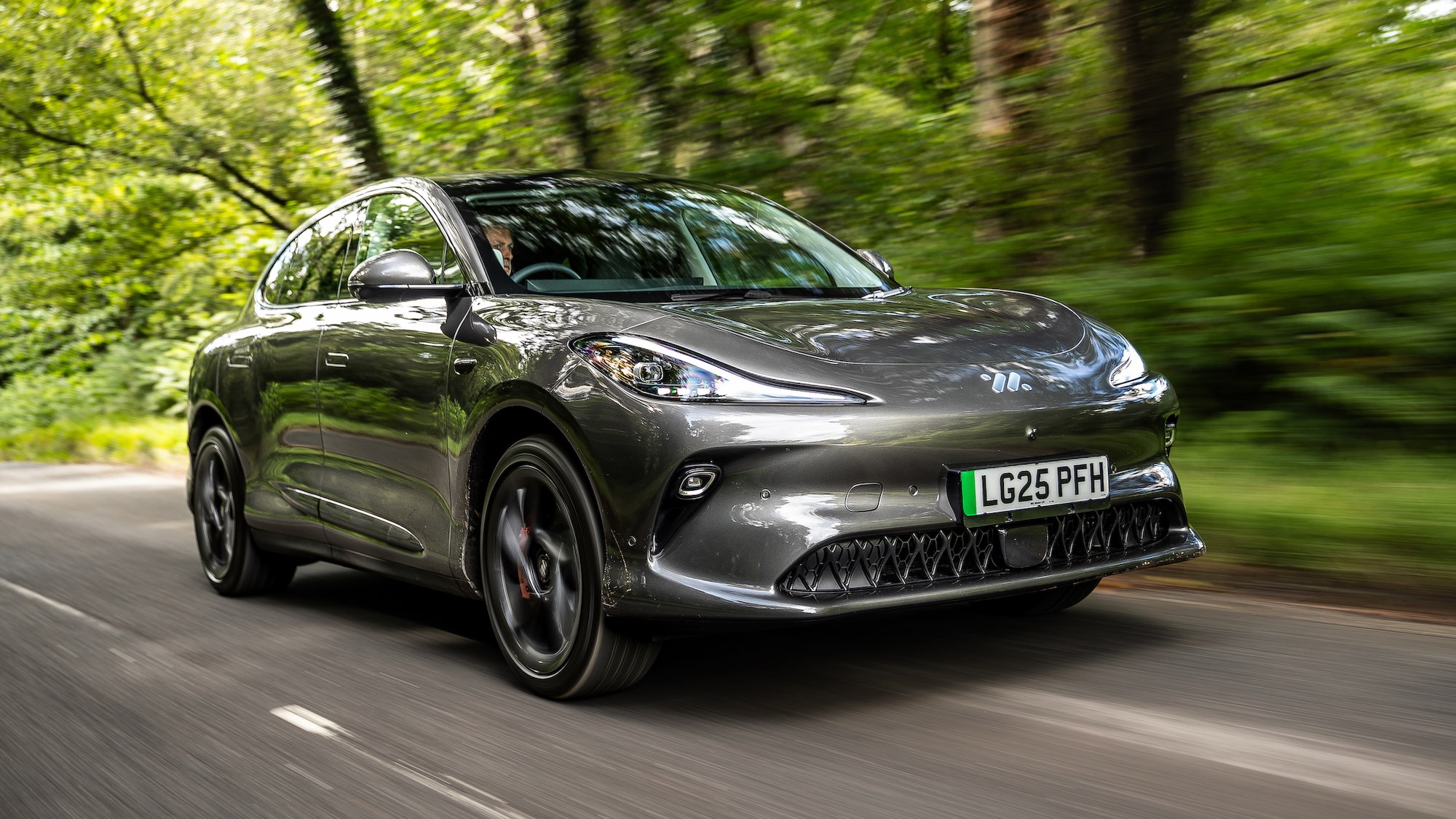
And what of the near 800bhp elephant in the room? Well, it’s there, front and centre in the driving experience. But the IM6 doesn’t have the same snappy R/C car accelerator response you sometime get in EVs. Instead, the IM6 builds its power in a rapid and relentless, but satisfying and organic way. Even with some particularly aggressive driving we got an efficiency figure of 2.5 miles per kWh. In normal uses expect something closer to four.
What about the interior?
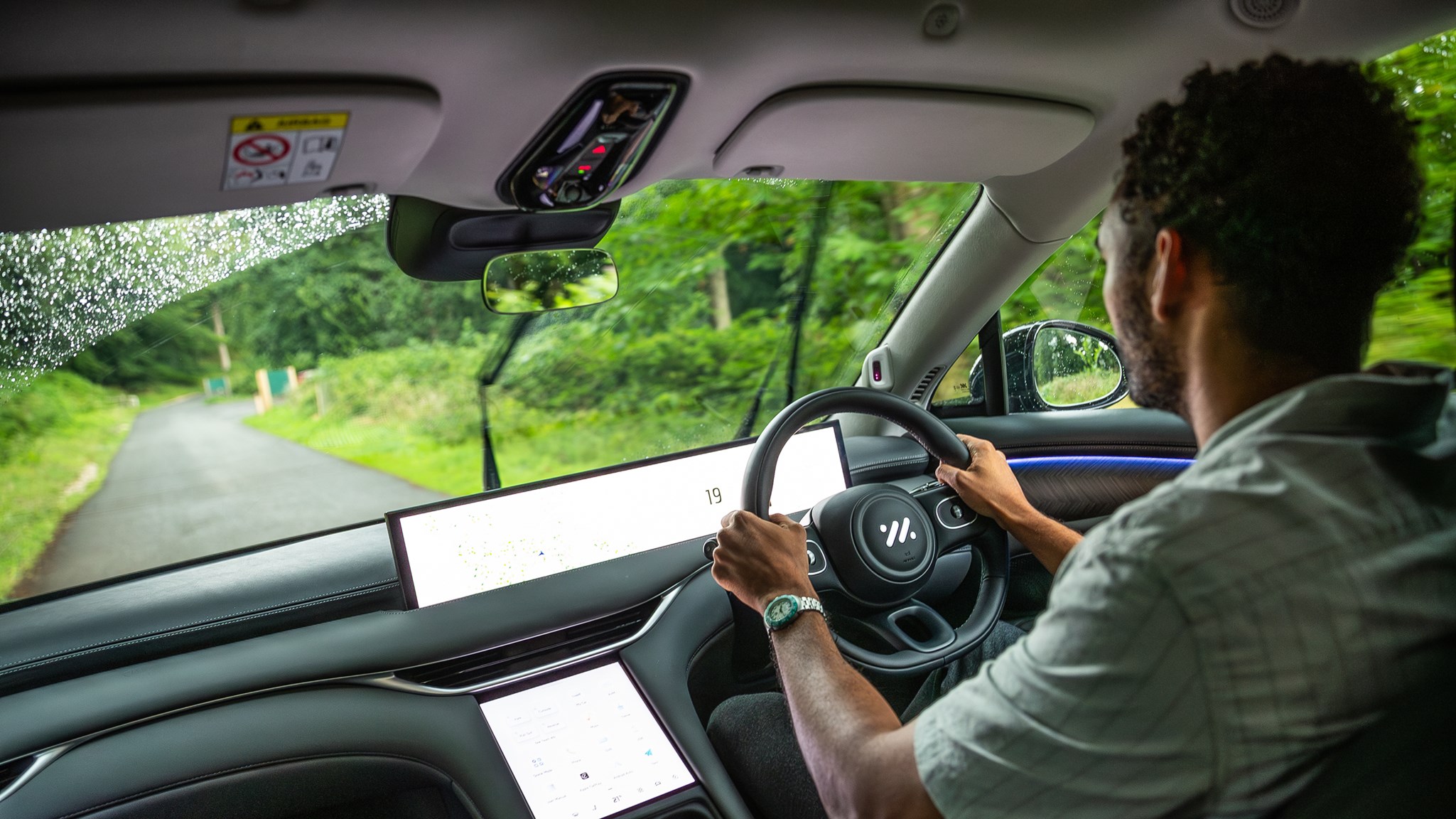
This is also where the IM6 delivers. A huge 26.3-inch screen takes care of driver and cockpit functions on one side, with infotainment features on the other. It’s pin sharp, responsive and bright even in strong sunlight, and it’s complimented by a further 10.5-inch screen that sits below the air vents and above a ventilated wireless 50-watt charger.
Designed to a be a control panel more than anything else, it’s where you can operate most of the car’s settings, from the windows and child locks to the ADAS stuff, regen power and the ambient lighting. It’s equally as quick as the main infotainment screen but its positioning means it’s more intuitive to use. MG has also added a good level of customisation, so it’s not too hard to find your most used functions on the move.
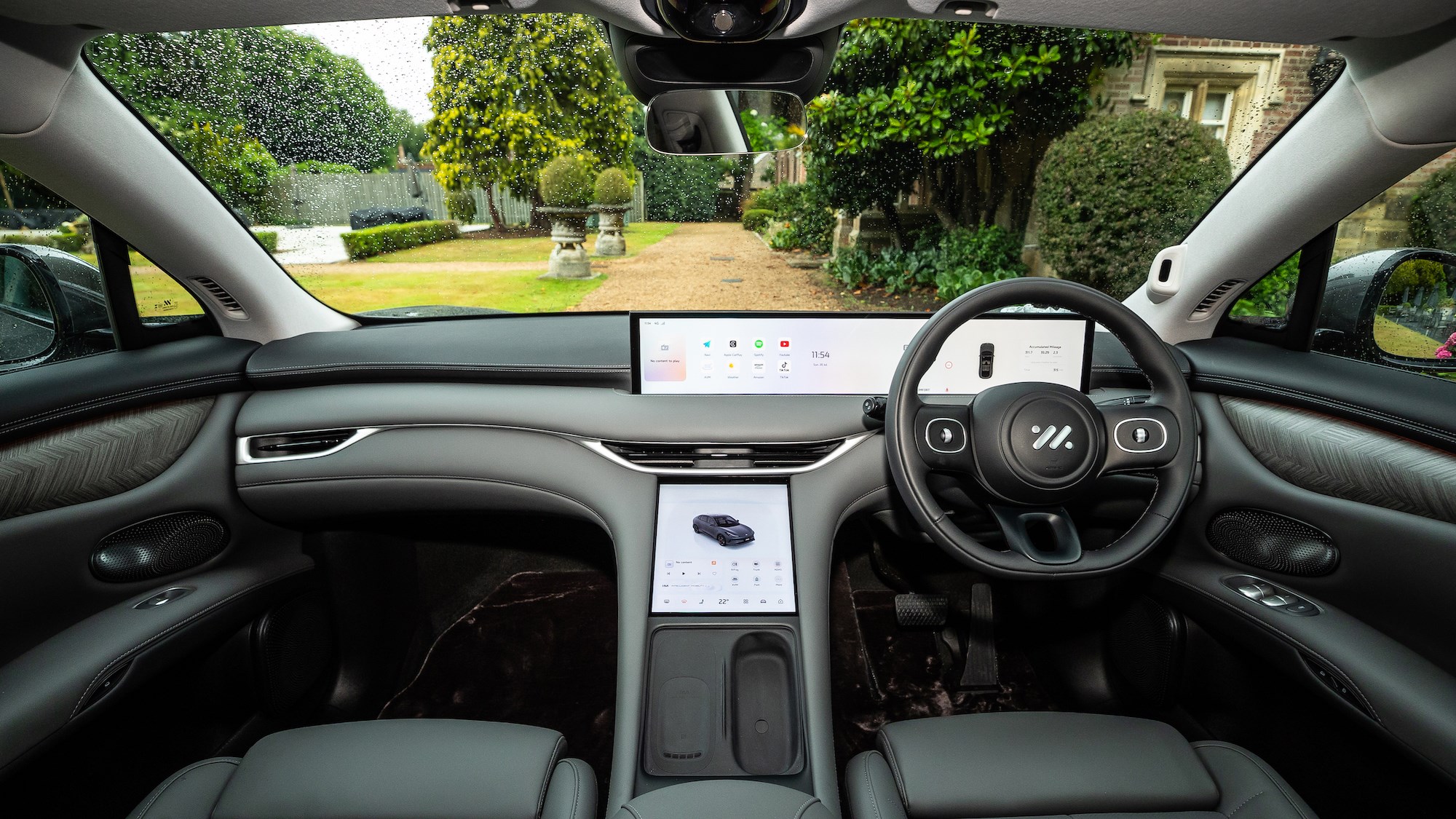
Unfortunately, it’s not all common sense: the climate control can only be operated via touchscreen, which is annoying – especially when on the move. On the plus side, cruise control is operated via four paddles the steering wheel. A couple on one side allow you to add and subtract the distance to the car in front, a couple on the other side let you select your preferred speed. Neat, though it’s interesting MG hasn’t popped the regeneration control there instead.
There were a few issues. We found the control panel would sometimes override the Apple CarPlay navigation – an issue that’ll hopefully be fixed. What’s more, the car’s cameras also felt optimistic in terms of space: during parking manoeuvres they suggested we had far more space than we did. Not a huge problem if you correctly use mirrors as well as cameras – but something worth noting nonetheless.
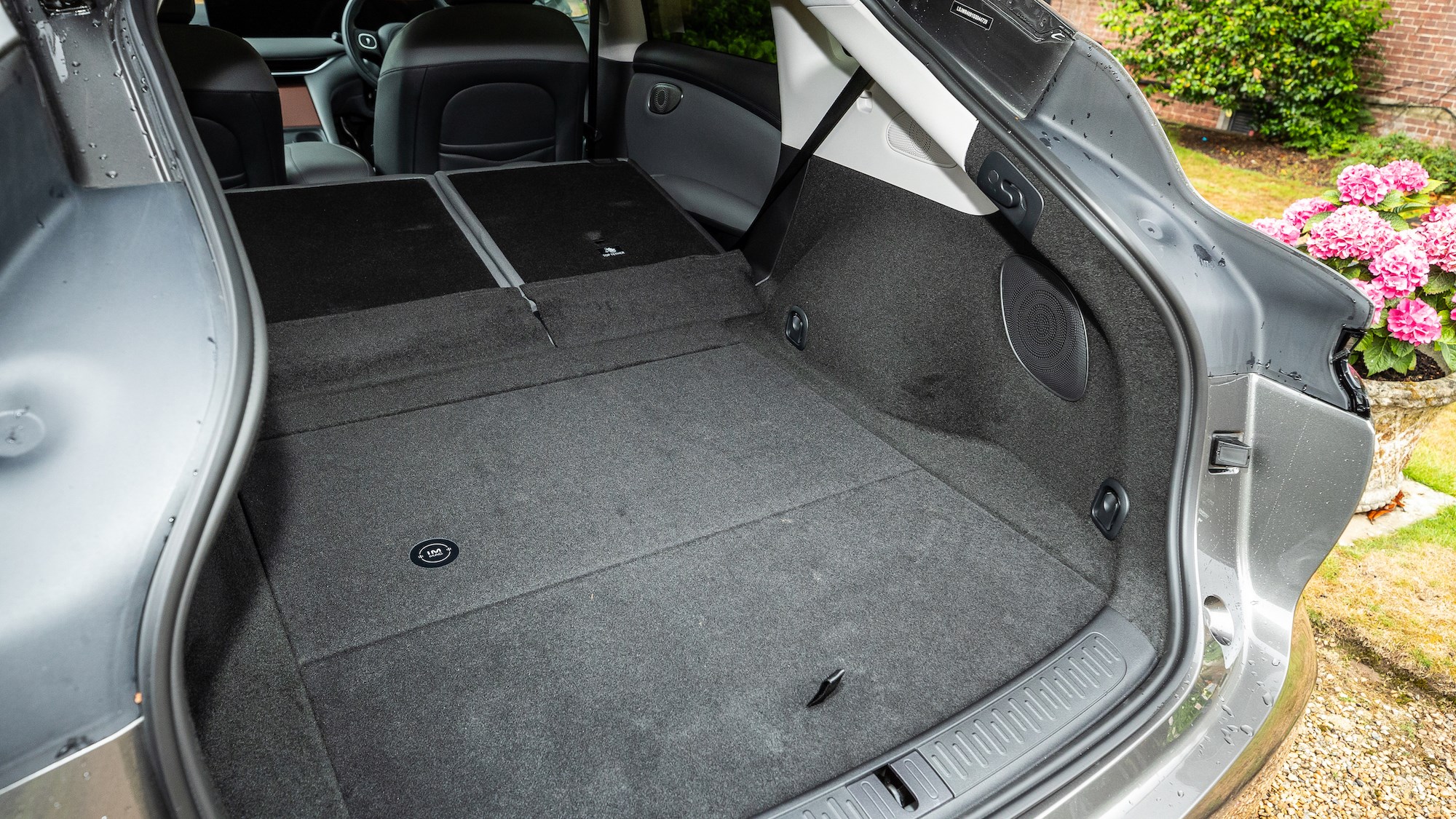
There’s tonnes of space in its noise-cancelling, airy, noise insulated cabin, and it should be practical too, with a 665-litre boot and 32-litre frunk.
Before you buy
MG has split the IM6 range into just two levels. The long-range car starts at £47,995, and a £3000 step up takes you to the Performance model with more power, less range and 21- instead of 20-inch wheels. A further £2000 gets you in into the limited Performance launch edition, which adds adaptive damping and air suspension.
For reference, the IM5 hatch starts at £39,450, though you begin with a smaller 75kWh battery with just 304 miles of range. The long range IM5 begins at £44,995 – about three grand less than the SUV – and tops out at £49,495 for the long-range Performance model – also about three grand less than the SUV version. The main difference between the cars, aside from performance figures, are smaller wheels on the IM5, and no massage seats for front passengers.
I suspect the long-range version of the IM6 will be the pick of the range, as it gets the same interior and suspension as the dual-motor car – and even ekes out a longer range. The Performance model grabs all the headline figures, but buyers will opt for range above everything else.
MG IM6 SUV verdict
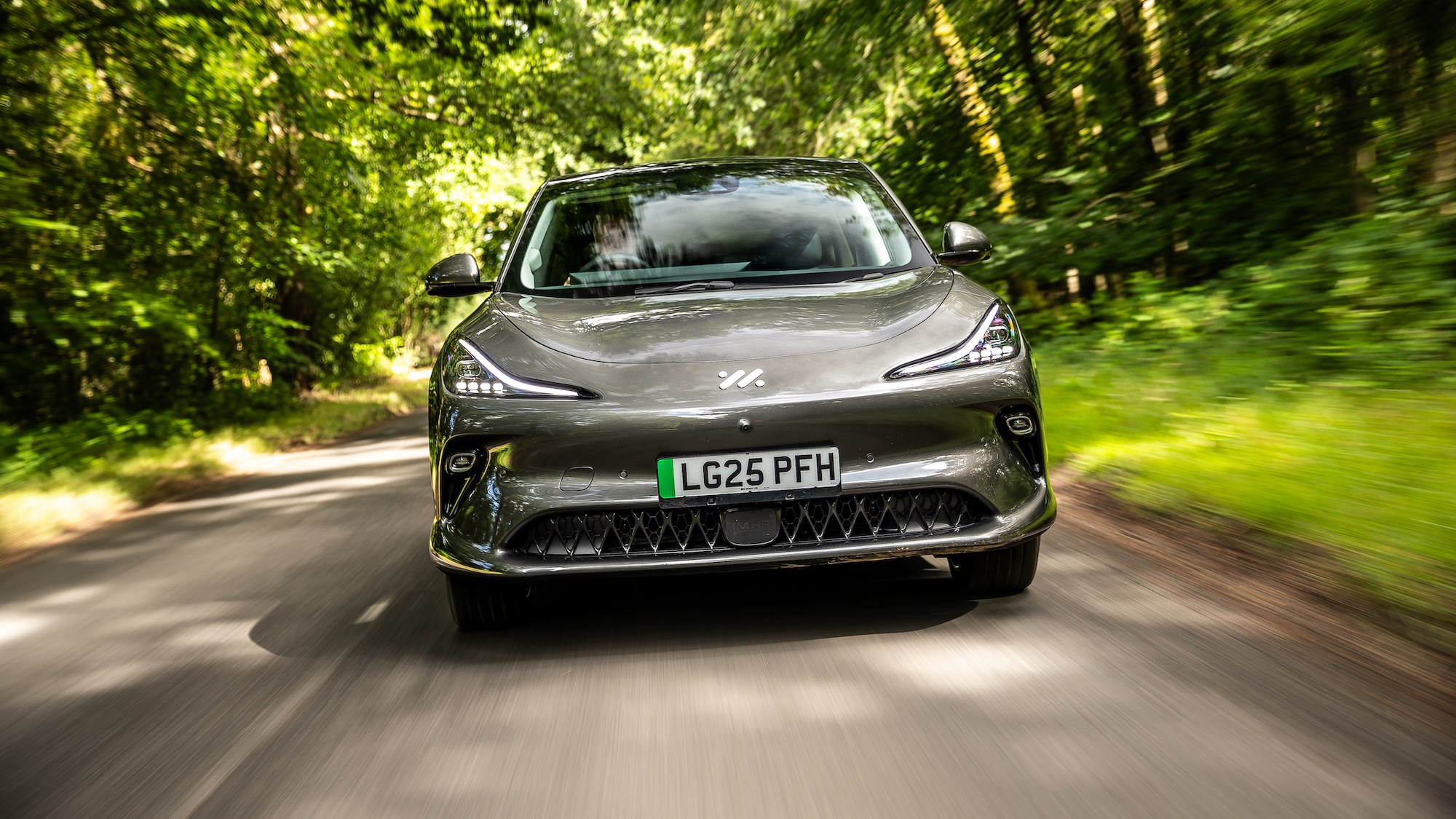
The IM6 is a strong step up for MG and pulls the brand into an entirely new sector. It’s an impressive first entry into the market: the styling is inoffensive enough, but the interior is impressive as is the strong level of refinement and good ride at speed. We’re used to Chinese brands offering lots of tech, but it’s integrated well in the IM6.
Compared to the Model Y it’s arguably more polished but certainly rides better – and it makes its power in a more engaging way. And when compared to Audi’s Q4 e-Tron – the other big seller – it’s got far more character, whatever badge it has on the front.
There are a few niggles, though, mainly around the steering and potentially the brakes – though they stand out less when paired with a less powerful motor.
Specs for Performance model below.