► MG’s Model 3 rival driven
► Twinned with the IM6 SUV
► Performance and Long-range models driven
MG is going premium and it’s entering the sector with not one but two EVs. Both on sale in mid-September, the IM5 and IM6 were revealed at the 2025 Goodwood Festival of Speed and take things up a notch from the existing MG range. Both bring more tech, more refinement and more power than anything released so far by the new-look MG.
We’ve driven both the IM6 SUV and the IM5 hatchback, and this review deals with the latter – but the two are relatively similar. Both are electric, and both use the same platform (also used by Audi’s China-only AUDI brand). Both also target Tesla as their key competitors; the IM6 targets the Model Y, while the IM5 has the Model 3 in its sights.
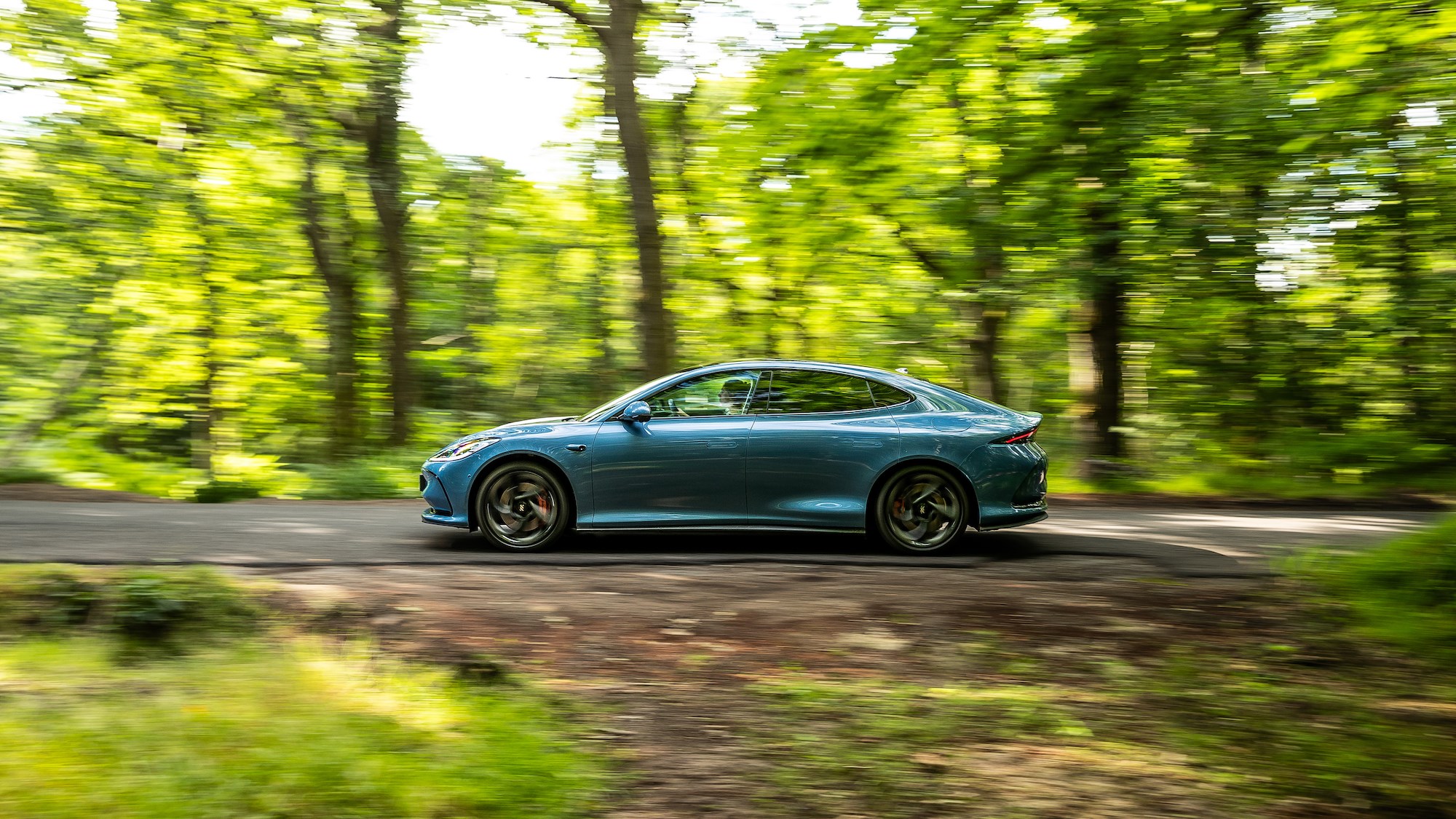
So how does MG’s first foray into the premium sector go? To find out we drove the IM5 hatchback in two guises: the entry-level car and then range-topping Performance model. Keep reading for our full verdict.
Want to know how we reach our conclusions? Have a look at how we test on our explainer page.
Should I buy a MG IM5? Yes. The IM5 looks to be a quality product, with a strong interior, good range (or power depending on what you go for) and fair handling.
At a glance
Pros: Refined ride and impressive cabin, lots of power
Cons: Steering feels odd, brakes could be more robust
What’s new?
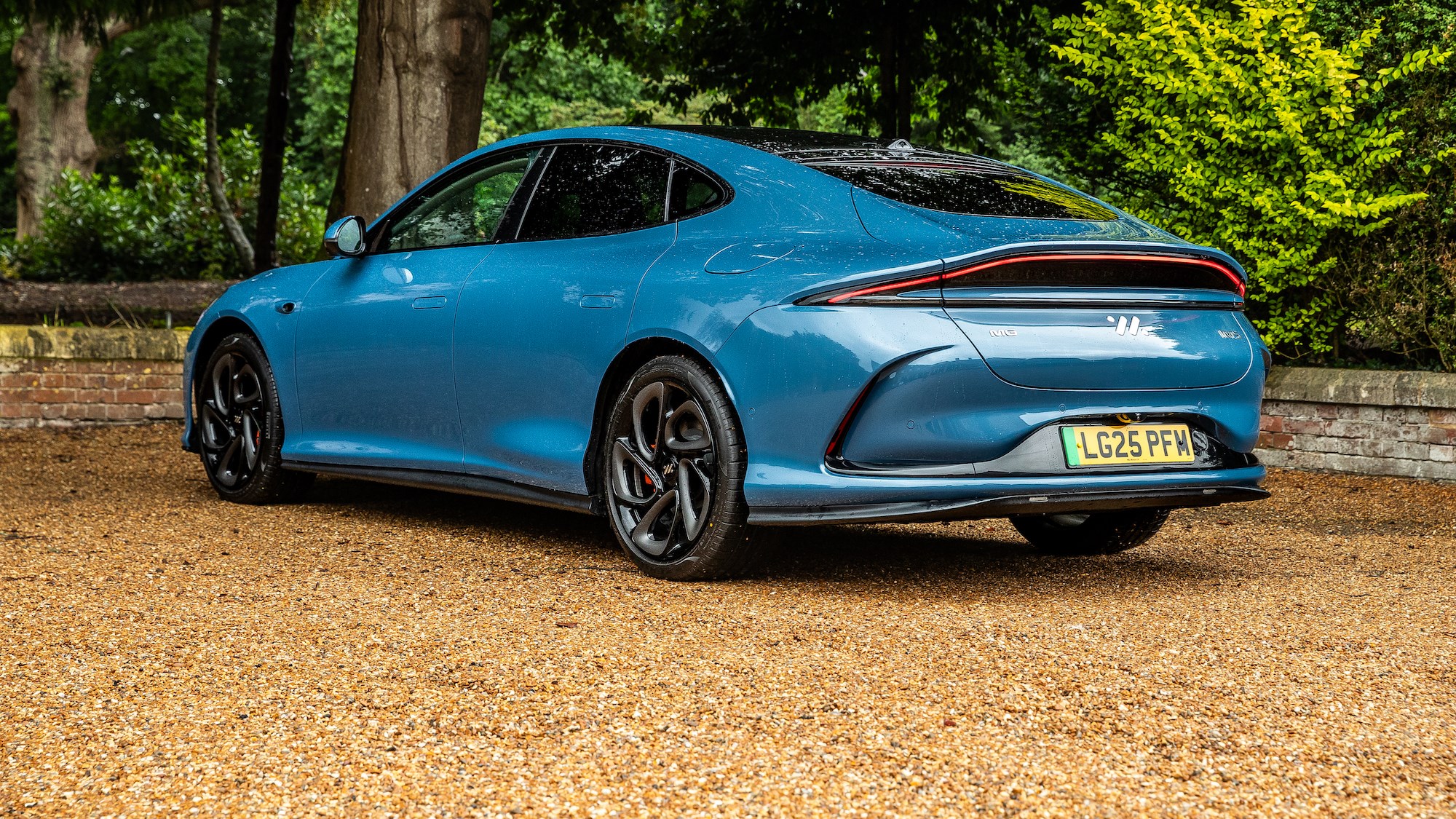
The IM5 hatchback drapes an uneventful but oddly familiar body over a platform we’ve not seen in the UK before. We’ve also not seen the new ‘IM’ logo before either, displayed proudly on the bonnet of the IM5. A distinct brand elsewhere, it’s going to be an MG sub-brand in the UK for now – though the suits are already thinking of full MG badging in a later model year update. Doing that would require homologation, though.
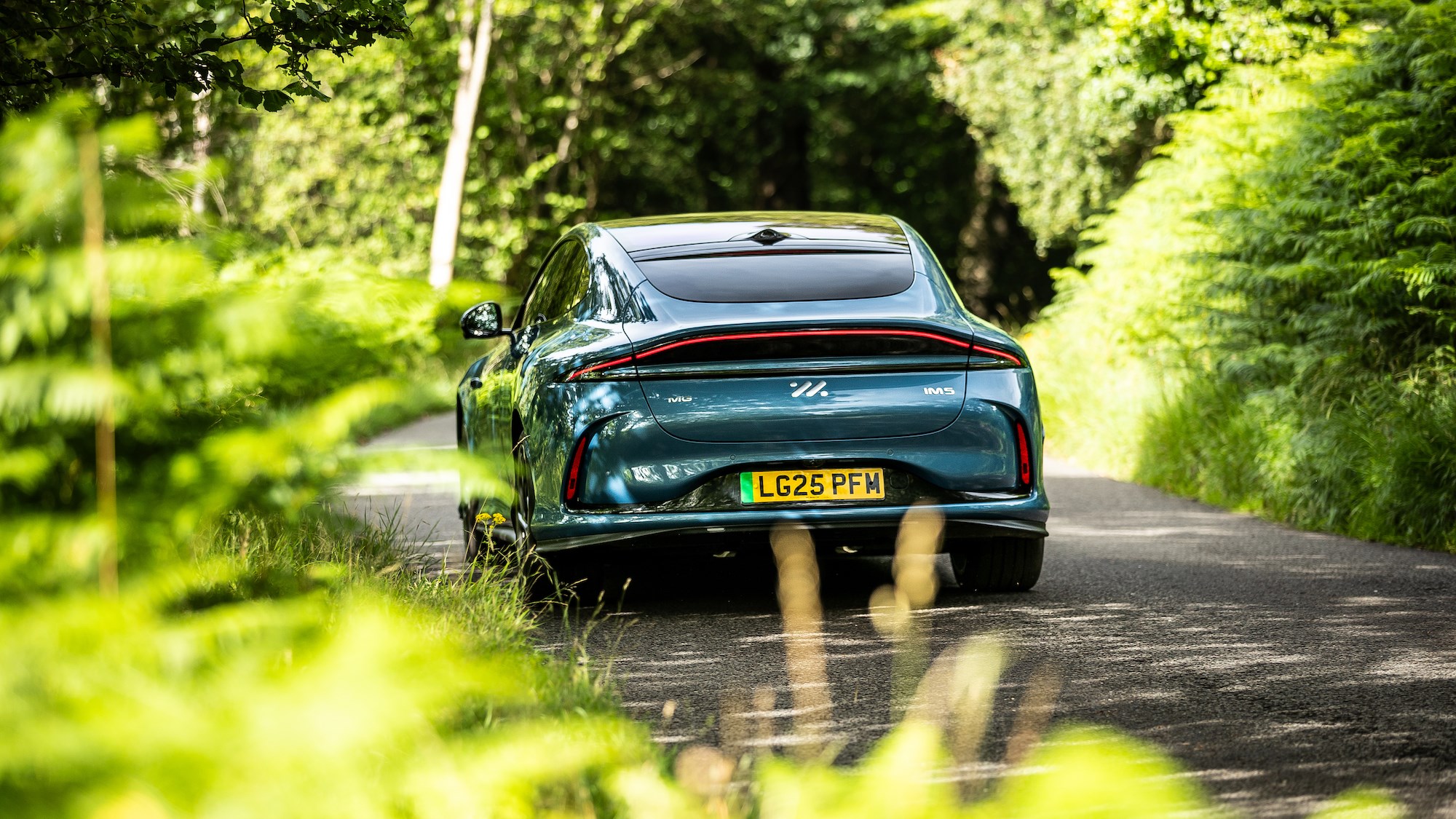
The IM badge carries many firsts for MG: the interior promises to be techier and more luxurious than before, while the exterior looks svelte, aerodynamic and even a bit Aston Martin if you focus on the rear light signature. Focus on the front and it’s all a bit anonymous.
Looks are subjective, but it does well on paper: the top end Performance model puts over 700bhp to the tarmac across both axles and will hit 62mph from standing under four seconds.
What are the specs?
The IM5 comes with three powertrain choices, and unlike the IM6 it starts with a smaller 75kWh battery. It’s paired to a rear-mounted motor for a total power figure of 291bhp and 332lb ft, while range is 304 miles. It’s also good for a 0-62mph sprint of 6.8-seconds and top speed of 124mph. However, it’s the only 400-volt model of the IM range, so will take longer to charge and is less efficient overall.
Next up there are a pair of 100kWh cars, both with 800-volt technology: the long-range model is rear-wheel drive only and makes 402bhp along with 369lb ft of torque. 0-62mph is 4.9 seconds and top speed is 136mph – but it’s got the biggest range of the line-up with 441 miles on a full charge.
The range-topper is the all-wheel drive Performance model, which packs in 742bhp and 592lb ft of torque. It’s the quickest of all the IM models coming to the UK, doing 0-62mph in 3.2 seconds (0.3 seconds faster than the equivalent IM6) and a top speed of 166mph. The range suffers, though, coming in at just 357 miles on a full charge.
All models come with four-wheel steering and they’re also all blessed with the ability to crab walk. They can even perform ‘one touch’ parking manoeuvres, such as reversing perfectly for up to 100 metres.
How does it drive?
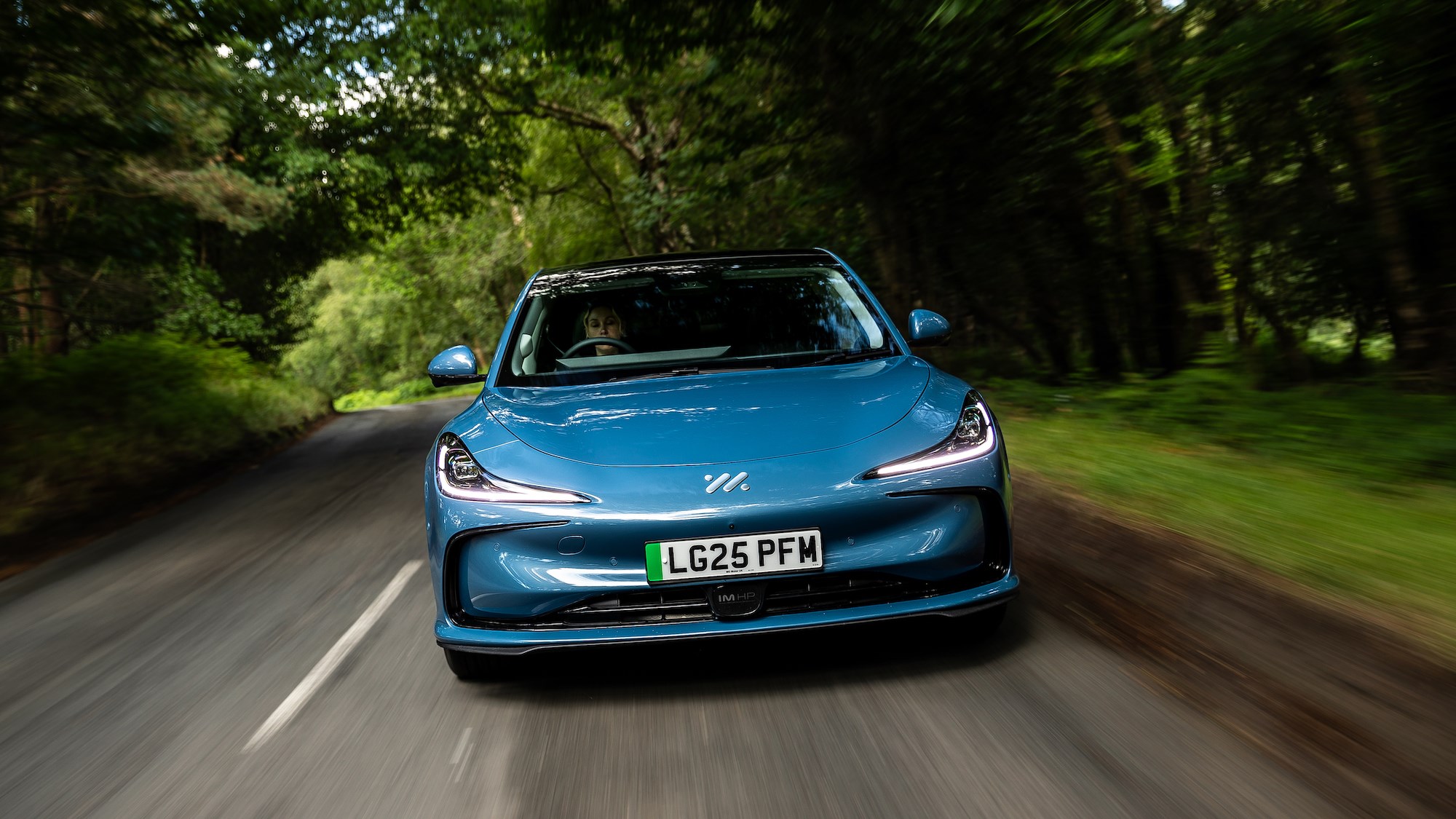
The IM5’s sleek, almost muscle car-esque lines hint at a surprisingly good driving experience. It’s a tail of two halves though: on motorways, the IM5 is extremely refined, with its active noise-cancelling enveloping you in near silence. The most we heard was wind noise, and even then, it was largely localised to the wing mirrors. Where are those wing-mirror cameras when you need them?
At lower speeds though, the IM5 ride becomes a little busy, and around some poorly maintained Kent roads we found the ride to be jigglier than we’d hope. On most roads the experience was good though, and what you want from a car in this sector.
The IM5 is longer, narrower and much lower than the IM6 it shares two powertrains with – and that has some fun results when driving in a more spirited fashion. It’s super quick in dual-motor trims, though doesn’t really hang around in the single-motor 100kWh trim either. It also has very little roll in the corners, which is handy when you’re trying to balance steering angle with adhesion and over 700 horses.

Like the IM6, the power arrives in a linear smooth fashion rather than an on/off Tesla-style response, and it means you’re able to play with the chassis more. It feels rear-biased even in all-wheel drive trim, and it almost invites a heavy right foot. I spent a lot of time exiting corners while feeding on more power than really necessary.
The four-wheel steering also works well, and it’s not intrusive in operation. Drive normally and it’s hardly there, but zip around town traffic and the nose darts around as if you’re on fast-forward. Do some slow-speed parking and the turning circle feels small but without that weird artificial feeling you sometimes get with all-wheel steering systems.
However, the IM5 has the same two issues as the IM6: the steering and brakes have room for improvement. In some modes, the wheel is a weird combination of firm just off centre and light with more lock, in other modes it feels as though the wheel is almost seized. It’s something that takes a while to get used to, though its effects reduced thanks to the IM5’s narrower size and lower driving position.
The brakes could also be better. MG has nicely blended the transition between regeneration and friction brakes, but you have to push harder than you’d think to get the braking force you want. There needs to be a little more bite.
Still, this is again less of an issue in the IM5, thanks to its lighter weight. It’s also less of an issue on the lower-powered models, too.
What about the interior?
The IM5 and IM6 interiors are virtually identical, but that’s no bad thing. Front and centre is a huge 26.3-inch screen that swoops from the driver’s side all the way past the middle of the cabin. Infotainment sits in the middle, while the cockpit dials are handled by the right side. In practice it’s pin sharp, responsive and bright – even in strong light – and it was able to run Apple Carplay without much fuss.
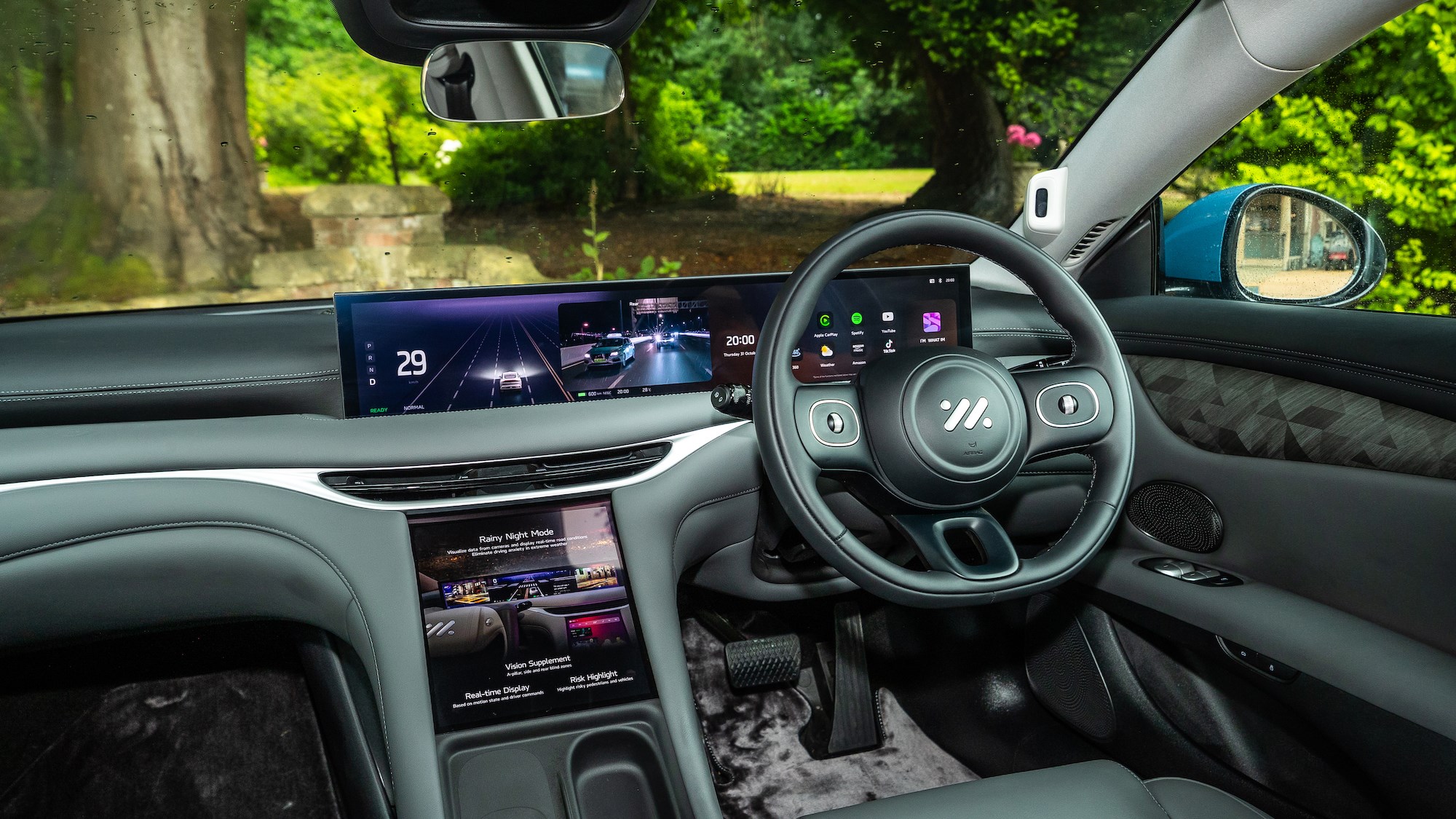
Look below the air vents and you’ll find another screen – this time a control panel that operates the majority of the car settings. It’s where you can operate everything from the windows and child locks to the ADAS stuff and its positioning means it’s more intuitive to use. MG has also added a good level of customisation, so you can configure your preferred list of shortcuts.
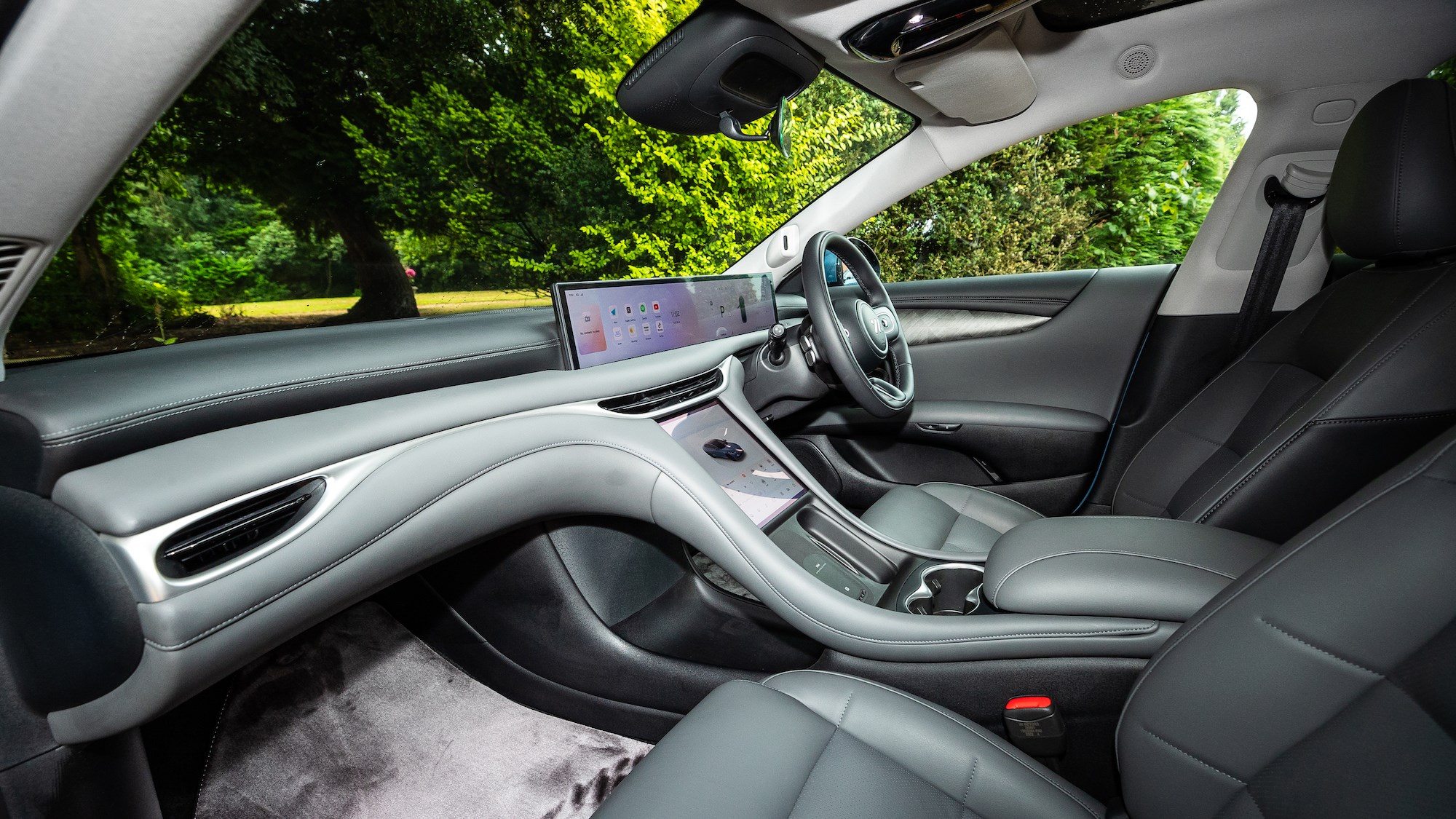
There are a few issues though: the ‘leather’ is fine, though some of the inserts feel cheap, and there’s also some odd thinking in the infotainment system. For example, the climate control can only be operated via touchscreen, which is pretty annoying – especially when on the move. What’s more, we couldn’t get cruise control to work – which was a shame. It seemed interesting, as it’s operated via four paddles the steering wheel. After some time though, we’d have probably rather opted for regeneration on the wheel.
There’s a good amount of space in the cabin, but the key thing here is how peaceful it is: that’s partly down to the active and passive noise-cancelling measures MG has put into place.
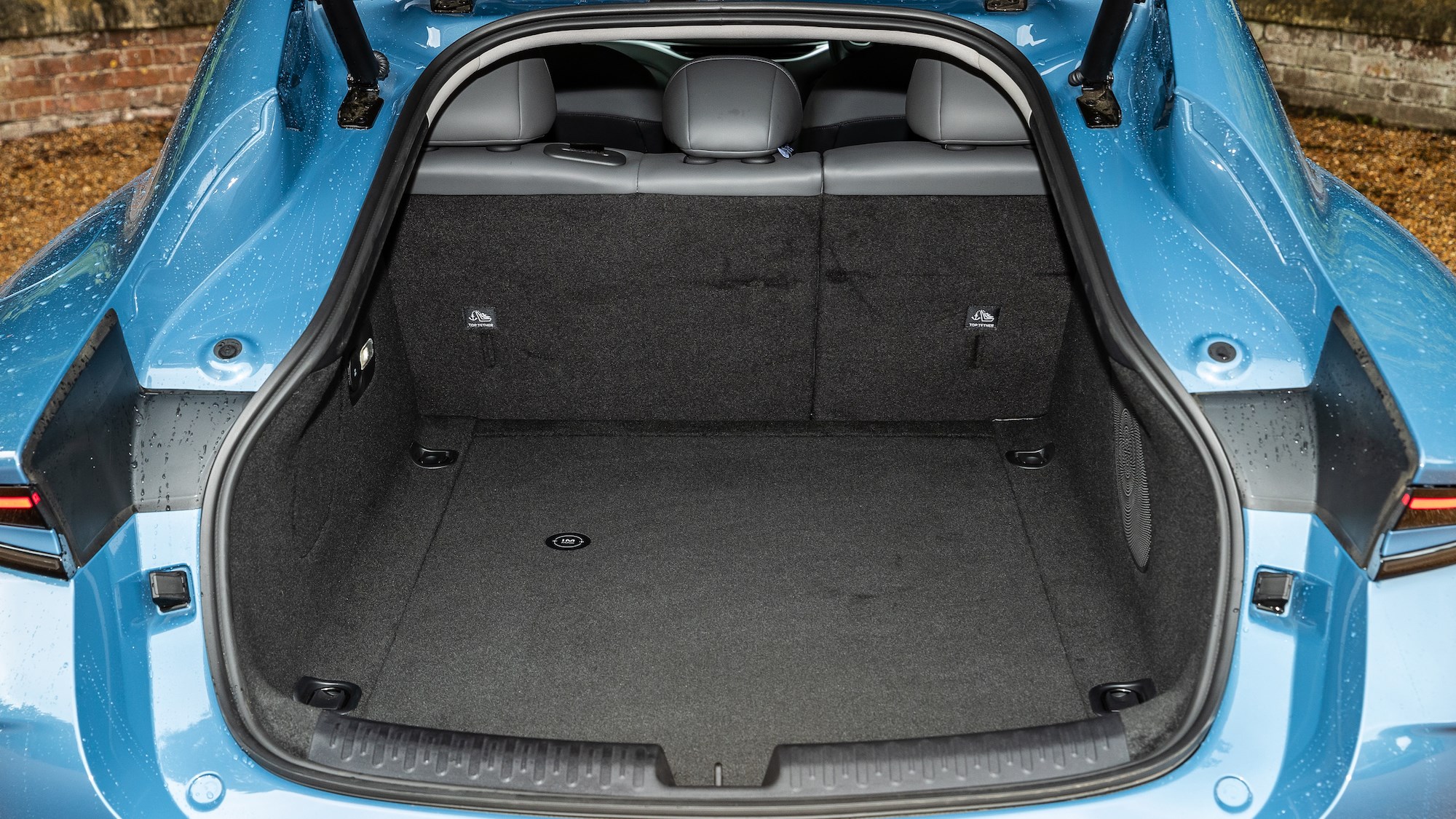
Finally the IM5 should be practical too, with a 457-litre boot but 1290-litres of space with the seats down. There’s also an 18-litre frunk. If you want more space, take a look at the IM6 SUV or a Tesla Model 3. The latter has 594-litres of boot space and a huge 88-litre frunk.
Before you buy
MG’s range is pretty straightforward, and the trend continues with its IM models. The range starts off with the £39,450 model with the 75kWh battery and 400-volt system, and rises to £44,995 for the 100kWh 800-volt, rear-wheel drive car. With 441 miles of range, it’s the got the biggest WLTP figure of the line up.
Finally, the headline-grabbing long-range Performance model tops the range, and it starts at £48,495. Alongside the extra power, you get less range at 357 miles, but bigger 21-inch wheels to distract yourself. All in, it’s around £4000 less the equivalent IM6.
Of these, the 100kWh long-range single motor will likely do the majority of the volume, even if the 75kWh sneaks below the £40,000 threshold.
MG IM5 verdict
MG has made a car that gives the Model 3 a run for its money. It’s looks good on the outside and is super refined when cruising. Throw in a 441-mile range in the case of the single-motor 100kWh has the Model 3 beat.
Get on some twistier tarmac, and the IM5 is more rewarding to drive too, though we’d argue the steering response needs a tweak and the brakes a tune up. Still, that’s most noticeable when you’re hustling the Performance model – and less obvious in other urban scenarios.
The only real place the MG falls short? The boot space is well behind that of the competition, and we noticed a few glitches in the infotainment – something that should be fixed on production models.
For what it’s worth, it also lacks the brand recognition of Model 3 or BYD Seal. A key reason SAIC Motors purchased MG was to help its products cut through with a renowned legacy brand. The IM is a killer product, but it’ll cut through better with the correct badge.
Specs for 100kWh Performance model.