► CAR drives the electric MG Cyberster
► 496bhp, 3.2sec 0-62mph, butterfly doors
► The first electric roadster – but is it a good one?
MG has sold over 90,000 EVs since its cars first went on sale in 2019, making it one of the biggest sellers of EVs in the UK, just behind Tesla, VW and BMW. Most of those sales have been generated by sensible SUVs like the MG S5 EV and hatchbacks like the MG 4 – and soon those numbers will be bolstered by the more premium IM5 and IM6 models. However, the Cyberster roadster remains the real jewel in MG’s crown.
‘For a brand like ours that has 100 years worth of history, I’ve always felt that’s something we should be celebrating,’ he continued. ‘It just gives us that little bit of point of difference that some of the new brands coming from China can’t do – we can do stuff like that.’
No surprise the MG boss is a fan – but is the Cyberster worth buying? Keep reading our full review to find out.
Should I buy an MG Cyberster? Yes, because it’s your only choice. Save for the MG and a couple of 500e models, electric convertibles exist as merely as concepts or outrageous hypercars in 2025. If you want the wind in your hair, a sporty drive and an electric powertrain underneath you, it’s the MG or nothing.
At a glance
Pros: Looks, pace, ride quality
Cons: Messy interior, extremely cosy for taller drivers
What’s new?
After a fairly protracted gestation period – initial skunkwork sketches and modelling by MG’s London-based design team started back in 2017 – the Cyberster was given the green light and pushed into production to ensure the car went on sale in 2024, coinciding with MG’s centenary.
The roadster is underpinned by the same Modular Scalable Platform architecture employed in the MG 4 and the much more sensible MG S5 EV. Its powertrain might be futuristic but the Cyberster has a pleasingly traditional roadster proportions – low, with a long bonnet that looks like it could swallow a V8, a snug central cabin beneath a rakish screen, and chopped truncated rear. That rising strip of black plastic that horseshoes the cabin and links up with the A-pillar does a clever job of visually slimming down the MG’s profile.
What are the specs?
The two-model UK range is refreshingly simple. Both models use a 77kW battery (74.4kW usable) with a 7kW onboard charger. Maximum charging capability is 144kW – nothing special by today’s standards but good enough for a 10 to 80 per cent charge in 38 minutes on a fast charger, or 10.5 hours on a domestic 7kW wallbox. That’s enough for a coffee and donut by your local fast-charger.
The rear-wheel-drive Trophy costs £55,245 and is powered by a 335bhp/350lb ft motor driving the rear wheels. Performance is brisk – 5.0 seconds dead to 62mph and a 121mph top speed. It weighs 1885kg and WLTP range is 316 miles.
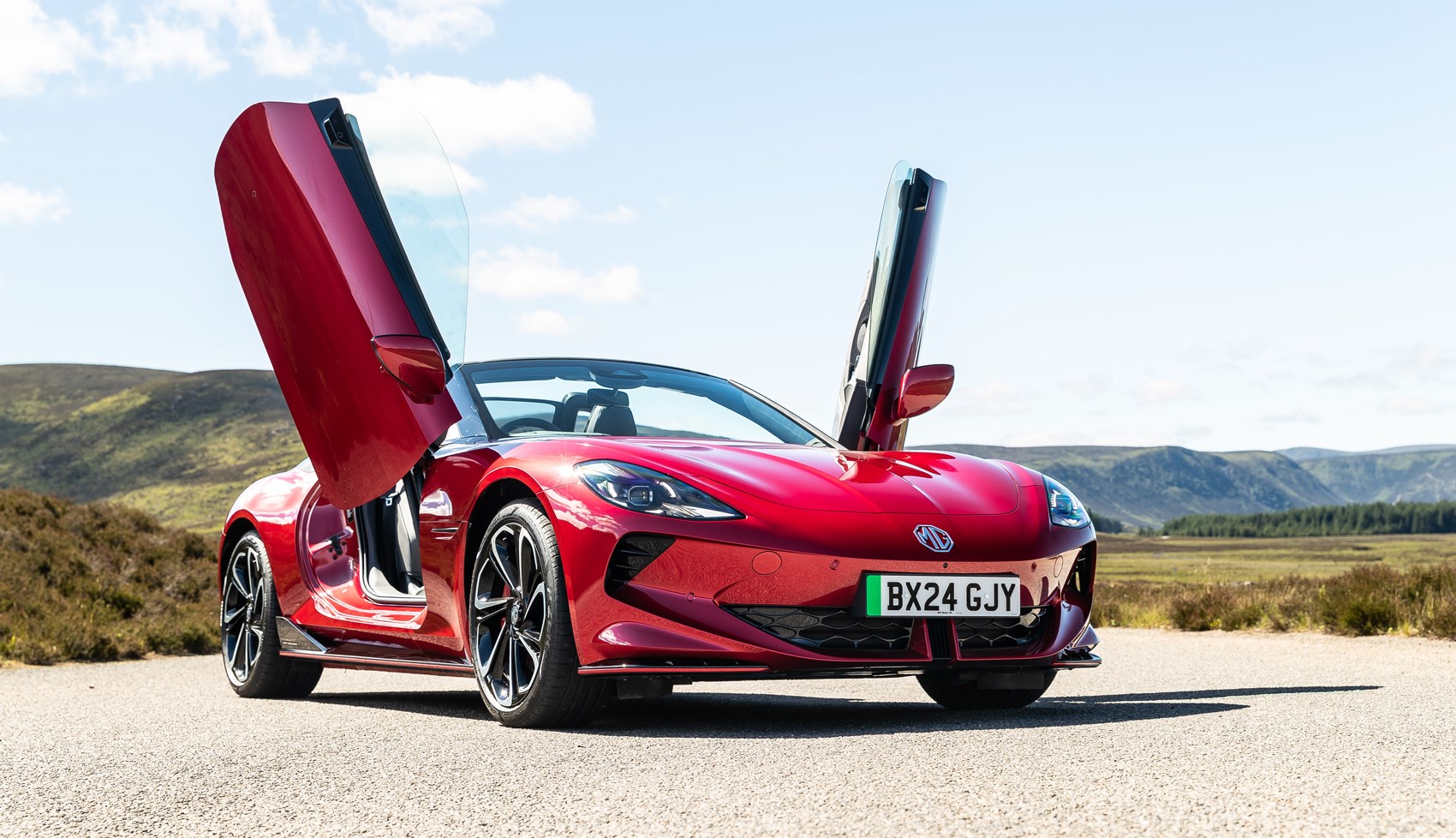
You’ll need just £5000 more to get into to the all-wheel-drive flagship £60,245 GT – the most powerful production MG in the brand’s storied centenary. I say ‘just’ because that modest step-up gives you an extra 161bhp and 295lb ft of torque from a second motor driving the front axle and a massive hike in performance over the Trophy. Power and torque rocket to 496bhp and 535lb ft, the 0-62mph sprint drops to an eyeball-flattening 3.2sec, and top speed is 125mph. Downsides, cost aside? Kerbweight climbs 100kg to 1985kg and WLTP range drops to 276 miles. Some context – that 3.2 second blast to 62mph matches that of the McLaren F1. Bonkers.
There will be a coupe version on the way, and it’ll be interesting to see how this compares to that performance-wise.
What’s the interior like?
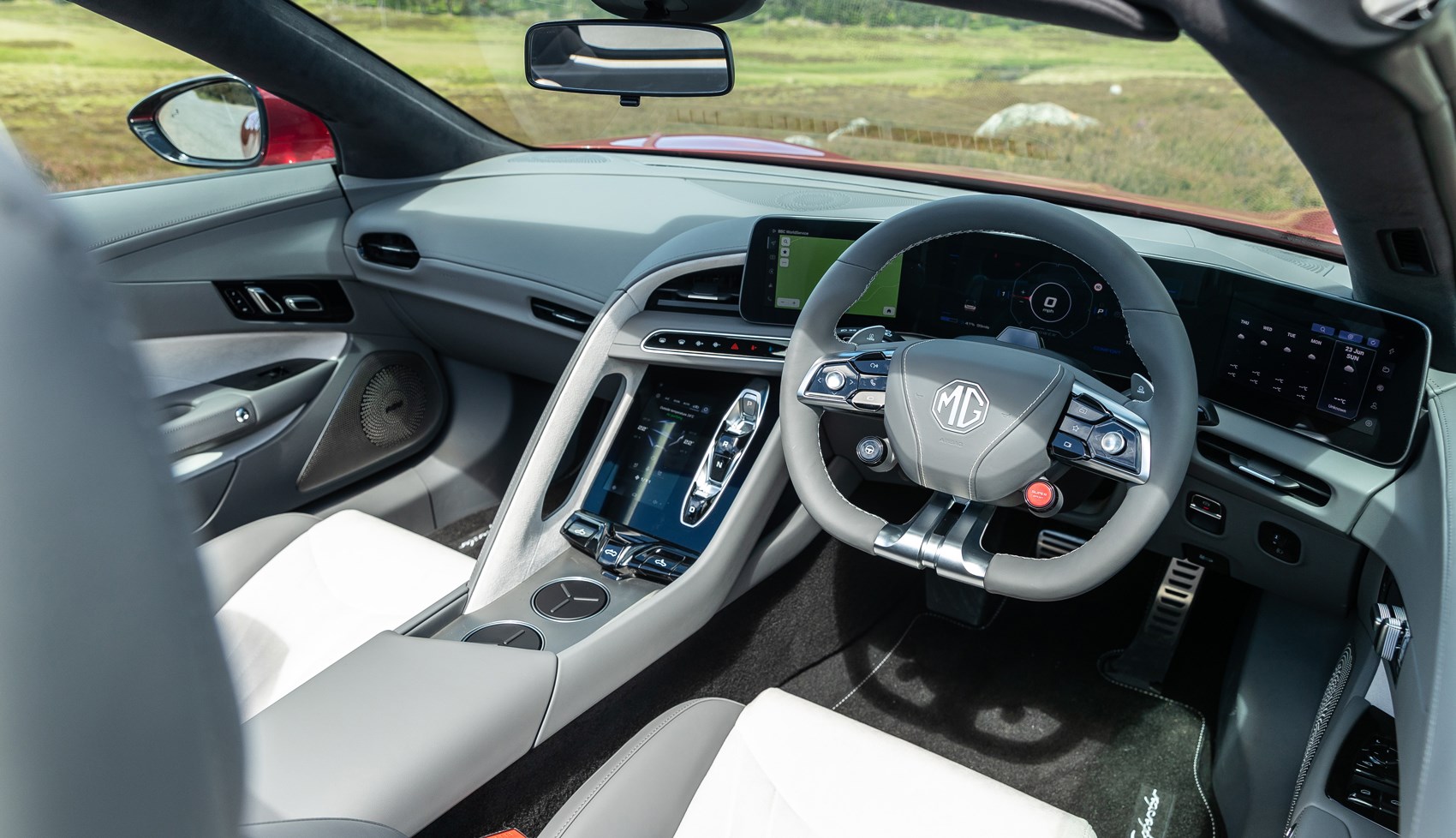
Busy, to say the least. The instrument nacelle comprises three flat screens, and there’s a fourth on the centre console. The smartphone-crispness of the graphics is impressive, and once you’ve spent an hour or so investigating the system – bespoke for Europe and significantly less excited and animated than the domestic Chinese version – the swipe-and-pinch controls become equally intuitive.
Overall fit and finish, and the sense of perceived quality is high. Stitched seams line-up accurately, most touch points use tactile materials and there’s a pleasing overall coherence. But there are some areas that jar. There’s an odd mix of controls – the key climate control buttons grouped usefully above the central screen are haptic units, but everything else on the centre console uses push-pull buttons. Odd.
The handbrake lever is oddly positioned , along with an old-school headlamp levelling dial. I’m not overly keen on the black fingerprint-magnet finish on the door and roof buttons, and the PRND selectors are overwrought. The worst visual offender is the glinting material on the centre console that has the stench of Mansory about it. There’s a useful netted areas behind the seats for soft bags and jackets, but drivers over six foot will wish it was used for a few more inches of legroom.
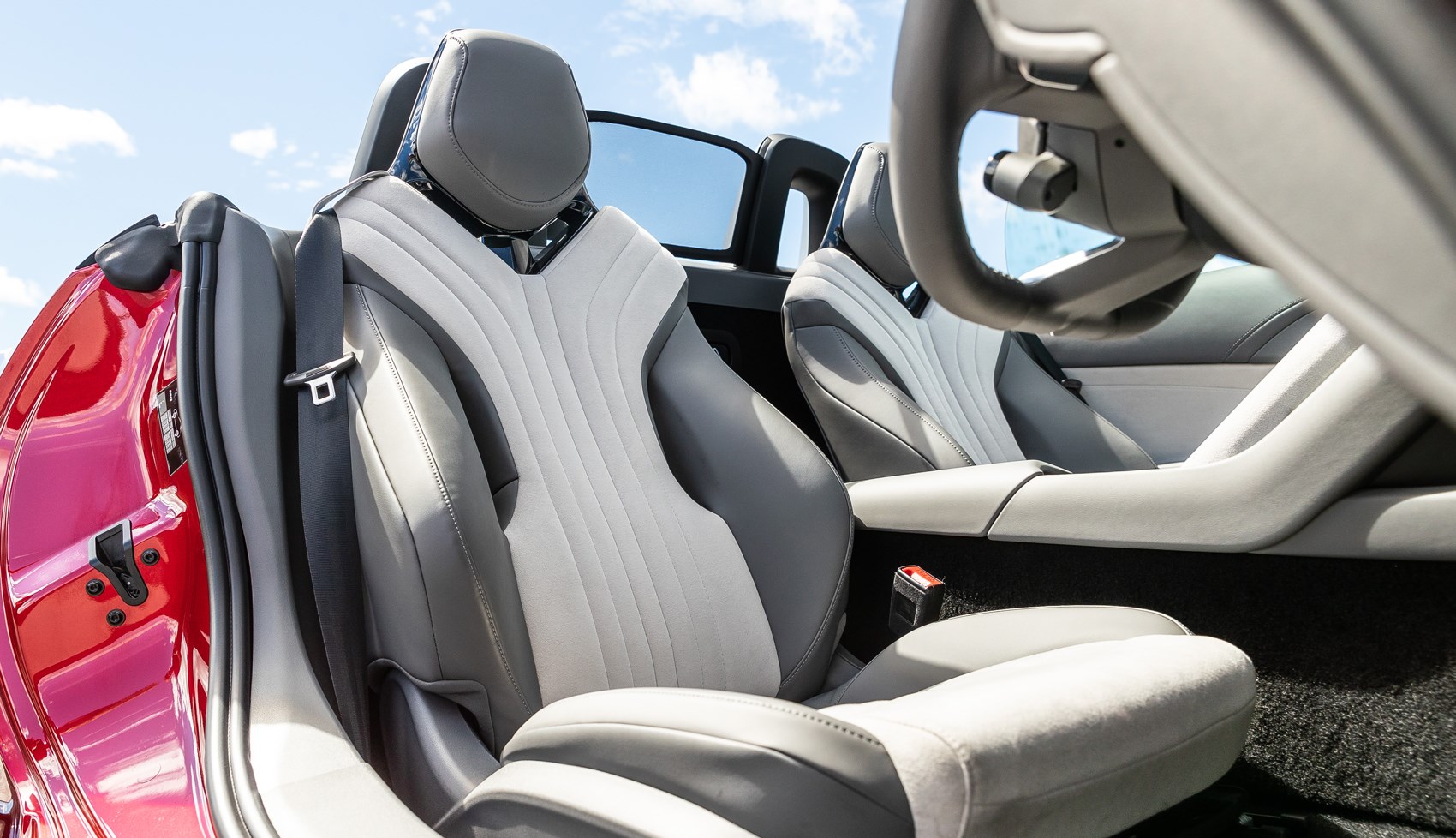
The electrically-adjustable seats need to be a good two inches lower, because of either the car’s skateboard, the electric gubbins that move them – or a combination of the two. The seat base is also fixed and shorter than I would like – it feels too flatly horizontal and lacking in under-knee support.
How does it drive?
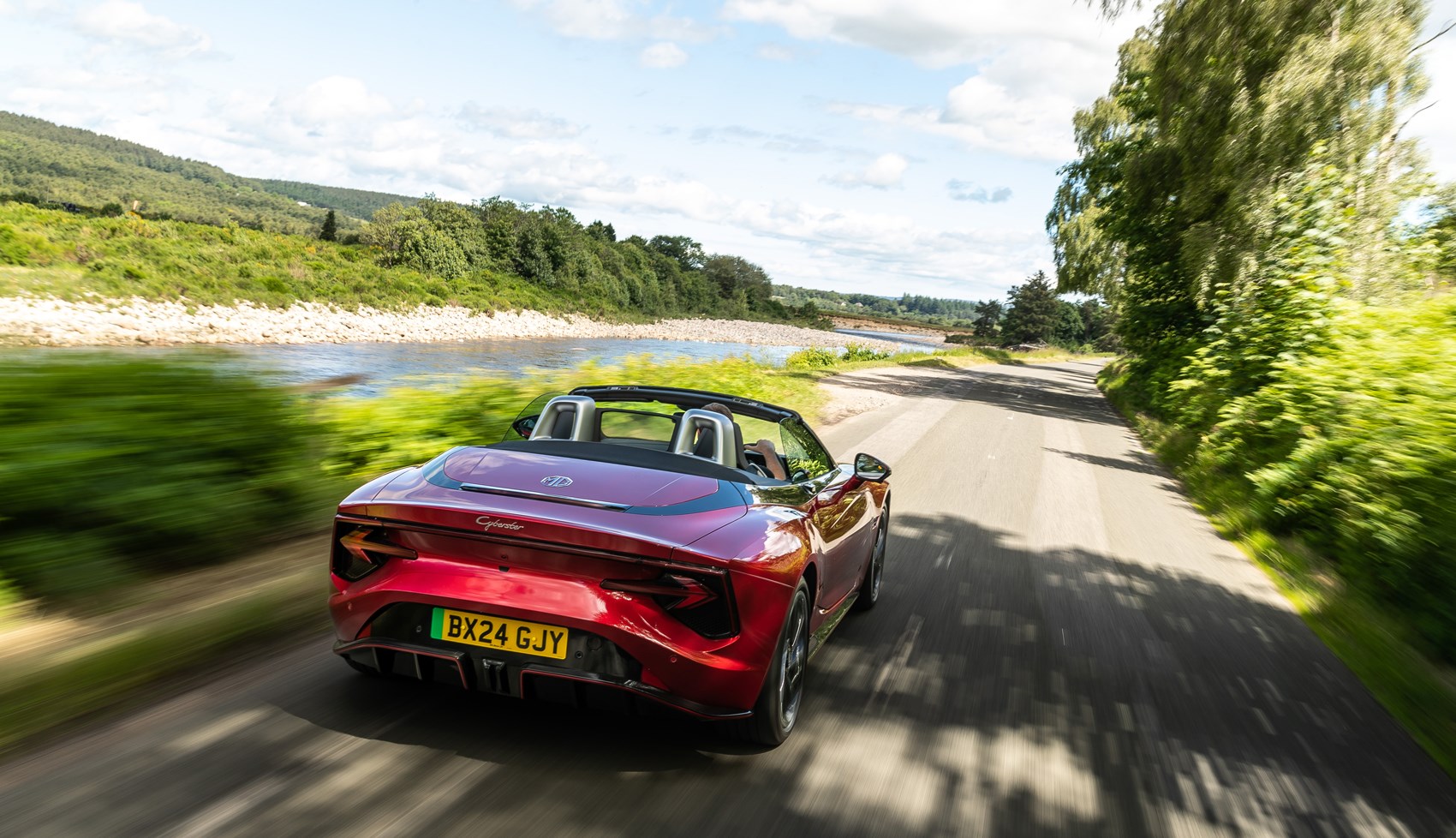
A lot of these shortcomings are long-grassed by the surprisingly good rolling refinement and ride quality. Roof down at low speeds and the Cyberster’s cabin is all but silent, creating the sensation of watching a film with volume way down. There’s little wind buffeting, barley a murmur from the twin electric motors, the suspension glides smoothly over the acned roads, the cabin is squeak- and rattle-free, and the well-judged artificial exhaust noise is a barely audible background thrum.
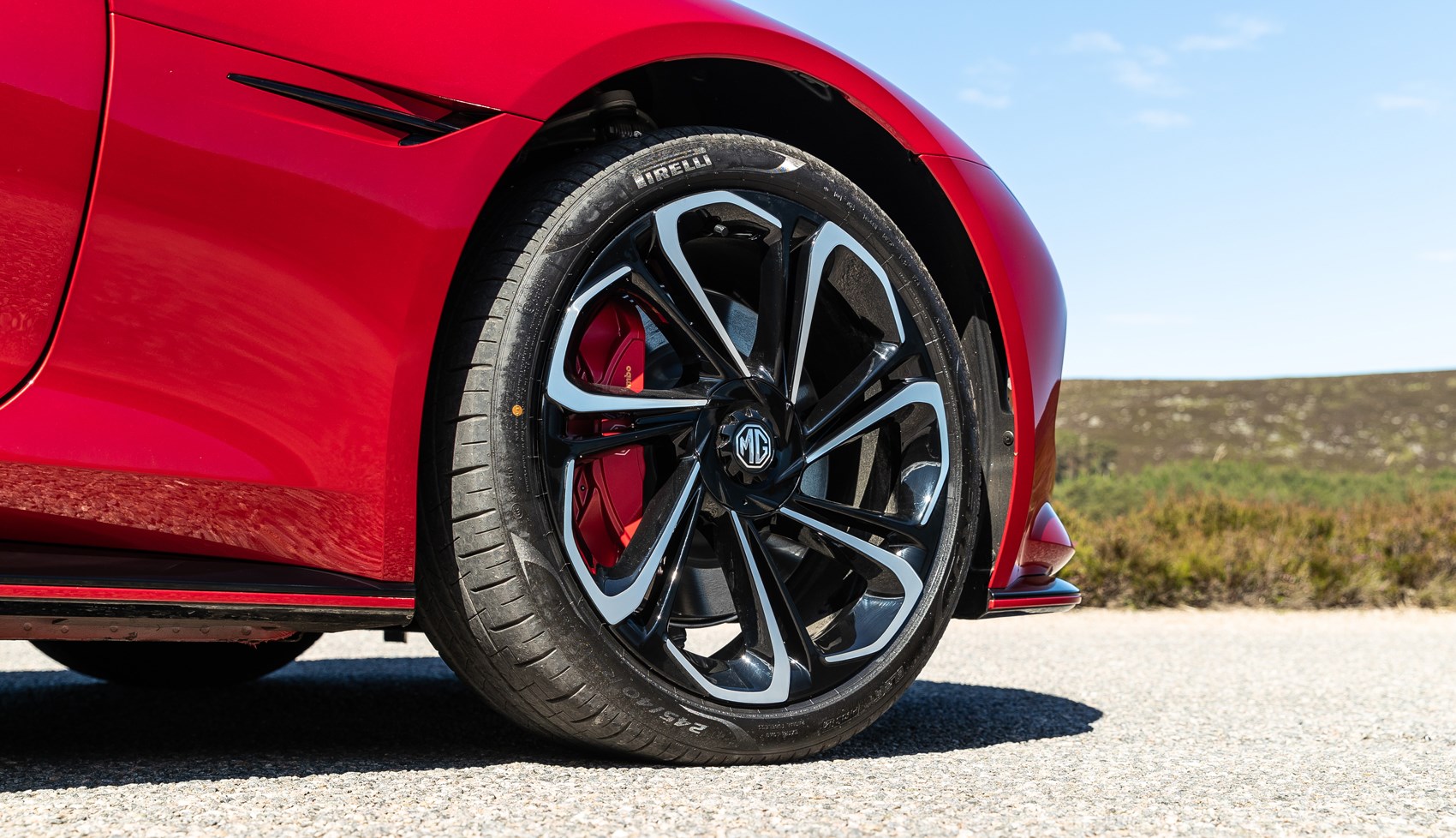
Despite riding on 20-inch ‘Jetstream’ alloys shod with 245/40 front and 275/35 rear profile Pirelli P Zero PZ4 Elect tyres, the GT breathes across the road in a beautifully controlled manner that Jaguar and Lotus owners will immediately find familiar. Body control at all speeds is excellent. It’s only over really abrupt intrusions that you can sense rather than feel the chassis flex. But never to the point where you’d start reaching for words like loose or baggy.
When you add electric steering that’s both quick and accurate, brakes that have decent bite, a 50:50 front-to-rear weight distribution, and more torque than a tractor rally the result is a car with a flowing gait that makes very pacey cruising across open and undulating roads a driver’s pleasure. It hides its thick-ankled kerb weight incredibly well, encouraging you to revel in its ability to cover ground quickly in a relaxed and composed manner. It’s a GT car without a roof.
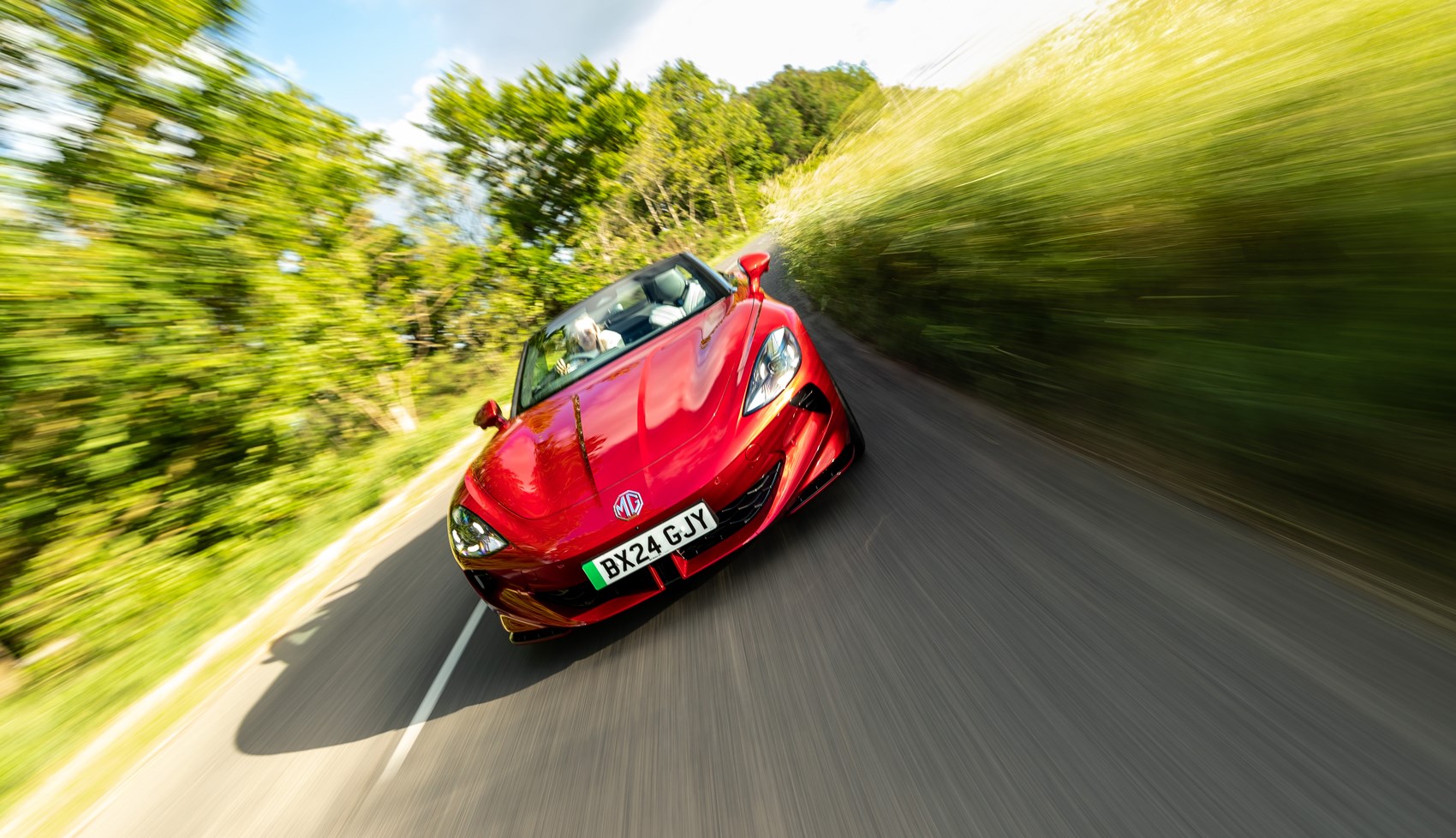
The drive modes – Comfort, Custom, Sport, Track – tweak the level of steering assistance, accelerator mapping, torque distribution between front and rear axles, and the climate control. Comfort is exactly that – a more relaxed right pedal, Goldilocks steering assistance, on-demand all-wheel drive and full-fat air-con. Conversely, Sport mode sparks up the accelerator, less assistance for a heavier steer, full-time four-wheel drive and, uh, full-fat air-con. Custom lets you make your own selection, and the probably-only-try-once Track dials everything up to 11.
It’s also as good a time as any to try out the launch control. Sport mode selected, ESC deactivated. Left foot on the brakes, right foot pinning the long-travel accelerator to the floor, wait for the dinky blue space rocket symbol to appear on the instrument screen and the speedometer to mimic Star Wars hyperspace, and then flick your left foot off the brakes. There’s no drama, no squirming, no announcement of imminent facial reorganisation. There’s an initial chirp from the four tyres and then the horizon is fast-forwarded into your lap. There’s no let-up either, the MG spearing its way into three-figure speeds with a ferocity that’s part party-trick hilarity and part queasy discomfort.
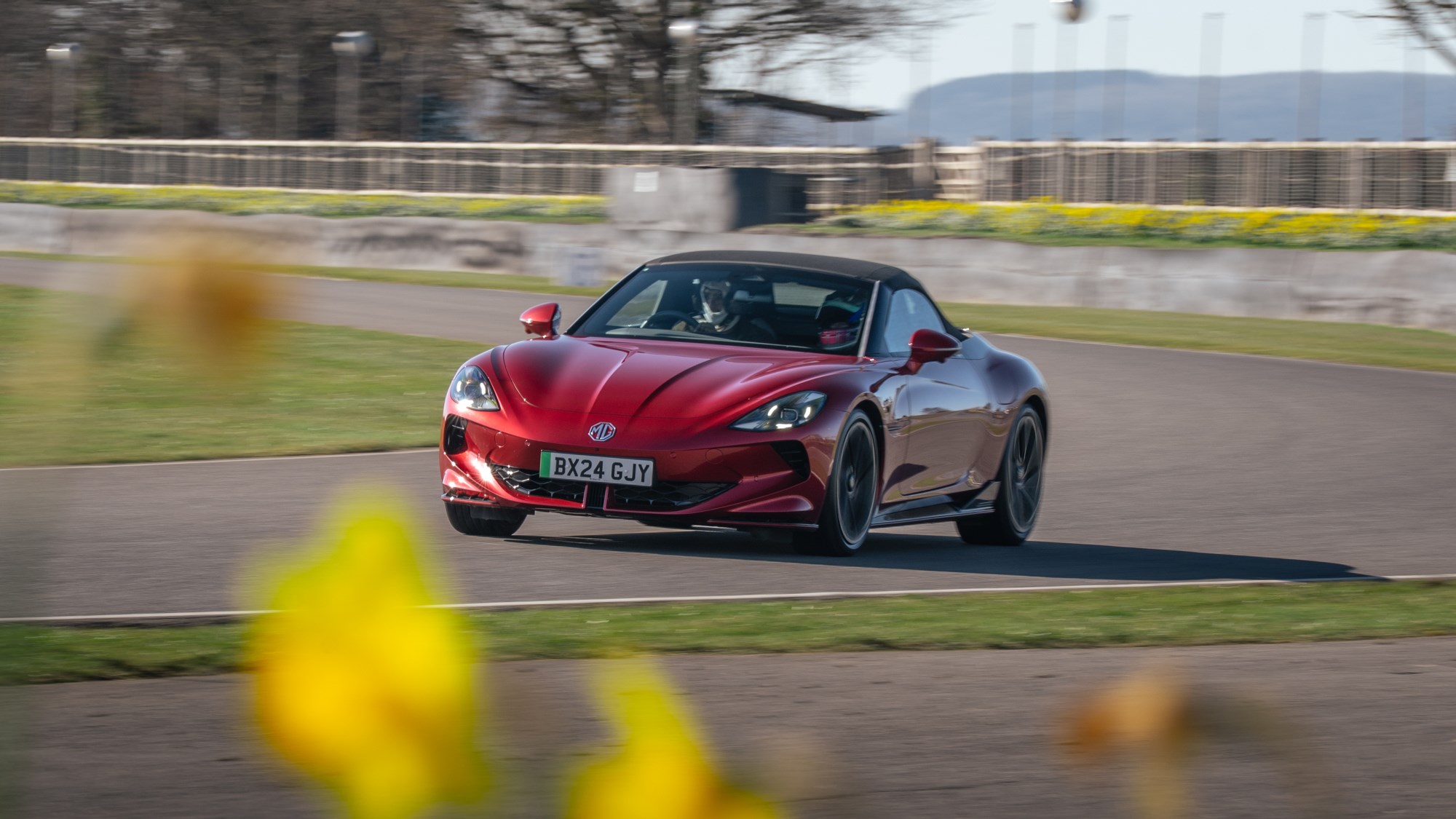
A few laps of the Goodwood Motor Circuit confirmed just how sorted the Cyberster’s chassis is. Despite its weight, is Modular Scalable Platform stays well flat in hard braking and corner entry. Carrying speed through corners requires a little more smoothness, but it’s still fun to drive and easy to lean on. Go in thinking of it as a nimble British roadster and you’ll likely end up smeared on Goodwood’s brick chicanes. Treat it like a GT car that needs to be stroked through corners, though, and it’s rewarding enough.
Before you buy
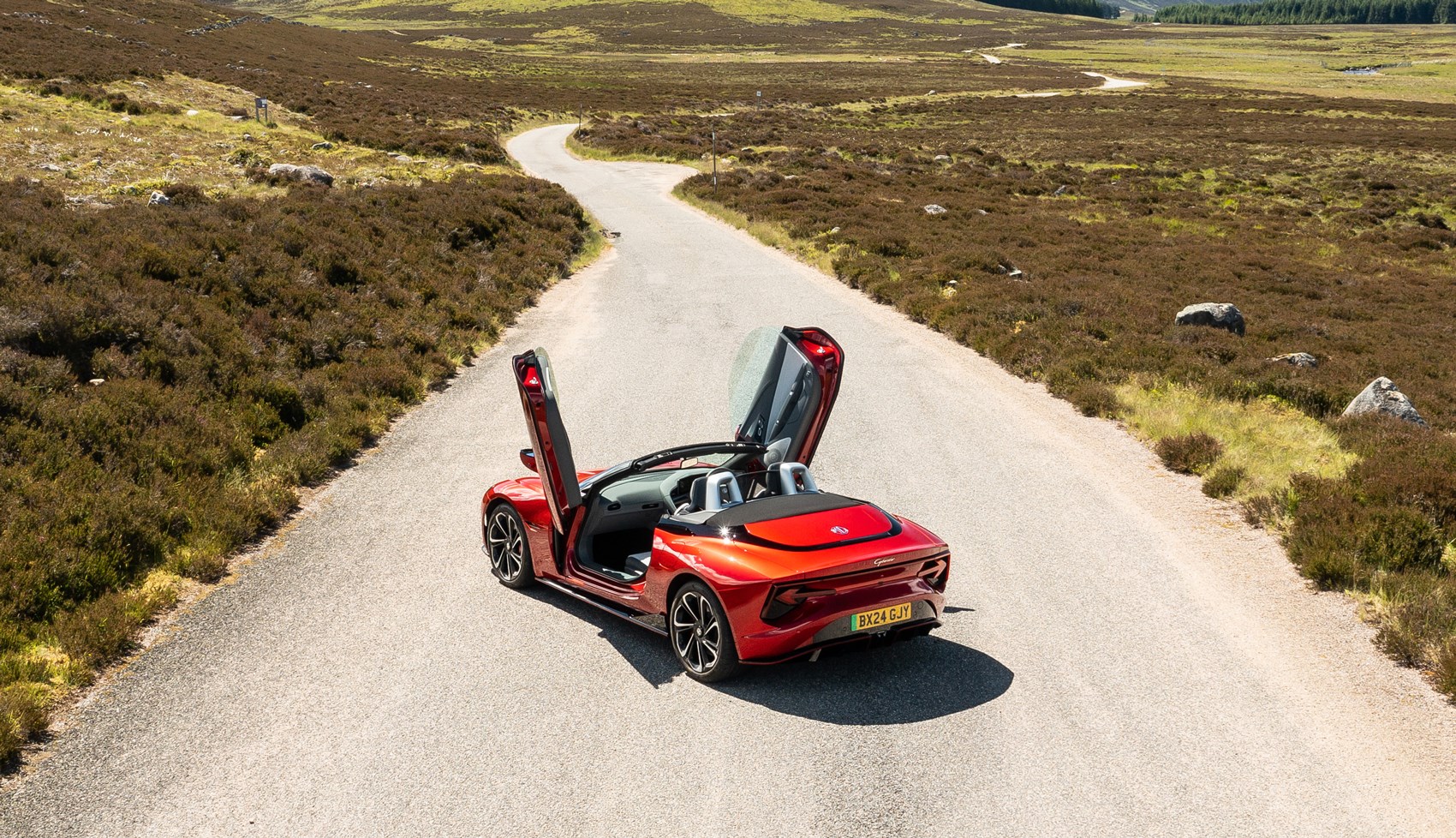
The Polestar 6, next-gen Porsche Boxster and BMW Z4 are still a few years off, and the Tesla Roadster is still a permanent Musk pipe dream. And when those rivals do whirr into showrooms, odds on they’ll be significantly more expensive than the MG.
Which makes us look at the dwindling roadster roster that still uses a combustion engine. The Jaguar F-Type has officially bowed out but, if you’re looking at a used one, it’s an old-school mix of brawn and engaging dynamics. Your other option is the BMW Z4, but it’s more of a Saga cruiser than an apex nailer, majoring on refinement and manners.
Not bothered about the convertible bit? MG has confirmed the Cyber GTS – a hardtop version of the Cyberster. MG bosses reckon it’ll probably sell even better than the Cyberster when it does arrive.
Verdict
Its connection with old British-built MGs is a stretch, but as a halo model for SAIC-era MG the Cyberster is an excellent grand tourer. It’s way better than it needs to be, a car that can confidently stand on its own.
Yes, there are digital gimmicks, technology knick-knacks and ergonomic quirks, but the engineering fundamentals of this car are impressively sound. It offers a grand touring driving experience that is unlike anything else currently available, and will do for some time come. Hats off then to MG. We’re very glad the Cyberster exists.
Specs are for a Cyberster GT