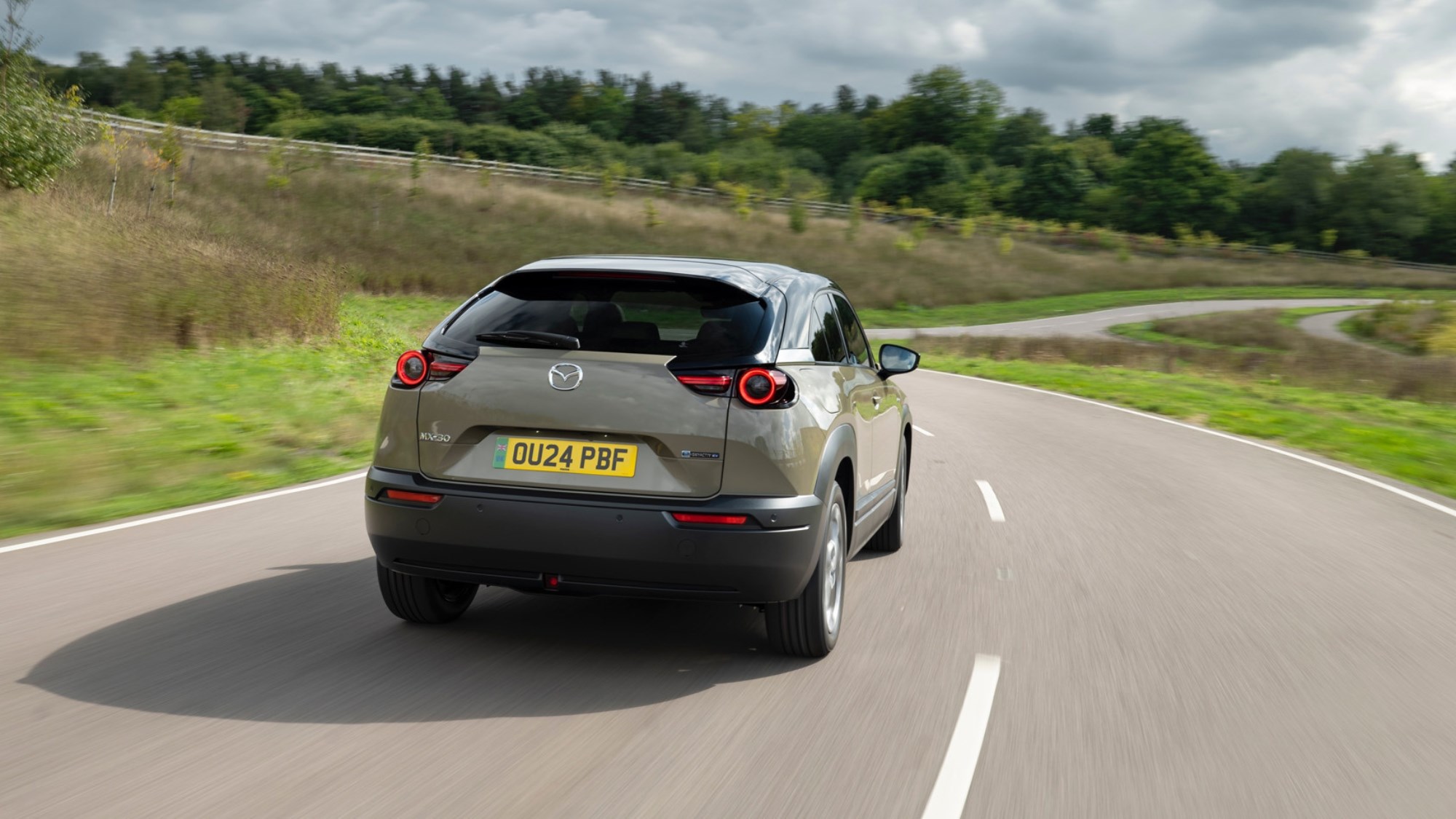
► 35.5 kWh battery is best for CO2…
► But small range could limit appeal
► MX-30 costs from £26,045 OTR
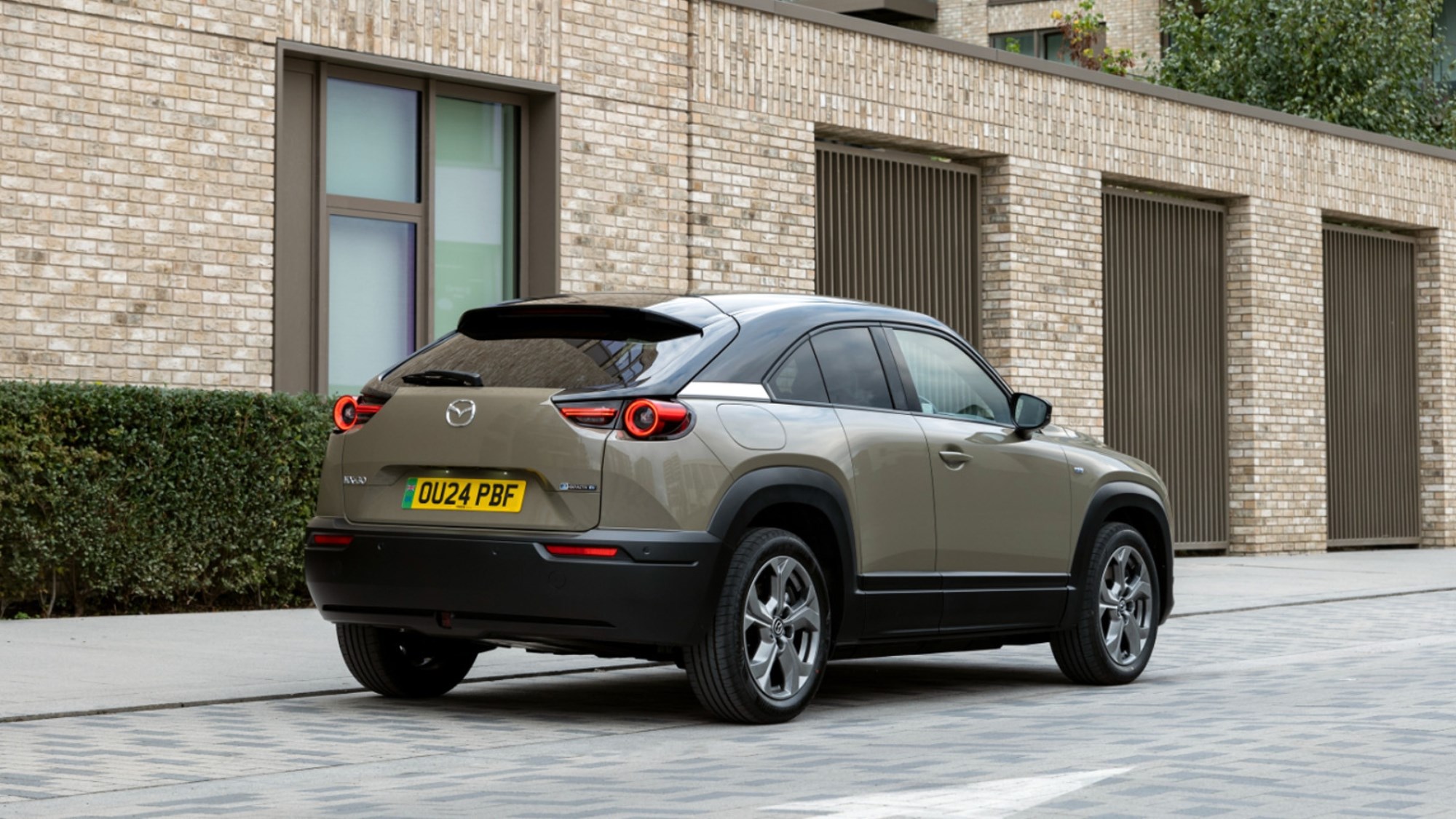
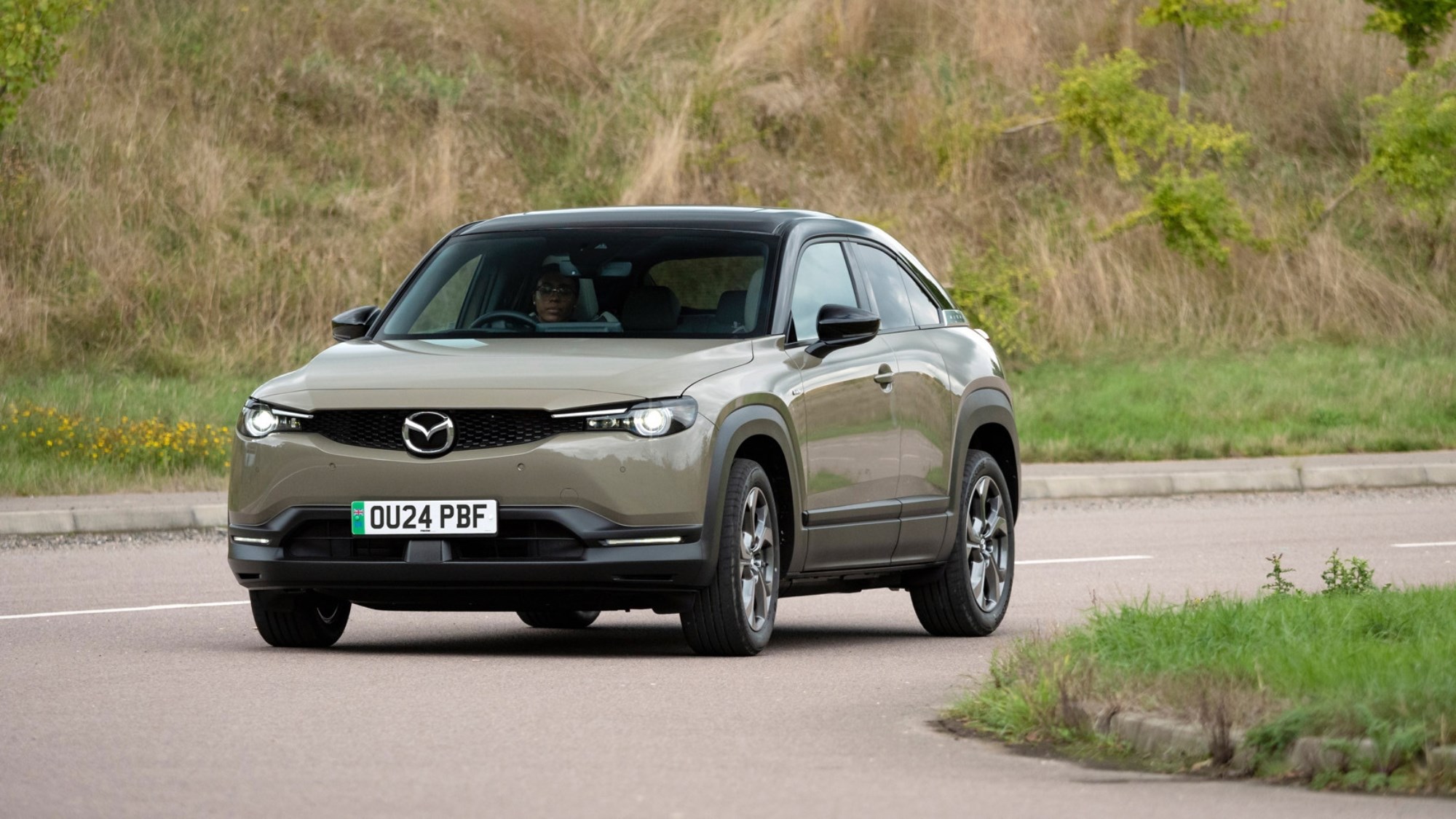
How’s this for a bold statement to begin with? The Mazda MX-30 EV could be one of the most underrated cars currently on sale in Britain. Dare I say it, it is the most underrated small SUV right now. Because while sales have never really taken off since its launch in 2020, the MX-30 EV is a very good electric car. One that’s perfectly suited to a large proportion of UK motorists.
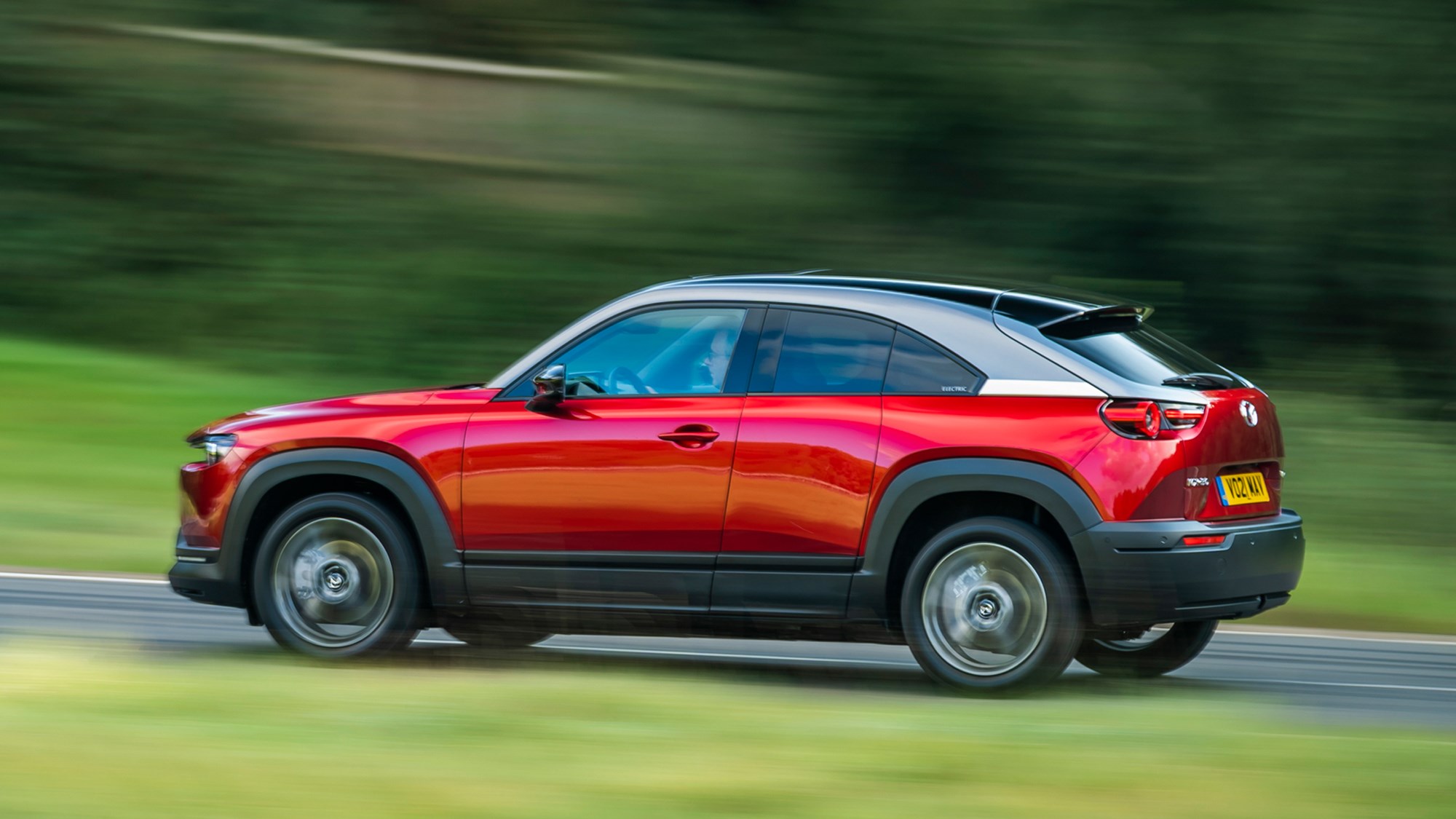
For starters, this is an electric SUV that doesn’t conform to the overturned fridge-freezer design language some EVs have been plastered with. And it’s made by a Japanese brand that very much knows how to make cars that are fun to drive anywhere, not least because it’s a master of control weighting and interior ergonomics.
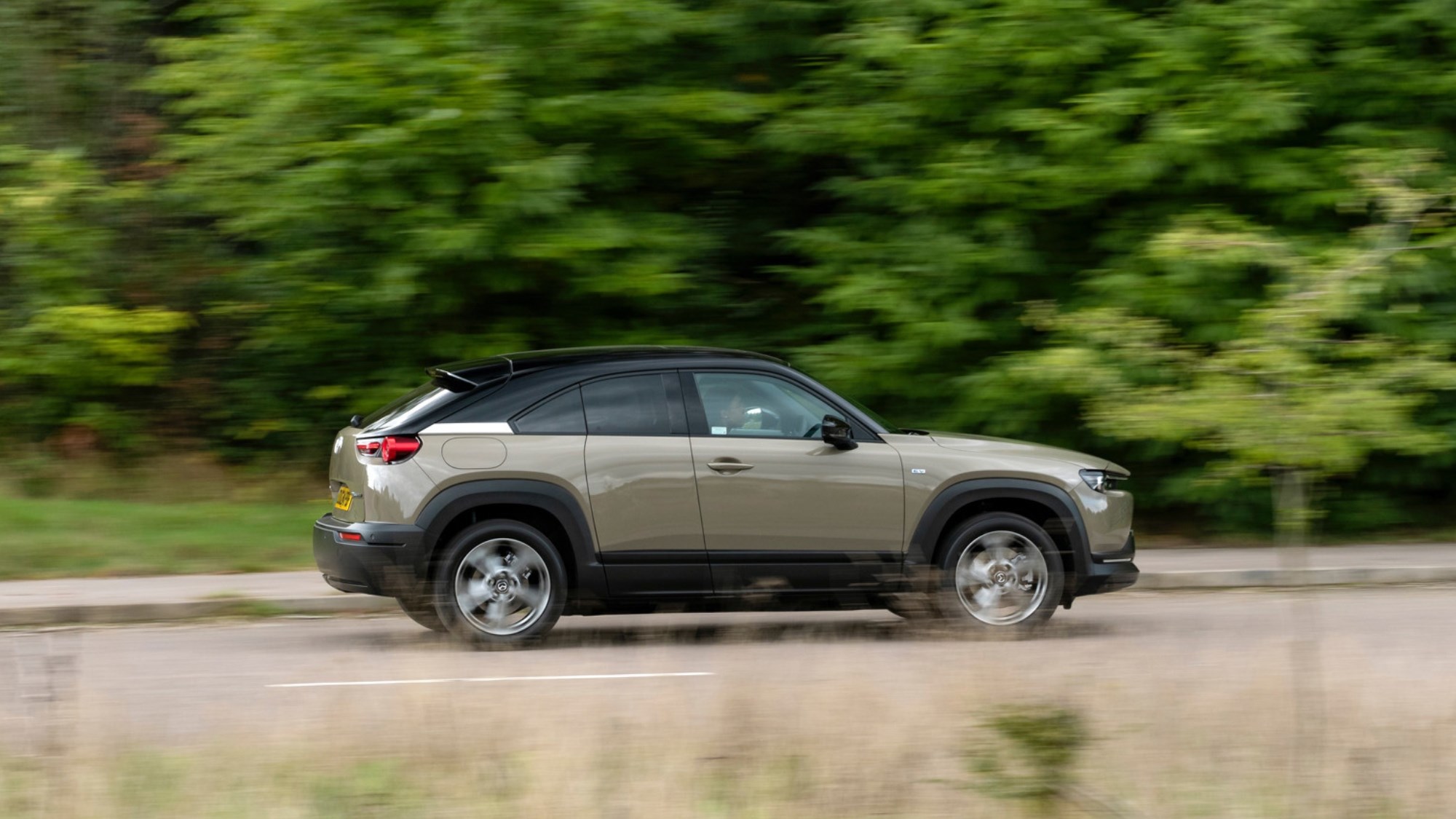
So while a tiny 35.5kWh battery pack and utterly underwhelming 124-mile official driving range (meaning you’ll be lucky to get a 100 miles out of it in the real world) have left a lot to be desired on paper, in reality, there’s more to the MX-30. Much more. As I’ll explain in our full test below.
Should you buy a Mazda MX-30 EV? Great exterior design and satisfyingly smart interior ergonomics are matched by a driving experience that makes all journeys a pleasure. As a small family car for urban and sub-urban types who travel fewer than 100 miles a week (like most Brits), the electric MX-30 would be a joy to own.
At a glance
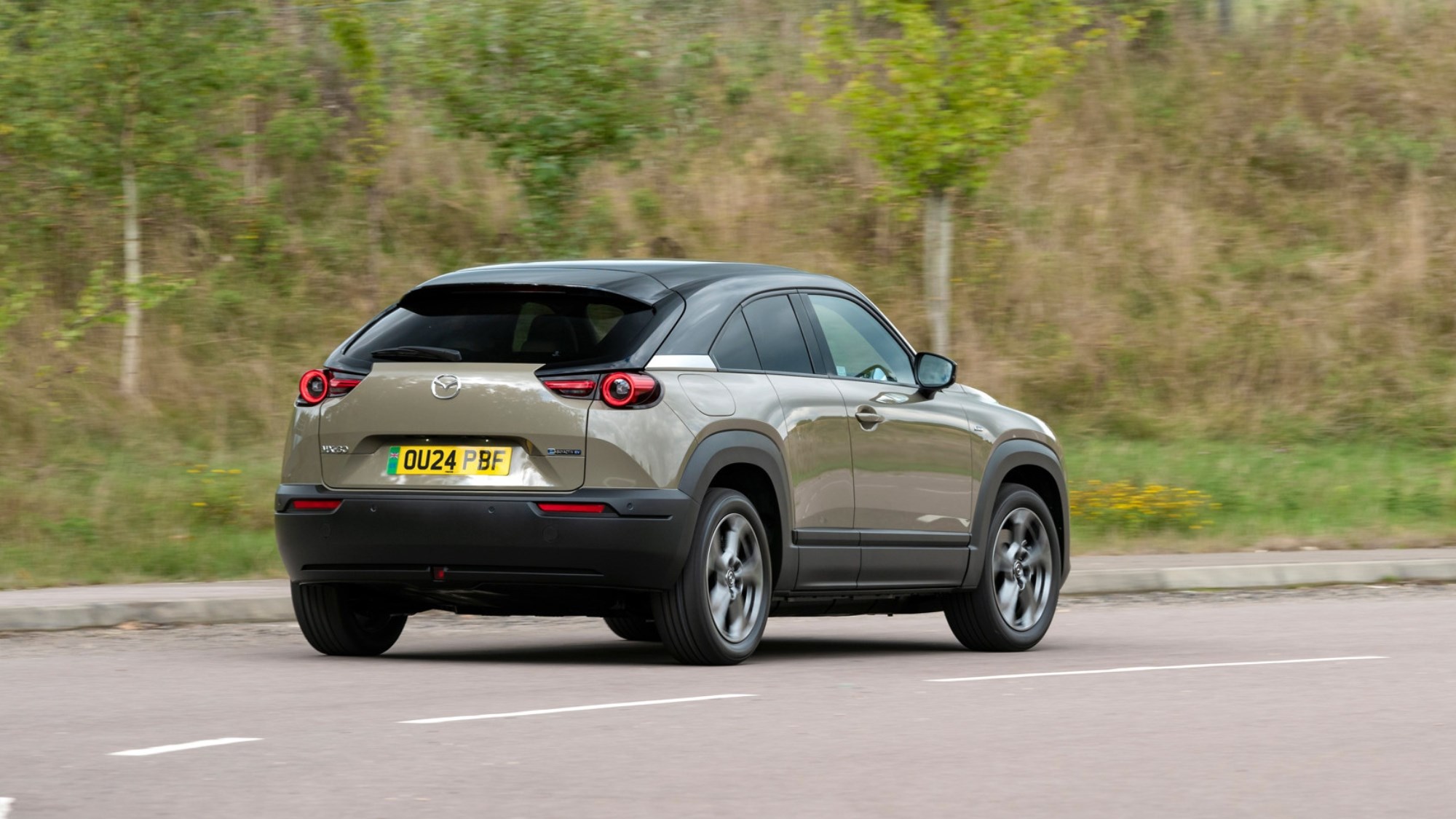
Pros: Handsome design, sensibly sized for small family life, and well thought out inside. A joy to drive on all road types, so long as you’re not going very far.
Cons: The range. In 2020 it felt lacking. In 2025, it’s laughably miniscule. It’s no longer on sale, meaning your only choice is to go used – or consider the hybrid MX-30 R-EV.
What’s new?
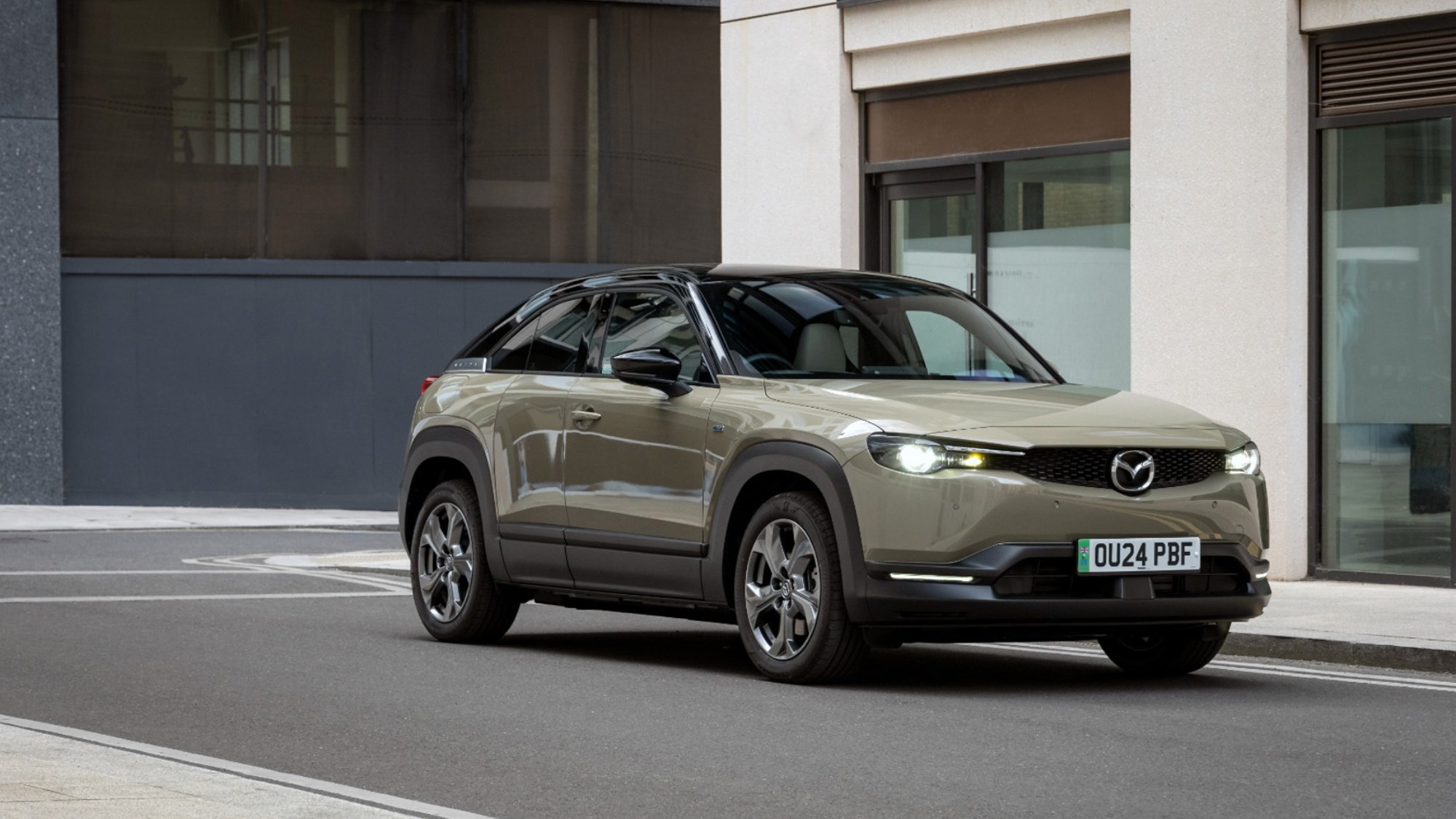
When the MX-30 EV launched in 2020, it wasn’t just Mazda’s first-time entry into the battery-powered small SUV segment, it was the brand’s first full EV. It didn’t have many rivals back then, but now it does – think electric versions of the MG ZS, Kia Niro and Peugeot 2008, and the electric-only Skoda Elroq, and you’re only scratching the surface. But the MX-30 EV (even as a used-only offering after it was discontinued in early 2025) provides something very different to the lot of ‘em.
What are the specs?
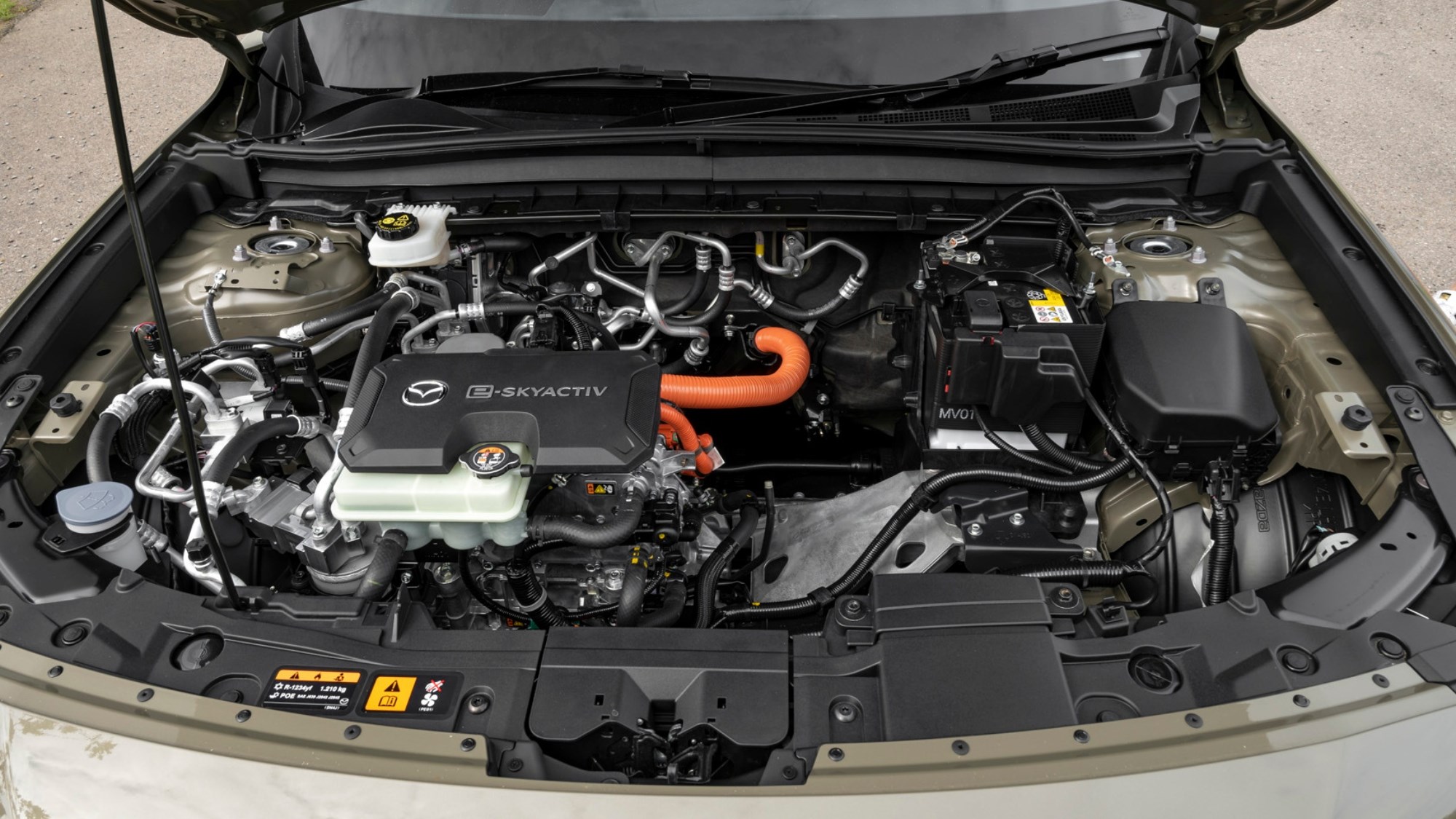
Using a 35.5kWh battery and a single-mounted front electric motor with 143bhp and 200lb ft of torque, the MX-30 EV can eke out a claimed 124 miles of combined range, or 164 miles of city driving. If you’re exercising it, the EV will sprint from 0-62mph in 9.7 seconds, and onto a top speed of 87mph.
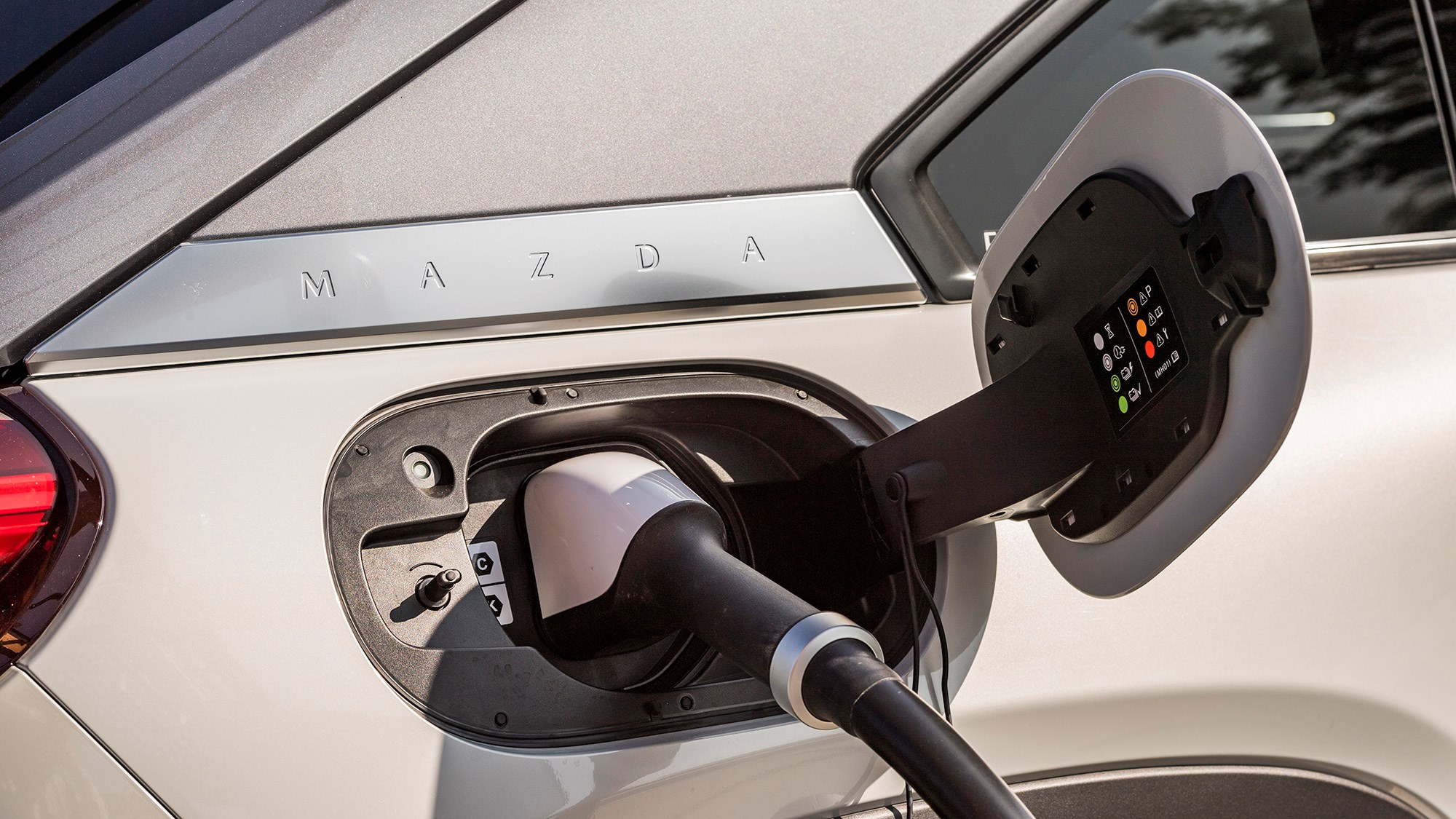
Charging from 20-80% takes 26 minutes using a 50kW fast charger if you go for a 2022 onwards car. If you go for an earlier model, it maxes out at 40kW, adding 10 minutes to your wait time. That’s not ideal. Thanks to its small battery, however, the MX-30 EV only needs 5 hours and 23 minutes to be brimmed with electrons on a 7kW home charger.
Mazda’s justification is that most users don’t actually need a huge 75kWh battery, and making those big batteries involves a lot of raw materials and energy. Enough to significantly contribute to the embedded environmental cost of a car, which in turn affects how long your electric vehicle really takes to be better than a conventional car and its ongoing consumption and pollution.
While not a scientific measure (your mileage may vary, literally), the smaller battery effectively halves the additional impact over a conventional car and, crucially, brings the ‘break even’ point forward to the stage where the initial owner of the car could see the benefit.
Most large-battery EVs will only give a return on that initial CO2 investment around the same time the conventional car is considered well-used and due for replacement.
This is all very well and worthy – until you need to do a slightly longer trip, say, at the weekend. Even a destination as little as 50 miles away is going to take additional planning. Some will be prepared to account for this, though perhaps not many.
How does it drive?
Glad you asked. Mazda is known for making cars that grow on you, as a driver, without necessarily screaming about their prowess externally. Whether it’s the rev-tastic RX-8 or surprisingly capable Mazda 6, the Japanese firm knows how to maximise its products.
Electric vehicles are a different kettle of fish though. All instant torque and iron fist with a silent punch hilarity, until the charge runs out and you drive like the proverbial nun. Including a bit of praying. But the MX-30 EV is still very clearly a Mazda. It feels like an ICE-powered car
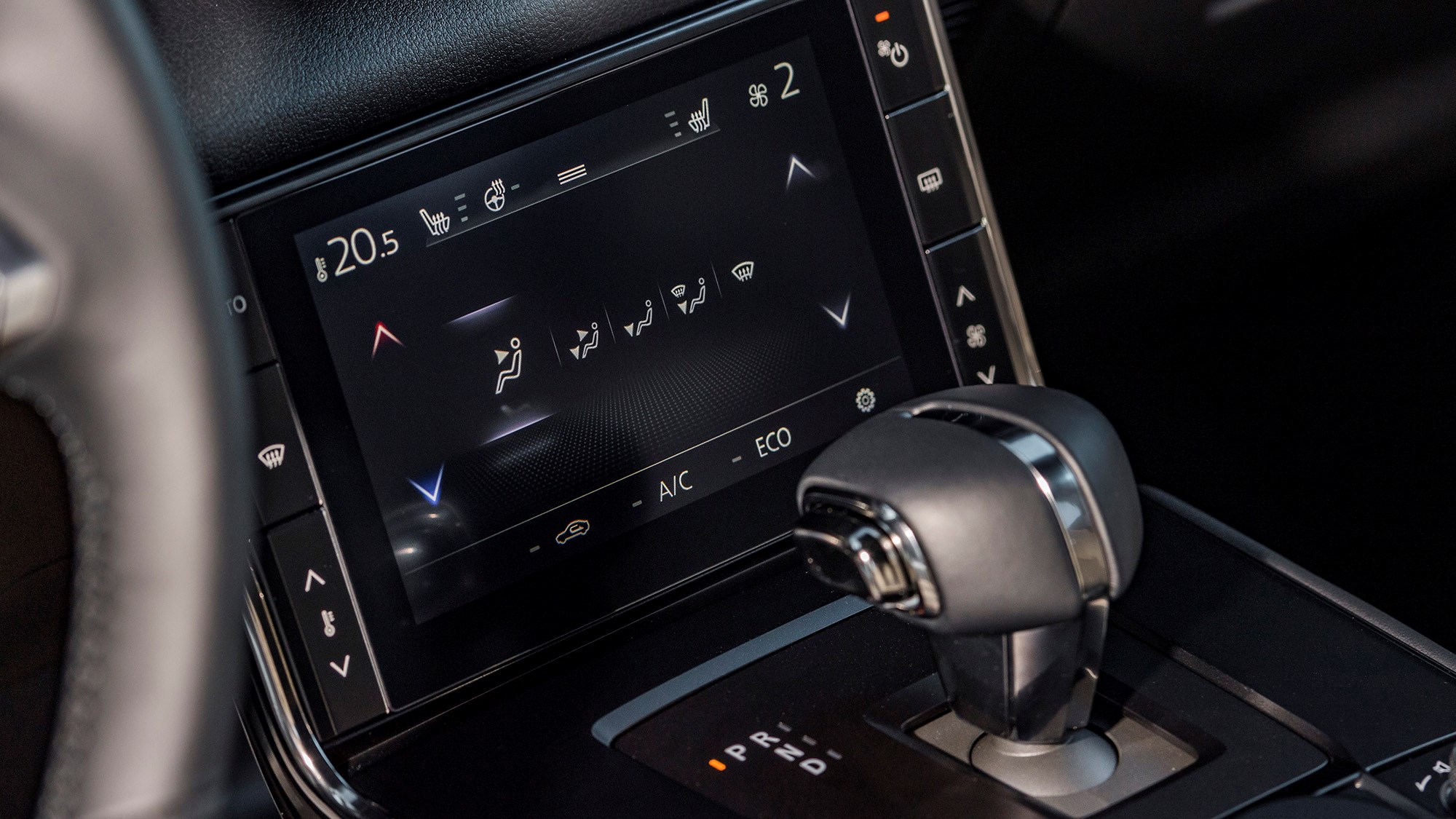
Torque-map and touch points all contribute to this eerily familiar sensation. The motor control pedal (the one under your right foot – there’s little pretence of ‘one-pedal driving’ here, though it’s got the ability to come close) is a floor-hinged, organ-style one that’s long, supportive and very, very progressive and controllable. It’s the kind of detail that contributed to the lazy, unhurried style of driving that a big old Mercedes would encourage, and it makes driving the MX-30 a real pleasure.
Even the stubby transmission lever is reassuringly mechanical. The lever is purely a forward/reverse selector like a typical automatic car, with an unusual ‘move sideways to park’ that adds an opportunity to engage with the car physically rather than pushing another button. There are EV-specific features of course, like paddle shifters for regenerative braking, which defaults to a mid way position and can be reduced or increased to suit. But this only adds to the engagement.
The parking brake’s electronic, though. Well, you can’t get everything right.
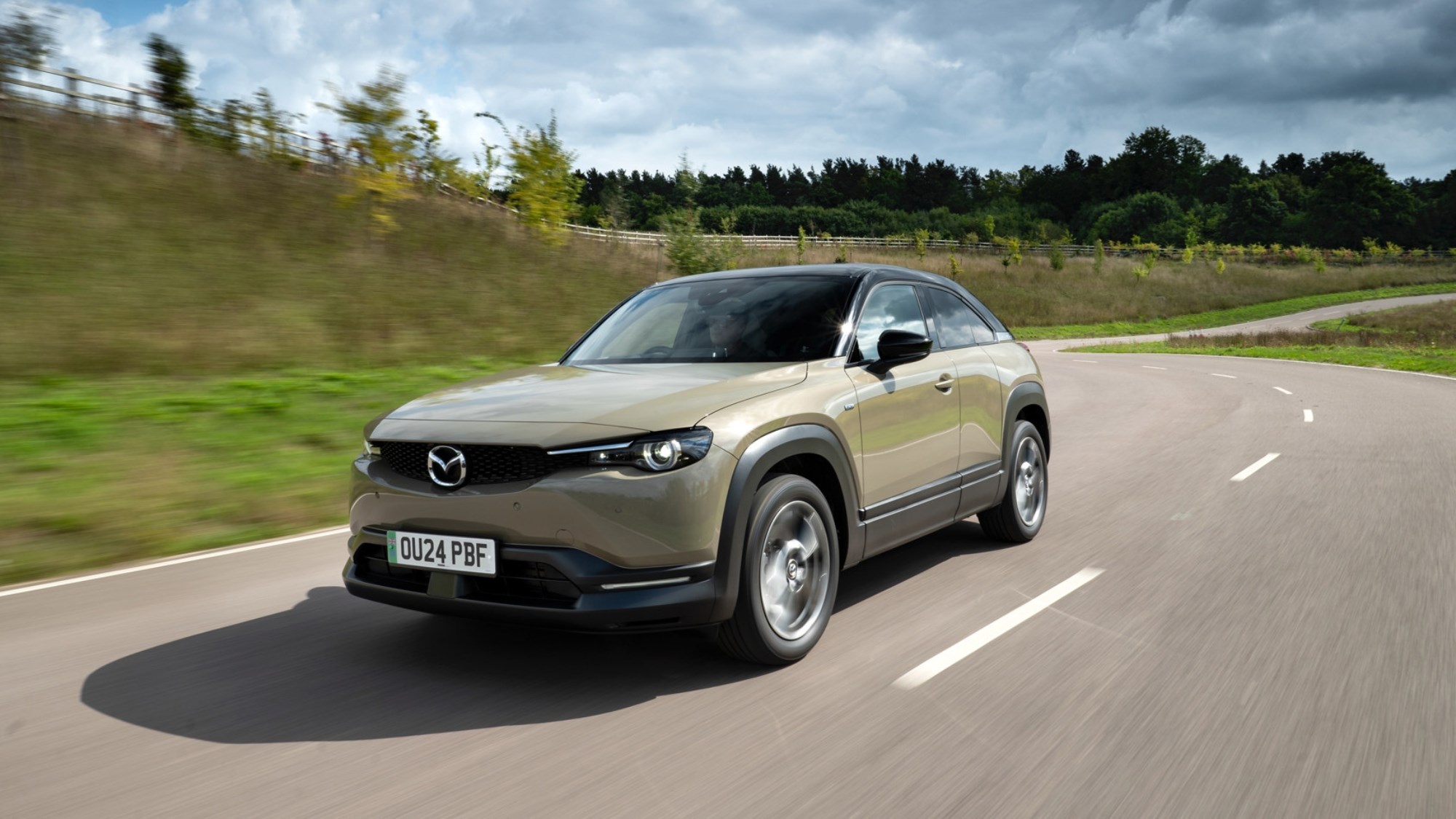
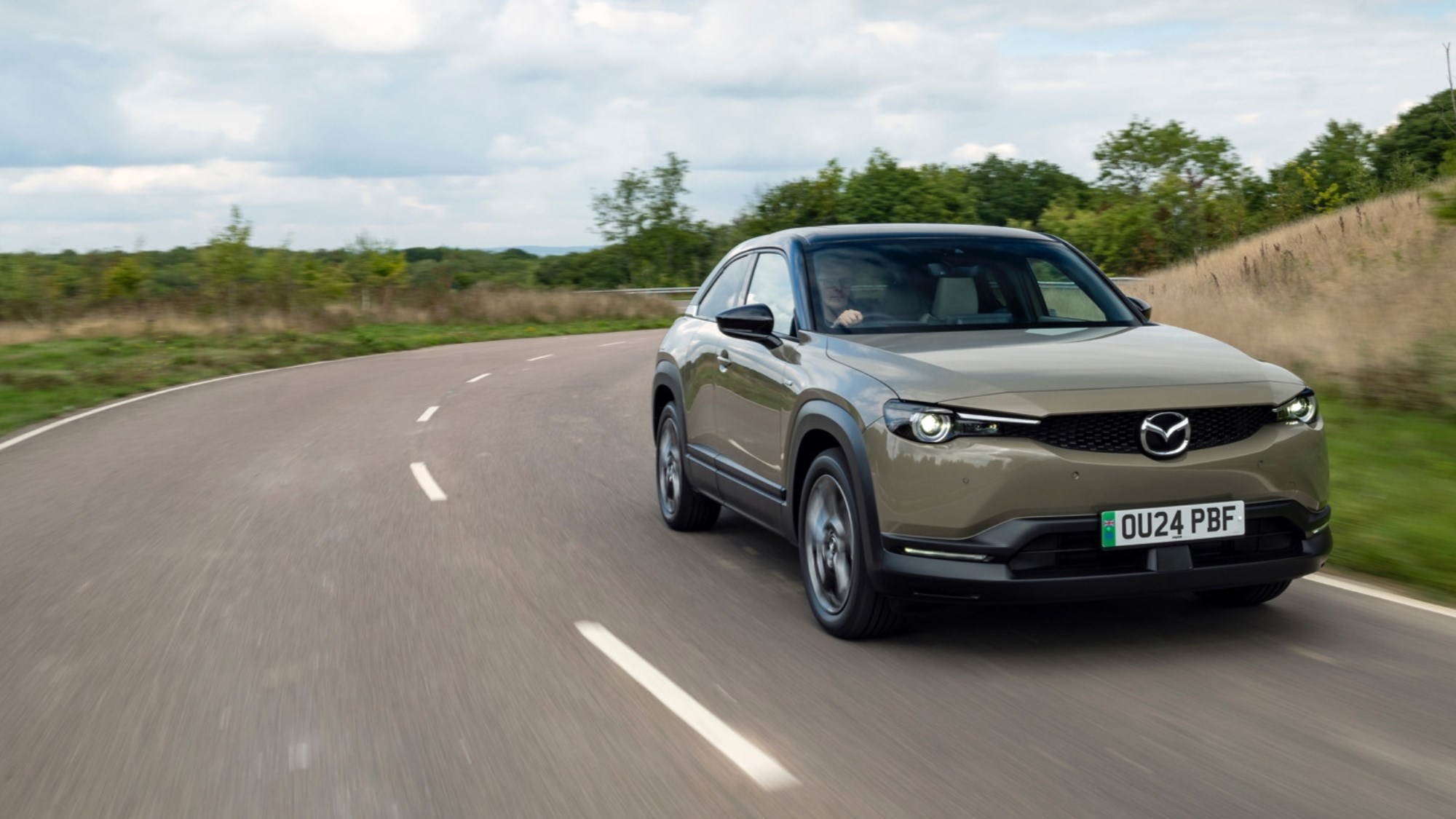
Encouraged by the artificial combustion and well-weighted, direct steering, you press on. It’s not quite, barely dipping under the 10sec 0-62 mark, but the car feels so cohesive. Bends are drawn in a smooth arc, with confident aim, and it takes a moment to remember that this is an electric car at all – there’s some torque-vectoring technology, but there’s pleasure to be found in absorbing the feedback and actually driving the car, not seeing how long the sensors can keep you on the road in denial of physics.
Brakes are an area that some electric cars feel lacking in, with precious little pedal feel as your foot pressures the pedal further, with nothingness giving away to a sudden halt. Not the Mazda: easy to modulate, whether you just want a quick pre-bend glance to push the balance over the front axle, or the anchor’s been tossed for an emergency stop. The engineers have really thought about this and it resonates from every contact point.
The difference in weight, in attitude, between the MX-30 and any other electric car in this price range is key in its appeal. There’s none of the stodge, the roly-poly cornering or aggressively controlled weight management ruining the ride. It’s basic stuff – just McPherson struts and torsion beam – but so were some of the most delightful hot-hatches ever made, and the MX-30 carries their spirit in its springs.
Best of all, the engineering simplification that’s enabling all this driving pleasure also ensures the MX-30 EV can claim to be a far more sustainable electric car. It’s small battery requires far fewer precious resources, and its lighter construction is enabled from less componentry. As such, the so-called ‘break even’ point is brought forward to the stage where the initial owner of the car could see the benefit.
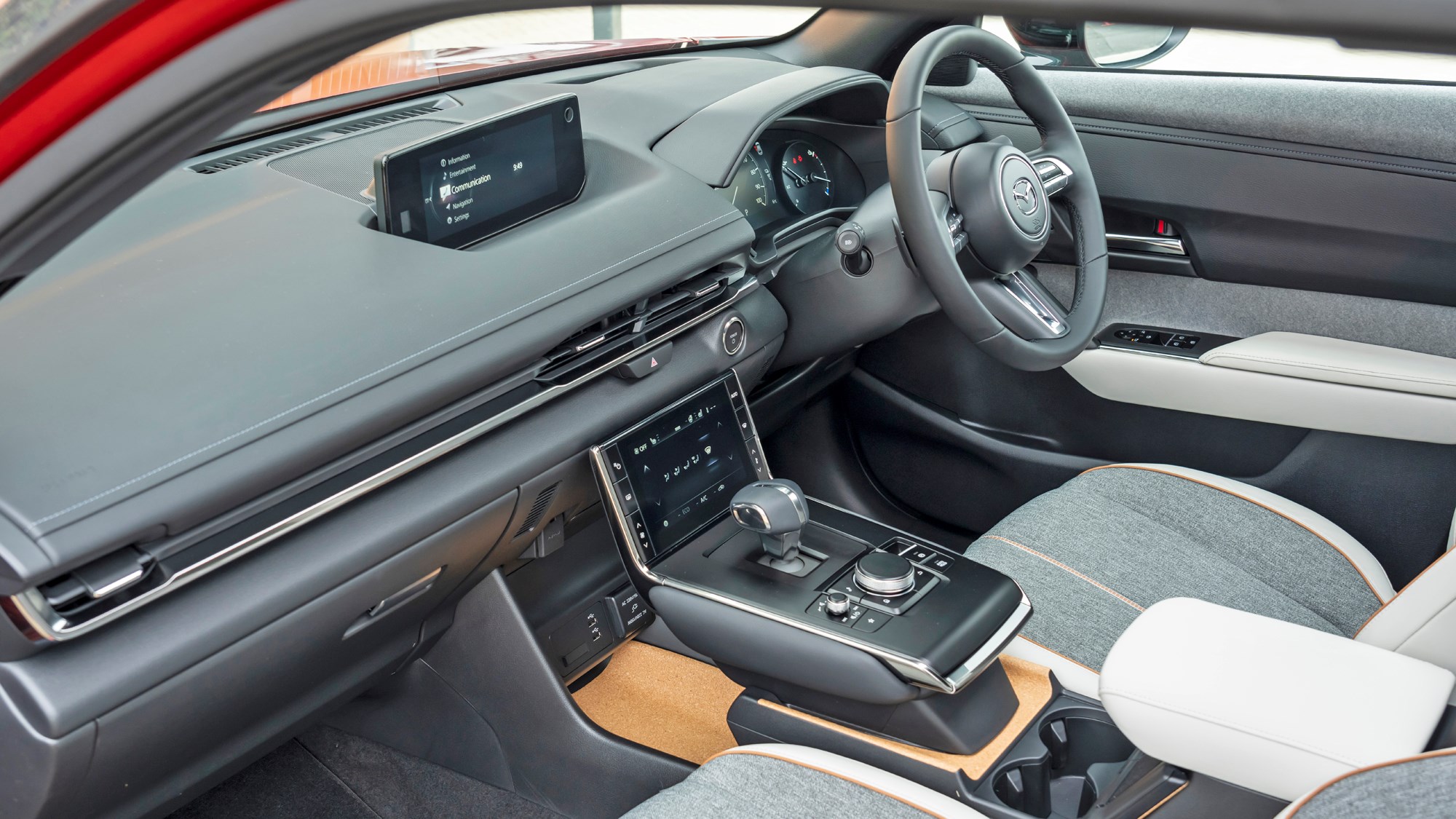
What about the interior?
Mazda’s deployed a three-ring structure for the MX-30, surrounding the batteries and passenger compartment. It’s torsionally stiff and allows the suspension to compensate for the road and not the body. The result is a pleasant, predictable ride and good refinement.
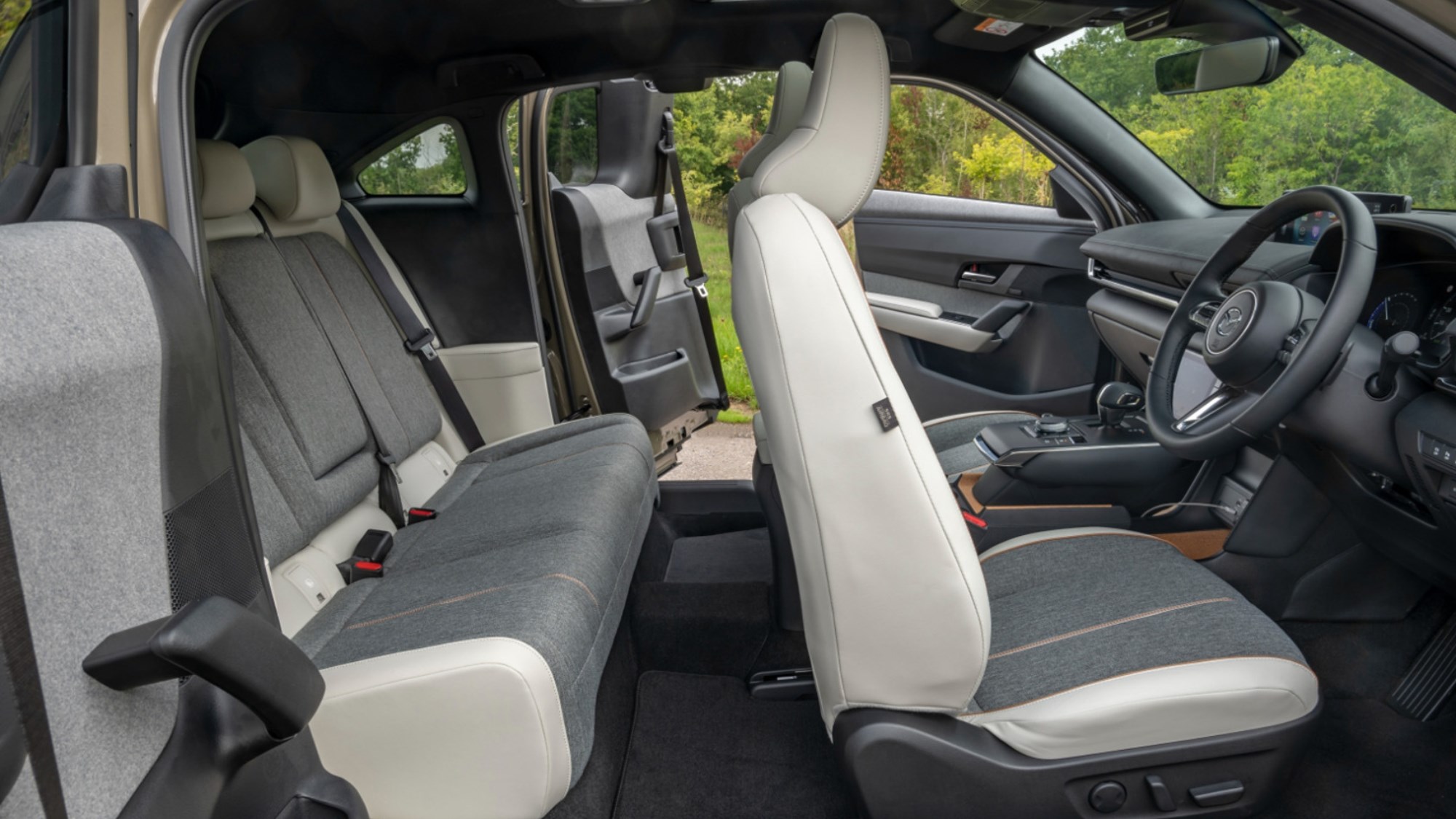
That goes some way to compensating for the compromised side view out the rear passengers get while perched on the attractive, but quite shapelessly flat rear bench. Being positioned quite upright below a tapering roofline isn’t as claustrophobic as you might expect, and sculpted front seatbacks mean two adults of average height can sit tandem, but you’re peering out of a porthole set in acres of black plastic and legroom is, don’t doubt it, restricted.
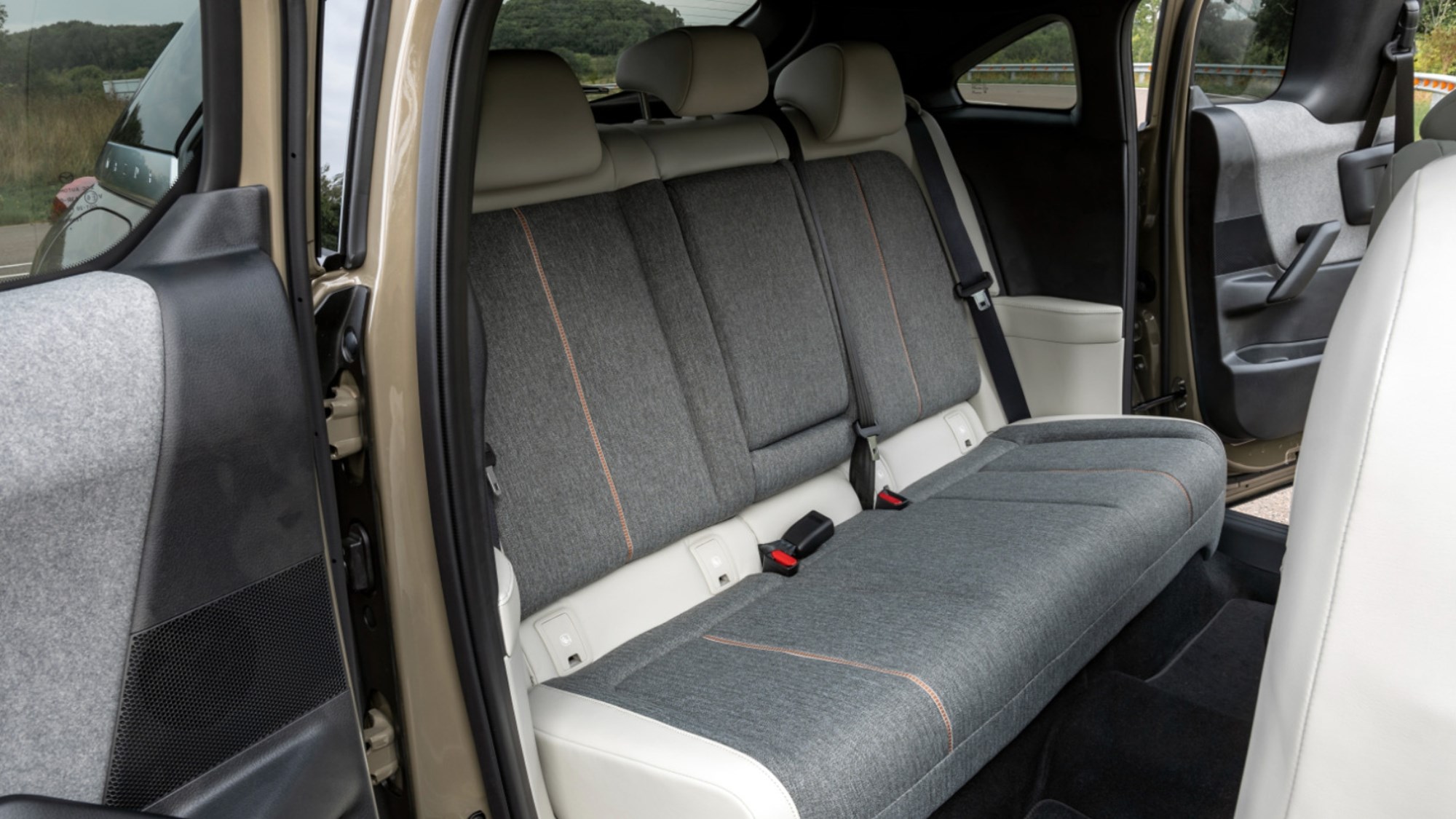
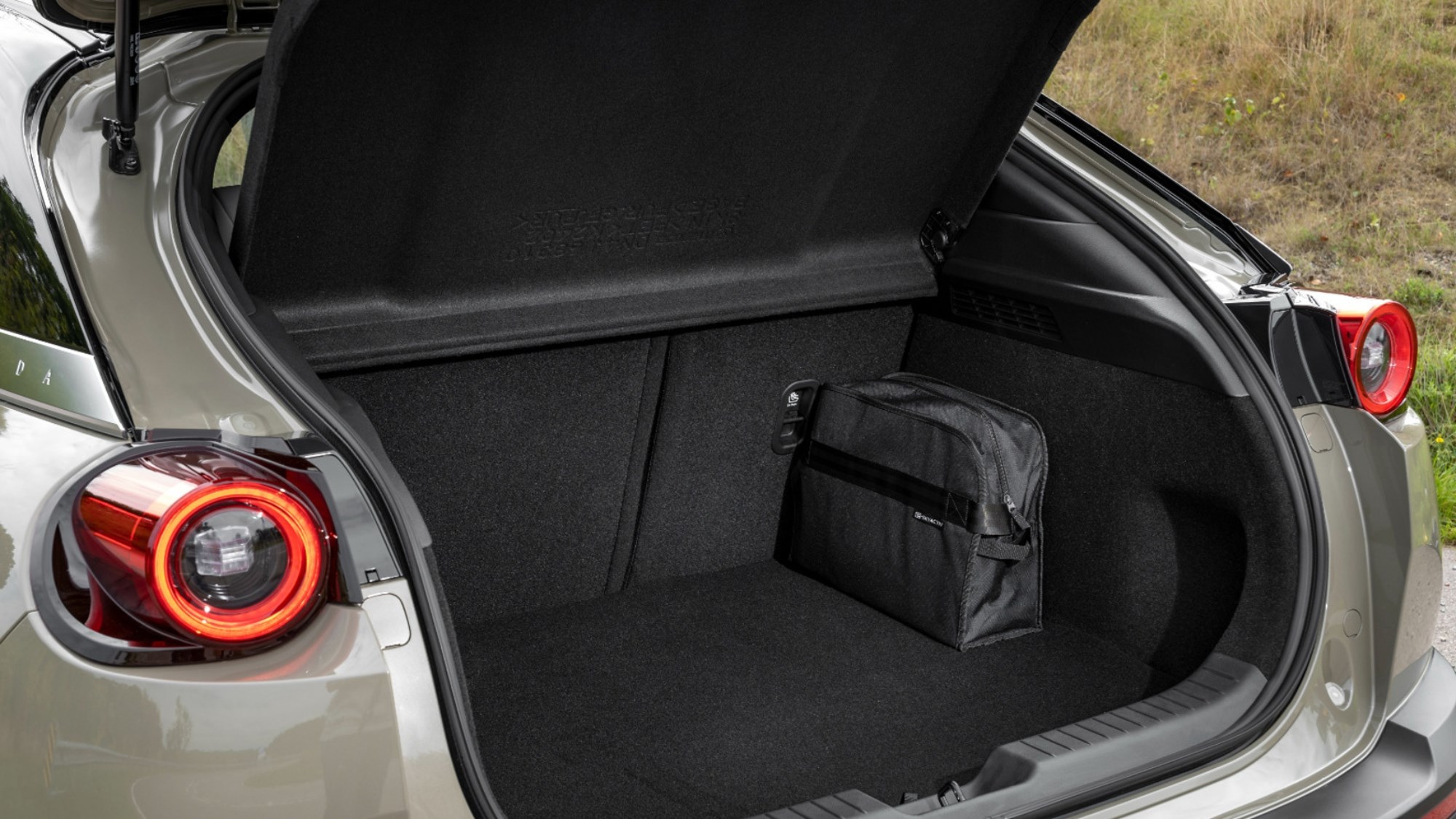
Smaller passengers are easier to deal with though, thanks to the seat topography and Freestyle doors. Child seats are the right height and unobstructed, making this one of the easiest electric cars you’ll find if you’ve got infants or toddlers. There’s a reasonable 366-litre boot, too (you’ll lose a few litres if you have the Bose audio).
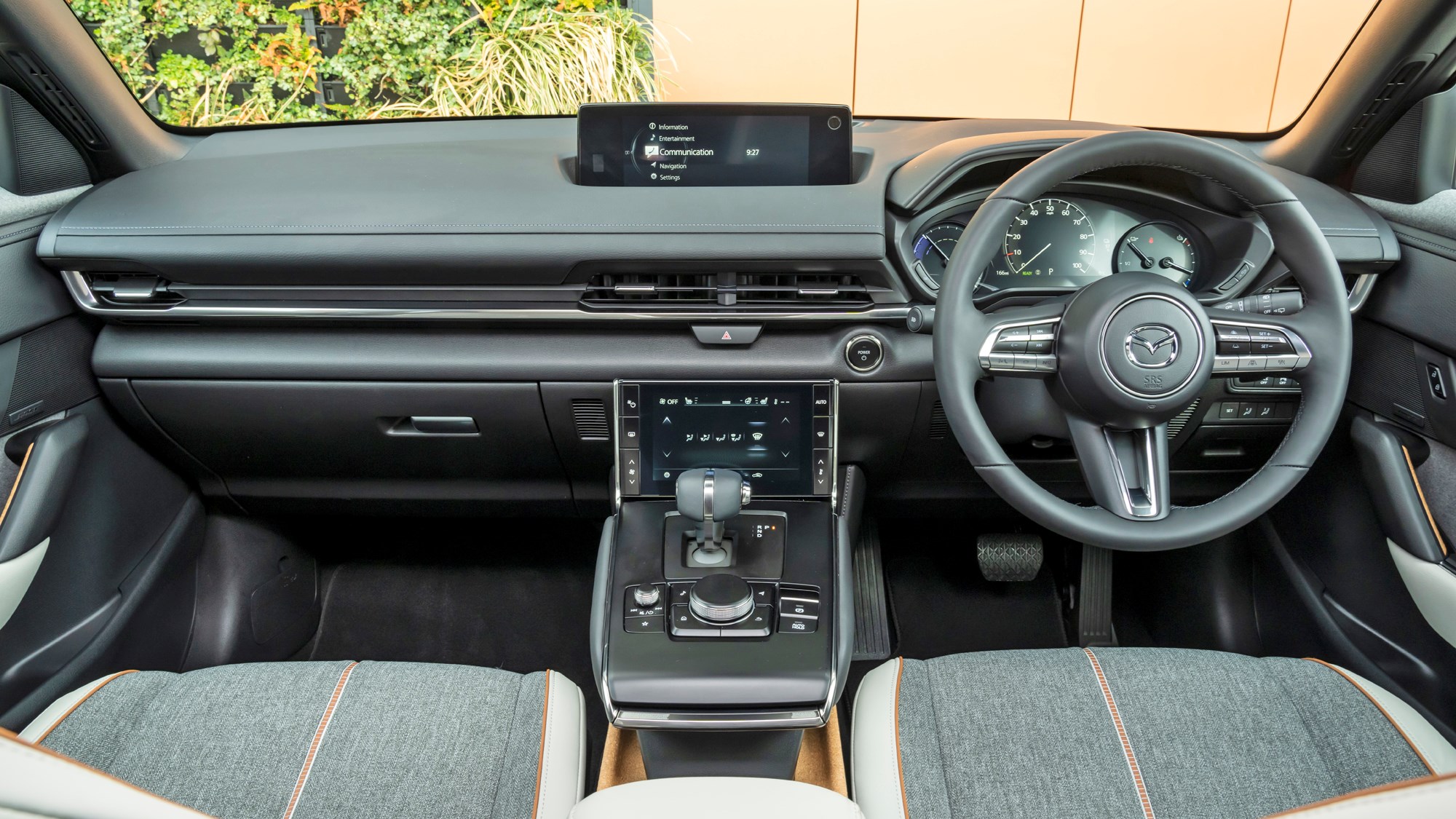
That square, padded seat structure is carried through to the front. Seats are very subjective, so first-person opinion here: I thought they were great, and suspect most people will appreciate the same qualities – chunky padding that’s like a firm memory foam mattress, well-shaped bolsters that hold you without being constricting, and just the right amount of lumbar support and width for shoulders. The materials are nice, too, but the most distracting thing in the MX-30 is the appearance of cork.
This natural material (much of the interior is vegan-friendly natural or environmentally-friendly recycled) is found not only on the centre console and simple, neat covered cupholders, it’s inside the door pull handle on the higher specifications too, where it’s a welcome tactile change from plastics.
Mazda hasn’t taken your pinboard and glued it to the dash – the cork is a special, high-density material that’s been treated and covered so it won’t absorb spills or age rapidly.
All MX-30’s are generously equipped, including a head up display and adaptive cruise control and lane keeping on all models; options really are all about convenience and personal preference, instead of being essentials for you to pay extra for. The price becomes even more appealing when you compare the overall package with rivals.
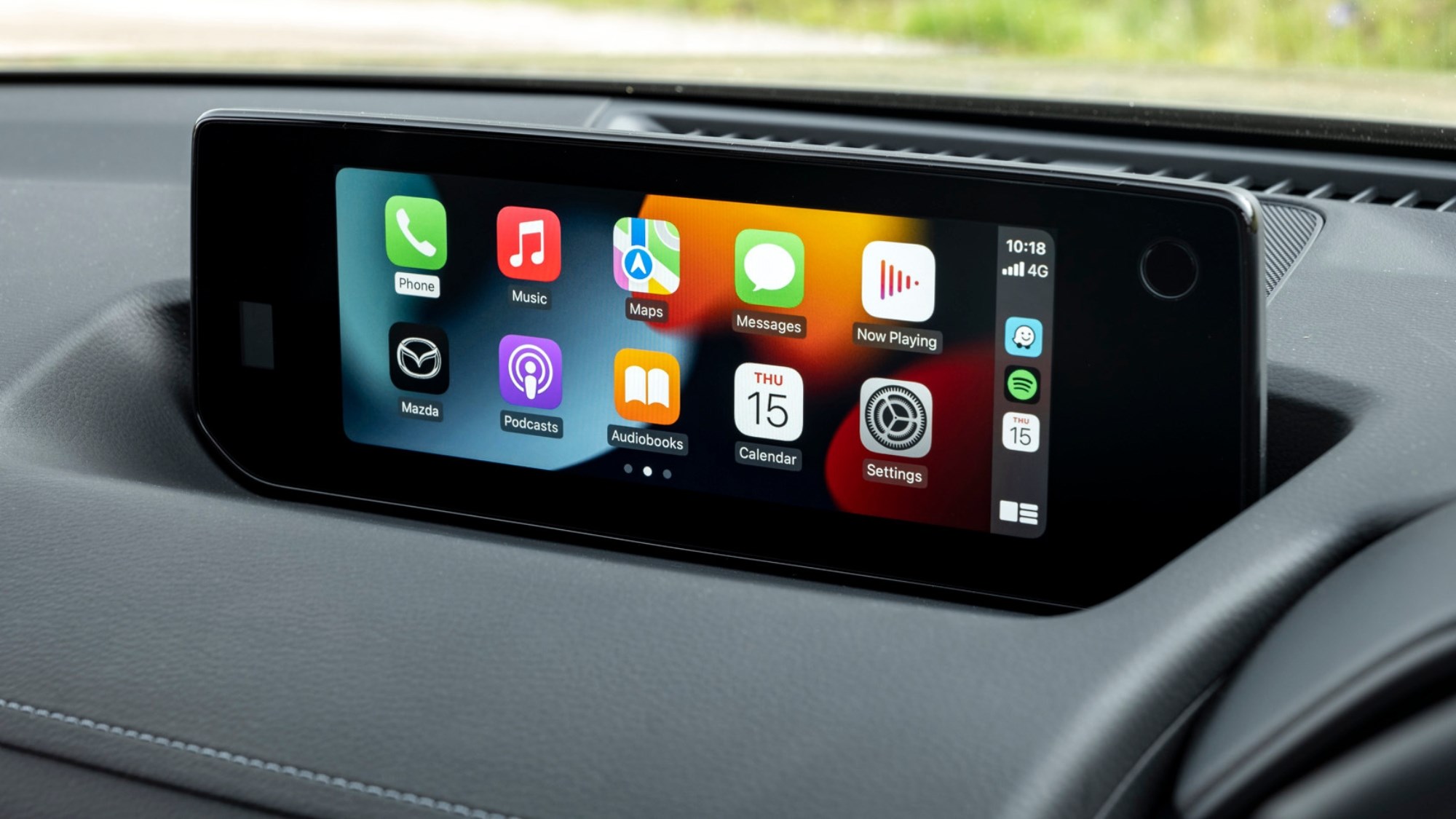
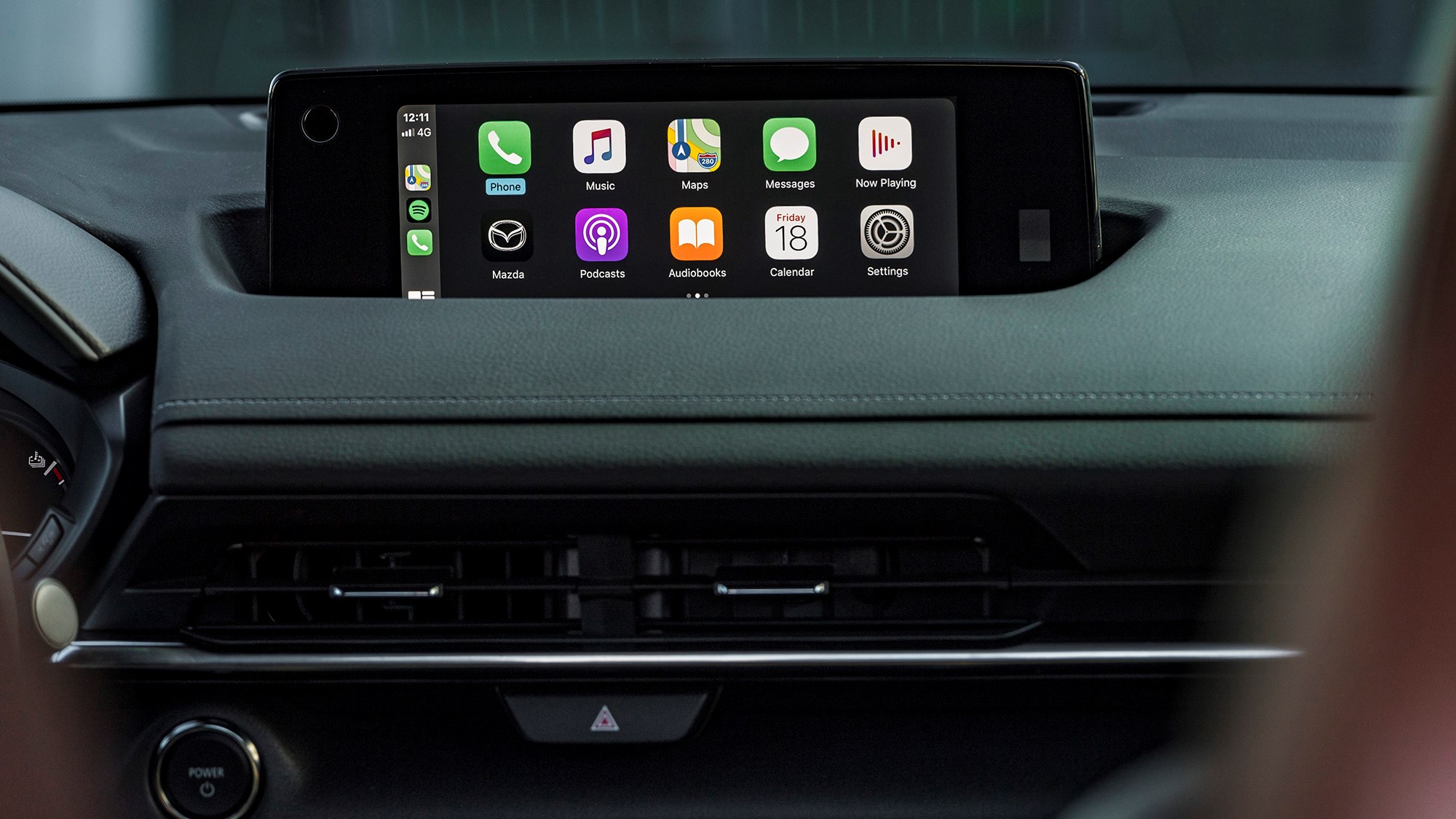
Infotainment is fully-featured, with Android Auto nd Apple CarPlay support included and Mazda’s intuitive rotary control. It’s supported by steering wheel controls and a clear, crisp dashboard display.
Perhaps the only thing the classy, well-built cabin is lacking is a set of multi-coloured slivers of ambient light.
Before you buy
When it was last on sale as a new car, the MX-30 EV was priced from £27,995, which was relatively competitive (the Ford Puma Gen-E is two grand more) until you remember the range disadvantage. But now, as a used proposition, that range doesn’t feel quite so big of an issue. Four-year-old examples with 40,000 miles on the clock can be had for under £9,000. As an urban small family car that’s as fun to drive and quirky, that feels like a heck of a buy.
It also means comparisons with the car’s biggest rivals, namely the Ford Puma Gen-E with its sub-£30k price and plus-200-mile range, and the Skoda Elroq, with its +200 to 360 mile-capable models, need not worry a potential buyer. Neither of those models are old enough yet to have depreciated to comparable levels. And yet range aside, the MX-30 EV is genuinely right up there with the best of the class for driving pleasure.
Verdict
It’s a bitter sweet discovery that the MX-30 EV is probably at its most competitive as a used model, but don’t let that cloud the fact Mazda’s first electric car is as easy to love as it is to live with. After spending close to a thousand miles with one, it’s easier to see that most people, most of the time will find its 124-mile range more than sufficient. The ‘most’ part could be a real sticking point, though.
However, if you’re concerned about 124 miles because you’ve heard typical 250-mile BEVs really give 150 miles, you should give the MX-30 a chance – the way it delivers and uses power, and has been carefully tuned to keep you involved rather than remote, means it’s more likely to deliver that full range. It’s genuinely appealing a a driver’s car too – not in a ‘OMG this is so fast’ way like a Tesla. It’s satisfying to drive and would be just as satisfying with a regular engine; most electric cars are a compromise we accept because of the halo effect of being green.