► We drive the facelifted MC20 drop top
► Updated styling, new steering wheel
► Mechanically unchanged (hurrah!)
Don’t let the new name fool you, the Maserati MCPura is effectively a very light update to the mighty mid-engined MC20 ‘super sports car’. Coupe and open topped Cielo versions are still on offer, and – for the moment at least – you can still buy the more focussed GT2 Stradale for track work.
That leaves the MCPura to continue offering a less frenetic alternative to a Ferrari 296 GTS or McLaren Artura Spider. To say it’s a true grand tourer is pushing things somewhat, with minimal luggage space and interior storage making it significantly less practical than an Aston Martin DB12 Volante or Bentley Continental GTC.
But who cares about practicality when you’ve got the keys to an open-topped Maser and Tuscany’s wide selection of roads to play with? Keep reading for our full review, or have a look at our how we test page if you want to know how we reach our verdicts.
Should you buy a Maserati MCPura Cielo? Oh yes. A delectable ride and handling balance with shocking levels of approachability will soon make you forget about the minimal luggage space and cheap feel to parts of the interior.
At a glance
Pros: unintimidating yet involving to drive, supple ride, amusing turbo noises
Cons: small and hot boot, parts bin interior, V6 sounds a bit industrial
What’s new?
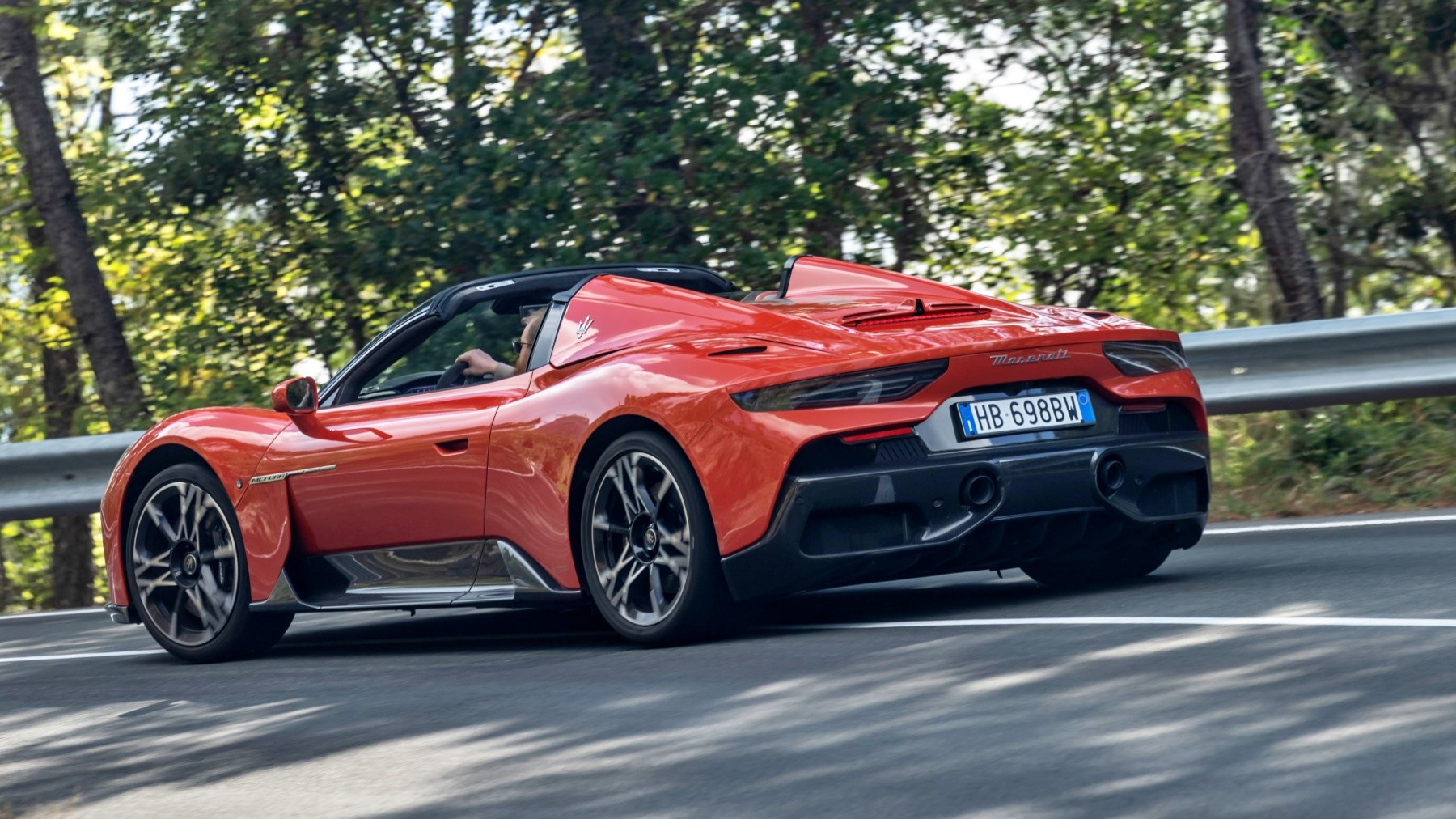
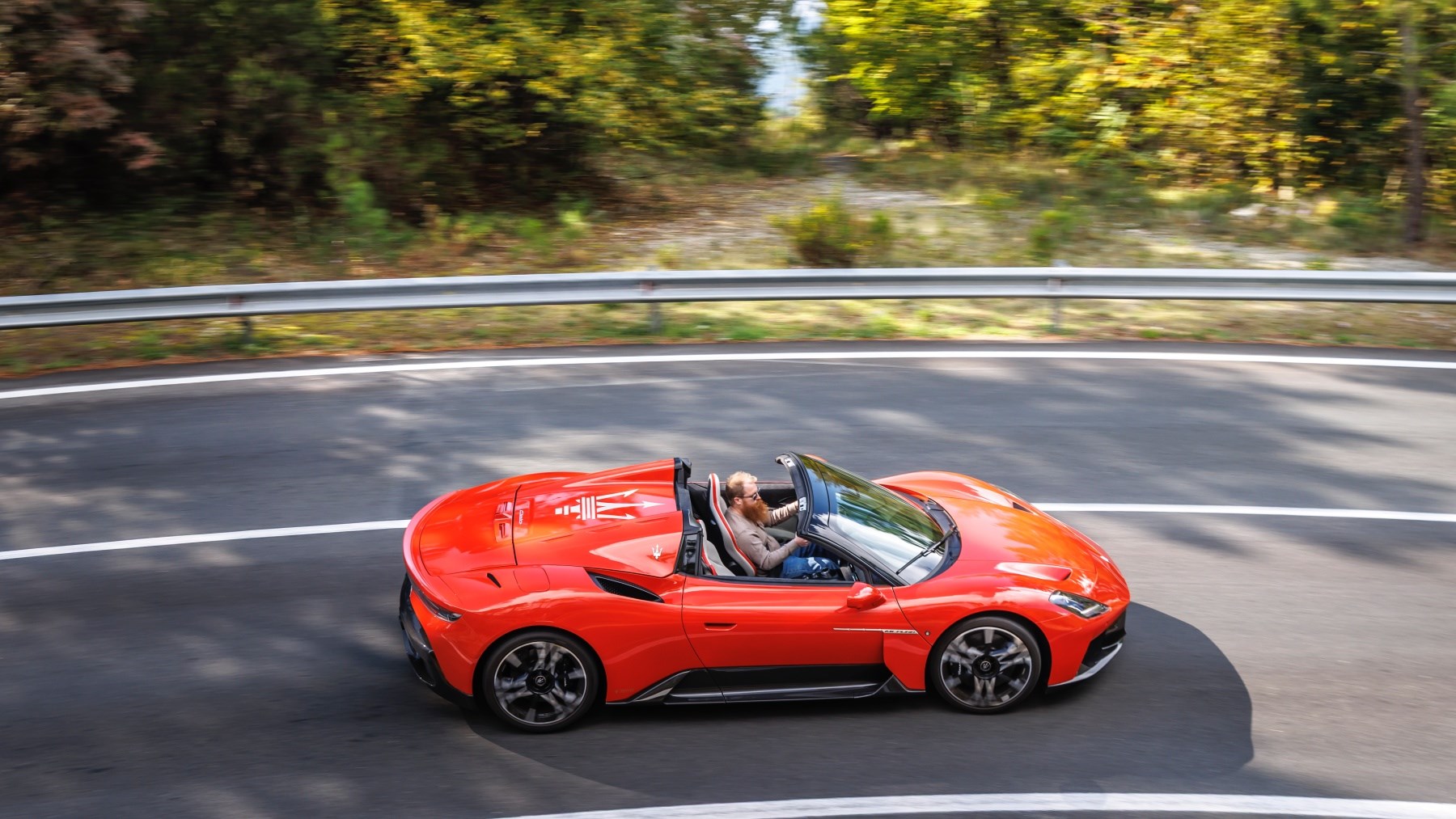
Not much if I’m honest. On top of the new name that references the purity of the driving experience, you get new front and rear bumpers with tweaked aero and a more aggressive appearance inspired by the GT2 Stradale. You can even have a bigger rear wing as an optional extra to really hammer home the point.
No facelift would be complete without some shiny (and matt) new colours including the Devil Orange you see on my test car. Inside, Alcantara replaces leather for its sportier feel, grippier nature and reduced weight. Those that can’t be without a bit of hide will need to enter the Fuoriserie personalisation programme where you also get a greater choice of colour, livery and you can even personalise the badging.
What are the specs?
Exactly the same as the MC20 Cielo we’ve previously tested. That means a 3.0-litre twin-turbo Nettuno V6 with F1-style pre-chamber combustion chambers that improve efficiency, twin spark plugs per cylinder and both direct and indirect injection. An oversquare design helps it rev, with 621bhp delivered at 7500rpm to an eight-speed dual-clutch auto ‘box.
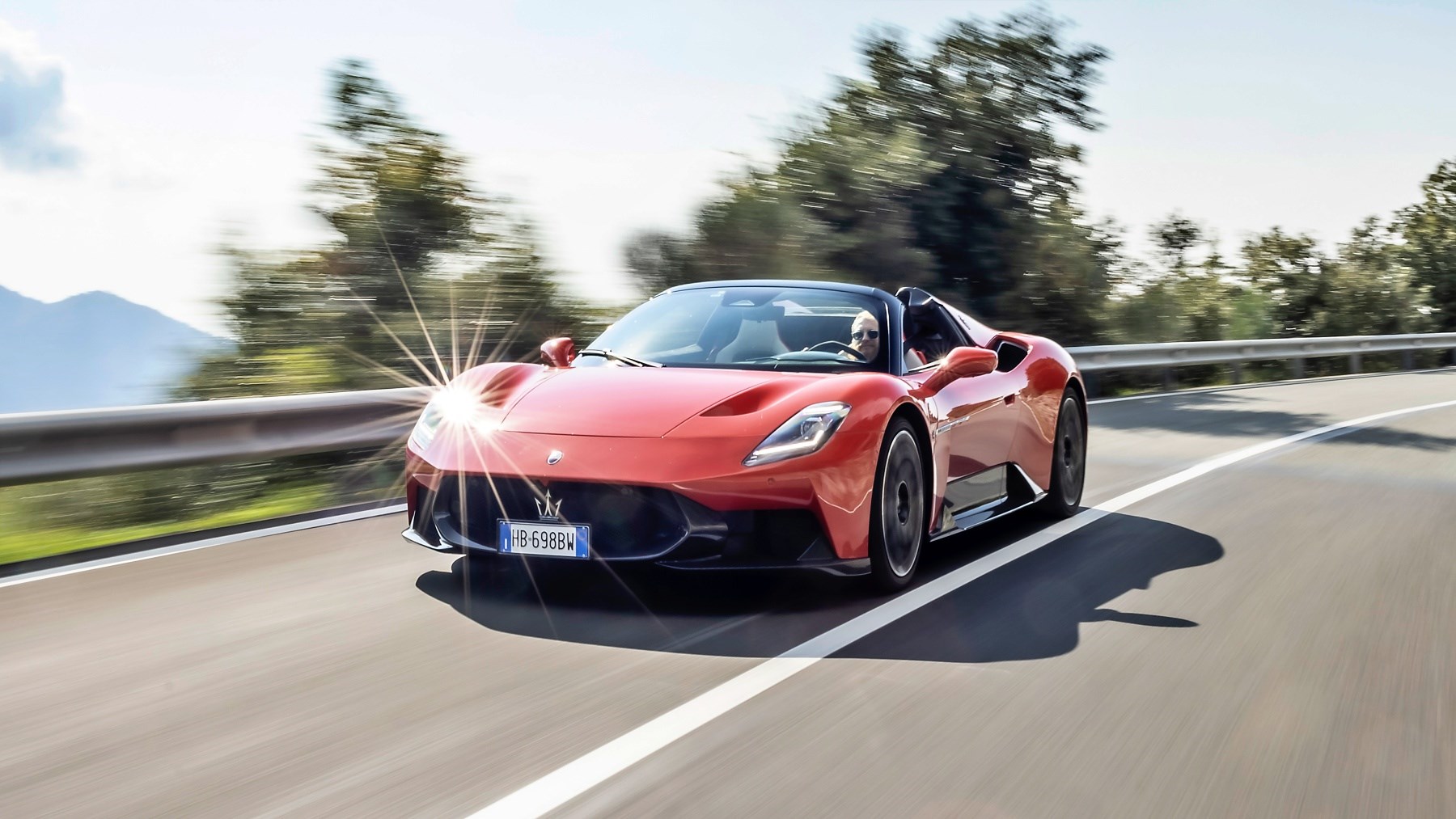
Lashings of carbon for the body and chassis help keep weight down to 1560kg, contributing to the 2.9 second 0-62mph time. Top speed is 199mph and the roof takes 12 seconds to open or close, at least once you’ve found the controls for it buried in the touchscreen.
How does it drive?
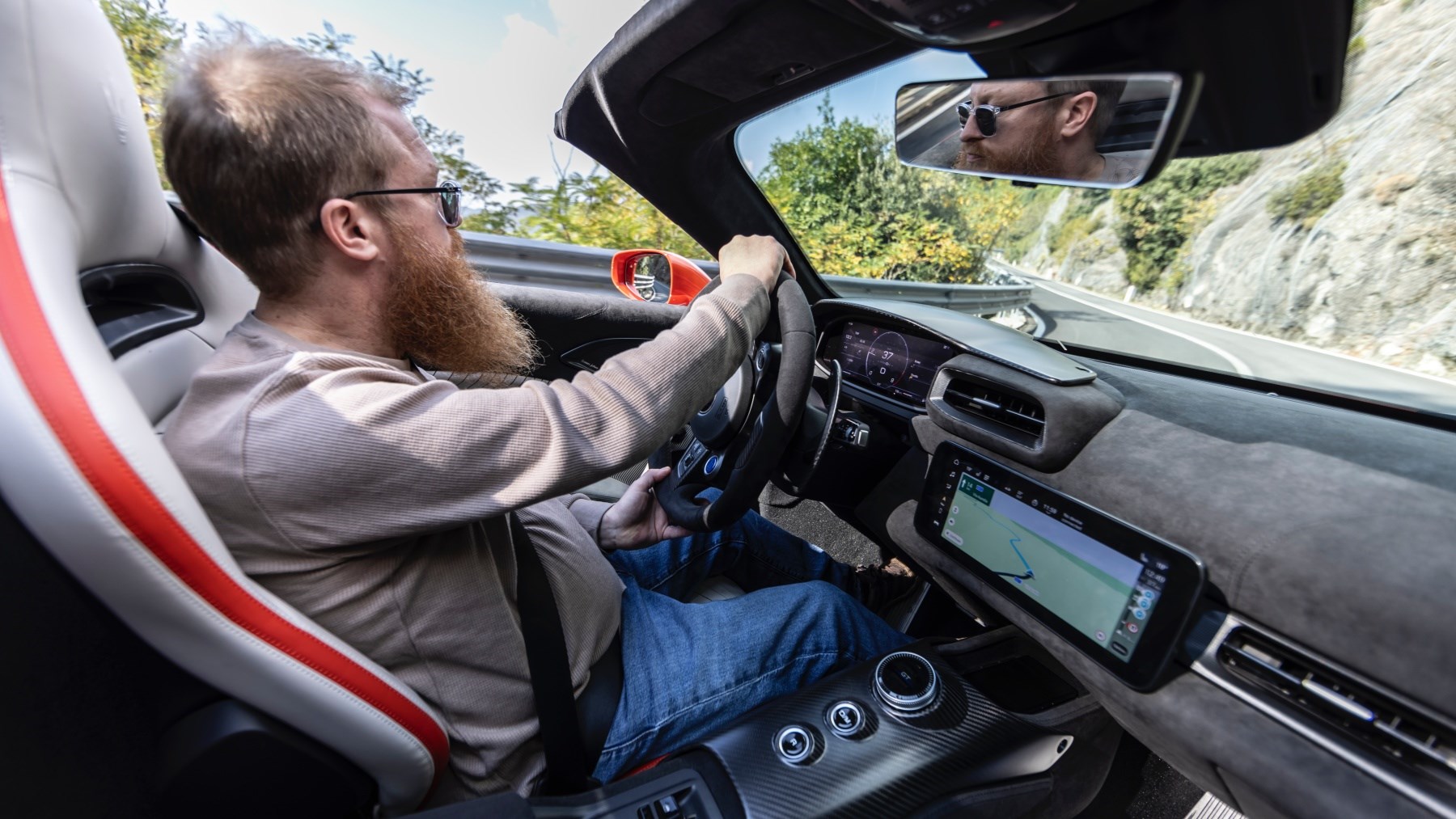
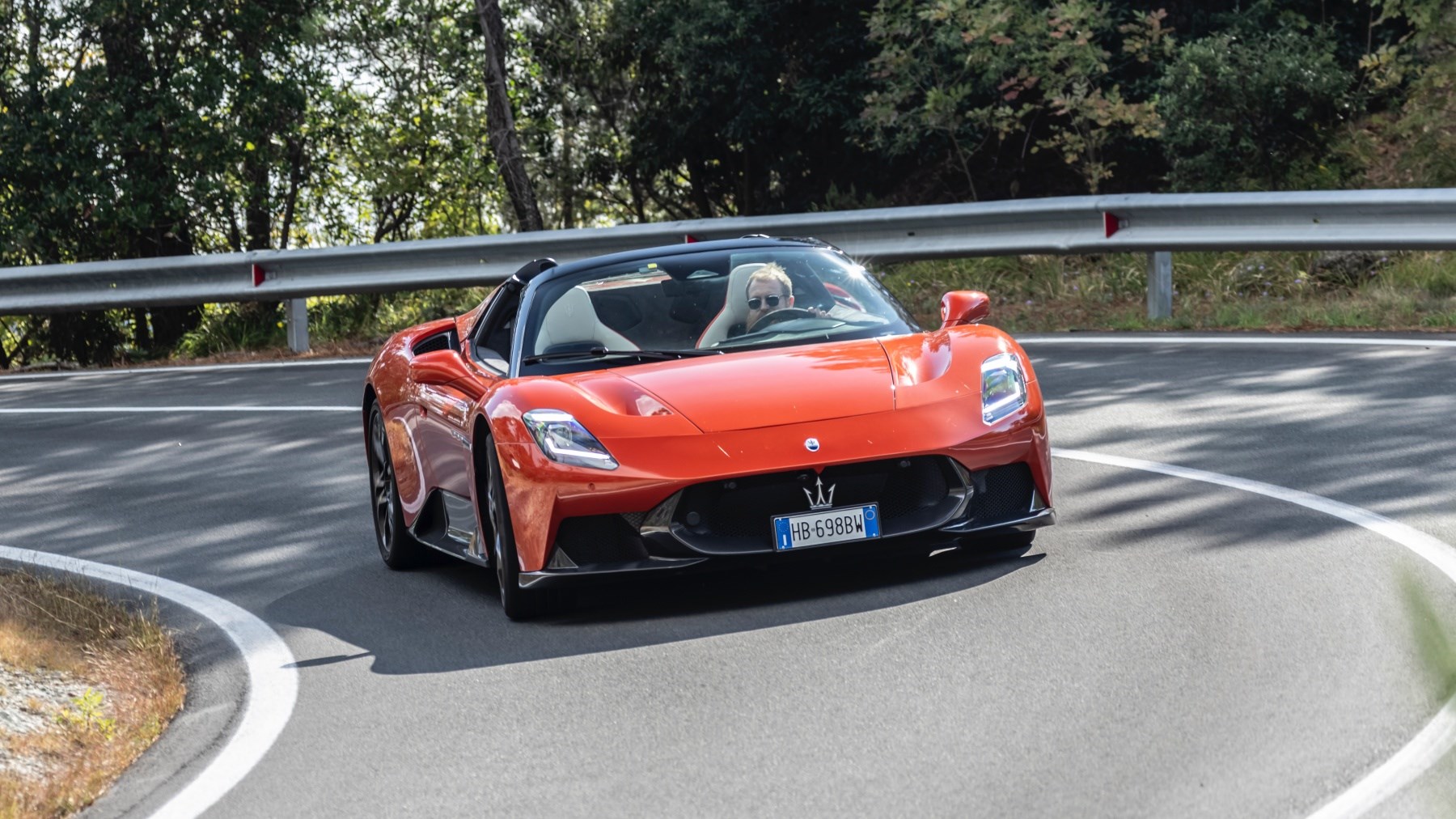
With no changes to the chassis, the MCPura Cielo drives much the same as the MC20 Cielo, and that’s absolutely fine by me. The first big surprise is just how easy and unintimidating it feels. It’s a cliché, but the MCPura really does shrink around me, never worrying with its width and allowing me to navigate busy Italian roads in total calm.
Standard adaptive dampers are used to great effect. Default GT mode delivers a suppleness that many modern SUVs should take note of, whilst still providing enough body control to pick up the pace significantly. Sport tightens things up with Corsa ramping up damper stiffness a bit too much for Tuscany’s sometimes craggy roads.
The option to knock the dampers back to a softer setting is welcome as you need Corsa mode for maximum boost and a noisy exhaust at all revs – valves open at 5000rpm in GT and 3500rpm in Sport. Sport already slackens the traction and stability control a bit, with Corsa allowing more movement before power is cut and brakes are fiddled. ESC off is the final step that seemed inappropriate to tread on given the Armco and rock face lined roads.
I found myself mostly switching between Sport and Corsa with the dampers softened off in both modes, and GT is the perfect fit for autostrada work as it’s more likely to engage eighth gear for quieter cruising, and shifts are much smoother, too. I suspect the small 60-litre tank would be empty long before you felt the need to stop for a break. Wind noise and buffeting aren’t too bothersome with the roof down, even at speed.
Where many rivals favour light and super-speedy racks, the MCPura Cielo has just enough weight to reassure and a rate of response that’s measured and not artificially quick. It also provides more feel and feedback than any Ferrari system I’ve yet experienced, although Porsche and McLaren still rule the roost for involvement here. Braking feel isn’t the best at the top of the travel, but the carbon ceramics remained fade-free after many hard stops on a clear stretch of winding road.
A touch of body roll helps you judge speed and grip levels, with a spot of safe understeer if you go in a bit too hot. Keep within the high limits and you’re able to get on the power early, the Bridgestone Potenzas delivering great traction in the dry, flinging you up the road at a pace that suggests the performance figures quoted are correct. A Ferrari 296 feels a step faster again, though.
A satisfying little wiggle from the rear is available in Corsa mode on corner exit if you’re particularly heavy footed, even without the ESC fully off. Experience with the MC20 Cielo in the UK suggests the MCPura will be a lot more squirrely on cold or damp roads.
Complaints? The engine sounds a bit like a particularly industrial three-cylinder at times and is never truly musical, although fans of turbo whooshes, wheezes and flutterings will be entertained by most interactions with the throttle. I also found gearchanges to be a bit sudden in Sport and far too thumpy in Corsa, while left-foot braking enthusiasts will hate the three second throttle cut if there’s any pressure on both pedals at the same time.
What about the interior?
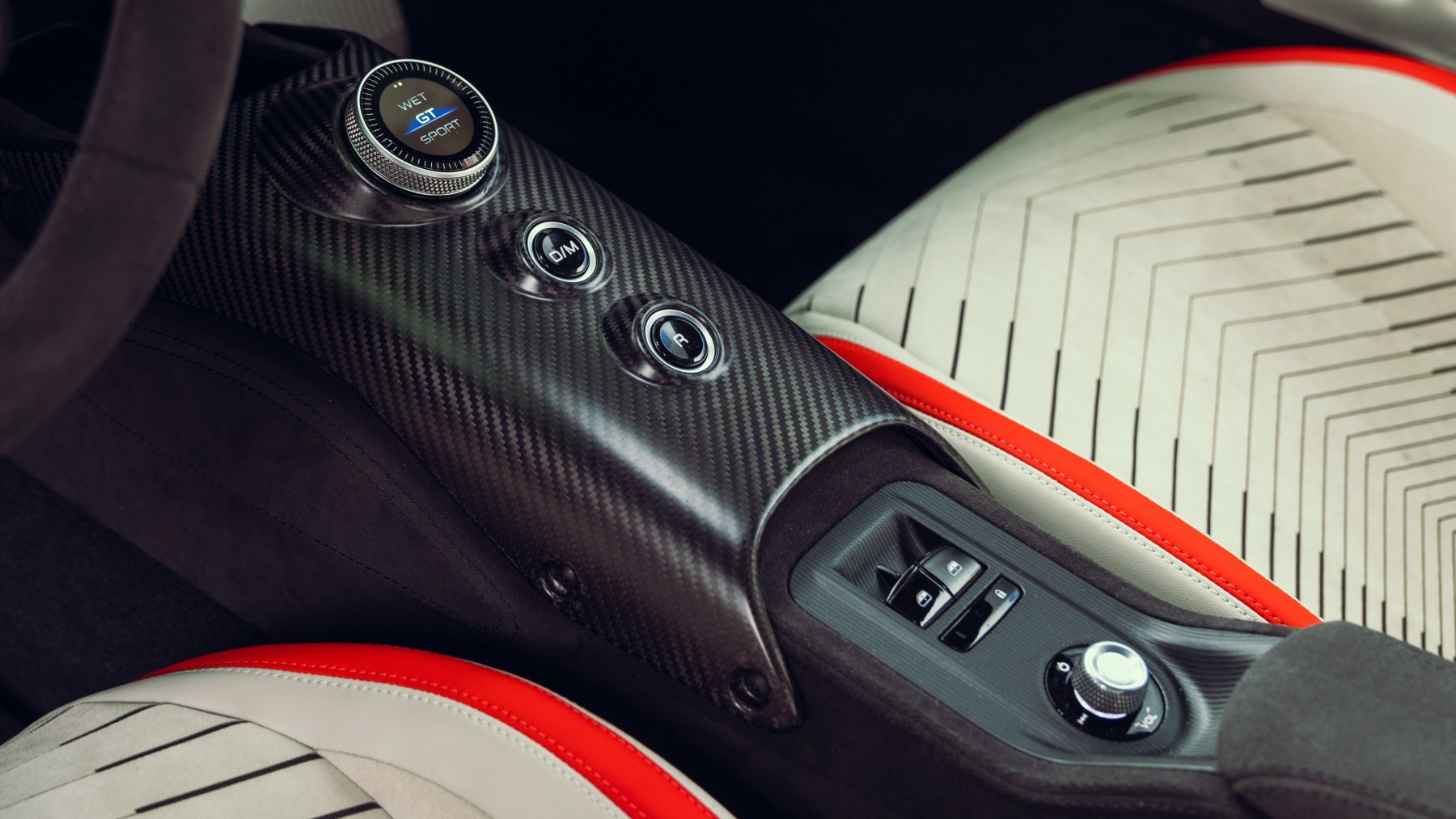
Let’s start with the good. There’s sufficient electric adjustment for the comfortable front seats for a variety of heights to get comfy, and they support well during hard cornering. A few physical controls are also welcome, even if the drive mode selector can be confusing with its twist, press and swipe inputs.
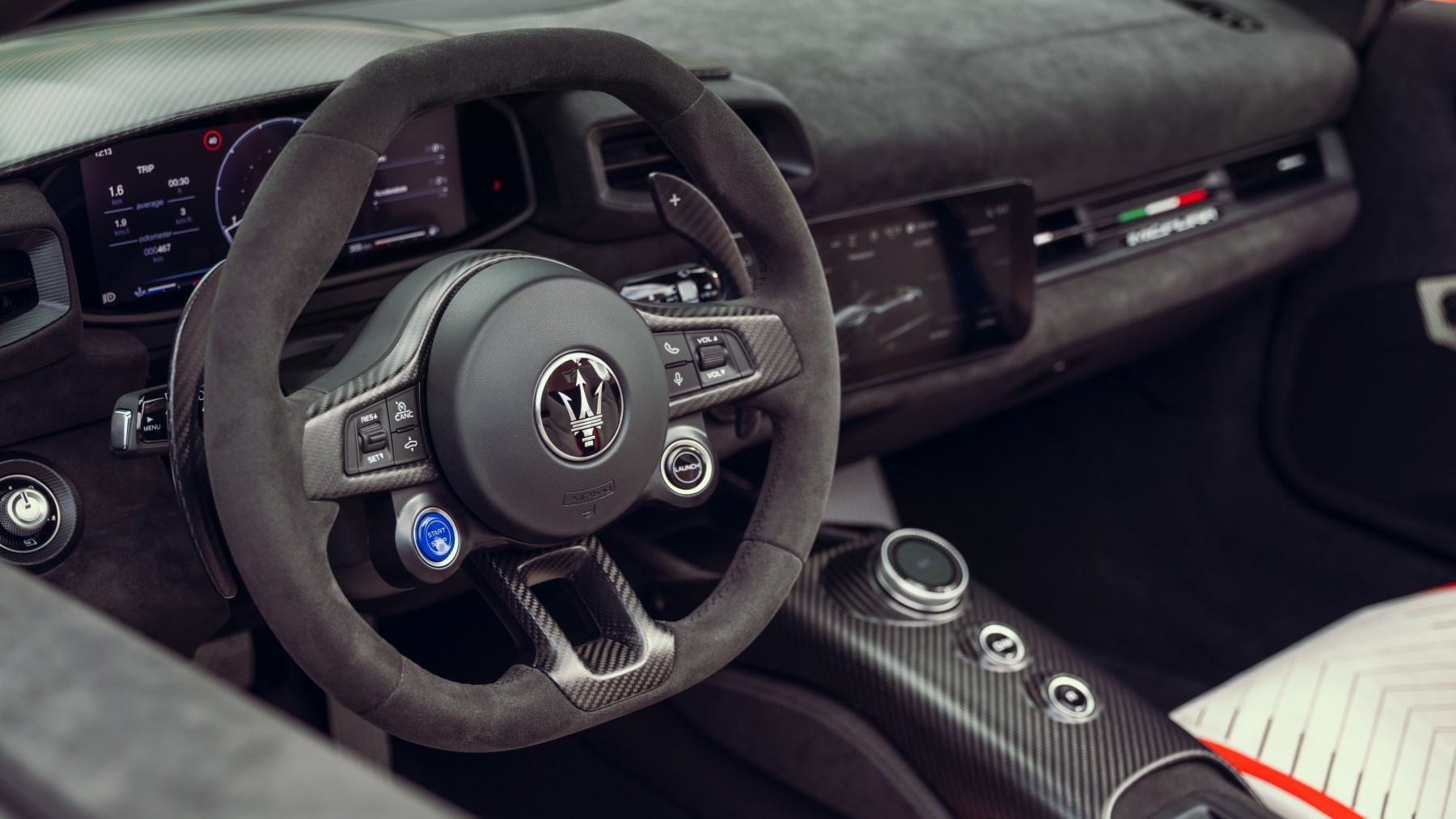
Unfortunately for Maserati, the A110 analogy works here, too. Even though almost every surface that could be wrapped in Alcantara now is, many of the main interaction points are painfully mainstream or just feel a bit cheap. The Alcantara interior door pull looks and feels like it might pull off or rip after a while, the main steering wheel buttons look downmarket, and the ones for launch and engine start are more 80s arcade than anything.
The 10.3-inch touchscreen is shared with the Fiat 500e, just with a few Maserati menus and graphics. It still looks a bit too similar to the supermini I’d been driving the previous week’s system for my liking, and infuriatingly hides the controls for the electric roof and electronically tintable glass panel within it. Buttons for these, and the climate controls would be nice to have assuming they didn’t get lifted out of a Jeep or Fiat.
I would also be very careful if you plan to go touring in your MCPura. You can just about get a couple of backpacks in the 100-litre rear boot, and another 50 litres in the shallow front boot. The glovebox is tiny, there are no door pockets and just the one cupholder.. Don’t put anything heat sensitive in the back if you’re going for a spirited drive; I could barely hold my hand on my aluminium-framed laptop after a memorable blast on an Italian mountainside.
Before you buy (trims and rivals)
There are relatively few choices when it comes to buying an MCPura Cielo. There’s just the one model with a choice of a couple of option packs to add interior and interior carbon fibre and some welcome driver assist tech. This includes AEB, auto-dimming side mirrors, blind spot monitoring and crucially, a surround camera system. Pretty much everything else is for looks, including the Fuoriserie stuff.
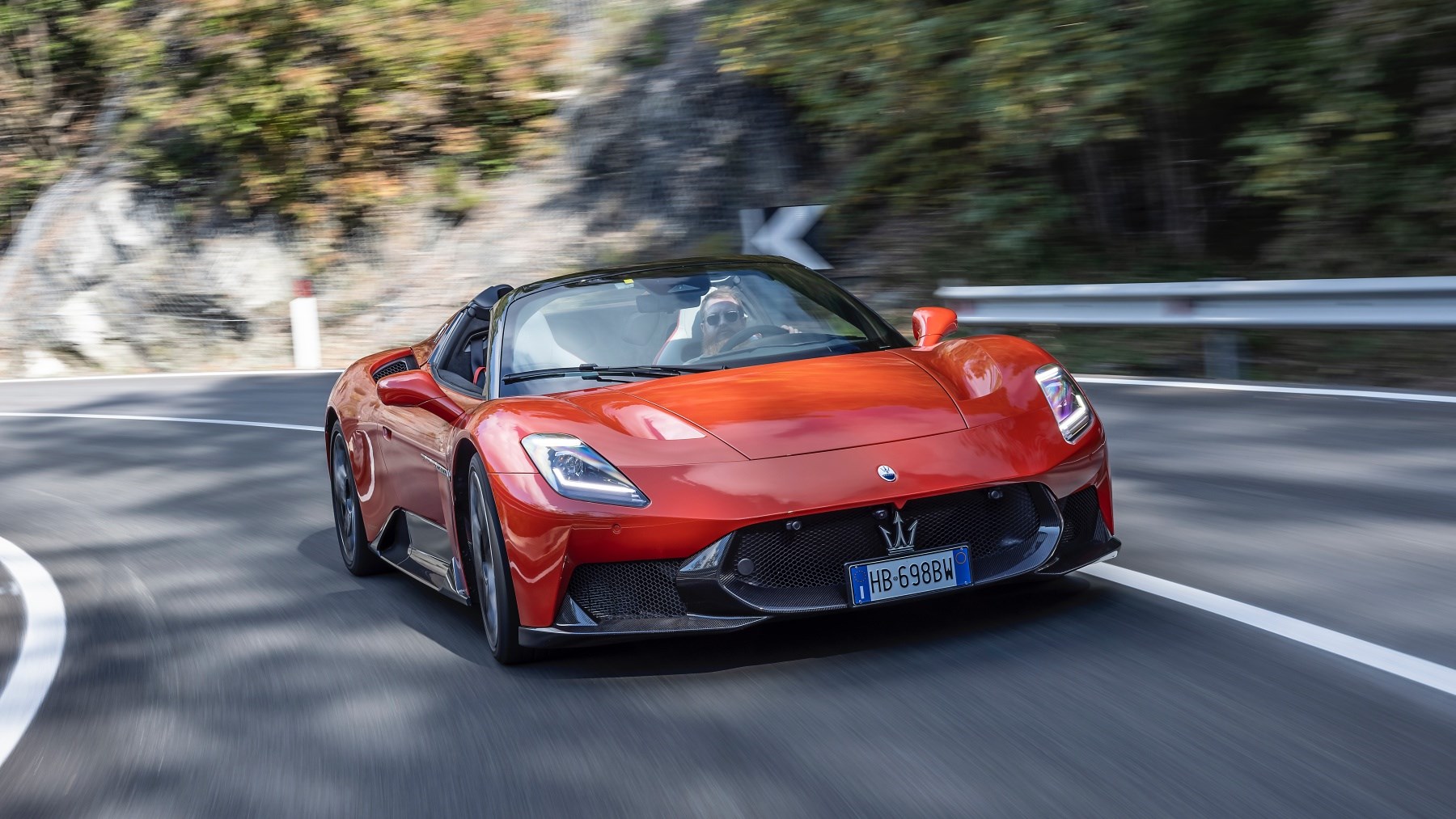
Expect to pay around £230,000 for the Cielo without options, more than a McLaren Artura Spider or Chevrolet Corvette, but less than a Lamborghini Temerario’s inevitable open variant or the Ferrari 296 GTS.
Verdict
Maserati could have undoubtedly gone further to lift the MCPura’s cabin quality and usability, but I’m glad they left the mechanicals alone. As more rivals move to hybridisation and increased complexity, Maserati’s mid-engined flagship looks ever more tempting for the relatively simple approach to its powertrain.
Then there’s the ride and approachable handling that make the MCPura an easygoing companion on boring roads, and a trustworthy friend who certainly knows how to have a good time on a dry squiggle of road. With no hint of scuttle shake or chassis flex, the Cielo is perhaps the most tempting version of a fine junior supercar.