► Refreshed Lexus RZ electric crossover tested
► EV can be had with ‘manual’ shifting and steer-by-wire
► Updates also improve efficiency and range
How can you separate your battery-electric crossover from so many others? Fill it full of interesting and novel technology is a common response – and one that Lexus has indulged in with its updated RZ.
The brand’s plush EV that’s been hacked about with a blade has been given a new lease of life, with Lexus (and Toyota) engineers improving the car’s efficiency and using it as a springboard for some new driving technologies. So… does it all work?
At a glance
Pros: Balanced ride; steer-by-wire feels intuitive; impressive material quality; good space
Cons: Interior annoyances; steer-by-wire ‘yoke’ is badly laid out; ‘manual’ shift is flawed
What’s new?
On the face of it, it doesn’t look like the RZ has changed much at all. The design is very similar to what it was before, with super sharp headlights and lines in the front end, big wheels and a coupe-ish silhouette. Ditto the general look of the interior, with a high centre console, big glossy central screen and lots of great-feeling materials.
In fact, a lot of the RZ’s improvements aren’t all that visible. The battery pack and electric motors have seen improvements in efficiency – the same tweaks that are applied to the Toyota bZ4X – with new battery cooling and a slightly denser pack, as well as ‘eAxle’ motors that have been designed to reduce energy losses as much as possible. Lexus has also included some new soundproofing.
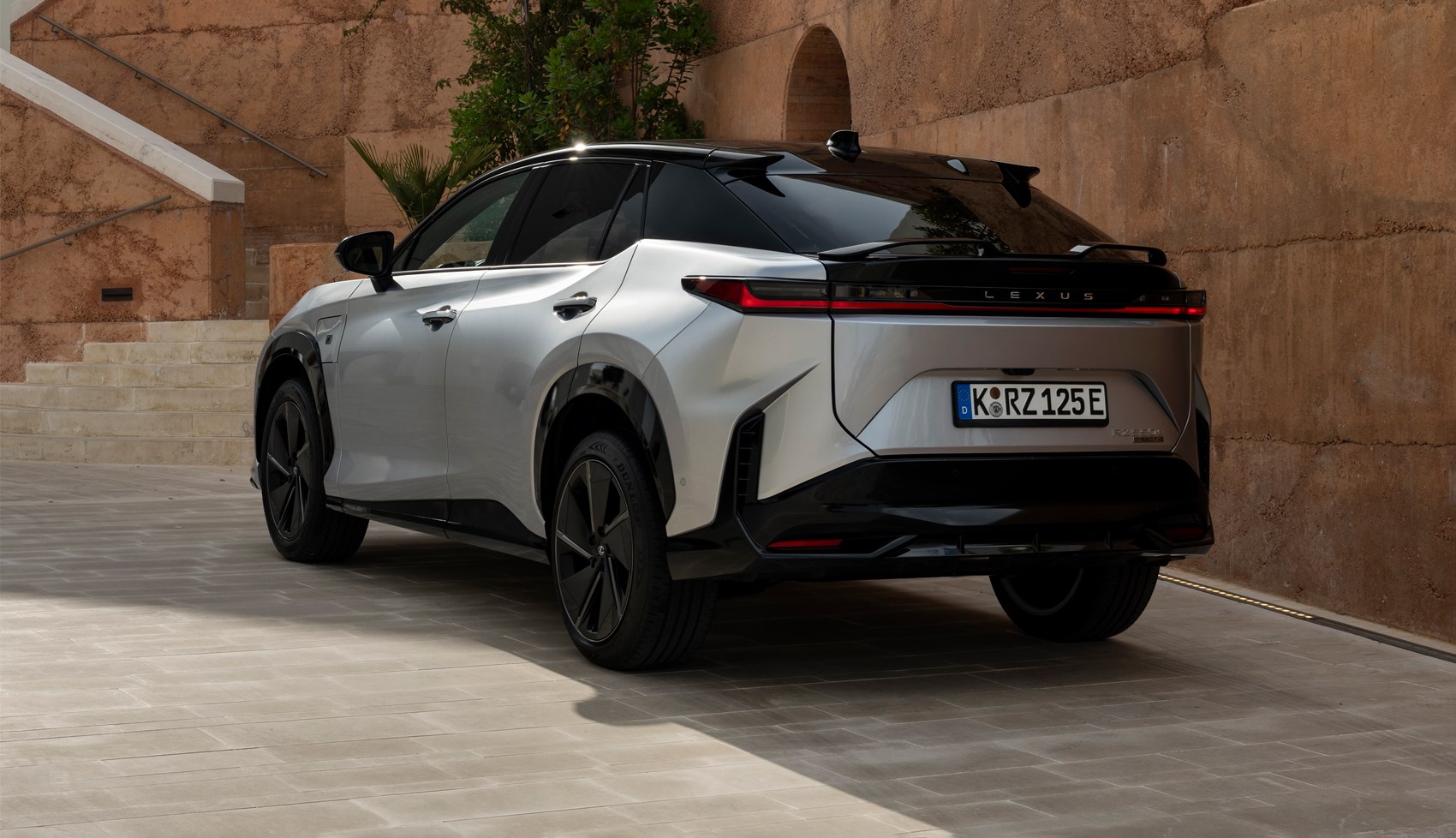
The versions available have changed – more on that in a bit – with the newest and most interesting bit being the introduction of an F Sport trim (pictured above): a performance-ish model designed to be a technological pioneer as much as a sporty variant.
We say that because this is the brand’s first production car available with steer-by-wire – a technology that Lexus has been developing for some years. The RZ F Sport model also features ‘Interactive Manual Drive’, which is code for virtual ‘gear’ shifting designed to make the driving experience more engaging. Think Hyundai Ioniq 5 N’s N-Shift and you’re pretty much there.
What are the specs?
There are now three power outputs available: 350e, 500e and 550e.
The entry-level 350e is likely to be the best-seller, generating 221bhp from a single electric motor and sprinting to 62mph in 7.5sec. This version claims the highest range, too; 353 miles for those on 18-inch wheels or 316 miles for models on 20-inch wheels.
The 500e comes with two e-motors with all-wheel drive, with performance jumping to 376bhp, the 0-62mph sprint dropping to 4.6 seconds and the range claims clocking in at 311 or 283 miles respectively.
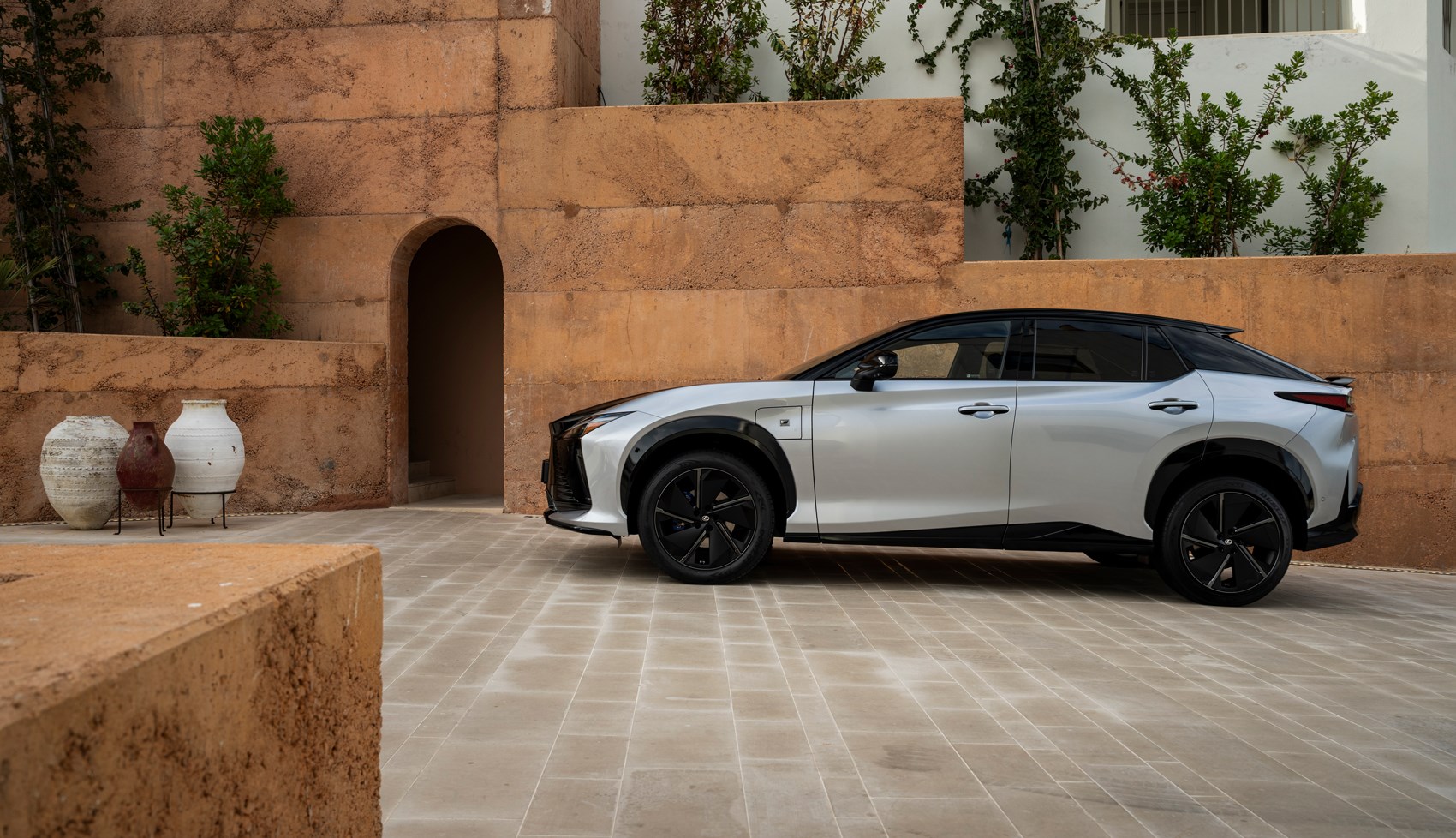
Both the 350e and 500e can be had in Premium and Premium Plus specification, and you can choose which wheel size option you prefer. The RZ in general is very well equipped, with basic ones coming with loads of safety tech, dual-zone climate control, 360-degree parking aids, a panoramic glass roof, a wireless charger and more. Plus throws in a head-up display, memory seats and touch-sensitive steering wheel controls. Takumi trim is also available here, too, adding a Mark Levinson audio system among other luxuries.
Topping the powertrain options is the 550e model. It’s all-wheel drive, too, developing 402bhp and hitting 62mph in 4.4 seconds. This version is only available as an F Sport with 20-inch wheels, with Lexus claiming a 280-mile e-range.
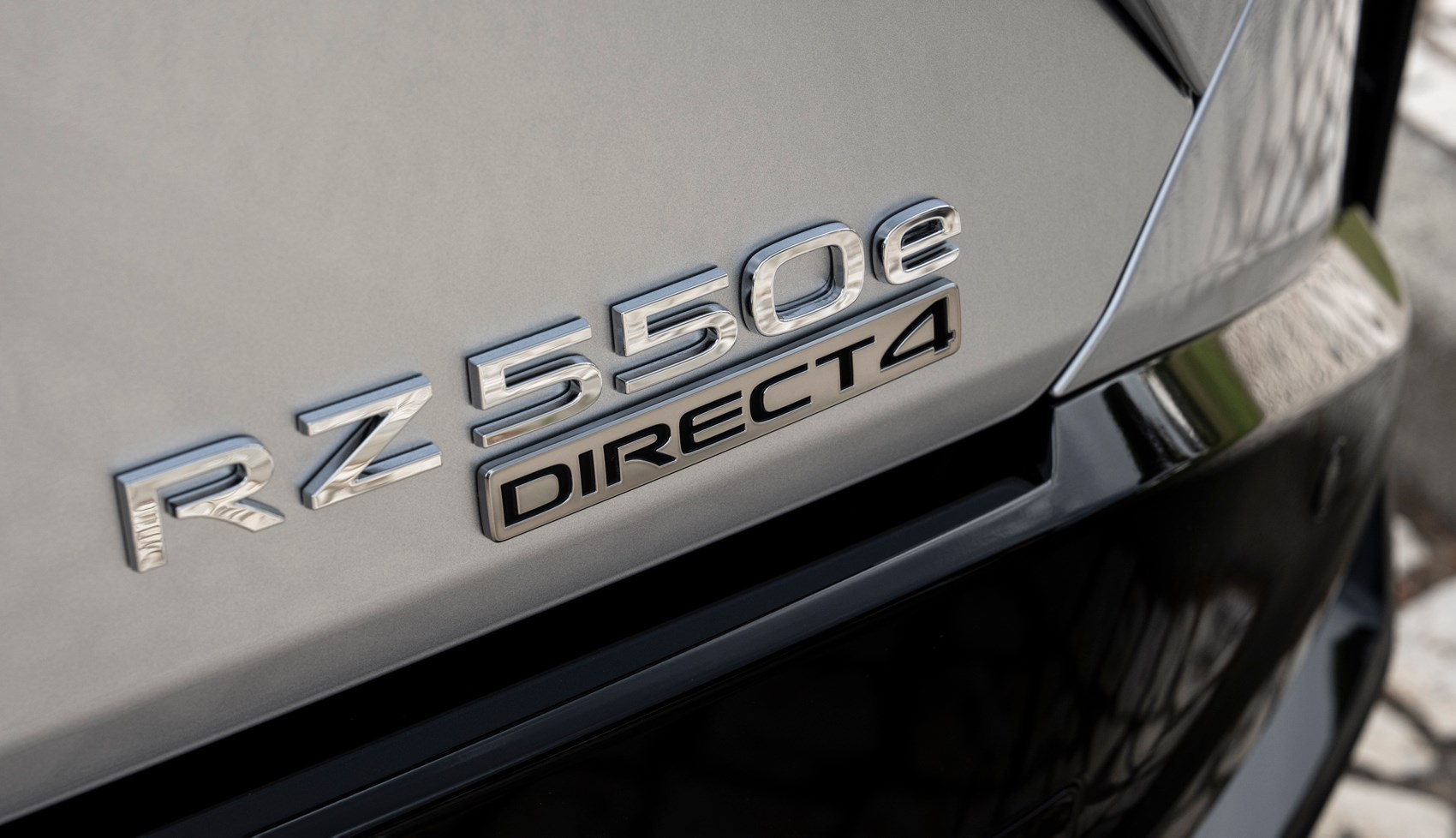
You can only spec the 550e in F Sport trim. That means bespoke exterior detailing like aerodynamic wheels and a more aggressive bodykit, as well as sporty details and thickly-bolstered sports seats. All 550e F Sport models include steer-by-wire and the ‘interactive manual drive’ system, and there is an F Sport Takumi model that includes more luxuries.
What’s it like to drive?
We had the chance to sample all three power variants and try out all the new technology; our test cars were all on 20-inch wheels, too.
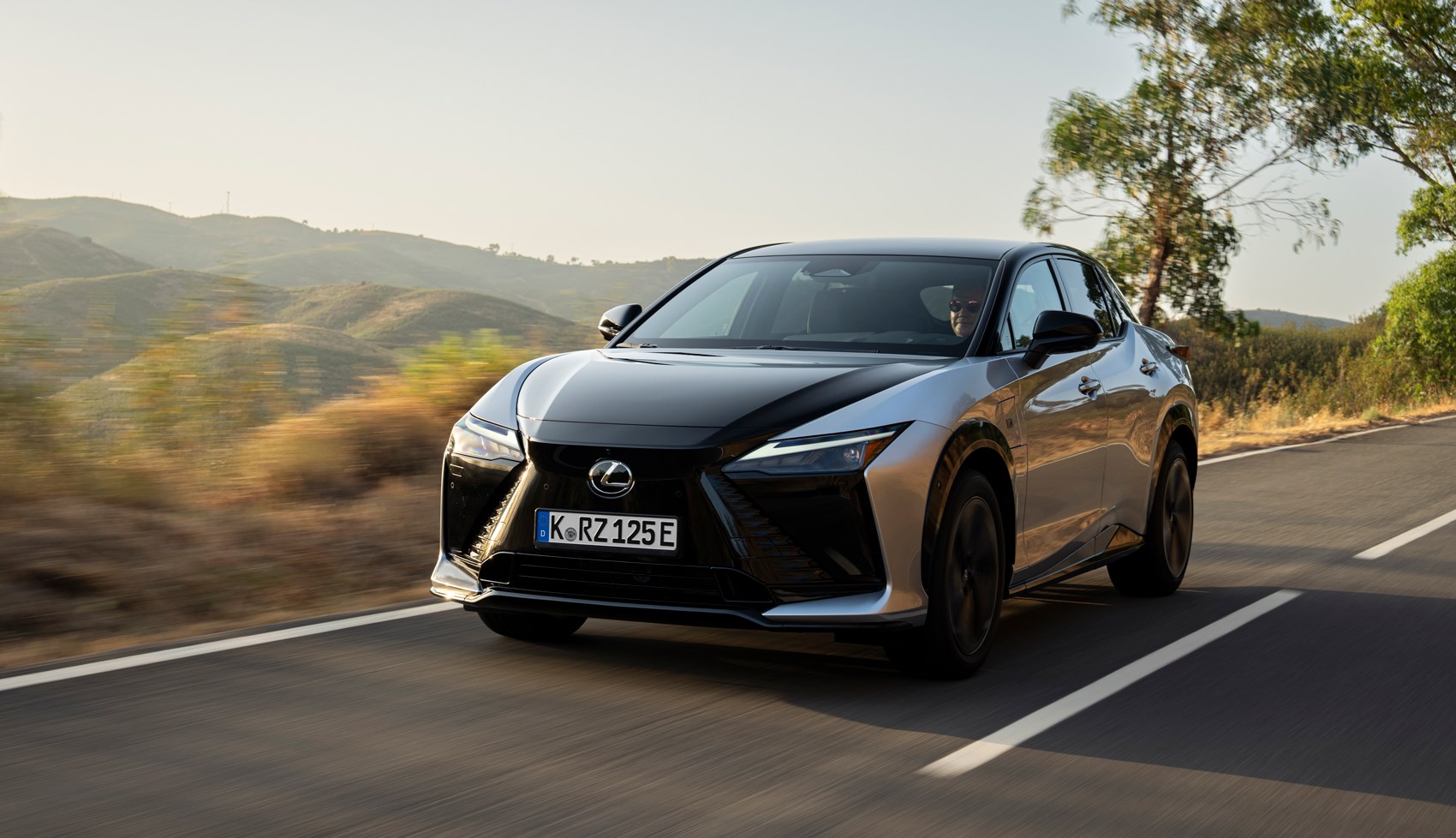
The 350e will be all anyone really needs here; not only does it offer the best range, but its performance is perfectly brisk enough – if nothing all that exciting. There’s little difference between the 500e and 550e in terms of outright grunt, mind you, but both will offer you sports car-like acceleration (for sports car-like money).
As for improved efficiency, our real-world test runs netted rougly 3.8 to 3.9 miles per kWh regardless of powertrain option on a mix of motorway, country roads and urban town driving. That’s a lot better than the pre-facelft RZ.
Non-F Sport models ride rather well, treading the balance between floaty softness and over-sharp harshness over rough tarmac rather well. F Sport ones do naturally ride harder, but there’s a welcome lack of brittleness to the ride setup. If anything, the tyres are noisier than we’d like, introducing some roar at motorway speeds that spoils the ambience a bit.
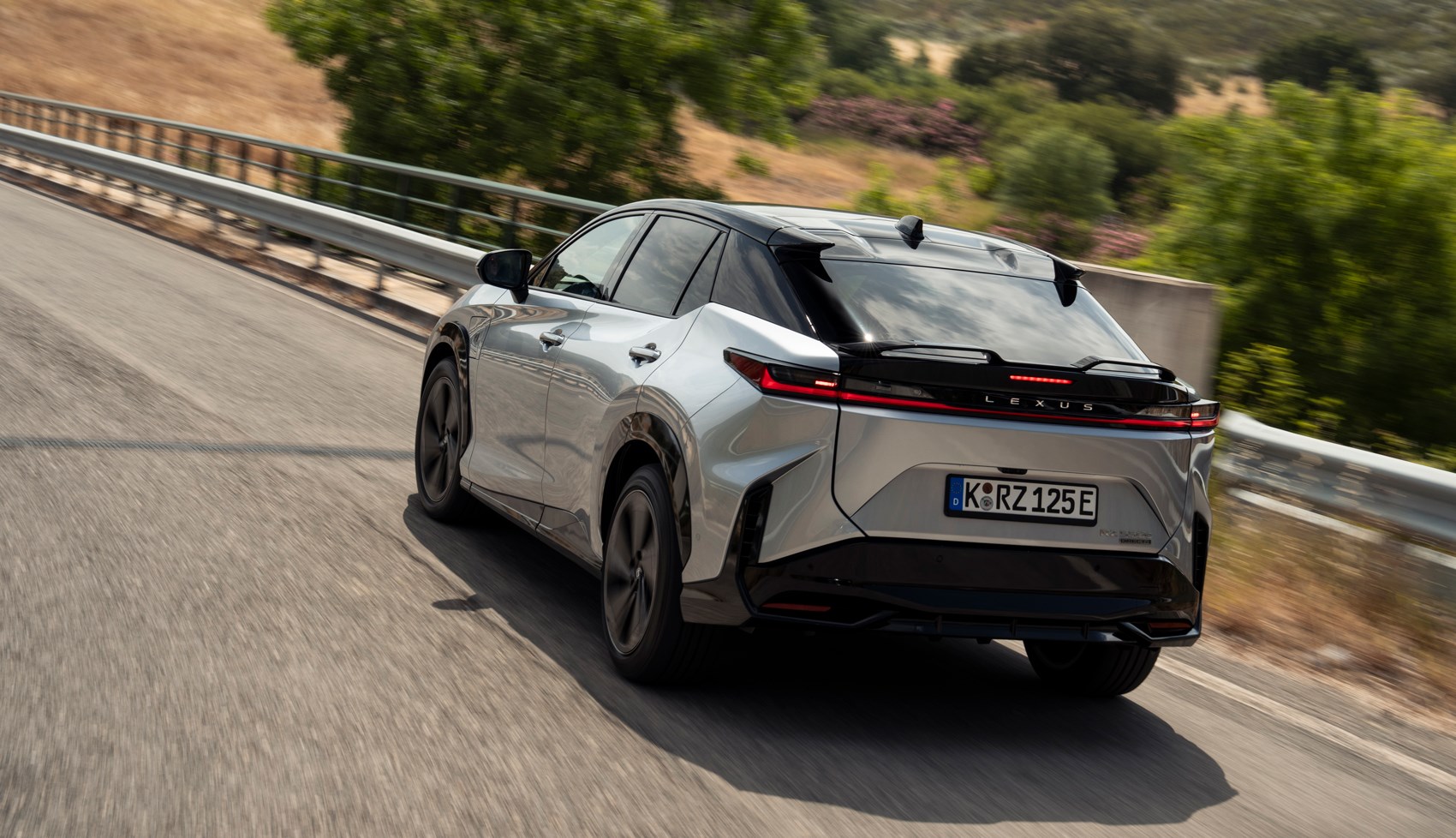
Standard steering versions are… fine. There isn’t a great deal of weight to the setup, and it’s a bit numb to chuck into a corner. In fact, the regular RZ is all a bit anodyne to drive – perfectly fine but not really that distinctive.
That is, of course, if you’re not driving the F Sport model with its interesting technological additions. What we will say about the steer-by-wire system is that it’s a little disconcerting at first, but you quickly get used to it – and it becomes remarkably fluid. In short, it’s impressive; very little effort is required to park or turn around sharp urban streets, but it really relaxes at higher pace.
The biggest issue with it? The steering ‘wheel.’ Given there is no requirement to cross your arms to steer, its yoke-like shape is designed to encourage you not to. But, unlike the stalks on the standard car that are fixed to the steering column, the indicator and wiper stalks now move with you.
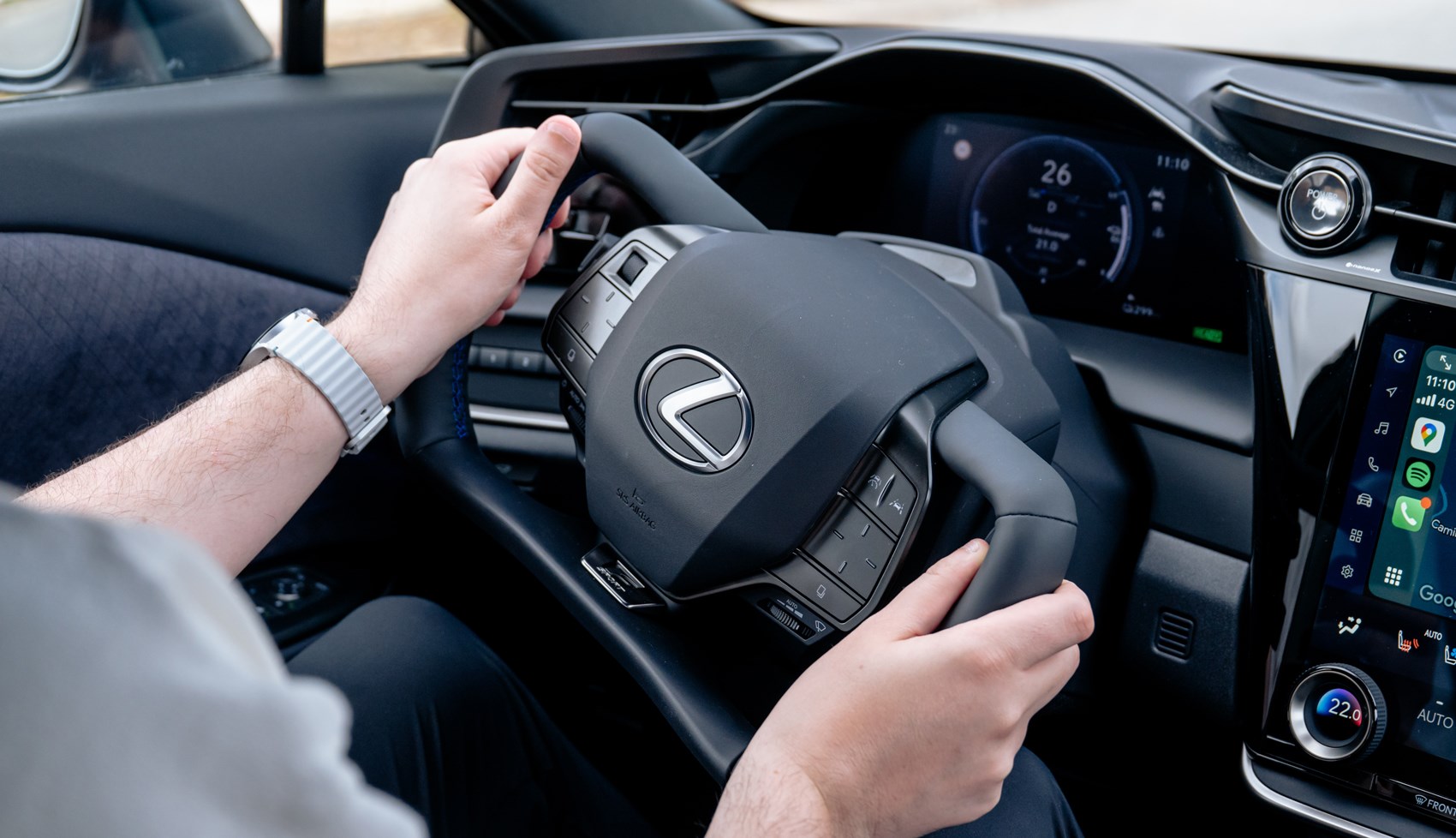
That would be tolerable if the ‘wheel’ also didn’t have the paddles for the ‘Interactive Manual Drive’ system, too – but it does. But those paddles to ‘shift’ are mounted uncomfortably high up where you have to stretch your hands, making it cumbersome to operate.
The IMD system itself is also a bit odd, and doesn’t feel as encouraging to use as something like the Ioniq 5 N’s tech. There’s a wispy, high-pitched and not-all-that-combustion-like ‘rev’ sound that accompanies eight ‘gears’ that feel far too closely spaced together to encourage natural shifting. You do also get the sensation of a gearchange each time you shift up, and power will be limited at the ‘redline’. It feels like something you might use once or twice then never use again, disappointingly.
In other situations (or on specs that don’t have IMD), those ‘+’ and ‘-‘ paddles are used to alter the amount of regenerative braking. The RZ has four steps of regen, with its toughest still not quite being one-pedal drive.
What’s the interior like?
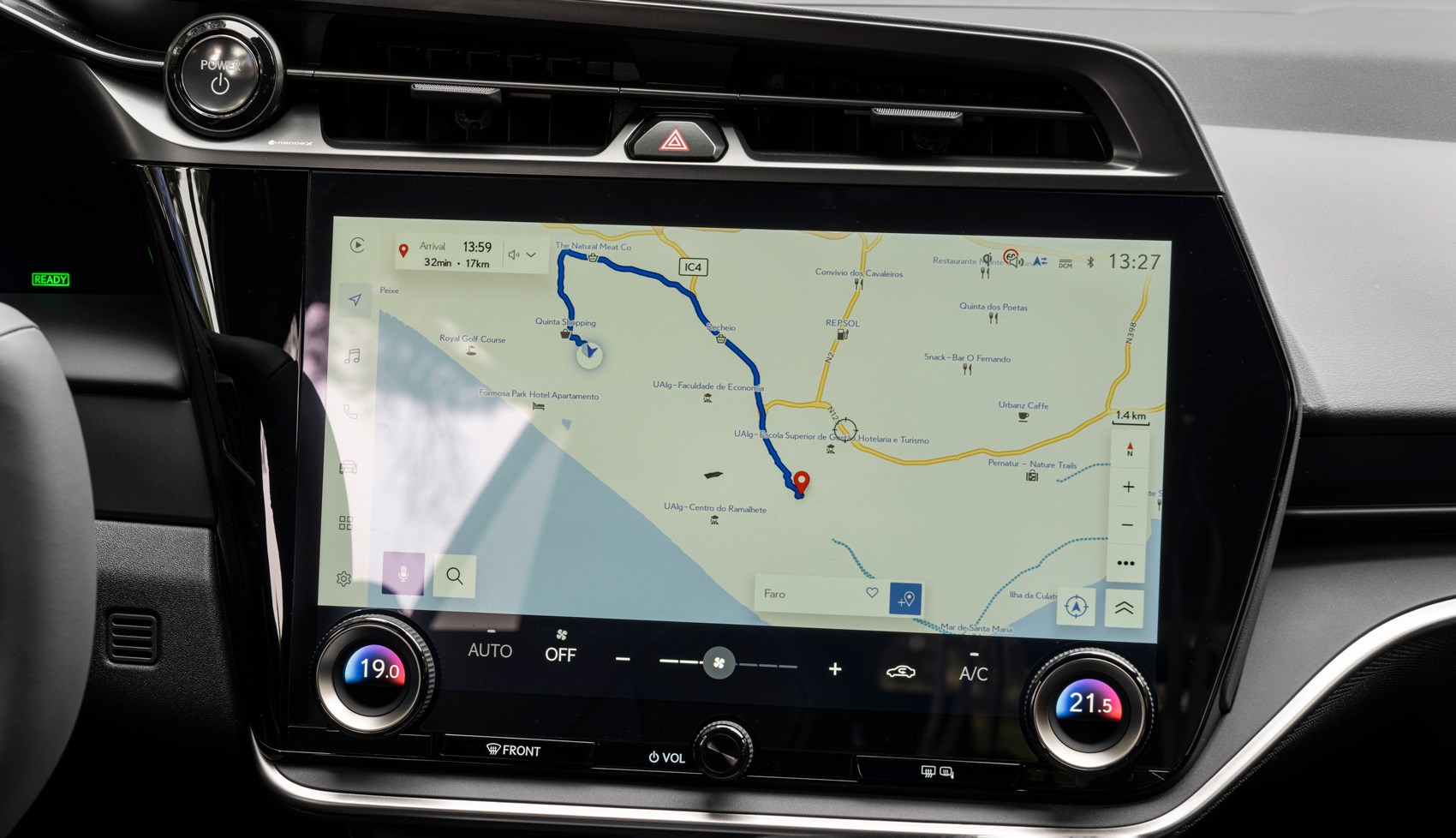
In some ways, the interior hasn’t changed all that much on first glance. The RZ is still trimmed with loads of high-quality, soft-feeling materials and much of the structure is the same. That includes the large central touchscreen system, small digital instrument binnacle and high centre console.
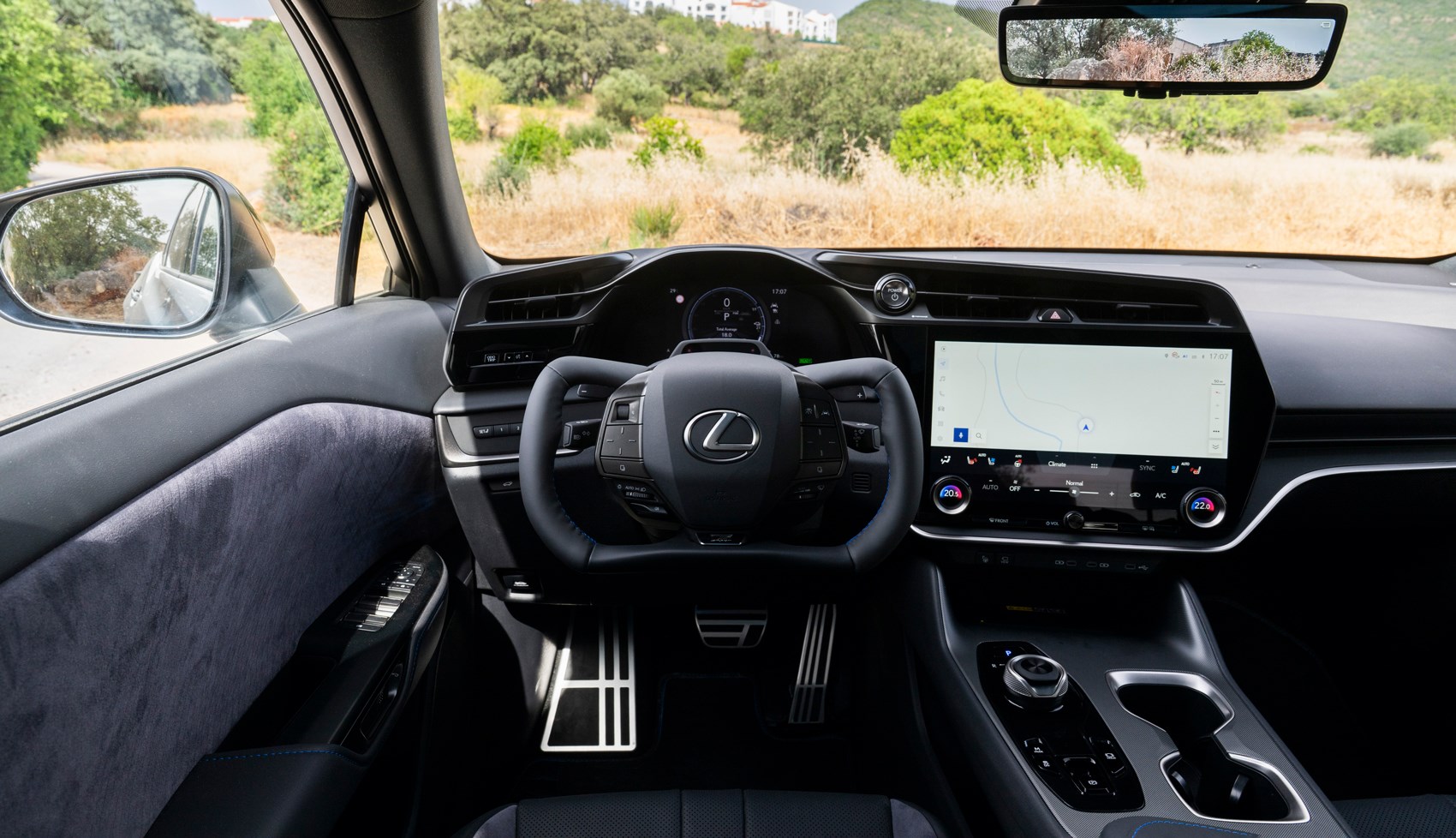
Some of those details are very nice – the steering wheel feels very soft and pliant in your hands, the central screen is super sharp and things feel generally solid. Lexus has introduced laser-cut patterns into the materials in the doors for a bit of extra design detail.
But the instrument binnacle is small and very fuzzy, to the point I was questioning my own eyesight to read it. Our assumption is that, due to the lack of instrument cowling, there is a thick layer of anti-glare material to counteract sunlight. But it just makes the display extremely blurry.
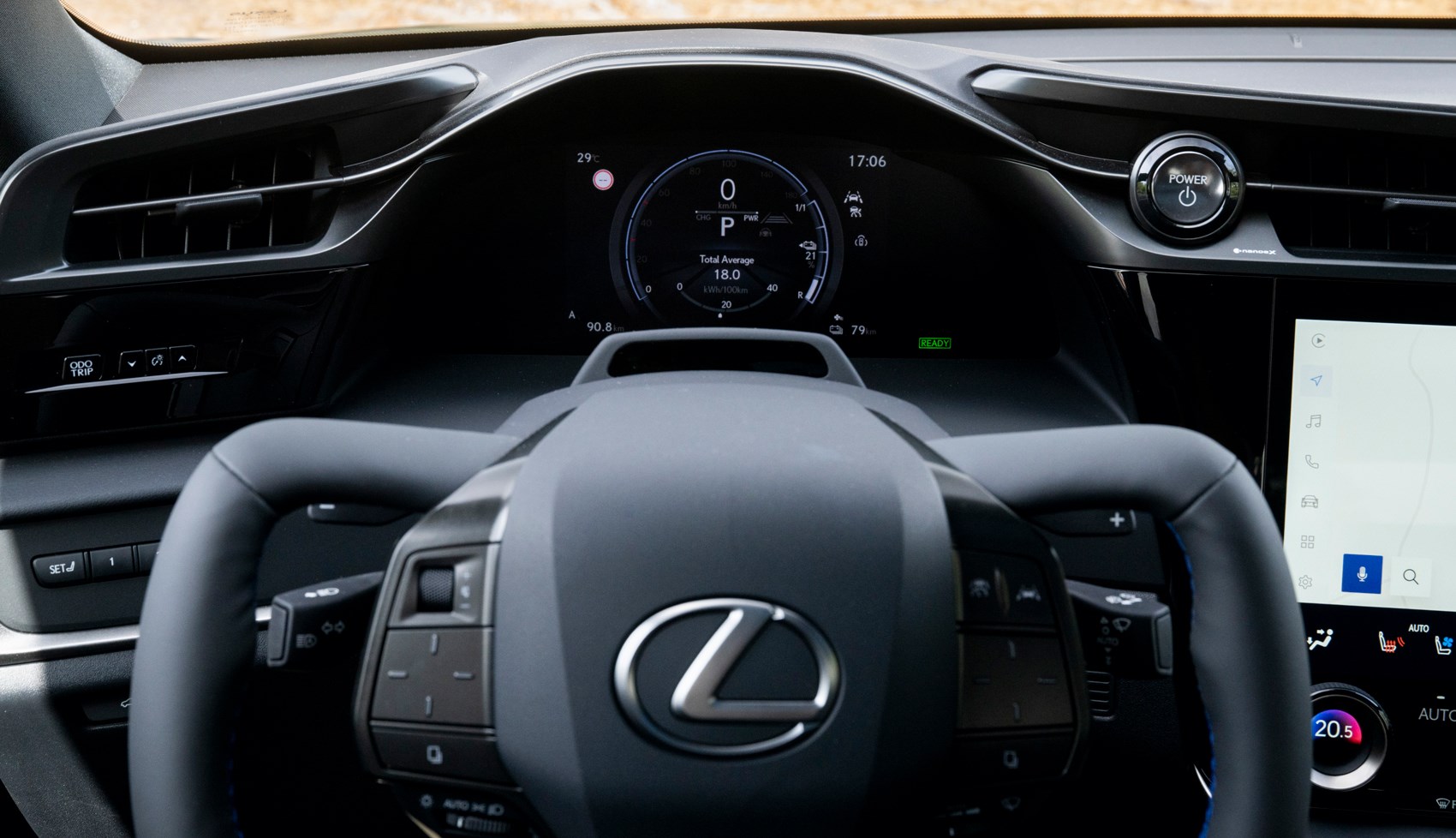
As well as our moans about the steer-by-wire wheel design above, there is also just a general amount of confusing complication to the steering wheel’s button layout -regardless of which spec you choose. Higher variants include haptic steering wheel buttons that are also applied to other Lexus models; rest your thumb on one of the buttons and a graphic on the head-up display or instrument cluster shows what the button does, allowing for each button to do multiple functions. It forces you to take your eyes of the road to see what you’re pressing and why, which is deeply annoying and not exactly safe – bin them, Lexus. Immediately.
It’s a shame there are so many irritants in here, as the RZ is a roomy and airy place to spend time. Every version has a panoramic roof, with higher trims including one that self-tints to block out the sun, and the seats are supportive. The F Sport seats are tight, though – it seems the overly thick and huggy side bolsters aren’t really meant for anyone above five per cent body fat.
Rear space is good, with tall adults able to sit behind equally tall adults, and the boot area is rated to 522 litres. That’s broadly the same as an Audi Q4 e-Tron and BMW iX2 – but way more than a Polestar 2 or Genesis GV60.
Before you buy
Lexus predicts that the RZ 350e in Premium Plus spec is likely to be the bestseller in the UK, offering the longest range (so long as you spec the smaller 18-inch wheels) and plenty of equipment.
We’ll have to hang on for a bit for UK prices, but we do know that the RZ will go on sale towards the end of 2025 in the UK. Lexus UK says it ‘aims to be competitive’ with a lot of the RZ’s competition – namely cars like the Polestar 2, Audi Q4 e-Tron, Genesis GV60 and BMW iX2.
That said, we expect the F Sport model, with all its performance and niche technology, to push north of £60k – more than something like a Polestar 2 Dual Motor with the Performance Pack.
Verdict: Lexus RZ
The biggest gripe of the RZ is that it’s held back by an interior that can feel complicated or just weird to operate. The ‘yoke’ steering wheel for the by-wire tech needs a serious rethink; the haptic buttons attached to it are infuriating to use and the hard-to-read instruments feel bizarrely low-quality for a premium car. There are real benefits to being a technology pioneer sometimes, but one of the drawbacks is that you might get things wrong.
Which is frustrating, because many of the RZ’s fundamentals make it feel like a much more competitive car than it was prior. It’s reasonably efficient, smooth to drive, has loads of room feels impressively well built. Lexus’ engineers seem to have cracked steer-by-wire, too, with a fluid system that is easy to master after a few miles. A lower-specced one with conventional controls might be less interesting, but it’ll also be less awkward.
Specs are for a Lexus RZ550e F Sport; price is estimate