► Flagship Lexus SUV tested
► Choice of three hybrid powertrains
► We drive the middling PHEV model
The Lexus RX has been around for a long time now. The first-generation model was launched in 1999 which means it’s arguably one of the cars that sparked the entire luxury SUV revolution. Sure, the Ranger Rover and the M-Class got there first, but the arrival of this Lexus and the BMW X5 just before the turn of the millennium really reinforced the message.
The Mk1 RX sat in relative isolation, but times have changed. Now, almost every manufacturer has a large premium SUV in its fleet, meaning this latest RX faces more competition than ever. Not only does it need to see off the usual band of German rivals, but it’s also battling the likes of Range Rover Velar, Volvo XC90 and the upstart Genesis GV80. Among many, many others.
And, frankly, we’re not sure it still has the chops to compete. Here’s how we test cars.
Should I buy a Lexus RX plug-in hybrid? Do you want to regularly go hunting for twisty B-roads or spend your weekends towing horseboxes and battling greenlanes? If the answer to both these questions is no, then the RX might just be the luxury SUV for you.
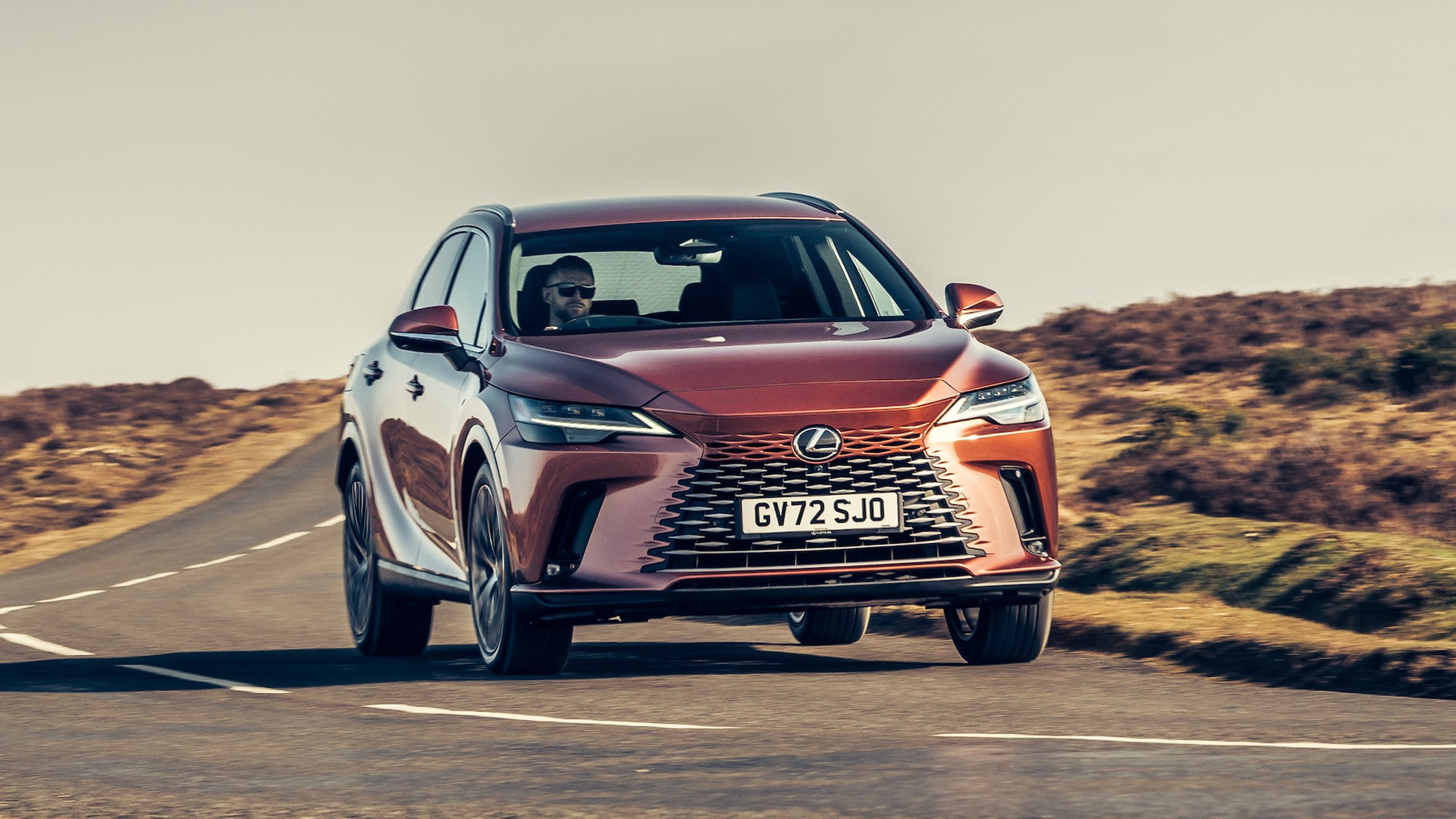
At a glance
Pros: Efficient PHEV power, luxurious inside, generally comfortable
Cons: Not exciting, rivals are faster, go further on electric and drive better, too
What’s new?
This is the latest version of the Lexus RX, introduced in 2022. It’s the fifth or eighth in the series, depending on how you measure these things, and it entered the ring swinging with a host of clever technology, a fresh new look and a choice of three hybrid powertrains (including a sporty 366bhp model for the range-topping RX 500h).
Is all of this enough to remain competitive? We took the plug-in hybrid RX 450h+ for a drive to find out.
What are the specs?
Surprise! The same 2.5-litre four-cylinder plug-in hybrid system found in the Toyota RAV4 powers this supposedly premium machine. Like its sibling, the Lexus features an 18.1kWh battery pack and an electric motor on each axle. That gives it a maximum output of 304bhp, a WLTP electric driving range of 42 miles, and four-wheel drive.
The RX is reasonably fast in a straight line, although it trails key luxury PHEV SUV rivals such as the Mercedes GLE 400 e and BMW X5 xDrive50e. Lexus says the 450h+ can sprint 0-62mph in 6.5sec, which is 0.4 seconds behind than the Mercedes and a whopping 1.7 seconds slower than the BMW. But the RX isn’t set up for speed, so you don’t go looking for it.
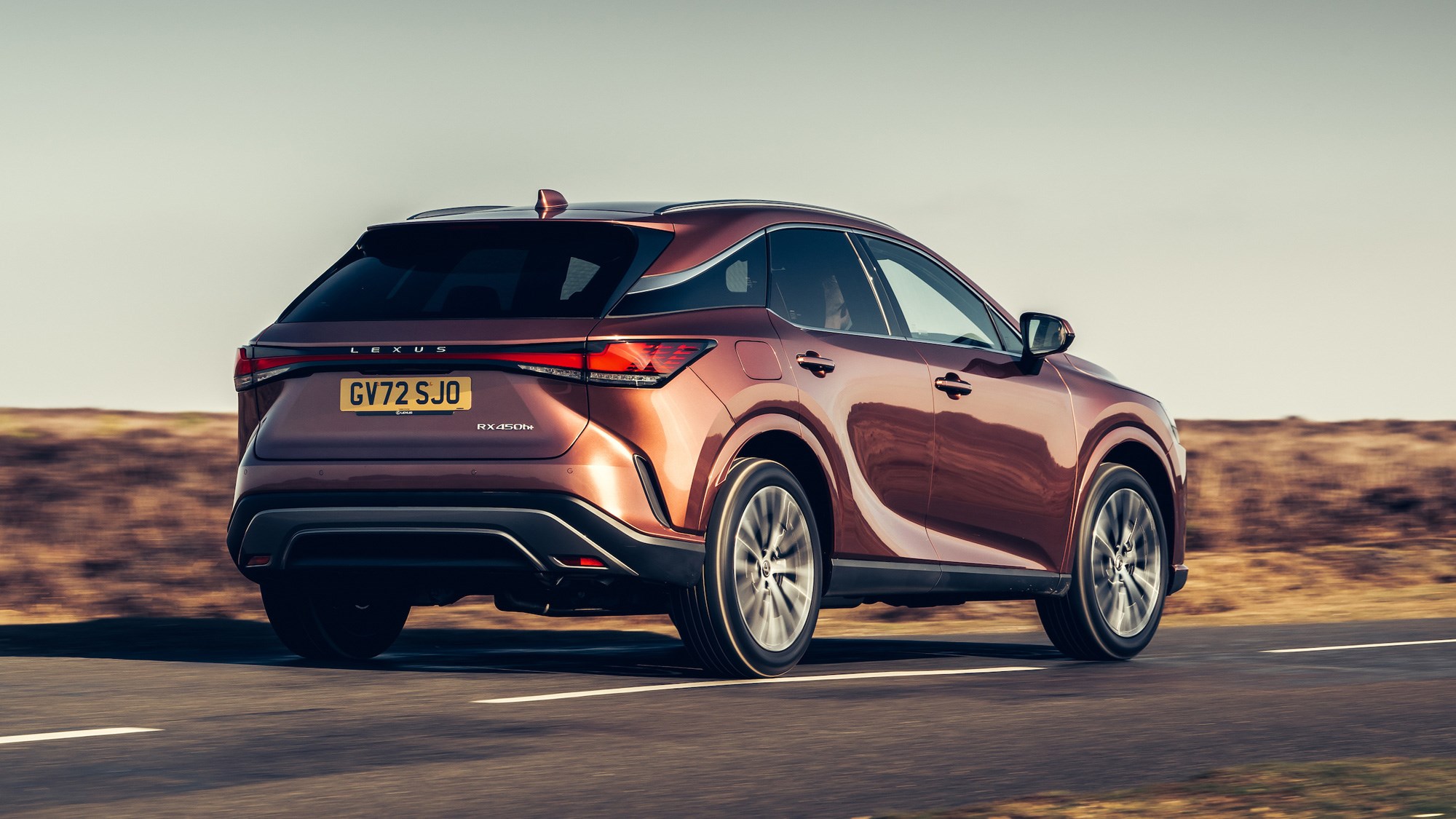
After just half an hour behind the wheel, you’ll be conditioned to drive more sensibly. The RX never eggs you on to go faster. It reins you in and slows you down. Prime example – the engine is hitched to an e-CVT so, if you ask for maximum throttle, the revs will soar skywards. It isn’t a nice engine to listen to, either, which is all the deterrent we needed against speeding.
You can forgive the performance deficit when you experience how smoothly the RX shuffles between EV and hybrid mode. Though, as we’ll mention below, its soft suspension may make your passengers feel queasy if you often drive with exuberance.
As a plug-in hybrid, it’s most efficient if you charge up the drive battery via the mains. On AC this takes between 2.5 and nine hours, depending on the connection. Astonishingly for this day and age, it doesn’t support faster DC charging. The quoted WLTP fuel economy is a ridiculous 235-256mpg. Which only makes sense if you very, very, very rarely fire-up the petrol engine. Like the RAV4, we’d expect more like 40mpg out in the real world. If you’re careful.
How does it drive?
It’s heavy. The most generously equipped RX 450h+ weighs more than 2.2 tonnes – and you can tell the chassis is having a hard time managing that bulk. Drive over a dip in the road and the RX will compress into the tarmac like it’s just had a skip full of cast iron dropped on its roof.
We reckon the springs are a little too soft and the dampers don’t offer enough resistance early on in their stroke to control the weight of the RX crashing down on them. Our Takumi test car also came with adaptive dampers, but switching them to Sport mode didn’t make much of a difference.
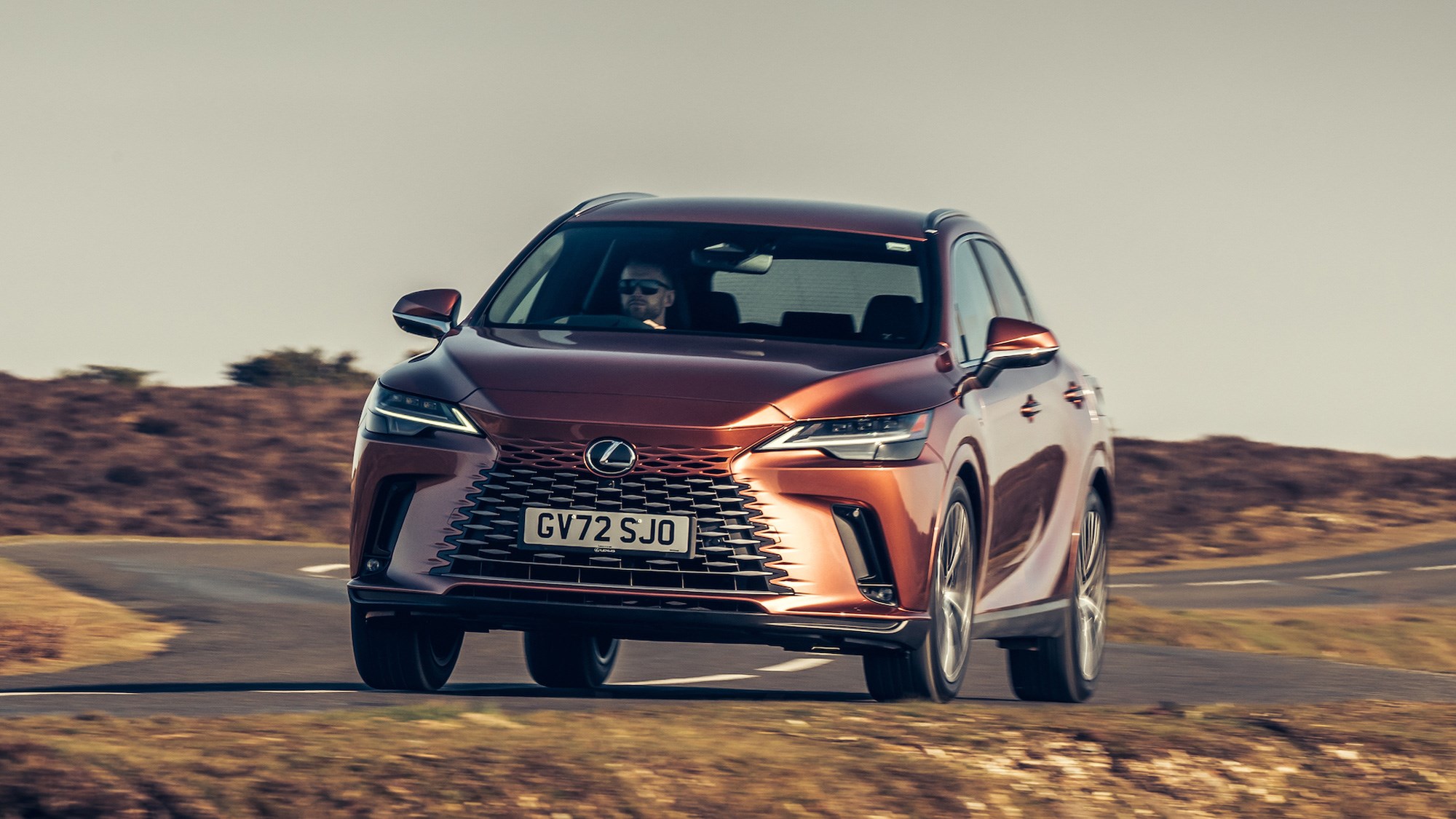
You get a similar sensation in the corners – only it’s laterally rather than vertically. Tip the RX into a bend hard and it’ll lean over like a superbike rider, which might make your passengers feel a bit sick. It isn’t dangerous, though. There’s actually an awful lot of grip available.
Because the battery pack for the car’s PHEV system is mounted under the cabin, the RX has a very low centre of gravity. Couple that with its four-wheel drive and four-wheel steering systems and you’ll find you can take corners much quicker than the suspension would lead you to believe.
There’s also a positive flipside to this softness. The RX is great at filtering out sharp bumps. Even though our test car was fitted with the largest 21-inch alloy wheels available, the chassis felt like it could round off everything short of an asteroid crater, even when blasting along the motorway.
Because the wheels aren’t cemented in place by their struts, there isn’t much movement in the body when you hit a pothole. The wheel moves in the arch without passing the shock through the rest of the car – and that makes it comfortable on a fast road. Wind and tyre noise are also kept in check and, when you’re running in EV mode (which you can do at speeds of up to 80mph), the powertrain is almost silent.
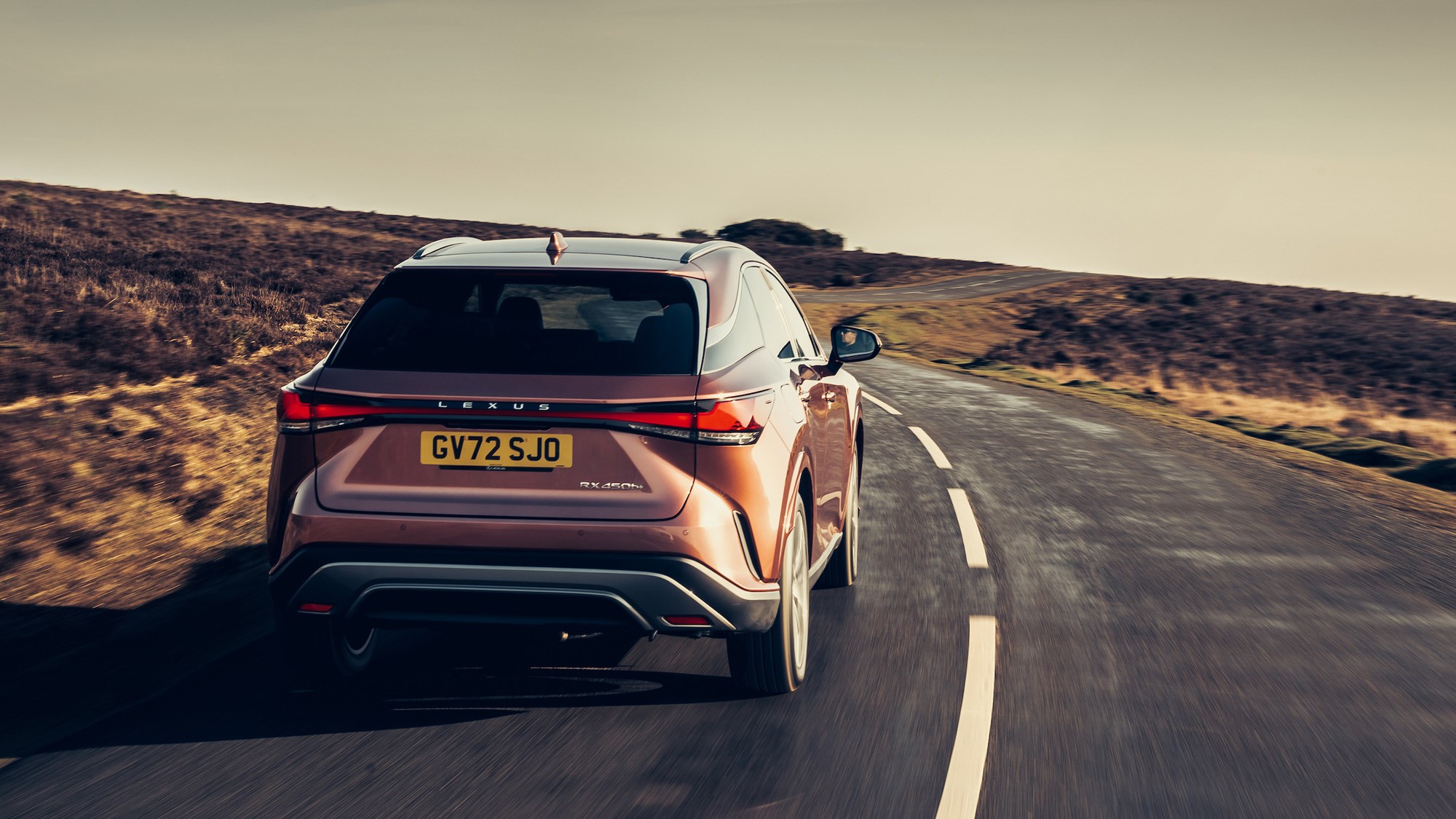
The RX has a party trick, too. Once you’ve emptied the battery, it starts running like a full hybrid, which means you’re not dragging around the dead weight of the battery and motors. They’re forced to earn their keep, clawing back what power they can through regenerative braking and redeploying it to increase the efficiency of the petrol engine.
This helps to make up for the RX’s electric range. Lexus says the 450h+ can drive for 42 miles on electric power alone, which looks a little lacklustre compared to the 60-odd miles offered by the plug-in hybrid versions of the X5 and GLE. Don’t fret, though. That’s still more than enough for many daily commutes.
We’re also pleased the RX doesn’t have a longer electric range, because then it would need a bigger battery. It’s a double-edged sword. Sure, a PHEV with a longer electric range is kinder to the planet when it’s charged – but once it runs out of juice, you’ll be carting around more weight and putting more strain on the petrol engine. And the last thing the RX needs is more weight.
What about the interior?
The cabin’s a lovely place to be, especially if you splash out on the range-topping Takumi specification. Its cream leather upholstery and enormous panoramic sunroof make the interior feel light and airy – and there’s loads of technology to keep you comfortable and entertained.
We like the infotainment system, too. Every version of the car comes with a 14.0-inch screen, which is crisp and responsive. Lexus also hasn’t fallen into the trap of bunging all the controls on the screen. You get physical dials for the heater controls, buttons for the demister and a proper volume knob.
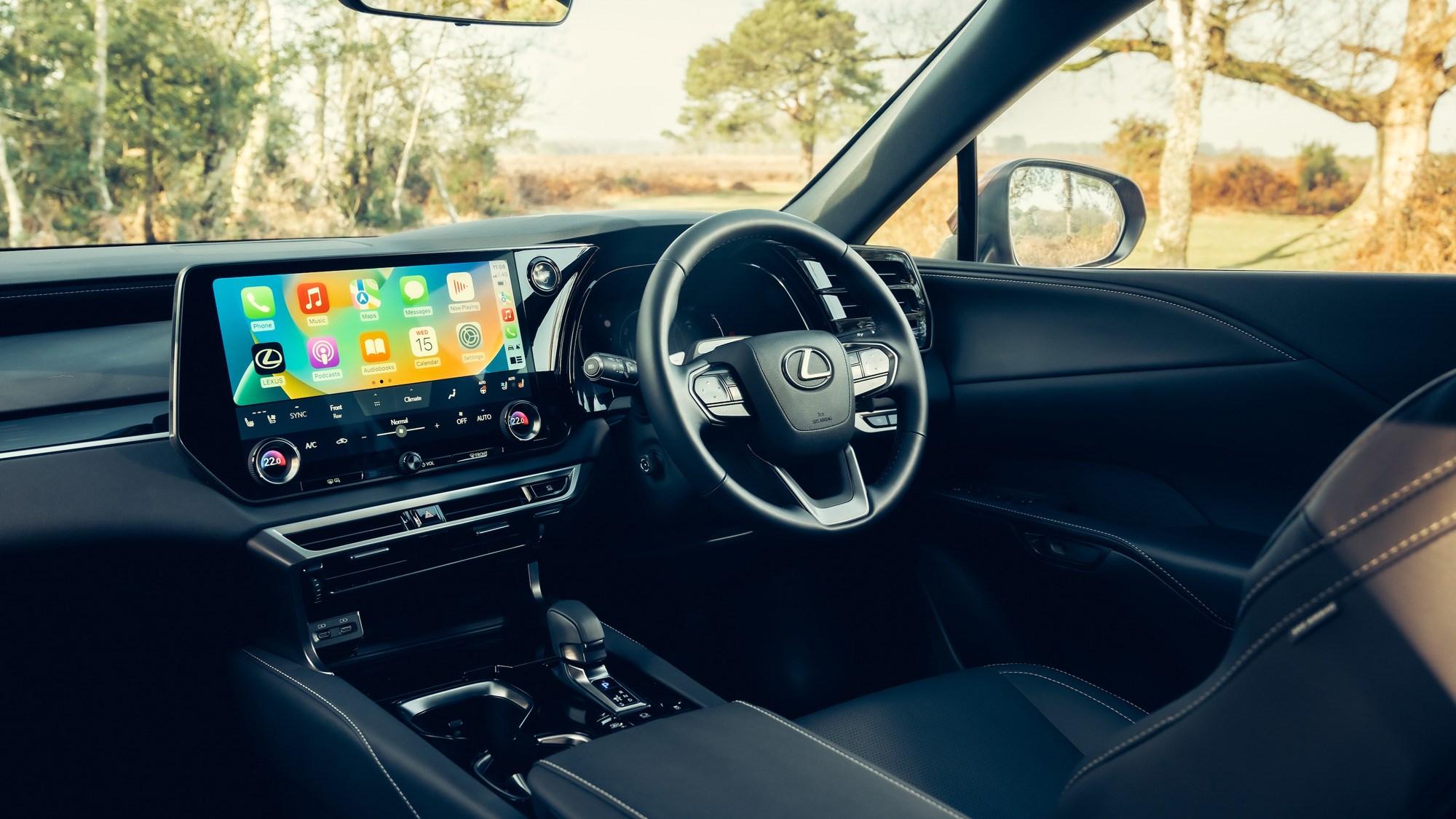
And it’s comfy. Front seat passengers get a pair of incredibly accommodating electrically adjustable chairs, while the rear bench feels like a business class cabin on a posh airliner. Our range-topping Takumi model also had heated, cooled and electrically adjustable rear seats, along with a 21-speaker Mark Levinson stereo. The speakers sound great, too, if not wanting for a little more bass.
The RX 450h+ has a 461-litre boot when filled to the load cover, rising to 612 litres when packed to the roof (Lexus doesn’t quote a seats-down figure, presumably because you’ll damage the leather). Surprisingly, this is the same amount as the rest of the range, despite the bigger battery lurking on the premises.
Before you buy
This luxury doesn’t come cheap. At the time of writing (July 2025) an RX 450h+ Takumi costs from £77,295. While that’s cheaper than the latest BMW X5 xDrive50e M Sport, which is presently available from £82,255, the German is better in the corners, much faster in a straight line, and more spacious of boot (500 litres minimum).
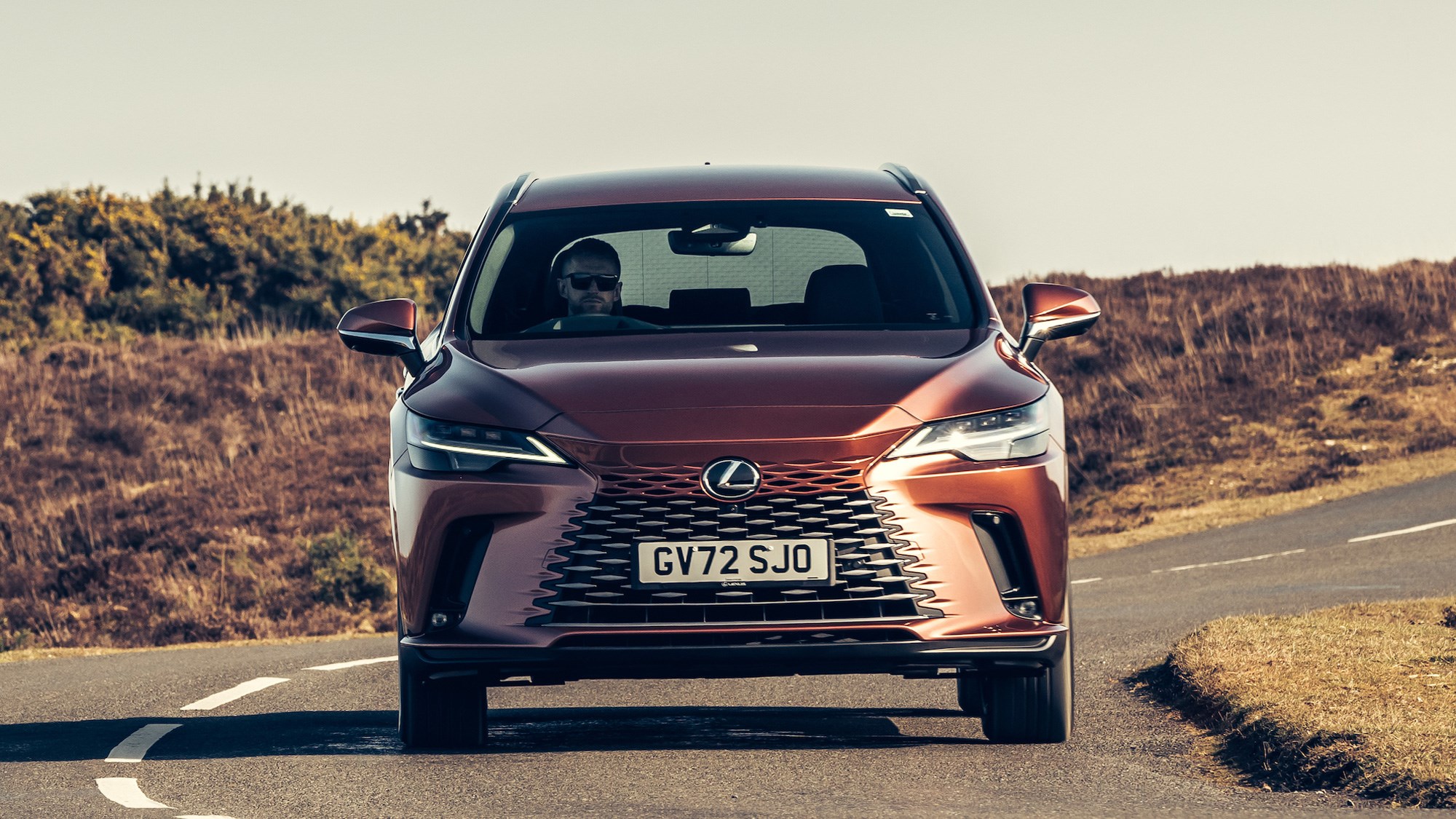
You can solve the price problem by moving down the RX pecking order and opting for a lesser trim level. The most basic 450h+ Premium variant starts from £65,045, which is more reasonable – and it’s hardly spartan inside. You still get three-zone air-conditioning, a wireless smartphone charger, heated seats and a heated steering wheel. You do drop to 19-inch wheels, down from 21s elsewhere in the range, so maybe choose this if your other conveyance is a magic carpet.
Verdict: Lexus RX
The Lexus RX is a perfectly recommendable luxury SUV. It’s comfortable, refined, efficient and it feels suitably expensive. However, it’s a bit one-dimensional – and there’s a growing expectation for cars in this class to do more than just one thing well.
There are PHEV SUVs for similar money that have a broader range of ability, such as the BMW X5 or the Land Rover Discovery. The former is sharper to drive, while the latter can happily carry seven passengers up a rocky escarpment. So, if you need more than just comfort, consider the rivals.
Specs below for the Lexus RX 450h+ Takumi