► First drive in a prototype Range Rover Electric
► Around 2.8 tonnes and expected £170k price tag
► Does electric make for the ultimate Range Rover?
The long-awaited Range Rover Electric is here and we’ve finally got behind the wheel of a prototype version in Arjeplog, Sweden – right on the border of the Arctic Circle. For context, the ‘expressions of interest’ for this car is at around 60,000 ahead of first deliveries in 2026 and that’s before anyone had the chance to get behind the wheel.
Why is it so popular? Well as a starting point large, luxury SUVs make sense as an EV for two primary reasons. The first is refinement (they’re super quiet) and the second is weight. Add a few hundred kilos onto a sports car and you’ll know about it, but do the same to an SUV and it’s barely noticeable. Also factor in that, electric or not, it’s a Range Rover. Including Sport models, the company shifts around 140k examples a year at an average transaction price of £136k.
That means it’s a huge money maker and with 80% of those sales outside of areas with an impending ban on the sale of new petrol and diesel cars, it’s unlikely to change much anytime soon. However, Range Rover sees a gap in the market for the Electric, especially among customers that need an EV and as such have not been able to purchase one of its cars before.
At a glance
Pros: Super refined and feels more agile than petrol models
Cons: Not quite the sense of occasion as a V8 or the range of a diesel
What’s new?
On the face of it, not much as all of the new stuff is under the skin. Range Rover made a conscious decision to keep the car as similar as possible on the exterior and interior to existing ICE models. If it ain’t broke, don’t fix it comes to mind, so all the focus has been on the bits you can’t see.
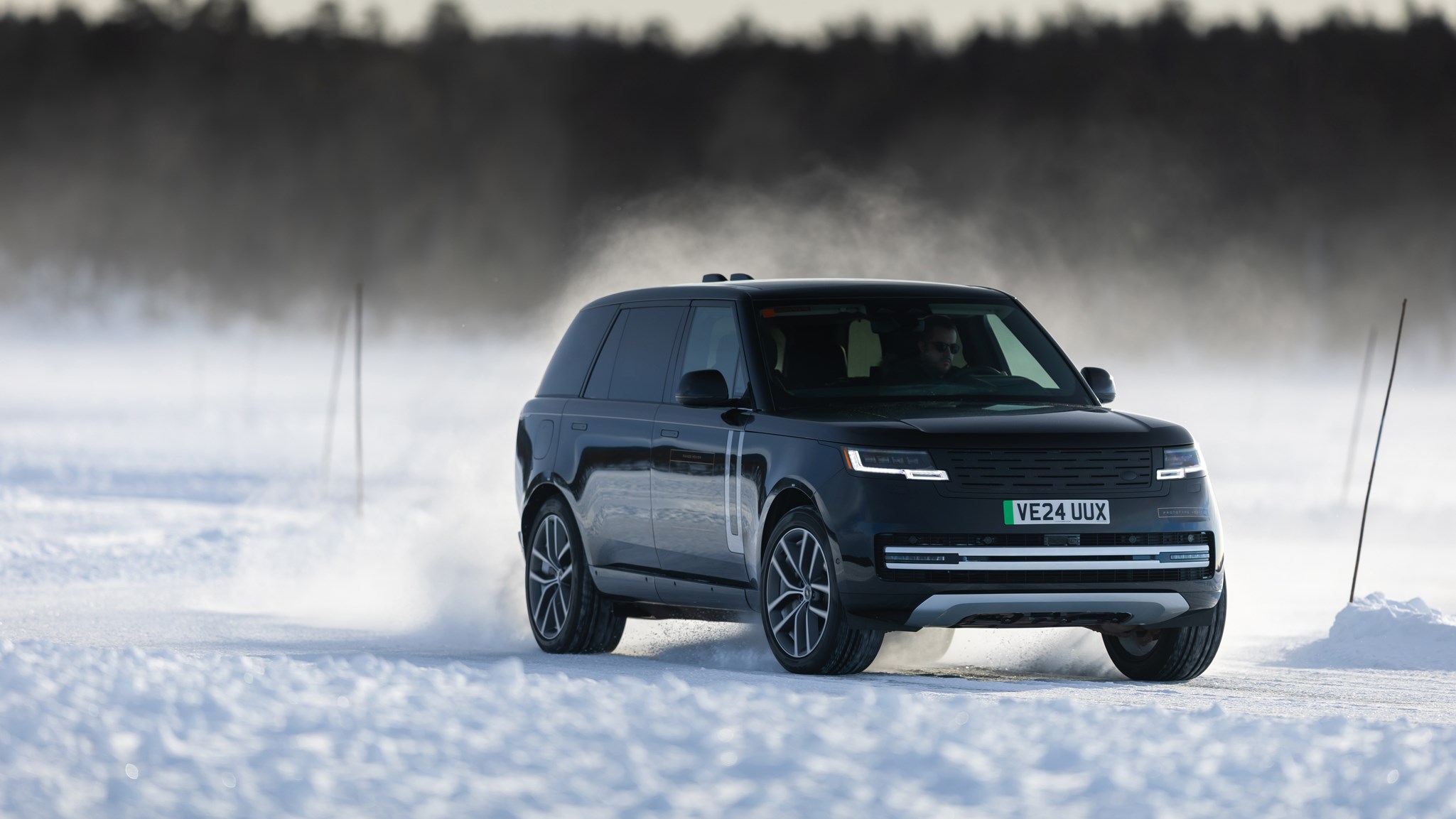
Indeed, the company isn’t looking to cannibalise existing ICE sales, instead simply offering customers a new option. Thomas Müller, Executive Director of Product Engineering, explains ‘the customers should choose what is the best powertrain for a Range Rover that he or she wants to drive. And I think that flexibility is needed, not just for the customer but it’s a great asset that we have.’
The electric model will use the same Modular Longitudinal Architecture (MLA) as the petrol and diesel Range Rovers, with production on the same line at the Solihull factory. This will differ from the Electric Modular Architecture (EMA) platform used on upcoming electric Range Rovers and Land Rovers (such as the Velar and Discovery Sport) where production will take place at Halewood, Merseyside.
That said, Range Rover aficionados should be able to spot a slightly different grille design to petrol and diesel models, even if the one you can see in the pics is merely a placeholder for the final version.
What are the specs?
The Range Rover Electric is propelled by two electric motors (one on each axle) that are supplied by a double stack 118kWh (useable) battery pack with 344 prismatic cells. 800V architecture also means super-fast charging at up to 350kW.
That means 542bhp and 627lb ft of torque, giving a 0-62mph time of around 4.5 seconds – roughly in line with the performance of a V8 Range Rover SV. Total range is targeted at around 300 miles in the real world.
Meanwhile, new Independent Driveline Distribution (IDD) tech manages the torque between axles while (also new) Integrated Traction Management (ITM) can respond to a slip event in just 50 milliseconds – 100x faster than the equivalent system in a petrol or diesel Range Rover.
Why no quad-motor setup like some manufacturers are chasing? Lynfel Owen – Chief Engineer, Vehicle Architecture – explains, ‘each one would need to be larger than a centre EDU with torque vectoring capability, as each independent wheel would need to generate the full wheel torque required without any vectoring through the centre differential; you wouldn’t have a reference speed comparison on the axle, so it would be very hard to deliver control and composure simultaneously in challenging terrain, especially at low speed’
How does it drive?
All driving impressions are from time behind the wheel on a frozen lake in a prototype car, so this is very much a first taste of what the Range Rover Electric is like. Unsurprisingly, it’s very much a Range Rover in most of what it does and how it does it, yet there’s a few key changes.
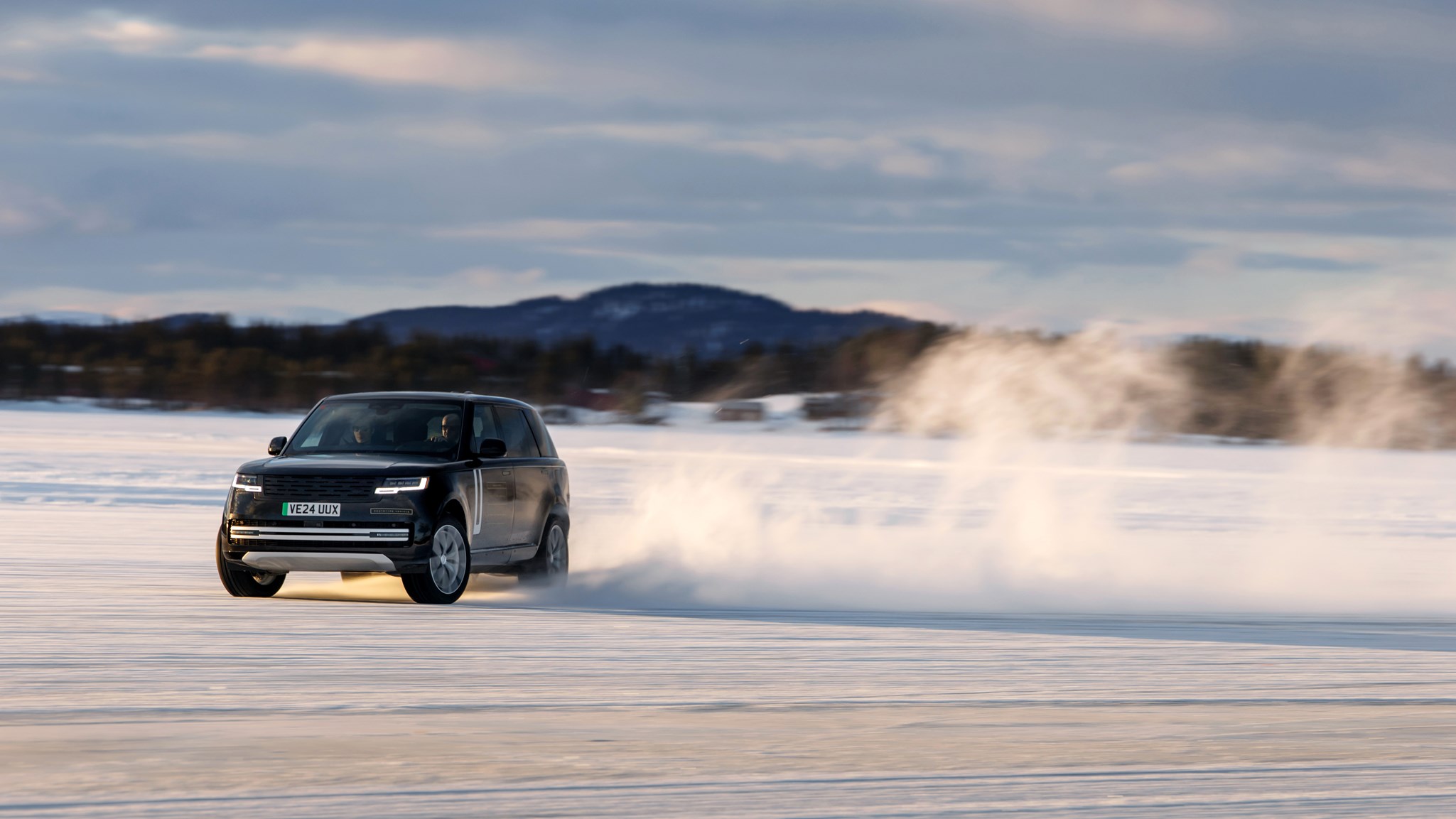
For starters, it actually feels lighter and more responsive on the ice than petrol and diesel models we’ve had the pleasure of driving over recent years. The throttle pedal and brake are a key influencer in how you can shift the weight around in a car and, in that respect, there’s been big strides forward.
Accelerate out of a corner and the precision from the throttle and responses from the powertrain are tangible, while the brake pedal (tuned to give greater response in line with the accelerator) is also more immediate without being grabby. It’s a clever and beautifully judged balance that no doubt took a lot of development hours to hone.

Also helping that feeling of agility is the new twin-rate air suspension that – along with tweaked adaptative dampers – better manage pitch and roll, while the centre of gravity has also been brought down by 60mm. It backs up what we’ve heard from engineers over the last few years, in that more weight can be well hidden as long as you control and manage it properly and the Electric is a prime example of this.
It feels just as at home climbing a steep, icy incline as it does going sideways on a frozen lake where the adjustability is frighteningly good – all aided of course by the lightning quick responses enabled by the EV powertrain.
That said, it doesn’t feel especially quick. There’s probably just about enough urgency to keep customers happy, but you can forget being pinned back into your seat like in many EVs. The Range Rover Electric, it feels, is too mature, too refined for that sort of thing.
What about the interior?
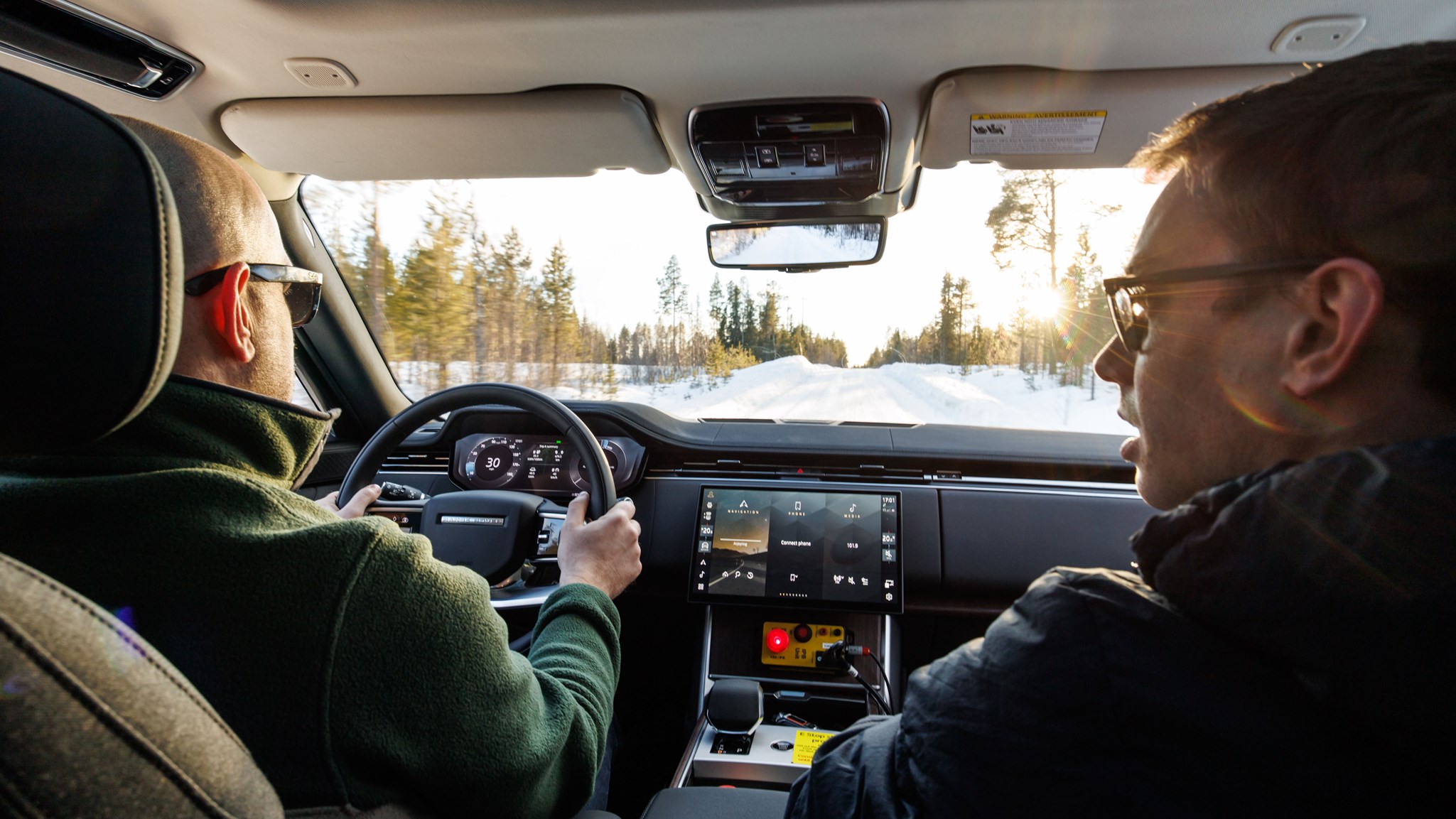
We drove a prototype version with an incomplete interior, but all indications suggest that, like the exterior, it will be very similar if not identical to the petrol and diesel models.
Before you buy (trims and rivals)
Trim levels are yet to be confirmed, but rivals will include the Volvo EX90, BMW iX, Mercedes-Benz EQS SUV and upcoming electric Bentley and Porsche Cayenne EV. We don’t have a confirmed price on the Range Rover Electric, but expect it to be roughly in line with the petrol V8 model at about £170k.
Verdict
It shouldn’t come as a surprise to anyone that our first impressions of the Range Rover Electric are hugely promising. This is a car that, arguably, was made for the electric life and when we asked a number of senior Range Rover execs which they think is the best RR, they all say electric.
Whether Range Rover can turn those 60,000 expressions of interest into firm sales will surely depend on hard facts (such as the range and cost) as well as more subjective elements. You see, half the appeal of a similarly priced V8 Range Rover is surely the feeling of excess and invincibility, the purr of a monstrous engine in a hugely powerful car that screams money and power.
Electric, meanwhile, is clearly hugely effective, but is the sense of occasion still there? Range Rover likely will not care as long as customers are buying its cars, yet the answer will be intriguing nonetheless.