► The Avenger finally becomes a ‘proper’ Jeep
► Mild-hybrid 4xe becomes an off-roader
► But can it survive when the going gets pastoral?
The majority of those buying small SUVs don’t actually want (or need) four-wheel-drive, and in fact most of the Jeep Avenger’s rivals don’t even get a 4×4 option. But this is Jeep, and that badge carries some gravitas that a front-wheel-drive crossover can’t get away with.
Not that buyers seem to have cared. The Avenger has proven a hit for Jeep in Europe – and helped it to almost triple its UK sales in 2024 compared to the previous year. It’s all the more impressive considering how many newcomer brands there are.
But Jeep obviously felt some remorse about the car because it’s just pushed this into its showrooms. Meet the new Avenger 4xe. It’s a jacked-up, more powerful, four-wheel drive version of the Avenger e-Hybrid – and the company’s engineers insist it has solved the original car’s off-road limitations.
At a glance
Pros: Chunky-but-cool styling, some 4×4 talent, comfortable ride
Cons: By no means ‘trail-rated’, practicality limitations, not cheap
What’s new?
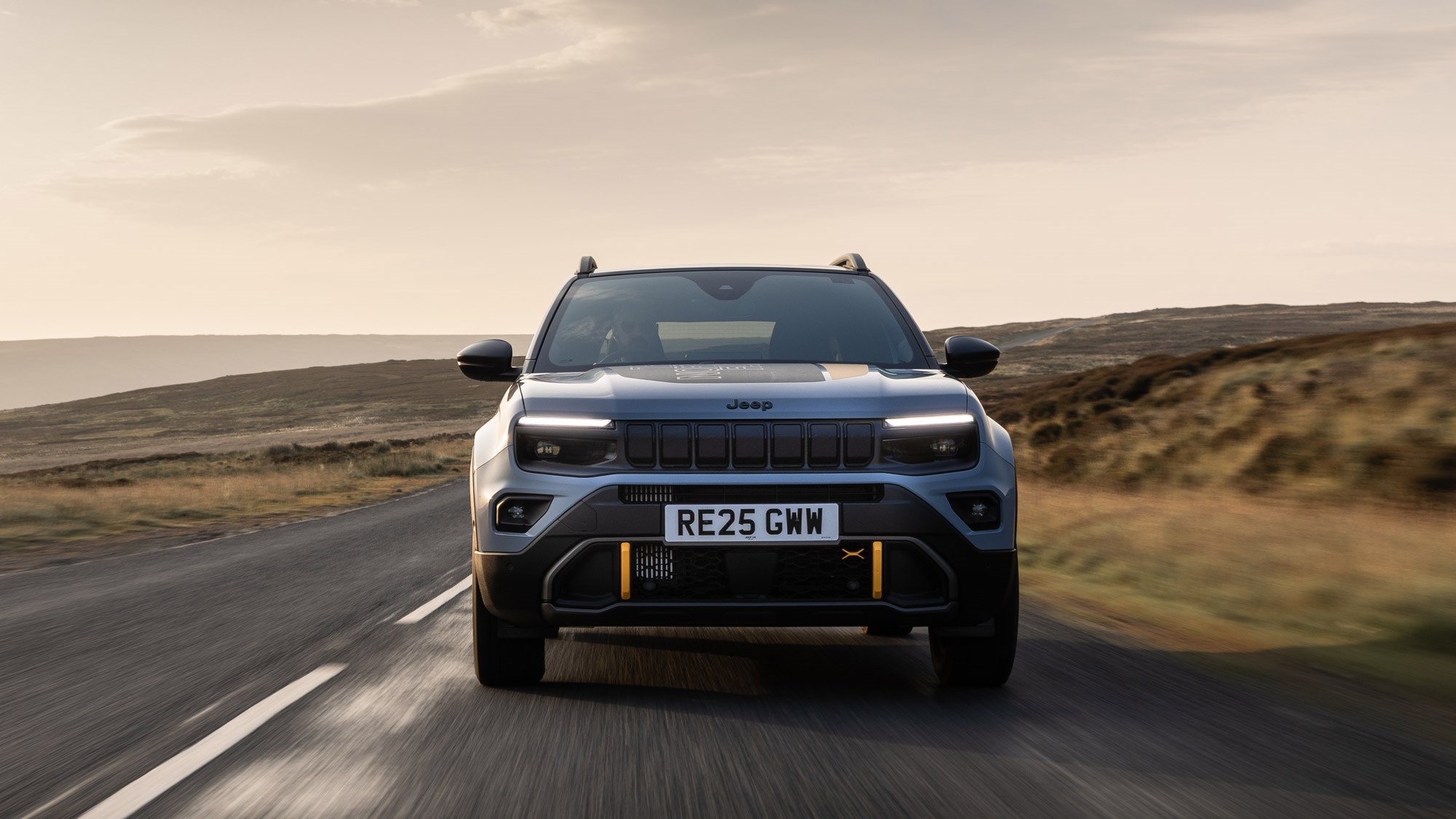
Quite a lot. We’ll canter through the stuff you can see first, starting with the butch new bumpers. Jeep says they serve two purposes. First, because they hug the Avenger’s body tighter than the standard bumpers, they increase the car’s approach and departure angles from 18 and 33 degrees to 22 and 35 degrees respectively. Plus, because they’re moulded in scratch-resistant plastic, Jeep says they’ll look fresher for longer.
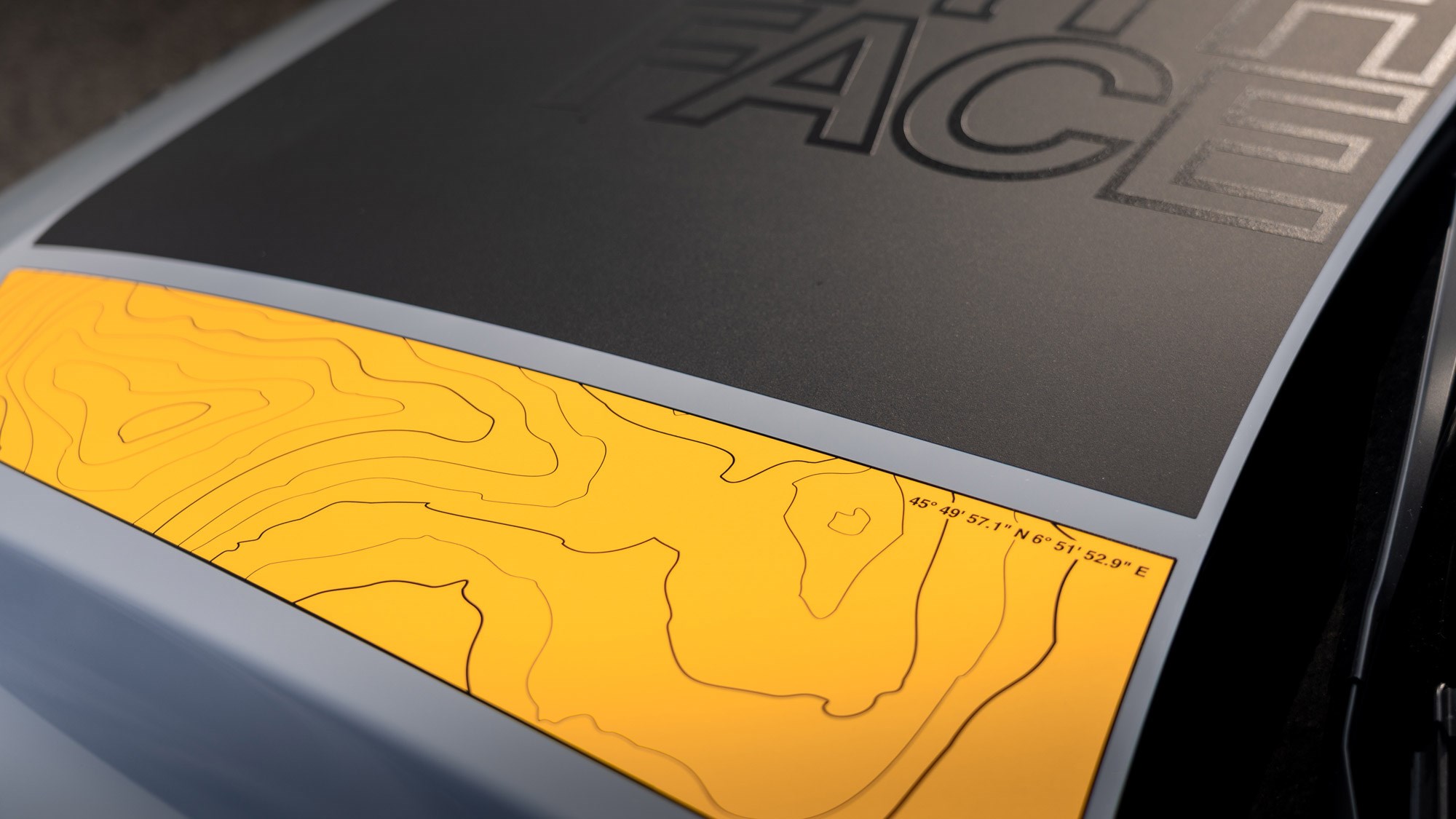
You get a few more off-road trinkets, such as front and rear tow hooks and a matte black bonnet decal to cut down on glare from the sun. The Avenger 4xe’s fog lights have also been recessed into the bumpers to help prevent them from getting punctured by rocks and branches when you’re driving off-road.
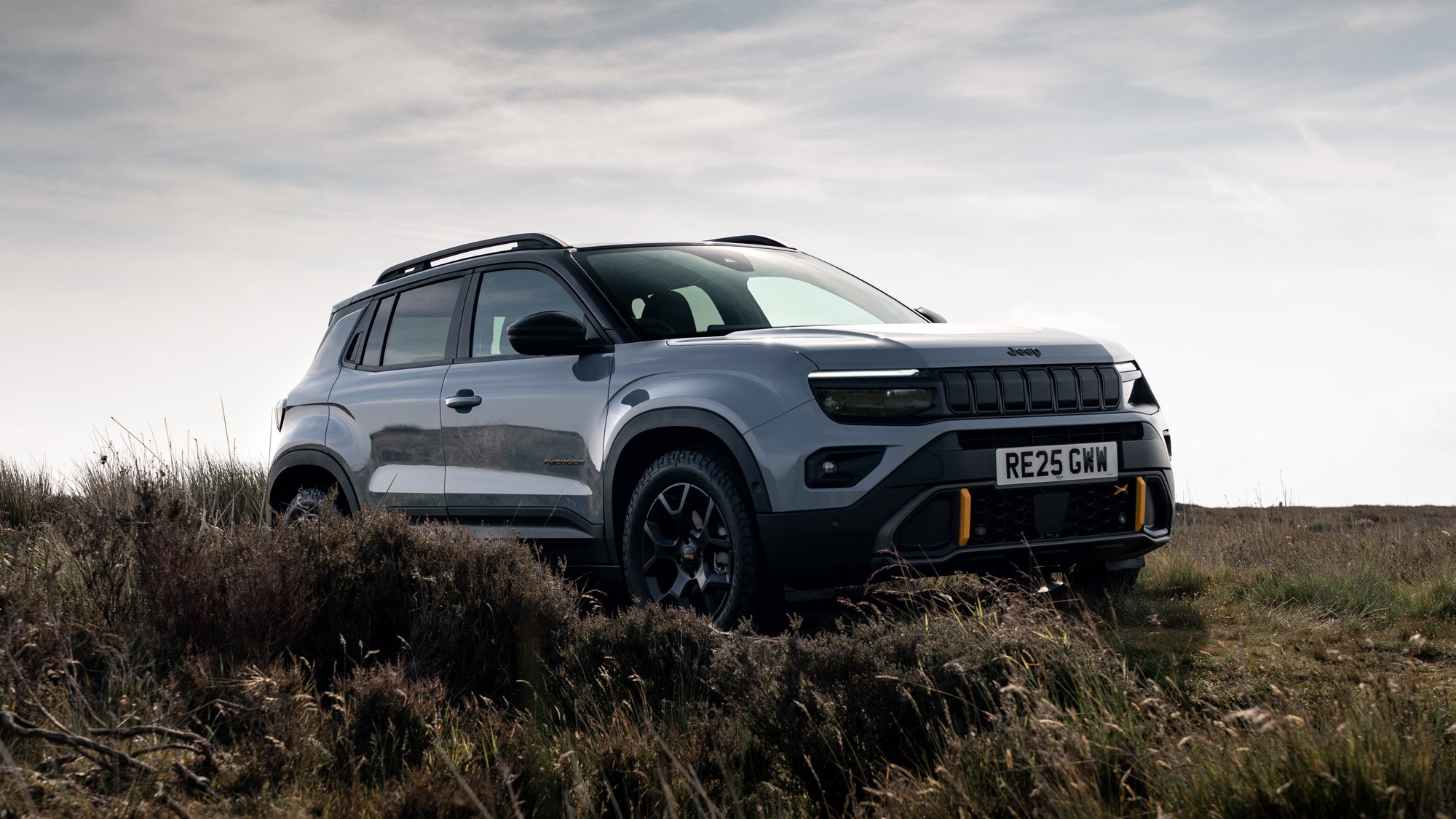
But there’s more to the 4xe than just cosmetics. There are some hardcore mechanical changes, too. Jeep has lifted the car’s body an extra 10mm off the road, added a new steel bash plate and increased the Avenger’s wading depth from 230mm to 400mm. Plus, unlike the standard car, the 4xe has multilink rear suspension – and you can even have it with knobbly off-road tyres for maximum bro-dozer points.
Jeep loves a special edition too, and has teamed up with North Face for a limited-run model inspired by the outdoor brand. Featuring various gold details and branding, it is inspired by Mont Blanc, with 4806 being produced, that number being the height in metres of Western Europe’s highest mountain.
What are the specs?
Given Jeep puts most of its Avenger focus on the electric model, you’d think that might have made the most sense to lop on a second e-motor on the rear axle to the EV and voila, four-wheel-drive. But instead, it’s the mild-hybrid model that becomes the 4×4.
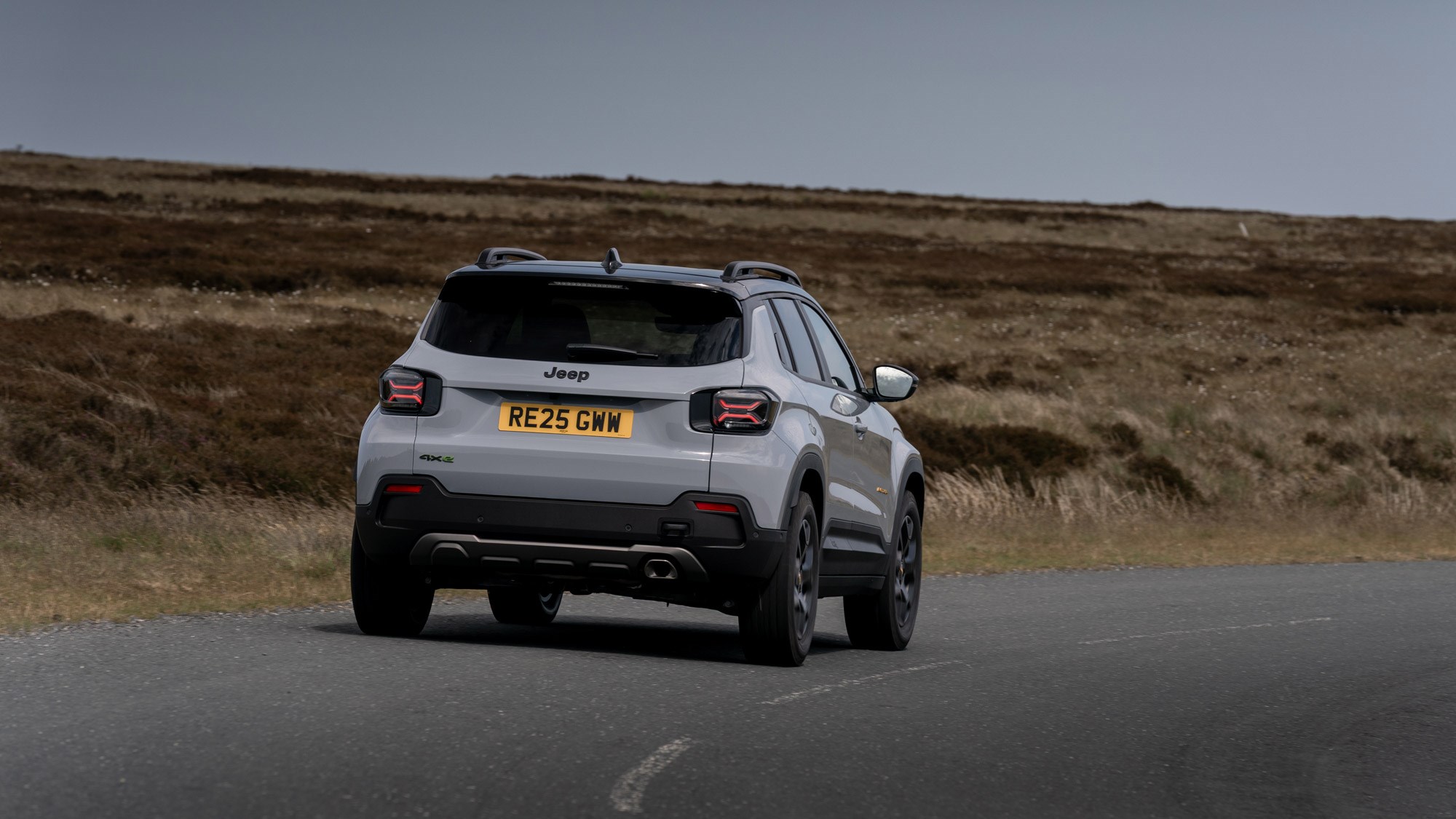
Up front, the 4xe has the same 1.2-litre mild-hybrid system as the Avenger e-Hybrid but, to give it four-wheel drive, Jeep fitted an extra 48-volt electric motor at the rear. That means there’s no driveshaft connecting the front and rear axles, which Jeep says is a good thing because it gives the car some precious extra ground clearance. A six-speed dual-clutch automatic is also the gearbox of choice.
The 4xe’s powertrain has a combined output of 143bhp, compared to the 134bhp you get in the e-Hybrid. That extra waft trims the car’s 0–62mph time down from 10.9 seconds to 9.5 seconds and increases its top speed from 114mph to 121mph.
But because the rear motor can only muster 65lb ft of torque on its own, Jeep has designed a gear reducer to make the most of it. It has a ratio of 22.7:1, which the brand’s boffins told me results in an enormous wheel torque figure of 1401 lb ft.
It’s worth noting there’s no front-wheel-drive ‘hybrid 136’ engine option on the Avenger, unlike on most of its sibling cars – such as the Peugeot 2008 and Vauxhall Mokka.
How does it drive?
The 4xe is by far the best version of the Avenger, just not for the reasons you might expect. The changes Jeep have made have elevated its off-roading ability, but make no mistake, a Dacia Duster 4×4 or Suzuki Jimny would keep going long after the Avenger has got stuck.
We’ve tried the Avenger on all-season rubber in Italy and now in the UK on proper off-roading tyres, which are available as a factory option. Our drive across the North York moors included some light green laning in the Yorkshire Dales, which I’m pretty sure a front-wheel-drive model could have tackled with ease.
Afterwards, however, a dedicated off-roading track showed the 4xe is reassuringly more useful. We tackled a surprisingly high ford with ease and there’s plenty of traction on steep uphills – there’s a lot to thank those grabby tyres for, though. We’re yet to try it on mud, too.
But it’s by no means a ‘trail-rated’ Jeep. Take the 4xe’s ride height. Yes, its suspension is technically taller than the standard car’s – but the new dampers only buy you can extra centimetre of clearance. That means it’s barely any more capable. You can rocks scraping against the 4xe’s new sump guard. Plus, because the suspension barely has any extra travel over the standard car’s, I kept clattering the rear dampers into their bump stops.
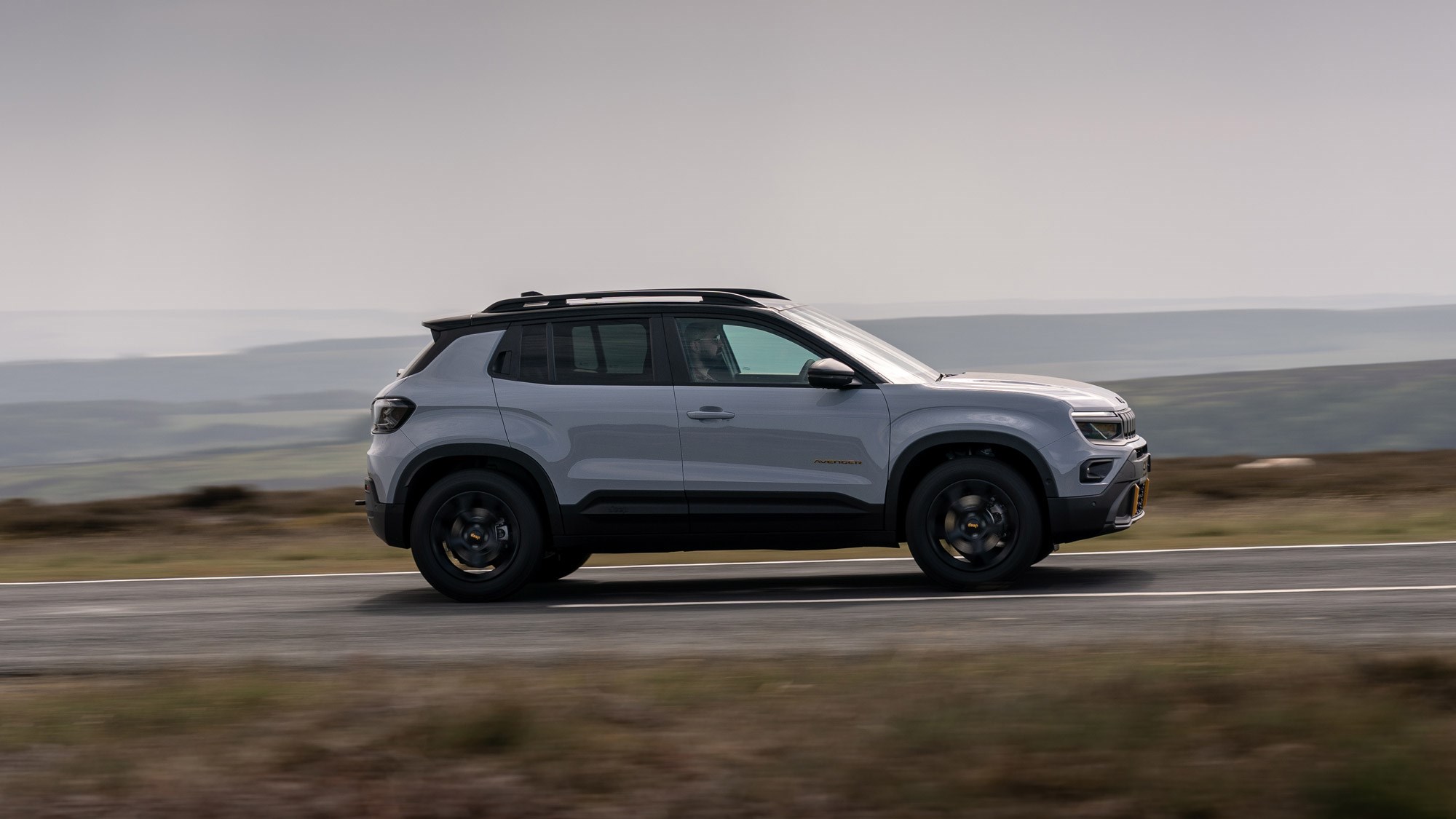
What’s probably of more use to those buying the 4xe, though, is it’s actually the best Avenger to drive on the road. The additional electric motor manages to fill in the small performance gaps if the standard e-Hybrid model, with plenty of punch and greater flexibility on fast B-road. The gearbox has an occasional hesitancy but it’s an improvement for sure.
The 4xe’s more advanced multi-link suspension also makes it the most comfortable Avenger. All versions ride on 17-inch alloys, rather than the 18s most other models are fitted with, and helped by plenty of sidewall, the ride is pretty absorbent, both on and off-road. More impressive is its refinement, even on that rubber, proving fairly quiet even on the motorway.
It’s not bad in town, either. Because you have twice as many mild hybrid electric motors as the standard Avenger e-Hybrid, and because both can operate independently of the petrol engine, the 4xe can creep around on electric power at (very) low speeds. It’s not a replacement for a PHEV by any stretch of the imagination, but it does make a small difference to your fuel consumption in traffic. We still only averaged 40mpg, though.
What about the interior?
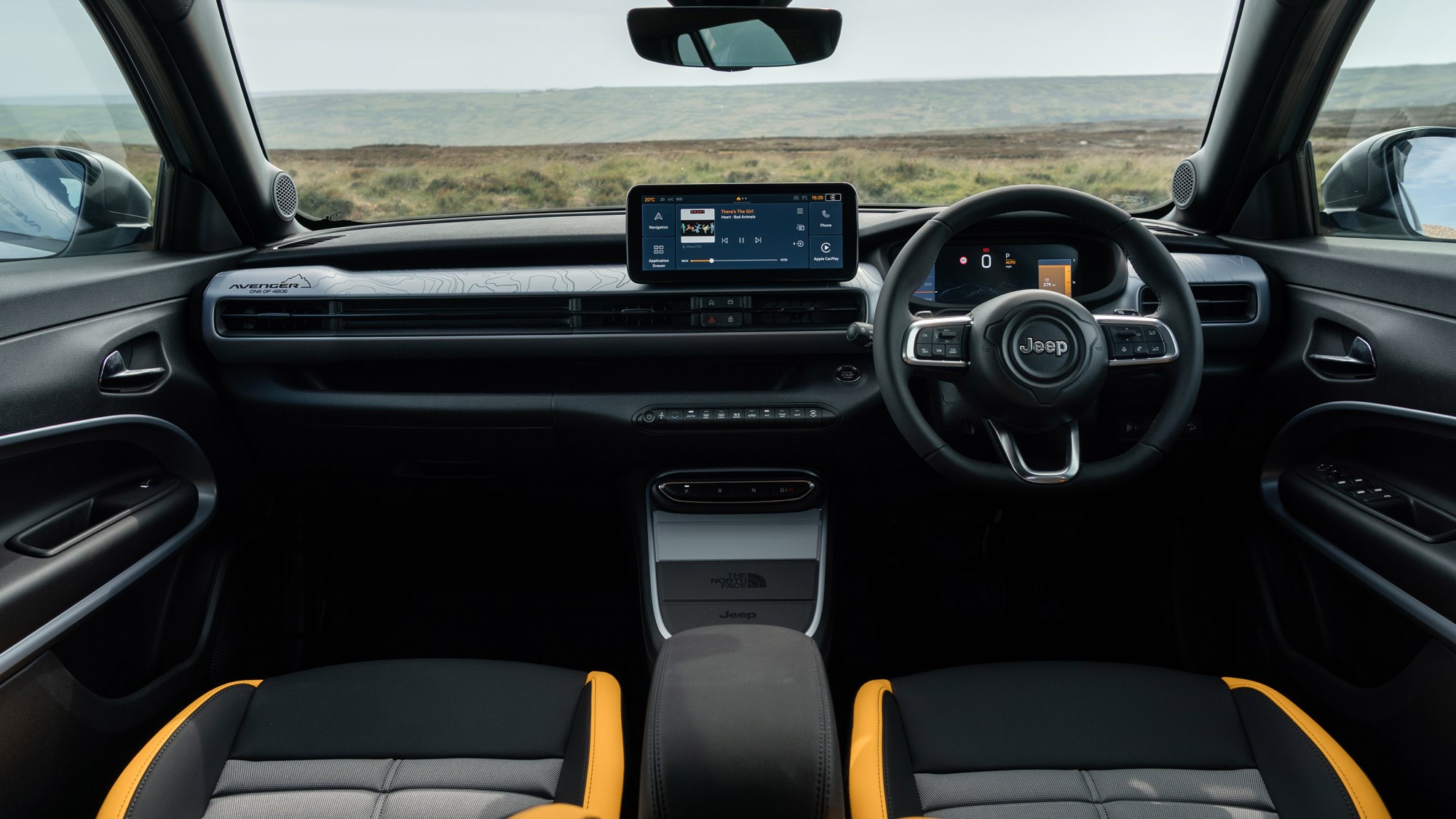
Erm… it’s like a Jeep Avenger. You do get some extra jewellery, though. The 4xe has model-specific (and washable) seat upholstery, a ‘4xe’ badge for the passenger-side dashboard and a new lid for the central storage bin. But basically, everything else about the car’s interior remains unchanged.
Choosing the North Face Edition brings various stylish yellow elements and various emblems, of course, but doesn’t change the cabin massively. It’s not the plushest of interiors, with lots of hard black plastics around the cabin, but the elements you touch all have a solid feel to them. The touchscreen is easy to use and we appreciate having a strip of physical buttons for the climate control. Pity the heated seats are buried within a menu, though.
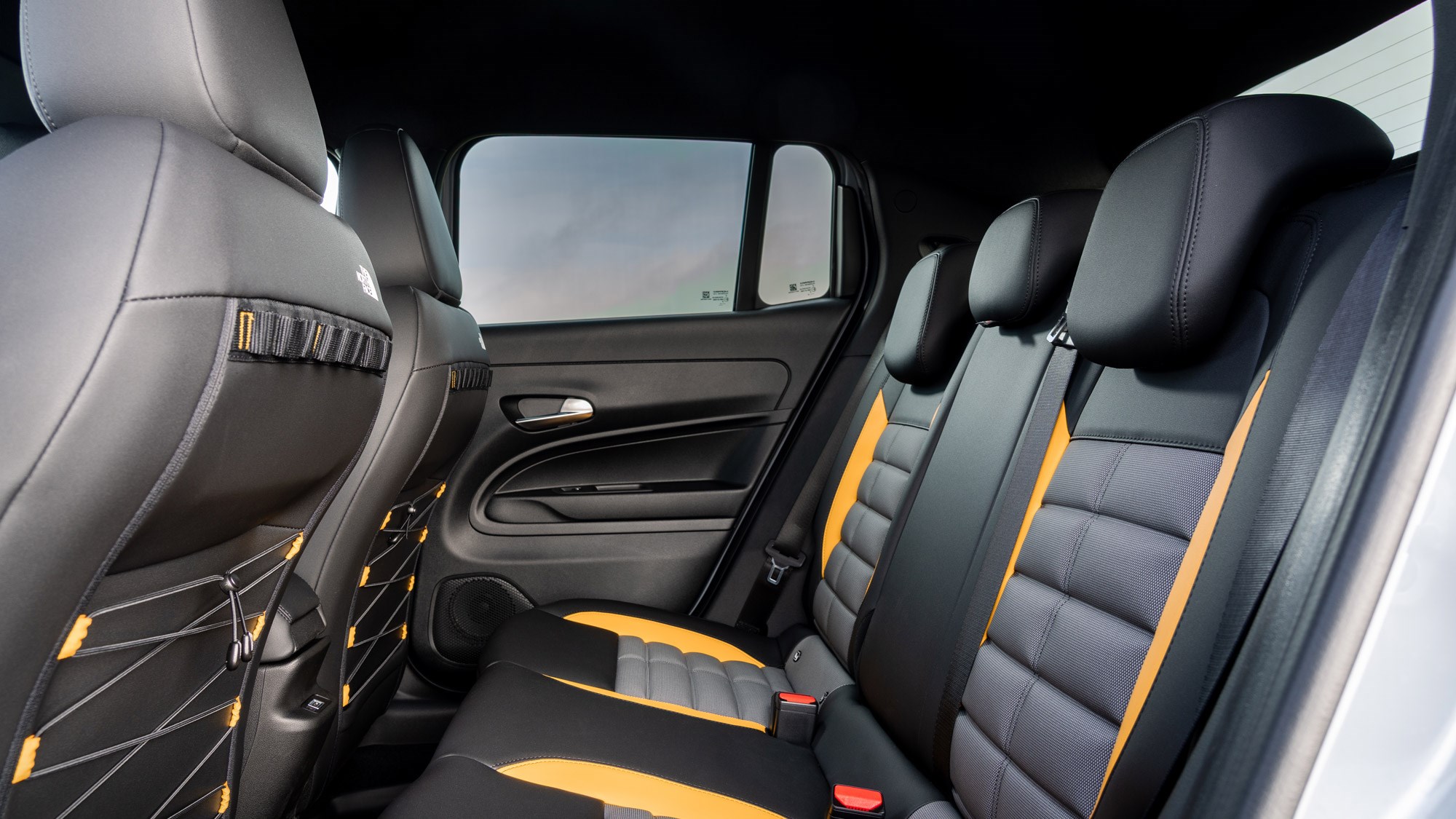
It’s also not a practical choice, for those thinking of using it as a small family car. Rear seat space is tight for adults sat behind anyone of average height and the boot doesn’t fare much better. The extra electric motor at the back eats room under the boot board, trimming maximum capacity from 321 litres to 262 litres. A five-door Mini Cooper has more space than that.
Before you buy
First, ask yourself whether you really need four-wheel drive. If you don’t, but you still want an Avenger, you’ll probably be better served by the less expensive e-Hybrid model.
But if you do want four-wheel-drive, there are three trim levels to choose from on the 4xe, and it’s worth noting they are different to the normal Avenger. They consist of Upland, Overland the North Face Edition.
Standard equipment includes 17-inch black alloy wheels, a reversing camera, adaptive cruise control and two 10.25-inch screens for the main infotainment and digital dial display. The Overland adds wireless smartphone charging, blind spot monitoring and a 360-degree parking camera.
With the North Face you’re mainly paying for its badges and styling, but it does also get useful rubber floor mats, as well as heated front seats, keyless entry and an electric boot.
Prices for the Avenger 4xe start from £31,219 for a Summit, rising to £35,219 for the Noth Face Edition. Though you also get more power for your money, it’s around £4,000 more than the standard FWD e-Hybrid and also more expensive than the EV. It’s going to be a tough sell, and Jeep knows. It’s forecast to account for only seven per cent of Avenger sales.
Verdict
The Avenger 4xe is possibly the best version of Jeep’s smallest SUV to date, with the big caveat of if you can ignore the jump in price. To my eyes, that slightly chunkier styling makes it how it should have looked from the start, and its improved power and suspension changes make it better to drive on the road.
But it’s not a proper off-roader. Yes, it can tackle light off-roading with ease, but its only slightly taller suspension doesn’t afford it anywhere near enough ground clearance to pass over rocks and logs without clattering them into the floor pan. So it somewhat defeats the point of a four-wheel-drive Avenger, but it must be said that doesn’t make it any less likeable.