► Mk6 Honda CR-V review
► Hybrid and PHEV driven
► Efficient and spacious, but pricey
This sixth generation of Honda CR-V has been on sale since 2023 and we’ve now spent plenty of time in every powertrain variant. As a global bestseller, it’s not a vehicle that Honda likes to muck about with too much, and has undergone much the same transformation versus its immediate predecessor as the latest generation of Honda Civic.
This means a minimally styled but eminently sensible interior – which still retains plenty of proper buttons – a choice of petrol-electric hybrid engines only, and a more conventional SUV silhouette. While diesel is no longer available, buyers can choose between a self-charging hybrid badged e:HEV or a plug-in hybrid badged e:PHEV; both are impressively efficient and smooth to drive.
Even so, higher-than-average pricing and an exceptionally broad range of competitors from the excellent Kia Sportage to the premium BMW X3 mean it’s unlikely to ever trouble our best SUVs list. But that doesn’t mean it’s not the right family-friendly transport for you.
Should I buy a Honda CR-V Hybrid? If you appreciate thoughtful engineering that delivers ease of use and impressive real-world efficiency and need plenty of space you should certainly give the CR-V a close inspection.
Here’s how we test cars, and why you should trust us.
At a glance
Pros: Genuinely efficient, tidy driving experience, wonderfully sensible and spacious inside
Cons: Expensive and underpowered versus rivals, never in danger of being exciting
What’s new?
Well it’s bigger than its predecessor, for a start. It’s 80mm longer, with 40mm of that in the wheelbase – though just 10mm wider, so it doesn’t feel much less wieldy. Perhaps more surprising considering the sheer size of it now, it remains a five-seater only, like the Toyota RAV4.
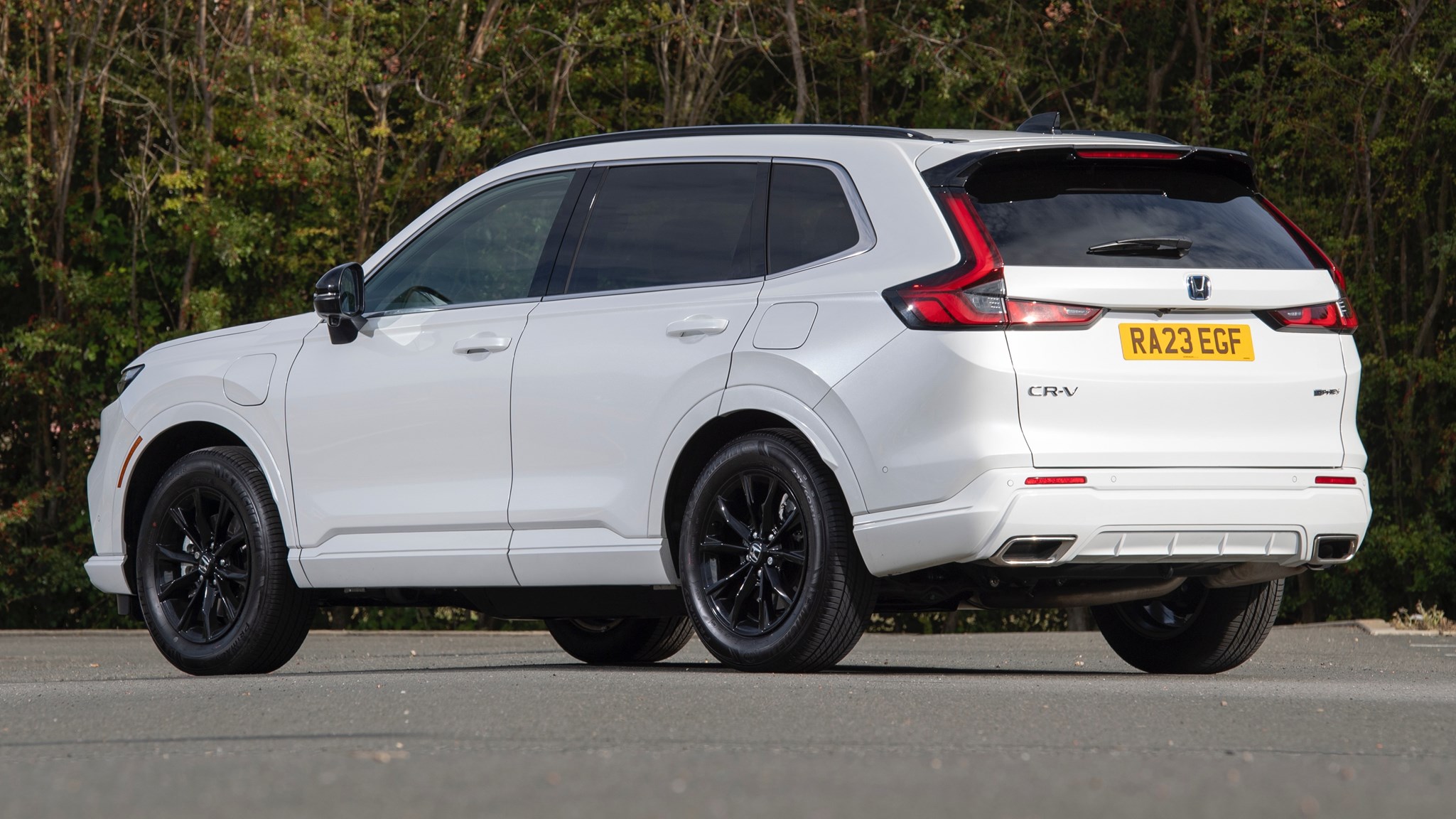
It also has a slightly more conventional silhouette than the last one, with a longer bonnet and more upright stance that boosts practicality further. Those looks are backed up by standard four-wheel drive in regular hybrid models, while the PHEV is front-drive only.
What are the specs?
The two hybrids engines are both related to the excellent e:HEV system in the latest Civic. That means a 2.0-litre Atkinson cycle petrol engine and a pair of electric motors – one for traction and one acting as generator. While that’s essentially similar to the previous-generation CR-V hybrid, it’s hugely better in every regard.
Unusually, the engine doesn’t directly drive the wheels much of the time, instead turning the generator and allowing the electric motor to take care of moving the vehicle at lower speeds. At higher speeds, a lock-up clutch engages for direct drive from the engine to the wheels, a system Honda says is more efficient.
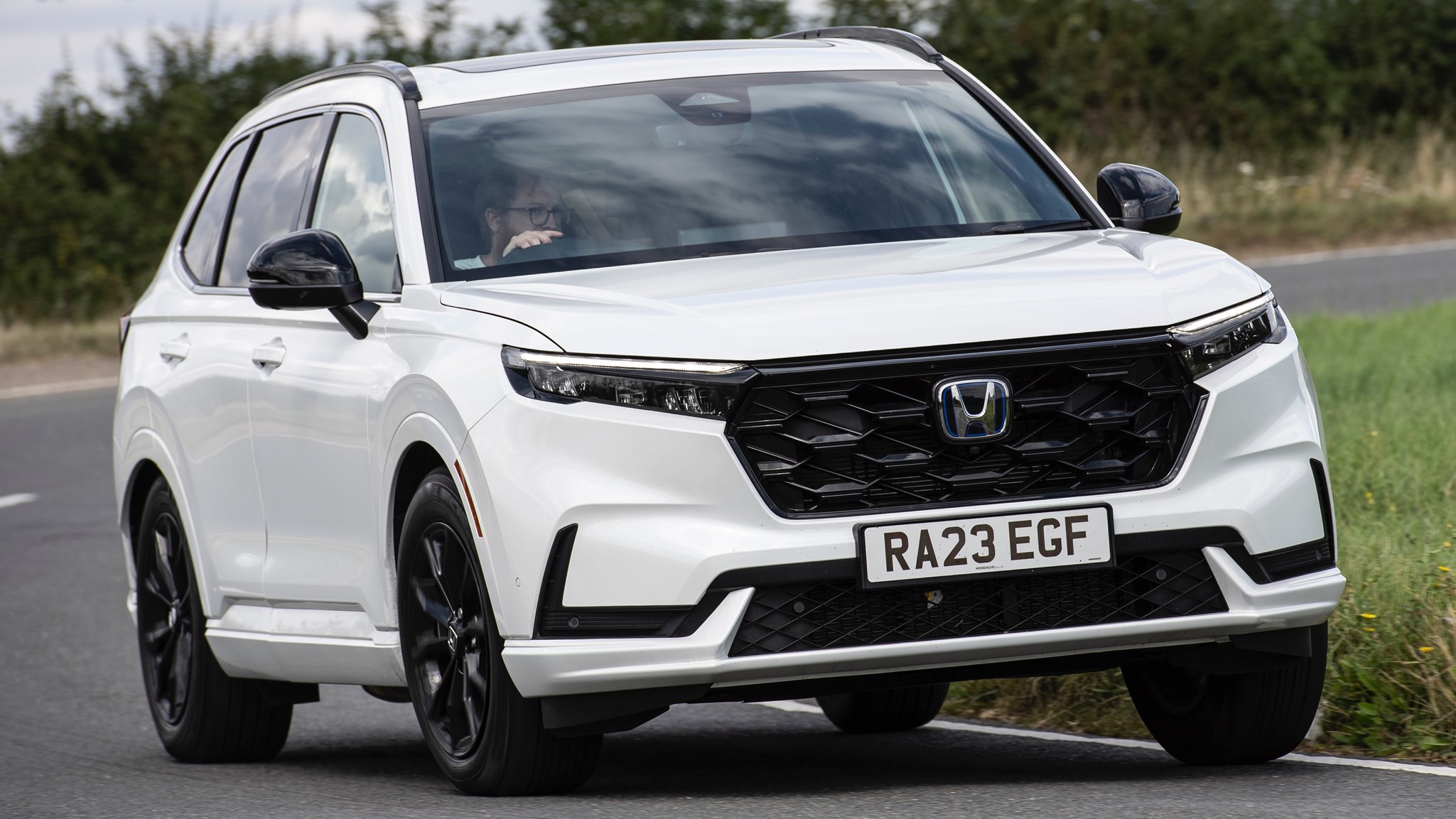
The regular self-charging hybrid model uses a 1.06kWh battery and is virtually identical to the system now used in the Civic and ZR-V. But the CR-V is also available with Honda’s first plug-in hybrid powertrain, too.
The components are arranged in the same format but there’s a much larger 17.7kWh battery. This is good for a 50-mile WLTP range on electric power alone in UK specification, which was a decent chunky of zero emissions capability when the CR-V first launched in 2023. Now you’ll find a whole legion of VW Group plug-in hybrid SUVs claiming 70 miles or more – and typically delivering on that promise, too. In our hands, the CR-V e:PHEV usually managed 35-40 miles per charge.
But it did also remain usefully fuel efficient when the battery was too depleted to deliver extended EV-running, since at that point it reverts to behaving like the regular e:HEV model – extra weight of the larger battery compensated for to some degree by the absence of the self-charging model’s draggier four-wheel drive system. As such, we’ve typically seen over 40mpg from both variants in long-term mixed driving.
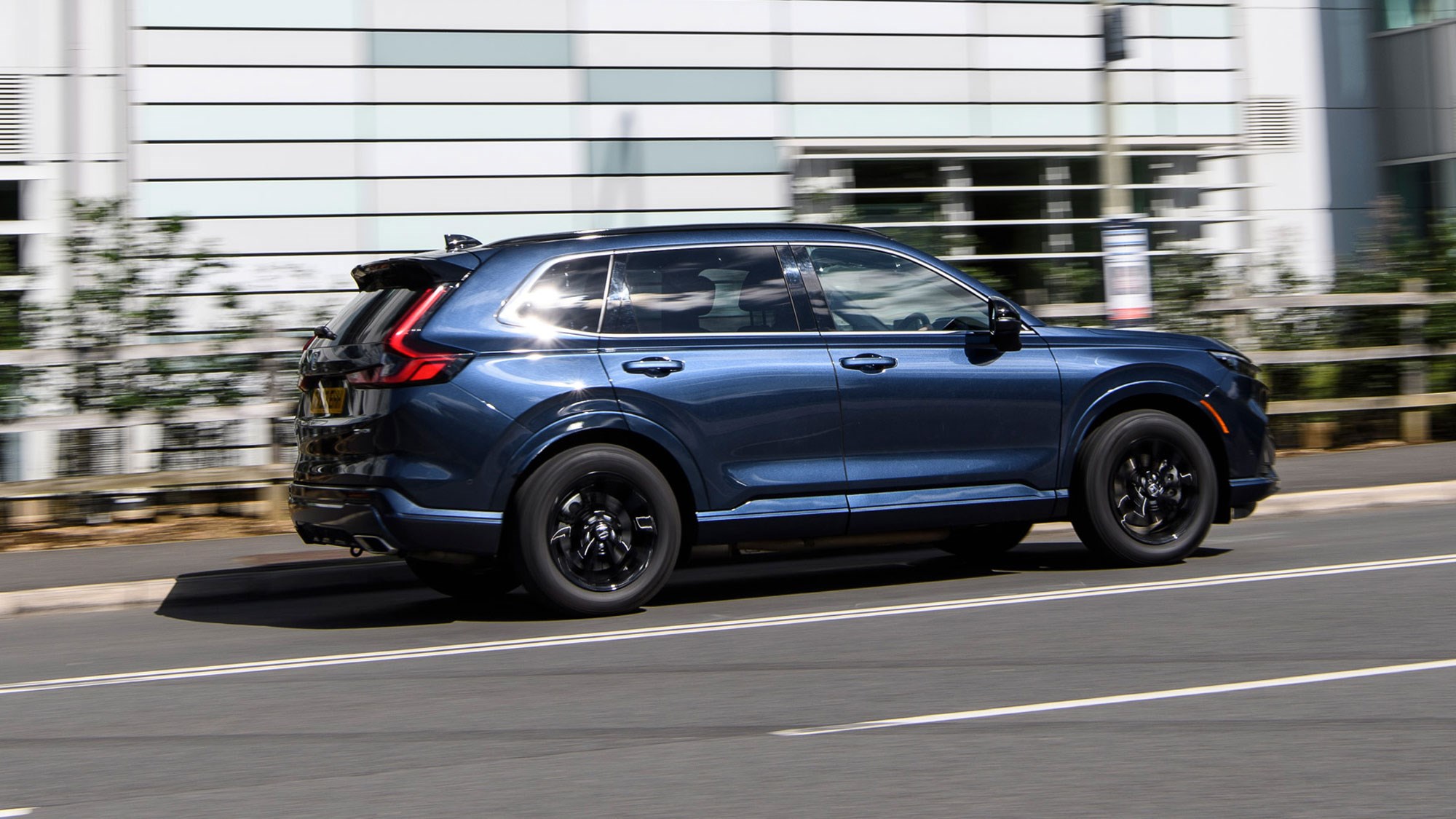
This compares well to the regular hybrid’s official 42.2mpg, but less to the plug-in’s claimed 294mpg, a figure that’s skewed by the battery mileage. More importantly in the real world, the bigger battery means just 19g/km of CO2 in official tests, plonking PHEV CR-V in the nine per cent company car tax band (versus 36 per cent for the regular hybrid).
There’s also a lower ratio available for the lock-up clutch in this model, which is suitable for high loads or towing. The PHEV can tow up to 1500kg, while the self-charger manages 750kg.
Since drive comes from the same traction motor regardless of battery size, you get 181bhp and 247lb ft of torque from every model. Performance is 0-62mph in 9.4 or 9.5sec – the slower being the more highly specified self-charging variant. Top speed is 116mph for the e:HEV, 121mph for the e:PHEV.
How does it drive?
Setting off as a pure EV, the CR-V feels more balanced than much of its plug-in hybrid SUV opposition. Though overall power output looks rather weedy compared to the likes of the Toyota RAV4 plug-in (302bhp) or the Mazda CX-60 (322bhp) the CR-V has the distinct advantage that it doesn’t really shuffle power sources about. So you get the full 181bhp the entire time you’re driving, whether the engine’s on or off – until you hit the motorway, when the lock-out clutch puts you onto the petrol engine.
It’s certainly willing at low speeds but if you were hoping for the thump in the back that many powerful rivals provide you’d best look elsewhere. Whether you opt for the e:HEV or e:PHEV, you’re looking at a 9.4-second 0-62mph time at best. Overtaking is doable but requires some planning with just two in the car. It feels even more flat with a full load on board. Towing certainly won’t be a speedy business.
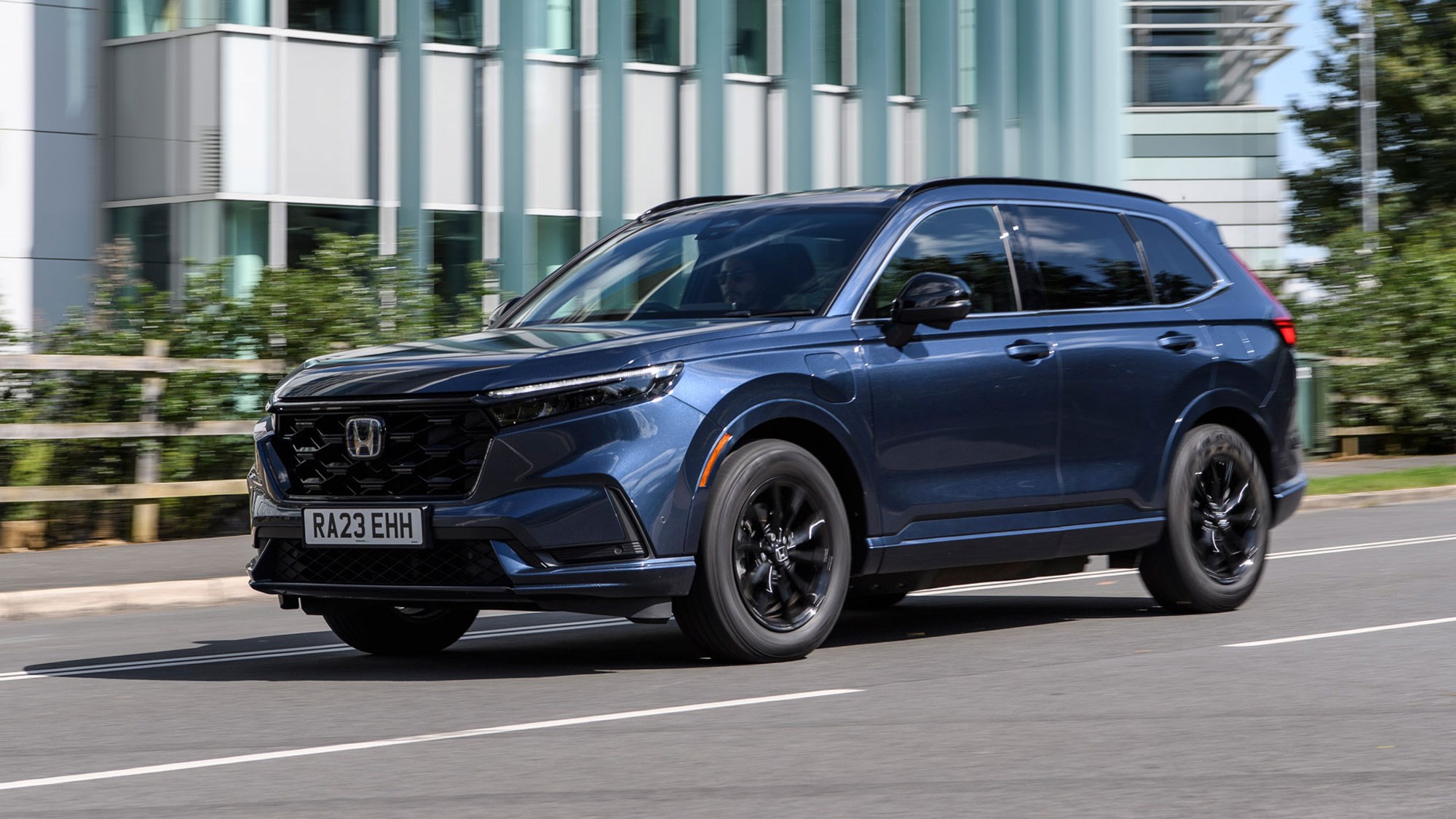
However, both CR-V variants offer a very relaxed and smooth drive. It’s unsurprisingly silent as EV, but even when the engine kicks in it’s unobtrusive. Power feels ample round town and it’s an accomplished cruiser.
Ride and handling have taken a leaf from the Civic’s book, and the steering’s nicely weighted and direct through the thin-rimmed helm. You can feel the bulk over the front axle, though – it thuds over bumps at low speed and front-end grip isn’t as good as we’d like. The HEV is a bit more agile than the PHEV while the 4WD system helps drive you out of corners more effectively. Even so, an X3 is a better steer.
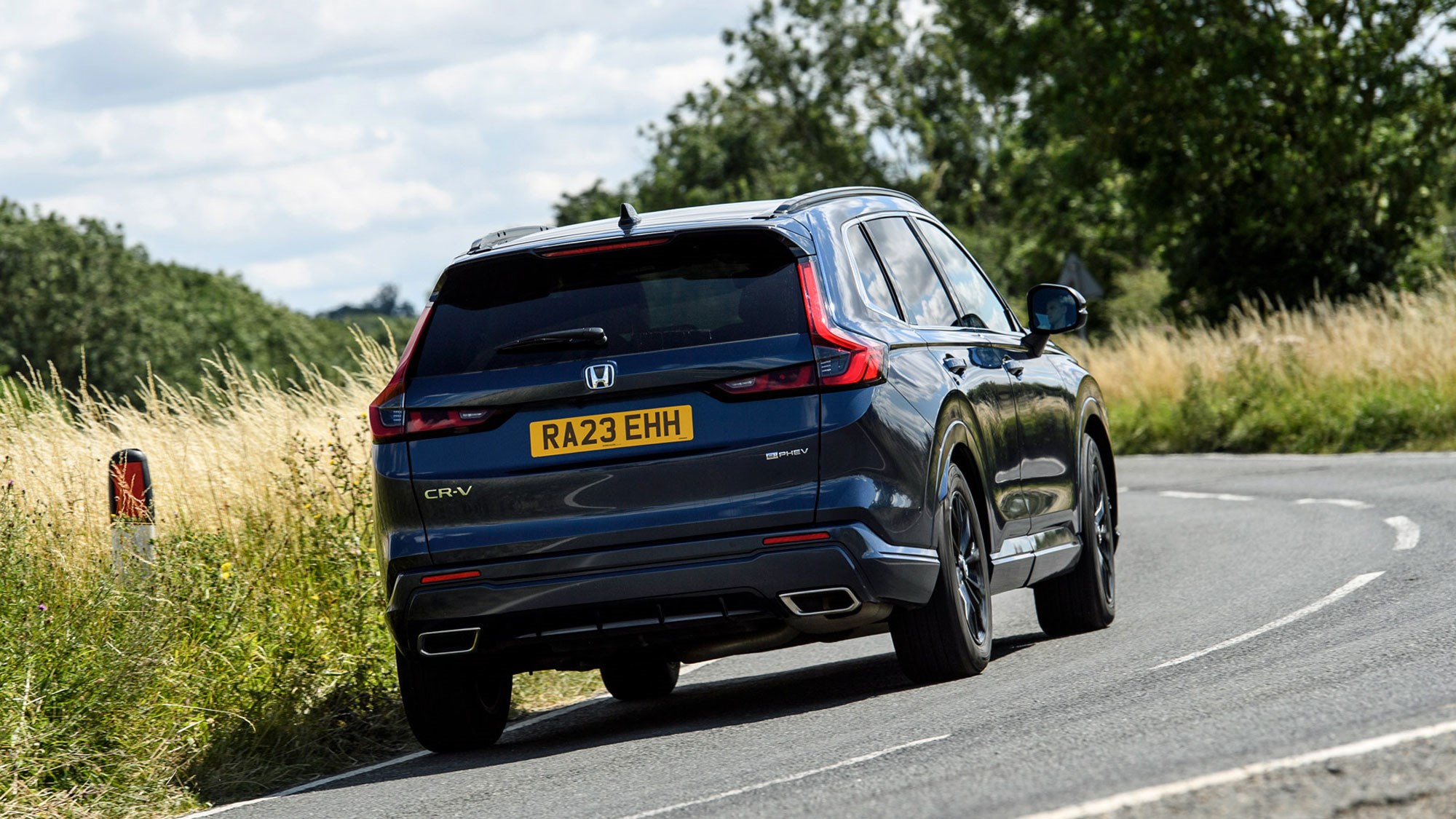
There are some strings to the Honda’s bow, though. The brake feel is excellent, not always a given in PHEVs, and Honda’s also put real emphasis on visibility. The low window line, thin pillars and sensibly-sited door mirrors minimise blind spots and make this a pleasure to pilot round town. Not enough manufacturers care about this at the moment.
It’s just a shame not all of the safety features are so sensible. Great visibility and 11 airbags, we can get behind. There’s also a clever blindspot camera that comes on when you indicate left but, bafflingly, its feed displays in the central screen rather than the instrument panel – displacing the sat-nav. Hopefully you’re not coming up to a complicated exit. There’s also a highly irritating overspeed warning that needs turning off afresh every time you start up – mandated, so not Honda’s fault, but jarring nonetheless.
If you use Honda’s own navigation, the car will intelligently apply its battery where it’s most needed, improving efficiency. This also applies to towing, which is clever – the CR-V will ensure it has enough juice in the tank to allow the battery to ‘boost’ the petrol engine up inclines.
What about the interior?
Like the Civic, the CR-V is a model of function over form, and all the better for it. The wide dashboard contains a myriad of physical switchgear, including a full set of climate controls, hybrid controls and shortcuts for the media system.
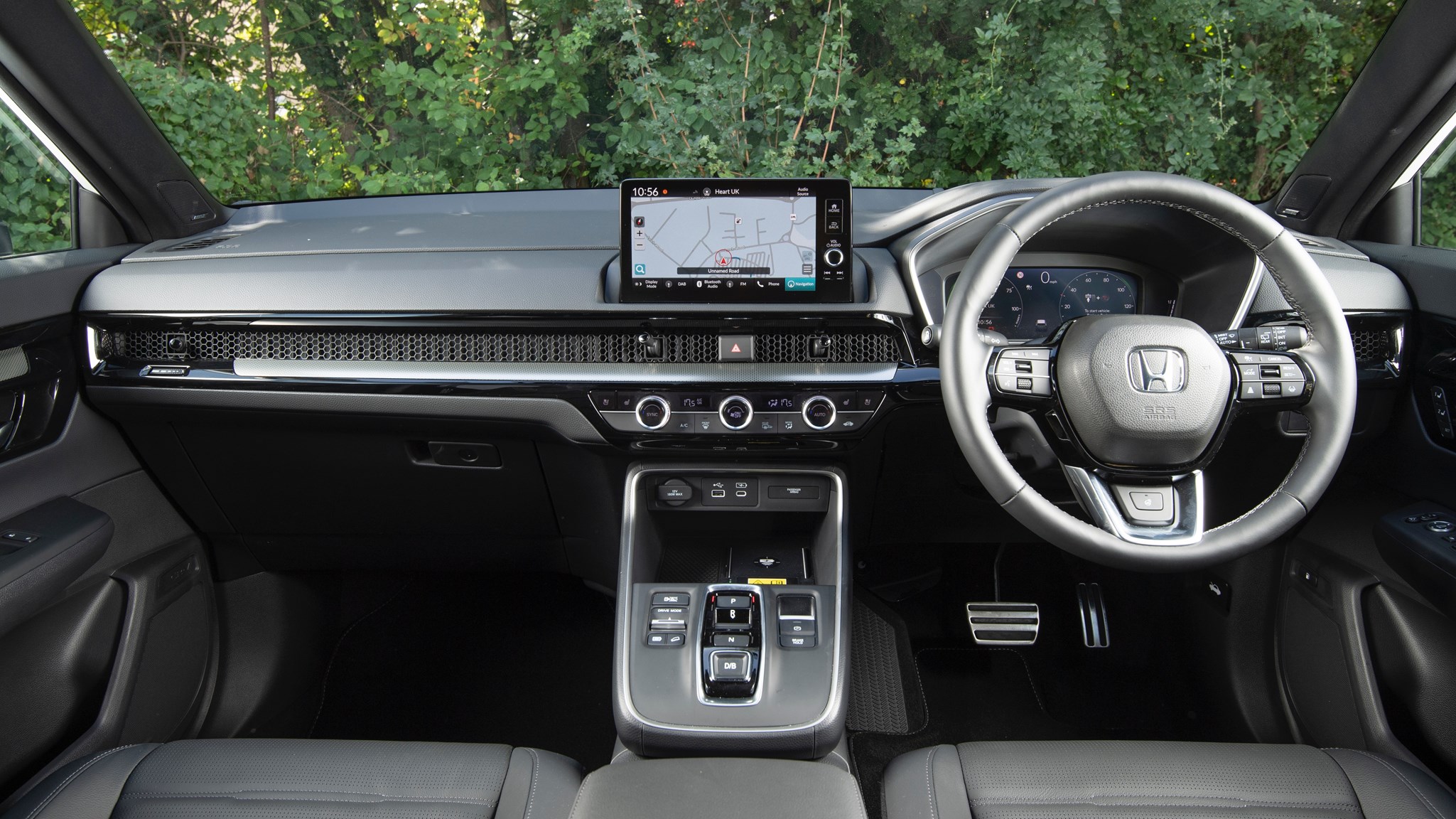
The steering wheel’s loaded with proper buttons, too, and they make total sense. So does the digital instrument cluster. So too does the 9.0-inch infotainment screen. Honda’s the sort of company that labels its switchgear with words and symbols, and life’s so much easier because of it.
It’s spacious, too. Adults can stretch out in a rear seat that reclines (quite far) and slides fore and aft by 190mm. There’s also a huge boot – 586 litres in capacity. And, unusually, plug-in hybrid models get 72 litres more space than the self-charging hybrids, due to the position of the battery under the rear seats.
What it’s not is very colourful, so you’d better like black and silver.
Before you buy (trims and rivals)
The kicker here is the pricing. And not in a good way. Against rivals – many of them with quite a lot more power – the CR-V is rather expensive. Even though it’s seen a price cut since launch, the three variants available are all hovering in around the £50k mark. That’s a chunk more than a RAV4, and though you get plenty of kit for your money, Honda’s three-year warranty is looking a little weak next to up to 10 years of cover from that arch rival.
Those three variants are the entry-level Elegance e:HEV, higher-spec (and most expensive) Advance e:HEV, and the Advance Tech e:PHEV. They all get key features such a powered tailgate, panoramic glass roof, LED lights, wireless phone charging, keyless go, heated steering wheel, and the ‘Honda Sensing 360’ safety package.
The Advance models add a 360-degree camera system to the front and rear parking sensors and reversing camera, plus a head-up display and electric seat adjustment – if only for the driver. The Advance Tech of the PHEV refers exclusively to the additional automatic parking system, which is well out-classed by some rival offerings now.
Verdict: Honda CR-V Hybrid
Bigger and better than ever before, if the CR-V was five grand cheaper and possibly a little quicker we’d find it easy to recommend. As ever, it comes down to the truly excellent – if often shockingly dull – competitors in this crowded class, which offer much of the same ability for less cash.
However, if you’re after a dependable family SUV with loads of space, excellent efficiency and an interior that’s unlikely to ever annoy you, the CR-V still makes a sound choice. We rather like it.