► The 2001-2006 Civic Type R is full of surprises
► Peaky engine rewards revs
► Tip-toe feel missing in modern hot hatches
We like the Honda Civic Type R an awful lot here at CAR. It outshone all but the GR Yaris at our 2025 Hot Hatch of the Year test, and editor Ben Miller agreed to six months in a long-term Civic Type R, too. Alas, it’s going to be axed in the UK and Europe thanks to tightening emissions regulations. Funny, because at 186g/km, the modern 171mph scalpel still emits less carbon than the 2005 example you see before you.
We’ve become accustomed to turbocharged CTRs over the last three generations, but let’s not forget a big reason why the first three – including the JDM EK9 Civic Type R – were so special. Before emissions regulations and increasing weight forced turbochargers onto so many engines, you could count on Honda to make 100bhp per litre naturally aspirated.
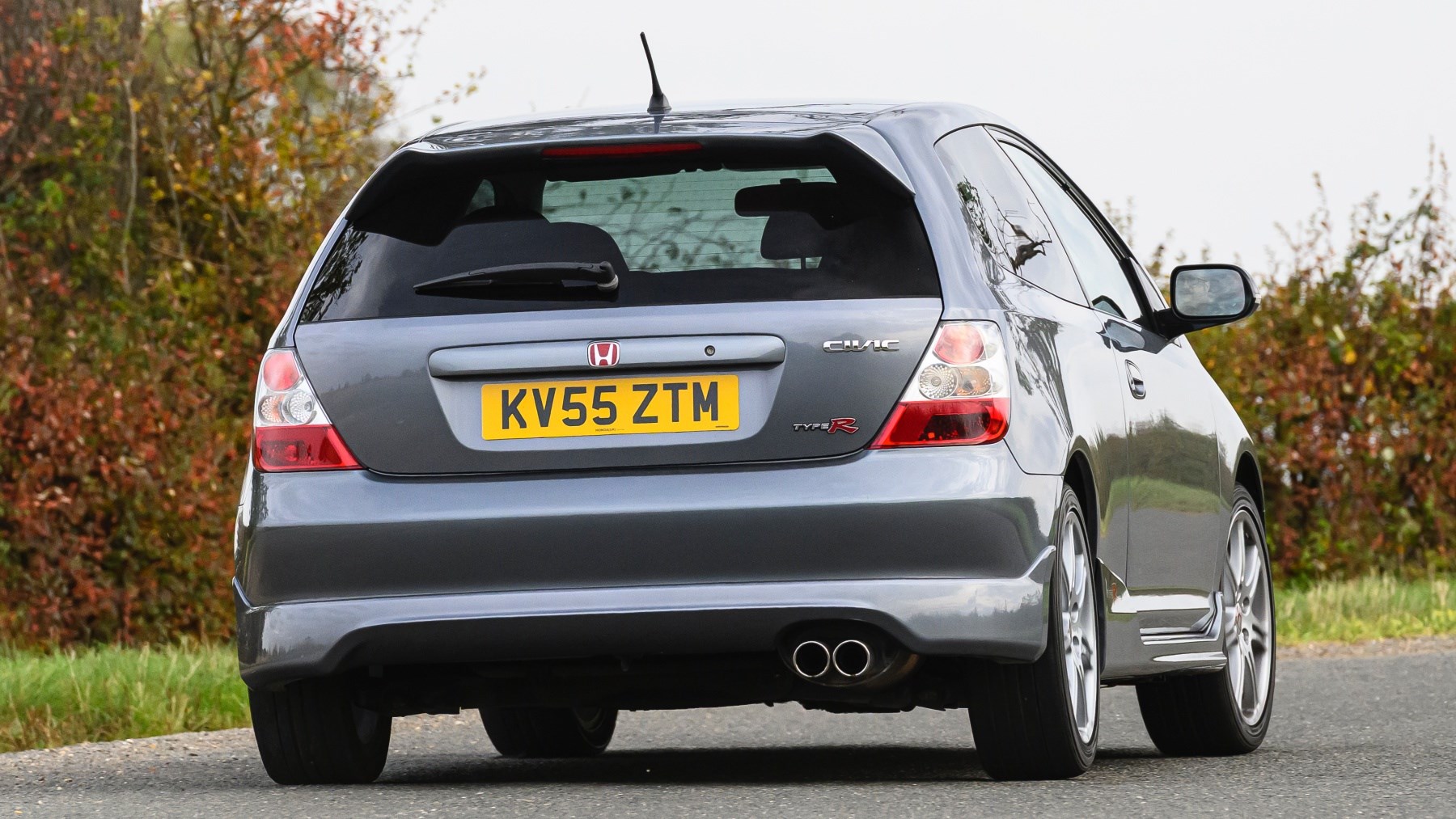
OK, at 197bhp out of 1998cc for this example isn’t quite there in terms of specific output, but we’re splitting hairs here. It makes for a very different driving experience to the modern car for better and worse. Read on to find out why, and to find out why the EP3 was full of surprises. If you’d like to know how we test, please peruse our explainer page.
At a glance
Pros: ultra-responsive engine, mechanical-feeling gearshift, adjustable handling balance, practical
Cons: initial steering response, Poundland interior quality, narrow power band
What is it?
This particular car is a late second-generation or EP3 Civic Type R in runout Premier trim that brings air-con, an ugly Momo steering wheel, Recaro seats and the classic Type R touch of a red carpet. As a post-facelift model, it gets a lighter flywheel than earlier cars for even sharper responses.
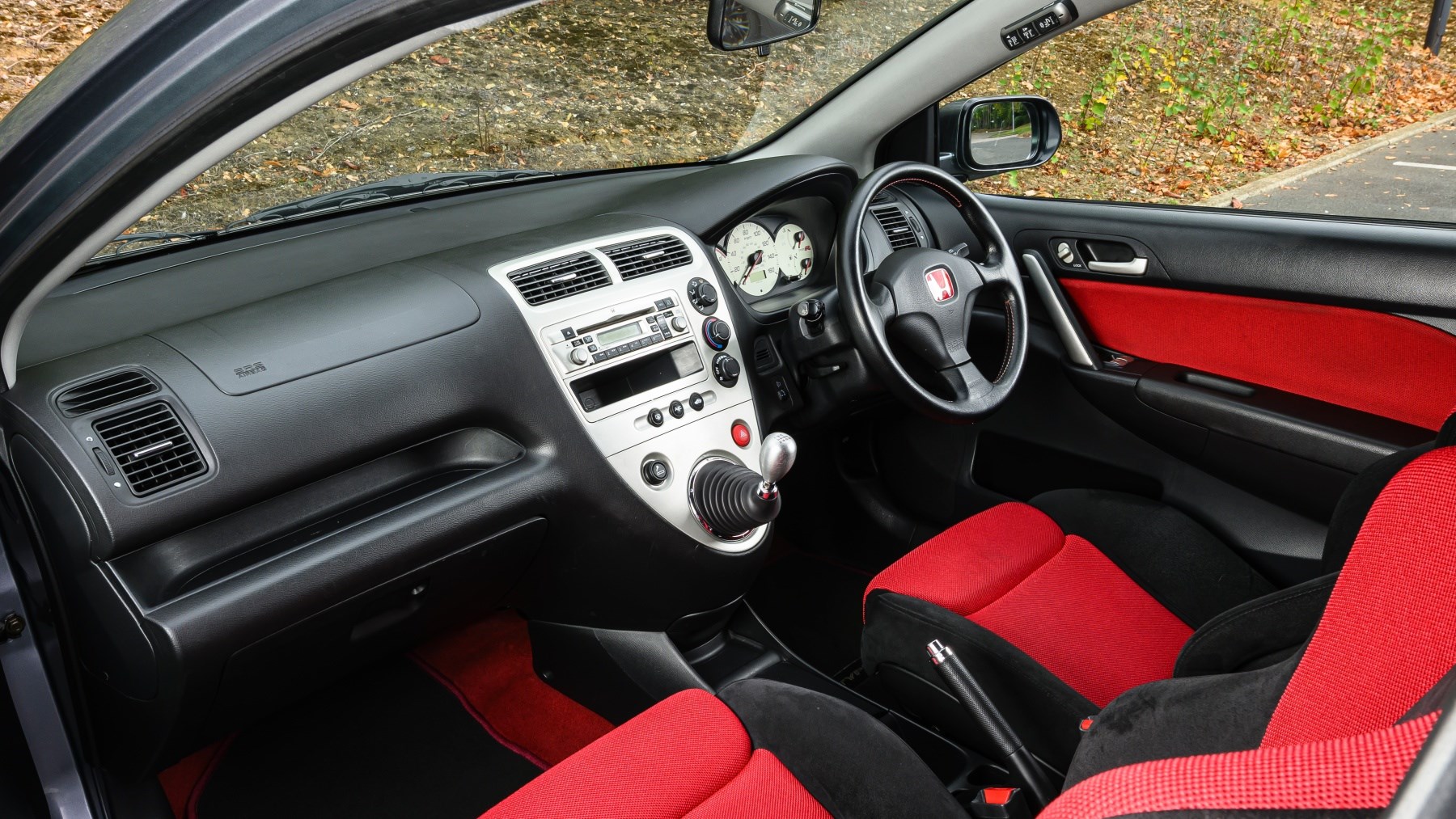
This will no doubt be the Type R most people remember as the first, but it was in fact predated by the Japan-only EK9. This was an even wilder bit of kit built for homologation, with a 1.6-litre naturally-aspirated four called the B16B pushing out 182bhp at 8200rpm with a rev limit that cut in even higher.
EP3s are a little more laid back in comparison and much better suited at being an everyday hot hatch, even more than two decades after its introduction. Rivals were plentiful back in the day, with the Civic butting heads with the Renaultsport Megane, five-pot Ford Focus ST, Volkswagen Golf GTI, Seat Leon Cupra and more. Happy times.
What are the specs?
Up front is Honda’s K20A 2.0-litre naturally aspirated engine with i-VTEC that provides a change of cam profile for the intake and exhaust valves. That’s what enables it to potter around like your nan in her 1.4-litre five-door one moment and then scream to 8k the next. It produces its 197bhp at a heady 7400rpm but is redlined beyond 8000rpm. Torque is a mere 145 Ib ft at 5900rpm which is just before it comes on cam and takes off. Most VW 1.5 TSI petrols have more than that at 1500rpm….
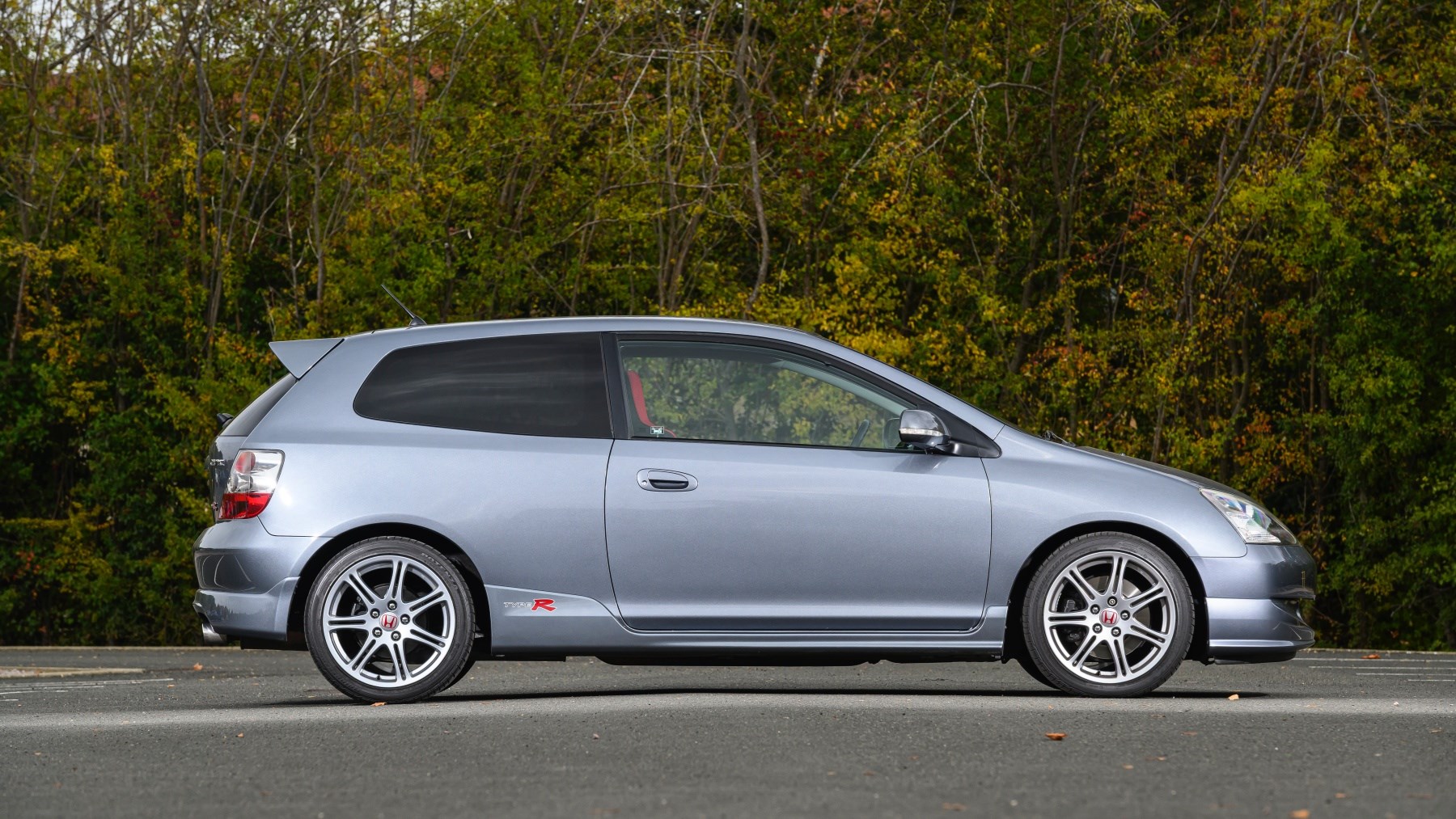
A limited-slip differential wasn’t in the options list in the UK – you’ll need a JDM model or the aftermarket for one of those – yet traction is still sufficient for a 6.6 second 0-62mph time. Flat out it’ll do 146mph. Independent rear suspension features unlike some later Civic Type Rs, and this model is three-door only just like the original EK9 and later FN2.
Weight is very much on the EP3’s side and certainly contributes to the turn of pace. Honda quotes a figure of just 1210kg which is only about 100kg more than the ‘lightweight’ and almost entirely aluminium Alpine A110. Tyre size is a modest 205/45 R17 and yet the front discs still look lost in the alloy wheels.
What’s it like to drive?
Outrageously good fun when you’re on it, but not without its faults. I remember having fun during a 30 minute drive of this very car about seven years ago, but my mind has apparently filtered out certain less pleasant aspects of the driving experience. I’m just trundling along waiting for the engine to warm up and not enjoying the treacly weight of the steering just off centre and how little feel there is.
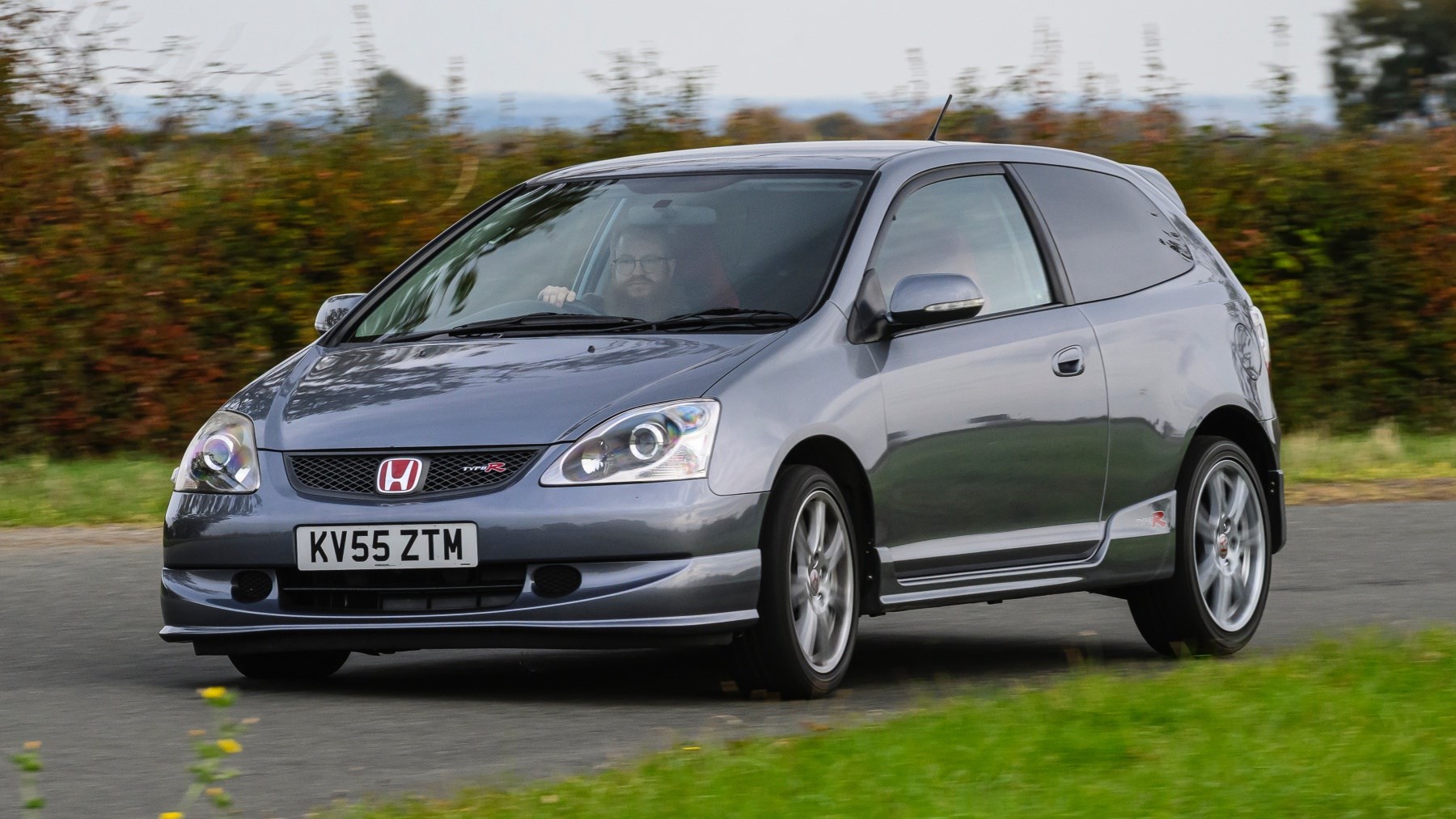
At least it feels a bit more urgent from low revs than the spec sheet would suggest. You’d undoubtedly get trounced by someone in a mouth and no trousers A3, yet you still get the sense there’s a big engine in a relatively small, light car, if a not particularly rambunctious one. Power builds in a linear fashion until you hit 6000rpm, at which point the cam profile switches and the engine goes into a frenzy.
A previously muted induction system finally finds its voice as the engine makes a desperate rush to cover the last 2000rpm. I’m pressed into the figure-hugging Recaro seats with a noticeable amount more force. If you really want to make progress in a Type R, then you’ll be stirring the alloy shift knob to keep the engine on cam.
That really is no bad thing if you’re a fan of a good manual shift. For a start, it’s just so close to your left hand on the steering wheel, and the well-scratched shifter is just the right size and shape for easy palming through the gears. Satisfaction is guaranteed in every shift by the precise, mechanical action and perfectly placed pedals that gladly invite heel and toe work.
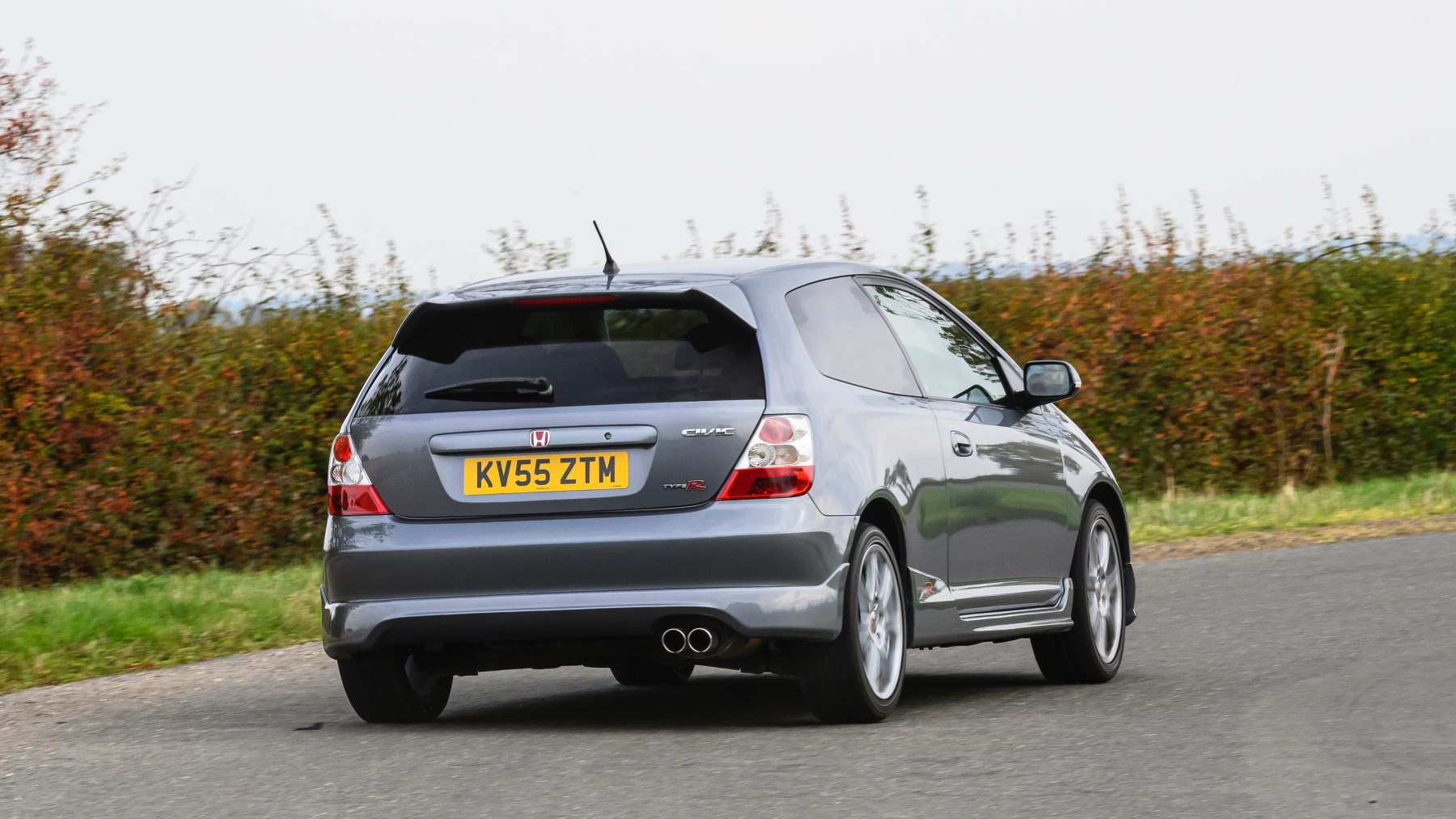
Then there’s the chassis balance. I always view a good hot hatch as a cheeky terrier of a car, and that includes a willingness to wag its tail. Go into a corner with verve off throttle, and the nose is pivoted towards the inside of the bend predictably and effectively, making the Type R feel like it’s as desperate to change direction as a dog chasing a bouncing ball.
It isn’t quite as tenacious on corner exit thanks to the open diff, but I’m willing to overlook that and the mute steering because of the sheer amount of fun I’m having. Having a quick go shortly before in what is arguably ‘peak Golf’, a Mk7 GTI Performance Pack, hammered home just how exciting the Type R is in almost every way.
And yet the next day I had my wife alongside me and four-year old son in the back and the Type R went back to being a quiet, easy to drive family hatchback with an ability to filter out surface imperfections than many modern cars. Don’t confuse that with suppleness, though. The suspension may smooth what the road is surfaced with, but you’ll still feel all the bumps the asphalt covers albeit with enough squish to never feel jarring. Wind and road noise are joined by an engine singing at nearly 4000rpm at motorway speeds, though.
What’s it like inside?
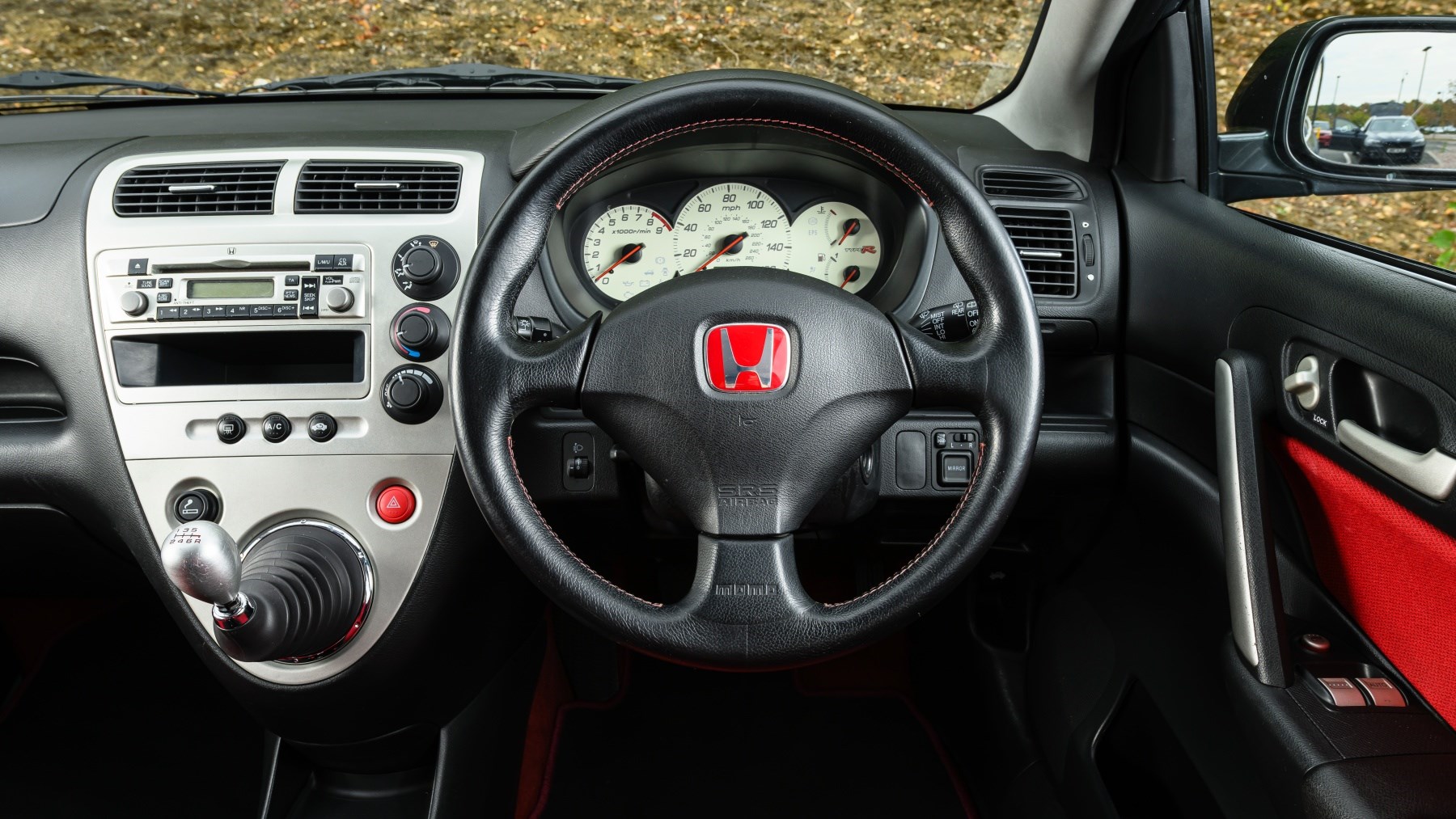
Better, and much, much worse than I remember. The monobox shape conceals an MPV-like driving position that’s tall and upright, exacerbated by no height adjustment save for inclined seat rails that bring you higher as you get closer to the rake-only adjustable steering wheel. As I’m rather short, that left me perched higher than I would have liked.
Despite this, pedal and steering wheel placement is good, so I soon turn my attention to interior quality far below what I expected. Honda wasn’t afraid to use a bit of soft touch plastic in the 90s, but belts had been tightened by 2001, and the only squishy stuff I can find is on the door-mounted armrests. I’ve no complaints regarding the driver’s seat’s comfort or support.
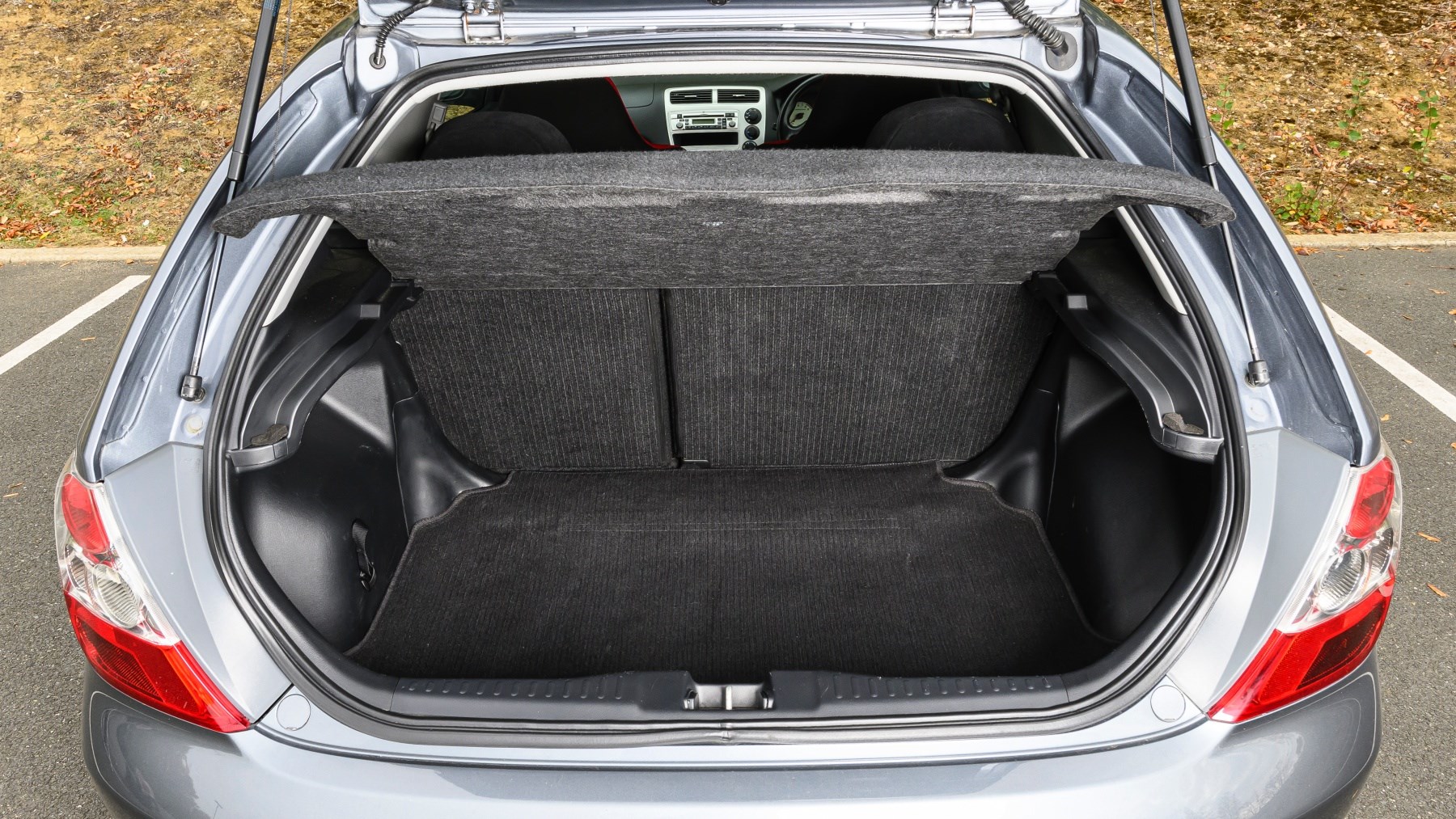
I assumed the three-door Civic would be something of a chore when it came to putting my son in his Isofix seat – a nice bonus of having a modern classic – but I was pleasantly surprised. The floor is totally flat and roof high so I could easily get in the back to strap child into seat, while the Recaros tilt forwards and out of the way to allow good access via the big doors. A 315 litre boot is some way behind the 410 litres offered by the 2025 Type R.
Verdict
The gulf between modern and modern classic Type R is even greater on road than spec sheet. Where 2025’s take feels planted and grippy, 2005’s has a much more playful approach to cornering that you’ll love or hate. I am firmly in the former camp, especially with that jewel of a powertrain sat in front of you.
Sure, I wish it steered better and had a more pleasant interior, but this EP3 has proved to be the most joyous things I’ve driven all year, sports and supercars included. One of the greats? I’d be tempted to say yes if it wasn’t for a chance encounter with a DC2 Integra Type R a few weeks previous. That really does deserve its billing as the best front-wheel drive car ever.