► Dacia’s first-ever hybrid vehicle is here
► Surprise, surprise – it’s a good ‘un
► Real-world fuel economy of 50mpg
The Dacia Jogger Hybrid is an incredibly important car for the brand. It’s leading the charge on the company’s electrification strategy in the UK – and it’s the first hybrid car Dacia has ever made.
Dacia isn’t making things easy for itself, either, because it’s pitching the Jogger Hybrid against some veteran competitors. This cheap and cheerful MPV needs to drag buyers away from stalwart hybrid manufacturers such as Kia and Toyota. The latter brand has been building electrified vehicles since the 1990s and has made a fortune flogging the hybrid-powered Prius to every minicabber in Britain.
Despite this, Dacia is confident that its aggressive pricing strategy will compensate for its lack of experience. The Jogger Hybrid starts from £23,305, which is stunning value for a seven-seat family car. For context, prices for a seven-seat Kia Sorento hybrid start from around £44,000. So, is it worth spending your cash with the experts or should you take a chance on the newcomer? We subject the Jogger Hybrid to our in-depth test.
Should you buy a Dacia Jogger Hybrid? Far, far cheaper than seven-seater SUV alternatives, and much more conventional looking than seven-seat vans, the Jogger doesn’t really have any direct rivals. As such, you might have expected it to be ‘just fine’. But it’s better than that, so much so that even if you have extra cash, you might still be tempted.
At a glance
Pros: Exceptional value for a seven-seat family car. Efficient hybrid powertrain is punchier than you’d expect.
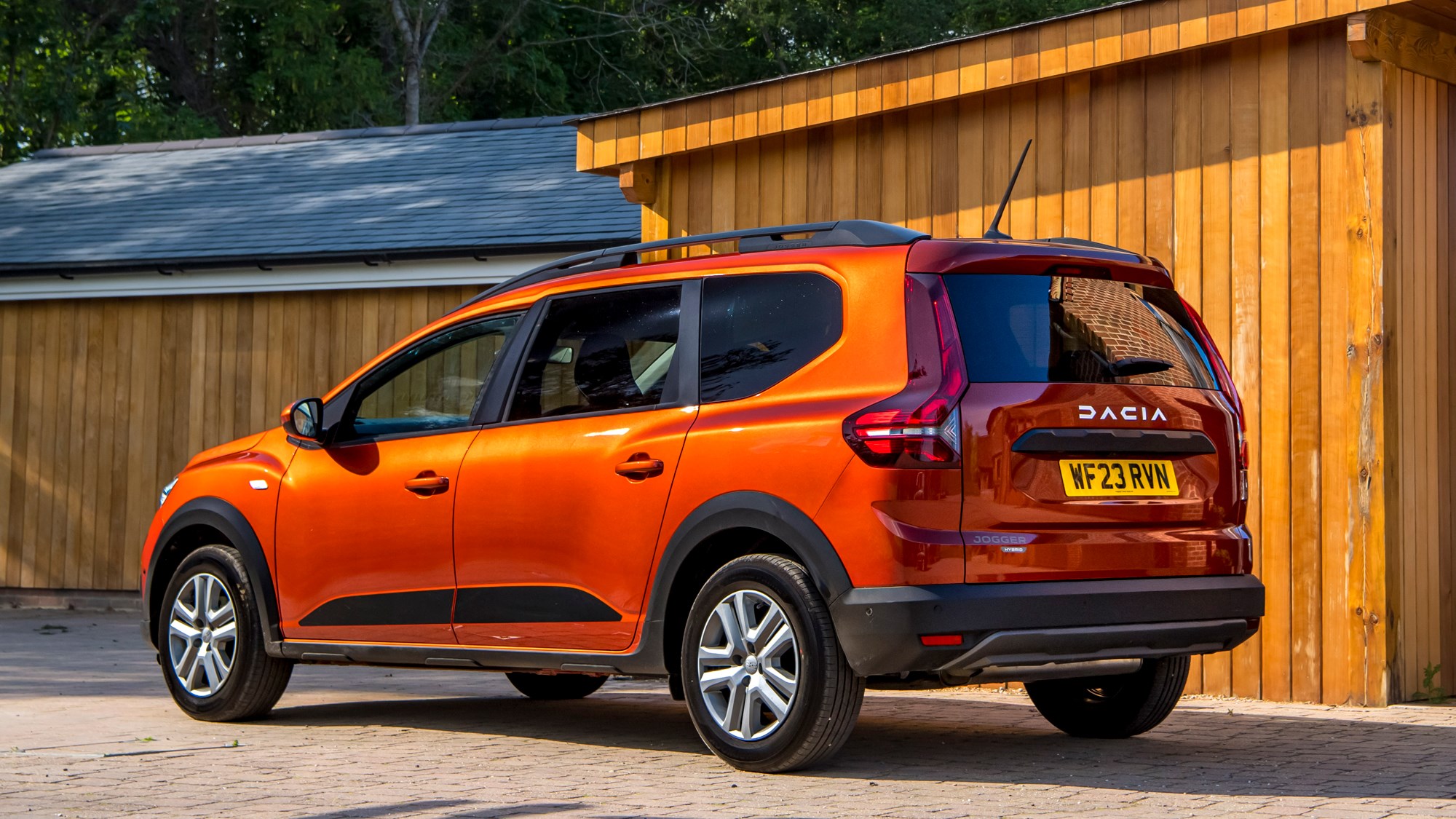
Cons: The shape is a bit meh. Function over form for sure. The handling leaves a lot to be desired.
What’s new?
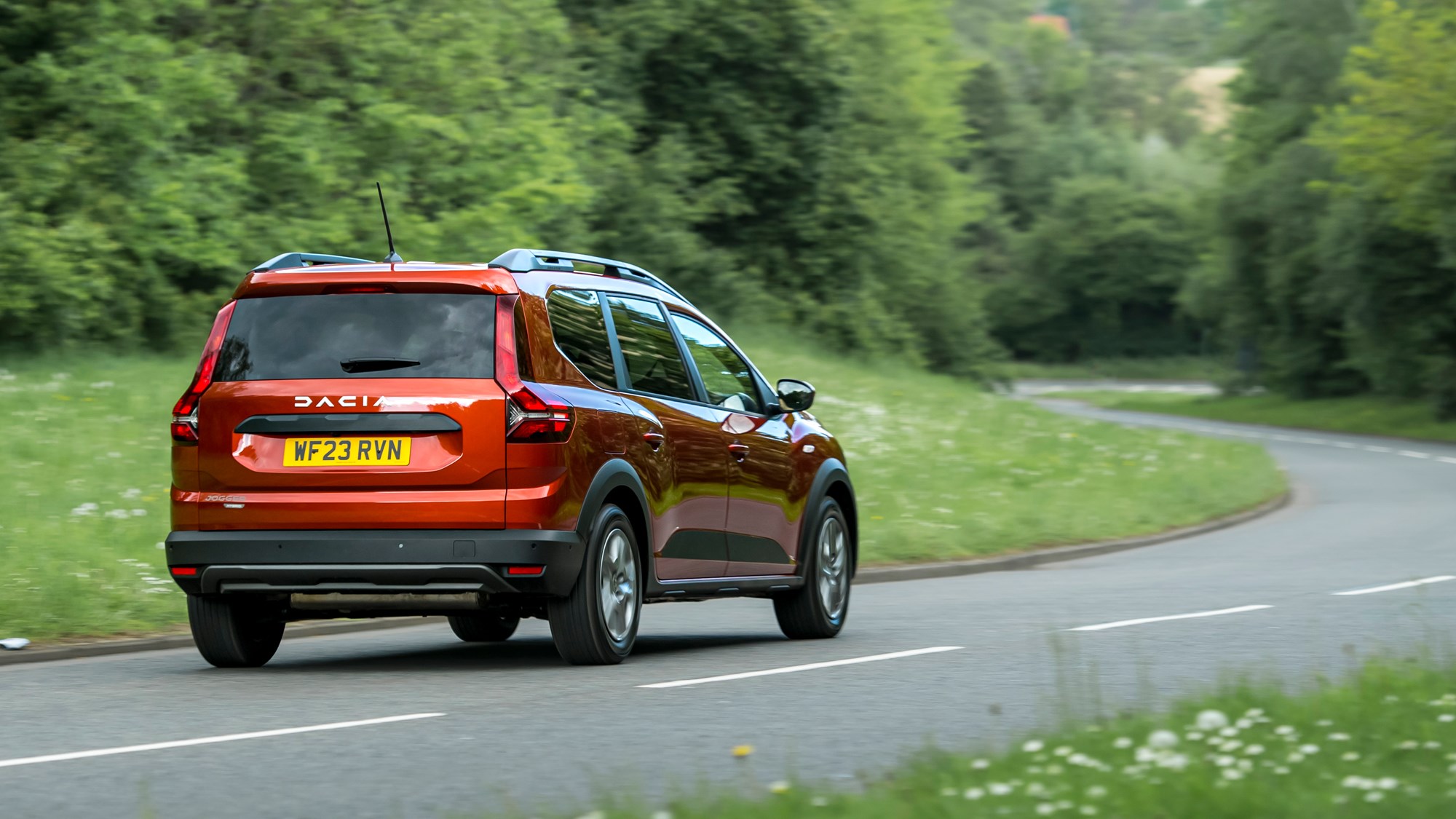
The Dacia Jogger raised a few eyebrows when it launched in 2021, because it was a spacious seven-seater car with a then sub-£15k starting price. Stretching Renault’s CMF-B architecture (found under the Renault Clio and Renault Captur) make the car 4.5 metres long, it was almost the same length as a Toyota RAV4. While the price has increased a little bit, the Jogger remains ginormous when compared to other models in the price range.
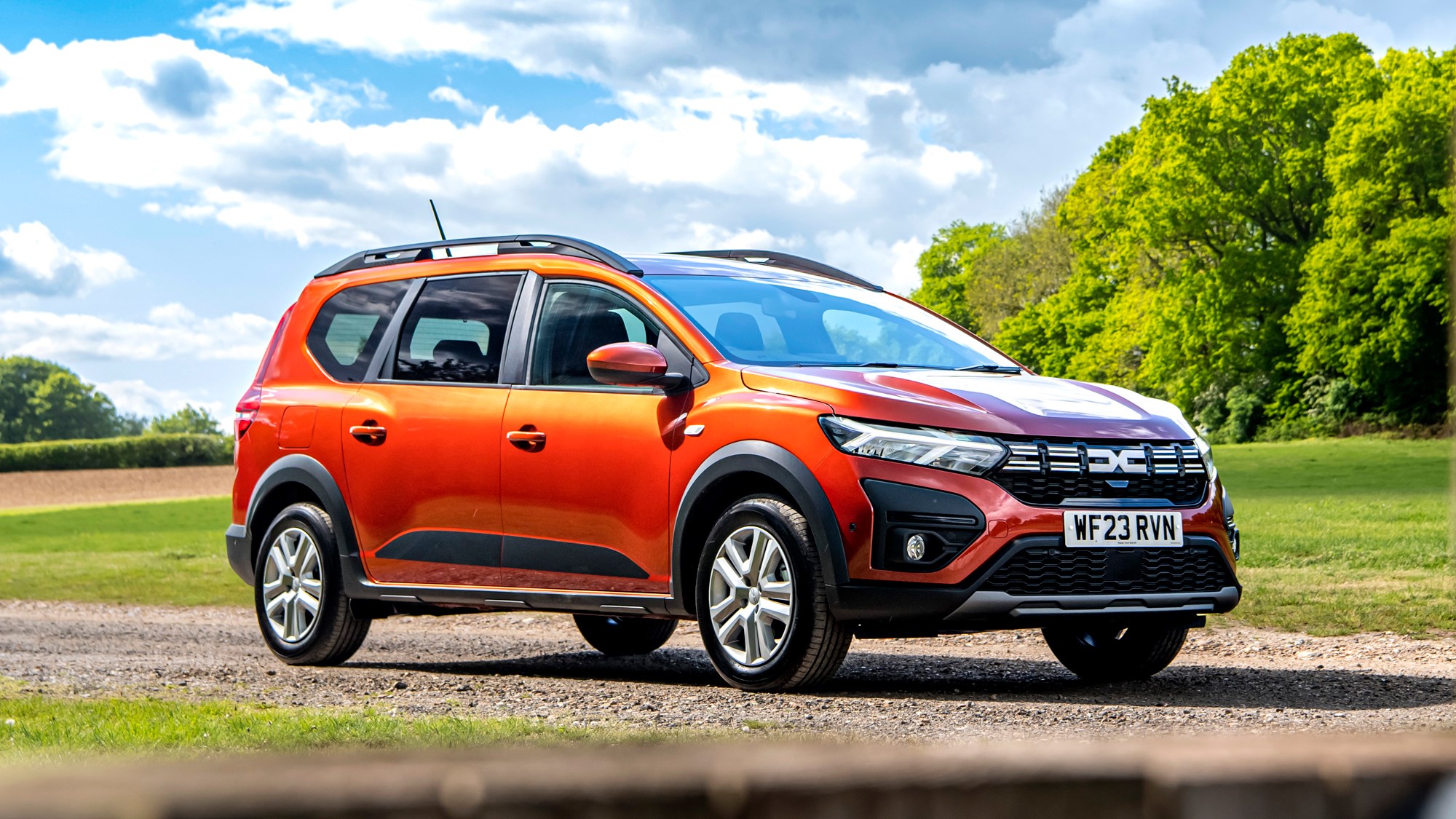
Dacia has kept the Jogger’s line-up refreshingly simple. There are only three trim levels and two powertrains, with a 108bhp 1.0-litre three-cylinder petrol unit sitting below the hybrid system. Most of the equipment is also bundled into the trim levels rather than separated into individual options and Dacia only offers a handful of accessories.
The accessories are well-aimed, though. They include bike racks, roof boxes, a fold-out bed for the boot and a tent attachment for the rear. That means you can build the Jogger into a fully-fledged family adventure vehicle for much less cash than a roof-tented pick-up truck. Buyers on the continent can also have a bi-fuel LPG model. Sadly, that option isn’t available in the UK – but that seems like an oversight considering bi-fuel Sanderos and Dusters account for 15% of the company’s UK sales. Maybe if we all shout loud enough, Dacia will change its mind.
What are the specs?
It’s quite odd. The Jogger uses the same self-charging hybrid powertrain found in the Renault Clio, Captur and Arkana – and it’s unlike any of the systems we’ve seen from Toyota, Kia or Ford. It’s based on a 1.6-litre four-cylinder petrol engine, and it features two electric motors.
There’s a starter-generator connected to the crankshaft (which helps the engine to turn over and tops up the battery) and a larger 49hp electric motor nestling in the gearbox. The latter motor can propel the car all by itself at speeds of up to 43mph. Dacia also says the Jogger Hybrid can potter around town on electric power alone for 80% of time, which we think is a slightly generous estimation. Still, it always starts in EV mode and prioritises emissions-free running at low speeds.
The battery pack is a 1.2kWh unit which occupies the space reserved for the spare wheel in the standard Jogger. Losing the spare is disappointing in what’s supposed to be a rugged family adventure vehicle, but it isn’t a deal-breaker. And apart from that, you make no practicality sacrifices by opting for the hybrid. The boot’s the same size as the standard car and you can still have it with seven seats.
As for efficiency, Dacia says the hybrid can return 56.5mpg in official WLTP testing. Normally, this is the part where we’d say that’s a fantastical estimate and the car won’t approach anything like those figures in the real world, but Dacia has defied tradition. Our Jogger test car averaged almost 50mpg during our 50-mile route – and we weren’t trying to drive economically. We reckon you might even be able to beat the official figure if you treat the throttle like a land mine (and tread lightly).
How does it drive?
We weren’t exactly galvanised by the unit when we tried it in the Renault Arkana, but it feels much more at home in the Jogger. The Dacia is more softly sprung and far cheaper, which helps to compensate for the idiosyncrasies of the powertrain.
The system has a combined output of 138bhp, which is enough to whisk the Jogger along very well indeed. It isn’t a performance car by any stretch of the imagination, but it accelerates with a lot more vigour than the standard 1.0-litre petrol-powered model. And, because you can only have it with an automatic gearbox, it’s more relaxing over longer distances.
The powertrain lacks some finesse, though. The changeover from electric to petrol power is rather crude and it’s tricky to judge when the powertrain will switch from regenerative to friction braking, making it hard to guess how much pedal pressure to apply. The gearbox’s decision-making skills aren’t always accurate, either. When accelerating up to 70mph, for example, the engine screams like it’s yoked to an old-school CVT.
Don’t be fooled, though. There’s a proper gearbox behind the engine – but it’s also quite unusual. It’s a six-speed unit loosely based on the technology found in Renault’s Formula One racers. It has neither a torque converter (as you’ll find in a conventional automatic gearbox) nor a clutch (like you get in Volkswagen’s DSG units) – and it doesn’t even have synchromesh. The starter-generator performs the job of a synchromesh, spinning the engine up to the correct speed to match the road. Then the gear simply falls into place.
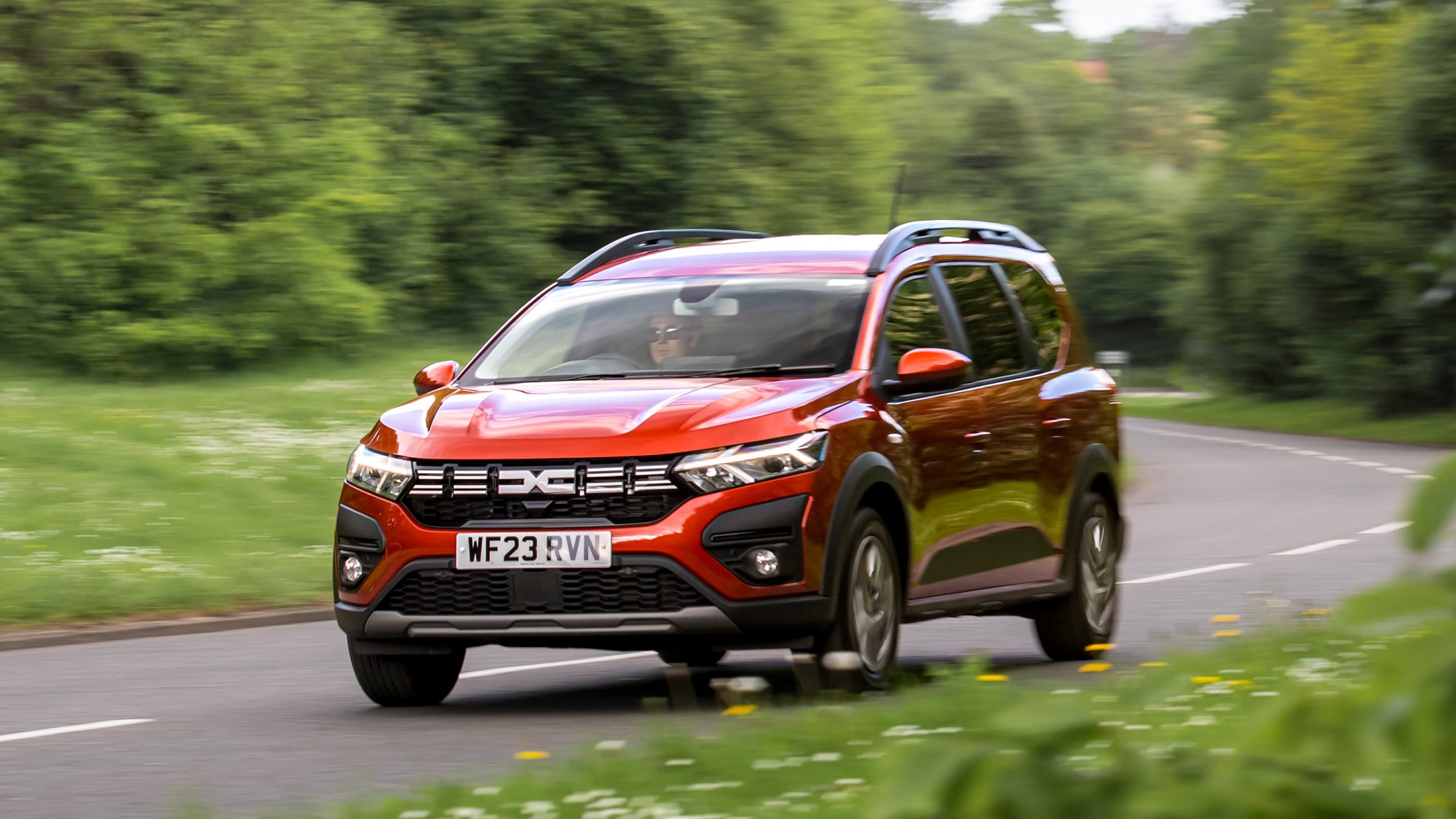
Dacia says its weird six-speed gearbox allows it to compete with hybrid kings Toyota and Kia on price. Stripping off technology like a clutch and synchromesh saves money on the production of each transmission – and it can then pass those savings onto the buyer.
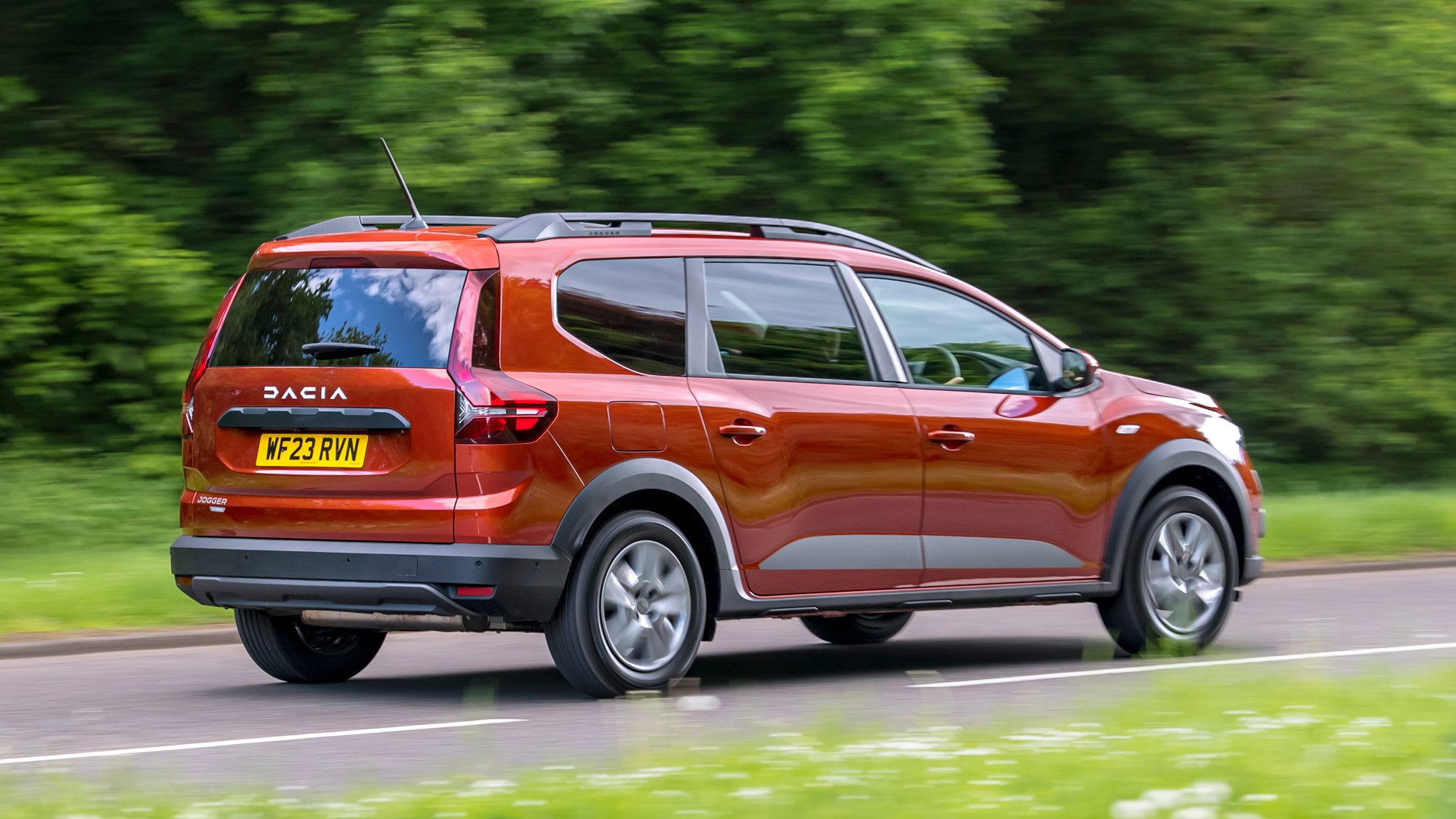
It drives well, too. We were impressed by how nimble the Jogger Hybrid is through the corners. It’s a long car, but it somehow retains the essence of the Clio supermini’s handling. It turns in well, grips keenly and it isn’t unsettled by mid corner bumps. Yes, the suspension is a little wallowy, but it’s perfectly acceptable once you learn to work with the Jogger’s rhythm.
That soft suspension and extended wheelbase also takes the edge off almost any bump. Those 16-inch wheels and thick tyres help, too. The rubber flexes when you drop into a pothole (just like a car from the 1990s) which smooths out the UK’s tatty road network. We don’t think we’d have been any more comfortable on our test route in a premium SUV such as a BMW X3 – and that costs almost four times as much as the Jogger.
The Jogger’s steering system is well-weighted and, as it’s such a cheap and cheerful car, it does without lane-keeping assist. That’s great if you plan to use the Jogger for a spot of rural adventuring because you won’t be constantly fighting the technology on narrow back-roads.
There’s nothing ground-breaking about the way the petrol Jogger drives. Its turbocharged 1.0-litre engine produces 108bhp and 148lb/ft of torque which, on the surface, sounds rather asthmatic. But what you need to remember is the car weighs just 1,200kg, so – unloaded at least – it’s more than adequate if not especially sprightly. It can sprint from 0–62mph in 11.2 seconds, which is on a par with other bargain load-luggers.
We can’t yet comment on what it’s like seven-up, but we imagine you’ll need to stir the slightly notchy six-speed gearbox regularly to keep moving. It’s a shame there’s no diesel – that sort of low-down torque would suit this car very well. We’ve driven the bi-fuel variant too, which won’t come to the UK at least initially. Despite a 10bhp power deficit it’s virtually indistinguishable from the pure petrol car, except LPG’s half the price and you can’t spec a spare wheel.
With 200mm of ground clearance the Jogger’s cleared for soft-roading. Dacia has also introduced its Extended Grip system on the range-topping Extreme models. The company says it can adjust the car’s electronic stability control settings to maximise traction on loose surfaces, helping the Jogger perform better off road. We’re yet to try it out, but we’ll let you know once we have.
What’s the interior like?
It’s pure Sandero Stepway up in the front, but that’s not really a bad thing these days. Sure, you won’t find any soft-touch plastics or leather trim, but even the base-spec Essential model has air-conditioning, cruise control and rear parking sensors (the latter because Dacia’s marketeers reckon we need some help parking something so long. They’re probably right).
Those base-spec cars make do with a smartphone mount instead of a centre touchscreen but step up to Expression trim and you’ll get a basic if quite user-friendly infotainment system. And with Apple CarPlay and Android Auto available, why bother using the factory software at all? The mid-spec model also features climate control, electric rear windows, keyless entry and an electric parking brake that simply feels weird on a Dacia.
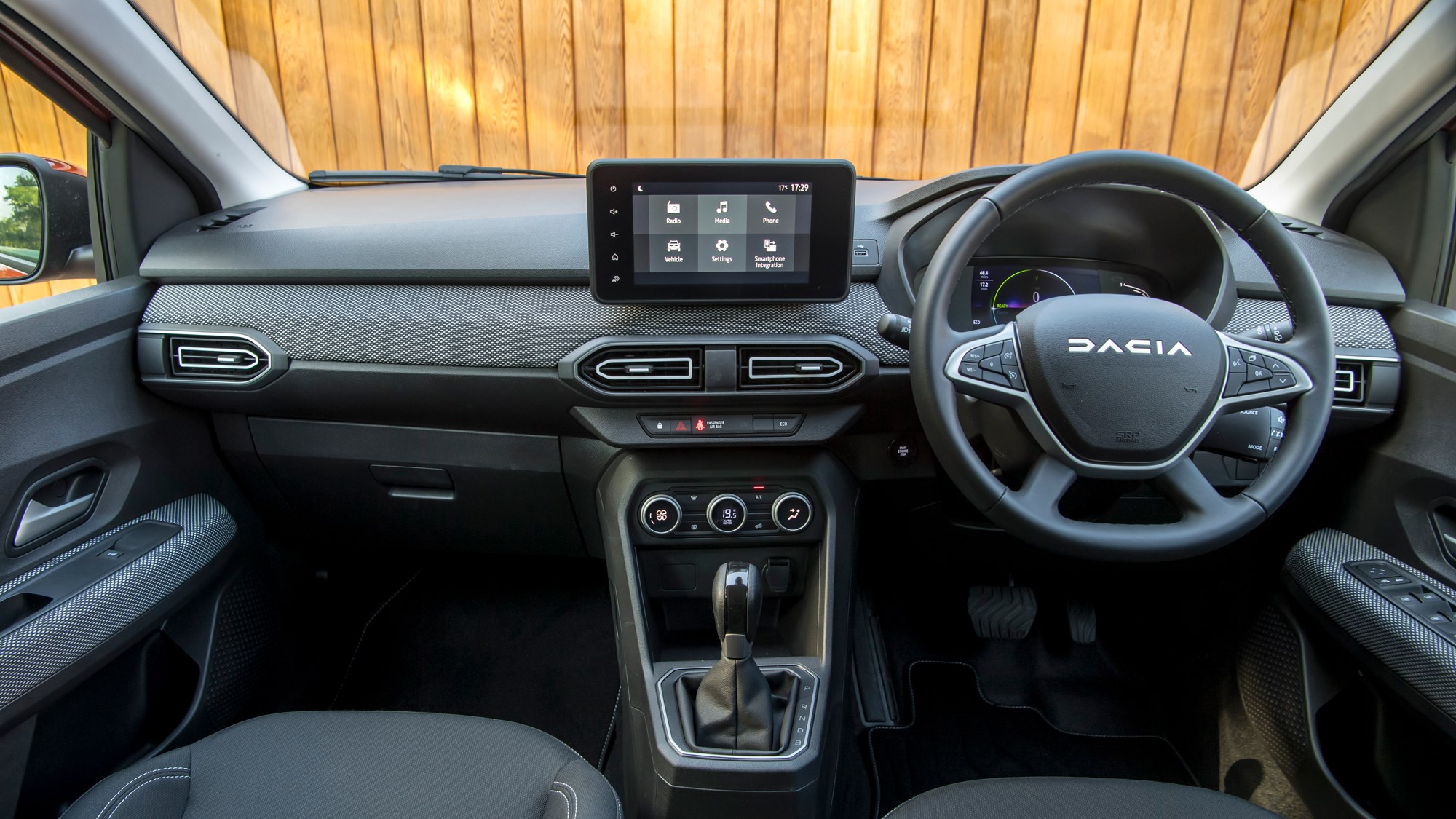
Top-spec Extreme cars get navigation added plus heated front seats and a host of styling tweaks designed to make it look more rugged. None of the Jogger variants are particularly luxurious – but then neither are its rivals, which tend to be based on vans. And we’d rather sit behind the wheel of a Jogger than we would a Berlingo.
Hybrid Joggers also get a simple 7.0-inch digital gauge cluster. It displays information like your fuel economy, battery capacity and level of regenerative braking. There’s also a handy cartoonish graphic in the top-left corner which illustrates the energy flow between the motor, engine and battery.
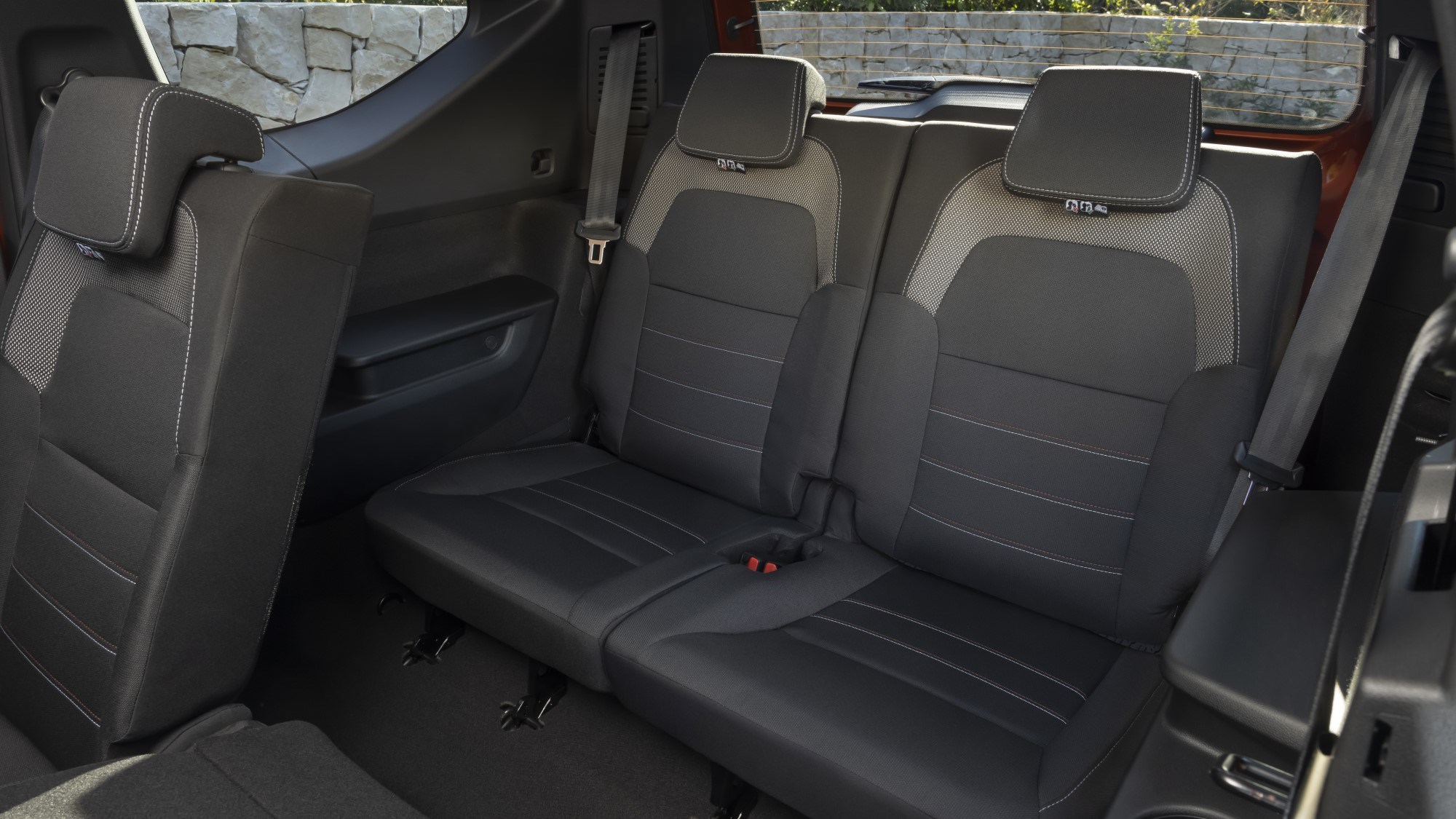
There’s more room in the third row of the Jogger than any seven-seat SUV this side of a Discovery. So it’s brilliantly practical. It even gives purpose-built MPVs like the Citroen C4 Spacetourer a run for their money.
We’ve tested the Jogger with two six-foot testers – and both could fit on the third row with a surprisingly generous amount of legroom and shoulder room. Granted, neither would remain comfortable on a pan-European road trip, but it’s perfectly reasonable for local journeys.
Access to the rearmost seats is good, too. The second seating row tumbles forward easily while the large rear doors make it easy to clamber through to the back. The second row is as practical as you’d expect, too, with lots of knee and headroom and handy tray tables on the front seat backrests.
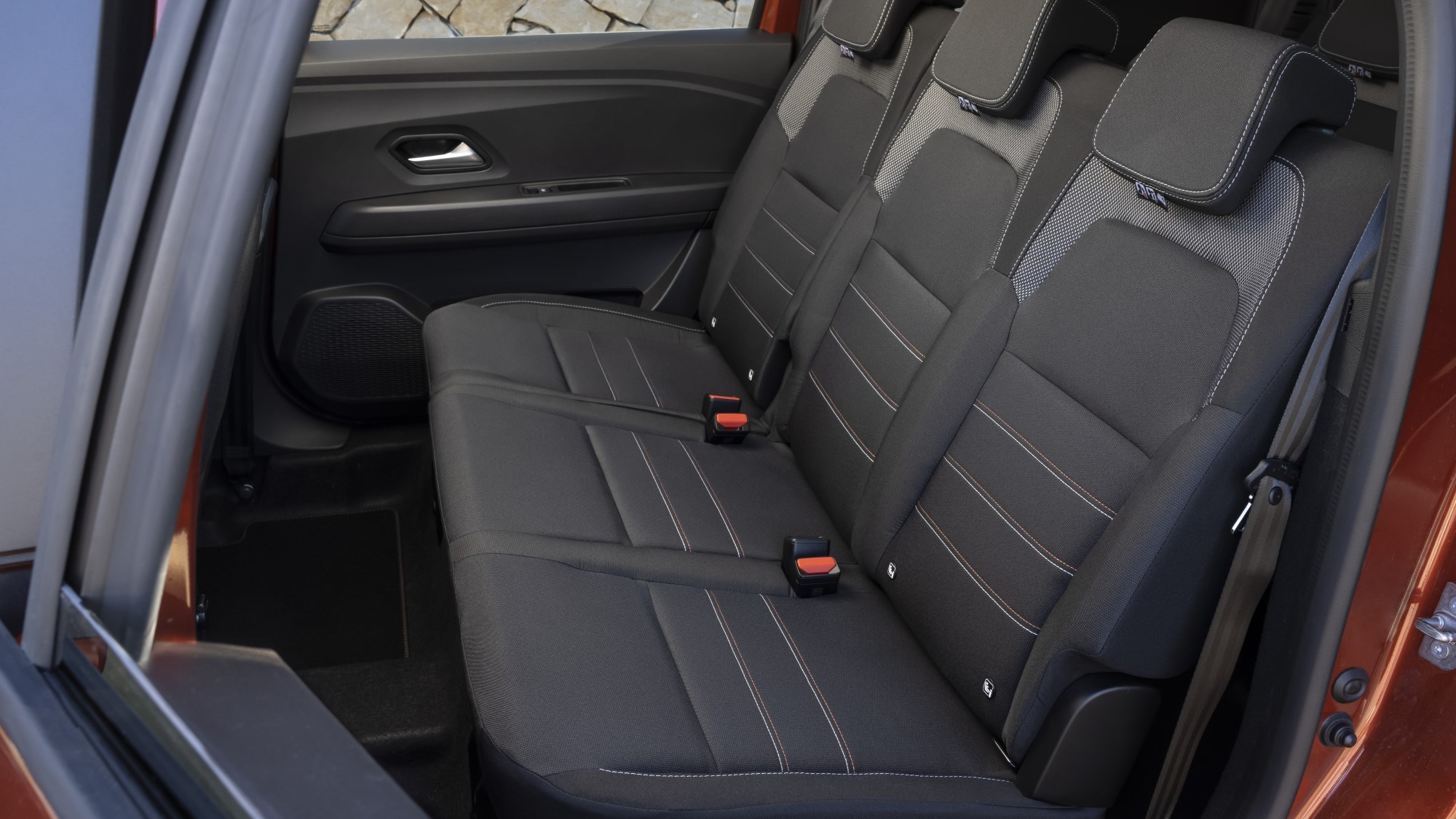
The Jogger is a budget product, though – and you can’t have it all at this money. By saving your cash, you sacrifice some convenience in the seating arrangement. Ever since the Chrysler Grand Voyager broke cover in 2008, we’ve demanded a third seating row that folds flat into the floor of the boot. However, to maximise the amount of luggage space in the Jogger, you’ll need to remove the seats. It isn’t a particularly arduous task – the seats are fixed in place with a couple of catches and they only weigh ten kilos – but they’re a pain in the arse to store once you’ve removed them.
The second row can’t be removed, although you can tumble them forwards. Do that and remove the rear seats and you’ll unlock an enormous storage area that’s two metres long and more than a metre wide, offering more than 1,800 litres of capacity.
We love the modular roof rails available from the mid-spec car, too. These convert into a full roof rack in just a minute or two, and are ideal for all manner of bike racks, roof boxes or even a roof tent. There’s also an optional towbar that allows the Jogger to haul up to 1,200kg. Because, you know. Lifestyle hobbies and that.
Before you buy
Even with some price increases since its 2021 launch, the Jogger feels like a right old bargain. And with the enormous efficiency offered by the Hybrid model, running costs will leave your wallet happy too. £23k for a family car as practical and comfortable as this is mighty impressive.
That said, the Jogger is still more of a purchase of the head over heart. Alternative seven-seat family cars are much nicer to behold – the Peugeot 5008 feels premium, while even the Skoda Kodiaq is a noticeable step up from the Jogger. But both the 5008 and Kodiaq hybrid models cost from over £39k each, so they’re unlikely to share space on your shortlist with a Jogger. The Dacia lives in its own space.
Verdict
The Dacia Jogger is such an honest car that it’s almost impossible to dislike. Dacia has excelled at building a car that serves a broad range of purposes. It’s spacious, comfortable, fantastically practical and stunning value for money.
We reckon the Jogger will be a popular choice for big families, taxi drivers and buyers of a more lifestyle-oriented persuasion. Expect to see plenty of these down the coastline or at bike parks loaded up with muddy gear.
Some real off-road capability (like a proper four-wheel drive system) would have been the icing on the cake, making the Jogger a real budget Subaru Outback rival. But, as it is now, the Jogger’s easy to recommend over a van-based MPV or many of the smaller seven-seat SUVs.