► We drive Dacia’s latest bargain SUV
► Loads of storage space, stacks of rear legroom
► Hybrid model promises great efficiency
Cheap cars aren’t always naff. You need to accept that you’re going to pay a penalty in comfort, refinement and build quality by opting for a more affordable brand but, once a budget manufacturer has stripped away excess comforts, you’re normally left with a practical, sensible runabout. Case in point – the new Dacia Bigster.
The Bigster is Dacia’s first foray into the family SUV market. That means the brand is now competing with the Nissan Qashqai, Kia Sportage and Hyundai Tucson, all of which have spent the last few years jostling for the lead in the UK’s new car sales charts. For that reason, moving into this space certainly isn’t going to be easy for Dacia.
But Dacia has money on its side. Prices for the Bigster start from a shade over £25,000, making it £5,000 less expensive than the base-model Qashqai and a whopping £8,000 cheaper than the most basic Tucson. But is that enough of a difference to compensate for the Bigster’s shortcomings? Scroll down to find out.
Should you buy a Dacia Bigster? That depends on how willing you are to live with its flaws. It’s an immensely practical and spacious car but build quality is lacking and its controls need a little more calibration. You won’t find better value in this class, though.
At a glance
Pros: Loads of boot space, attractively priced, efficient self-charging hybrid system
Cons: Refinement is lacking, wooly steering system, interior feels like it came from a van
What’s new?
Less than you’d expect. Dacia hasn’t tried to disguise the fact that the Bigster is essentially a stretched version of the Duster. It’s based on the same CMF-B underpinnings, it has very similar styling and it’s packed with the same interior technology. These similarities keep development costs low and allow the firm to undercut its rivals.
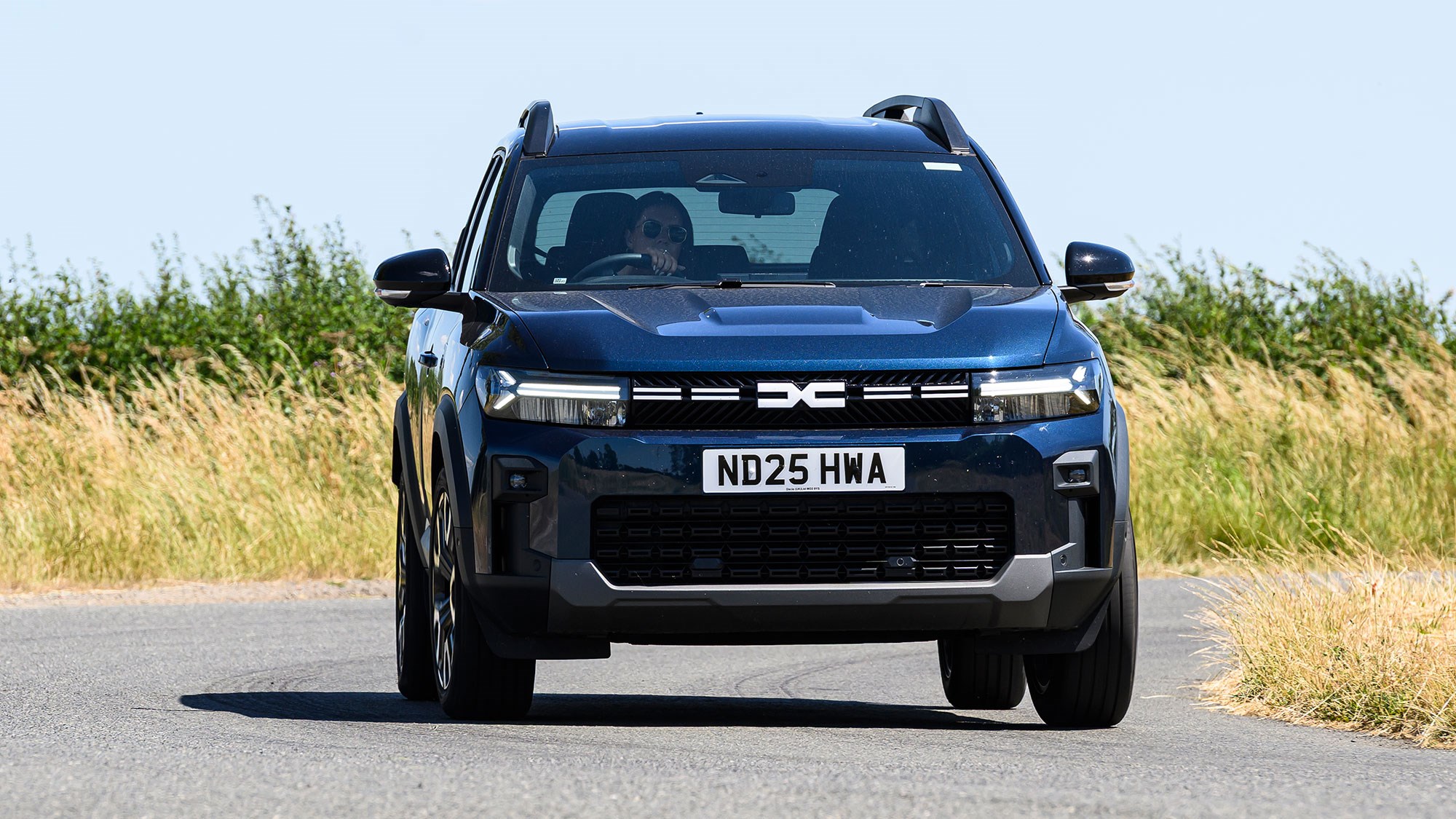
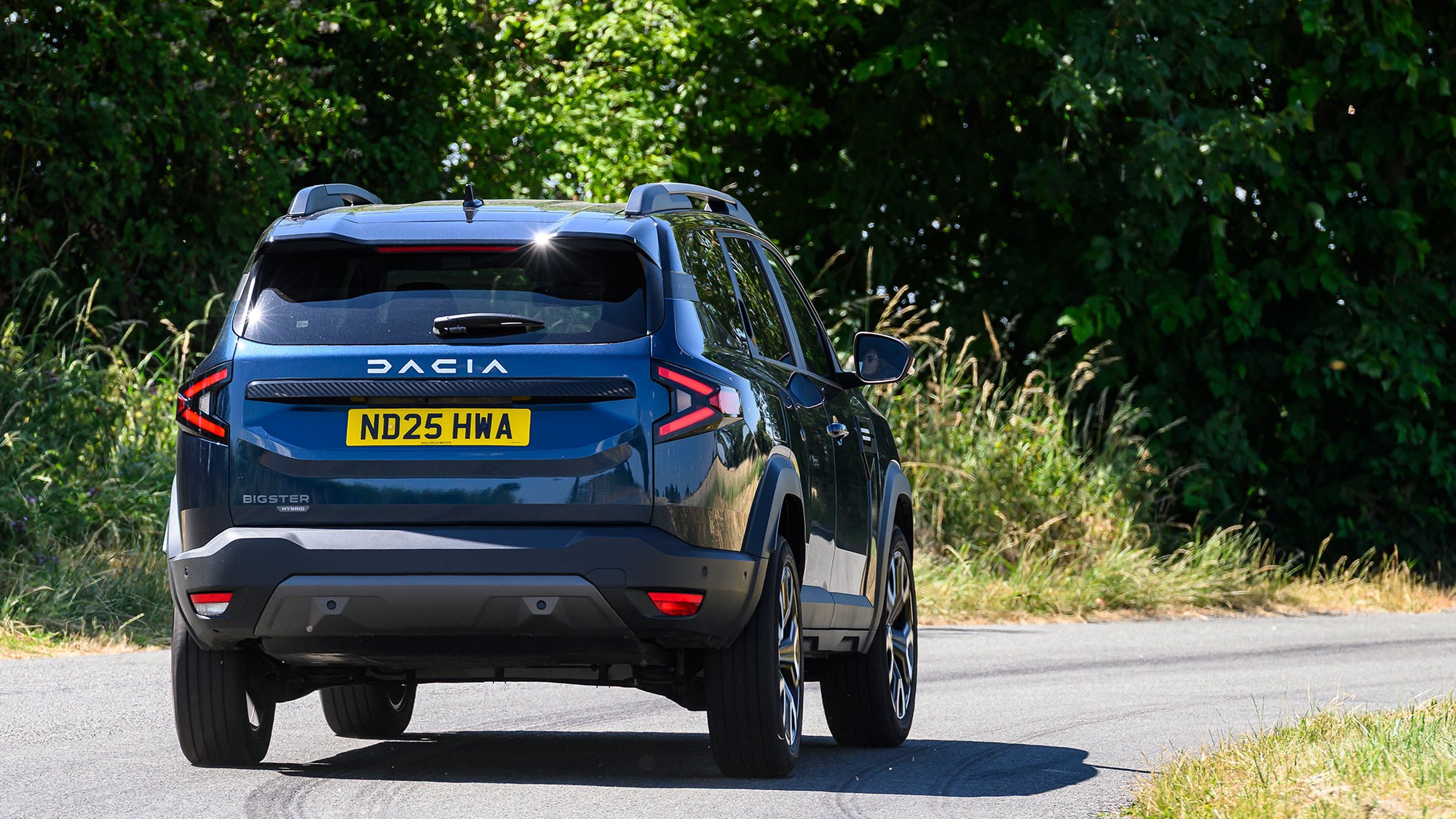
At 4.57 metres long, it’s the biggest car Dacia makes. It’s a few centimetres longer than the Jogger but, unlike its MPV sister, there’s no option to spec the Bigster with seven seats. Dacia says it didn’t want to spoil the Bigster’s design or comfort by squeezing the extra seats in, but the lack of a third row feels like a missed opportunity to me.
Obviously, standard equipment levels aren’t quite as impressive as its key rivals – but the Bigster still features several firsts for the brand. These include a panoramic sunroof, two-tone paint and an electric tailgate.
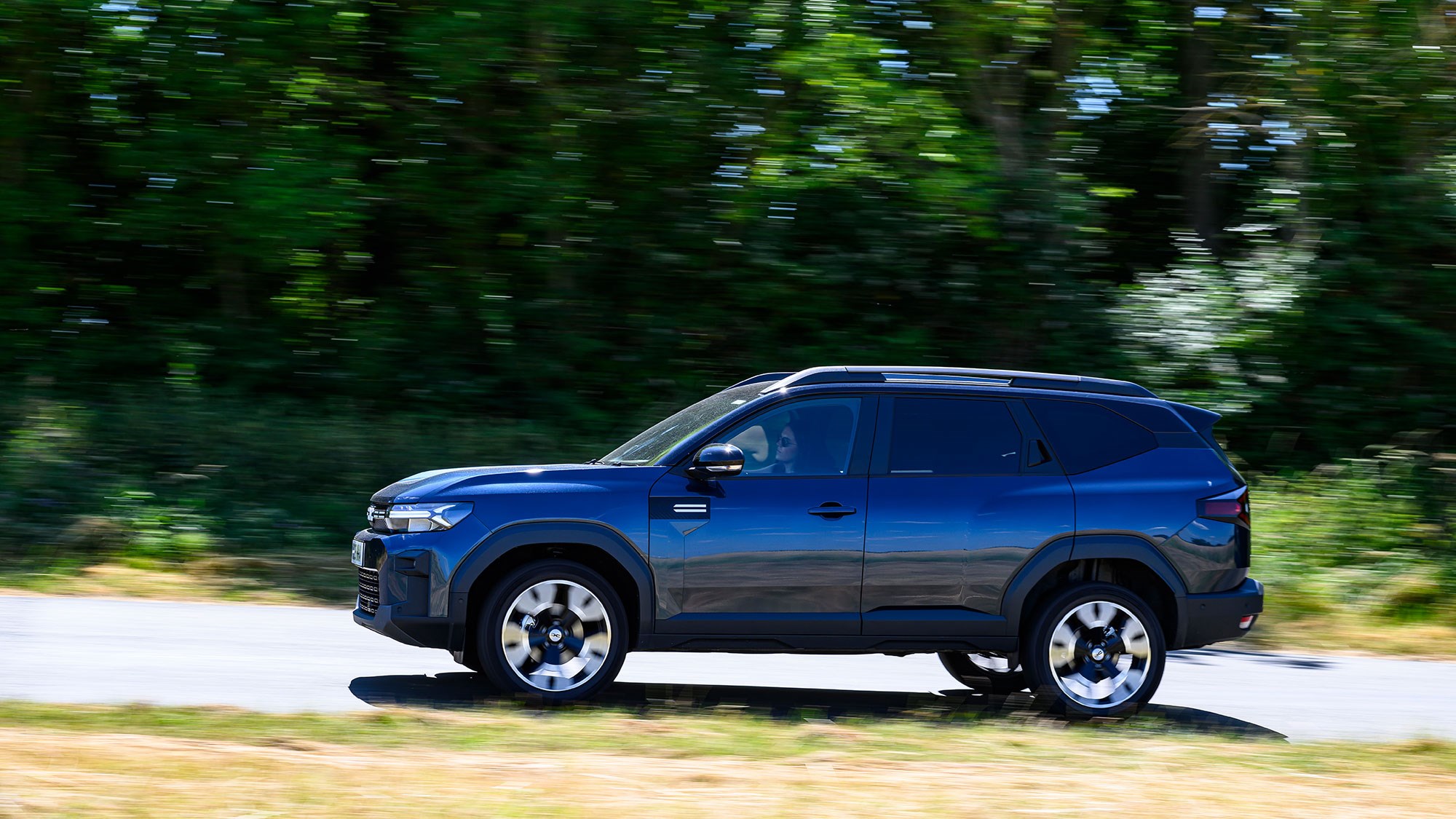
What’s even better is that Dacia hasn’t thoughtlessly chucked this extra equipment at the car – it’s implemented them with cost-cutting in mind. For example, the automatic tailgate only has one electric strut to save cash, while the panoramic sunroof costs a mere £550. That’s less than half the price of the same option on a Volkswagen Tiguan.
What are the specs?
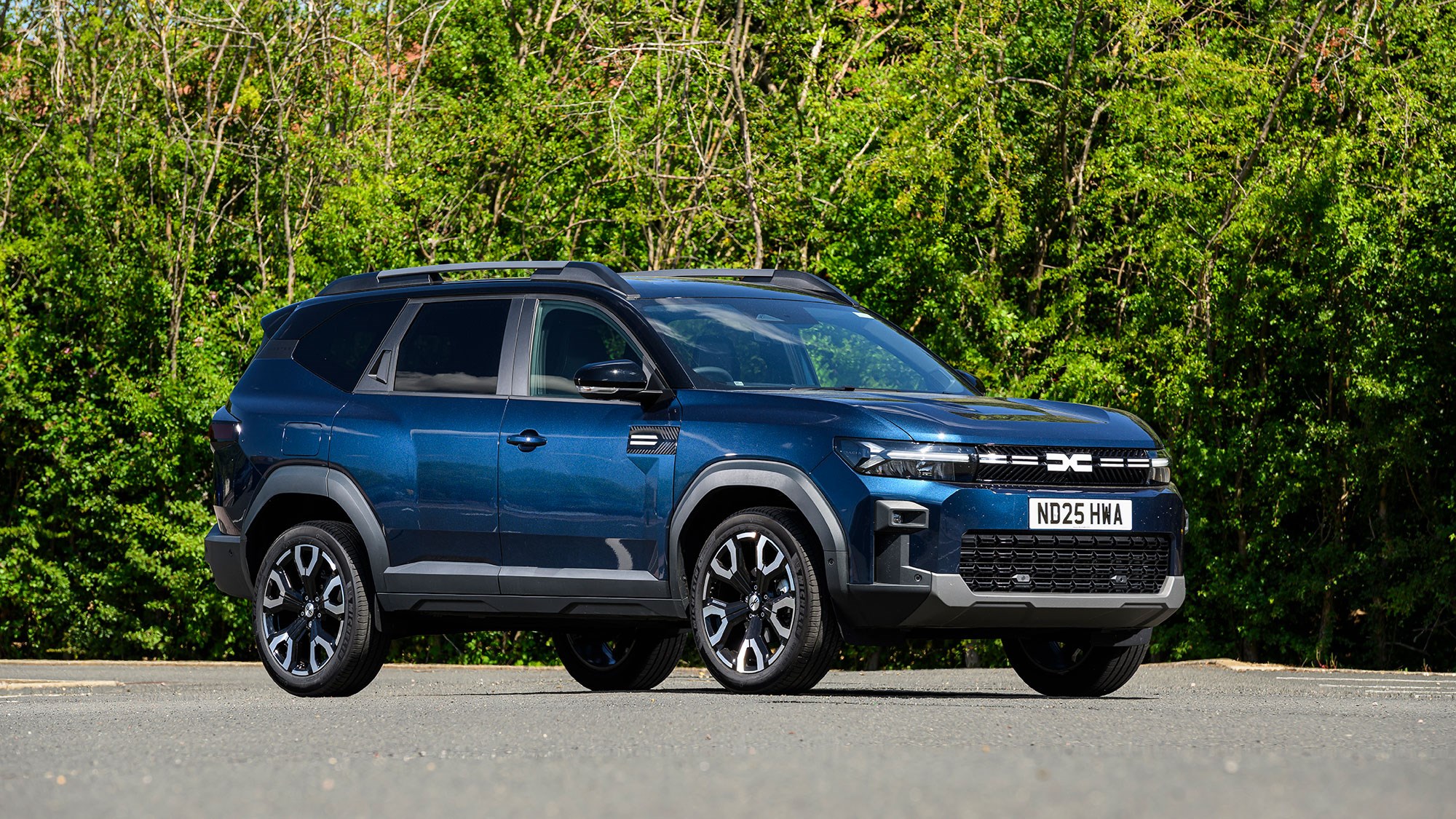
The Bigster is available with three powertrains – a front-wheel drive mild hybrid, a four-wheel drive mild hybrid and a front-wheel drive self-charging hybrid. We’ve only driven the last option so far, but it’s arguably the most important model in the range. That’s because it introduces a brand-new hybrid powertrain not just for Dacia, but for the entire Renault Group. It seems Dacia’s days of living off Renault’s scraps are over.
This new hybrid powertrain mates the electric motor and gearbox from the Duster hybrid with a new, slightly more powerful 1.8-litre petrol engine. You now get 153bhp (15bhp more than the old system), which is enough for a 0–62mph time of 9.5 seconds and a claimed fuel economy figure of 60.1mpg. I didn’t find that claim to be wildly inaccurate, either – I averaged more than 50mpg during my time with the car.
Mild-hybrid Bigsters have 1.2-litre three-cylinder petrol engines and manual gearboxes. The front-wheel drive model produces 138bhp, which Dacia says is enough for a 9.8-second dash to 62mph and an average fuel economy figure of 51.4mpg.
Four-wheel drive Bigsters are slower and slightly less powerful. They produce 128bhp and have 0–62mph times of 11.2 seconds. More importantly, though, they consume additional fuel due to their more complicated drivetrains. Dacia claims an average figure of 46.3mpg, so I wouldn’t recommend you go for four-wheel drive unless you desperately need the extra off-road ability.
How does it drive?
Well enough, but it’s not quite perfect. These faults aren’t damning enough to knock the Bigster out of the running, but the fact Dacia overlooked them is a little frustrating. What’s worse is I reckon the brand’s engineers could have fixed most of the car’s foibles by simply spending a little longer on calibrating its controls.
I’ll start with the brakes. Dacia hasn’t modulated the changeover from regenerative to friction braking very well. The friction brakes don’t engage until you’re halfway down the pedal travel, at which point the pads slam into the discs like a blacksmith’s hammer on an anvil, bringing you to a halt with a jolt. The Qashqai and Tucson are far more predictable.
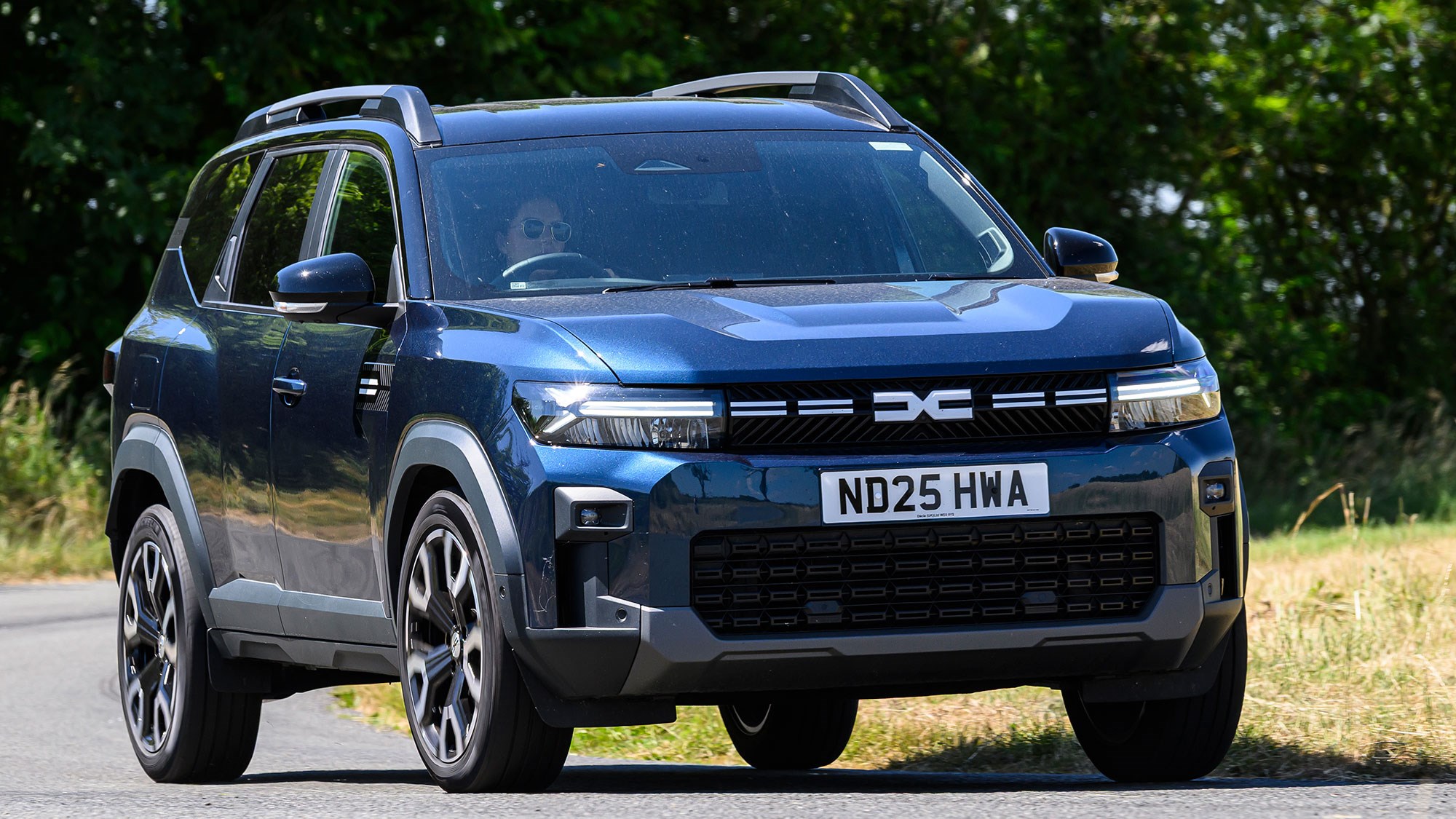
The steering isn’t fantastic, either. It’s direct enough, but there’s way too much power assistance and the weight doesn’t build progressively as you wind on lock. That makes it difficult to trust what the front wheels are doing. I constantly found myself second guessing how much steering angle I needed to round tight junctions, for example.
I like how quiet the hybrid system is, though. The electric motor is powerful enough to push the car around at speeds of up to 40mph. That means you can easily crawl between traffic lights and creep around car parks on silent electric power. Even when the engine sparks into life at higher speeds, it isn’t noisy enough to be annoying.
It can get thrashy when you accelerate hard, though. The hybrid model’s automatic gearbox only has four cogs in it – and the gaps between each change are enormous. As a result, the engine screams like a kookaburra when joining motorway slip roads.
Plus, because the gaps between the ratios are so wide, it’s slow to shift up. When you get to the top of each cog, the transmission needs to wait for the engine revs to drop before it can hammer home the next gear – and that can take a couple of seconds. It almost feels like the box is skipping gears, changing from first to third to fifth.
You can catch the powertrain out when switching between electric and hybrid modes, too. When approaching a junction at the end of a fast A-road, the powertrain sometimes can’t decide which power source to prioritise. This confusion causes engine to shudder to a halt then immediately bark back into life, which sends unwanted vibrations through the cabin.
At least it’s powerful enough. The instant torque from the electric motor makes the powertrain feel more like a diesel than an electrically assisted petrol, which is great when you’ve got a boot full of luggage and four adults on board. You don’t worry about joining fast roads in the same way you would in a fully laden base-spec Jogger.
I like what Dacia’s done with the Bigster’s suspension, too. It’s a little floaty, but that means it simply glides over the sort of imperfections that’d unstick a Sandero or a sportier SUV, such as a Ford Kuga. Only the biggest craters will crash into the cabin, which is impressive considering how cheap it is. You can easily spend all day on the motorway in it.
What’s it like inside?
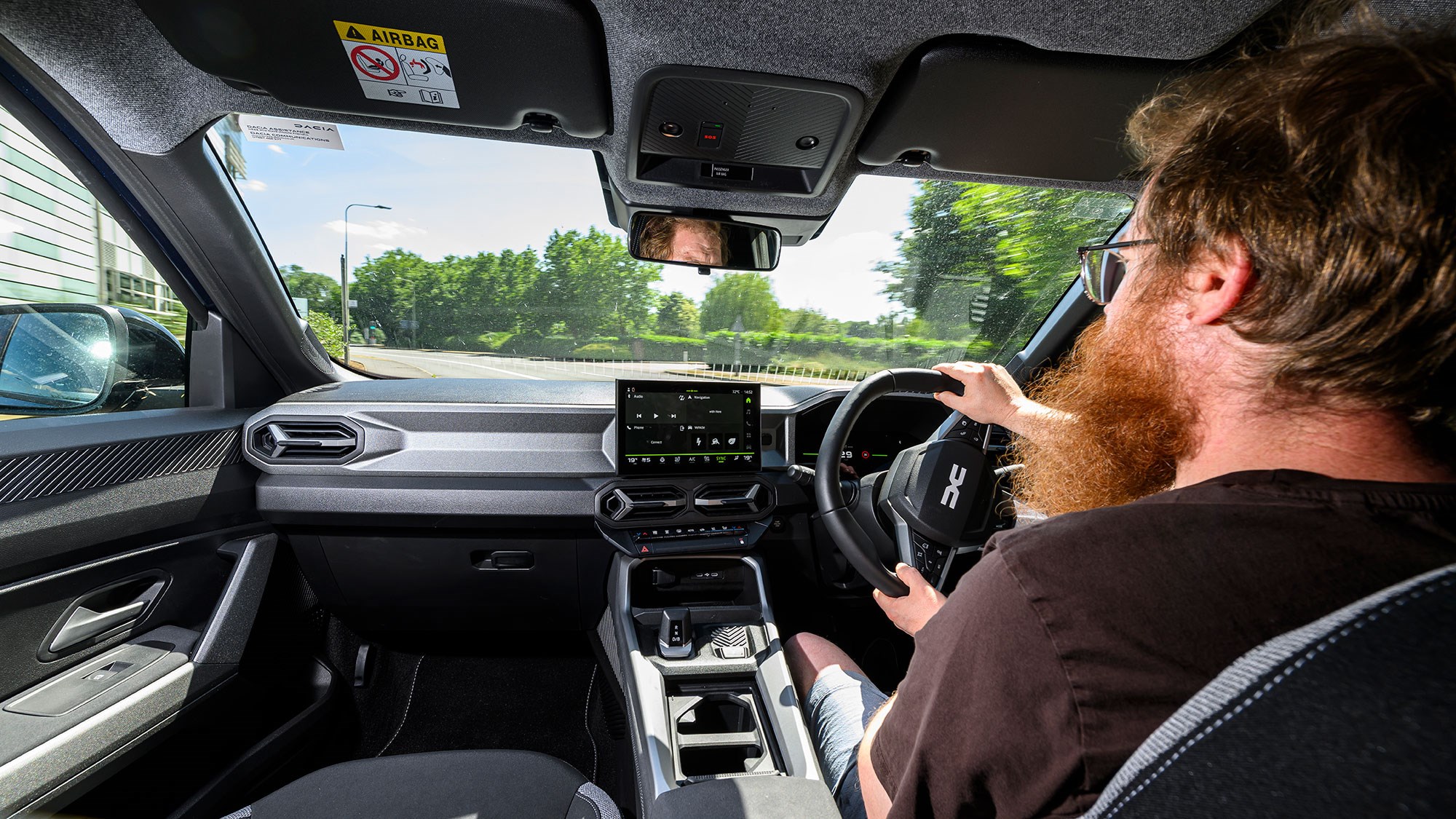
Up front, the Bigster’s cabin is very similar to the Duster. You get the same 10.1-inch infotainment system and choice of digital gauge clusters, which vary according to spec. Neither are what you’d call cutting-edge, (the touchscreen is laggy when swapping between screens), but they get the job done and are easy to use.
The key difference between the Duster and Bigster’s cabin is that the Bigster has a new centre console more befitting of a larger car. It gains a wireless smartphone charger, a different gear selector and a pair of cupholders hidden by a sliding cover.

The main touch points feel sturdy, but we have reservations about the longevity of the wetsuit-like seat material on our test car. It was already showing signs of wear. The over reliance on hard plastics and total lack of soft-touch materials means it’s also unlikely to meet the quality standards buyers now expect from this class. As I keep reiterating, though, this is a cheap car – and you can’t expect to eat caviar on a tinned tuna budget.
What really sets the Bigster apart is its boot. Go for the front-wheel drive, mild-hybrid petrol and you’ll have 677 litres on luggage space. That’s class leading. Hybrid and 4×4 models have slightly less room due to their battery packs and rear differentials, but they both still offer more than 600 litres.

But it isn’t just big – it’s also clever. You get height-adjustable floor and a 40/20/40 split-folding rear bench, allowing you to juggle passengers and cargo easily. The handles for the seat backs are easily accessible from the boot and, once you’ve lowered them, you’ll unlock a van-like maximum capacity of 1,977 litres. That’s 200 litres more than the Kia Sportage.
Rear legroom and headroom are good, too, although you might struggle to seat three adults on the rear bench. Because the Bigster is based on a B-segment platform, it doesn’t have a particularly wide cabin. In fact, it’s a millimetre narrower than the smaller Duster.
Before you buy
You can spec your Bigster in one of three trim levels – Expression, Journey or Extreme. And they’re all well-equipped for the money.
The most basic Expression model features 17-inch alloys (no steel wheels here), dual-zone climate control, a reversing camera and 10.1-inch touchscreen. The Journey gets some extra kit, including an electric boot, heated front seats, keyless entry, a part-electric driver’s seat and adaptive cruise control.
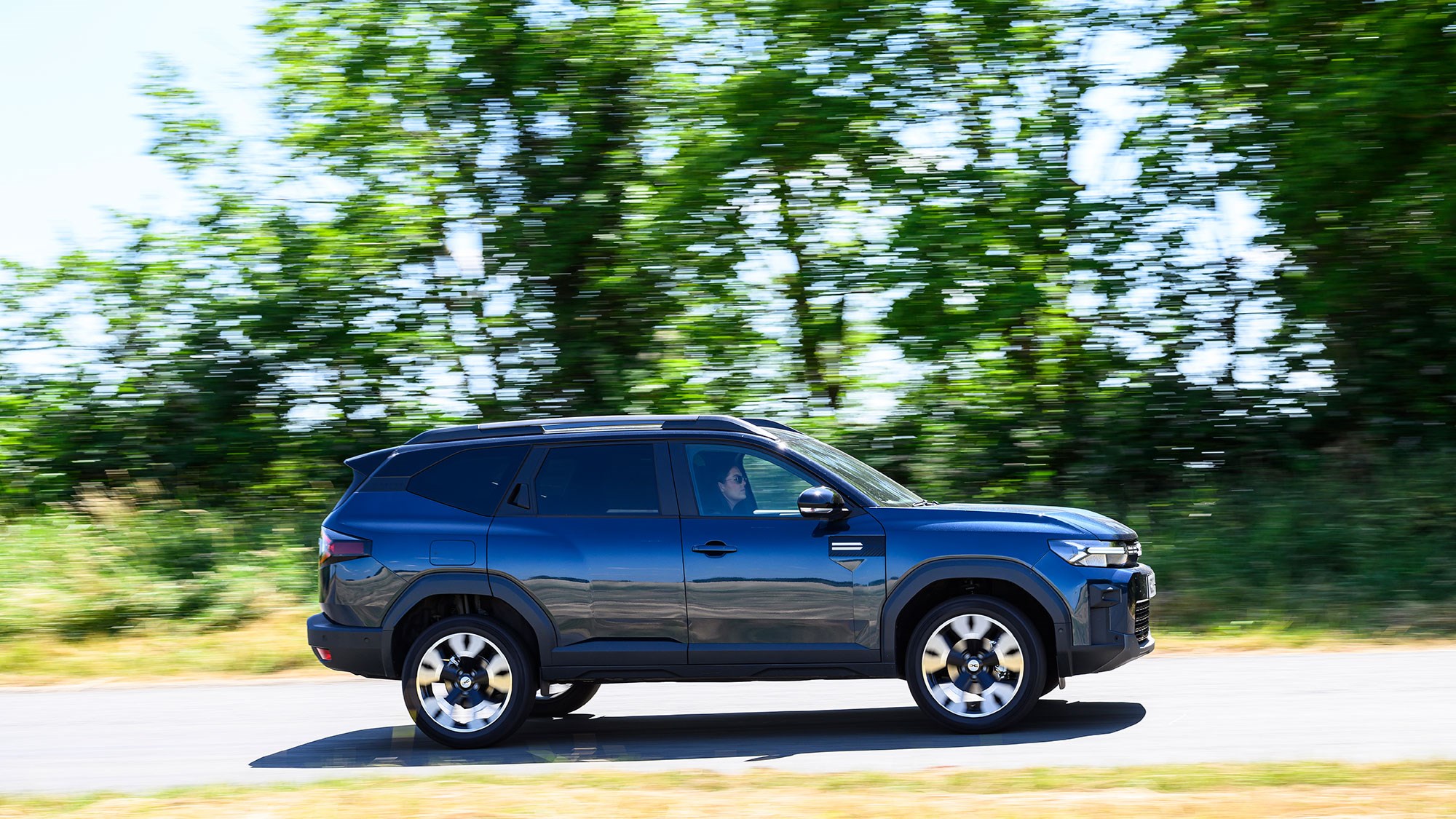
Flagship Extreme variants are distinguished by their fashionable copper-brown styling elements and modular roof rails, which can be transformed into a roof rack with an Allen key. You also get a panoramic sunroof – a first for Dacia, and one that feels a bit odd in a brand renowned for selling just the ‘essentials.’ Not that I’m complaining.
Prices start from £25,995 for the Expression, £26,765 for the Journey and £27,015 for the Extreme. What’s particularly impressive is that the Hybrid model has a starting price of £28,190. That’s great value by hybrid SUV standards.
Verdict
I like the Dacia Bigster. I respect its honesty. Cars are getting less authentic with each generation change, with even run-of-the-mill manufacturers convincing themselves that premiumisation should be the foundation to build their brands upon. That’s fine for BMW or Mercedes. But a Qashqai shouldn’t have a starting price of £30,000.
The Bigster’s unashamed authenticity is intoxicating enough to let you overlook it minor faults. The cheap cabin plastics are forgivable when you look at the car’s starting price, while the calibration issues in the powertrain and chassis can be solved by switching to a more relaxed driving style. Which, with your family on board, you should be doing anyway.
Dacia’s family SUV gets even better when you team its affordability and authenticity with the sheer amount of space in its cabin and the stellar fuel economy offered by its hybrid system. In fact, I reckon the Sportage, Tucson and Qashqai should start worrying.
While they’ve been squabbling like privileged public school boys about who has the better soft-touch trim or the shiniest infotainment system, Dacia has muscled in with a common-sense, working-class car that’s expertly judged for these austere times. It has exactly what need at a price you can afford.
I certainly wouldn’t pay £5,000 more for a Qashqai. Would you?