► CAR’s review of the most recent RS4
► Boo: 444bhp V6 replaces old V8
► Hurrah: 0-62mph in 4.1sec, 174mph
This most recent B9-generation Audi RS4 Avant makes do with a 2.9-litre, twin-turbocharged V6, identical to the unit fitted in its RS5 stablemates. The previous B8-generation Audi RS4 Avant came with a riotous, barnstorming V8. Downsizing sucks. Or blows. So some diehards might suggest.
But just because something’s smaller doesn’t necessarily mean it’s worse. While, admittedly, the 444bhp V6 only delivers almost as much power as before, it does have a belting 125lb ft extra torque. It also features a 25 per cent reduction in CO2 emissions and some impressive fuel economy figures. If any high-performance estate car owner has ever cared about that.
So, what’s this RS4 really like? We’ve tested it thoroughly both abroad and in the UK: read on for the full, definitive CAR verdict. And check out our how we test page to see why you can trust us.
Should I buy an Audi RS4 Avant? If you want a very fast, all-weather wagon that can do a relaxed cruise almost as well as it can take apart a b-road, then, yes, you should take a proper look at one of these.
At a glance
Pros: Extremely capable, very fast, more efficient than it used to be (if you’re careful)
Cons: Not as outright exciting to drive as the main rivals, previous owners
What’s new?
Let’s get the bad news out of the way first. The RS4 is no longer available to buy new in the UK – so if you still want one by the end of this review you’ll be heading for the classifieds. A special RS4 25 Years Edition effectively served as the swansong when it was launched in 2024.
Interesting timing for the end of the line, in some respects, as BMW only started selling its direct rival, in late 2022. You can read more about that in our BMW M3 Touring review. We’ve also got a series of M3 Touring long-term test reports for you to peruse.
Returning to the Audi, beyond the engine change, it’s probably also of interest that this RS4 is more svelte than the previous version: the engine alone is 31kg lighter than the old 4.2-litre V8. Updates in 2020 shaved another 45kg off the kerbweight, most of which can be attributed to the ditching of some sound deadening materials. Hmm.
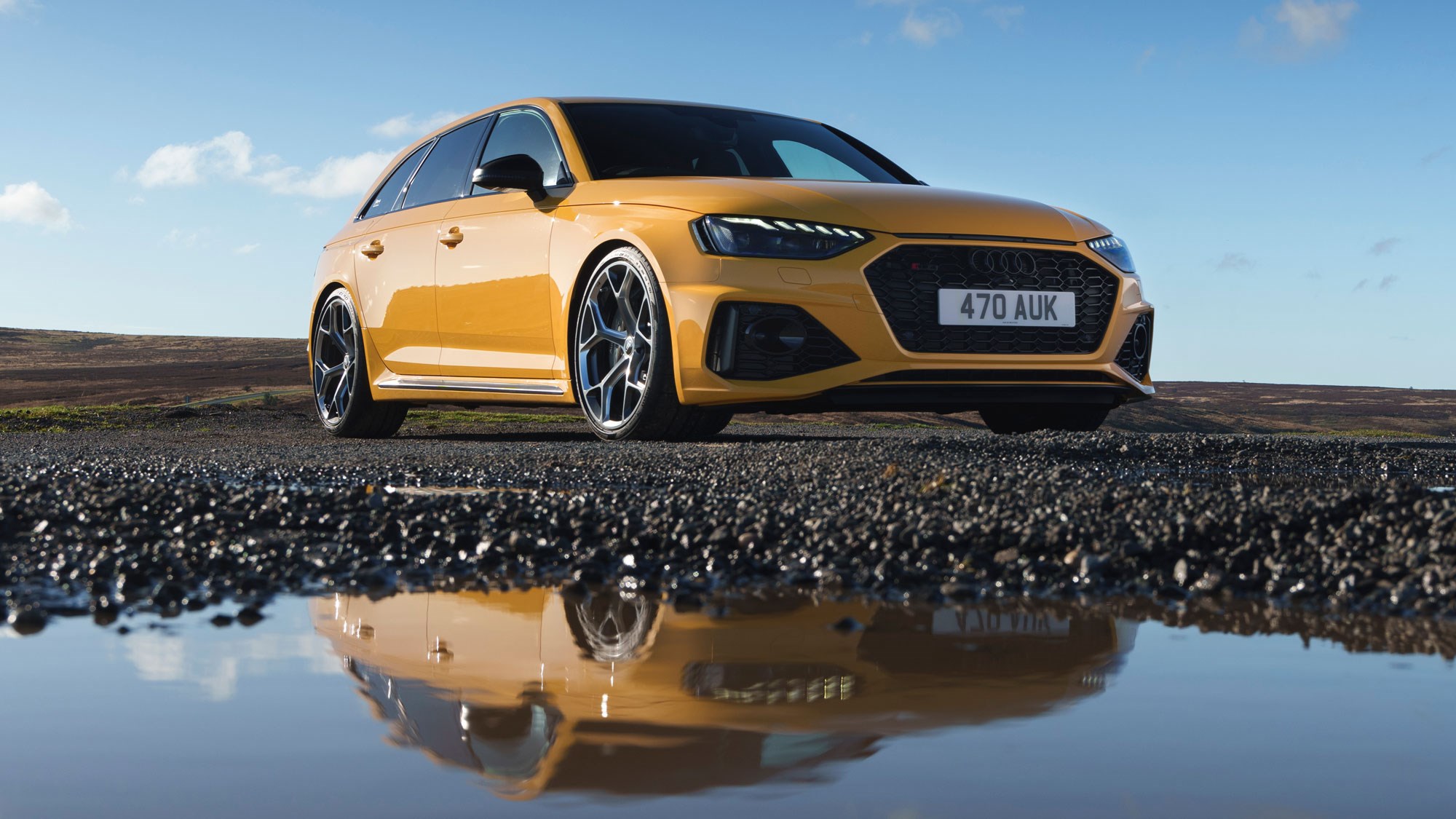
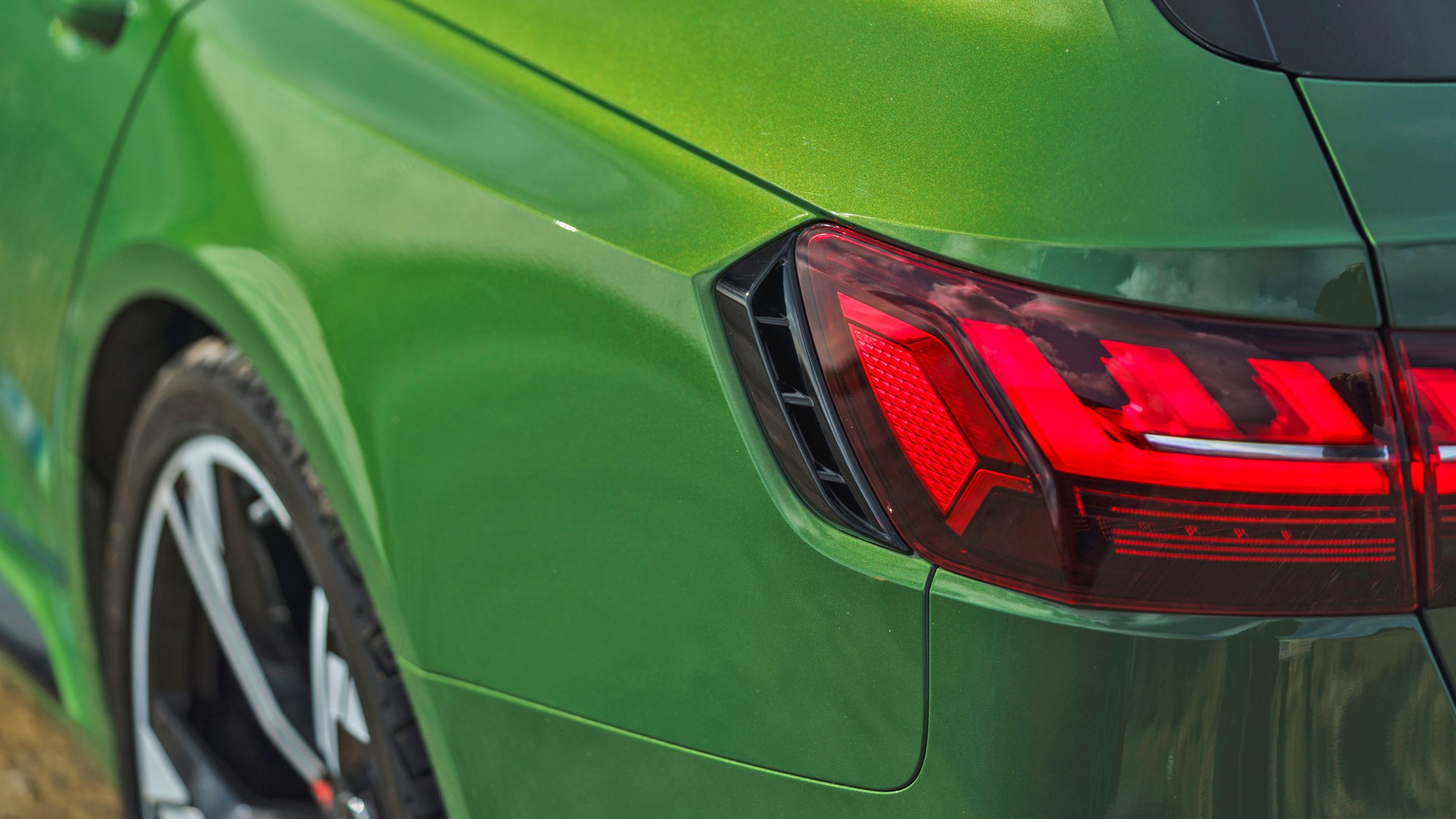
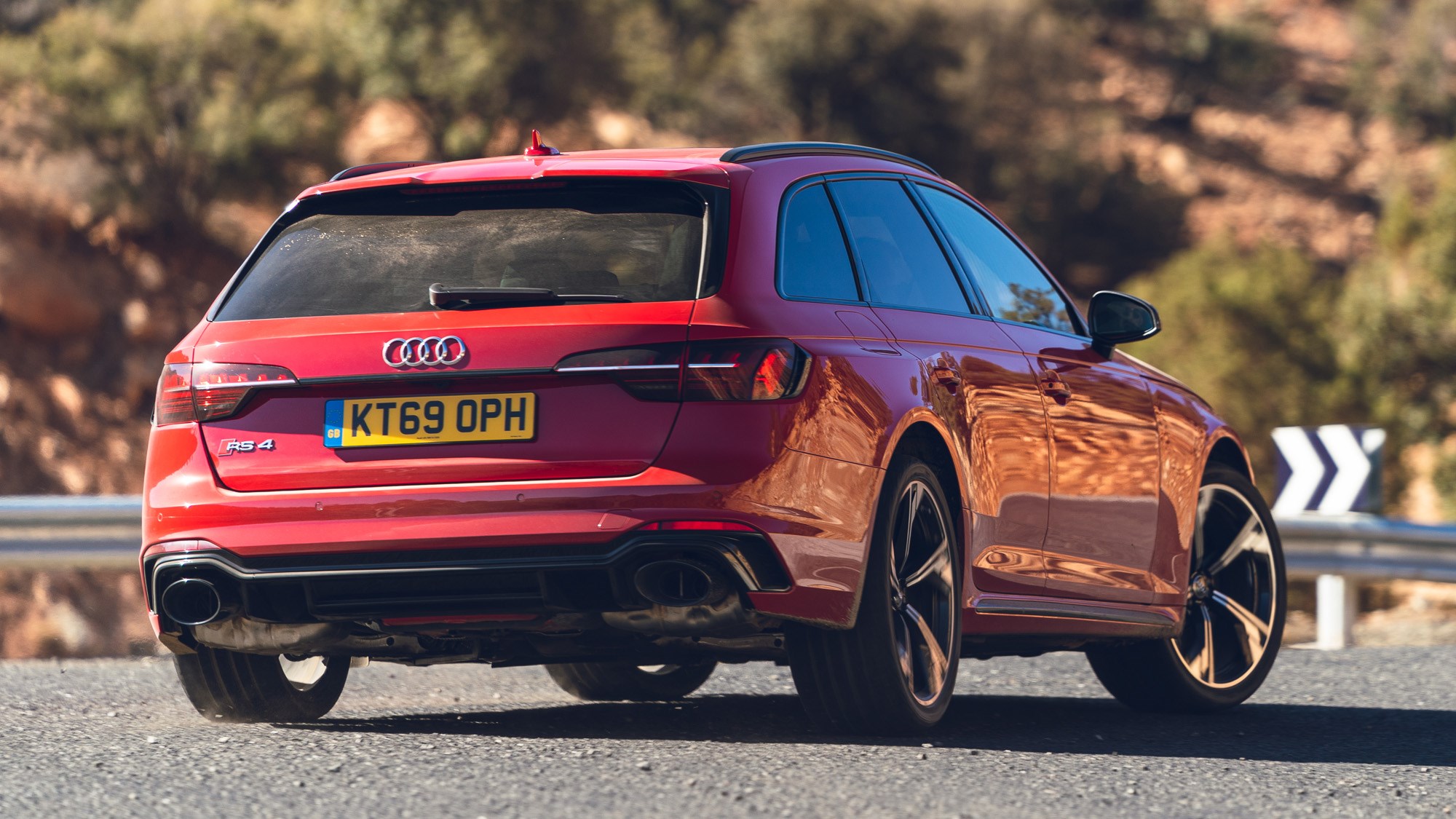
It has to be said, the RS4 has far more presence in real life than it does in pictures – those arches punch out an extra 24mm in width compared with the standard A4 Avant of the time and it sits 30mm lower. Giant oval tailpipes manage to make it look lower as well as wider. The dark vents flanking the tail lights aren’t actually real, disappointingly, but help to add even more visual width to reinforce its brawniness.
Audi reckons its wide-arched shape references the Audi 90 IMSA GTO – a good thing to draw design inspiration from, even if it’s unlikely to be the first thing that comes to mind when you look at the RS4.
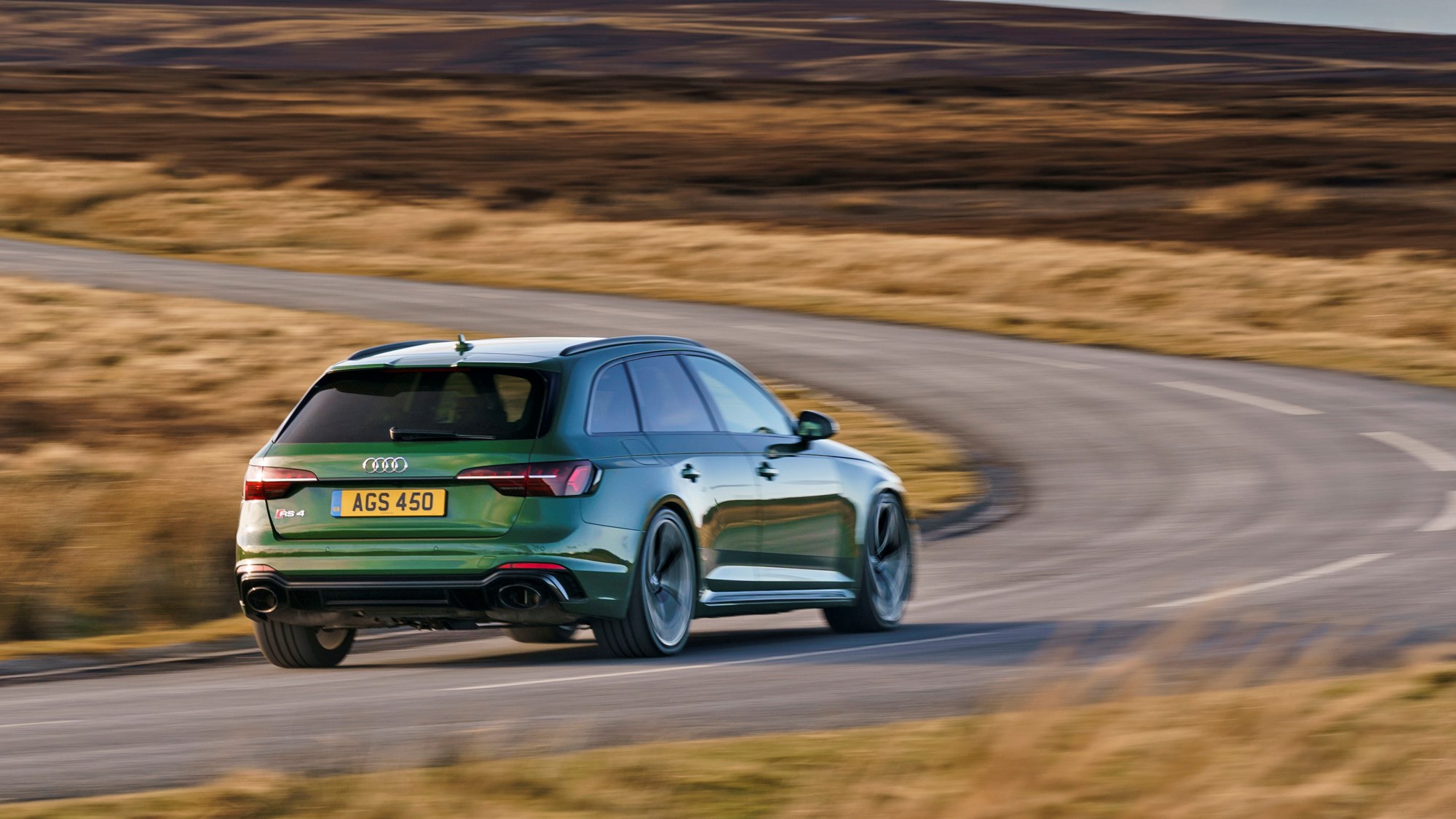
While 19-inch wheels are standard, the larger of the two options available are 20 inches in silver or black, wearing 275/30 Continentals front and rear. Opt for the Carbon Black version and a set of glossy, 20-inch, milled aluminium wheels shave a further 8kg in weight.
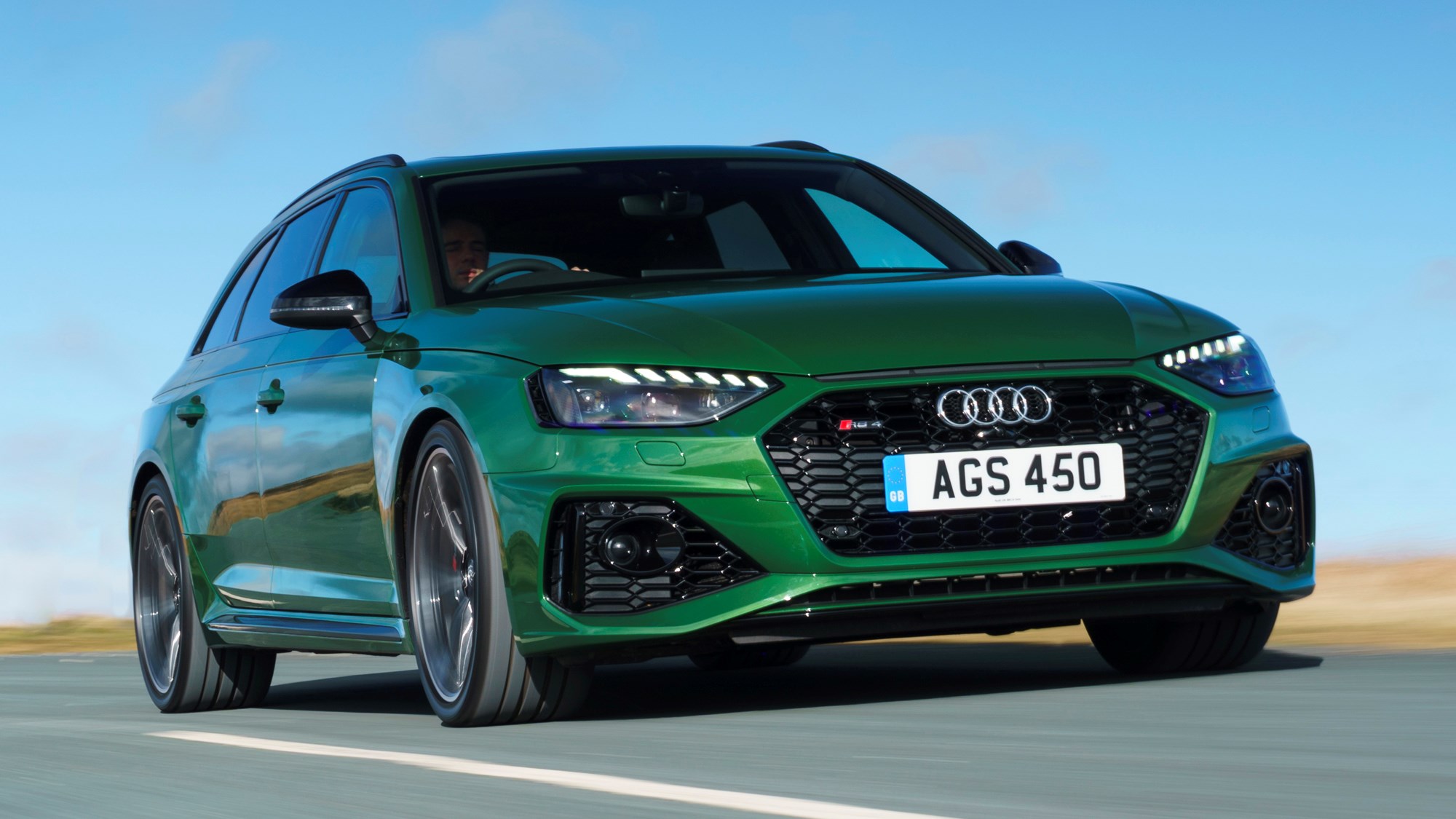
That 2020 refresh tallied-up with the makeover that lesser A4s received during 2019, with LED-heavy lights and a frameless interpretation of the honeycomb mesh grille, slotting into a slimmer, broader aperture than less powerful models. Given there are no sheetmetal changes, it’s remarkable how much more hench the facelifted RS4 looks as a result.
Any more rippling and it’d come with a bottle of Audi branded bronzing oil.
Rejoice! The RS4 is 0.6sec quicker than its predecessor from 0-62mph, at 4.1sec (two tenths slower than the lighter RS5 Coupe) and tops out at 174mph, if you opt for the flagship Vorsprung model (or spec the optional RS Dynamic package on pre-facelift cars). Otherwise, it’s electronically limited to 155mph as standard. It feels every inch that fast on the road.
At 1745kg, you wouldn’t describe the RS4 Avant as actually lightweight, but it does weigh 125kg less than the previous-generation RS4. That’s a haul of Ikea flatpackery.
As the Quattro badges and heritage-laced square-bulged wheelarches suggest, all-wheel drive is standard, shuffling the torque split front to rear as required – or conditions demand. During typical driving it’s divided 40:60 front:rear, with as much as 85 per cent of torque directed to the front or 70 per cent to the rear as the system detects wheel slip. We’ve tested the RS4 on a variety of slippery and loose surfaces and it coped with imperious ease. Traction is first-rate.
An electronically controlled Sport rear differential is an option in some markets, but was fitted to all new RS4s in the UK as standard, with the ability to precisely portion more or less torque to each individual rear wheel as required.
Additionally, all RS4s feature torque vectoring by braking. It has a real agility and there’s decent feel through the deliciously thick-rimmed steering wheel; it won’t talk to you like a pure-bred rear-drive AMG or M product, but this wicked wagon definitely feels worthy of Audi’s RS badge.
An eight-speed Tiptronic torque converter auto is the only gearbox option, in place of the old car’s seven-speed dual-clutch transmission. There’s a pair of slightly cheap-feeling plastic paddles nestling behind the feelsome wheel, for finger-flicking gearchanges. Software remapping of the transmission was introduced in 2020: in regular Drive mode it’s eerily seamless, but the thumps between rations in Sport or Manual modes feel artificial and overemphasised.
Although the two-generations-previous 2005 RS4 was available as a Saloon, Avant estate and Cabriolet, this car was sold only in wagon form, just like its immediate predecessor. The five-door RS5 Sportback essentially fulfils what would be the Saloon’s role.
There’s a decent boot, with a flat floor and easily enough space to swallow family luggage or a big dog (though maybe not both at the same time; you’ll need the bigger Audi RS6 Avant for that…).
How does it drive?
As you’d expect, there’s masses of lateral bite, but it’s to the RS4’s credit that it doesn’t feel inert or anodyne like some fast Audis of old. It’s not as involving as an AMG C63 Mercedes, for instance, or the BMW M3, nor is it the last word in driver feedback. But it is a car that can be rewarding to drive when you want it to be, and entirely undemanding the rest of the time – which feels very much in line with the RS4’s ethos.
To exceed the chassis’ and tyres’ limits you’d have to be going faster than we’d feel comfortable on the public road, but you can subtly adjust the car’s attitude with the brakes and the throttle long before you risk losing your licence.
Driven relatively sedately, there’s plenty of front-end grip and all the traction you can eat, with torque-vectoring-by-braking helping out to carve a clean corner exit. It’s something you can get used to – and perhaps even take liberties with – especially on wet roads.
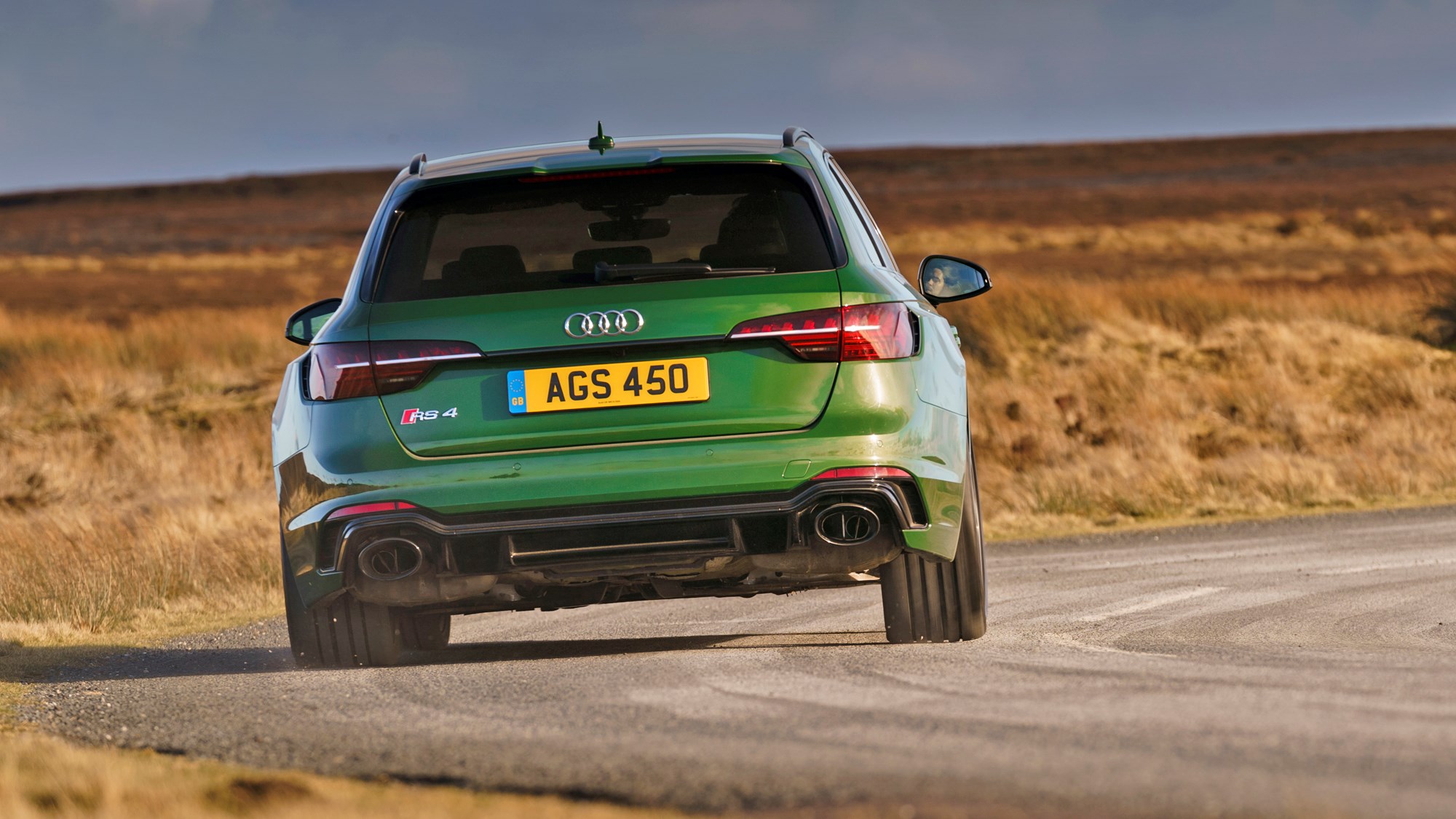
Several of the cars we’ve tried were on 20-inch wheels and fitted with the optional Dynamic Ride Control (DRC), with hydraulically controlled damping. In the firmest Dynamic mode, the ride can be choppy on all but the smoothest roads, and you’ll likely quickly tire of it. You have to fiddle with the rather inconveniently placed Drive Select buttons on the dash to change the mode – we wish it had a steering wheel toggle like the TT RS.
Comfort mode feels the best option for the majority of circumstances, and on British roads the RS4 is more effective at absorbing bumps than an RS5, with a less knobbly ride in this softest setting. Despite the effortlessly accessible speed on tap, it’s the sublime ride quality of the RS4 in Comfort that particularly impressed us.
The economy claims should be taken with a pinch of salt; we saw a low of 10mpg on one particularly thrashy drive cross-country. We’d anticipate mid-20s in day-to-day driving, with 30mpg+ feasible on a longer, more gentle cruise.
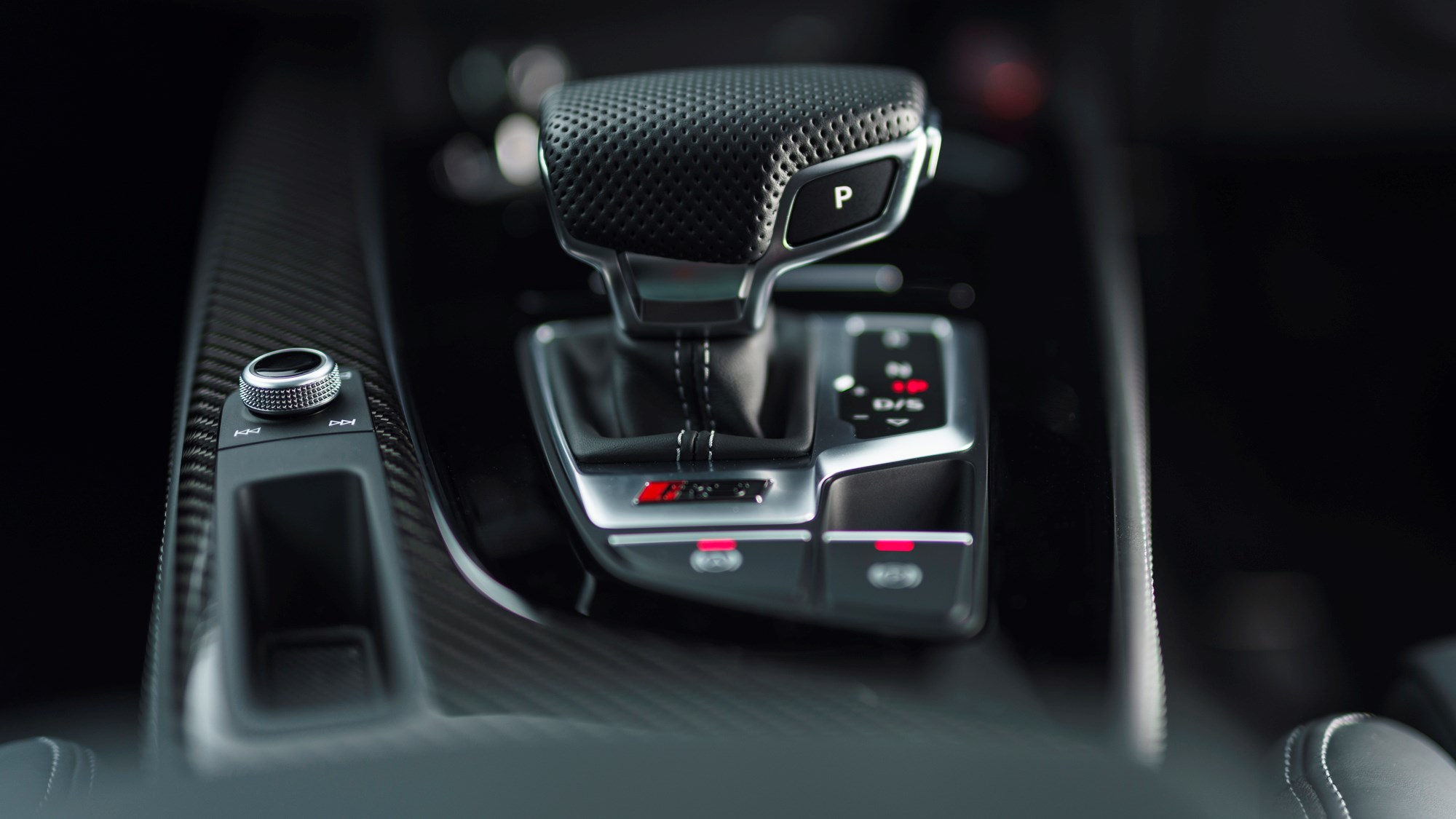
We didn’t miss the old dual-clutch gearbox; the eight-speed Tiptronic shifts unobtrusively in auto mode and supplying gears when requested without fuss in the manual setting. The only fly in the ointment comes during low-speed manoeuvres when it can be slow to engage between Drive and Reverse gears.
The optional sports exhaust makes a theatrical belching noise on upshifts under load, which adds to the sense of occasion, but does sound synthetic, as if it’s been carefully programmed to do so.
Otherwise the V6 makes a decently characterful sound: a muted rasp with a bassy undertone filtering into the cabin with more volume than the RS5.
We tried the optional ceramic brakes, which were very impressive – confidence-inspiring bite from cold, decent feedback through the pedal, and easy to modulate. But much of the same praise could also be applied to the standard steel brakes, coming in at 375mm up front and 330mm at the rear.
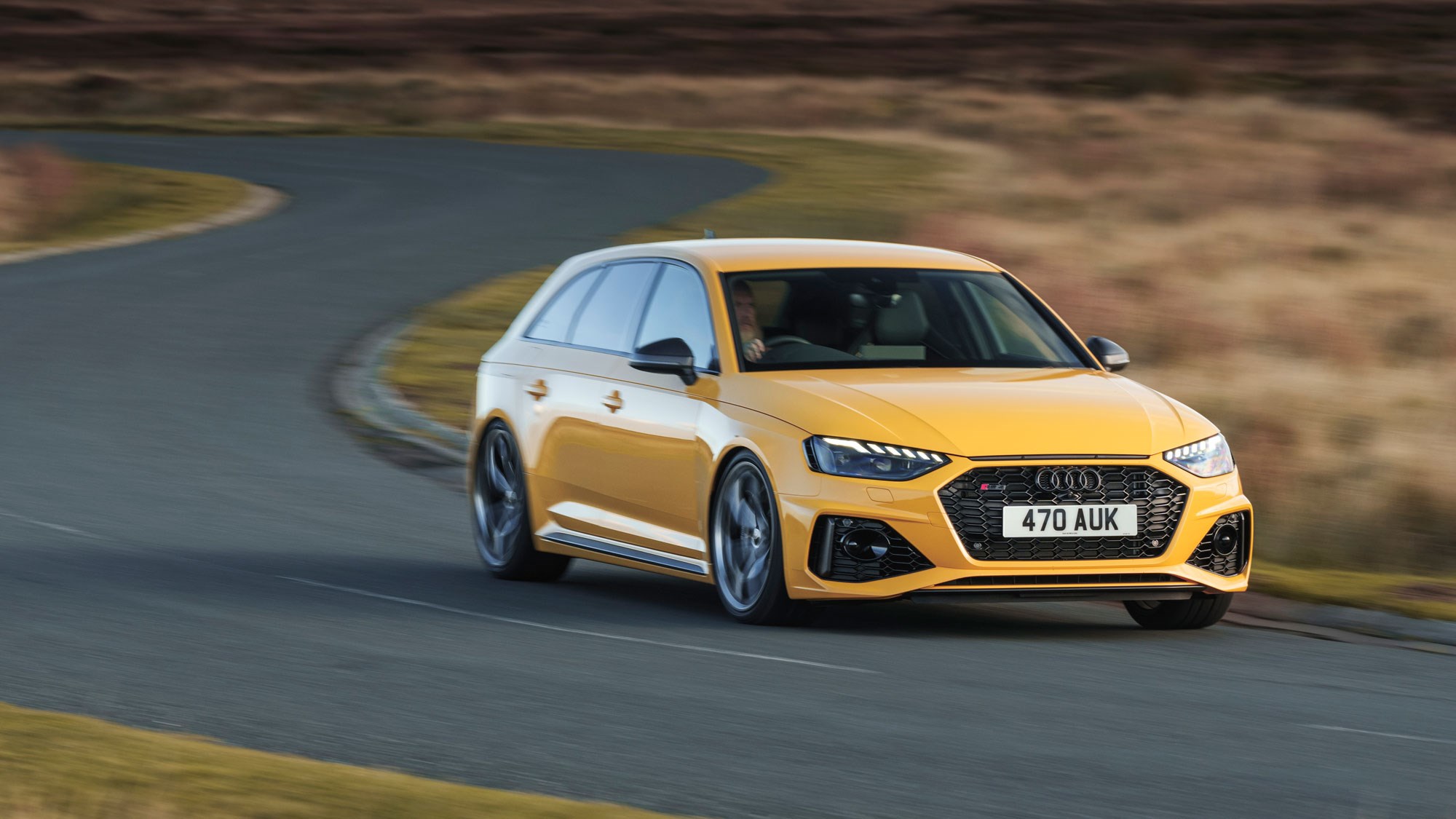
One option best avoided is the variable-rate Dynamic Steering, which, although better than previous iterations, still feels odd as it weights up in an unnatural way. The regular steering set-up works well on its own, with three levels of power steering weight to choose from (Comfort, Auto and Dynamic). Regardless of mode, there’s decent feel and feedback (by fast Audi standards, at least, and considering the giant front tyres, impressively so). Good news – RS Audis are becoming less numb (and more comfortable).
How’s the Audi RS4’s interior?
As per the equivalent regular A4, cabin fit and finish is hard to fault, and judicious use of aluminium and Alcantara trim helps lift the ambience a little. If you step from a completely up-to-the-minute car into the RS4, it’s age is becoming more obvious, particularly with its freestanding multimedia screen, but this is still one of the nicest cabins around.
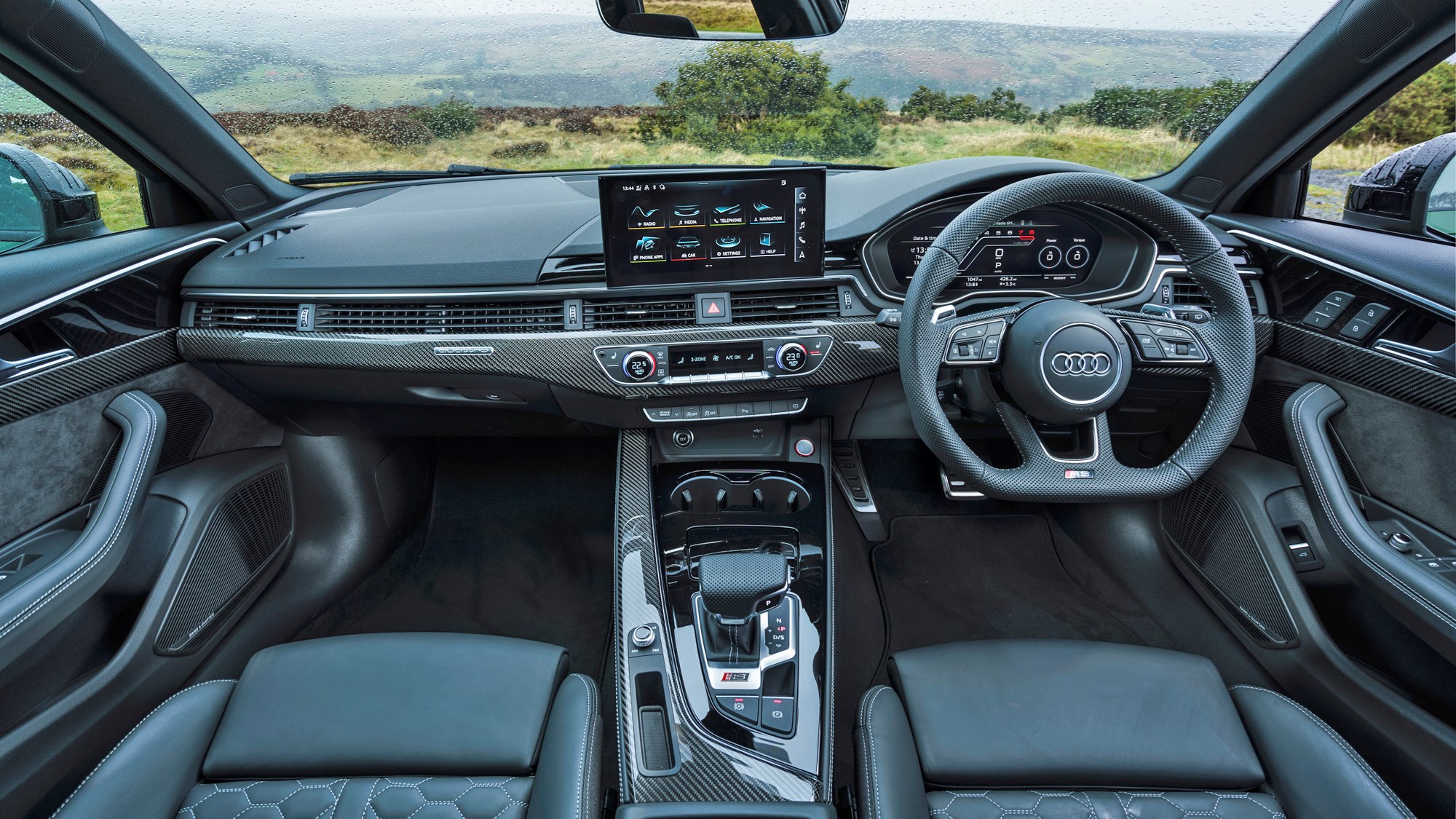
The RS-specific Virtual Cockpit TFT instrument panel sits behind the wheel, with extra RS-specific displays available such as boost pressure, tyre pressures, power and torque output, and a G-meter – which is probably the last thing you should be looking at while you’re cornering at any kind of meaningful g.
It’s optionaly augmented by a genuinely useful head-up display beamed onto the windscreen, which is pin-sharp, and, helpfully, includes an oil temperature readout along with the usual vehicle speed and sat-nav instructions – and, less usefully, a lap timer.
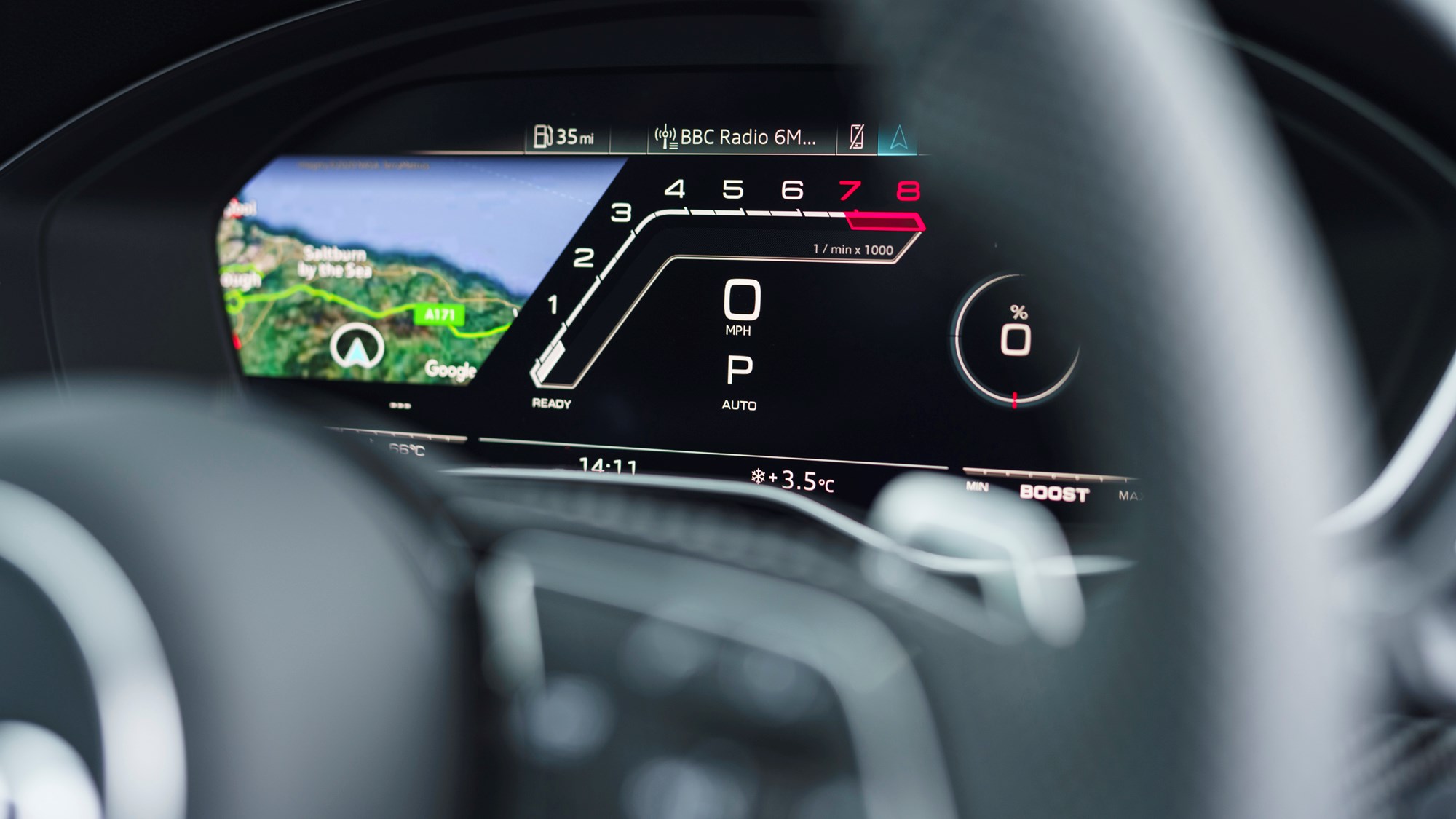
In finest fast Audi tradition there’s a pair of plush, bear-hug-bolstered (and very nicely quilted) sports seats up front, available in varying levels of cushion plumpness for the honeycomb-stitched leather. It just about remains on the right side of chintzy.
Before you buy (trims and rivals)
There was a time when an RS4 was just an RS4, but this generation was available new in a slightly bewildering number of variants. As well as the ‘basic’ version the standard range included the Carbon Black and the flagship Vorsprung, while 2020 brought the RS4 Bronze Edition (only 25 of these were available new in the UK) and 2022 introduced the RS4 Competition (75 for UK buyers), just as 2024 saw the RS4 25 Years Edition muddy the waters.
The good news is that they’re all well equipped, but with an extensive options list as well as a choice of trim levels, you are going to have to wade through the specs of individual cars quite carefully if there’s something in particular that you want. As mentioned above, not all of them came with Dynamic Ride Control, for example – though if you’ve read this far you’ve already heard plenty about the most desirable features and options available.
As a high-performance, high-maintenance and still high-priced but now second-hand car, we’d strongly urge you get a professional inspection from a specialist before purchase. Not ever original owner will have been as mechanically sympathetic to a cold engine as you’re going to be. For example.
As for rivals, you’ve heard about most of them already by this point in the review. Take a good look at the BMW M3 Touring and Mercedes-Benz C63 Estate.
Verdict: Audi RS4 Avant
The Audi RS5 Coupe’s all-weather capability and physics-bashing performance crossed with the Audi A4 Avant wagon’s understated estate body (augmented by just the right amount of wheelarch steroid injections) is quite an attractive recipe.
As a max-performance, minimum-fuss estate car it fulfils its brief perfectly. It’s as much fun to drive as the RS5 (in fact, it actually feels better balanced), while enjoying a more unassuming image. It’s not a car that’ll give you goosebumps, but for many buyers it’ll make them very satisfied. Who wouldn’t love an all-in-one fast estate?