► Audi Quattro 20v review
► We test original Ur Quattro
► Where sports AWD legend began
Quattro. One word, all the attitude. It’s the car that put Audi on the world stage and made four-wheel drive cool long before every suburban SUV followed suit. When it launched in 1980, it didn’t just win rallies, it rewrote the rules on performance, dynamic ability. With its square-jawed styling, warbling five-pot soundtrack and rally-bred hardware, this was Audi flexing its muscles and turning heads in the process. It’s no exaggeration to say this car changed everything for Ingolstadt.
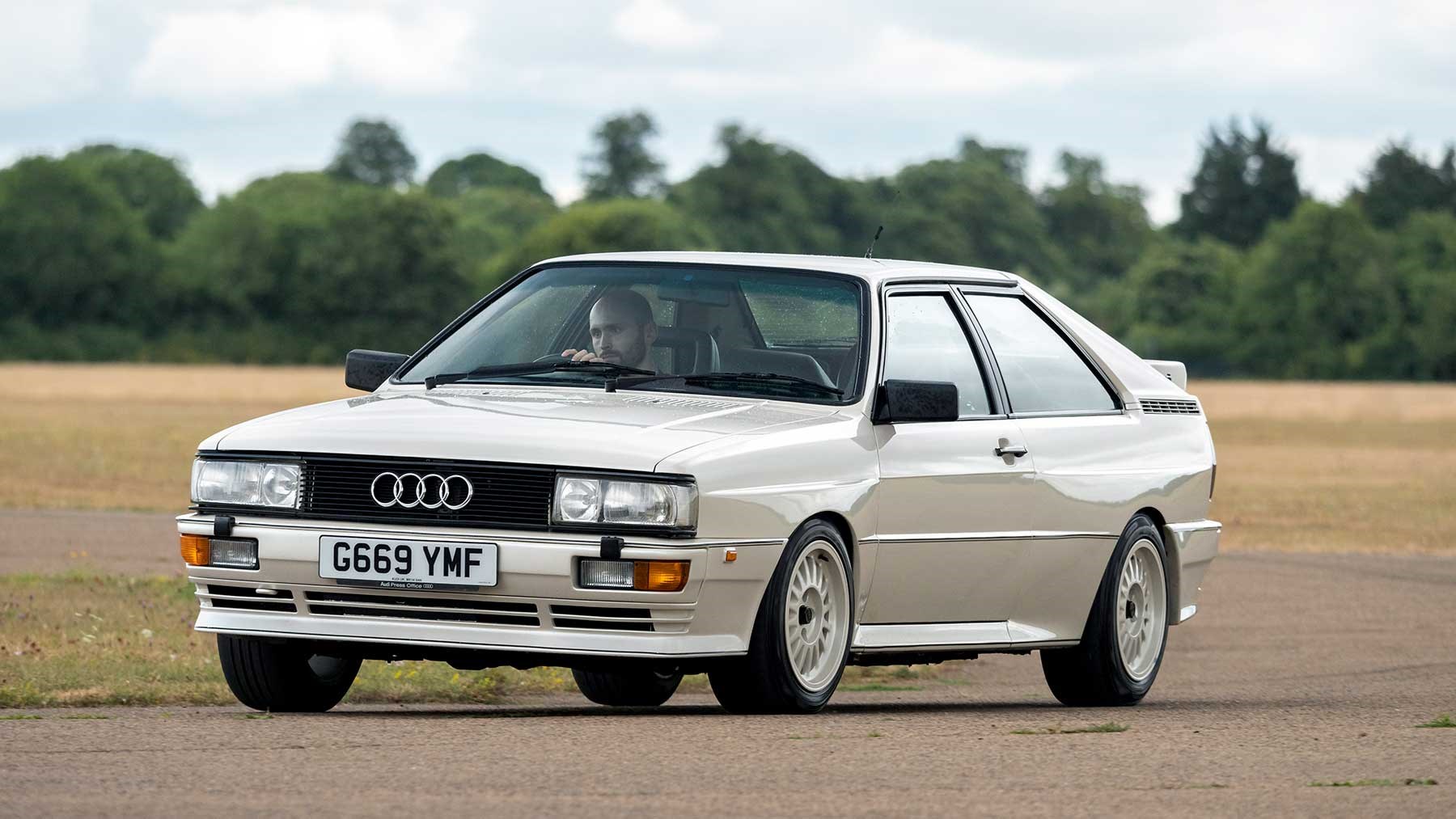
We’ve been back behind the wheel of one of the last UK-registered Quattros, a proper 20-valve version from Audi’s heritage fleet, to see if it still cuts the mustard. Is it just a boxy icon trading on nostalgia, or is there genuine brilliance lurking under those blistered arches? A week of driving has answered that in spades. Spoiler alert: it’s every bit as special as you hoped.
Should you buy an Audi Quattro? If you’re lucky enough to find one in good condition, absolutely. It’s one of the most characterful classics of the 1980s and still delivers a distinctive, usable performance car experience today.
Here’s how we test cars, and why you should trust us.
At a glance
Pros: Five-cylinder warble, timeless looks, grippy all-weather pace
Cons: Numb steering, brittle ride on poor roads, parts can be tricky to find
What’s new?
This isn’t just a retro review. As part of our ‘Driving the Classics’ series, we spent time with a pristine Audi UK heritage fleet example of the original Quattro to rediscover what makes it tick – and whether it still stacks up against today’s crop of all-wheel drive performance cars.
This particular car is one of the last UK-registered 20-valve versions. With its uprated engine, clever Torsen differential and subtle cosmetic updates, it’s the Quattro at its most evolved – still raw, but with layers of refinement that make it genuinely enjoyable to use on modern roads.
What are the specs?
The Audi Quattro was in production from 1980 to 1991, with 11,452 examples built, but over that decade, it evolved significantly under the skin. The original cars launched with the 2.1-litre 10-valve ‘WR’ engine producing 200bhp and quickly made their mark, both on the road and on the rally stage. Just a year after launch, Michèle Mouton made history by becoming the first woman to win a World Rally Championship event, powering her Quattro to victory at the 1981 Rallye Sanremo.
Over the next decade, Audi kept the road-going Quattro in step with its rally-bred image. In 1983, it gained the now-iconic LCD dashboard, paired with combined headlamp units to modernise its look. A year later, the interior was redesigned with a new dashboard layout and steering wheel, while Audi’s motor sport ambitions culminated in the homologation of the short-wheelbase Sport Quattro, built in limited numbers and paired £50,000+ price tag.
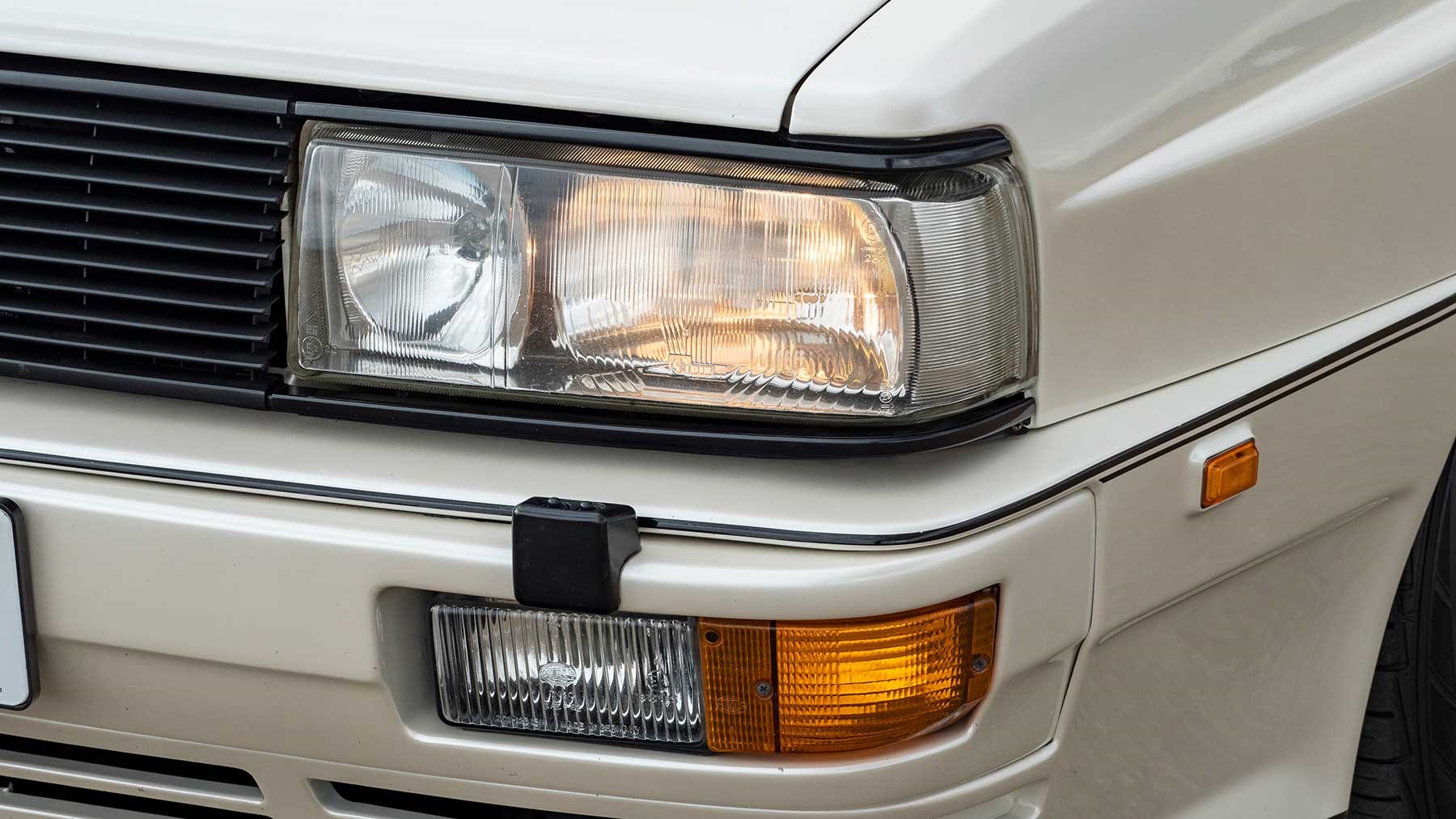
In 1985, the Quattro received its most recognisable facelift: a sloping grille, updated single-piece headlights and trim changes gave it a sleeker, more modern nose. Inside, there were further tweaks to switchgear and dashboard materials. Then in 1987, Walter Röhrl cemented the Quattro’s legend with a spectacular victory at Pikes Peak in the wild Sport Quattro S1 E2, the ultimate rally iteration.

The standard Quattro’s final technical evolution came in 1988 with the ‘MB’-coded 2.2-litre engine, which brought a modest bump in torque. A year later, the definitive version arrived: the ‘RR’-coded 20-valve engine with twin-cam head and optional catalytic converter.
Power rose to 217hp, torque to 228lb ft at just 1950rpm, and performance remained brisk – 0-62mph in 6.3 seconds, with a top speed of 143mph. It also gained the clever TorSen centre differential, replacing the manual diff-lock with a torque-sensing unit capable of shuffling power front to rear as conditions demanded.
All Quattros drove all four wheels via a five-speed manual gearbox, and thanks to clever engineering — including a hollow output shaft design – Audi managed to package permanent all-wheel drive into a usable, road-friendly coupe without the bulk of rival 4×4 systems. It was a packaging triumph that helped define Audi’s engineering-led identity, and it laid the groundwork for the quattro badge becoming a brand within a brand.
How does it drive?
Turn a thin, old-fashioned key in the ignition barrel and the five-cylinder lump starts first time, every time, settling to a smooth, burbly idle. One of the untold joys of the Quattro is just how easy it is to live with: unimpinged visibility, clever Bosch Motronic injection and engine management, a cohesive drivetrain and a friendly clutch action make it a cinch to select first gear and pull away with minimal fuss.
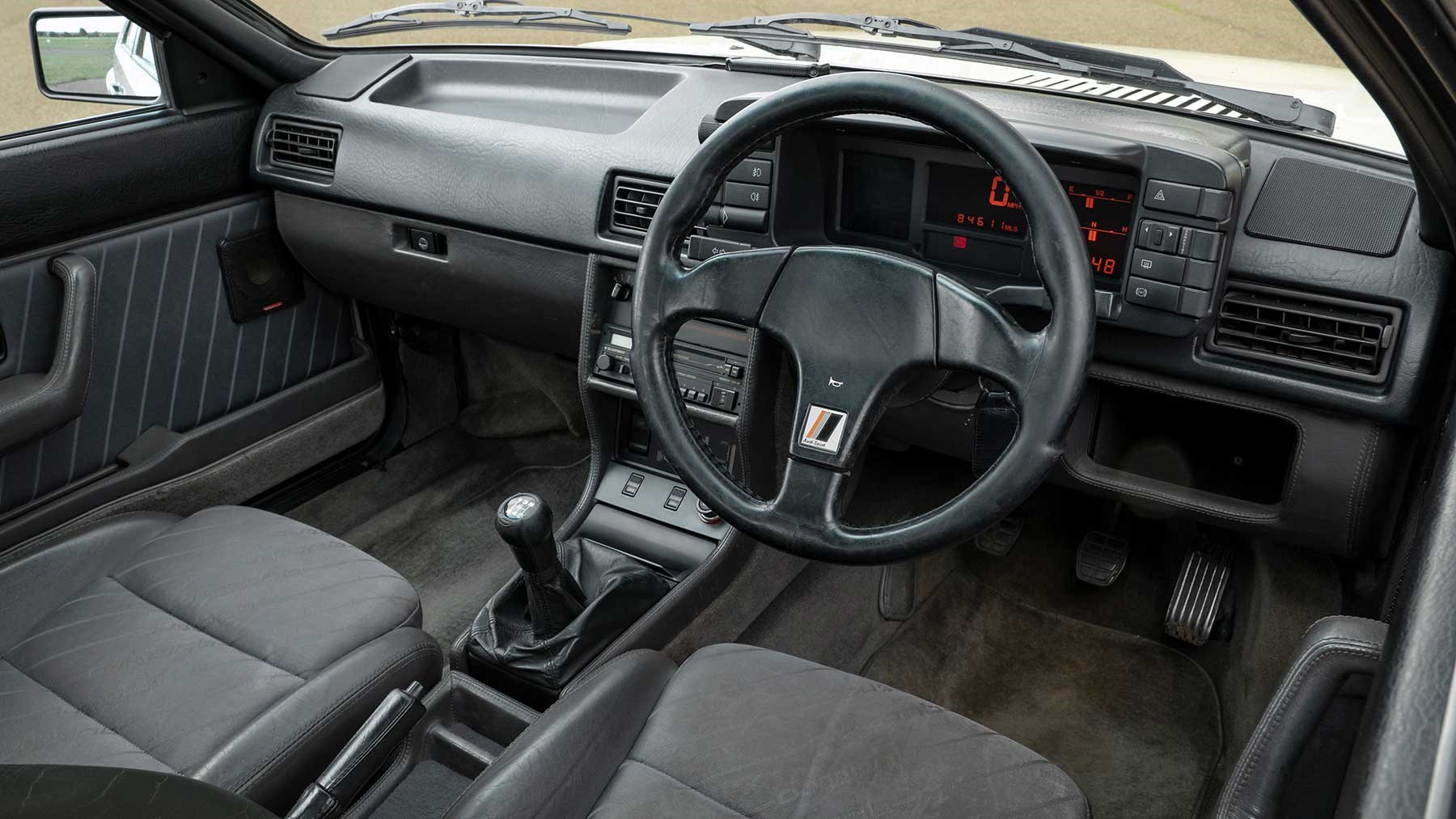
The three-spoke steering wheel on later 20v models is divine: simple, unadorned of buttons or complications – just lashings of smooth leather, an Audi Sport badge and some modest sculpting to encourage old-school quarter-to-three driving grip. This was before the era of widespread airbags, or Audi’s Procon-Ten safety system for that matter.
Picking gears in the five-speed gearbox is straightforward (though navigating the detent on reverse takes a bit of practice). The change itself is mechanical, precise and enjoyable in action, but doesn’t like to be rushed. Slow and accurate is best.
The ratios suit the powertrain. The 20-valve head only appeared on later Quattros after first debuting in the Audi 200, bringing more torque lower down the rev range for greater flexibility. The greatest compliment I can pay is to observe how performance is urgent and rapid, even by today’s standards.
Audi’s claim of 6.3sec 0-62mph feels quite credible and once you skip the laidback torque of 228lb ft peaking at a languid 1950rpm and chase the 217bhp powerband nearer 6000rpm then the five-pot comes to life.
Past five on the digital rev counter and the character changes, hurtling the 1.3-tonne Quattro forwards with gusto, the trademark warbling soundtrack fizzing with energy, although it’s never quite as loud as your Group B memories may imagine.
The more you drive the Quattro, the more you appreciate its modern tendencies. Many’s a time you climb into older 70s, 80s or 90s vehicles and bemoan the feeble brakes. Not so here. The 20v Audi coupe has surprisingly strong anchors with powerful reserves of deceleration – and the security of early-generation ABS to back up emergency stops. It remains stable under hard braking.
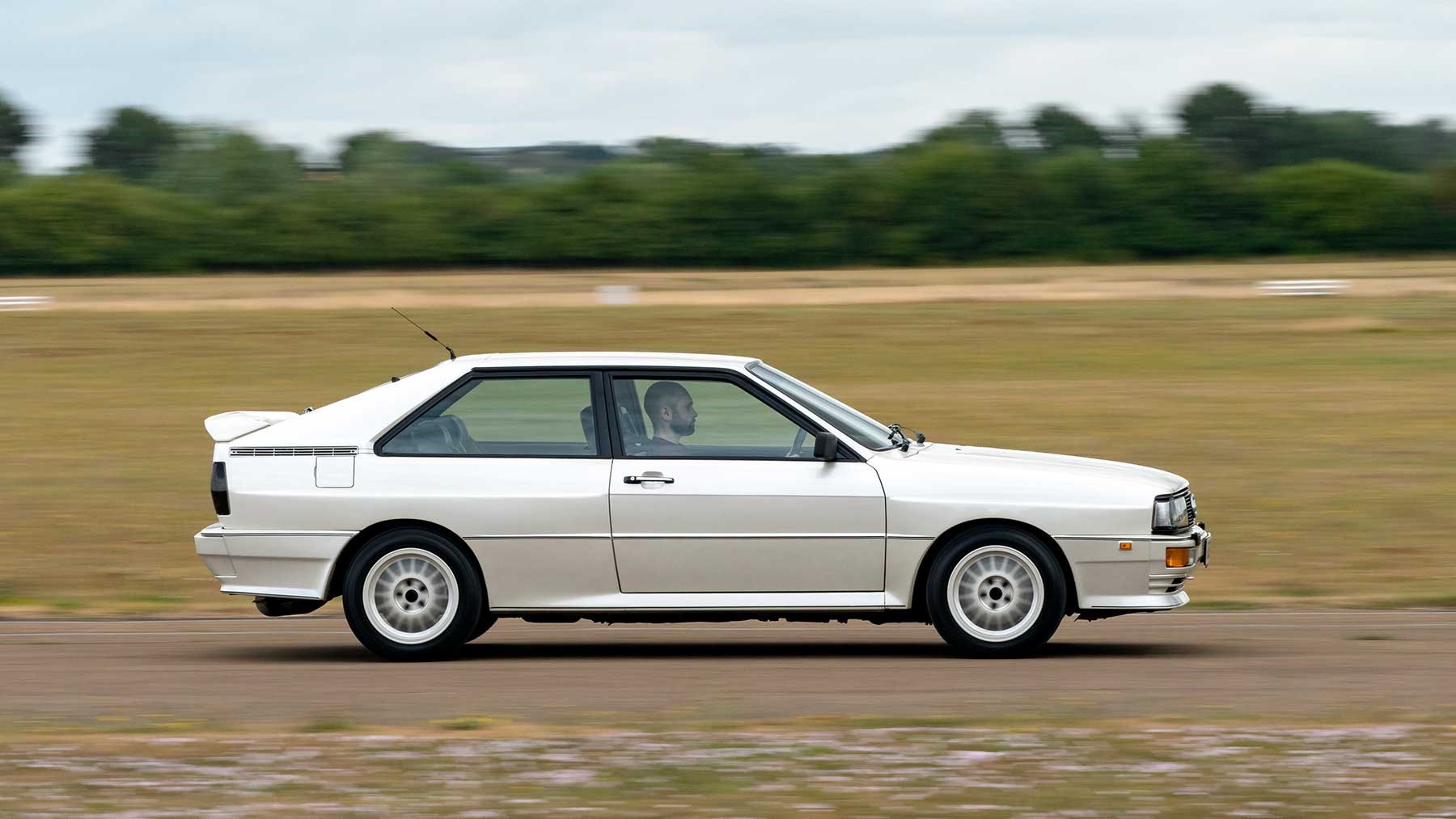
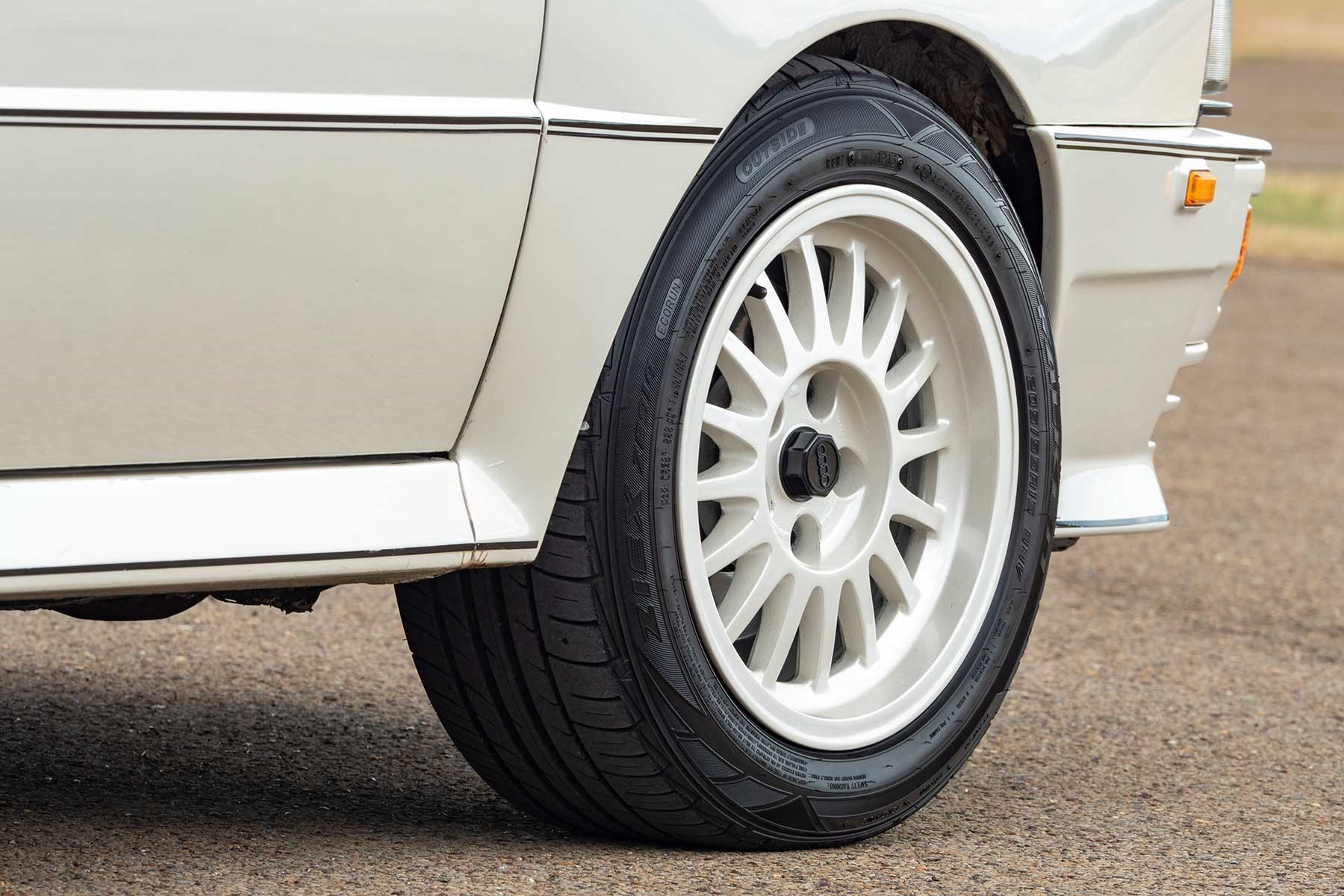
Modest 205/55 R15 Falkens provide a slender contact patch and serve as a reminder of the vicious cycle of ever-expanding modern wheel/brake/tyre sizes. Never once did I wish for more grip or traction (the all-wheel drive taming the turbocharged power even on damp roads) and the flipside is a decent primary ride that handles the worst that a typical British back road can throw at it.
The Quattro is actually surprisingly well mannered, though cat’s eyes and potholes thud and rattle through the bodywork. It’s perfectly comfortable and the only weak spot is rack-and-pinion steering that’s slightly numb and slow to react just off-centre. In an age where the best hot hatches now have pin-sharp, instant responses, Audi’s granddaddy of athleticism feels just a little bit more docile as you thread it down your favourite back road.
Imagine how this must have felt four decades ago, though. Its combination of 2.2-litre turbocharged punch and all-wheel drive, boosted for the 1988 model year with the intelligent Torsen differential capable of shuffling torque front or aft split between 25:75 either way, must’ve been a revelation. The drivetrain is more than a match for the KKK turbocharged power delivery.
What about the interior?
The cabin is pure Eighties theatre. Red digital dials set the tone, while low-sheen plastics and soft cloth seats with leather bolsters keep things period-correct. It’s a practical space too – visibility is outstanding, the front seats are supportive, and rear passengers get a surprising amount of space.
Storage is well thought-out for the time, with large cubbies, slim door bins and clear labelling for controls. There’s no touchscreen – or USB – but the Blaupunkt stereo and climate dials are a refreshing reminder of simpler times.
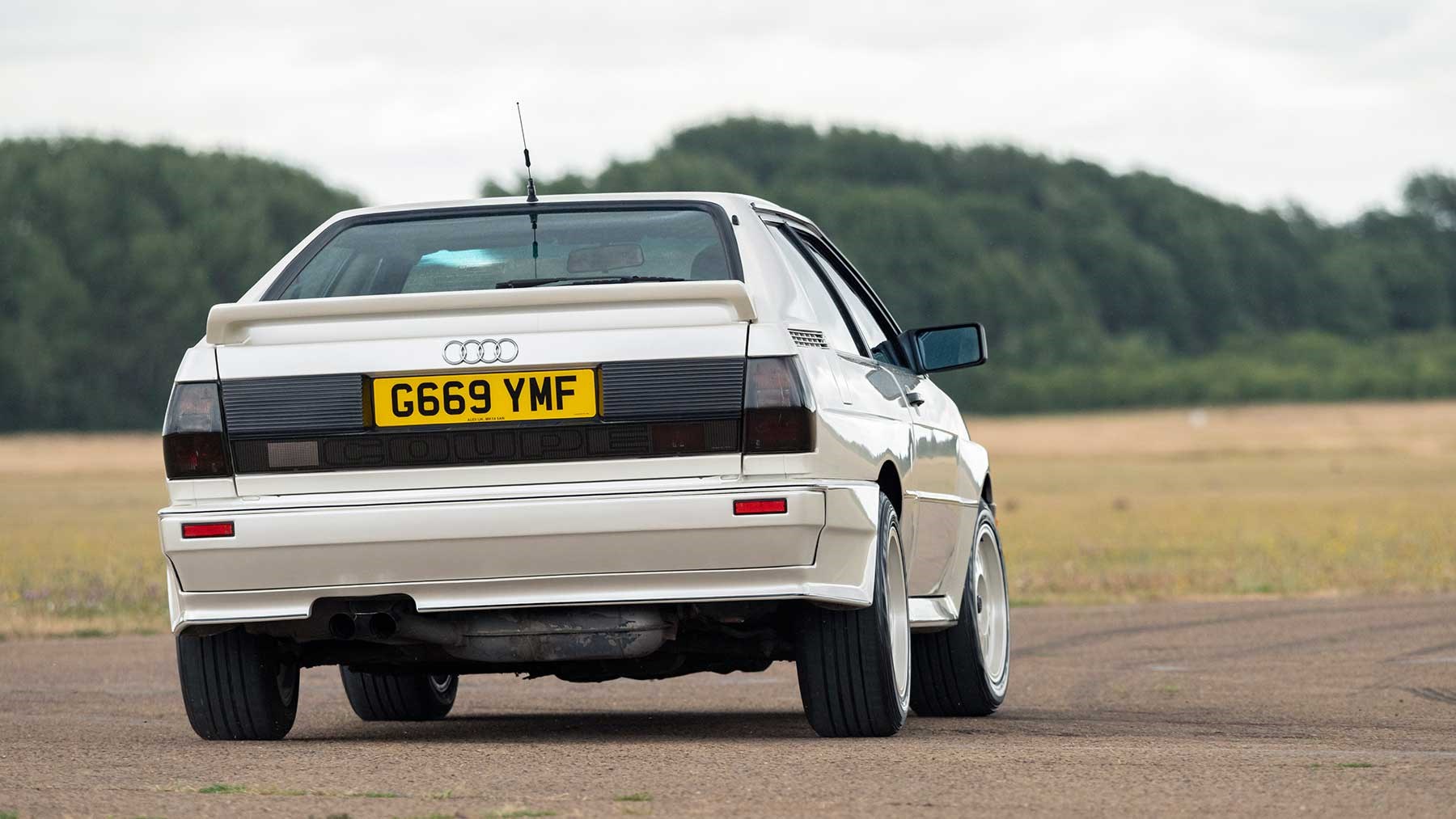
The boot, however, is compromised by a huge 90-litre fuel tank, a loose space-saver spare and, in our case, a vintage steering lock. Still, that vast tank gives the Quattro a motorway-crushing range, even if 22mpg means fuel stops aren’t cheap.

Before you buy
Let’s get one thing straight: if you’re after a bit of quattro-flavoured nostalgia, make sure you’re buying the real deal. Only the original turbocharged coupe gets the capital Q — the later ‘quattro’ badge appeared all over the Audi range and doesn’t carry the same cachet. From the launch-spec WR 10-valvers to the final RR 20v models, there’s a whole alphabet of evolution to get your head around. The smart money’s on the late cars, where performance, reliability and retro charm converge in one box-arched package.
Prices? They’ve gone from rally hero to auction room royalty. A well-used early WR might still be yours for around £25,000, but clean MBs and especially RR-spec cars now hover in the £45,000-£65,000 range. Show-stoppers with low mileage can break the £80k barrier without breaking a sweat. But caveat emptor: originality and history matter more than ever. Badgework, dash type, wheel style and interior trim all tell the story – and if something looks a bit ‘reimagined’, assume it’s been down the rabbit hole of 1990s ‘improvements’.
As ever with 1980s German cars, the bodyshell is the battlefield. Yes, post-’85 cars were galvanised, but galvanising doesn’t stop rust – or erase past crash damage. Look out for rot in the sills and arches, patchy repairs, and tell-tale signs of over-eager filler.
And don’t be lulled into thinking parts are plentiful. They are not. This isn’t a Mk2 Golf. Wings, ABS sensors, even electric window motors are harder to find than an unmodified Subaru Impreza. Audi blames VW for this paucity of heritage parts – we don’t care about that, only that it makes classic Audi ownership a pain in the neck.
Verdict
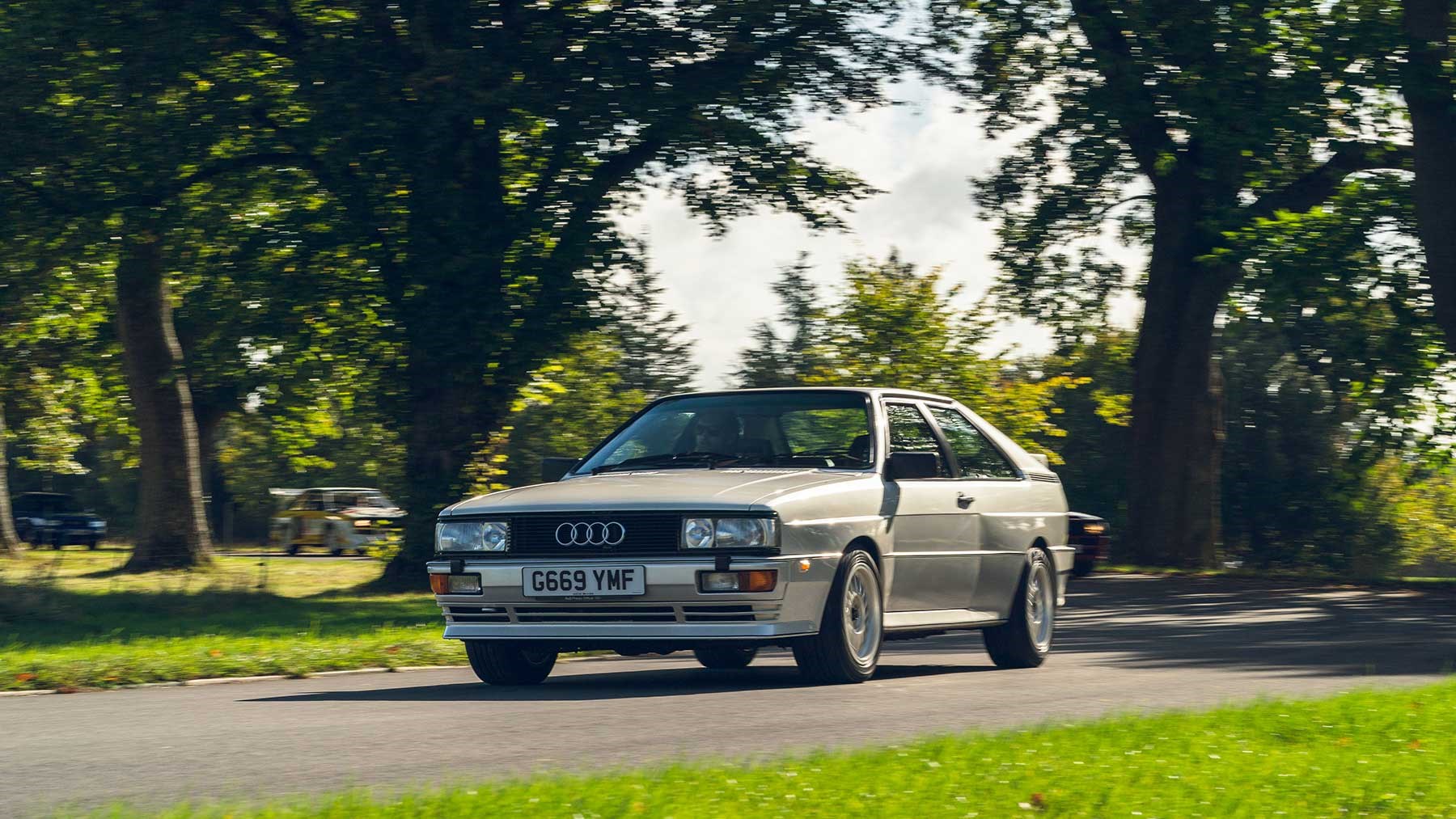
There’s a reason why the Audi Quattro is a legend. It didn’t just win rallies – it redefined what was possible on the road too. Here, more than four decades years after its debut at Geneva, it still feels special, combining big turbo character with surprising usability.
It’s not perfect. The steering’s vague, and the ride lacks polish, but the Quattro remains a milestone car that helped Audi transform from cautious VW offshoot to world-class brand. The warbling five-cylinder engine, the four-wheel-drive confidence, the Bauhaus boxiness – it’s all still deeply addictive.
If you want a classic that thrills, engages and still works as an occasional daily, the Audi Quattro is one of the greats.