► Latest Audi A3 PHEV tested
► Claimed EV range of 88 miles
► But can it deliver?
If you think all the world wants is SUVs, the Audi A3 is the car to prove you wrong. Despite it selling 26(!) different derivatives of SUVs, it’s the A3 that continues to top Audi’s sales charts in the UK, and a key draw is the plug-in hybrid which has been high up the shortlists of company car drivers since its introduction in 2021. In fact, it was the second best-selling PHEV last year, only behind the Ford Kuga.
Known as the A3 TFSI e, it’s now been refreshed a year on from the standard Audi A3’s nip and tuck, only the PHEV receives far more in the way of changes, courtesy of its all-new plug-in hybrid powertrain promising some significant efficiency gains, so does it succeed in being a classy hatch that can also cost pennies to run?
At a glance
Pros: Impressive EV-only driving range, comfortable and good to drive, classy interior
Cons: £3,000 more expensive than the equivalent Golf, small boot
What’s new?
The big change on this A3 TFSI e is what’s under the bonnet, with Audi ditching the ancient 1.4-litre petrol engine of the old car for the new 1.5-litre that’s already commonplace in the majority of lower-end Audis and practically anything still ICE from Skoda, VW and Cupra. But more on that in the next section.
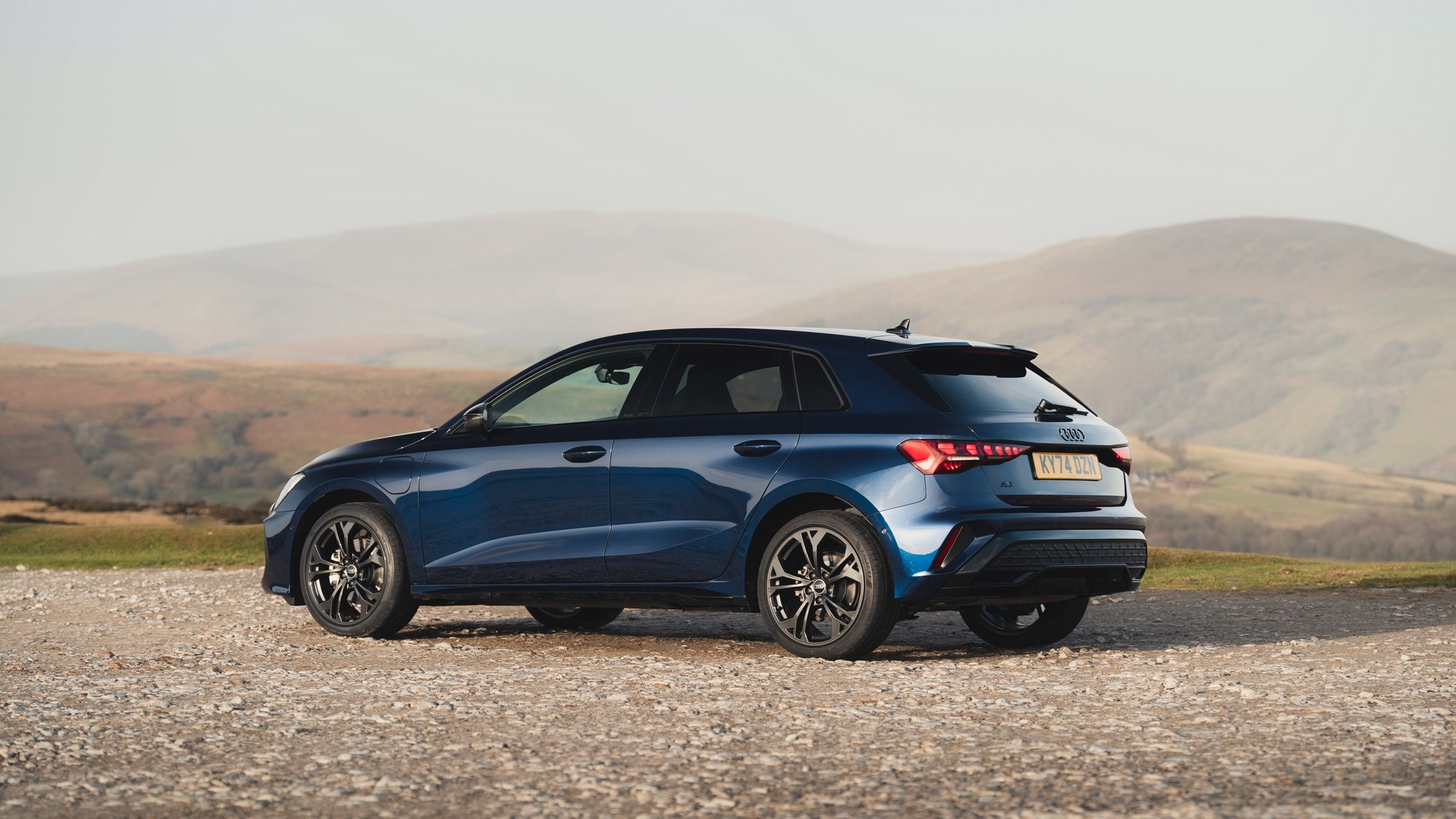
Elsewhere, the TFSI e now gains the latest A3’s wider, flatter front grille and more muscular-looking front and rear bumpers. Inside, there’s a redesigned centre console with a new gear selector, as well as revised materials throughout. But make no mistake, in everywhere other than what’s under the bonnet, this is a very small update, and czharacterisrally Audi.
What are the specs?
As already mentioned, the A3 TFSI e uses a new 1.5-litre petrol engine paired to an electric motor and considerably larger 19.8kWh battery, up from 10.8kWh (net capacities). But despite the changes, the performance figures remain the same – putting out 201bhp and 258lb ft of torque, allowing for a 0-62mph time of 7.4 seconds and a top speed of 139mph, or 87mph if you leave in electric mode. A six-speed automatic gearbox also remains, with drive sent to the front wheels.
But it’s the battery that is the real difference, more than doubling the claimed electric range from 40 to 88 miles, one of the longest of any PHEV on sale currently. Though slightly exaggerated compared to what you’ll get in the real world, we routinely saw between 60 and 70 electric miles out of a charge, giving scope for plenty of journeys to be done on electricity without the need to wake the engine.
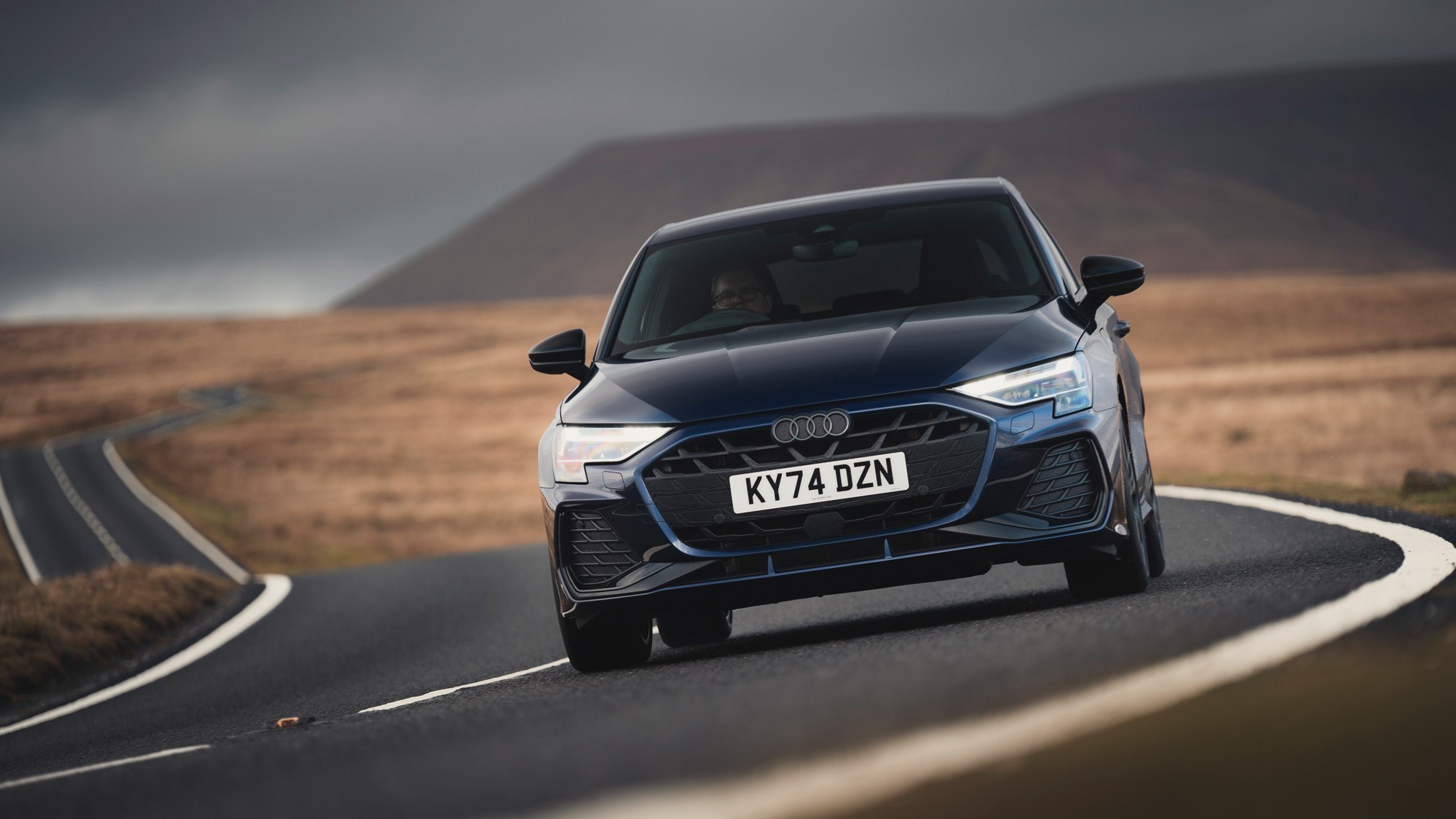
That said, as with any PHEV, the claimed fuel economy figures are ludicrous. Audi claims more than 900mpg from the most efficient trim, all the more daft considering the actual mpg readout on the car can’t go above 300mpg. Over 500 miles of driving, including two 120-mile journeys and another shorter run done without any charge, we averaged 130mpg. Even with the battery out of juice, 45mpg is quite easily possible, so this has the scope to be a very cheap PHEV to run if you can make the most of cheap overnight home charging.
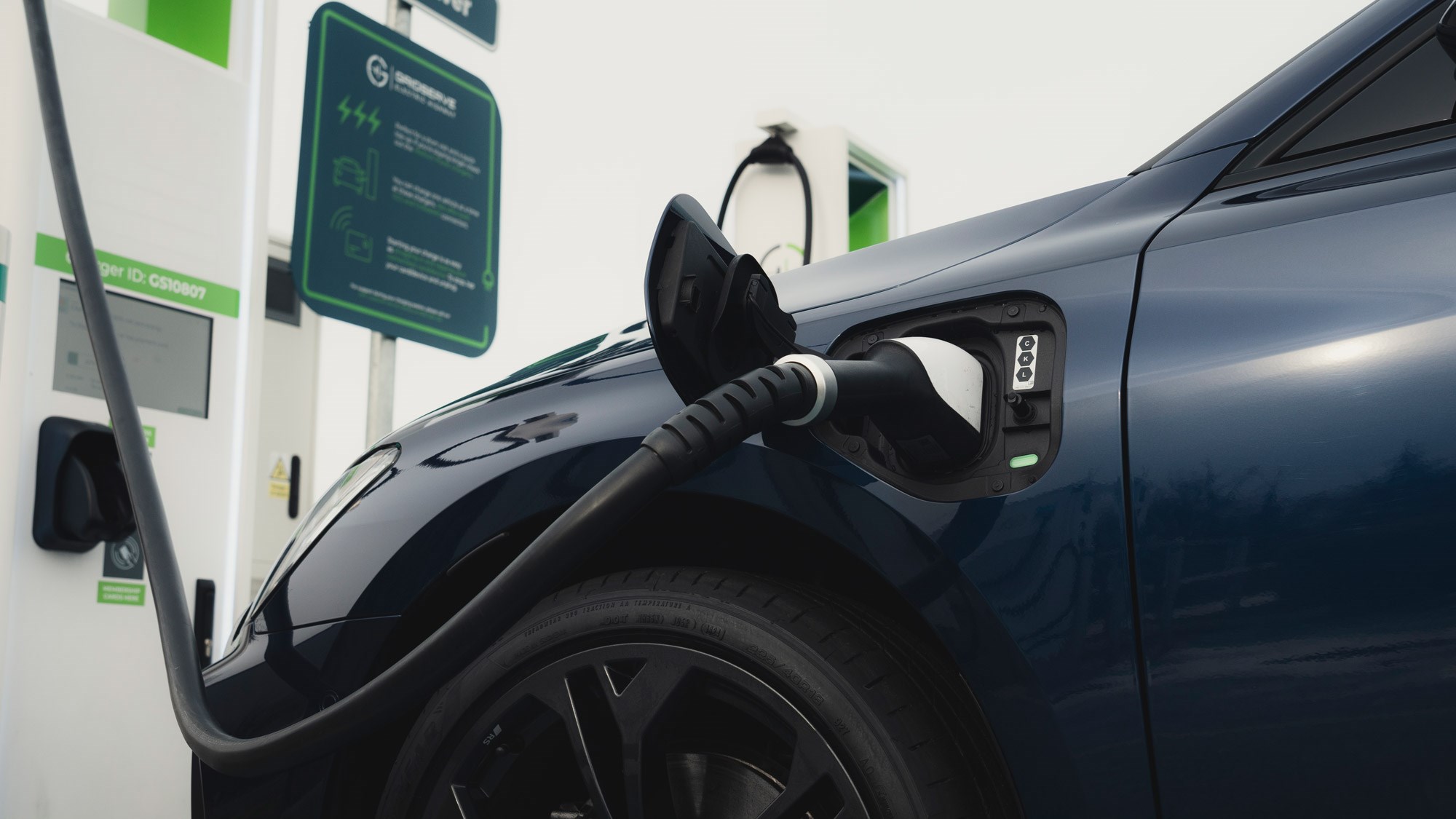
It’s compatible with 50kW DC rapid charging, too, but it works out ruinously expensive to charge it that way, while standard 11kW AC charging means 2.5 hours is needed to get that battery full. CO2 emissions of just 7-9g/km also put it in one of the lowest company car BiK tax brackets available to a non-EV.
While Audi continues to offer a more powerful 45 TFSI e version (now with 268bhp) in other markets, this hasn’t yet been confirmed for the UK.
How does it drive?
Rather well, in short. This 1.5-litre engine is considerably smoother and quieter than the previous 1.4, and the switch between electric and petrol power is very smooth and almost unnoticeable if you’re not staring at the rev counter. The A3 always defaults to EV mode, and the performance, even without the engine’s assistance, is more than adequate in everyday driving.
Despite carrying almost 300kg more in weight compared to a regular A3 equipped with the 1.5-litre petrol engine, it disguises its extra heft well. It feels planted through the corners, with minimal body roll and plenty of grip unless you put your foot hard on the throttle from a standstill. This latest A3, in general, is one of the more engaging cars built on VW’s MQB platform, and is certainly a better drive compared to the Volkswagen Golf e-Hybrid.
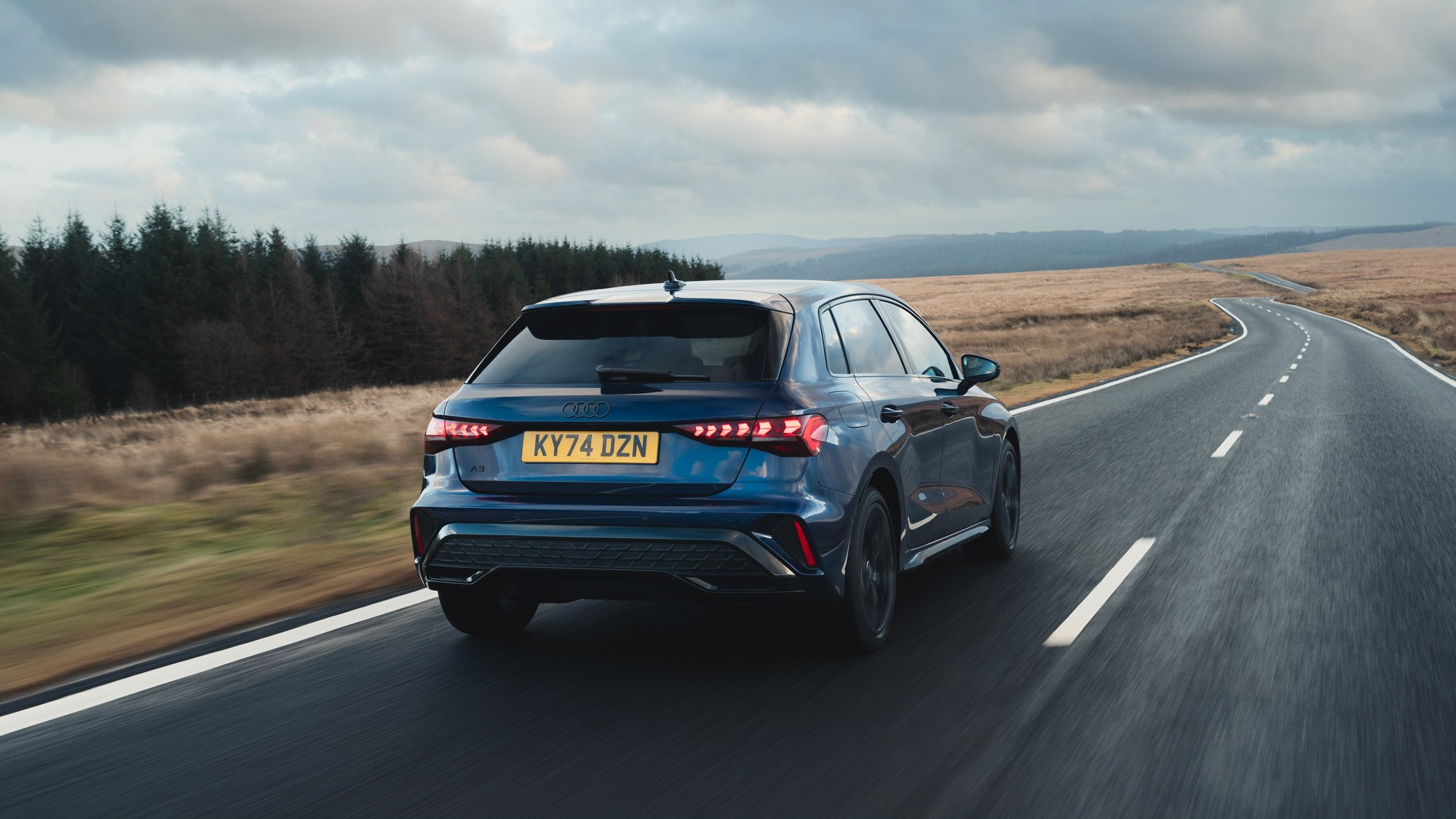
Perhaps most surprising, though, is how comfortable the TFSI e remains. PHEVs often feel more unsettled than their ICE counterparts, but Audi’s suspension changes mean it’s every bit as comfortable as the regular car, even on our S line-spec test car’s larger alloy wheels and sportier suspension setup. The only thing we would say is that refinement isn’t perhaps up to Audi’s normal levels, with quite a lot of road noise on the motorway. This is a problem in all A3s, but it’s exacerbated when running with just electricity because there’s no engine to muffle the hubbub coming from the wheels beneath you
What’s it like inside?
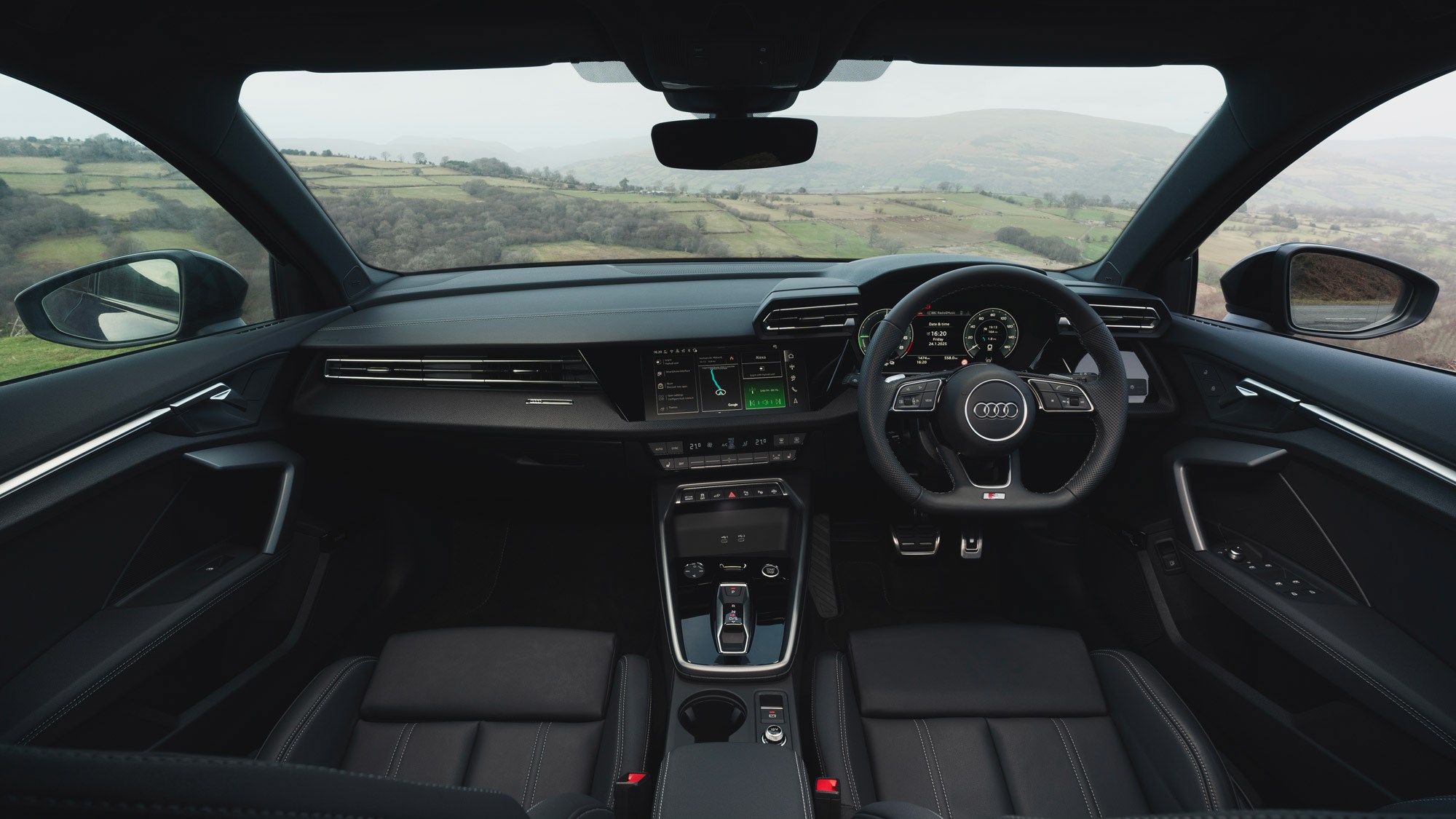
Up front, the quality of the interior is strong. The doors in particular feel heavy and close with a reassuring thud, and efforts to improve the materials for this mid-life update have worked. The gloss black area around the centre console (a staple of most modern Audis) is still a ridiculous idea, but the excellent infotainment system and virtual cockpit dials make up for it. In many ways, the A3’s slightly older interior is easier to operate than its new breed of products, with more physical controls for the climate and heated seats still in a sensible place.
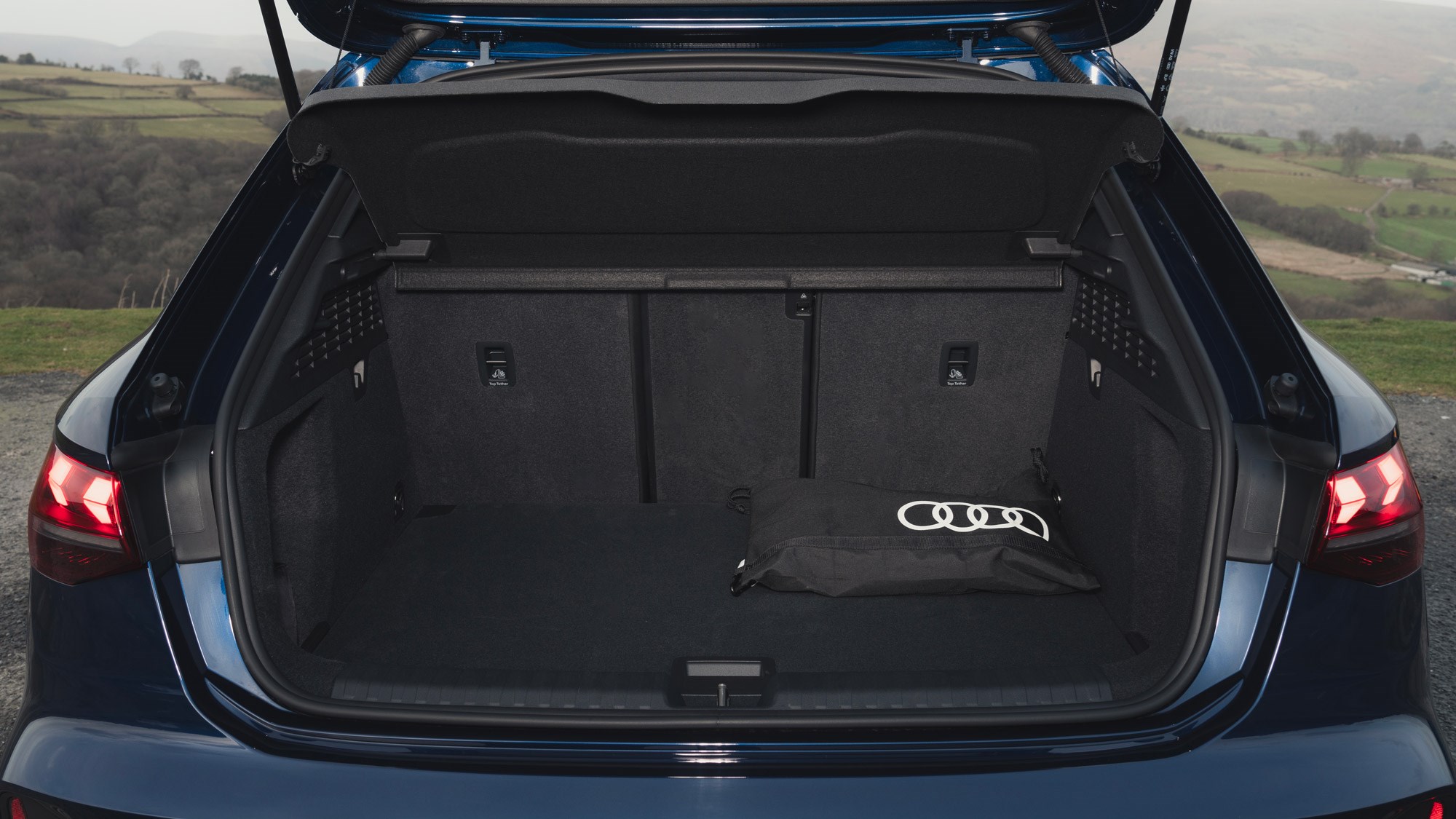
Rear passenger space is unchanged compared to the standard petrol and diesel A3, meaning there’s about enough space for four adults, but five would be deeply uncomfortable. But the large battery under the boot floor reduces the volume from 380 to 280 litres. It’s really just the underfloor area you lose, but it’s still quite a shallow space, not helped if you keep the charging cables there. The smaller Audi A1 has a larger boot, for example.
Before you buy (trims and rivals)
The plug-in hybrid A3 mirrors that of the standard petrol and diesel car, with a choice of Sport, S line and Black Edition grades.
The Sport comes with 17-inch alloy wheels, LED headlights, heated front seats, as well as a 10.1-touchscreen and 12.3-inch digital instrument cluster on the tech front. The popular S line grade adds 18-inch alloys, a sportier bodykit and artificial leather upholstery, while Black Edition gets a full black styling pack and black alloys, naturally.
The one issue this PHEV is its price as, starting from £39,290, it’s around £7,000 more expensive than a conventional petrol automatic A3, and only the entry-level model escapes the £40,000 luxury car tax supplement, applying to cars between the second and sixth year of registration. S line and Black Edition models cost £41,570 and £43,020 respectively, and option packs are then available on top of this.
The A3 TFSI e’s main issue is the Volkswagen Golf e-Hybrid, which starts from £3,000 less. Of course, an A3 will always cost more than a Golf but the difference seems particularly pronounced here. That said, the cost of a hybrid Cupra Leon is almost identical to the Audi.
Verdict
As with anything to feature the VW Group’s latest 1.5-litre PHEV powertrain, the Audi A3 TFSI e represents a significant improvement on its predecessor. The hybrid setup is smooth and well integrated, but it’s the electric running ability and potential for very low running costs that impress the most.
As with the previous A3, this is a classy, well-built hatch that is also very good to drive. It’s only the price of this hybrid that is the stumbling block, though it’s worth checking out the leasing deals as strong residuals mean monthly prices aren’t as bad as you might expect.
*Specs are for Audi A3 40 TFSI e Black Edition with optional Tech Pack and metallic paint*