► New Vantage Roadster driven
► Drop-top version of Aston’s two-seat bruiser
► Compellingly quick and cohesive
Newsflash: Aston Martin is changing. With serious investment in both the car maker and the F1 team, these are happy days for a marque as synonymous with boom and bust as with Bond. Using the same laser-guided, big-spending precision with which he’s put together the dreamiest F1 team on the grid (now it just needs time, and next year’s regs…), Canadian billionaire businessman Lawrence Stroll has gifted Gaydon its best tilt yet at sustained greatness – and its greatest sports car yet.
Key building blocks are the reuniting of Aston’s two superstar designers, Marek Reichman and Miles Nurnberger, a re-negotiated engine supply deal with AMG (hence this Vantage’s massive power hike over its predecessor; previously Aston had to bow to AMG’s hierarchy), Aston’s own software architecture (the Roadster introduces both a new driver’s display and a shortcut button to deactivate the drive assists, both of which are being added to the coupe) and ex-Bentley, Porsche and JLR man Adrian Hallmark in position as CEO.
We know the new Vantage is a great coupe, talking its place in what is suddenly a very compelling model range. Will that magic survive the cutting off of its roof?
At a glance
Pros: Rampant performance, real beauty, confidence-inspiring handling
Cons: Heavier and pricier than the coupe – obviously – with a compromised boot
What’s new?
The previous Vantage arrived in 2017 in coupe guise, and it was a curious car. Fresh out of the crate, it couldn’t lay a glove on the then aged 991-generation 911 GTS. The Aston enjoyed a modest power advantage but it was too wide, too basic inside, too lacking in composure and so messily traction-limited, even on a dry circuit, that the Porsche monstered it. Now Aston Martin staff endlessly make 911 comparisons, and with good reason – the result would now be a fight, you sense, rather than a formality; as it should be, given the British car’s punchy pricing.
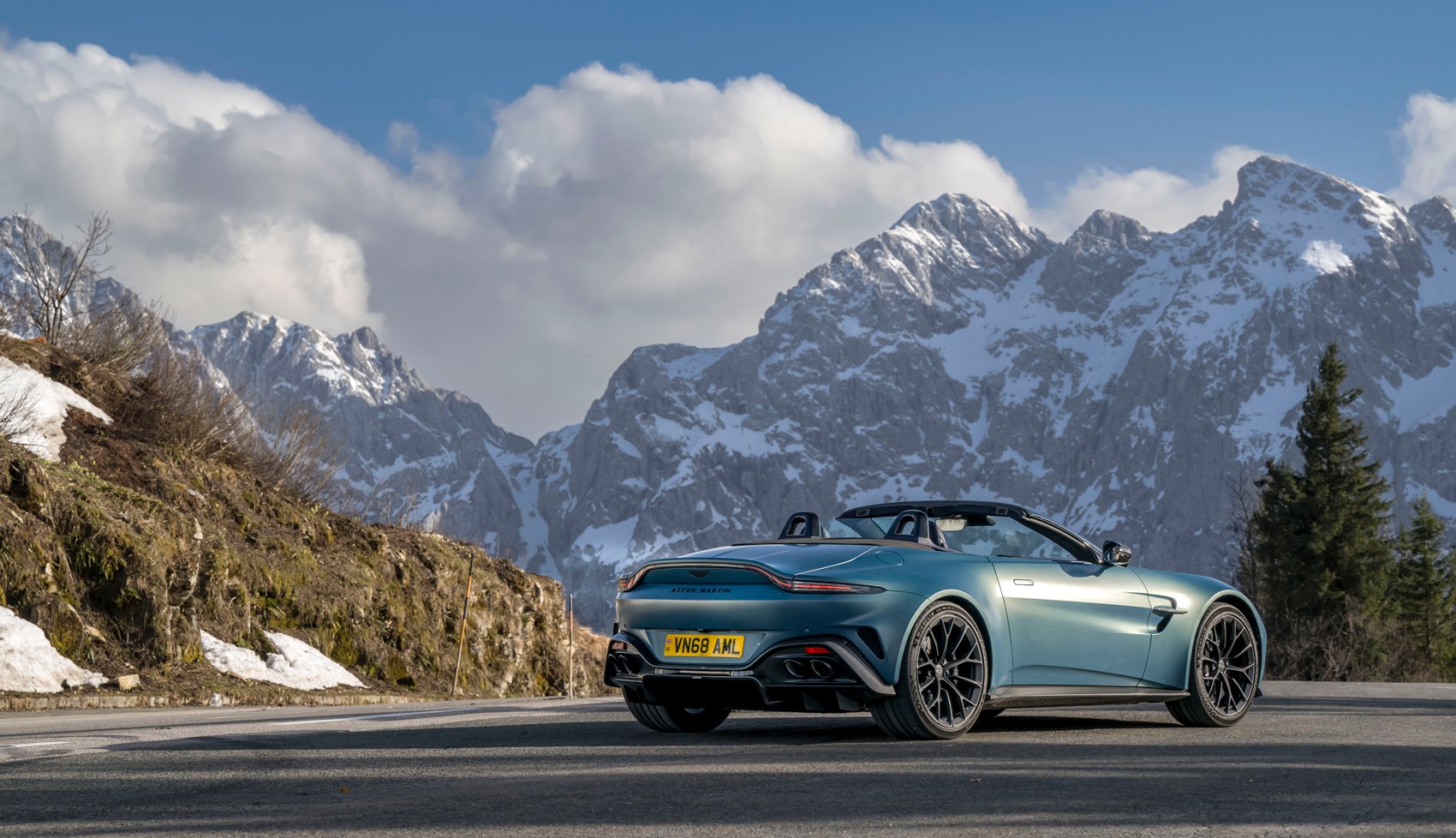
The new Vantage is very different animal, not least in its potency. Power and torque then were 503bhp and 505lb ft. They’re now 656bhp and 590lb ft. But the really good news is that, as with last year’s coupe, the new Vantage Roadster is much more than a snarling V8 in a to-die-for suit. Yes, it’s gorgeous. And yes, it’s almost violently quick. But it’s also agile and tactile and, if not forgiving, then at least fully committed to the kind of dialogue that prevents problems in the first place. Beautifully balanced, almost balletically so at times, and rewarding to drive, it loses none of its predecessor’s big-hearted charisma but tempers it with so much more raw talent it’s hard to credit the two cars as consecutive steps on an evolutionary curve.
What are the specs?
The twin-turbo V8 develops 656bhp at 6000rpm and 590lb ft at 2750rpm. In the 1665kg Roadster, that’s enough motive force to fire you 0-62mph in 3.5sec and on to just north of 200mph. The top-end rush is addictive but, because of the twin turbos, the Vantage Roadster never feels anything other than riotously responsive and scalp-peelingly quick.
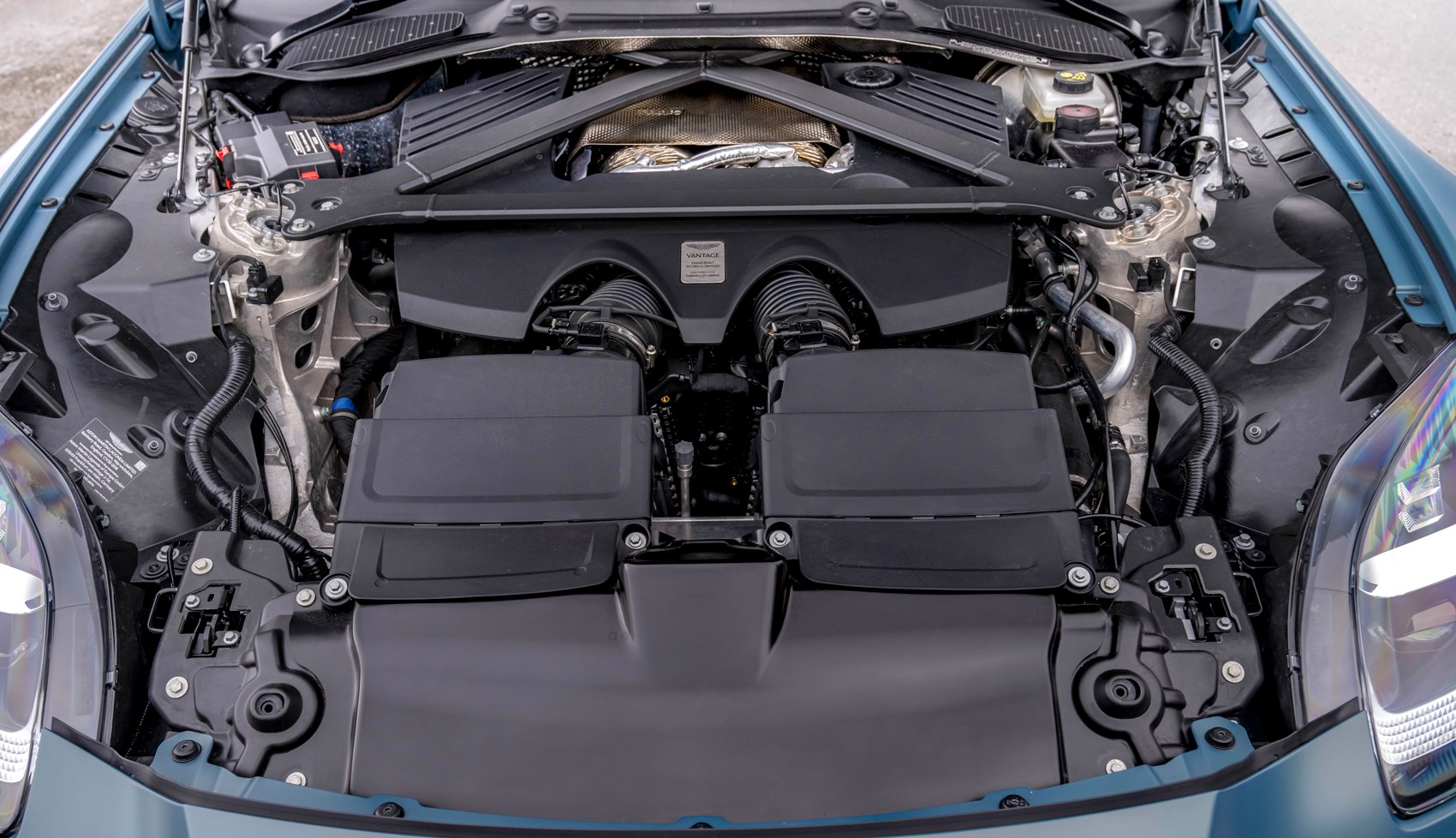
Chase the redline or work the midrange – you’ll get places very quickly indeed either way. This is Aston’s ‘entry-level’ sports car, and a strict two-seater. If you want 911-style +2 seating with wind-in-your-hair thrills, you’ll need the DB12 Volante.
How does it drive?
In short, beautifully. And it’s the Vantage’s composure, tactility and its newfound fondness for nuanced dynamic dialogue that are the real stars of the show, not its firepower.
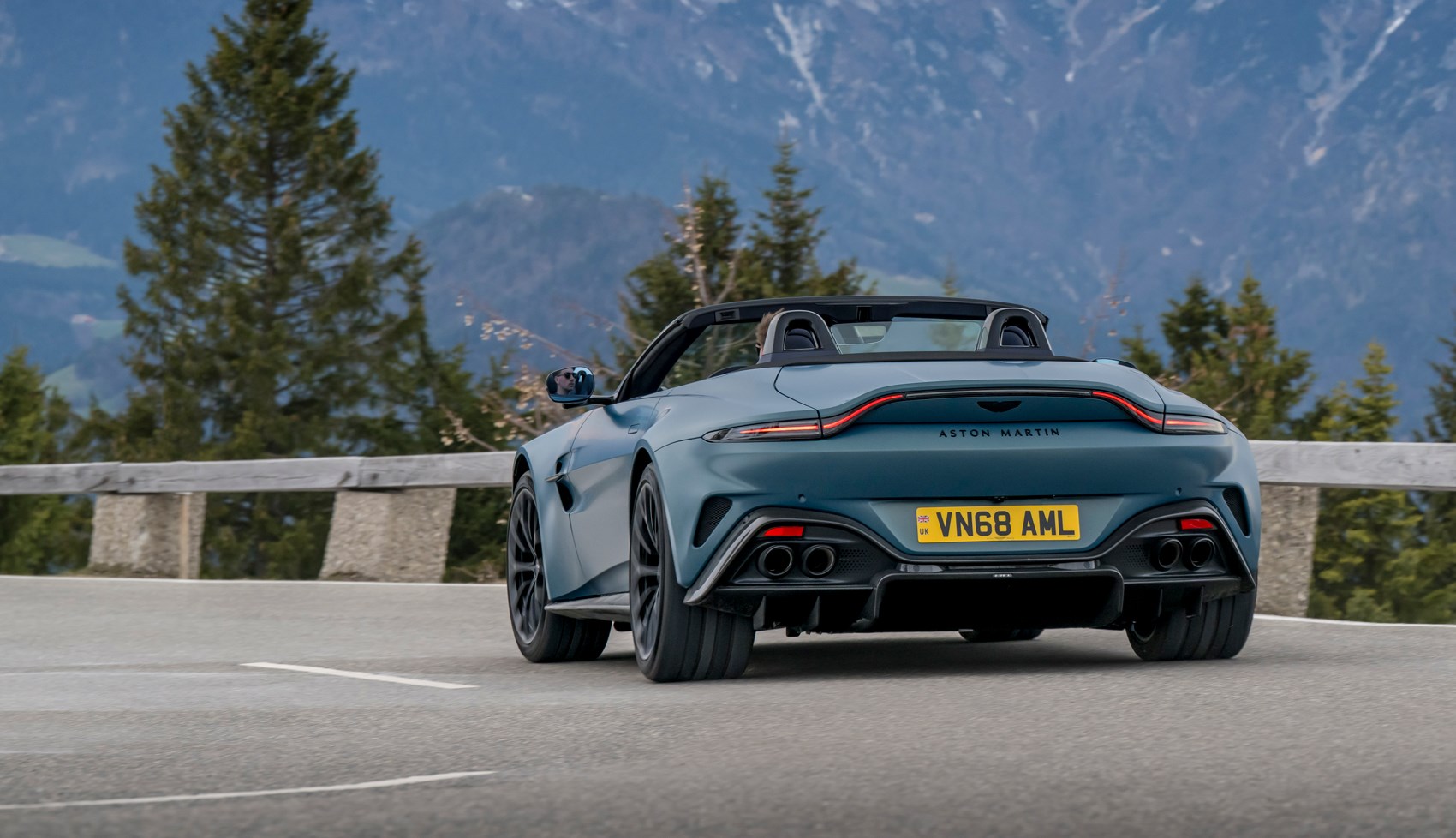
This shouldn’t come as a surprise. We know the current Vantage coupe is a great sports car, and so’s this Roadster, mostly because it’s essentially the same car. The suspension set-up (Bilstein adaptive dampers) and electronics calibration are identical, with slightly softer transmission mounts the only meaningful deviation. Weight is up, of course (by 60kg), as is price (by circa £10k to £175k), and the folding roof steals some boot space (it’s down from 346 litres to 200 litres). But Aston’s new soft-top is every bit as focused, fizzy and frenetic as its tin-top sibling, and undoubtedly a richer sensory experience.
The steering wheel, perfectly sized and shaped to work with the pretty direct rack (2.27 turns lock-to-lock, down from 2.4 previously) is the first bit of great news. The last thing the old Vantage needed was to be any wider. This one is but doesn’t feel it. It’s a breeze to place and the taut steering, which offers a modicum of feel (plus a little hunting on cambered surfaces at lower speeds), plugs you into a chassis so cohesive and confidence-inspiring it can be hard to equate such detail changes (stiffer rear damper mounts, stronger upper front wishbones and a shorter final drive ratio) with having so completely transformed the car’s dynamic character.
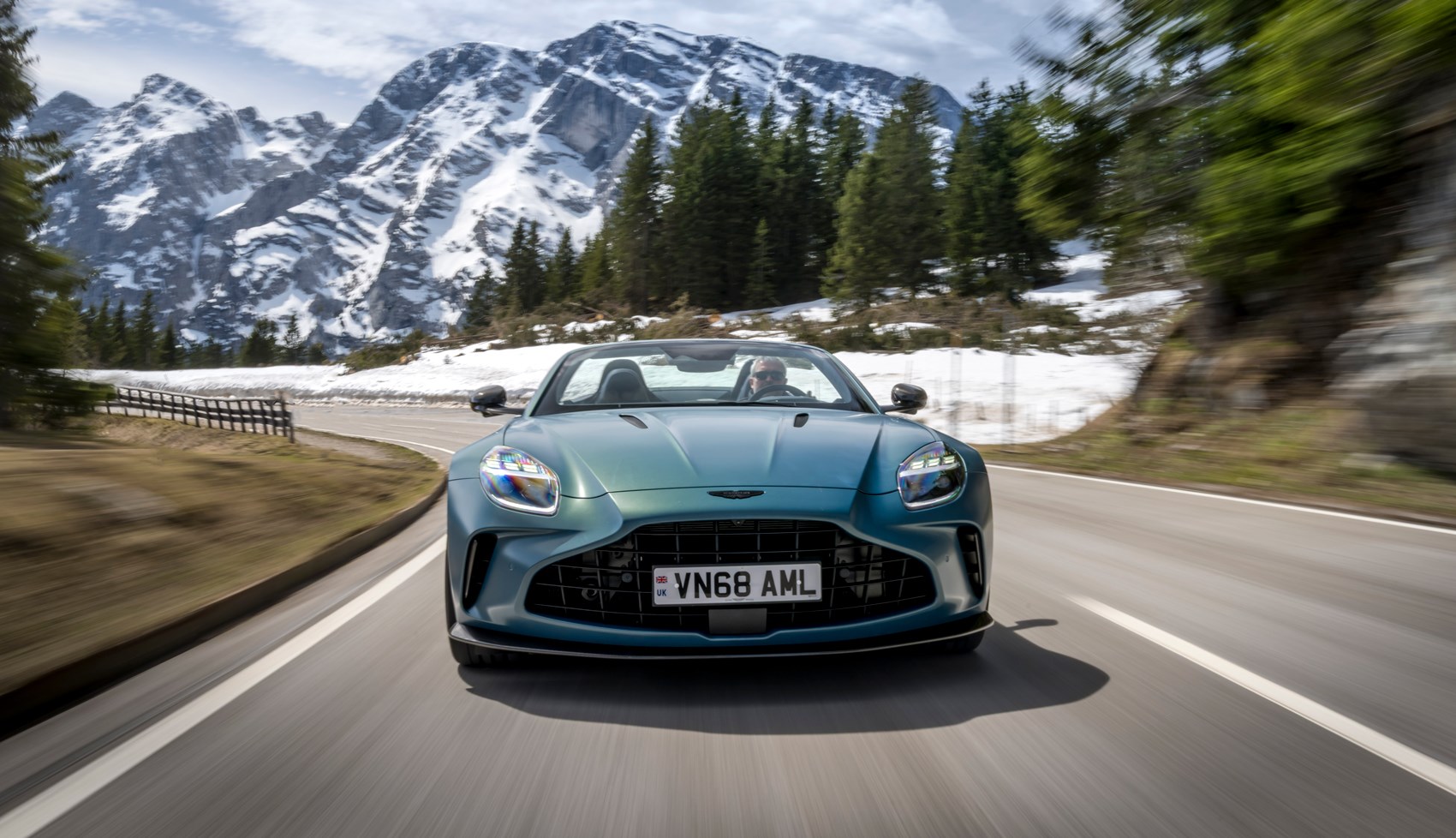
Slaloming through a wicked section of curves, the drying tarmac giving us more grip to work with, the sensation is more like skiing than driving, this short, broad and low tool of a car pivoting around you more like a Lotus Elise than a 1665kg (dry) Roadster with a 4.0-litre V8 in the nose. The brake pedal is firm and accurate, with plenty of fade-free power to dig into, and the ZF auto ’box does a passable impression of a twin-clutcher, with quick shifts and a satisfying shift action.
The ride, though untroubled in Austria by any properly gnarly tarmac, is composed and compliant, encouraging you to experiment with the firmer damper settings (mostly better the stiffer you go) in a way so many cars with adaptive dampers just don’t. And the rhythm all this chassis and powertrain talent lets you to settle into is magical, the Vantage Roadster rotating keenly into hairpins and sweepers alike with its grippy front-axle grip (particularly once the bespoke Michelins have a little heat in them). Traction on corner exit is strong, too, helped by the sweetly calibrated throttle pedal, e-diff and multi-stage traction control, which together give you the confidence to work right up to the limit, corner after corner, mile after glorious mile.
What about the interior?
The cockpit’s all but identical to the coupe’s, so rather lovely and now with a multimedia system you don’t have to try to pretend isn’t there. In fact, Aston’s gone from the ridiculous (an ancient Mercedes-based architecture that looked like a touchscreen but wasn’t) to the sublime: a user-friendly combination of crisp, intuitive displays with plenty of physical buttons, not least for climate, volume, damper and exhaust settings and drive mode.
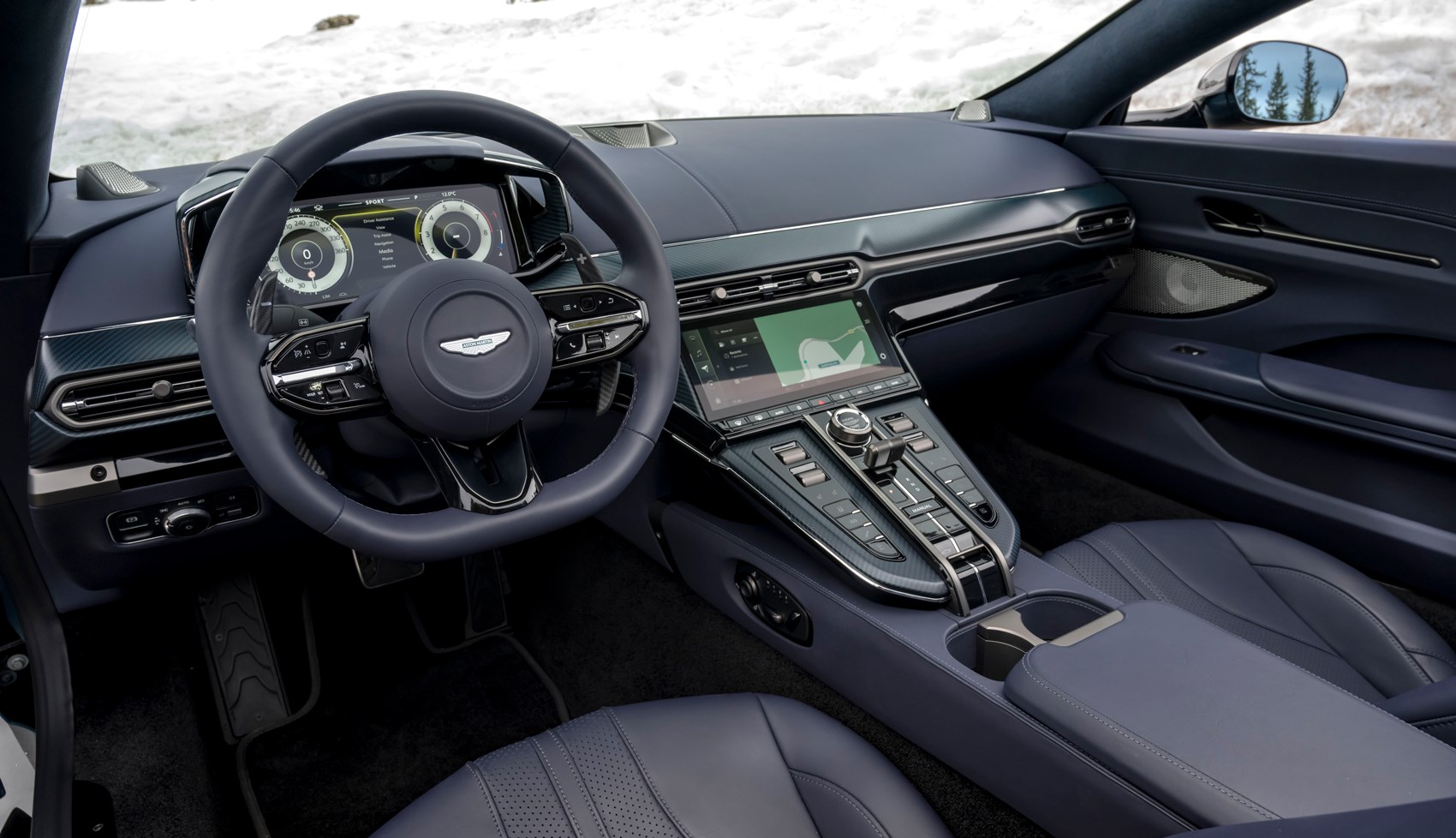
The leather’s buttery soft, the driving position good and the level of fit and finish very good, if not quite Bentley Continental GT good. Gripes? It’s a little cramped if you’re much taller than 6ft and the shift paddles could be nicer to hold and to use. There’s also no on-screen confirmation of, say, your damper setting, though the button lighting shifts to a different colour.
A single button turns off all the mandatory ADAS irritants, neatly, and Aston will be adding the same feature to the coupe. The eight-layer, Z-fold hood looks good up and feels it too; snug and quiet. Hold the button and he roof drops in a best-in-class 6.8sec, shifting the 50:50 weight distribution to 49:51…
Before you buy
A £10k premium for the Roadster is modest in this rarified part of the market (the Roma Spider is nearly £30k more expensive than the coupe), and the drop-top Vantage’s remit within Aston’s range makes perfect sense. Those after more comfort and more seats will opt for the bigger DB12. But the Vantage sits there as Aston’s main sports car offering, with the incoming Valhalla and rare-groove Valkyrie operating at a far loftier price point.
The Aston’s pricing places it between Porsche and the likes of Bentley and Ferrari.
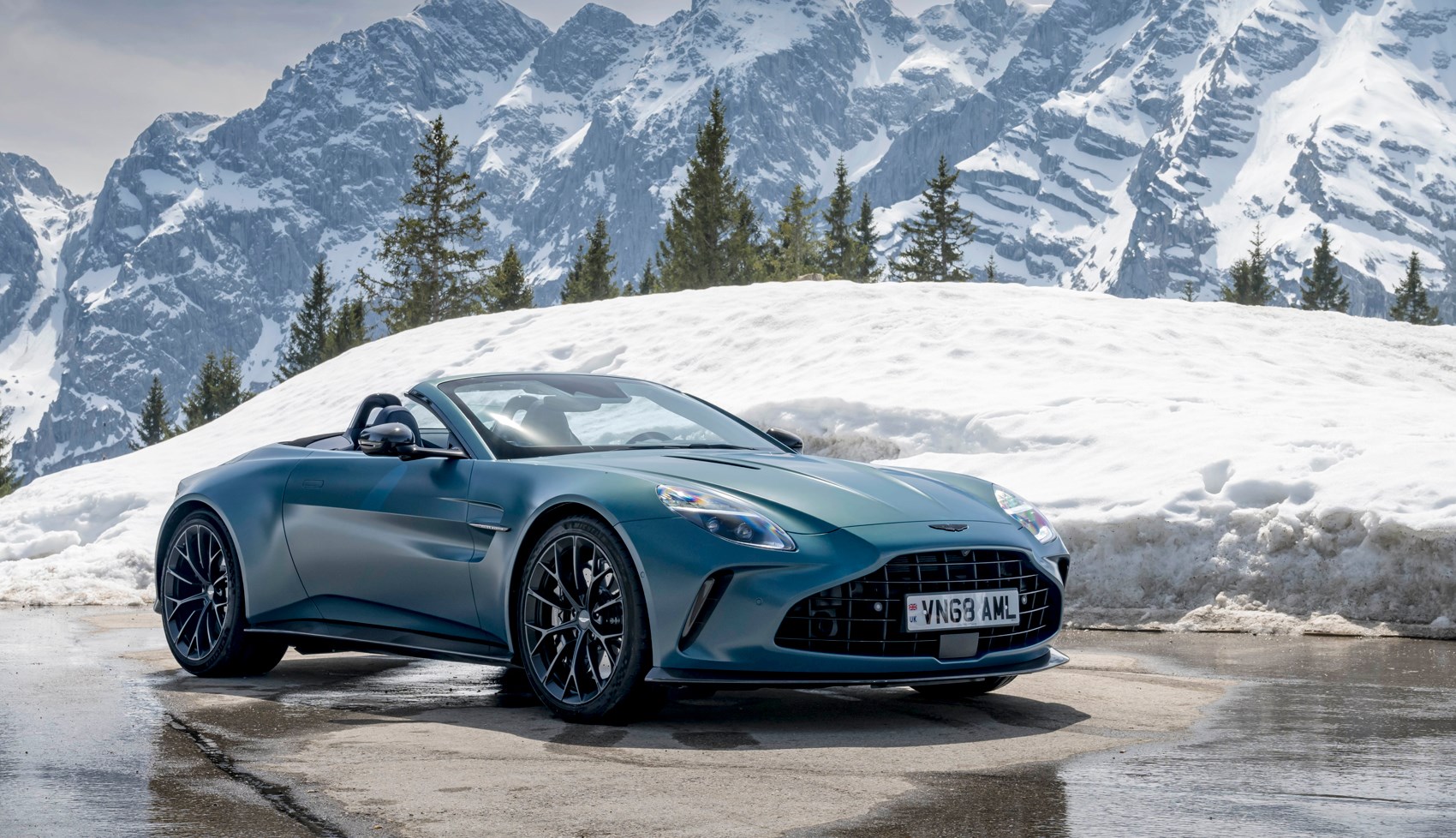
We’re waiting for a new 911 Turbo S cabriolet but chances are it’ll be a subtly different proposition, and more usable if less emotive than the Vantage. The Roma’s an equally pretty car but is starting to feel its age, with a dated infotainment system that’s always been fiddlier than it really needs to be.
Bentley’s new-ish Continental GTC is now available in two flavours; the big-money ‘ultra performance hybrid’ Speed version and the new, only slightly less powerful ‘high performance hybrid’ version. We’ve only driven the Speed. It’s sensational, with monumental performance together with a level of EV-only hybrid utility the Aston simply doesn’t have an answer for. But the Vantage Roadster is the sharper and more exciting driving machine.
Verdict: Aston Martin Vantage Roadster
Where the Stroll-era Aston F1 team is a work in progress, its Vantage Roadster is the finished article. Beautiful, ballistic and balletic, the thrilling, life-affirming Roadster is new Vantage to have – or at least to covet.