► Aston’s very late hybrid hypercar is finally here
► This or a Ferrari SF90 XX Stradale or Lambo’s Revuelto?
► Circa £850k, limited to 999 units
Well, that took a while. Before Lawrence Stroll, before the Aston Martin F1 team (this time around), before the Valkyrie (the Adrian Newey/Red Bull one with the Cosworth V12) and before the global pandemic there was a Geneva Motor Show (2019) with not one but two mid-engined Aston Martin concepts. Throwback!
The more affordable one, the V6-engined Vanquish – a Ferrari F8/Lambo Huracan rival – didn’t get very far, falling foul of Aston’s short and stressful time under ex-AMG man Tobias Moers. But the Valhalla, a tri-motor hybrid hypercar built around a bespoke carbon tub, three electric motors and a mega-powerful AMG-sourced twin-turbo V8 is finally here, after more false starts than school sports day.
We drive it in prototype guise to answer two important questions: does the Aston Martin badge even belong on cars with their engine in the middle; and can north of 1000bhp ever actually be fun, rather than just impressive/terrifying?
At a glance
Pros: Wild performance, outrageous corner speed and braking stability, well up for lairiness
Cons: Interior nails the basics but feels a bit spartan, zero luggage capacity
What’s new?
The car – it’s brand new. The first production cars will reach owners late 2025 and we’ll drive the finished article a few months later. But for now, we must ‘make do’ with a totally representative prototype on the short but sweet Stowe circuit at Silverstone.
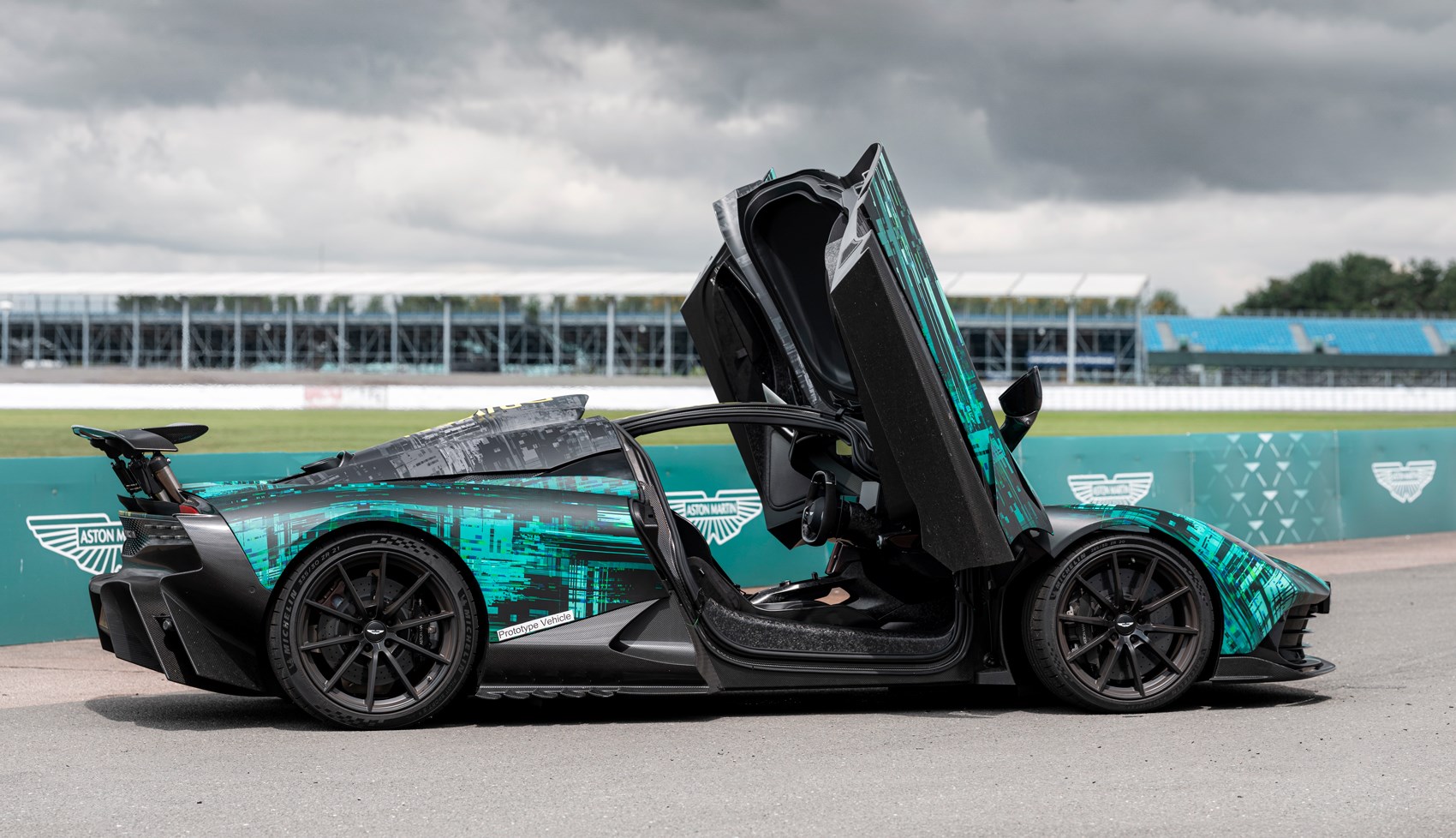
Aston’s second mid-engined production car and its first true hybrid, the Valhalla uses the same powertrain concept as cars like the Honda NSX, Ferrari SF90 Stradale and Lamborghini Revuelto. A very small battery (6kWh, for around nine miles of electric-only range, tops) endlessly assists and is recharged by the V8 (charging via cable is also an option, if you’re feeling conscientious) and supplies three electric motors: one on each front wheel for hybrid all-wheel drive and torque vectoring duties; and one in the drivetrain working to banish turbo lag and intensify the (already quite intense) power delivery. All this engineering sits in a bespoke carbon structure with Aston’s trademark good looks and a healthy dose of active aero (for DRS and airbrake functionality), helping achieve more than 600kg of downforce from 150mph.
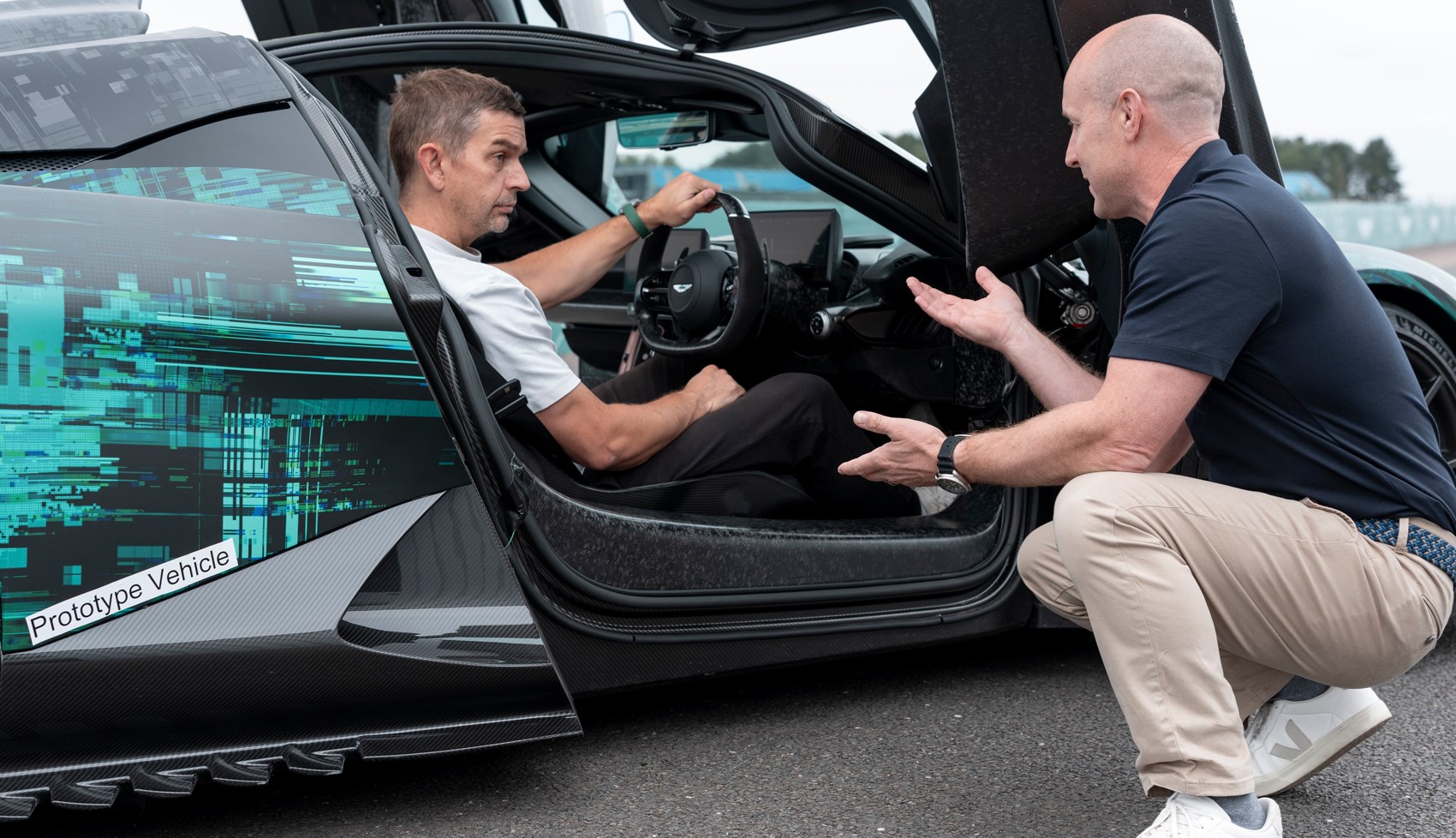
This kind of configuration hasn’t always produced exciting, malleable cars. Honda’s tri-motor NSX was confusing and aloof, as was the SF90 Stradale before it received the ‘turn everything up to 11’ XX treatment. But Aston insists the Valhalla is different; more intuitive, more approachable, more fun. It started with a baseline tune for road driving and built from there, rather than sanitising a circuit-optimised car for the road, and also erred on the side of caution when it came to potentially artificial-feeling elements such as the front e-motors, winding back their levels of detectable effort to preserve a rear-driven sensation.
What are the specs?
Senior. The engine is the most powerful yet from Aston’s supplier, AMG, generating 817bhp and 632lb ft. Add in the electrified side of the equation and the totals are 1064bhp and 811lb ft – enough to propel this 1655kg (dry) machine 0-62mph in just 2.5sec and on to 217mph.
If that sounds fast then let me assure you that is precisely how it feels, too. But because all that shove it delicately managed, both across the two axles by the powertrain and by Aston’s enviably deft driver-assist electronics (including a multi-stage stability control you can wind up and down using a rotary control, tuning the level of slip to precisely match your mood, the conditions and the state of the tyres), it never feels violent or in any way out of control. Stowe is not a big circuit but the straight lines it does have don’t last long in the Valhalla, its acceleration and braking making short work of the bits between the corners.
How does it drive?
There’s a real risk when contemplating cars like this of writing them off as too much: too much money, too much power, too much complexity. An MX-5 is all you need, right, or a ’60s Elan? Lightweight, simple, honest, chuckable – that, the cynics will insist, is real driving.
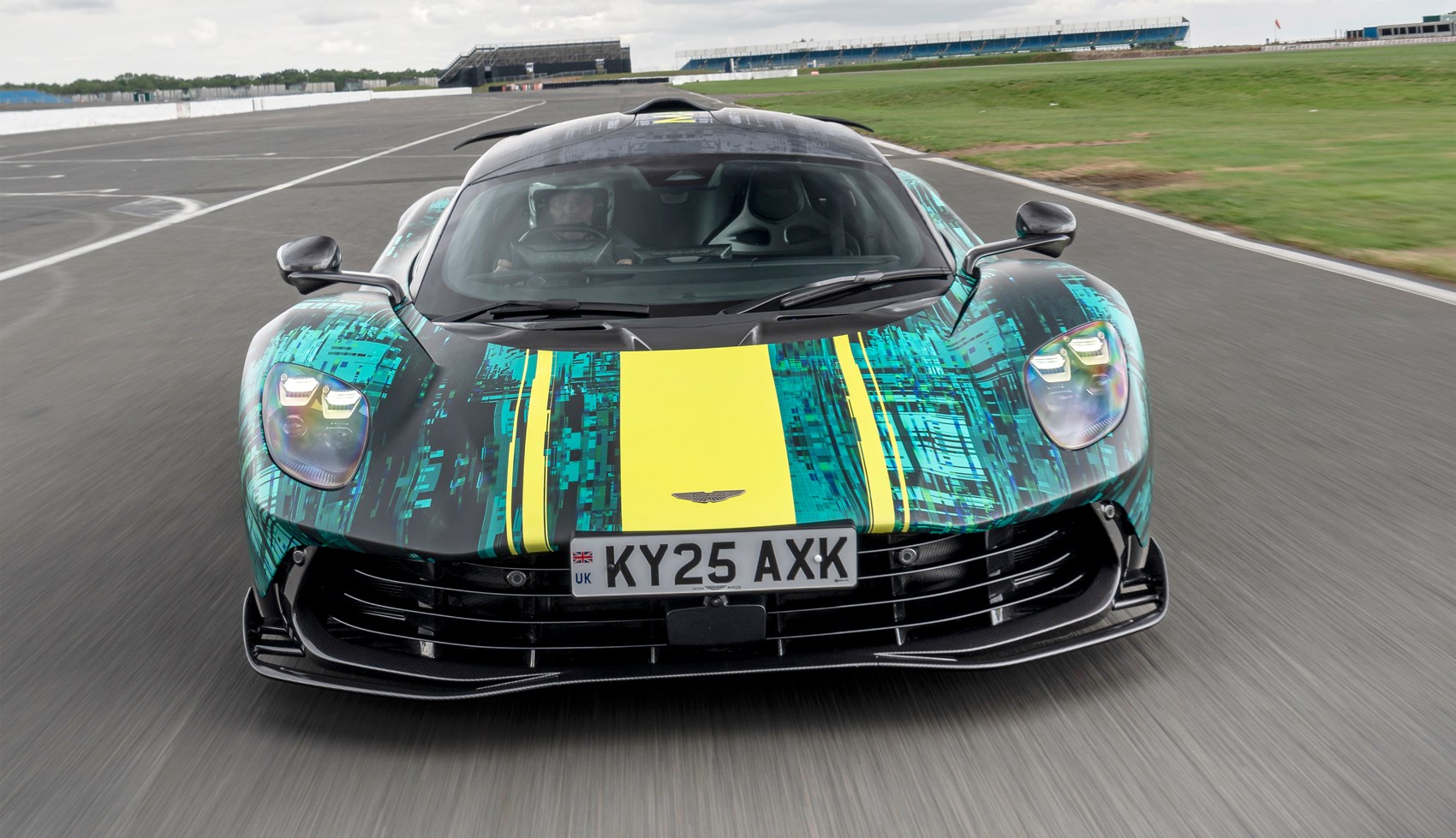
But what if you could have everything that the Valhalla brings (the carbon tub and arse-on-the-deck ergonomic theatre of a Le Mans prototype; endless performance; a fluency with speed that swells confidence and urges experimentation) with all the honesty, accessibility and chuckability of an Elan or an MX-5? What if you could have a car that’s endlessly adjustable mid-corner (particularly on today’s road-orientated Pilot Sport S 5 rubber; Cup 2s will be an option for committed track work), its broad limits telegraphed with crystal clarity as you play with the quick but intuitive steering and zero-lag throttle, only to then devour the straight that follows with an afterburner-esque alacrity no MX-5 or Elan could ever manage.
In short, what if Aston Martin managed to build a V8, tri-motor monster of a car that isn’t a monster at all?
I drive a Vantage first, to get a feel for the circuit, and it’s good: punchy shifts, brawny power, a front end that turns and grips and so much feel and feedback you could never argue you weren’t warned. Leave the electronics on and you feel them doing their thing, but their interventions are subtle and unobtrusive, encouraging you to wind them back and enjoy a chassis more than talented enough to run fast and free without them. There are quicker, more controlled track cars, of course, and the Vantage’s relatively soft set-up and front-engined, rear-drive architecture must be born in mind, if not actively managed every metre of every lap. But jeez this is turning into a great day.
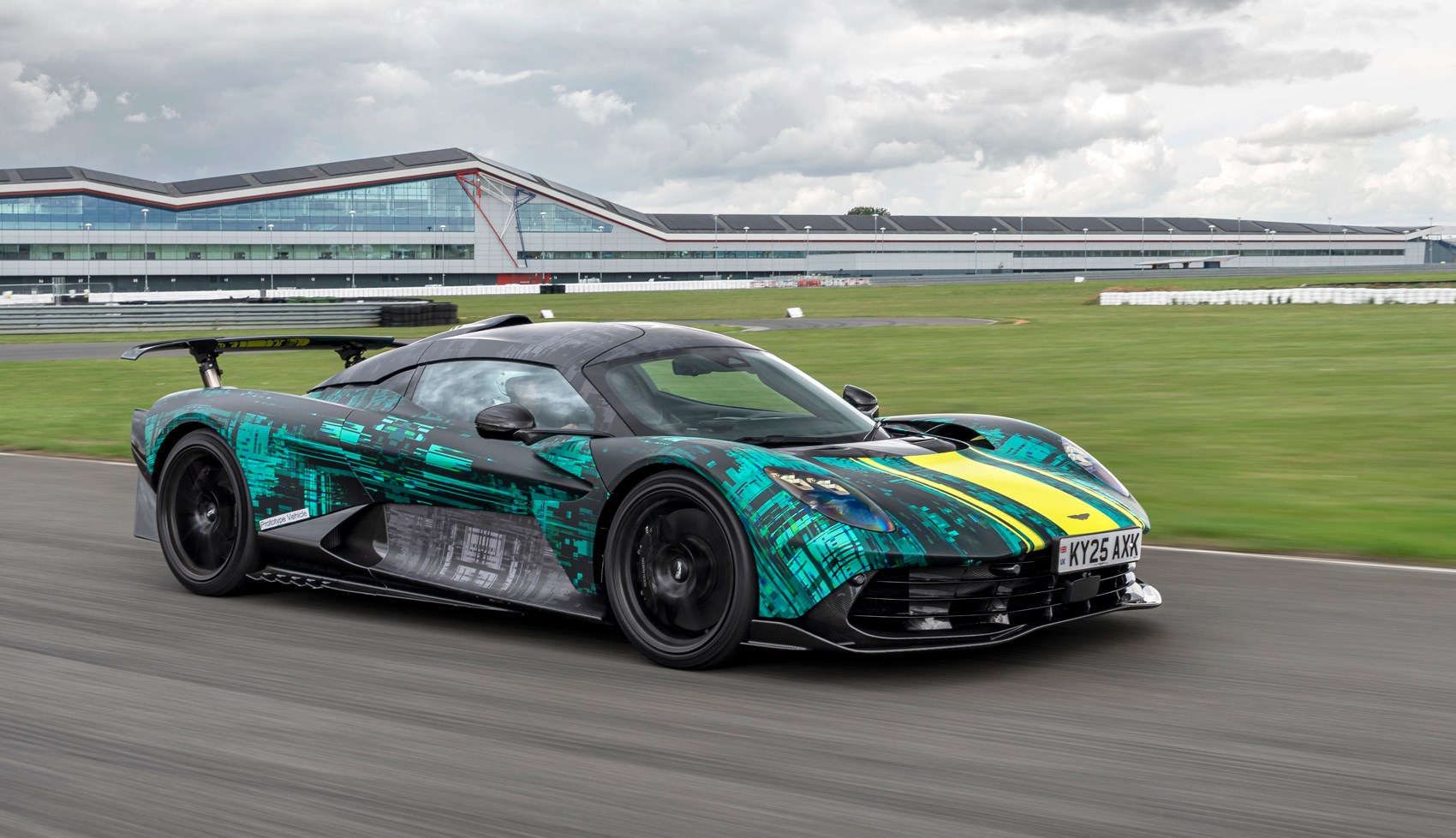
Swapping into the Valhalla is like fast-forwarding 60 hours in Gran Turismo. One moment you’re scuffing around winning races and hoarding prize money in your uprated road car, the next you’re in a carbon-tubbed prototype with a letterbox windscreen, active aero and a powertrain that never lets up.
I’m in Sport+ (Race is more circumspect with its e-deployment, to go hard for longer, but Sport+ gives you the violence unchecked) with the stability control set to default, mid-level 5. Out of the pits, into the hairpin and suddenly I’m coming out with half a quarter of a turn of opposite lock, the car at once calm and alive beneath – make that around – me. The hybrid powertrain punches through third gear to the upper reaches of fourth in a heartbeat, eviscerating the straight that follows, and when I brake in my usual spot (prompting the active rear wing to go vertical and make like an airbrake) I realise I’ve made a terrible error. We may be travelling far faster but such is Valhalla’s combined braking power and composure that my reference points require not so much nudging as wholesale re-location.
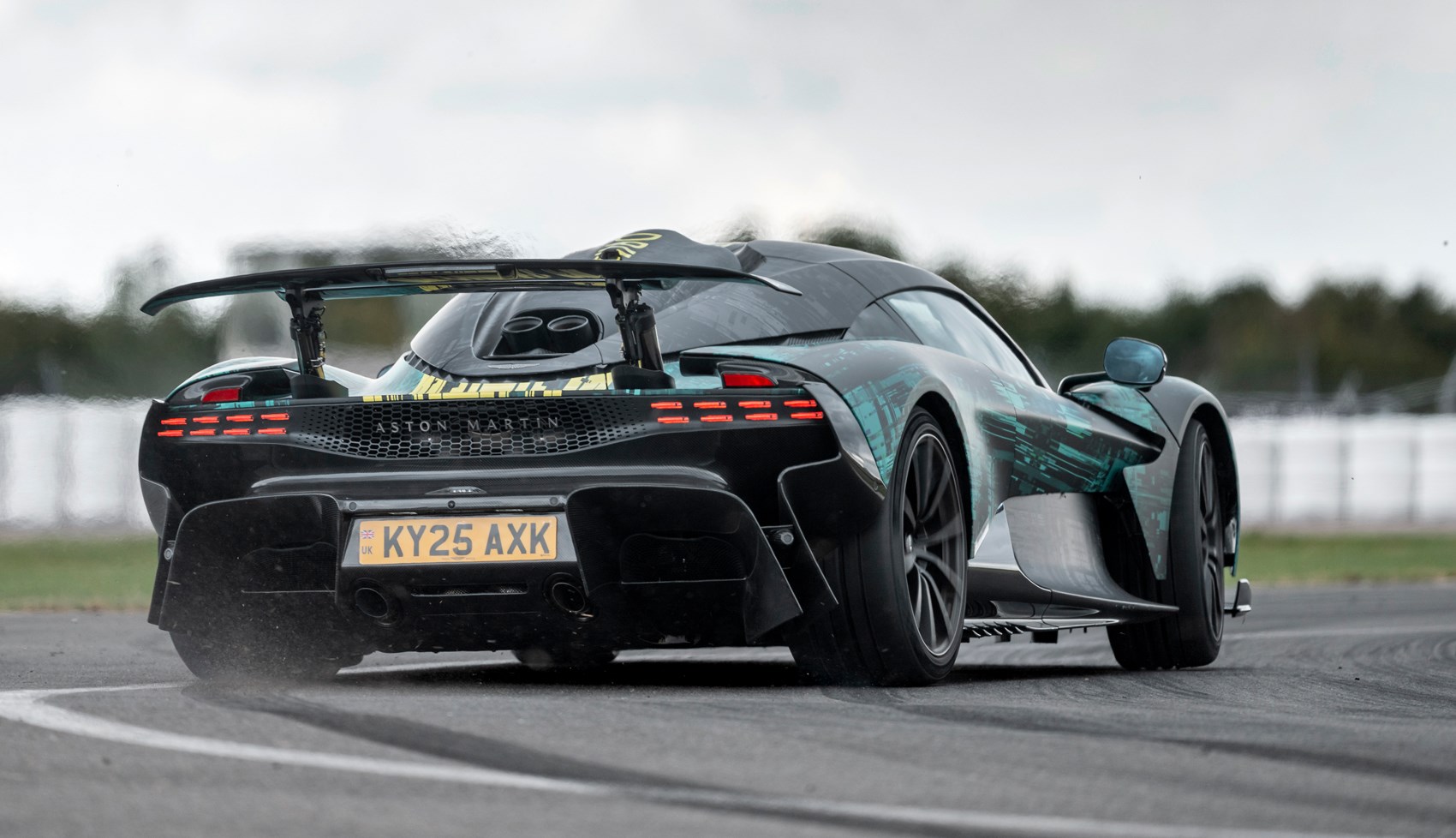
The laps fly by, with seat time revealing layers of unholy speed beneath the car’s incredible accessibility. Trail braking soon becomes second nature, so accurate are the brakes and so direct the front end, and as you finally come off the brakes so you find yourself with options: keep it neat and quick or breathe back on the throttle, the lag-free powertrain response, coupled with the quick and rich feedback, letting you confidently squeeze the rear axle (no rear-wheel steering) into the smoothest, glossiest, least scary oversteer you’ve ever met.
What’s it like inside?
The cockpit’s much more Vantage-spacious than Valkyrie-cramped, with all the theatre of a race-style cockpit – locked-in driving position, lots of carbon – with none of the discomfort. The controls, too, are familiar to anyone who’s driven any other contemporary Aston.
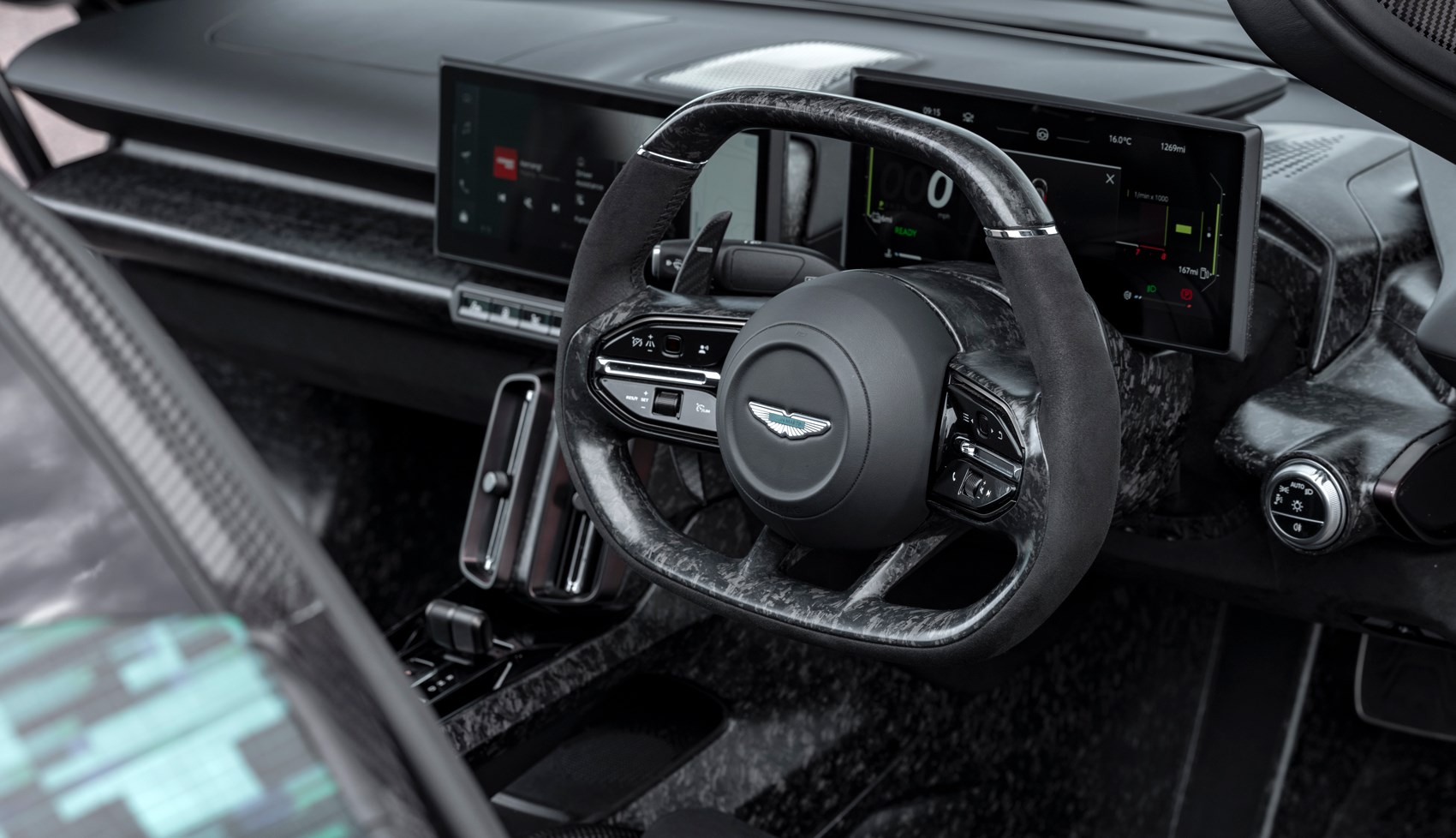
The vibe inside, like the SF90 XX is purposeful, with lots of carbon and little by way of a luxury feel, though it’s in no way uncomfortable. Could you do big road miles in here? It feels like you could, though we haven’t tested it in that environment, but you’ll either have to send your bags on ahead or squeeze them into the passenger seat (if unoccupied) or passenger footwell – there is no luggage capacity to speak of. The Ferrari is a little better (with a 74-litre frunk) but the Lamborghini manages a big 112-litre front trunk despite its big V12.
Before you buy
At circa £850,000 the Valhalla’s pricing is punchy by anyone’s standards. That’s more even than Ferrari asked for the more expensive Spider version of the SF90 XX, and that was limited to just 599 units (999 Valhallas will be built). It’s so far above the superb Revuelto (circa £450,000) that Lamborghini, which has a fat order book for its flagship, must be wishing it’d doubled the price.
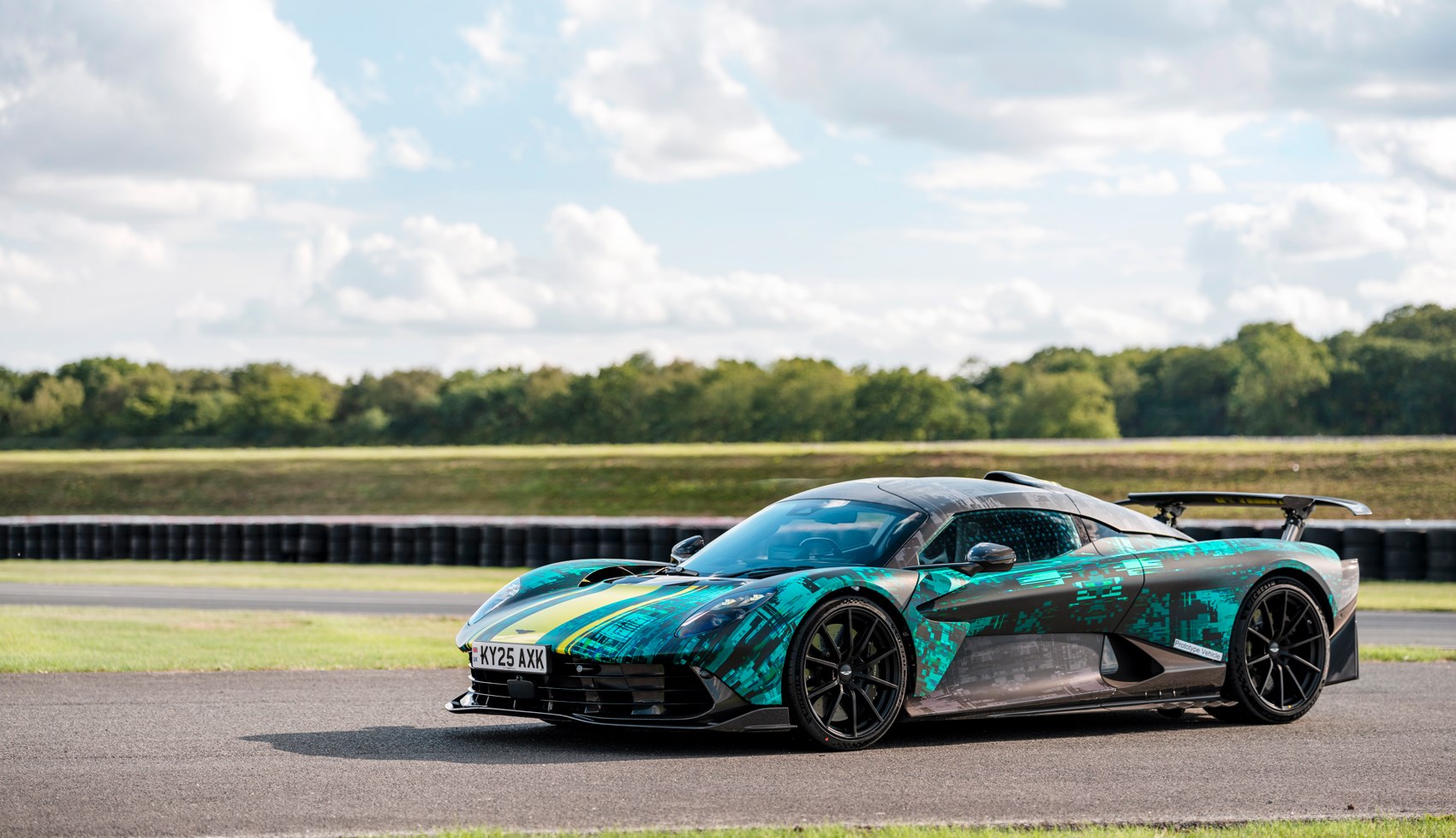
But somehow it doesn’t feel like Aston will struggle to find buyers. So far at least, mid-engined Astons are vanishingly rare creatures, and beautiful too. And while we need to wait for more seat time, both on track and on the road, the Valhalla feels like a genuine dynamic rival. Its powertrain’s less extrovert than the SF90’s XX unhinged V8, which might be a turn-off for some, and less tuneful than the Lambo’s 12, naturally, but its penchant for showing you a really, really good time should stand it in good stead when we get the three together.
Verdict
By starting out with a very clear idea of the car it wanted to create, Aston Martin’s crafted the playful, soulful antithesis of cars like the conceptually similar NSX. Beautiful to look at and bewitching to drive, it is ferocious yet flattering, powerful yet playful. It makes the extraordinary accessible, assuming of course you’re prepared to consider something costing £850,000 accessible. Pricey and without a shred of practicality, it makes little sense on paper. But on tarmac it’s magnificent.